AUTOMATION
IN
HISTOPATHOLOGY
AUTOMATED TISSUE PROCESSING
• The basic principle for tissue processing requires the exchange of fluids using a series of
solutions for a predetermined length of time in a controlled environment.
To provide sufficient rigidity to the tissue so that it can be cut into thin section for
microscopic examination.
• Recent advances now include: A. Tissue processors
B. Microwave ovens
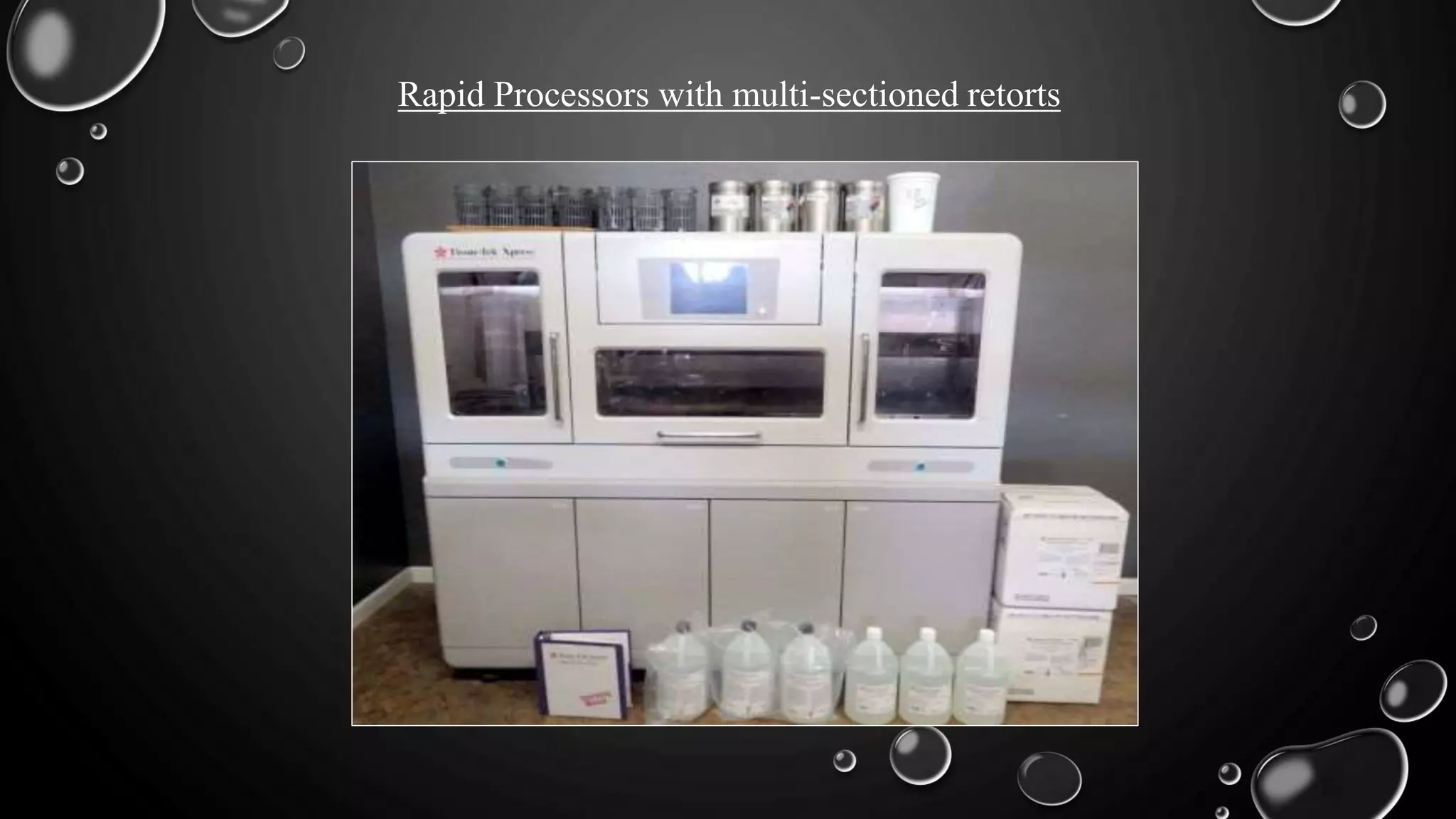
C. Rapid Processors with multi-sectioned retorts
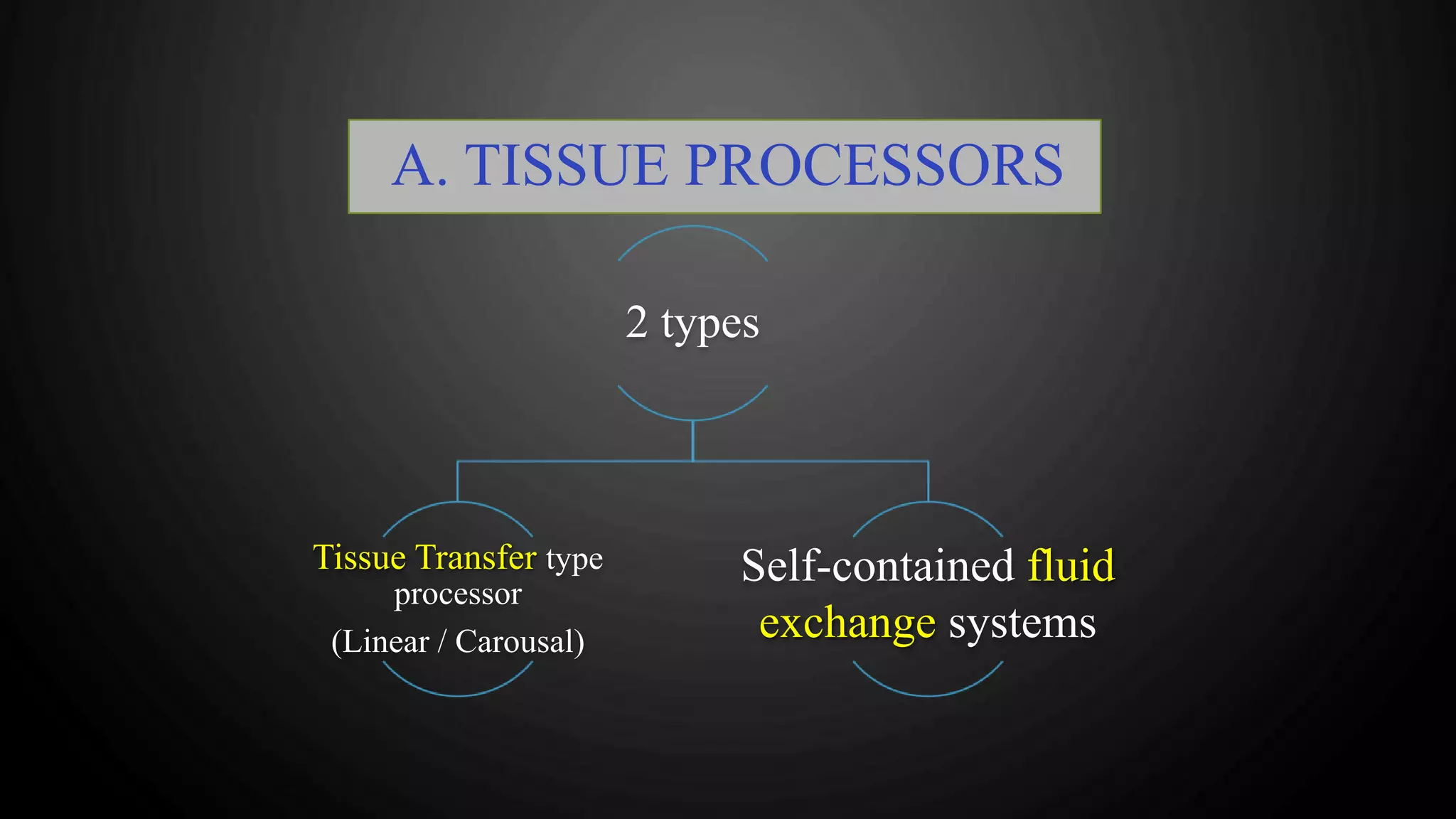
A. TISSUE PROCESSORS
2 types
Tissue Transfer type
processor
(Linear / Carousal)
Self-contained fluid
exchange systems
Carousal Type Processor (Tissue Transfer)
Transports tissue blocks
in baskets
Through a series of reagents housed in stationary containers
Submerged specimen’s length of time in each reagent container should be
electronically controlled
Vertical oscillation or the rotatory movement of the tissue basket provided the
agitation
Automated tissue processor
Basket
(30-100 Cassettes)
Rotating Head
Reagent Containers
(9-10)
Controls &
Indicators
Wax containers
(2-3)
AGITATION by
Vertical
Oscillation or
Rotatory
Movement
• Advantages:
-Allow maximum flexibility in the choice of reagents and schedules.
-Rapid turnaround time for day/night processing.
-In recent models, tissue basket is enclosed within an integrated fume hood – allow
escape of fumes during agitation.
• Disadvantages:
- Tissues dry, while being transferred.
Self-contained fluid exchange systems
A microprocessor used in this instrument
Tissue Cassettes are loaded into a retort chamber where they remain stationary
throughout the process
Reagents & melted paraffin wax moved sequentially into & out of the
retort chamber by using vacuum & pressure
Each step could be customized by controlling time, temperature, or
pressure/vacuum
Agitation is achieved by Tidal action
Touch Panel
Retort for 100-300
Cassettes
Reagents
10-12 reagent stations with
adjustable temperature
between 30 & 45⁰C
Wax Station
3-4 Paraffin Wax stations with
adjustable temperature
between 48 & 60⁰C
AGITATION by
Tidal Action
• Advantages:
-Vacuum & heat can be used at any stage – reduction in processing time &
improved filtration of denser tissues.
-Retorts are sealed – prevent tissue drying.
-Divided retorts that allows for different programs to run simultaneously.
- Customized schedules for tissue processing are possible.
-There is a fluid spillage containment & elimination of fumes.
- Employ alarm systems & diagnostic programs for troubleshooting any
instrumentation malfunction.
- Allows the user a safe, clean & easy reagent renewal.
• Newer instrumentation have:
- Provides the opportunity to divide tissue by size.
- Have solution management systems, allowing reagents to be monitored for
purity & to be used for a greater period of time without adversely harming the tissue.
B. Microwave ovens or processors :
• Microwave ovens specially designed for tissue processing are now common in a
recent tissue processing technique.
• This technique is 1st used by Boon and Kok in 1985.
• It shortens the processing time from hours to minutes.
Microwave ovens stimulates diffusion of the solutions into the tissue
By increasing the internal heat of the specimen
Thus, accelerating the reaction
• That is in another words, the penetrative properties of microwave & conversion of this incident
energy into heat, is made use of this processor so that it shortens the processing time.
• In processed tissue,
Better
quality
epithelium
More focal
condensation
of stroma
Less
shrinkage of
tissue
• The processing time depends on the thickness & density of the specimen.
AGITATION is
provided by Air-
Nitrogen system
- Precise temperature
controls,
- timers, and
- fume extraction
systems.
Built in regenerable
Charcoal Filter
Connection
to fume
extraction
Software controlled
stirring device
14 Cassettes per
container
Touchscreen Control
Terminal
• Reagents used for microwave processing include:
- Ethanol,
- isopropanol and
- proprietary mixtures of alcohol &
- paraffin.
• Graded concentration of solutions is not required.
• Clearing agents are not necessary because the temperature of the final paraffin step
facilitates evaporation of the alcohols from the tissue.
• Xylene & formalin are not used in this process, which eliminates toxic fumes &
carcinogens.
• Properly controlled processing provides uncompromised morphology & antigenicity of
the specimens.
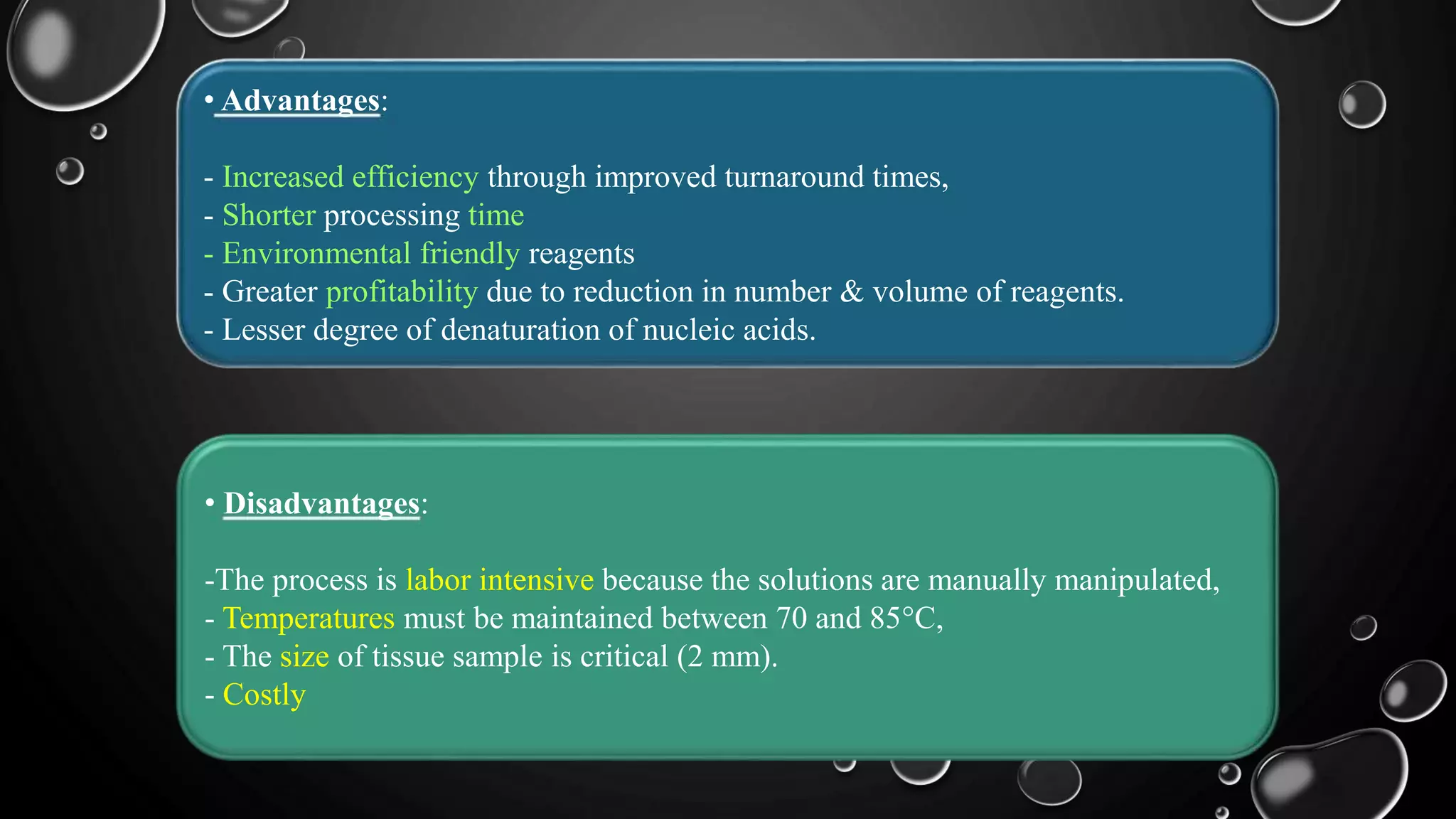
• Advantages:
- Increased efficiency through improved turnaround times,
- Shorter processing time
- Environmental friendly reagents
- Greater profitability due to reduction in number & volume of reagents.
- Lesser degree of denaturation of nucleic acids.
• Disadvantages:
-The process is labor intensive because the solutions are manually manipulated,
- Temperatures must be maintained between 70 and 85°C,
- The size of tissue sample is critical (2 mm).
- Costly
Manual TP Automated TP Microwave TP
Reliability Less reliable as
human error may
occur
More reliable More reliable
Time consumption Time consuming Have customised
schedules for TP
Shortens the
processing time
Cost Inexpensive Costly More costly
Chemicals like
Xylene & formalin
Employs noxious
chemicals
Vacuum & heat
can be used
Not used so
eliminates toxic
fumes &
carcinogens
Graded
concentration of
solution
Monitored Monitored Not required
Shrinkage of
tissue
Evaluated Less evaluated Lesser evaluated
Comparison between tissue processers
C. Rapid Processors with multi-sectioned retorts :
• This processor uses :
Microwave technology
Vacuum infiltration
‘Molecular-friendly’ proprietary reagents
• A robotic arm moves the tissue cassettes through four stations which contain
acetone, isopropanol, polyethylene glycol, mineral oil and paraffin.
• Microwaves & agitation are used to accelerate the diffusion of solvents in tissue.
• The microwave technology utilized, operates at a continuous low power instead of pulsing
high levels of microwave energy.
• The retort chamber is cylindrical.
• Microwaves circle around the cavity, taking advantage of the physical principle of the
‘whispering chamber’ effect that eliminates hot &cold spots.
Rapid Processors with multi-sectioned retorts
• Advantages:
-Acceptance of tissues into the system in every 15 minutes,
- Improve turnaround time.
-The reagents used are environmentally safe.
- The morphology & quality of the specimens is consistent with that of traditional
tissue processing.
• Disadvantages:
- The cost of the processor,
-The grossing of the tissue sample that requires standardization of specimen
dissection.
TISSUE MICROARRAY
• Tissue microarray (TMA) was developed as a method to evaluate numerous samples of tissue
in a short period.
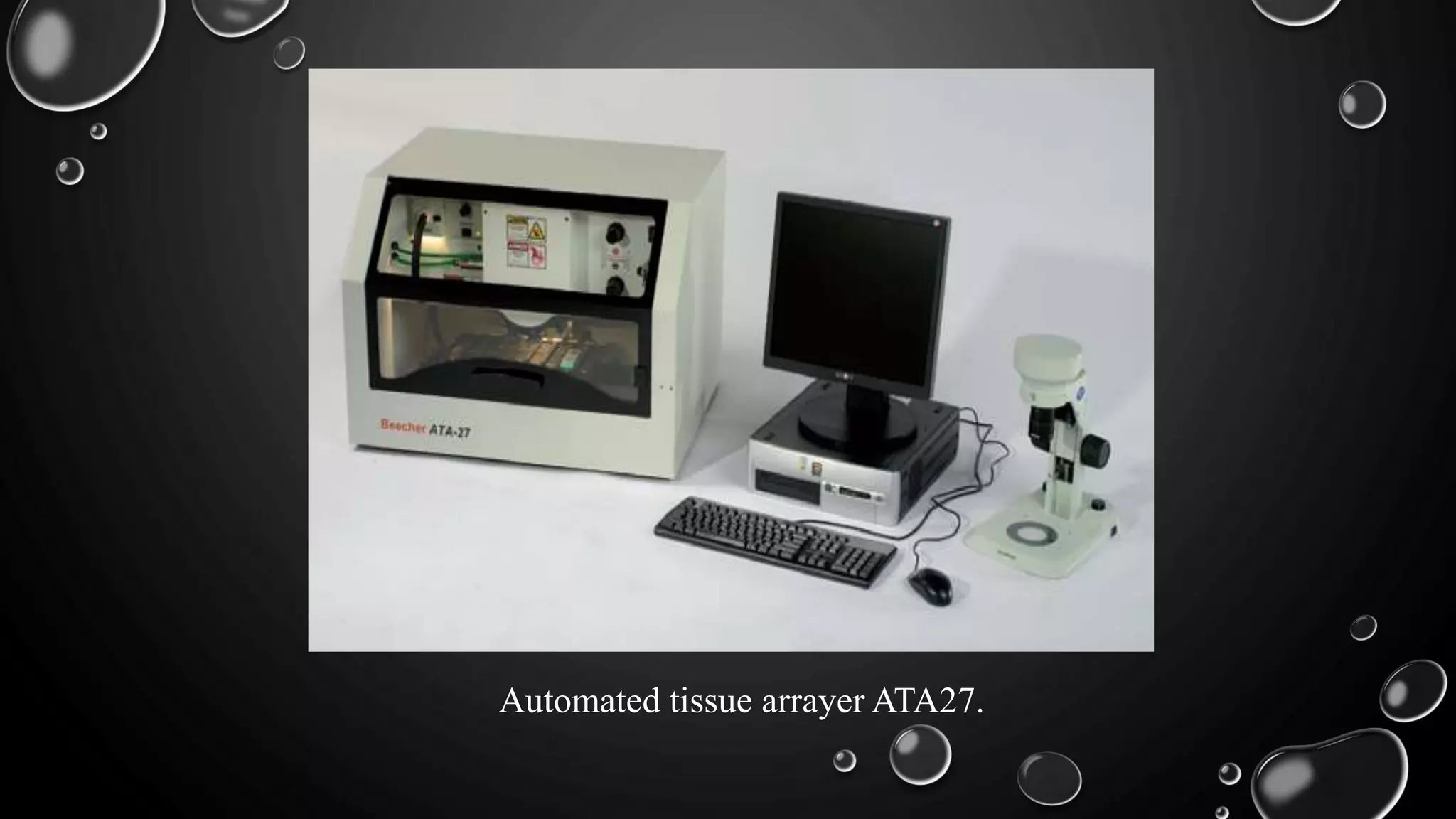
• The automated arrayer is easy to use and includes a specimen tracking software system.
• The instrument marks, edits, and saves punch coordinates using an on-screen display and
software tools.
• Ideal for a laboratory with a high volume of TMAs, as 120–180 cores can be ‘punched’ per
hour
Automated tissue arrayer ATA27.
AUTOMATED EMBEDDING STATION
EMBEDDING - the tissue is surrounded
in a molten medium by using a mould.
Subsequently this medium is solidified to
make a block for cutting thin section of
tissue.
Aims of embedding
1. To give support of the tissue
2. To prevent distortion of the tissue
during cutting
3. To preserve the tissue for archival use
Tissue-tek system is the combination of
1. Dispenser of liquid paraffin in a constant temperature
2. A metal plate to make the tissue block
3. Cold plate
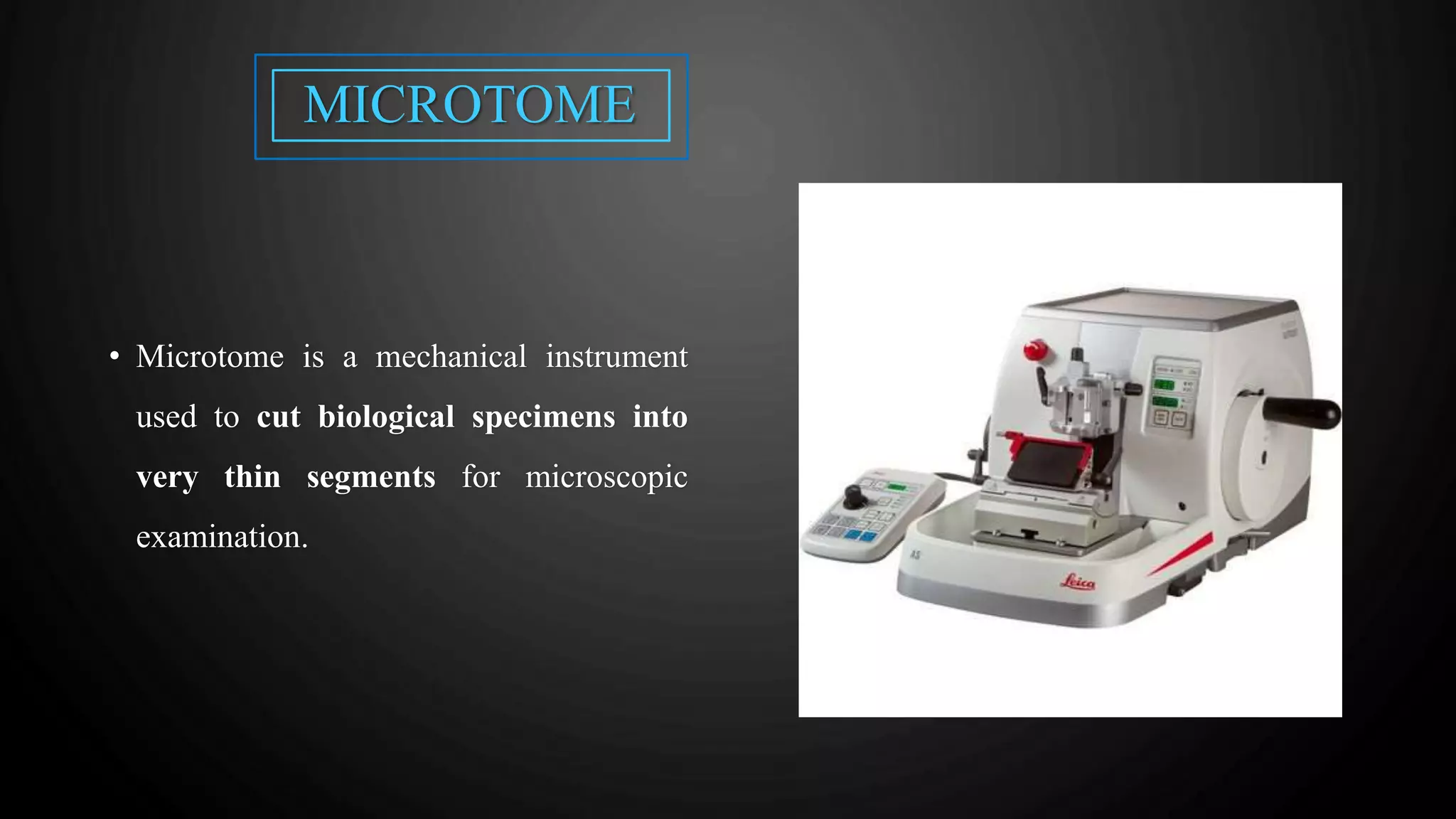
MICROTOME
• Microtome is a mechanical instrument
used to cut biological specimens into
very thin segments for microscopic
examination.
PARTS
Microtomes consist of three main parts:
• Base (microtome body)
• Knife attachment and knife
• Material or tissue holder
Automated
Microtome
Setting
Block
Holder
Blade
Stage
Microtomes can be classified as:
– Manual microtomes
– Semi- automatic microtomes
– Automatic microtomes
Automated Microtomes
Laser Microtome
Computer
Microtome
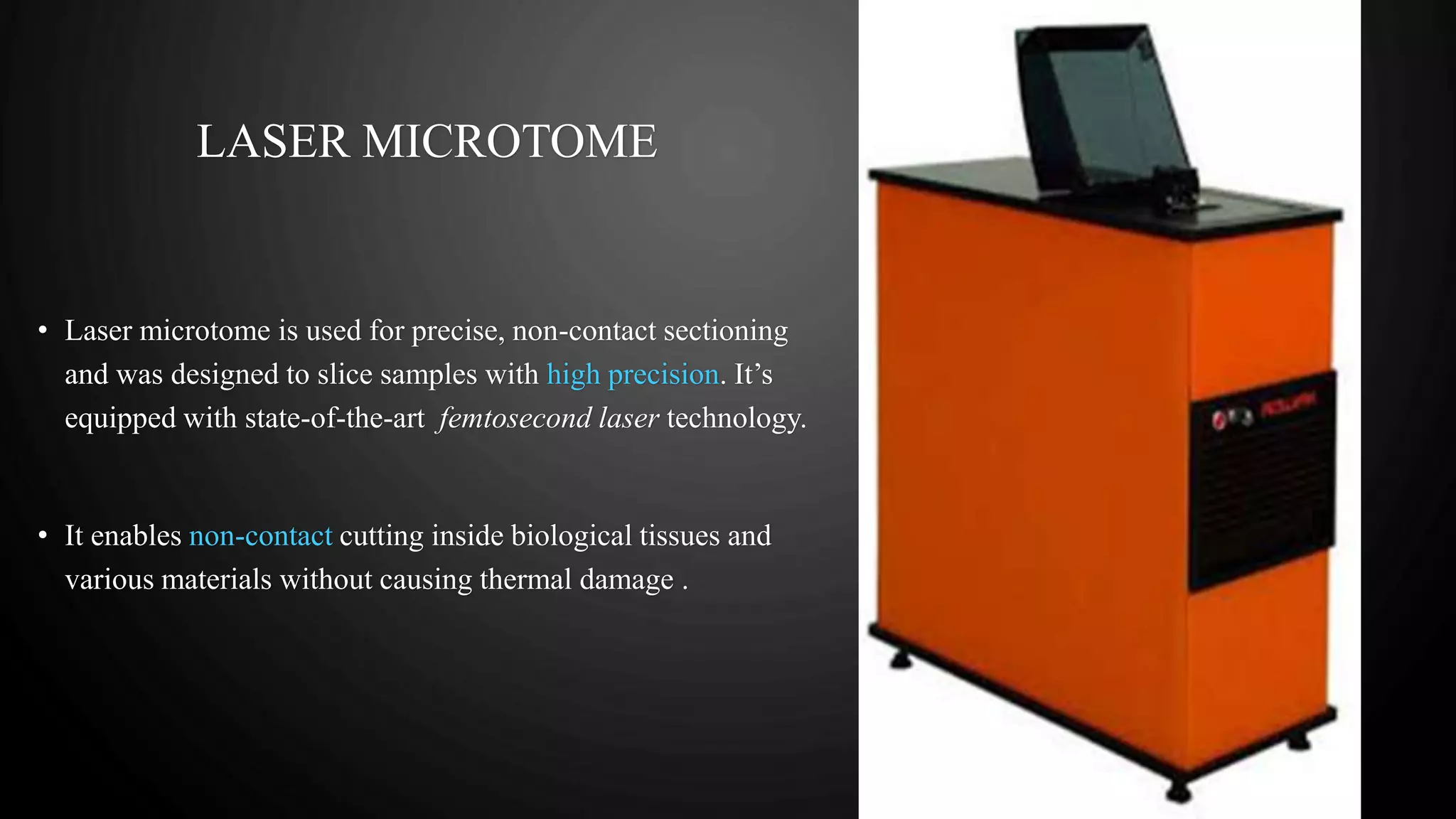
LASER MICROTOME
• Laser microtome is used for precise, non-contact sectioning
and was designed to slice samples with high precision. It’s
equipped with state-of-the-art femtosecond laser technology.
• It enables non-contact cutting inside biological tissues and
various materials without causing thermal damage .
ADVANTAGES:
1. Non- contact processing
2. Sub micrometer precision
3. Cutting of the tissue in its native state
4. No thermal damage
5. Fewer artifacts
6. Less time consumption in tissue preparation
COMPUTERIZED MICROTOME
• Computerized microtome is equipped with the advanced
rapid thermostatic switch, semiconductor freezing, cryo-
scalpel and cryoplate .
• Can carry out the rapid freezing section or routine
paraffin section (dual-purpose).
• Advanced retraction function makes better sectioning.
The retraction value is also adjustable.
• Automatic memorized coarse feed and reload function
can significantly improve cutting efficiency.
CRYOSTAT
• The cryostat is the instrument that has the arrangement to freeze the tissue and also to cut
the frozen tissue for microscopic section.
• First cryostat was introduced in 1954.
• The cryostat is a machine in which a slicer called a microtome is placed in a freezer. The
temperature may be regulated between-10ºc to -40ºc.
Control Panel
Glass door
Lock Hand
wheel
Freezing
Chamber
Waste
Collection
Bottle
PARTS
• Cryocabinet (-5 to -30⁰C) – Most tissues section properly between −15 °C and −25 °C.
• Microtome (Rotary/ Sliding/Rocking) of any type but preferably rustproof, which is
enclosed and operated within a deep freeze cabinet.
• Knife or blade: low- or high-profile disposable blades /profile C steel blade. The angle
of the knife is kept in between 5° and 7°.
• Antiroll plate : just in front of the knife - prevents the rolling of the cut tissue.
• Specimen Holder: Small, round, metal CHUCKS
• Fluorescent light lamp
• Electronic control panel
The specimens are mounted on a
cutting medium on a metal chuck and
frozen to a cutting temperature
Once frozen(-24⁰ C) the specimen is
mounted on the microtome.
Once the specimen is cut to a
satisfactory quality, it is mounted on a
warm dry glass slide, where it melts
and dries.
Principle
When the tissue is frozen, the
interstitial water in the tissue turns
to ice, and in this state the tissue is
firm with the ice acting as the
embedding medium.
INDICATIONS
• Rapid production of sections for intra-operative diagnosis.
• Immunofluorescence study.
• Diagnostic and research enzyme histochemistry for labile enzymes.
• Diagnostic and research non-enzyme histochemistry, e.g. Lipids and some carbohydrates
• Silver demonstration methods, particularly in neuropathology
• Advantages:
- Both tissue and knife are maintained at same low temperature.
-Capable of slicing sections as thin as 1μm.
-Serial sectioning is possible.
-Automatic defrosting and sterilisation.
-Antifogging air circulatory system.
• Disadvantages:
-Constant supervision and maintenance of temperature.
-Special lubricants with a low congealing point have to be used.
-Freeze artefacts.
-If temperature is too low – tissue becomes hard & crumbles – difficult to cut.
- Costly
WATER BATH
• Water bath is used to float the tissue after cutting – to to
remove folds and wrinkles of ribbons.
• The temperature of the water bath is usually controlled
automatically by a thermostat.
• The temperature of water in the water bath should be 10
°c below the melting point of the embedded paraffin wax
and is usually kept in 40–50 °C.
• It is necessary to prevent formation of any air bubbles
within the water bath.
DRYING
• The small amount of water held under the section will
allow further flattening to occur when heat is applied to
dry the section.
• The temperature should be at the melting point of the
paraffin.
• Automated stainers have drying ovens as part of the
instrumentation.
Electrothermal Slide Drying Bench
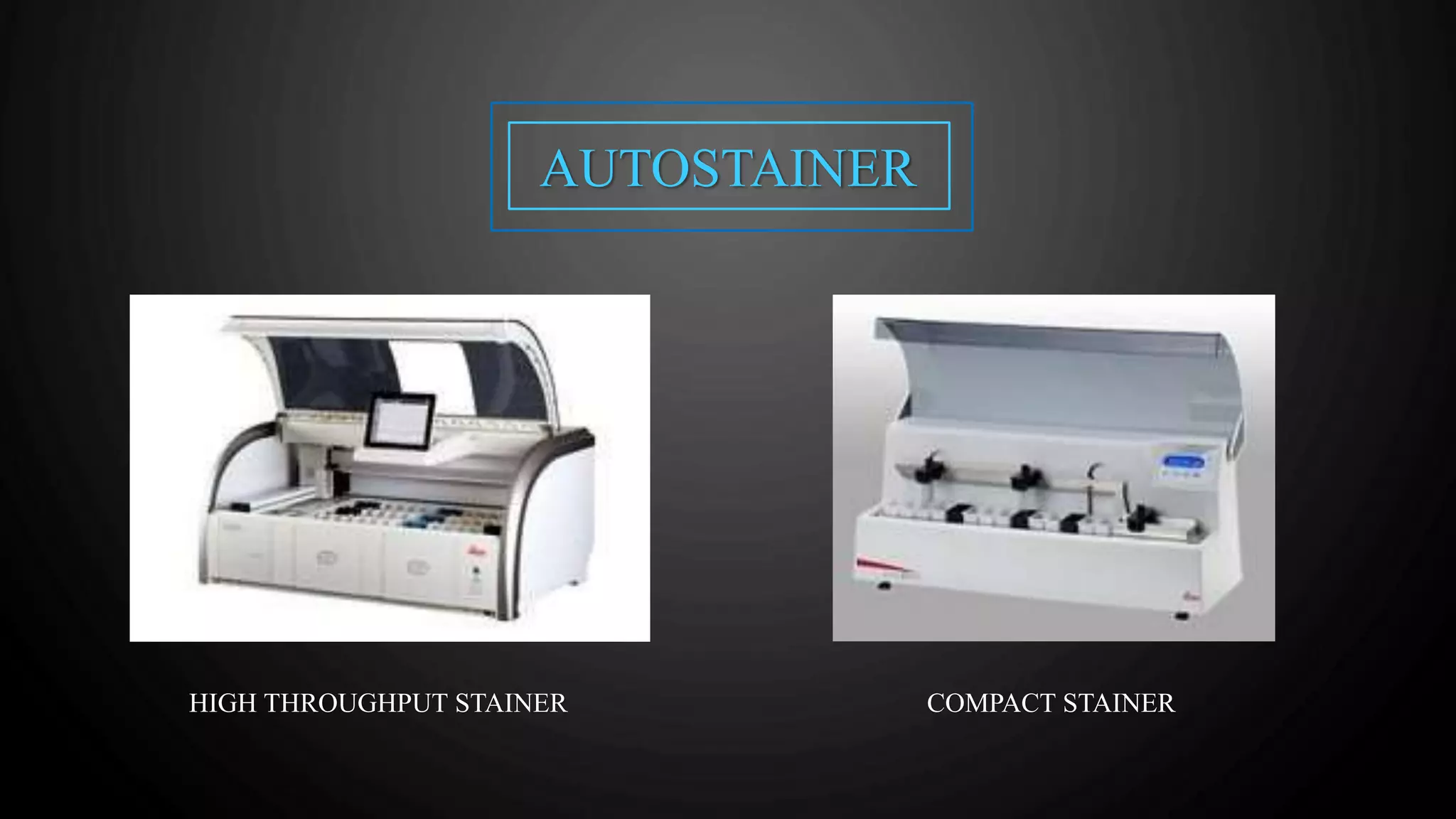
AUTOSTAINER
HIGH THROUGHPUT STAINER COMPACT STAINER
Types
Dips slides into
the stains
Applies stain to
the slide
Linear design
• 1 slide at a time
• Slides are clipped to slide
holders, which are
attached to carrier
mechanism.
Batch design
• Linear / Carousal
• Multiple slides
• Slide racks are moved
through baths of staining
solution
Types
Dips slides into
the stains
Applies stain to
the slide
Capillary Gap
Stainer
• Force or draw the
stain between the
specimen slide and
another surface.
Centrifugal
Stainer
• Spray the stain as
the slide rotate past
the spray nozzle in
a spinning
chamber.
Flat Stainer
• Drops the stain
onto the slide,
while the slide lies
flat within the
stainer.
PAP, AFB, Haematology IHC
COVER SLIPPING
• Suctioning mechanism for picking up a
coverglass from a stack of coverglasses.
• Exert a force onto the coverglass to
insure that it is released from the
selecting device and placed onto the
slide.
• After placement of the coverglass onto
the slide, capillary action pushes air
bubbles out from underneath the
coverglass.
LABELING
• Imprints - resistant to chemical exposure and physical wear.
• Easier to locate.
• Alphanumeric characters, barcodes or logos.
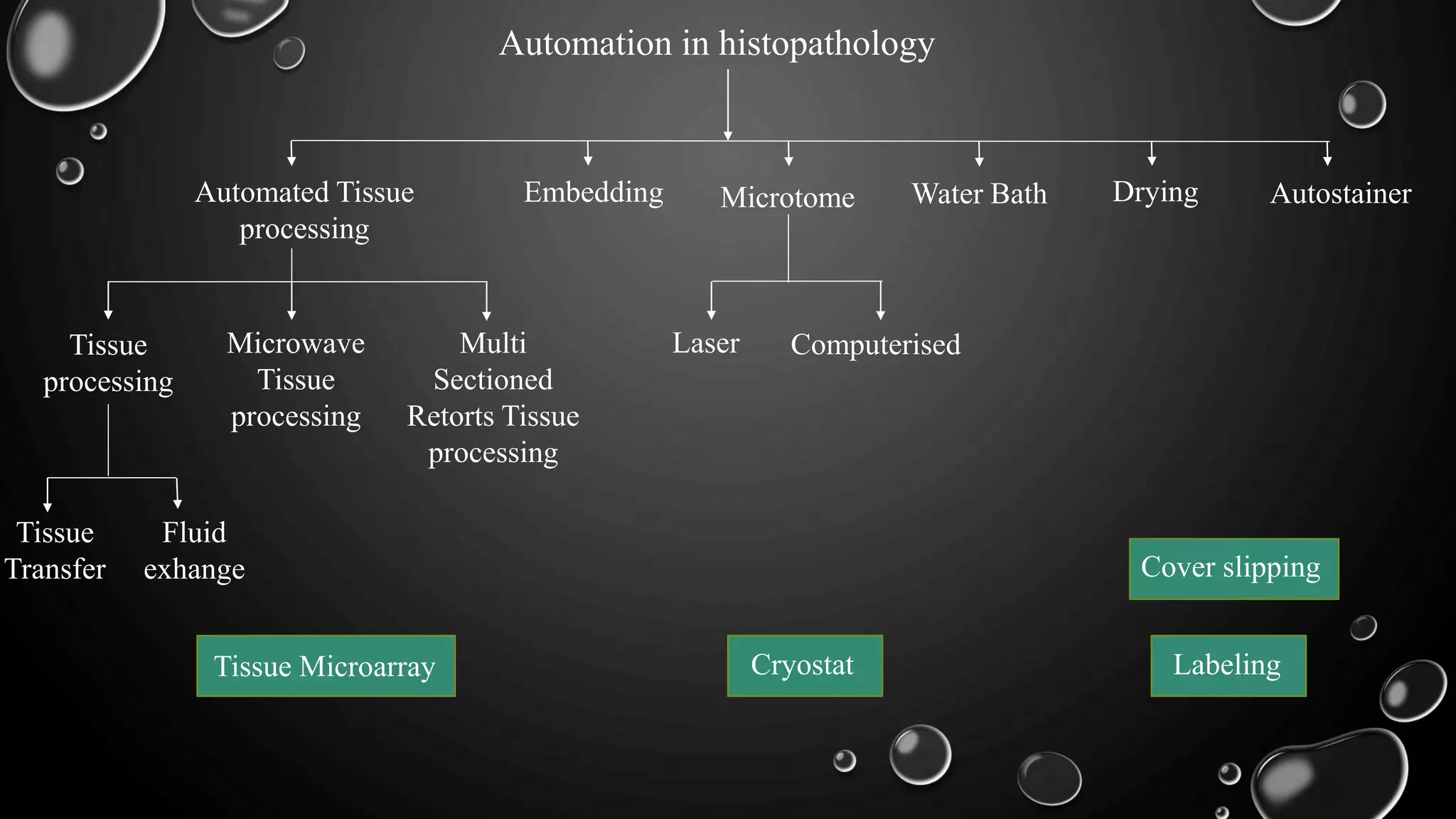
Automation in histopathology
Automated Tissue
processing
Tissue
processing
Microwave
Tissue
processing
Multi
Sectioned
Retorts Tissue
processing
Embedding
Cryostat Labeling
Water BathMicrotome Drying Autostainer
Tissue Microarray
Tissue
Transfer
Computerised
Fluid
exhange
Laser
Cover slipping
Thank you

Automation histopathology

  • 1.
  • 2.
    AUTOMATED TISSUE PROCESSING •The basic principle for tissue processing requires the exchange of fluids using a series of solutions for a predetermined length of time in a controlled environment. To provide sufficient rigidity to the tissue so that it can be cut into thin section for microscopic examination. • Recent advances now include: A. Tissue processors B. Microwave ovens C. Rapid Processors with multi-sectioned retorts
  • 3.
    A. TISSUE PROCESSORS 2types Tissue Transfer type processor (Linear / Carousal) Self-contained fluid exchange systems
  • 4.
    Carousal Type Processor(Tissue Transfer) Transports tissue blocks in baskets Through a series of reagents housed in stationary containers Submerged specimen’s length of time in each reagent container should be electronically controlled Vertical oscillation or the rotatory movement of the tissue basket provided the agitation
  • 5.
    Automated tissue processor Basket (30-100Cassettes) Rotating Head Reagent Containers (9-10) Controls & Indicators Wax containers (2-3) AGITATION by Vertical Oscillation or Rotatory Movement
  • 6.
    • Advantages: -Allow maximumflexibility in the choice of reagents and schedules. -Rapid turnaround time for day/night processing. -In recent models, tissue basket is enclosed within an integrated fume hood – allow escape of fumes during agitation. • Disadvantages: - Tissues dry, while being transferred.
  • 7.
    Self-contained fluid exchangesystems A microprocessor used in this instrument Tissue Cassettes are loaded into a retort chamber where they remain stationary throughout the process Reagents & melted paraffin wax moved sequentially into & out of the retort chamber by using vacuum & pressure Each step could be customized by controlling time, temperature, or pressure/vacuum Agitation is achieved by Tidal action
  • 8.
    Touch Panel Retort for100-300 Cassettes Reagents 10-12 reagent stations with adjustable temperature between 30 & 45⁰C Wax Station 3-4 Paraffin Wax stations with adjustable temperature between 48 & 60⁰C AGITATION by Tidal Action
  • 9.
    • Advantages: -Vacuum &heat can be used at any stage – reduction in processing time & improved filtration of denser tissues. -Retorts are sealed – prevent tissue drying. -Divided retorts that allows for different programs to run simultaneously. - Customized schedules for tissue processing are possible. -There is a fluid spillage containment & elimination of fumes. - Employ alarm systems & diagnostic programs for troubleshooting any instrumentation malfunction. - Allows the user a safe, clean & easy reagent renewal. • Newer instrumentation have: - Provides the opportunity to divide tissue by size. - Have solution management systems, allowing reagents to be monitored for purity & to be used for a greater period of time without adversely harming the tissue.
  • 10.
    B. Microwave ovensor processors : • Microwave ovens specially designed for tissue processing are now common in a recent tissue processing technique. • This technique is 1st used by Boon and Kok in 1985. • It shortens the processing time from hours to minutes. Microwave ovens stimulates diffusion of the solutions into the tissue By increasing the internal heat of the specimen Thus, accelerating the reaction
  • 11.
    • That isin another words, the penetrative properties of microwave & conversion of this incident energy into heat, is made use of this processor so that it shortens the processing time. • In processed tissue, Better quality epithelium More focal condensation of stroma Less shrinkage of tissue • The processing time depends on the thickness & density of the specimen.
  • 12.
    AGITATION is provided byAir- Nitrogen system - Precise temperature controls, - timers, and - fume extraction systems. Built in regenerable Charcoal Filter Connection to fume extraction Software controlled stirring device 14 Cassettes per container Touchscreen Control Terminal
  • 13.
    • Reagents usedfor microwave processing include: - Ethanol, - isopropanol and - proprietary mixtures of alcohol & - paraffin.
  • 14.
    • Graded concentrationof solutions is not required. • Clearing agents are not necessary because the temperature of the final paraffin step facilitates evaporation of the alcohols from the tissue. • Xylene & formalin are not used in this process, which eliminates toxic fumes & carcinogens. • Properly controlled processing provides uncompromised morphology & antigenicity of the specimens.
  • 15.
    • Advantages: - Increasedefficiency through improved turnaround times, - Shorter processing time - Environmental friendly reagents - Greater profitability due to reduction in number & volume of reagents. - Lesser degree of denaturation of nucleic acids. • Disadvantages: -The process is labor intensive because the solutions are manually manipulated, - Temperatures must be maintained between 70 and 85°C, - The size of tissue sample is critical (2 mm). - Costly
  • 16.
    Manual TP AutomatedTP Microwave TP Reliability Less reliable as human error may occur More reliable More reliable Time consumption Time consuming Have customised schedules for TP Shortens the processing time Cost Inexpensive Costly More costly Chemicals like Xylene & formalin Employs noxious chemicals Vacuum & heat can be used Not used so eliminates toxic fumes & carcinogens Graded concentration of solution Monitored Monitored Not required Shrinkage of tissue Evaluated Less evaluated Lesser evaluated Comparison between tissue processers
  • 17.
    C. Rapid Processorswith multi-sectioned retorts : • This processor uses : Microwave technology Vacuum infiltration ‘Molecular-friendly’ proprietary reagents • A robotic arm moves the tissue cassettes through four stations which contain acetone, isopropanol, polyethylene glycol, mineral oil and paraffin.
  • 18.
    • Microwaves &agitation are used to accelerate the diffusion of solvents in tissue. • The microwave technology utilized, operates at a continuous low power instead of pulsing high levels of microwave energy. • The retort chamber is cylindrical. • Microwaves circle around the cavity, taking advantage of the physical principle of the ‘whispering chamber’ effect that eliminates hot &cold spots.
  • 19.
    Rapid Processors withmulti-sectioned retorts
  • 20.
    • Advantages: -Acceptance oftissues into the system in every 15 minutes, - Improve turnaround time. -The reagents used are environmentally safe. - The morphology & quality of the specimens is consistent with that of traditional tissue processing. • Disadvantages: - The cost of the processor, -The grossing of the tissue sample that requires standardization of specimen dissection.
  • 21.
    TISSUE MICROARRAY • Tissuemicroarray (TMA) was developed as a method to evaluate numerous samples of tissue in a short period. • The automated arrayer is easy to use and includes a specimen tracking software system. • The instrument marks, edits, and saves punch coordinates using an on-screen display and software tools. • Ideal for a laboratory with a high volume of TMAs, as 120–180 cores can be ‘punched’ per hour
  • 22.
  • 23.
    AUTOMATED EMBEDDING STATION EMBEDDING- the tissue is surrounded in a molten medium by using a mould. Subsequently this medium is solidified to make a block for cutting thin section of tissue. Aims of embedding 1. To give support of the tissue 2. To prevent distortion of the tissue during cutting 3. To preserve the tissue for archival use
  • 24.
    Tissue-tek system isthe combination of 1. Dispenser of liquid paraffin in a constant temperature 2. A metal plate to make the tissue block 3. Cold plate
  • 26.
    MICROTOME • Microtome isa mechanical instrument used to cut biological specimens into very thin segments for microscopic examination.
  • 27.
    PARTS Microtomes consist ofthree main parts: • Base (microtome body) • Knife attachment and knife • Material or tissue holder Automated Microtome Setting Block Holder Blade Stage
  • 28.
    Microtomes can beclassified as: – Manual microtomes – Semi- automatic microtomes – Automatic microtomes
  • 29.
  • 30.
    LASER MICROTOME • Lasermicrotome is used for precise, non-contact sectioning and was designed to slice samples with high precision. It’s equipped with state-of-the-art femtosecond laser technology. • It enables non-contact cutting inside biological tissues and various materials without causing thermal damage .
  • 31.
    ADVANTAGES: 1. Non- contactprocessing 2. Sub micrometer precision 3. Cutting of the tissue in its native state 4. No thermal damage 5. Fewer artifacts 6. Less time consumption in tissue preparation
  • 32.
    COMPUTERIZED MICROTOME • Computerizedmicrotome is equipped with the advanced rapid thermostatic switch, semiconductor freezing, cryo- scalpel and cryoplate . • Can carry out the rapid freezing section or routine paraffin section (dual-purpose). • Advanced retraction function makes better sectioning. The retraction value is also adjustable. • Automatic memorized coarse feed and reload function can significantly improve cutting efficiency.
  • 33.
    CRYOSTAT • The cryostatis the instrument that has the arrangement to freeze the tissue and also to cut the frozen tissue for microscopic section. • First cryostat was introduced in 1954. • The cryostat is a machine in which a slicer called a microtome is placed in a freezer. The temperature may be regulated between-10ºc to -40ºc.
  • 34.
    Control Panel Glass door LockHand wheel Freezing Chamber Waste Collection Bottle
  • 35.
    PARTS • Cryocabinet (-5to -30⁰C) – Most tissues section properly between −15 °C and −25 °C. • Microtome (Rotary/ Sliding/Rocking) of any type but preferably rustproof, which is enclosed and operated within a deep freeze cabinet. • Knife or blade: low- or high-profile disposable blades /profile C steel blade. The angle of the knife is kept in between 5° and 7°. • Antiroll plate : just in front of the knife - prevents the rolling of the cut tissue. • Specimen Holder: Small, round, metal CHUCKS • Fluorescent light lamp • Electronic control panel
  • 36.
    The specimens aremounted on a cutting medium on a metal chuck and frozen to a cutting temperature Once frozen(-24⁰ C) the specimen is mounted on the microtome. Once the specimen is cut to a satisfactory quality, it is mounted on a warm dry glass slide, where it melts and dries. Principle When the tissue is frozen, the interstitial water in the tissue turns to ice, and in this state the tissue is firm with the ice acting as the embedding medium.
  • 37.
    INDICATIONS • Rapid productionof sections for intra-operative diagnosis. • Immunofluorescence study. • Diagnostic and research enzyme histochemistry for labile enzymes. • Diagnostic and research non-enzyme histochemistry, e.g. Lipids and some carbohydrates • Silver demonstration methods, particularly in neuropathology
  • 38.
    • Advantages: - Bothtissue and knife are maintained at same low temperature. -Capable of slicing sections as thin as 1μm. -Serial sectioning is possible. -Automatic defrosting and sterilisation. -Antifogging air circulatory system. • Disadvantages: -Constant supervision and maintenance of temperature. -Special lubricants with a low congealing point have to be used. -Freeze artefacts. -If temperature is too low – tissue becomes hard & crumbles – difficult to cut. - Costly
  • 39.
    WATER BATH • Waterbath is used to float the tissue after cutting – to to remove folds and wrinkles of ribbons. • The temperature of the water bath is usually controlled automatically by a thermostat. • The temperature of water in the water bath should be 10 °c below the melting point of the embedded paraffin wax and is usually kept in 40–50 °C. • It is necessary to prevent formation of any air bubbles within the water bath.
  • 40.
    DRYING • The smallamount of water held under the section will allow further flattening to occur when heat is applied to dry the section. • The temperature should be at the melting point of the paraffin. • Automated stainers have drying ovens as part of the instrumentation. Electrothermal Slide Drying Bench
  • 41.
  • 42.
    Types Dips slides into thestains Applies stain to the slide Linear design • 1 slide at a time • Slides are clipped to slide holders, which are attached to carrier mechanism. Batch design • Linear / Carousal • Multiple slides • Slide racks are moved through baths of staining solution
  • 43.
    Types Dips slides into thestains Applies stain to the slide Capillary Gap Stainer • Force or draw the stain between the specimen slide and another surface. Centrifugal Stainer • Spray the stain as the slide rotate past the spray nozzle in a spinning chamber. Flat Stainer • Drops the stain onto the slide, while the slide lies flat within the stainer. PAP, AFB, Haematology IHC
  • 44.
    COVER SLIPPING • Suctioningmechanism for picking up a coverglass from a stack of coverglasses. • Exert a force onto the coverglass to insure that it is released from the selecting device and placed onto the slide. • After placement of the coverglass onto the slide, capillary action pushes air bubbles out from underneath the coverglass.
  • 45.
    LABELING • Imprints -resistant to chemical exposure and physical wear. • Easier to locate. • Alphanumeric characters, barcodes or logos.
  • 46.
    Automation in histopathology AutomatedTissue processing Tissue processing Microwave Tissue processing Multi Sectioned Retorts Tissue processing Embedding Cryostat Labeling Water BathMicrotome Drying Autostainer Tissue Microarray Tissue Transfer Computerised Fluid exhange Laser Cover slipping
  • 47.