Presented by;
Rohit kumar
Babasaheb Bhimrao Ambedkar Central University
Lucknow
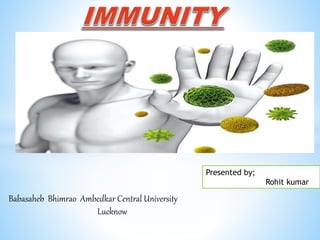
Immunity
1.Introduction
2.Types of immunity
A.) innate immunity
B.) acquired immunity
>: natural immunity
>: artificial immunity
*The term immunity refers to the resistance exhibited by the host
towards infection caused by micro organisms and their
products(toxins).
*This is based on the property of self and non self recognition. That
means immunity is carried out by the process of recognition and
disposal of non self or materials that inter the body.
*Immune response is the reaction of the body against any foreign
antigen.
*But protection against infection deseases is only a part of it.
Human Immunity
Acquired(specific)Innate(nonspecific)
1.
It is comes because of genetic and constitutional make up.
It has no relationship with previous bacterial infection and
immunisation .
It acts as first line of diffence against infections, micro organisms,
their products before they cause disease.
The various non specific diffenc mechanisms are present.
1.) anatomical and physical barriers
2.) physiological and chemical barriers
3.) biological barriers,
4.) general barriers,
2.
The acquiring of immunity from out side source is known as
acquired immunity.
It is result of action of 2 major groups of cells.
a) Lymphocytes
b) Antigen presenting cells.
It is highly adaptive and has 4 important features:-
i. Antigen specificity.
ii. Diversity.
iii. Immunological memory.
iv. Recognition self from non-self.
*It is the production of immunity against particular organisms after
exposure.
1. Natural active immunity;
This immunity develops by natural processes like infections.
Ex. The infection like small pox are cured by the active function of the
immune system.
2.Artificial active immunity;
here instead of natural infections .Infections is created artificially by using various
types of vaccines.
Ex. polio vaccine, cholera vaccine etc.
1. Humoral (antibody-medicated) Immunity
*Involves production of antibodies against foreign antigens.
*Antibodies are produced by a subset of lymphocytes called B cell.
*Defense against bacteria toxins and viruses that circulate freely in body fluids,
before they enter cells.
*Also caused certain reactions against transplanted tissue.
2.Cell medicated Immunity;
Involve specialized set of lymphocytes called T cells that recognize foreign on the
surface of cell organism, or, tissues:-
* helper T cells
*Cytotoxic T cells
*Delayed hypersensitivity T(TD) cells
*T suppressor (Ts) cells
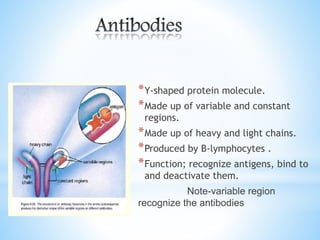
*Y-shaped protein molecule.
*Made up of variable and constant
regions.
*Made up of heavy and light chains.
*Produced by B-lymphocytes .
*Function; recognize antigens, bind to
and deactivate them.
Note-variable region
recognize the antibodies
Deactivation of a bacterium by an antibodies.
I. IgG
Structure: Monomer
Persentage serum antibodies:80%
Location: Blood, lymph, intestine
Half life in serum:23 days
Complements fixation: yes
Know functions: Enhances phagocytosis, neutralizes toxins
and viruses,protects fetus and new born.
II. IgM
Structure : Pentamer
Persentage serum antibodies:5-10%
Location: Blood, lymph, B cell surface(monomer)
Half life in serum:5 days
Complement fixation: yes
Known functions: First antibodies produced during an
infection. Effective against microbes and agglutigens.
III. IgA
• structure: Dimer
• Percentage serum antibodies: 10-15%
• Location: secretion(teare , saliva,intestine,milk)blood and
lymph.
• Complement fixation: NO
• Know Function: In serum function is unknow. On B cell
surface, initiate immune response.
IV.) IgD
A. Structure: Monomer
B. Percentage serum antibodies: 2%
C. Location: B-cell surface, blood, and lymph.
D. Half-life in serum: 3 days
E. Complement fixation: No
F. Kwon Functions: in serum functions is unknow.
On B cell surface, initiate immune response.
IV.) IgE
A. Structure: Monomer
B. Percentage serum antibodies:0.002%
C. Location: bound to mast cells and basophills
throughout body(Blood) .
D. Half-life in serum: 2 days
E. Complement fixation: No
F. Kwon Functions: Allergic reaction. Possibily lysis of
worms.
Immunity gained without an immune response.
1) Artificial passive immunity: antibodies
come from another person who has encountered the
antigen (e.g. tetanus).
2) Natural passive immunity: antibodies
come from mother across placenta or in breast milk.
Vaccination
* A preparation containing antigenic material-a whole live micro
organism/dead one/a harmless version(attenuated organism)/a
harmless from of a toxin(toxoid)/preparation of surface
antigens.
* Given either by injection into vein or muscle, or taken orally.
 Poor response
- Herd immunity.
 Antigenic variation
- antigenic drift: minor changes in the viral
antigen.
-antigenic shift: major changes in antigen
structure.
 Antigenic concealment
Thank you

Immunity ppt

  • 1.
    Presented by; Rohit kumar BabasahebBhimrao Ambedkar Central University Lucknow
  • 2.
    Immunity 1.Introduction 2.Types of immunity A.)innate immunity B.) acquired immunity >: natural immunity >: artificial immunity
  • 3.
    *The term immunityrefers to the resistance exhibited by the host towards infection caused by micro organisms and their products(toxins). *This is based on the property of self and non self recognition. That means immunity is carried out by the process of recognition and disposal of non self or materials that inter the body. *Immune response is the reaction of the body against any foreign antigen. *But protection against infection deseases is only a part of it.
  • 4.
  • 5.
    1. It is comesbecause of genetic and constitutional make up. It has no relationship with previous bacterial infection and immunisation . It acts as first line of diffence against infections, micro organisms, their products before they cause disease. The various non specific diffenc mechanisms are present. 1.) anatomical and physical barriers 2.) physiological and chemical barriers 3.) biological barriers, 4.) general barriers,
  • 6.
    2. The acquiring ofimmunity from out side source is known as acquired immunity. It is result of action of 2 major groups of cells. a) Lymphocytes b) Antigen presenting cells. It is highly adaptive and has 4 important features:- i. Antigen specificity. ii. Diversity. iii. Immunological memory. iv. Recognition self from non-self.
  • 8.
    *It is theproduction of immunity against particular organisms after exposure. 1. Natural active immunity; This immunity develops by natural processes like infections. Ex. The infection like small pox are cured by the active function of the immune system. 2.Artificial active immunity; here instead of natural infections .Infections is created artificially by using various types of vaccines. Ex. polio vaccine, cholera vaccine etc.
  • 9.
    1. Humoral (antibody-medicated)Immunity *Involves production of antibodies against foreign antigens. *Antibodies are produced by a subset of lymphocytes called B cell. *Defense against bacteria toxins and viruses that circulate freely in body fluids, before they enter cells. *Also caused certain reactions against transplanted tissue. 2.Cell medicated Immunity; Involve specialized set of lymphocytes called T cells that recognize foreign on the surface of cell organism, or, tissues:- * helper T cells *Cytotoxic T cells *Delayed hypersensitivity T(TD) cells *T suppressor (Ts) cells
  • 10.
    *Y-shaped protein molecule. *Madeup of variable and constant regions. *Made up of heavy and light chains. *Produced by B-lymphocytes . *Function; recognize antigens, bind to and deactivate them. Note-variable region recognize the antibodies
  • 11.
    Deactivation of abacterium by an antibodies.
  • 12.
    I. IgG Structure: Monomer Persentageserum antibodies:80% Location: Blood, lymph, intestine Half life in serum:23 days Complements fixation: yes Know functions: Enhances phagocytosis, neutralizes toxins and viruses,protects fetus and new born.
  • 13.
    II. IgM Structure :Pentamer Persentage serum antibodies:5-10% Location: Blood, lymph, B cell surface(monomer) Half life in serum:5 days Complement fixation: yes Known functions: First antibodies produced during an infection. Effective against microbes and agglutigens.
  • 14.
    III. IgA • structure:Dimer • Percentage serum antibodies: 10-15% • Location: secretion(teare , saliva,intestine,milk)blood and lymph. • Complement fixation: NO • Know Function: In serum function is unknow. On B cell surface, initiate immune response.
  • 15.
    IV.) IgD A. Structure:Monomer B. Percentage serum antibodies: 2% C. Location: B-cell surface, blood, and lymph. D. Half-life in serum: 3 days E. Complement fixation: No F. Kwon Functions: in serum functions is unknow. On B cell surface, initiate immune response.
  • 16.
    IV.) IgE A. Structure:Monomer B. Percentage serum antibodies:0.002% C. Location: bound to mast cells and basophills throughout body(Blood) . D. Half-life in serum: 2 days E. Complement fixation: No F. Kwon Functions: Allergic reaction. Possibily lysis of worms.
  • 17.
    Immunity gained withoutan immune response. 1) Artificial passive immunity: antibodies come from another person who has encountered the antigen (e.g. tetanus). 2) Natural passive immunity: antibodies come from mother across placenta or in breast milk.
  • 18.
    Vaccination * A preparationcontaining antigenic material-a whole live micro organism/dead one/a harmless version(attenuated organism)/a harmless from of a toxin(toxoid)/preparation of surface antigens. * Given either by injection into vein or muscle, or taken orally.
  • 19.
     Poor response -Herd immunity.  Antigenic variation - antigenic drift: minor changes in the viral antigen. -antigenic shift: major changes in antigen structure.  Antigenic concealment
  • 20.