IMMUNITY
Presented by :- Dr. Rohan Shrivastava
MDS – JR1
CONTENTS
Immunity
• Introduction
• Components of immune system
• Classification
• Innate immunity & mechanism
• Adaptive immunity & mechanism
Antigen
• Antigen
• Classification
Antibody Immunoglobulin
• Structure
• Classification
• Functions of each antibody
Auto-Immune diseases
Conclusion
References
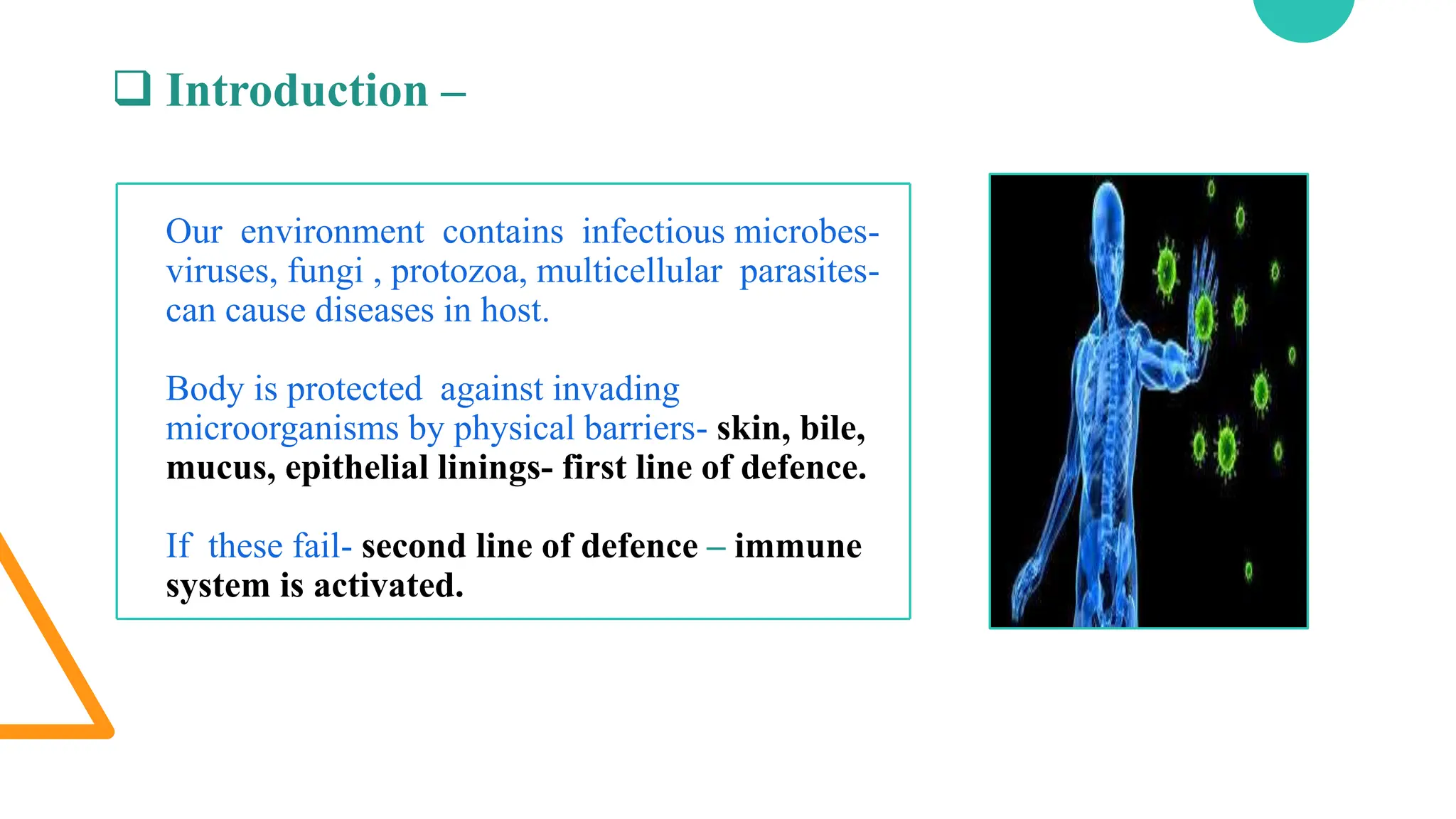
 Introduction –
Our environment contains infectious microbes-
viruses, fungi , protozoa, multicellular parasites-
can cause diseases in host.
Body is protected against invading
microorganisms by physical barriers- skin, bile,
mucus, epithelial linings- first line of defence.
If these fail- second line of defence – immune
system is activated.
 Immunity
• Resistance exhibited by the host against injury caused by
microorganisms and their products.
• This resistance plays a major role in prevention of infectious diseases
• Immune system- Biological structures & processes within an organism
that protect against diseases by identifying & killing pathogens &
tumour cells.
 Classification
 Line of Defense
Innate Immunity
• Also known as NATIVE IMMUNITY.
• Resistance possessed by birth.
• By virtue of his genetic and constitutional make-up.
• Does not depend on prior contact with foreign antigen.
 SPECIFIC – Resistance to a particular pathogen is concerned.
 NON SPECIFIC- Indicate a degree of resistance to infections in general.
• Again classified as
• SPECIES IMMUNITY - Entire human species is resistant to plant
pathogen.
• RACIAL IMMUNITY- Particular races of that species are resistant.
E.g.- American negroes are more susceptible to TB than the white race.
• INDIVIDUAL IMMUNITY- Resistance to infection varies with different
individuals of same race and species.
E.g- Homozygous twins show similar resistance/ susceptibility to Leprosy/
TB , not seen in heterozygous twins.
FACTORS INFLUENCING INNATE IMMUNITY
1. AGE-
Two extremes of life- fetus and old persons – higher susceptibility to various
infections.
Foetus- immature immune system , Old age- gradual waning of immune
response.
2. HORMONES-
Hormonal disorders – Diabetes mellitus , Hypothyroidism enhance
susceptibility to infections.
3. NUTRITION-
Immune response is reduced in malnutrition patients.
 Mechanism of Innate Immunity
1. EPITHELIAL SURFACES – First line of defence (Mechanical barrier)
• Skin – Bactericidal property.
High concentration of salts in drying sweat .
Sebaceous secretions
• Respiratory tract- Inhaled particles arrested in nasal passages.
Mucous secretion act as trapping mechanisms .
Cough reflex- important defence mechanism.
• Intestinal Tract- Saliva – inhibitory effect on micro-organisms.
Digestive juices.
• Conjunctiva-
Lysozymes present in tears- bactericidal action.
• Genitourinary tract- Urine’s flushing action eliminate bacteria from urethra.
Semen- contains some antibacterial substances.
Acidity of adult vagina- inhospitable to many pathogens.
2. ANTIBACTERIAL SUBSTANCE-
• Present naturally in blood and tissues.
• Beta lysin- thermostable substance active against anthrax and related bacilli.
• Lactic acid- muscle tissues and inflammatory zones.
• Lysozymes- present in tears
• Interferons- activated against viral infection.
• Complement system- destruction of pathogenic micro-organisms invading
blood and tissues.
3. CELLULAR FACTORS
• Phagocytic cells are –
Microphages- Polymorphonuclear leucocytes( neutrophills)
Macrophages- Mononuclear phagocytic cells
• Natural killer cells (NK)- A class of lymphocytes- non specific defence
against viral infection and tumours.
4. INFLAMMATION
• Occurs as a result of tissue injury/ irritation.
• Important nonspecific defence mechanism.
• Inflammation Vasodilation Inc. vascular permeability &
cellular infiltration
Microorganisms phagocytosed & destroyed, fibrin barrier laid at infection site.
5. FEVER
• Rise in body’s temperature - natural defence
mechanism.
• Accelerates physiological process.
• Destroys infecting pathogens.
• Stimulates production of interferons.
6. ACUTE PHASE PROTEINS
• Sudden increase in plasma concentration of certain proteins following injury/
infection- acute phase proteins.
• This include-
- C reactive proteins
- Mannose binding proteins
- Alpha- 1 - acid glycoprotein
• Enhance host resistance, prevent tissue injury, repair of inflammatory lesions.
 Acquired Immunity
• Resistance acquired by individual during his life .
• Adaptive immunity .
 ACTIVE IMMUNITY
• Resistance developed by individual – antigenic stimulus .
• Involves active functioning of host’s immune apparatus to produce
antibodies & immunologically active cells.
• Once developed , it is long lasting.
• When actively immunised individual encounters subsequent attack of same
antigen , immune response occurs more quickly.
 A. Natural active immunity
• Results from clinical / inapparent
infection by microbe .
• E.g- Person recovered from attack of
measles develop natural active
immunity.
• Life long immunity following many
viral diseases
• Immunity following bacterial infection
is generally less permanent.
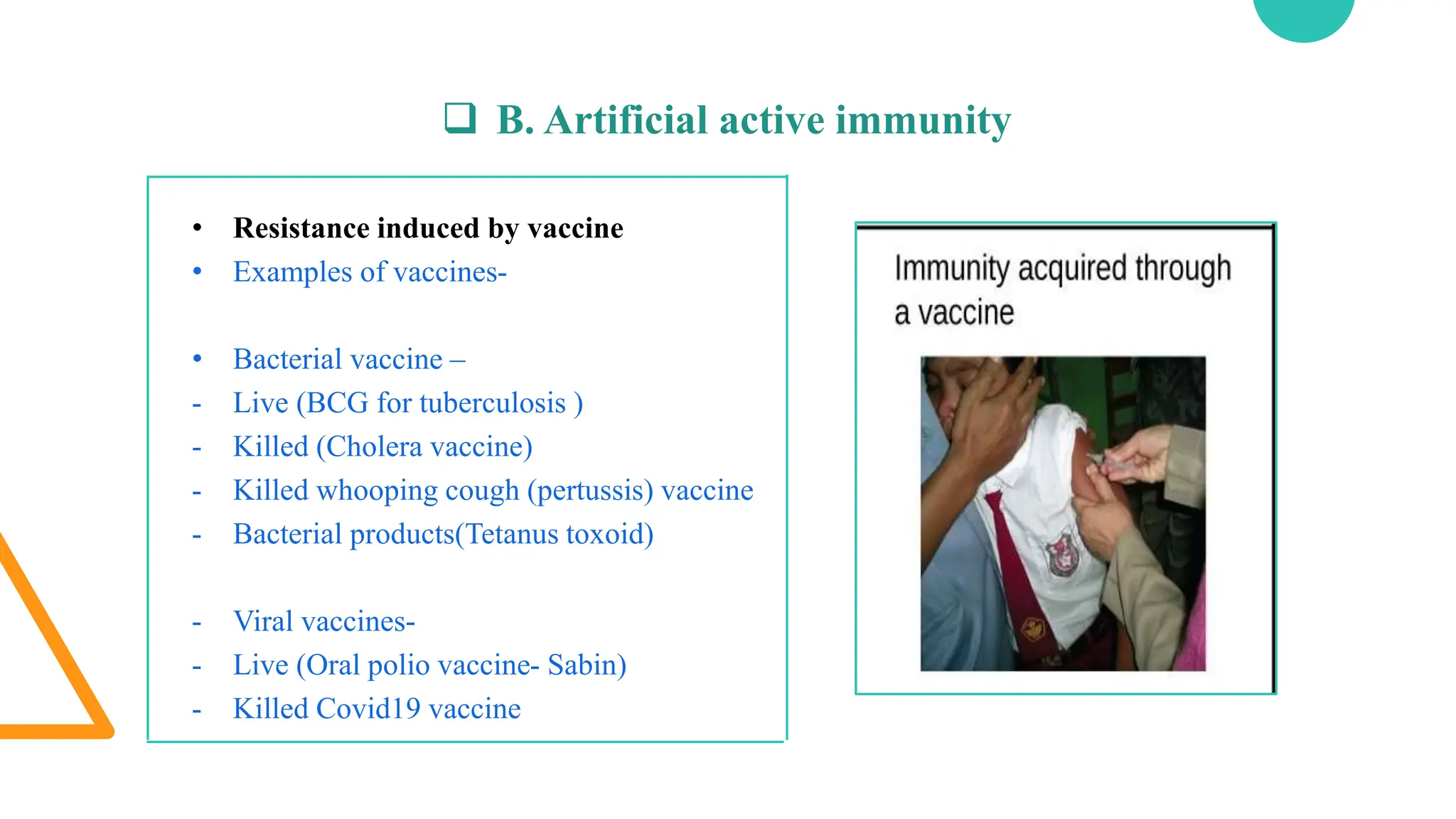
 B. Artificial active immunity
• Resistance induced by vaccine
• Examples of vaccines-
• Bacterial vaccine –
- Live (BCG for tuberculosis )
- Killed (Cholera vaccine)
- Killed whooping cough (pertussis) vaccine
- Bacterial products(Tetanus toxoid)
- Viral vaccines-
- Live (Oral polio vaccine- Sabin)
- Killed Covid19 vaccine
 Mechanism of Active Immunity – Stimulates both humoral
immune response & cell mediated immune response
Humoral/ antibody mediated immunity (HMI/AMI)
• Primary defence against viruses that infect respiratory / intestinal tract.
• pathogenesis of hypersensitivity (Type I, II,III) & autoimmune diseases.
• Synthesis of antibodies by plasma cells.
 Cell- mediated immunity (CMI)
• mediated by T lymphocyte cells.
• Protects against fungi, viruses, intracellular bacteria
• allograft rejection , graft vs host reactions
• mediates pathogenesis of delayed hypersensitivity(type IV)
• immunity against cancer
 PASSIVE IMMUNITY
• Resistance transmitted passively to recipient in a readymade form
• Recipient immune system plays no active role
• No antigenic stimulus, preformed antibodies administered
• Immunity lasts for days to weeks
• Less effective , employed when instant immunity is desired.
 A. Natural passive immunity
• Resistance passively transferred from
mother to baby.
• Human infants- maternal antibodies
transmitted through placenta.
• Human foetus acquires ability to produce
antibodies – 20th week of life.
• Till then, maternal antibodies give passive
protection against diseases.
 B. Artificial passive immunity
• Resistance passively transferred to
recipient by administration of antibodies.
• Agents used-
• HYPERIMMUNE SERA OF
ANIMAL/HUMAN ORIGIN
- Antitetanus serum prepared from
hyperimmune horses.
- Temporary protection
- Disadvantage- hypersensitivity & immune
elimination
 DIFFERENCE-
 IMMUNE SYSTEM
• LYMPHOID ORGANS
A. Central lymphoid organs –
- Thymus
- Bursa of Fabricius in birds.
- Bone marrow in mammals
B. Peripheral lymphoid organs-
- Spleen
- Lymph nodes
- Mucosa associated lymphoid
tissues(MALT)
- Lymphoid tissues in gut, lungs,
liver, bone marrow.
• CELLS-
1. Lymphocytes In
circulating blood-
70% are T Lymphocytes
{T for thymus dependent} ,
20% B Lymphocytes
{B for Bursa/ Bone marrow
10% Null cells}
2. Plasma cells
 Difference between B cells & T cells
 ANTIGEN
• Antigen is a molecule which introduced into a body evokes immune
response.
 CLASSIFICATION OF ANTIGEN
 They may also be classified as-
1. Complete antigen- Substances which induce antibody formation by
themselves & react specifically with these antibodies.
2. Haptens- Substances incapable of inducing antibody formation by
themselves but can react specifically with antibodies.
• Haptens are of 2 types- COMPLEX HAPTENS
SIMPLE HAPTENS
 ANTIBODIES- IMMUNOGLOBULINS
• Substances which are formed in serum & tissue fluids in response to
antigen and react with that antigen specifically and in some observable
manner.
• CHEMICAL NATURE- GLOBULIN – named as
IMMUNOGLOBULIN.
• Immunoglobulin 20 -25% total serum protein.
• Synthesised by plasma cells.
• NOTE: All antibodies are immunoglobulins , but all
immunoglobulins may not be antibodies.
 STRUCTURE OF IMMUNOGLOBULINS
 CLASSES OF IMMUNOGLOBULIN
 FUNCTIONS OF IMMUNOGLOBULINS
 ROLE OF ANTIBODIES IN IMMUNITY
• NEUTRALIZATION- Pathogen can no longer infect host because it is
bound to an Ab
• OPSONIZATION- Ab bound to Ag increases phagocytosis
• Antibodies together with proteins of complement system- cell lysis
 ANTIGEN- ANTIBODY REACTION
• Morphologically,
 PRECIPITATION REACTION
 AGGLUTINATION REACTION
• Functionally,
 NEUTRALIZATION
 COMPLEMENT FIXATION
 RADIOIMMUNOASSAY
 IMMUNOFLUORESENCE
 ENZYME LINKED IMMUNOSORBENT
ASSAY(ELISA)
USES
• IN VIVO- Basis of immunity against infectious diseases.
Lead to tissue injury in some hypersensitivity reaction/
autoimmune diseases.
• IN VITRO- Diagnosis of infections.
Detection of antigen/ antibody.
IMMUNITY BOOSTER
• Healthywaysto strengthenour immune system
• Diet rich in fruits & vegetables
• Regular exercise
• Maintain a healthy weight
• Adequate sleep
• Avoid smoking & drinking
• Measures to avoid infection- washing our hands
frequently
• Minimizing stress
 FOOD THAT ENHANCE IMMUNITY
• CITRUS FRUITS
• RED BELL PEPPER
• BROCCOLI
• SPINACH
• GINGER
• YOGURT
• TURMERIC
• ALMONDS
• SUNFLOWER SEEDS
• GREEN TEA
• PAPAYA
• HONEY
 PROBIOTICS
• Include Good Bacteria
• Live micro organisms that can be consumed
through fermented foods & supplements.
• Helps to boost our immunity
• Inhibit growth of harmful gut bacteria
• Promote production of natural antibodies
• Boost immune cells – T lymphocytes, IgA
producing cells, NK cells
• Lactobacillus acidophillus- common
probiotic strain – boost immunity
CLINICAL CONSIDERATIONS
 IMMUNODEFICIENCY SYNDROMES
• A state in which immune system ability to fight infectious disease is
compromised / entirely absent.
• 2 Types
• Primary- Congenital- resulting from genetic defects in some components
of immune system.
• Secondary- Acquired- As a result of other disease / condition – HIV
infection, malnutrition, immunosuppression.
Primary Immunodeficiency syndromes & classification
A) HUMORAL IMMUNODEFICIENCIES (B Cell defect)
X linked agammaglobulinemia
Transient Hypogammaglobulinemia
of infancy
• Failure of pre - B cells to
differentiate into mature B cells.
• Pt suffers from recurrent
infections.
• Abnormal delay in initiation of
IgG synthesis in some infants.
• Ig concentration in majority
patients normalise by 2-4 yrs of
age.
Selective Immunoglobulin
deficiencies
Selective IgA deficiency
• selective deficiency of one / more
immunoglobulin classes
• other immunoglobulin classes
remain normal / elevated.
• Absence/ near absence of
serum & secretory IgA.
• Increased susceptibility to
respiratory & GIT infections.
B) CELLULAR IMMUNODEFICIENCIES (T CELL DEFECT)
• Thymic Hypoplasia
(DiGeorge’s Syndrome)
• Development defect –
affects 3rd & 4th pharyngeal
pouches
• aplasia / hyperplasia of
thymus & parathyroid
glands.
• T cells absent/ deficient.
C) COMBINED IMMUNODEFICIENCIES (BOTH T & B CELL
DEFECTS)
Ataxia Telangiectasia
• Majority pt lack IgA & IgE, some
posses antibody to IgA
• . Cell mediated immunity also
defective
• results in delayed hypersensitivity
& graft rejection.
• Wiskott- Aldrich syndrome
• X linked recessive disease
• Thrombocytopenia
• eczema, bleeding
• recurrent infections
• Cellular immunodeficiency with
abnormal Ig synthesis
• Depressed cell mediated
immunity
• . Pt susceptible to recurrent
diseases.
• Haemolytic anaemia common.
Secondary Immunodeficiency
• Depression of Humoral
Immune responses
• Depression of Cell- Mediated
Immunity
• Results when B cells are depleted
– Lymphoid malignancy –
Chronic lymphatic leukaemia
• Excessive loss of serum proteins –
Exfoliative skin diseases
• Multiple myeloma – Excessive
production of abnormal Ig.
• Occurs in AIDS , Hodgkin’s
lymphoma , Lepromatous leprosy
 AUTOIMMUNE DISEASE
Autoimmune disorders
affecting orofacial region
predominantly-
Systemic Autoimmune
diseases with oral
manifestations
• Sjogrens syndrome
• Benign lymphoepithelial
lesion(mikulicz’s disease)
• Aphthous stomatitis
• Periodontal disease
• Pemphigus
• Bullous pemphigoid
• Epidermolysis bullosa
• SLE
• Myasthenia gravis
 SJOGRENS SYNDROME
• Autoimmune disorder
• Diminished lacrimal & salivary gland
secretion (sicca complex)
• Results in Keratoconjuctivitis sicca &
Xerostomia
• Primary- Xerostomia & Xerophthalmia
• Secondary- Triad – Xerophthalmia,
Xerostomia & Connective tissue
disorders(Rheumatoid arthritis, SLE)
 BENIGN LYMPHOEPITHELIAL LESION
(Mikulicz’s Disease)
• Systemic/bilateral chronic,
enlargement of lacrimal, parotid,
submandibular salivary gland ,
attributed to chronic infection
• Related to Sjogrens syndrome
• Mild pain, local discomfort &
xerostomia.
• Associated with fever, respiratory
disorders, oral infections
 APHTHOUS STOMATITIS(Aphthous ulcers,
canker sores, recurrent aphthous stomatitis)
• oral ulceration
• Hereditary, trauma, dietary deficiency,
psychological , allergic, infections, drugs,
Immunological
• Elevated levels- IgA & IgG in patient sera
• Females(10-30 yrs)
• Burning sensation
• Initially localised area – erythema, small white
papule forms, Ulcerates & enlarges.
• Yellowish grey Pseudo membrane
 PERIODONTITIS
• Inflammatory disease –
destruction of both soft & hard
tissues in periodontal region .
• Over activation of host
immune response activates
osteoclastic activity & alveolar
bone loss.
 PEMPHIGUS VULGARIS
• Rapid appearance of
vesicles/ bullae
• NIKOLSKY
SIGN- loss of
epithelium by
rubbing apparently
unaffected skin.
• ASBOE HANSEN
SIGN- bulla spread
phenomenon
 BULLOUS PEMPHIGOID
• Rashes – remains for several week-
vesicles & bullae
• Rarely painful
• Buccal mucosa, gingiva commonly
involved
• Edema & gingival inflammation
 SYSTEMIC LUPUS ERYTHEMATOSIS
• Autoantibodies , immune complex
formation & immune dysregulation
• Damage to kidney, skin, blood cells & CNS
• Oral lesions- Multiple white plaques with
dark reddish purple margins
• Hyperaemia & oedema
• Bleeding & superficial ulceration
• Xerostomia, Glossitis, dental caries,
periodontitis
 MYASTHENIA GRAVIS
• Life threatening condition
• Drooping of one/more eyelids
• Double vision
• Difficulty in speech/ swallowing
• Limited facial expression
• Weakness in muscles
 CONCLUSION
• The immune system is like an army- With the task of protecting the host
against infection by potential pathogens
• There is always a synergy between adaptive immune system & its innate
counterpart
• Defects in either system can lead to autoimmune diseases,
immunodeficiencies & hypersensitivity reactions.
• Thus a thorough knowledge of immune reactions is of prime concern in our
day to day clinical treatment procedures.
 REFERENCES
• Textbook of microbiology for dental students – C P Baveja
• Essential Pathology for Dental students- Harsh mohan
• Oral health & disease- Nisengard & Newman
• Shafer’s Textbook of oral pathology
• General medicine for dental students- Harmanjit singh hira
IMMUNITY presentation for education.pptx

IMMUNITY presentation for education.pptx

  • 1.
    IMMUNITY Presented by :-Dr. Rohan Shrivastava MDS – JR1
  • 2.
    CONTENTS Immunity • Introduction • Componentsof immune system • Classification • Innate immunity & mechanism • Adaptive immunity & mechanism Antigen • Antigen • Classification Antibody Immunoglobulin • Structure • Classification • Functions of each antibody Auto-Immune diseases Conclusion References
  • 3.
     Introduction – Ourenvironment contains infectious microbes- viruses, fungi , protozoa, multicellular parasites- can cause diseases in host. Body is protected against invading microorganisms by physical barriers- skin, bile, mucus, epithelial linings- first line of defence. If these fail- second line of defence – immune system is activated.
  • 4.
     Immunity • Resistanceexhibited by the host against injury caused by microorganisms and their products. • This resistance plays a major role in prevention of infectious diseases • Immune system- Biological structures & processes within an organism that protect against diseases by identifying & killing pathogens & tumour cells.
  • 5.
  • 6.
     Line ofDefense
  • 7.
    Innate Immunity • Alsoknown as NATIVE IMMUNITY. • Resistance possessed by birth. • By virtue of his genetic and constitutional make-up. • Does not depend on prior contact with foreign antigen.  SPECIFIC – Resistance to a particular pathogen is concerned.  NON SPECIFIC- Indicate a degree of resistance to infections in general.
  • 8.
    • Again classifiedas • SPECIES IMMUNITY - Entire human species is resistant to plant pathogen. • RACIAL IMMUNITY- Particular races of that species are resistant. E.g.- American negroes are more susceptible to TB than the white race. • INDIVIDUAL IMMUNITY- Resistance to infection varies with different individuals of same race and species. E.g- Homozygous twins show similar resistance/ susceptibility to Leprosy/ TB , not seen in heterozygous twins.
  • 9.
    FACTORS INFLUENCING INNATEIMMUNITY 1. AGE- Two extremes of life- fetus and old persons – higher susceptibility to various infections. Foetus- immature immune system , Old age- gradual waning of immune response. 2. HORMONES- Hormonal disorders – Diabetes mellitus , Hypothyroidism enhance susceptibility to infections. 3. NUTRITION- Immune response is reduced in malnutrition patients.
  • 10.
     Mechanism ofInnate Immunity 1. EPITHELIAL SURFACES – First line of defence (Mechanical barrier) • Skin – Bactericidal property. High concentration of salts in drying sweat . Sebaceous secretions • Respiratory tract- Inhaled particles arrested in nasal passages. Mucous secretion act as trapping mechanisms . Cough reflex- important defence mechanism.
  • 11.
    • Intestinal Tract-Saliva – inhibitory effect on micro-organisms. Digestive juices. • Conjunctiva- Lysozymes present in tears- bactericidal action. • Genitourinary tract- Urine’s flushing action eliminate bacteria from urethra. Semen- contains some antibacterial substances. Acidity of adult vagina- inhospitable to many pathogens.
  • 12.
    2. ANTIBACTERIAL SUBSTANCE- •Present naturally in blood and tissues. • Beta lysin- thermostable substance active against anthrax and related bacilli. • Lactic acid- muscle tissues and inflammatory zones. • Lysozymes- present in tears • Interferons- activated against viral infection. • Complement system- destruction of pathogenic micro-organisms invading blood and tissues.
  • 13.
    3. CELLULAR FACTORS •Phagocytic cells are – Microphages- Polymorphonuclear leucocytes( neutrophills) Macrophages- Mononuclear phagocytic cells • Natural killer cells (NK)- A class of lymphocytes- non specific defence against viral infection and tumours.
  • 14.
    4. INFLAMMATION • Occursas a result of tissue injury/ irritation. • Important nonspecific defence mechanism. • Inflammation Vasodilation Inc. vascular permeability & cellular infiltration Microorganisms phagocytosed & destroyed, fibrin barrier laid at infection site.
  • 15.
    5. FEVER • Risein body’s temperature - natural defence mechanism. • Accelerates physiological process. • Destroys infecting pathogens. • Stimulates production of interferons.
  • 16.
    6. ACUTE PHASEPROTEINS • Sudden increase in plasma concentration of certain proteins following injury/ infection- acute phase proteins. • This include- - C reactive proteins - Mannose binding proteins - Alpha- 1 - acid glycoprotein • Enhance host resistance, prevent tissue injury, repair of inflammatory lesions.
  • 17.
     Acquired Immunity •Resistance acquired by individual during his life . • Adaptive immunity .
  • 18.
     ACTIVE IMMUNITY •Resistance developed by individual – antigenic stimulus . • Involves active functioning of host’s immune apparatus to produce antibodies & immunologically active cells. • Once developed , it is long lasting. • When actively immunised individual encounters subsequent attack of same antigen , immune response occurs more quickly.
  • 19.
     A. Naturalactive immunity • Results from clinical / inapparent infection by microbe . • E.g- Person recovered from attack of measles develop natural active immunity. • Life long immunity following many viral diseases • Immunity following bacterial infection is generally less permanent.
  • 20.
     B. Artificialactive immunity • Resistance induced by vaccine • Examples of vaccines- • Bacterial vaccine – - Live (BCG for tuberculosis ) - Killed (Cholera vaccine) - Killed whooping cough (pertussis) vaccine - Bacterial products(Tetanus toxoid) - Viral vaccines- - Live (Oral polio vaccine- Sabin) - Killed Covid19 vaccine
  • 21.
     Mechanism ofActive Immunity – Stimulates both humoral immune response & cell mediated immune response Humoral/ antibody mediated immunity (HMI/AMI) • Primary defence against viruses that infect respiratory / intestinal tract. • pathogenesis of hypersensitivity (Type I, II,III) & autoimmune diseases. • Synthesis of antibodies by plasma cells.
  • 22.
     Cell- mediatedimmunity (CMI) • mediated by T lymphocyte cells. • Protects against fungi, viruses, intracellular bacteria • allograft rejection , graft vs host reactions • mediates pathogenesis of delayed hypersensitivity(type IV) • immunity against cancer
  • 23.
     PASSIVE IMMUNITY •Resistance transmitted passively to recipient in a readymade form • Recipient immune system plays no active role • No antigenic stimulus, preformed antibodies administered • Immunity lasts for days to weeks • Less effective , employed when instant immunity is desired.
  • 24.
     A. Naturalpassive immunity • Resistance passively transferred from mother to baby. • Human infants- maternal antibodies transmitted through placenta. • Human foetus acquires ability to produce antibodies – 20th week of life. • Till then, maternal antibodies give passive protection against diseases.
  • 25.
     B. Artificialpassive immunity • Resistance passively transferred to recipient by administration of antibodies. • Agents used- • HYPERIMMUNE SERA OF ANIMAL/HUMAN ORIGIN - Antitetanus serum prepared from hyperimmune horses. - Temporary protection - Disadvantage- hypersensitivity & immune elimination
  • 26.
  • 27.
     IMMUNE SYSTEM •LYMPHOID ORGANS A. Central lymphoid organs – - Thymus - Bursa of Fabricius in birds. - Bone marrow in mammals B. Peripheral lymphoid organs- - Spleen - Lymph nodes - Mucosa associated lymphoid tissues(MALT) - Lymphoid tissues in gut, lungs, liver, bone marrow.
  • 28.
    • CELLS- 1. LymphocytesIn circulating blood- 70% are T Lymphocytes {T for thymus dependent} , 20% B Lymphocytes {B for Bursa/ Bone marrow 10% Null cells} 2. Plasma cells
  • 29.
     Difference betweenB cells & T cells
  • 30.
     ANTIGEN • Antigenis a molecule which introduced into a body evokes immune response.
  • 31.
  • 32.
     They mayalso be classified as- 1. Complete antigen- Substances which induce antibody formation by themselves & react specifically with these antibodies. 2. Haptens- Substances incapable of inducing antibody formation by themselves but can react specifically with antibodies. • Haptens are of 2 types- COMPLEX HAPTENS SIMPLE HAPTENS
  • 33.
     ANTIBODIES- IMMUNOGLOBULINS •Substances which are formed in serum & tissue fluids in response to antigen and react with that antigen specifically and in some observable manner. • CHEMICAL NATURE- GLOBULIN – named as IMMUNOGLOBULIN. • Immunoglobulin 20 -25% total serum protein. • Synthesised by plasma cells. • NOTE: All antibodies are immunoglobulins , but all immunoglobulins may not be antibodies.
  • 34.
     STRUCTURE OFIMMUNOGLOBULINS
  • 35.
     CLASSES OFIMMUNOGLOBULIN
  • 36.
     FUNCTIONS OFIMMUNOGLOBULINS
  • 38.
     ROLE OFANTIBODIES IN IMMUNITY • NEUTRALIZATION- Pathogen can no longer infect host because it is bound to an Ab • OPSONIZATION- Ab bound to Ag increases phagocytosis • Antibodies together with proteins of complement system- cell lysis
  • 39.
     ANTIGEN- ANTIBODYREACTION • Morphologically,  PRECIPITATION REACTION  AGGLUTINATION REACTION • Functionally,  NEUTRALIZATION  COMPLEMENT FIXATION  RADIOIMMUNOASSAY  IMMUNOFLUORESENCE  ENZYME LINKED IMMUNOSORBENT ASSAY(ELISA)
  • 40.
    USES • IN VIVO-Basis of immunity against infectious diseases. Lead to tissue injury in some hypersensitivity reaction/ autoimmune diseases. • IN VITRO- Diagnosis of infections. Detection of antigen/ antibody.
  • 41.
    IMMUNITY BOOSTER • Healthywaystostrengthenour immune system • Diet rich in fruits & vegetables • Regular exercise • Maintain a healthy weight • Adequate sleep • Avoid smoking & drinking • Measures to avoid infection- washing our hands frequently • Minimizing stress
  • 42.
     FOOD THATENHANCE IMMUNITY • CITRUS FRUITS • RED BELL PEPPER • BROCCOLI • SPINACH • GINGER • YOGURT • TURMERIC
  • 43.
    • ALMONDS • SUNFLOWERSEEDS • GREEN TEA • PAPAYA • HONEY
  • 44.
     PROBIOTICS • IncludeGood Bacteria • Live micro organisms that can be consumed through fermented foods & supplements. • Helps to boost our immunity • Inhibit growth of harmful gut bacteria • Promote production of natural antibodies • Boost immune cells – T lymphocytes, IgA producing cells, NK cells • Lactobacillus acidophillus- common probiotic strain – boost immunity
  • 45.
  • 46.
     IMMUNODEFICIENCY SYNDROMES •A state in which immune system ability to fight infectious disease is compromised / entirely absent. • 2 Types • Primary- Congenital- resulting from genetic defects in some components of immune system. • Secondary- Acquired- As a result of other disease / condition – HIV infection, malnutrition, immunosuppression.
  • 47.
    Primary Immunodeficiency syndromes& classification A) HUMORAL IMMUNODEFICIENCIES (B Cell defect) X linked agammaglobulinemia Transient Hypogammaglobulinemia of infancy • Failure of pre - B cells to differentiate into mature B cells. • Pt suffers from recurrent infections. • Abnormal delay in initiation of IgG synthesis in some infants. • Ig concentration in majority patients normalise by 2-4 yrs of age.
  • 48.
    Selective Immunoglobulin deficiencies Selective IgAdeficiency • selective deficiency of one / more immunoglobulin classes • other immunoglobulin classes remain normal / elevated. • Absence/ near absence of serum & secretory IgA. • Increased susceptibility to respiratory & GIT infections.
  • 49.
    B) CELLULAR IMMUNODEFICIENCIES(T CELL DEFECT) • Thymic Hypoplasia (DiGeorge’s Syndrome) • Development defect – affects 3rd & 4th pharyngeal pouches • aplasia / hyperplasia of thymus & parathyroid glands. • T cells absent/ deficient.
  • 50.
    C) COMBINED IMMUNODEFICIENCIES(BOTH T & B CELL DEFECTS) Ataxia Telangiectasia • Majority pt lack IgA & IgE, some posses antibody to IgA • . Cell mediated immunity also defective • results in delayed hypersensitivity & graft rejection.
  • 51.
    • Wiskott- Aldrichsyndrome • X linked recessive disease • Thrombocytopenia • eczema, bleeding • recurrent infections • Cellular immunodeficiency with abnormal Ig synthesis • Depressed cell mediated immunity • . Pt susceptible to recurrent diseases. • Haemolytic anaemia common.
  • 52.
    Secondary Immunodeficiency • Depressionof Humoral Immune responses • Depression of Cell- Mediated Immunity • Results when B cells are depleted – Lymphoid malignancy – Chronic lymphatic leukaemia • Excessive loss of serum proteins – Exfoliative skin diseases • Multiple myeloma – Excessive production of abnormal Ig. • Occurs in AIDS , Hodgkin’s lymphoma , Lepromatous leprosy
  • 53.
     AUTOIMMUNE DISEASE Autoimmunedisorders affecting orofacial region predominantly- Systemic Autoimmune diseases with oral manifestations • Sjogrens syndrome • Benign lymphoepithelial lesion(mikulicz’s disease) • Aphthous stomatitis • Periodontal disease • Pemphigus • Bullous pemphigoid • Epidermolysis bullosa • SLE • Myasthenia gravis
  • 54.
     SJOGRENS SYNDROME •Autoimmune disorder • Diminished lacrimal & salivary gland secretion (sicca complex) • Results in Keratoconjuctivitis sicca & Xerostomia • Primary- Xerostomia & Xerophthalmia • Secondary- Triad – Xerophthalmia, Xerostomia & Connective tissue disorders(Rheumatoid arthritis, SLE)
  • 55.
     BENIGN LYMPHOEPITHELIALLESION (Mikulicz’s Disease) • Systemic/bilateral chronic, enlargement of lacrimal, parotid, submandibular salivary gland , attributed to chronic infection • Related to Sjogrens syndrome • Mild pain, local discomfort & xerostomia. • Associated with fever, respiratory disorders, oral infections
  • 56.
     APHTHOUS STOMATITIS(Aphthousulcers, canker sores, recurrent aphthous stomatitis) • oral ulceration • Hereditary, trauma, dietary deficiency, psychological , allergic, infections, drugs, Immunological • Elevated levels- IgA & IgG in patient sera • Females(10-30 yrs) • Burning sensation • Initially localised area – erythema, small white papule forms, Ulcerates & enlarges. • Yellowish grey Pseudo membrane
  • 57.
     PERIODONTITIS • Inflammatorydisease – destruction of both soft & hard tissues in periodontal region . • Over activation of host immune response activates osteoclastic activity & alveolar bone loss.
  • 58.
     PEMPHIGUS VULGARIS •Rapid appearance of vesicles/ bullae • NIKOLSKY SIGN- loss of epithelium by rubbing apparently unaffected skin. • ASBOE HANSEN SIGN- bulla spread phenomenon
  • 59.
     BULLOUS PEMPHIGOID •Rashes – remains for several week- vesicles & bullae • Rarely painful • Buccal mucosa, gingiva commonly involved • Edema & gingival inflammation
  • 60.
     SYSTEMIC LUPUSERYTHEMATOSIS • Autoantibodies , immune complex formation & immune dysregulation • Damage to kidney, skin, blood cells & CNS • Oral lesions- Multiple white plaques with dark reddish purple margins • Hyperaemia & oedema • Bleeding & superficial ulceration • Xerostomia, Glossitis, dental caries, periodontitis
  • 61.
     MYASTHENIA GRAVIS •Life threatening condition • Drooping of one/more eyelids • Double vision • Difficulty in speech/ swallowing • Limited facial expression • Weakness in muscles
  • 62.
     CONCLUSION • Theimmune system is like an army- With the task of protecting the host against infection by potential pathogens • There is always a synergy between adaptive immune system & its innate counterpart • Defects in either system can lead to autoimmune diseases, immunodeficiencies & hypersensitivity reactions. • Thus a thorough knowledge of immune reactions is of prime concern in our day to day clinical treatment procedures.
  • 63.
     REFERENCES • Textbookof microbiology for dental students – C P Baveja • Essential Pathology for Dental students- Harsh mohan • Oral health & disease- Nisengard & Newman • Shafer’s Textbook of oral pathology • General medicine for dental students- Harmanjit singh hira