
CAMERA BASED
CLASSROOM ATTENDANCE SYSTEM
MAYANK GARG (2013H140040H)
POORVA SHARMA(2013H1400XXH)
SANKET KADAM (2013H1400XXH)
OBJECTIVES OF THE PROJECT
 To take attendance of a class with known
strength and dimensions using webcams and
to develop a hardware software interface for
the same
DESIGN METHODOLGY
 The project involved taking pictures of a
classroom using webcams and analyzing
them. The image processing software used
for this purpose was OpenCV.
ABOUT OPEN CV
 (OPEN Source Computer Vision) is a library
of real-time computer vision routines from
Intel. It was first released in 2000, and is can
be used in applications such as object, face
and gesture recognition, lip reading and
motion tracking.
METHOD USED…
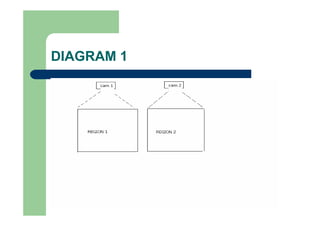
 We decided to divide the classroom into two
distinct parts, with one webcam being
allotted for each part.
DIAGRAM 1
METHOD (CONTD)
 To take attendance the photographs taken
were first converted to grayscale.
 Masks were then generated of each student
in the classroom.
 On multiplying the mask with the original
grayscale image, an individual student’s
photograph was recovered.
METHOD (CONTD)
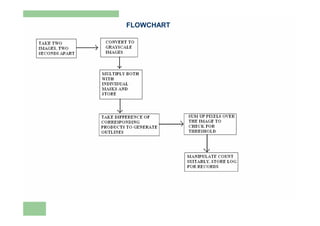
 We utilized the fact that humans almost
always move in an interval of time. As a
result, two photographs taken within a small
interval, on subtraction would yield the
outline of a human face.
 Thus, two photographs are taken from each
camera, 2 seconds apart in time.
 Both these images are converted to
grayscale and multiplied with masks.
Corresponding results are then subtracted.
METHOD (CONTD)
 A suitable threshold was assigned to the
value of the sum of pixels in the subtracted
image (taken as 0.0001 based on empirical
evidence)
 Exceeding the threshold means the presence
of a human face in the photograph.
 Finally, the no. of faces is counted and
stored.
FLOWCHART
REQUIREMENTS AND ASSUMPTIONS
 Ideally, a photograph of the entire class for
purposes of reference (for creation of
masks).
 Suitable illumination.
 It is assumed that the students always sit at
the same place in their classes.
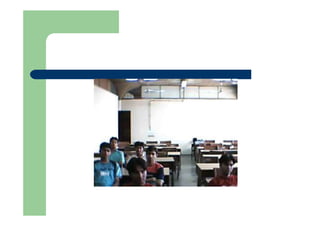
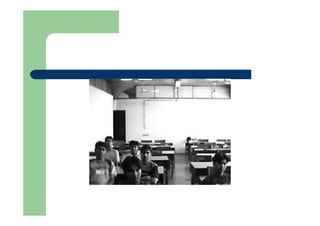
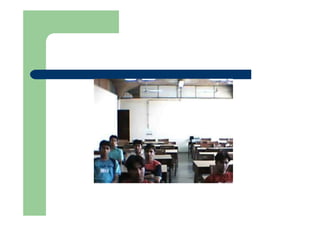
SAMPLES
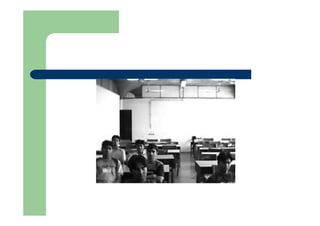
 The following slides show a sample of our
implementation. These contain the original
images, the converted grayscale
photographs, the mask, the results of
multiplication and the difference operations.
Task to do:
Reading and collecting information
Best suitable algo choosen
Matlab Coding
Put on hardware
Integrate with Verilog to put on
FPGA
Software required:
Matlab
Xilinx
NI
Etc
Hardware required:
Camera’s
FPGA Kit
One system
etc
Thanks
Link to connect with author:
http://www.slideshare.net/MayankGarg25
https://www.linkedin.com/in/gargmayank
http://www.researchgate.net/profile/Mayank_Garg6/
https://www.facebook.com/mayank17692?ref=hl

Image attendance system

  • 1.
    CAMERA BASED CLASSROOM ATTENDANCESYSTEM MAYANK GARG (2013H140040H) POORVA SHARMA(2013H1400XXH) SANKET KADAM (2013H1400XXH)
  • 2.
    OBJECTIVES OF THEPROJECT  To take attendance of a class with known strength and dimensions using webcams and to develop a hardware software interface for the same
  • 3.
    DESIGN METHODOLGY  Theproject involved taking pictures of a classroom using webcams and analyzing them. The image processing software used for this purpose was OpenCV.
  • 4.
    ABOUT OPEN CV (OPEN Source Computer Vision) is a library of real-time computer vision routines from Intel. It was first released in 2000, and is can be used in applications such as object, face and gesture recognition, lip reading and motion tracking.
  • 5.
    METHOD USED…  Wedecided to divide the classroom into two distinct parts, with one webcam being allotted for each part.
  • 6.
  • 7.
    METHOD (CONTD)  Totake attendance the photographs taken were first converted to grayscale.  Masks were then generated of each student in the classroom.  On multiplying the mask with the original grayscale image, an individual student’s photograph was recovered.
  • 8.
    METHOD (CONTD)  Weutilized the fact that humans almost always move in an interval of time. As a result, two photographs taken within a small interval, on subtraction would yield the outline of a human face.  Thus, two photographs are taken from each camera, 2 seconds apart in time.  Both these images are converted to grayscale and multiplied with masks. Corresponding results are then subtracted.
  • 9.
    METHOD (CONTD)  Asuitable threshold was assigned to the value of the sum of pixels in the subtracted image (taken as 0.0001 based on empirical evidence)  Exceeding the threshold means the presence of a human face in the photograph.  Finally, the no. of faces is counted and stored.
  • 10.
  • 11.
    REQUIREMENTS AND ASSUMPTIONS Ideally, a photograph of the entire class for purposes of reference (for creation of masks).  Suitable illumination.  It is assumed that the students always sit at the same place in their classes.
  • 12.
    SAMPLES  The followingslides show a sample of our implementation. These contain the original images, the converted grayscale photographs, the mask, the results of multiplication and the difference operations.
  • 21.
    Task to do: Readingand collecting information Best suitable algo choosen Matlab Coding Put on hardware Integrate with Verilog to put on FPGA
  • 22.
  • 23.
    Thanks Link to connectwith author: http://www.slideshare.net/MayankGarg25 https://www.linkedin.com/in/gargmayank http://www.researchgate.net/profile/Mayank_Garg6/ https://www.facebook.com/mayank17692?ref=hl