Ice Cream Production
Ice cream may have the following
composition:
• greater than 10% milkfat and usually between 10% and as
high as 16% fat in some premium ice creams
• 9 to 12% milk solids-not-fat: this component, also known as
the serum solids, contains the proteins (caseins and whey
proteins) and carbohydrates (lactose) found in milk
• 12 to 16% sweeteners: usually a combination of sucrose
and glucose-based corn syrup sweeteners
• 0.2 to 0.5% stabilizers and emulsifiers
• 55% to 64% water which comes from the milk or other
ingredients.
Other Types of Ice Cream
• Frozen custard at least 10% milk fat and at least 1.4% egg yolk
and much less air beaten into it, similar to Gelato, fairly rare.
• Frozen yogurt: a low fat or fat free alternative made with
yogurt
• Gelato: an Italian frozen dessert having a lower milk fat content
than ice cream and stabilised with ingredients such as eggs.
• Ice milk: less than 10% milk fat and lower sweetening content,
once marketed as "ice milk" but now sold as low-fat ice cream
in the United States.
• Sherbet: 1–2% milk fat and sweeter than ice cream.
• Sorbet: fruit puree with no dairy products
Liquid Nitrogen Ice Cream
• Using liquid nitrogen to freeze ice cream is an old idea
and has been used for many years to harden ice
cream. The use of liquid nitrogen in the primary
freezing of ice cream, that is to effect the transition
from the liquid to the frozen state without the use of
a conventional ice cream freezer, has only recently
started to see commercialization
• The most noted brands are Dippin' Dots,Blue Sky
Creamery, Project Creamery, and Sub Zero Cryo
Creamery. The preparation results in a column of
white condensed water vapor cloud.
• The ice cream, dangerous to eat while still "steaming," is allowed to
rest until the liquid nitrogen is completely vaporized. Sometimes ice
cream is frozen to the sides of the container, and must be allowed
to thaw
• Making ice cream with liquid nitrogen has advantages over
conventional freezing. Due to the rapid freezing, the crystal grains
are smaller, giving the ice cream a creamier texture, and allowing
one to get the same texture by using less milkfat. Such ice crystals
will grow very quickly via the processes of recrystallization thus
obviating the original benefits unless steps are taken to inhibit ice
crystal growth.
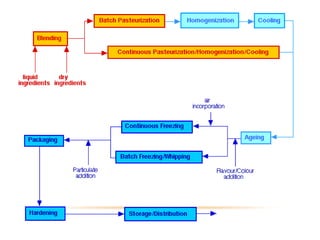
The basic steps in the manufacturing of ice
cream are generally as follows:
• blending of the mix ingredients
• pasteurization
• homogenization
• aging the mix
• freezing
• packaging
• hardening
Blending
• First the ingredients are selected based on the
desired formulation and the
calculation of the recipe from the formulation and
the ingredients chosen, then the ingredients are
weighed and blended together to produce what is
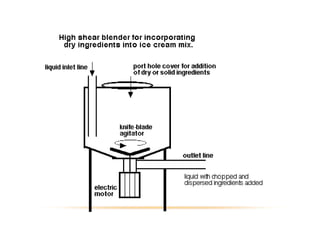
known as the "ice cream mix". Blending requires
rapid agitation to incorporate powders, and often
high speed blenders are used.
Pasteurization
• The mix is then pasteurized. Pasteurization is the
biological control point in the system, designed for
the destruction of pathogenic bacteria. In addition
to this very important function, pasteurization also
reduces the number of spoilage organisms such as
psychrotrophs, and helps to hydrate some of the
components (proteins, stabilizers).
Homogenization
• The mix is also homogenized which forms the fat emulsion
by breaking down or reducing the size of the fat globules
found in milk or cream to less than 1 µ m. Two stage
homogenization is usually preferred for ice cream mix.
Clumping or clustering of the fat is reduced thereby
producing a thinner, more rapidly whipped mix. Melt-down
is also improved. Homogenization provides the following
functions in ice cream manufacture:
• Reduces size of fat globules
• Increases surface area
• Forms membrane
• makes possible the use of butter, frozen cream, etc.
Homogenization continued:
•
By helping to form the fat structure, it also has the following
indirect effects:
• makes a smoother ice cream
• gives a greater apparent richness and palatability
• better air stability
• increases resistance to melting
• Homogenization of the mix should take place at the
pasteurizing temperature. The high temperature produces
more efficient breaking up of the fat globules at any given
pressure and also reduces fat clumping and the tendency to
thick, heavy bodied mixes. No one pressure can be
recommended that will give satisfactory results under all
conditions.
Ageing
• The mix is then aged for at least four hours and usually overnight. This allows time for the
fat to cool down and crystallize, and for the proteins and polysaccharides to fully hydrate.
Aging provides the following functions:
• Improves whipping qualities of mix and body and texture of ice cream
It does so by:
• providing time for fat crystallization, so the fat can partially coalesce;
• allowing time for full protein and stabilizer hydration and a resulting slight viscosity
increase;
• allowing time for membrane rearrangement and protein/emulsifier interaction, as
emulsifiers displace proteins from the fat globule surface, which allows for a reduction in
stabilization of the fat globules and enhanced partial coalescence.
• Aging is performed in insulated or refrigerated storage tanks, silos, etc. Mix temperature
should be maintained as low as possible without freezing, at or below 5 C. An aging time
of overnight is likely to give best results under average plant conditions. A "green" or
unaged mix is usually quickly detected at the freezer.
Freezing and Hardening
• Following mix processing, the mix is drawn into a flavour tank where
any liquid flavours, fruit purees, or colours are added. The mix then
enters the dynamic freezing process which both freezes a portion of
the water and whips air into the frozen mix. The "barrel" freezer is a
scraped-surface, tubular heat exchanger, which is jacketed with a
boiling refrigerant such as ammonia or freon. Mix is pumped through
this freezer and is drawn off the other end in a matter of 30 seconds,
(or 10 to 15 minutes in the case of batch freezers) with about 50% of
its water frozen. There are rotating blades inside the barrel that keep
the ice scraped off the surface of the freezer and also dashers inside
the machine which help to whip the mix and incorporate air.
Hardening
• After the particulates have been added, the ice cream is packaged and is placed
into a blast freezer at -30° to -40° C where most of the remainder of the water is
frozen. Below about -25° C, ice cream is stable for indefinite periods without
danger of ice crystal growth; however, above this temperature, ice crystal growth
is possible and the rate of crystal growth is dependant upon the temperature of
storage. This limits the shelf life of the ice cream. A primer on the theoretical
aspects of freezing will help you to fully understand the freezing and
recrystallization process.
• Hardening involves static (still, quiescent) freezing of the packaged products in
blast freezers. Freezing rate must still be rapid, so freezing techniques involve low
temperature (-40oC) with either enhanced convection (freezing tunnels with
forced air fans) or enhanced conduction (plate freezers).

Ice cream production`

  • 1.
  • 2.
    Ice cream mayhave the following composition: • greater than 10% milkfat and usually between 10% and as high as 16% fat in some premium ice creams • 9 to 12% milk solids-not-fat: this component, also known as the serum solids, contains the proteins (caseins and whey proteins) and carbohydrates (lactose) found in milk • 12 to 16% sweeteners: usually a combination of sucrose and glucose-based corn syrup sweeteners • 0.2 to 0.5% stabilizers and emulsifiers • 55% to 64% water which comes from the milk or other ingredients.
  • 3.
    Other Types ofIce Cream • Frozen custard at least 10% milk fat and at least 1.4% egg yolk and much less air beaten into it, similar to Gelato, fairly rare. • Frozen yogurt: a low fat or fat free alternative made with yogurt • Gelato: an Italian frozen dessert having a lower milk fat content than ice cream and stabilised with ingredients such as eggs. • Ice milk: less than 10% milk fat and lower sweetening content, once marketed as "ice milk" but now sold as low-fat ice cream in the United States. • Sherbet: 1–2% milk fat and sweeter than ice cream. • Sorbet: fruit puree with no dairy products
  • 4.
    Liquid Nitrogen IceCream • Using liquid nitrogen to freeze ice cream is an old idea and has been used for many years to harden ice cream. The use of liquid nitrogen in the primary freezing of ice cream, that is to effect the transition from the liquid to the frozen state without the use of a conventional ice cream freezer, has only recently started to see commercialization • The most noted brands are Dippin' Dots,Blue Sky Creamery, Project Creamery, and Sub Zero Cryo Creamery. The preparation results in a column of white condensed water vapor cloud.
  • 5.
    • The icecream, dangerous to eat while still "steaming," is allowed to rest until the liquid nitrogen is completely vaporized. Sometimes ice cream is frozen to the sides of the container, and must be allowed to thaw • Making ice cream with liquid nitrogen has advantages over conventional freezing. Due to the rapid freezing, the crystal grains are smaller, giving the ice cream a creamier texture, and allowing one to get the same texture by using less milkfat. Such ice crystals will grow very quickly via the processes of recrystallization thus obviating the original benefits unless steps are taken to inhibit ice crystal growth.
  • 6.
    The basic stepsin the manufacturing of ice cream are generally as follows: • blending of the mix ingredients • pasteurization • homogenization • aging the mix • freezing • packaging • hardening
  • 8.
    Blending • First theingredients are selected based on the desired formulation and the calculation of the recipe from the formulation and the ingredients chosen, then the ingredients are weighed and blended together to produce what is known as the "ice cream mix". Blending requires rapid agitation to incorporate powders, and often high speed blenders are used.
  • 10.
    Pasteurization • The mixis then pasteurized. Pasteurization is the biological control point in the system, designed for the destruction of pathogenic bacteria. In addition to this very important function, pasteurization also reduces the number of spoilage organisms such as psychrotrophs, and helps to hydrate some of the components (proteins, stabilizers).
  • 11.
    Homogenization • The mixis also homogenized which forms the fat emulsion by breaking down or reducing the size of the fat globules found in milk or cream to less than 1 µ m. Two stage homogenization is usually preferred for ice cream mix. Clumping or clustering of the fat is reduced thereby producing a thinner, more rapidly whipped mix. Melt-down is also improved. Homogenization provides the following functions in ice cream manufacture: • Reduces size of fat globules • Increases surface area • Forms membrane • makes possible the use of butter, frozen cream, etc.
  • 12.
    Homogenization continued: • By helpingto form the fat structure, it also has the following indirect effects: • makes a smoother ice cream • gives a greater apparent richness and palatability • better air stability • increases resistance to melting • Homogenization of the mix should take place at the pasteurizing temperature. The high temperature produces more efficient breaking up of the fat globules at any given pressure and also reduces fat clumping and the tendency to thick, heavy bodied mixes. No one pressure can be recommended that will give satisfactory results under all conditions.
  • 13.
    Ageing • The mixis then aged for at least four hours and usually overnight. This allows time for the fat to cool down and crystallize, and for the proteins and polysaccharides to fully hydrate. Aging provides the following functions: • Improves whipping qualities of mix and body and texture of ice cream It does so by: • providing time for fat crystallization, so the fat can partially coalesce; • allowing time for full protein and stabilizer hydration and a resulting slight viscosity increase; • allowing time for membrane rearrangement and protein/emulsifier interaction, as emulsifiers displace proteins from the fat globule surface, which allows for a reduction in stabilization of the fat globules and enhanced partial coalescence. • Aging is performed in insulated or refrigerated storage tanks, silos, etc. Mix temperature should be maintained as low as possible without freezing, at or below 5 C. An aging time of overnight is likely to give best results under average plant conditions. A "green" or unaged mix is usually quickly detected at the freezer.
  • 14.
    Freezing and Hardening •Following mix processing, the mix is drawn into a flavour tank where any liquid flavours, fruit purees, or colours are added. The mix then enters the dynamic freezing process which both freezes a portion of the water and whips air into the frozen mix. The "barrel" freezer is a scraped-surface, tubular heat exchanger, which is jacketed with a boiling refrigerant such as ammonia or freon. Mix is pumped through this freezer and is drawn off the other end in a matter of 30 seconds, (or 10 to 15 minutes in the case of batch freezers) with about 50% of its water frozen. There are rotating blades inside the barrel that keep the ice scraped off the surface of the freezer and also dashers inside the machine which help to whip the mix and incorporate air.
  • 15.
    Hardening • After theparticulates have been added, the ice cream is packaged and is placed into a blast freezer at -30° to -40° C where most of the remainder of the water is frozen. Below about -25° C, ice cream is stable for indefinite periods without danger of ice crystal growth; however, above this temperature, ice crystal growth is possible and the rate of crystal growth is dependant upon the temperature of storage. This limits the shelf life of the ice cream. A primer on the theoretical aspects of freezing will help you to fully understand the freezing and recrystallization process. • Hardening involves static (still, quiescent) freezing of the packaged products in blast freezers. Freezing rate must still be rapid, so freezing techniques involve low temperature (-40oC) with either enhanced convection (freezing tunnels with forced air fans) or enhanced conduction (plate freezers).