ICE-CREAM
PROCESSING
Ice cream is a frozen dairy product made
by suitable blending and processing of
cream and other milk products, together
with sugar and flavour, with or without
stabilizer or colour, and with the
incorporation of air during the freezing
process.
What is Ice-Cream?
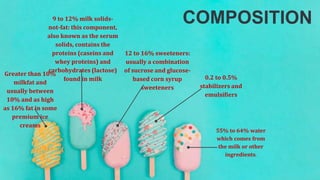
Greater than 10%
milkfat and
usually between
10% and as high
as 16% fat in some
premium ice
creams
9 to 12% milk solids-
not-fat: this component,
also known as the serum
solids, contains the
proteins (caseins and
whey proteins) and
carbohydrates (lactose)
found in milk
12 to 16% sweeteners:
usually a combination
of sucrose and glucose-
based corn syrup
sweeteners
0.2 to 0.5%
stabilizers and
emulsifiers
55% to 64% water
which comes from
the milk or other
ingredients.
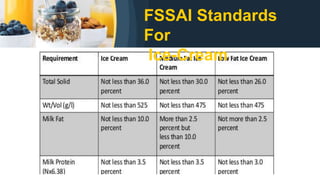
FSSAI Standards
For
Ice-Cream
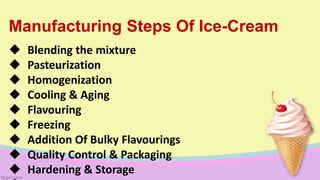
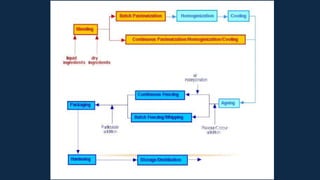
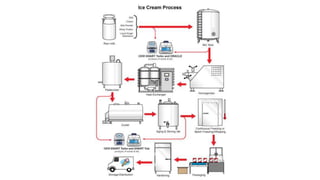
Manufacturing Steps Of Ice-Cream
 Blending the mixture
 Pasteurization
 Homogenization
 Cooling & Aging
 Flavouring
 Freezing
 Addition Of Bulky Flavourings
 Quality Control & Packaging
 Hardening & Storage
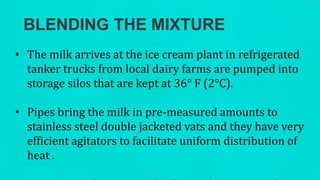
BLENDING THE MIXTURE
• The milk arrives at the ice cream plant in refrigerated
tanker trucks from local dairy farms are pumped into
storage silos that are kept at 36° F (2°C).
• Pipes bring the milk in pre-measured amounts to
stainless steel double jacketed vats and they have very
efficient agitators to facilitate uniform distribution of
heat .
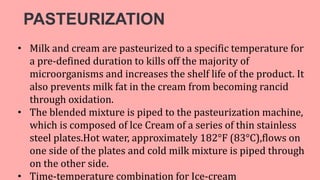
PASTEURIZATION
• Milk and cream are pasteurized to a specific temperature for
a pre-defined duration to kills off the majority of
microorganisms and increases the shelf life of the product. It
also prevents milk fat in the cream from becoming rancid
through oxidation.
• The blended mixture is piped to the pasteurization machine,
which is composed of lce Cream of a series of thin stainless
steel plates.Hot water, approximately 182°F (83°C),flows on
one side of the plates and cold milk mixture is piped through
on the other side.
• Time-temperature combination for Ice-cream
HOMOGENIZATION
• Ice cream mix is homogenized (2500 to 3000 psi) to
decrease the size of fat globules from the milk and cream
to identical size for addition of more stability to ice cream
and develop a smoother and creamier ice cream instead
of large clumps.
• By the application of intensive air pressure,homogenizer
ensures that the emulsifiers and stabilizers are well
blended and evenly distributed which prevents them
from separating from the rest of the ice cream mixture
COOLING AND AGEING
• The ice cream mixture is then transferred to cool down at a
temperature of 0-4°C and moved to aging tanks for getting it
ready for the next step of freezing and aeration. The mix is
cooled fast so that no growth of microorganisms can take
place.
• The mix is aged for between 4-24 hours at 2-5°C (40°F) under
continuous agitation. During the aging process, the following
occurs:
1. Stabilizer hydrate and takes full effect
2. Milk fat solidies and crystallize
FLAVOURING
• The ice cream is pumped to stainless steel vats where
flavorings are piped into the vats and blended
thoroughly.
• Flavours are added by experience to obtain pleasing
flavour and colours should correspond to the flavour.
• Only liquid ingredients can be added prior to freezing,
to make sure the mix flows properly through the
FREEZING
• From the flavouring tanks, the mix is pumped to the
continuous freezer where air is whipped in as it is frozen
between the temperatures of -3°C and -6°C using liquid
ammonia or freon as a freezing agent.
• Continuous freezing facilitates faster freezing leading to very
small ice crystals.
• The increased volume of the ice cream due to incorporation
of the air is called overrun (80 – 100%).
ADDITION OF BULKY FLAVOURINGS
• If chunks of food such as strawberry or cookie pieces are to
be added to the ice cream, the frozen mixture is pumped to a
fruit feeder. The mixture then moves to a blender where the
chunks are evenly distributed.
• Fruits, swirls, and any bulky type of flavorings (nuts, candy
pieces, etc.) are added . These ingredients can not be added
before freezing or they would interfere with the smooth flow
of the mix through the freezer.
QUALITY CONTROL & PACKAGING
Quality Control:-
• Every mixture is randomly tested during the production
process.
• Butterfat and solid levels are tested.
• The bacteria levels are measured.
• Each batch is also taste-tested before packaging
Packaging:-
• Automatic filling machines extrude ice cream into
HARDENING & STORAGE
• The already packaged ice cream is exposed to a temperature
range of -20°C to -40°C in the hardening tunnel for between
6 – 8 hours for larger packages and 30 minutes for smaller
packages.
• Hardening completes the ice cream freezing process and
stabilizes the product so that it does not melt down too
quickly.The hardened ice cream is then stored at temperatures
of ≤25°C.
• The cartons are then stored in refrigerated warehouses until
Enjoy it before it melts

Ice Cream Processing

  • 1.
  • 2.
    Ice cream isa frozen dairy product made by suitable blending and processing of cream and other milk products, together with sugar and flavour, with or without stabilizer or colour, and with the incorporation of air during the freezing process. What is Ice-Cream?
  • 3.
    Greater than 10% milkfatand usually between 10% and as high as 16% fat in some premium ice creams 9 to 12% milk solids- not-fat: this component, also known as the serum solids, contains the proteins (caseins and whey proteins) and carbohydrates (lactose) found in milk 12 to 16% sweeteners: usually a combination of sucrose and glucose- based corn syrup sweeteners 0.2 to 0.5% stabilizers and emulsifiers 55% to 64% water which comes from the milk or other ingredients.
  • 4.
  • 6.
    Manufacturing Steps OfIce-Cream  Blending the mixture  Pasteurization  Homogenization  Cooling & Aging  Flavouring  Freezing  Addition Of Bulky Flavourings  Quality Control & Packaging  Hardening & Storage
  • 8.
    BLENDING THE MIXTURE •The milk arrives at the ice cream plant in refrigerated tanker trucks from local dairy farms are pumped into storage silos that are kept at 36° F (2°C). • Pipes bring the milk in pre-measured amounts to stainless steel double jacketed vats and they have very efficient agitators to facilitate uniform distribution of heat .
  • 9.
    PASTEURIZATION • Milk andcream are pasteurized to a specific temperature for a pre-defined duration to kills off the majority of microorganisms and increases the shelf life of the product. It also prevents milk fat in the cream from becoming rancid through oxidation. • The blended mixture is piped to the pasteurization machine, which is composed of lce Cream of a series of thin stainless steel plates.Hot water, approximately 182°F (83°C),flows on one side of the plates and cold milk mixture is piped through on the other side. • Time-temperature combination for Ice-cream
  • 10.
    HOMOGENIZATION • Ice creammix is homogenized (2500 to 3000 psi) to decrease the size of fat globules from the milk and cream to identical size for addition of more stability to ice cream and develop a smoother and creamier ice cream instead of large clumps. • By the application of intensive air pressure,homogenizer ensures that the emulsifiers and stabilizers are well blended and evenly distributed which prevents them from separating from the rest of the ice cream mixture
  • 11.
    COOLING AND AGEING •The ice cream mixture is then transferred to cool down at a temperature of 0-4°C and moved to aging tanks for getting it ready for the next step of freezing and aeration. The mix is cooled fast so that no growth of microorganisms can take place. • The mix is aged for between 4-24 hours at 2-5°C (40°F) under continuous agitation. During the aging process, the following occurs: 1. Stabilizer hydrate and takes full effect 2. Milk fat solidies and crystallize
  • 12.
    FLAVOURING • The icecream is pumped to stainless steel vats where flavorings are piped into the vats and blended thoroughly. • Flavours are added by experience to obtain pleasing flavour and colours should correspond to the flavour. • Only liquid ingredients can be added prior to freezing, to make sure the mix flows properly through the
  • 13.
    FREEZING • From theflavouring tanks, the mix is pumped to the continuous freezer where air is whipped in as it is frozen between the temperatures of -3°C and -6°C using liquid ammonia or freon as a freezing agent. • Continuous freezing facilitates faster freezing leading to very small ice crystals. • The increased volume of the ice cream due to incorporation of the air is called overrun (80 – 100%).
  • 14.
    ADDITION OF BULKYFLAVOURINGS • If chunks of food such as strawberry or cookie pieces are to be added to the ice cream, the frozen mixture is pumped to a fruit feeder. The mixture then moves to a blender where the chunks are evenly distributed. • Fruits, swirls, and any bulky type of flavorings (nuts, candy pieces, etc.) are added . These ingredients can not be added before freezing or they would interfere with the smooth flow of the mix through the freezer.
  • 15.
    QUALITY CONTROL &PACKAGING Quality Control:- • Every mixture is randomly tested during the production process. • Butterfat and solid levels are tested. • The bacteria levels are measured. • Each batch is also taste-tested before packaging Packaging:- • Automatic filling machines extrude ice cream into
  • 16.
    HARDENING & STORAGE •The already packaged ice cream is exposed to a temperature range of -20°C to -40°C in the hardening tunnel for between 6 – 8 hours for larger packages and 30 minutes for smaller packages. • Hardening completes the ice cream freezing process and stabilizes the product so that it does not melt down too quickly.The hardened ice cream is then stored at temperatures of ≤25°C. • The cartons are then stored in refrigerated warehouses until
  • 18.