Hypothyroidism:
Evaluation & Management
Dr Shahjada Selim
Associate Professor, Department of Endocrinology, BSMMU
Visiting Professor in Endocrinology, Texila American University, USA
Website: http://shahjadaselim.com
Definition
Hypothyroidism means that the thyroid gland
can’t make enough thyroid hormone to keep
the body running normally. In hypothyroidism
thyroid gland is underactive the tissues are to
too little thyroid hormone.
ATA 2021: https://www.thyroid.org/hypothyroidism/Accessed on 21/01/2021
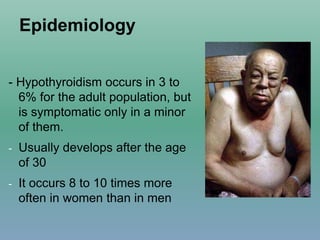
Epidemiology
- Hypothyroidism occurs in 3 to
6% for the adult population, but
is symptomatic only in a minor
of them.
- Usually develops after the age
of 30
- It occurs 8 to 10 times more
often in women than in men
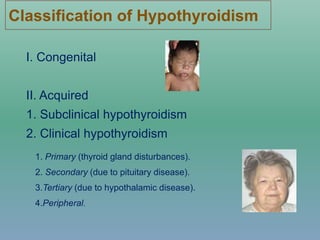
Classification of Hypothyroidism
I. Congenital
II. Acquired
1. Subclinical hypothyroidism
2. Clinical hypothyroidism
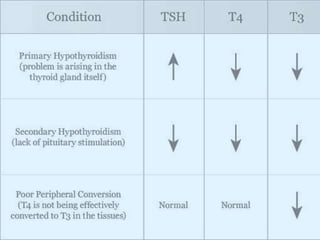
1. Primary (thyroid gland disturbances).
2. Secondary (due to pituitary disease).
3.Tertiary (due to hypothalamic disease).
4.Peripheral.
Etiology of Hypothyroidism
Congenital
- Maldevelopment –hypoplasia or aplasia
- Inborn deficiencies of biosynthesis or action of thyroid
hormone
- Atypical localization of thyroid gland
- Severe iodine deficiency
Primary Hypothyroidism
Acquired
- iodine deficiency
- autoimmune processes (Hashimoto’s thyroiditis):
MAE 1 & 2
- surgical -total thyroidectomy
- irradiation therapy (organs of the neck)-I131
therapy
- during or after therapy with propylthyouracil,
methimazole, iodides for hyperthyroidism
- infiltrative diseases (tuberculosis, actynomycosis)
- trauma
- medications such as amiodarone, interferon alpha,
thalidomide
Etiology of Peripheral Hypothyroidism
peripheral tissue resistance to thyroid hormones
decreasing of T4 peripheral transformation into
T3 (in liver or in kidneys)
production of antibodies to thyroid hormones
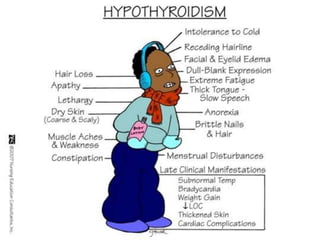
Clinical Features of Hypothyroidism
Skin &
Hair
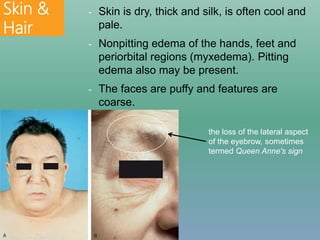
- Skin is dry, thick and silk, is often cool and
pale.
- Nonpitting edema of the hands, feet and
periorbital regions (myxedema). Pitting
edema also may be present.
- The faces are puffy and features are
coarse.
the loss of the lateral aspect
of the eyebrow, sometimes
termed Queen Anne's sign
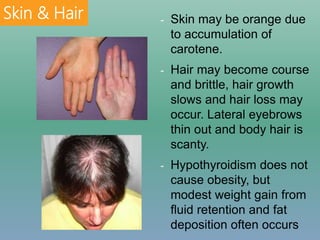
- Skin may be orange due
to accumulation of
carotene.
- Hair may become course
and brittle, hair growth
slows and hair loss may
occur. Lateral eyebrows
thin out and body hair is
scanty.
- Hypothyroidism does not
cause obesity, but
modest weight gain from
fluid retention and fat
deposition often occurs
Skin & Hair
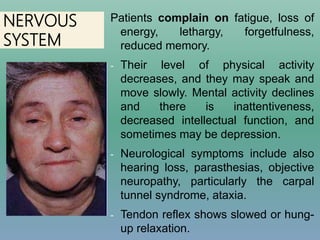
NERVOUS
SYSTEM
Patients complain on fatigue, loss of
energy, lethargy, forgetfulness,
reduced memory.
- Their level of physical activity
decreases, and they may speak and
move slowly. Mental activity declines
and there is inattentiveness,
decreased intellectual function, and
sometimes may be depression.
- Neurological symptoms include also
hearing loss, parasthesias, objective
neuropathy, particularly the carpal
tunnel syndrome, ataxia.
- Tendon reflex shows slowed or hung-
up relaxation.
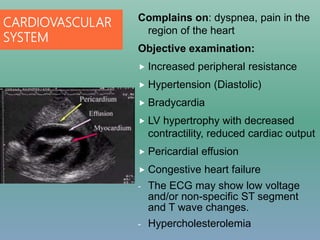
CARDIOVASCULAR
SYSTEM
Complains on: dyspnea, pain in the
region of the heart
Objective examination:
 Increased peripheral resistance
 Hypertension (Diastolic)
 Bradycardia
 LV hypertrophy with decreased
contractility, reduced cardiac output
 Pericardial effusion
 Congestive heart failure
- The ECG may show low voltage
and/or non-specific ST segment
and T wave changes.
- Hypercholesterolemia
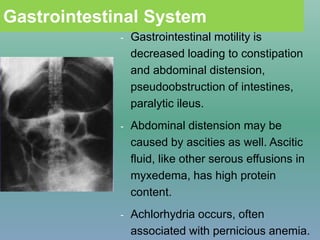
Gastrointestinal System
- Gastrointestinal motility is
decreased loading to constipation
and abdominal distension,
pseudoobstruction of intestines,
paralytic ileus.
- Abdominal distension may be
caused by ascities as well. Ascitic
fluid, like other serous effusions in
myxedema, has high protein
content.
- Achlorhydria occurs, often
associated with pernicious anemia.
RENAL SYSTEM
- Reduced excretion of a water load may be
associated with hyponatriemia
- Renal blood flow and glomerular filtration rate are
reduced, but serum creatinine is normal
- May be mild proteinuria and infections of urinary
tract
-Dyspnea of effort is common.
This complaint may be caused by enlargement of the
tongue and larynx, causing upper airway obstruction, or
by respiratory muscle weakness, interstitial edema of
the lungs, and for plural effusions which have high
protein content
-Hoarseness from vocal curt enlargement often occurs
Respiratory system
Musculoskeletal System
- Muscle and joint aches, pains and stiffness are
common
- Objective myopathy and joint swelling or effusions
are less often present
- The relaxation phase of the tendon reflexes is
prolonged
- Serum creatine phosphokinase and alanine
aminotransferase activities are often increased,
probably as much to slowed enzyme degradation
as to increased release from muscle
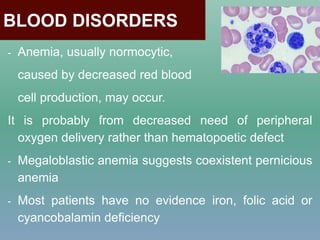
BLOOD DISORDERS
- Anemia, usually normocytic,
caused by decreased red blood
cell production, may occur.
It is probably from decreased need of peripheral
oxygen delivery rather than hematopoetic defect
- Megaloblastic anemia suggests coexistent pernicious
anemia
- Most patients have no evidence iron, folic acid or
cyancobalamin deficiency
Endocrine System
-Thyroid gland: nonpalpable or enlargement.
-Adrenal glands: hypofunction
-Pituitary system: secretion of growth hormone is
deficient because thyroid hormone is necessary for
synthesis of growth hormone. Growth and development
of
children are retarded. Epiphyses remain open.
-Gonadal glands: menorrhagia (from
anovulatory cycles), secondary amenorrhea,
infertility and galactorrhea; decreased fertility in men
Metabolic System
- Hypothermia is common
- Hyperlipidemia with increase of serum
cholesterol and triglyceride occurs because
of reduced lipoprotein lipase activity
CLINICAL FEATURES
Hypothyroidism can be presented in many
different ways and can mimic other disorders
Because many manifestations of
hypothyroidism
are non-specific,
the diagnosis is particularly likely to be
overlooked
in patients with other chronic illnesses and
elderly
and can lead to significant morbidity and even
mortality
Subclinical Hypothyroidism
It is an asymptomatic state in which serum T4 and free
T4 are normal, but serum TSH is elevated. This
designation is only applicable when thyroid function
has been stable for weeks or more, the hypothalamic-
pituitary-thyroid axis is normal, and there is no recent
or ongoing severe illness.
It is a state in which clinical features of hypothyroidism
are usually absent and euthyroidism is reached by
compensatory increasing of TSH secretion and that’s
why synthesis and secretion of such level of thyroid
hormone that will be enough for organism.
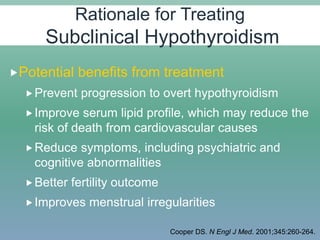
Potential benefits from treatment
Prevent progression to overt hypothyroidism
Improve serum lipid profile, which may reduce the
risk of death from cardiovascular causes
Reduce symptoms, including psychiatric and
cognitive abnormalities
Better fertility outcome
Improves menstrual irregularities
Cooper DS. N Engl J Med. 2001;345:260-264.
Rationale for Treating
Subclinical Hypothyroidism
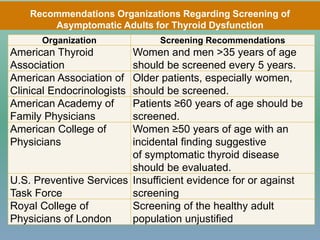
Recommendations Organizations Regarding Screening of
Asymptomatic Adults for Thyroid Dysfunction
Organization Screening Recommendations
American Thyroid
Association
Women and men >35 years of age
should be screened every 5 years.
American Association of
Clinical Endocrinologists
Older patients, especially women,
should be screened.
American Academy of
Family Physicians
Patients ≥60 years of age should be
screened.
American College of
Physicians
Women ≥50 years of age with an
incidental finding suggestive
of symptomatic thyroid disease
should be evaluated.
U.S. Preventive Services
Task Force
Insufficient evidence for or against
screening
Royal College of
Physicians of London
Screening of the healthy adult
population unjustified
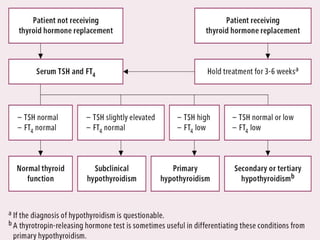
Diagnosis: Algorithm
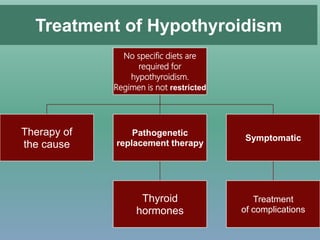
Treatment of Hypothyroidism
No specific diets are
required for
hypothyroidism.
Regimen is not restricted
Therapy of
the cause
Pathogenetic
replacement therapy
Thyroid
hormones
Symptomatic
Treatment
of complications
HYPOTHYROIDISM TREATMENT GOAL
EUTHYROIDISM
The goal of hypothyroidism therapy is to
replace thyroxine to mimic normal,
physiologic levels and alleviate signs,
symptoms, and biochemical abnormalities
Braverman LE, et al. Werner & Ingbar’s The Thyroid. A
Fundamental and Clinical Text. 8th ed. 2000.
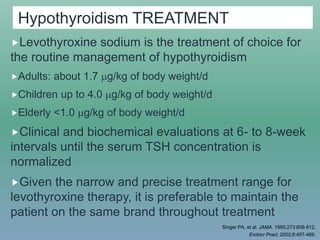
Hypothyroidism TREATMENT
Levothyroxine sodium is the treatment of choice for
the routine management of hypothyroidism
Adults: about 1.7 g/kg of body weight/d
Children up to 4.0 g/kg of body weight/d
Elderly <1.0 g/kg of body weight/d
Clinical and biochemical evaluations at 6- to 8-week
intervals until the serum TSH concentration is
normalized
Given the narrow and precise treatment range for
levothyroxine therapy, it is preferable to maintain the
patient on the same brand throughout treatment
Singer PA, et al. JAMA. 1995;273:808-812.
Endocr Pract. 2002;8:457-469.
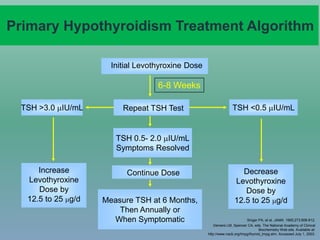
Primary Hypothyroidism Treatment Algorithm
TSH >3.0 IU/mL TSH <0.5 IU/mL
Initial Levothyroxine Dose
Increase
Levothyroxine
Dose by
12.5 to 25 g/d
Repeat TSH Test
6-8 Weeks
TSH 0.5- 2.0 IU/mL
Symptoms Resolved
Measure TSH at 6 Months,
Then Annually or
When Symptomatic
Continue Dose Decrease
Levothyroxine
Dose by
12.5 to 25 g/d
Singer PA, et al. JAMA. 1995;273:808-812.
Demers LM, Spencer CA, eds. The National Academy of Clinical
Biochemistry Web site. Available at:
http://www.nacb.org/lmpg/thyroid_lmpg.stm. Accessed July 1, 2003.
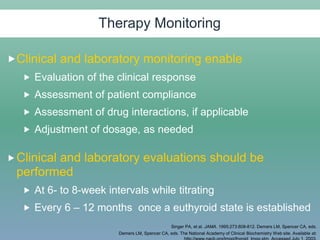
Therapy Monitoring
Clinical and laboratory monitoring enable
 Evaluation of the clinical response
 Assessment of patient compliance
 Assessment of drug interactions, if applicable
 Adjustment of dosage, as needed
Clinical and laboratory evaluations should be
performed
 At 6- to 8-week intervals while titrating
 Every 6 – 12 months once a euthyroid state is established
Singer PA, et al. JAMA. 1995;273:808-812. Demers LM, Spencer CA, eds.
Demers LM, Spencer CA, eds. The National Academy of Clinical Biochemistry Web site. Available at:
Caution in Patients with Underlying
Cardiac Disease
Using LT4 in those with IHD increases the risk of MI,
aggravation of angina, or cardiac arrhythmias
For patients <50 years of age with underlying
cardiac disease, initiate LT4 at 25-50 g/d with
gradual dose increments at 6- to 8-week intervals
For elderly patients with cardiac disease, start LT4 at
12.5-25 g/d, with gradual dose increments at 4- to
6-week intervals
The LT4 dose is generally adjusted in 12.5-25 g
increments
Braverman LE, et al. Werner & Ingbar’s The Thyroid. A Fundamental and Clinical Text. 8th ed. 2000.
Kohno A, et al. Endocr J. 2001;48:565-572.
Synthroid® [package insert]. Abbott Laboratories; 2003.
Factors That May Reduce Levothyroxine Effectiveness
 Malabsorption Syndromes
 Post-jejunoileal bypass
surgery
 Short bowel syndrome
 Celiac disease
 Reduced Absorption
 Colestipol hydrochloride
 Sucralfate
 Ferrous sulfate
 Food (eg, soybean formula)
 Aluminum hydroxide
 Cholestyramine
 Sodium polystyrene
sulfonate
 Drugs That Increase
Clearance
Rifampin
Carbamazepine
Phenytoin
 Factors That Reduced T4 to
T3 Clearance
Amiodarone
Selenium deficiency
 Other Mechanisms
Lovastatin
Sertraline
Braverman LE, Utiger RD, eds. The Thyroid: A Fundamental and Clinical Text. 8th ed. 2000.
Synthroid® [package insert]. Abbott Laboratories; 2003.
Is There Any Role for T3
Supplementation in The
Management of Hypothyroidism?
NO!
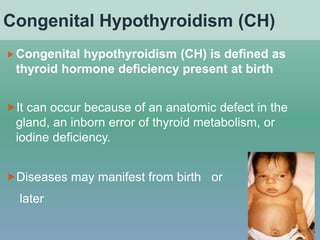
Congenital Hypothyroidism (CH)
Congenital hypothyroidism (CH) is defined as
thyroid hormone deficiency present at birth
It can occur because of an anatomic defect in the
gland, an inborn error of thyroid metabolism, or
iodine deficiency.
Diseases may manifest from birth or
later
EPIDEMIOLOGY
Incidence increased to about 1 in 2,000 due to
more stringent screening strategies.
Incidence in Bangladesh 1: 1,300, According to
the research paper of 'Institute of Nuclear
Medicine, Dhaka, Bangladesh'.
Male: Female = 1:2
1: 4000
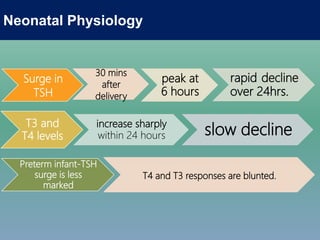
Neonatal Physiology
Surge in
TSH
30 mins
after
delivery
peak at
6 hours
rapid decline
over 24hrs.
T3 and
T4 levels
increase sharply
within 24 hours slow decline
Preterm infant-TSH
surge is less
marked
T4 and T3 responses are blunted.
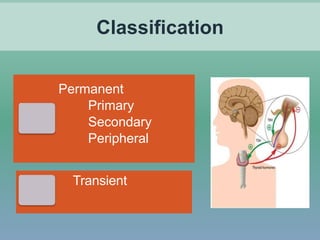
Permanent
Primary
Secondary
Peripheral
Transient
Classification
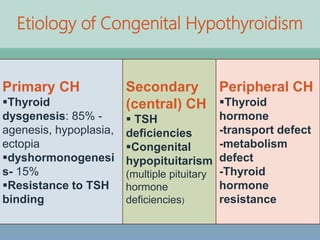
Etiology of Congenital Hypothyroidism
Primary CH
Thyroid
dysgenesis: 85% -
agenesis, hypoplasia,
ectopia
dyshormonogenesi
s- 15%
Resistance to TSH
binding
Secondary
(central) CH
 TSH
deficiencies
Congenital
hypopituitarism
(multiple pituitary
hormone
deficiencies)
Peripheral CH
Thyroid
hormone
-transport defect
-metabolism
defect
-Thyroid
hormone
resistance
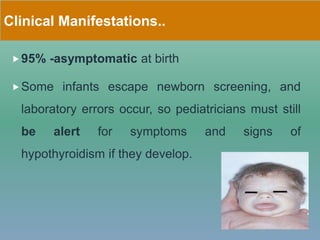
Clinical Manifestations..
95% -asymptomatic at birth
Some infants escape newborn screening, and
laboratory errors occur, so pediatricians must still
be alert for symptoms and signs of
hypothyroidism if they develop.
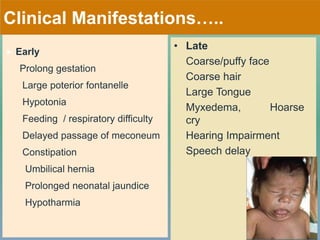
Clinical Manifestations…..
 Early
Prolong gestation
Large poterior fontanelle
Hypotonia
Feeding / respiratory difficulty
Delayed passage of meconeum
Constipation
Umbilical hernia
Prolonged neonatal jaundice
Hypotharmia
• Late
Coarse/puffy face
Coarse hair
Large Tongue
Myxedema, Hoarse
cry
Hearing Impairment
Speech delay
Newborn Screening
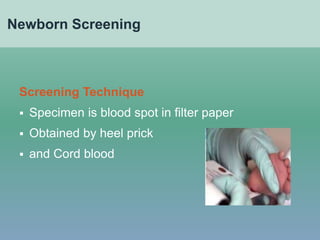
Screening Technique
 Specimen is blood spot in filter paper
 Obtained by heel prick
 and Cord blood
Screening Protocols for CH:
Three approaches re being used for screening:
1. Primary TSH, Back up t4
2. Primary T4, Back up TSH
3. Concomitant T4 and TSH
Optimum time 2-5 days of age
American Academy of Pediatrics
Recommended Screening
NICU/Preterm/Home delivery –
5 to 7 days of birth.
Mother on thyroid medication/
Family history of CH –
screen cord blood.
For infants 1,500 g birth weight,
repeat specimens should be sent at
2, 6, and 10 weeks of age due to
the risk of delayed TSH elevation.
Who Needs Special Attention
Preterm and low birth weight infants
Infants with trisomy 21 or cardiac defects have
an increased risk of congenital hypothyroidism.
Monozygotic twins , if they are monochorionic,
fetal hypothyroidism in the affected twin may
get compensated by the normal twin through
their shared fetal circulation.
A cord blood TSH value of >20 mIU/L can
be used for the purpose of screening for
congenital hypothyroidism.
For logistic angles, a higher cutoff of >30
mIU/L can be used.
 Serum thyroglobulin
 Anti thyroid antibody (TBG-AB)- In case of maternal
autoimmune disease
 CBC with PBF- anaemia (normo, micro and macro)
 CXR- Cardiomegaly
 ECG- bradycardia and low voltage ECG
 CT Scan and MRI
Other relevant Investigation
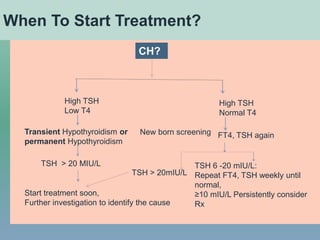
New born screening
TSH > 20 MIU/L
High TSH
Low T4
Transient Hypothyroidism or
permanent Hypothyroidism
Start treatment soon,
Further investigation to identify the cause
High TSH
Normal T4
FT4, TSH again
TSH > 20mIU/L
TSH 6 -20 mIU/L:
Repeat FT4, TSH weekly until
normal,
≥10 mIU/L Persistently consider
Rx
When To Start Treatment?
CH?
 Levothyroxine
 The recommended dose of LT4 is 10-15 μg/kg/day given
orally
 Rapid normalization of thyroid function (ideally within 2
wk) is important in achieving optimal neuro-developmental
outcome.
 Levothyroxin must be ingested in the empty stomach,
avoid soya, calcium and iron containing diet
Treatment..
FOLLOW-UP
CLINICAL FOLLOW-UP
Clinical assessment of growth and development,
should be performed every few months during
the first 3 years of life.
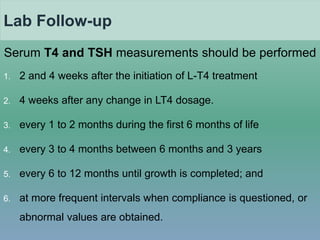
Lab Follow-up
Serum T4 and TSH measurements should be performed
1. 2 and 4 weeks after the initiation of L-T4 treatment
2. 4 weeks after any change in LT4 dosage.
3. every 1 to 2 months during the first 6 months of life
4. every 3 to 4 months between 6 months and 3 years
5. every 6 to 12 months until growth is completed; and
6. at more frequent intervals when compliance is questioned, or
abnormal values are obtained.
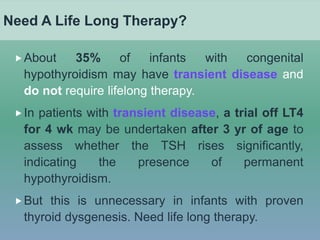
Need A Life Long Therapy?
About 35% of infants with congenital
hypothyroidism may have transient disease and
do not require lifelong therapy.
In patients with transient disease, a trial off LT4
for 4 wk may be undertaken after 3 yr of age to
assess whether the TSH rises significantly,
indicating the presence of permanent
hypothyroidism.
But this is unnecessary in infants with proven
thyroid dysgenesis. Need life long therapy.
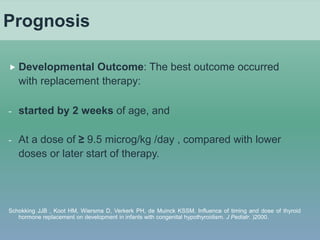
Prognosis
 Developmental Outcome: The best outcome occurred
with replacement therapy:
- started by 2 weeks of age, and
- At a dose of ≥ 9.5 microg/kg /day , compared with lower
doses or later start of therapy.
Schokking JJB , Koot HM, Wiersma D, Verkerk PH, de Muinck KSSM. Influence of timing and dose of thyroid
hormone replacement on development in infants with congenital hypothyroidism. J Pediatr. )2000.
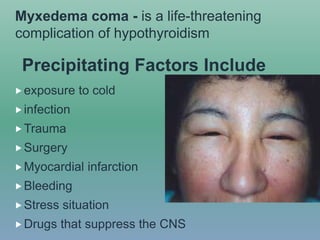
Precipitating Factors Include
exposure to cold
infection
Trauma
Surgery
Myocardial infarction
Bleeding
Stress situation
Drugs that suppress the CNS
Myxedema coma - is a life-threatening
complication of hypothyroidism
- Slow development (weakness, somnolence, coma)
- extreme hypothermia (temperatures 24 to 32°C)
- Areflexia
- Seizures
- Bradycardia, hypotension
- Polyserositis
- CO2 retention, and respiratory depression caused by
decreased cerebral blood flow, nonreversible brain
changes
- Rapid diagnosis (based on clinical judgment, history, and
physical examination) is imperative because early death is
likely.
Clinical Features
Treatment of Myxedema Coma
- large doses of T4 (200-500 mcg i/v
bolus 3 – 4 times a day) or T3 if
available (40–100 mcg i/v bolus 3
times a day), because TBG must be
saturated before any free hormone is
available for response.
-The maintenance dose for T4 is 50
mgm/kg/day i/v and for T3 10 -20
mcg/day i/v until the hormone can be
given orally.
TREATMENT OF MYXEDEMA COMA
- Corticosteroid therapy (hydrocortisone
200 – 400 – 600 mg/day i/v).
- The patient should not be rewarmed
rapidly because of the threat of cardiac
arrhythmia.
- Hypoxemia is common, so PaO2
should be measured at the outset of
treatment. If alveolar ventilation is
compromised, immediate mechanical
ventilatory assistance is required.
Case 1:
A 35-year-old lady complained of weight gain
and menorrhagia for 6 months, on examination
her skin is cold and rough, pulse 59 per
minute, BP 145/95 mmHg, eyes are baggy
with sparse hair, no thyromegaly.
Further Evaluation
Differential Diagnosis
Confirmed Diagnosis
Case 2:
A 55-year-old man came to you with the
complaint of leg swelling, weakness and
somnolence. On examination he was mildly
anemic, hypertensive and a scar mark was
present in front of his neck. He had no
breathlessness and urinary problem?

Hypothyroidism: Evaluation & Management by Dr Selim

  • 1.
    Hypothyroidism: Evaluation & Management DrShahjada Selim Associate Professor, Department of Endocrinology, BSMMU Visiting Professor in Endocrinology, Texila American University, USA Website: http://shahjadaselim.com
  • 2.
    Definition Hypothyroidism means thatthe thyroid gland can’t make enough thyroid hormone to keep the body running normally. In hypothyroidism thyroid gland is underactive the tissues are to too little thyroid hormone. ATA 2021: https://www.thyroid.org/hypothyroidism/Accessed on 21/01/2021
  • 3.
    Epidemiology - Hypothyroidism occursin 3 to 6% for the adult population, but is symptomatic only in a minor of them. - Usually develops after the age of 30 - It occurs 8 to 10 times more often in women than in men
  • 4.
    Classification of Hypothyroidism I.Congenital II. Acquired 1. Subclinical hypothyroidism 2. Clinical hypothyroidism 1. Primary (thyroid gland disturbances). 2. Secondary (due to pituitary disease). 3.Tertiary (due to hypothalamic disease). 4.Peripheral.
  • 5.
    Etiology of Hypothyroidism Congenital -Maldevelopment –hypoplasia or aplasia - Inborn deficiencies of biosynthesis or action of thyroid hormone - Atypical localization of thyroid gland - Severe iodine deficiency Primary Hypothyroidism
  • 6.
    Acquired - iodine deficiency -autoimmune processes (Hashimoto’s thyroiditis): MAE 1 & 2 - surgical -total thyroidectomy - irradiation therapy (organs of the neck)-I131 therapy - during or after therapy with propylthyouracil, methimazole, iodides for hyperthyroidism - infiltrative diseases (tuberculosis, actynomycosis) - trauma - medications such as amiodarone, interferon alpha, thalidomide
  • 7.
    Etiology of PeripheralHypothyroidism peripheral tissue resistance to thyroid hormones decreasing of T4 peripheral transformation into T3 (in liver or in kidneys) production of antibodies to thyroid hormones
  • 8.
    Clinical Features ofHypothyroidism
  • 9.
    Skin & Hair - Skinis dry, thick and silk, is often cool and pale. - Nonpitting edema of the hands, feet and periorbital regions (myxedema). Pitting edema also may be present. - The faces are puffy and features are coarse. the loss of the lateral aspect of the eyebrow, sometimes termed Queen Anne's sign
  • 10.
    - Skin maybe orange due to accumulation of carotene. - Hair may become course and brittle, hair growth slows and hair loss may occur. Lateral eyebrows thin out and body hair is scanty. - Hypothyroidism does not cause obesity, but modest weight gain from fluid retention and fat deposition often occurs Skin & Hair
  • 11.
    NERVOUS SYSTEM Patients complain onfatigue, loss of energy, lethargy, forgetfulness, reduced memory. - Their level of physical activity decreases, and they may speak and move slowly. Mental activity declines and there is inattentiveness, decreased intellectual function, and sometimes may be depression. - Neurological symptoms include also hearing loss, parasthesias, objective neuropathy, particularly the carpal tunnel syndrome, ataxia. - Tendon reflex shows slowed or hung- up relaxation.
  • 12.
    CARDIOVASCULAR SYSTEM Complains on: dyspnea,pain in the region of the heart Objective examination:  Increased peripheral resistance  Hypertension (Diastolic)  Bradycardia  LV hypertrophy with decreased contractility, reduced cardiac output  Pericardial effusion  Congestive heart failure - The ECG may show low voltage and/or non-specific ST segment and T wave changes. - Hypercholesterolemia
  • 13.
    Gastrointestinal System - Gastrointestinalmotility is decreased loading to constipation and abdominal distension, pseudoobstruction of intestines, paralytic ileus. - Abdominal distension may be caused by ascities as well. Ascitic fluid, like other serous effusions in myxedema, has high protein content. - Achlorhydria occurs, often associated with pernicious anemia.
  • 14.
    RENAL SYSTEM - Reducedexcretion of a water load may be associated with hyponatriemia - Renal blood flow and glomerular filtration rate are reduced, but serum creatinine is normal - May be mild proteinuria and infections of urinary tract
  • 15.
    -Dyspnea of effortis common. This complaint may be caused by enlargement of the tongue and larynx, causing upper airway obstruction, or by respiratory muscle weakness, interstitial edema of the lungs, and for plural effusions which have high protein content -Hoarseness from vocal curt enlargement often occurs Respiratory system
  • 16.
    Musculoskeletal System - Muscleand joint aches, pains and stiffness are common - Objective myopathy and joint swelling or effusions are less often present - The relaxation phase of the tendon reflexes is prolonged - Serum creatine phosphokinase and alanine aminotransferase activities are often increased, probably as much to slowed enzyme degradation as to increased release from muscle
  • 17.
    BLOOD DISORDERS - Anemia,usually normocytic, caused by decreased red blood cell production, may occur. It is probably from decreased need of peripheral oxygen delivery rather than hematopoetic defect - Megaloblastic anemia suggests coexistent pernicious anemia - Most patients have no evidence iron, folic acid or cyancobalamin deficiency
  • 18.
    Endocrine System -Thyroid gland:nonpalpable or enlargement. -Adrenal glands: hypofunction -Pituitary system: secretion of growth hormone is deficient because thyroid hormone is necessary for synthesis of growth hormone. Growth and development of children are retarded. Epiphyses remain open. -Gonadal glands: menorrhagia (from anovulatory cycles), secondary amenorrhea, infertility and galactorrhea; decreased fertility in men
  • 19.
    Metabolic System - Hypothermiais common - Hyperlipidemia with increase of serum cholesterol and triglyceride occurs because of reduced lipoprotein lipase activity
  • 20.
    CLINICAL FEATURES Hypothyroidism canbe presented in many different ways and can mimic other disorders Because many manifestations of hypothyroidism are non-specific, the diagnosis is particularly likely to be overlooked in patients with other chronic illnesses and elderly and can lead to significant morbidity and even mortality
  • 21.
    Subclinical Hypothyroidism It isan asymptomatic state in which serum T4 and free T4 are normal, but serum TSH is elevated. This designation is only applicable when thyroid function has been stable for weeks or more, the hypothalamic- pituitary-thyroid axis is normal, and there is no recent or ongoing severe illness. It is a state in which clinical features of hypothyroidism are usually absent and euthyroidism is reached by compensatory increasing of TSH secretion and that’s why synthesis and secretion of such level of thyroid hormone that will be enough for organism.
  • 23.
    Potential benefits fromtreatment Prevent progression to overt hypothyroidism Improve serum lipid profile, which may reduce the risk of death from cardiovascular causes Reduce symptoms, including psychiatric and cognitive abnormalities Better fertility outcome Improves menstrual irregularities Cooper DS. N Engl J Med. 2001;345:260-264. Rationale for Treating Subclinical Hypothyroidism
  • 24.
    Recommendations Organizations RegardingScreening of Asymptomatic Adults for Thyroid Dysfunction Organization Screening Recommendations American Thyroid Association Women and men >35 years of age should be screened every 5 years. American Association of Clinical Endocrinologists Older patients, especially women, should be screened. American Academy of Family Physicians Patients ≥60 years of age should be screened. American College of Physicians Women ≥50 years of age with an incidental finding suggestive of symptomatic thyroid disease should be evaluated. U.S. Preventive Services Task Force Insufficient evidence for or against screening Royal College of Physicians of London Screening of the healthy adult population unjustified
  • 25.
  • 26.
    Treatment of Hypothyroidism Nospecific diets are required for hypothyroidism. Regimen is not restricted Therapy of the cause Pathogenetic replacement therapy Thyroid hormones Symptomatic Treatment of complications
  • 27.
    HYPOTHYROIDISM TREATMENT GOAL EUTHYROIDISM Thegoal of hypothyroidism therapy is to replace thyroxine to mimic normal, physiologic levels and alleviate signs, symptoms, and biochemical abnormalities Braverman LE, et al. Werner & Ingbar’s The Thyroid. A Fundamental and Clinical Text. 8th ed. 2000.
  • 28.
    Hypothyroidism TREATMENT Levothyroxine sodiumis the treatment of choice for the routine management of hypothyroidism Adults: about 1.7 g/kg of body weight/d Children up to 4.0 g/kg of body weight/d Elderly <1.0 g/kg of body weight/d Clinical and biochemical evaluations at 6- to 8-week intervals until the serum TSH concentration is normalized Given the narrow and precise treatment range for levothyroxine therapy, it is preferable to maintain the patient on the same brand throughout treatment Singer PA, et al. JAMA. 1995;273:808-812. Endocr Pract. 2002;8:457-469.
  • 29.
    Primary Hypothyroidism TreatmentAlgorithm TSH >3.0 IU/mL TSH <0.5 IU/mL Initial Levothyroxine Dose Increase Levothyroxine Dose by 12.5 to 25 g/d Repeat TSH Test 6-8 Weeks TSH 0.5- 2.0 IU/mL Symptoms Resolved Measure TSH at 6 Months, Then Annually or When Symptomatic Continue Dose Decrease Levothyroxine Dose by 12.5 to 25 g/d Singer PA, et al. JAMA. 1995;273:808-812. Demers LM, Spencer CA, eds. The National Academy of Clinical Biochemistry Web site. Available at: http://www.nacb.org/lmpg/thyroid_lmpg.stm. Accessed July 1, 2003.
  • 30.
    Therapy Monitoring Clinical andlaboratory monitoring enable  Evaluation of the clinical response  Assessment of patient compliance  Assessment of drug interactions, if applicable  Adjustment of dosage, as needed Clinical and laboratory evaluations should be performed  At 6- to 8-week intervals while titrating  Every 6 – 12 months once a euthyroid state is established Singer PA, et al. JAMA. 1995;273:808-812. Demers LM, Spencer CA, eds. Demers LM, Spencer CA, eds. The National Academy of Clinical Biochemistry Web site. Available at:
  • 31.
    Caution in Patientswith Underlying Cardiac Disease Using LT4 in those with IHD increases the risk of MI, aggravation of angina, or cardiac arrhythmias For patients <50 years of age with underlying cardiac disease, initiate LT4 at 25-50 g/d with gradual dose increments at 6- to 8-week intervals For elderly patients with cardiac disease, start LT4 at 12.5-25 g/d, with gradual dose increments at 4- to 6-week intervals The LT4 dose is generally adjusted in 12.5-25 g increments Braverman LE, et al. Werner & Ingbar’s The Thyroid. A Fundamental and Clinical Text. 8th ed. 2000. Kohno A, et al. Endocr J. 2001;48:565-572. Synthroid® [package insert]. Abbott Laboratories; 2003.
  • 32.
    Factors That MayReduce Levothyroxine Effectiveness  Malabsorption Syndromes  Post-jejunoileal bypass surgery  Short bowel syndrome  Celiac disease  Reduced Absorption  Colestipol hydrochloride  Sucralfate  Ferrous sulfate  Food (eg, soybean formula)  Aluminum hydroxide  Cholestyramine  Sodium polystyrene sulfonate  Drugs That Increase Clearance Rifampin Carbamazepine Phenytoin  Factors That Reduced T4 to T3 Clearance Amiodarone Selenium deficiency  Other Mechanisms Lovastatin Sertraline Braverman LE, Utiger RD, eds. The Thyroid: A Fundamental and Clinical Text. 8th ed. 2000. Synthroid® [package insert]. Abbott Laboratories; 2003.
  • 33.
    Is There AnyRole for T3 Supplementation in The Management of Hypothyroidism?
  • 34.
  • 35.
    Congenital Hypothyroidism (CH) Congenitalhypothyroidism (CH) is defined as thyroid hormone deficiency present at birth It can occur because of an anatomic defect in the gland, an inborn error of thyroid metabolism, or iodine deficiency. Diseases may manifest from birth or later
  • 36.
    EPIDEMIOLOGY Incidence increased toabout 1 in 2,000 due to more stringent screening strategies. Incidence in Bangladesh 1: 1,300, According to the research paper of 'Institute of Nuclear Medicine, Dhaka, Bangladesh'. Male: Female = 1:2 1: 4000
  • 37.
    Neonatal Physiology Surge in TSH 30mins after delivery peak at 6 hours rapid decline over 24hrs. T3 and T4 levels increase sharply within 24 hours slow decline Preterm infant-TSH surge is less marked T4 and T3 responses are blunted.
  • 38.
  • 39.
    Etiology of CongenitalHypothyroidism Primary CH Thyroid dysgenesis: 85% - agenesis, hypoplasia, ectopia dyshormonogenesi s- 15% Resistance to TSH binding Secondary (central) CH  TSH deficiencies Congenital hypopituitarism (multiple pituitary hormone deficiencies) Peripheral CH Thyroid hormone -transport defect -metabolism defect -Thyroid hormone resistance
  • 40.
    Clinical Manifestations.. 95% -asymptomaticat birth Some infants escape newborn screening, and laboratory errors occur, so pediatricians must still be alert for symptoms and signs of hypothyroidism if they develop.
  • 41.
    Clinical Manifestations…..  Early Prolonggestation Large poterior fontanelle Hypotonia Feeding / respiratory difficulty Delayed passage of meconeum Constipation Umbilical hernia Prolonged neonatal jaundice Hypotharmia • Late Coarse/puffy face Coarse hair Large Tongue Myxedema, Hoarse cry Hearing Impairment Speech delay
  • 42.
    Newborn Screening Screening Technique Specimen is blood spot in filter paper  Obtained by heel prick  and Cord blood
  • 43.
    Screening Protocols forCH: Three approaches re being used for screening: 1. Primary TSH, Back up t4 2. Primary T4, Back up TSH 3. Concomitant T4 and TSH Optimum time 2-5 days of age
  • 44.
    American Academy ofPediatrics Recommended Screening NICU/Preterm/Home delivery – 5 to 7 days of birth. Mother on thyroid medication/ Family history of CH – screen cord blood. For infants 1,500 g birth weight, repeat specimens should be sent at 2, 6, and 10 weeks of age due to the risk of delayed TSH elevation.
  • 45.
    Who Needs SpecialAttention Preterm and low birth weight infants Infants with trisomy 21 or cardiac defects have an increased risk of congenital hypothyroidism. Monozygotic twins , if they are monochorionic, fetal hypothyroidism in the affected twin may get compensated by the normal twin through their shared fetal circulation.
  • 46.
    A cord bloodTSH value of >20 mIU/L can be used for the purpose of screening for congenital hypothyroidism. For logistic angles, a higher cutoff of >30 mIU/L can be used.
  • 47.
     Serum thyroglobulin Anti thyroid antibody (TBG-AB)- In case of maternal autoimmune disease  CBC with PBF- anaemia (normo, micro and macro)  CXR- Cardiomegaly  ECG- bradycardia and low voltage ECG  CT Scan and MRI Other relevant Investigation
  • 48.
    New born screening TSH> 20 MIU/L High TSH Low T4 Transient Hypothyroidism or permanent Hypothyroidism Start treatment soon, Further investigation to identify the cause High TSH Normal T4 FT4, TSH again TSH > 20mIU/L TSH 6 -20 mIU/L: Repeat FT4, TSH weekly until normal, ≥10 mIU/L Persistently consider Rx When To Start Treatment? CH?
  • 49.
     Levothyroxine  Therecommended dose of LT4 is 10-15 μg/kg/day given orally  Rapid normalization of thyroid function (ideally within 2 wk) is important in achieving optimal neuro-developmental outcome.  Levothyroxin must be ingested in the empty stomach, avoid soya, calcium and iron containing diet Treatment..
  • 50.
    FOLLOW-UP CLINICAL FOLLOW-UP Clinical assessmentof growth and development, should be performed every few months during the first 3 years of life.
  • 51.
    Lab Follow-up Serum T4and TSH measurements should be performed 1. 2 and 4 weeks after the initiation of L-T4 treatment 2. 4 weeks after any change in LT4 dosage. 3. every 1 to 2 months during the first 6 months of life 4. every 3 to 4 months between 6 months and 3 years 5. every 6 to 12 months until growth is completed; and 6. at more frequent intervals when compliance is questioned, or abnormal values are obtained.
  • 52.
    Need A LifeLong Therapy? About 35% of infants with congenital hypothyroidism may have transient disease and do not require lifelong therapy. In patients with transient disease, a trial off LT4 for 4 wk may be undertaken after 3 yr of age to assess whether the TSH rises significantly, indicating the presence of permanent hypothyroidism. But this is unnecessary in infants with proven thyroid dysgenesis. Need life long therapy.
  • 53.
    Prognosis  Developmental Outcome:The best outcome occurred with replacement therapy: - started by 2 weeks of age, and - At a dose of ≥ 9.5 microg/kg /day , compared with lower doses or later start of therapy. Schokking JJB , Koot HM, Wiersma D, Verkerk PH, de Muinck KSSM. Influence of timing and dose of thyroid hormone replacement on development in infants with congenital hypothyroidism. J Pediatr. )2000.
  • 54.
    Precipitating Factors Include exposureto cold infection Trauma Surgery Myocardial infarction Bleeding Stress situation Drugs that suppress the CNS Myxedema coma - is a life-threatening complication of hypothyroidism
  • 55.
    - Slow development(weakness, somnolence, coma) - extreme hypothermia (temperatures 24 to 32°C) - Areflexia - Seizures - Bradycardia, hypotension - Polyserositis - CO2 retention, and respiratory depression caused by decreased cerebral blood flow, nonreversible brain changes - Rapid diagnosis (based on clinical judgment, history, and physical examination) is imperative because early death is likely. Clinical Features
  • 56.
    Treatment of MyxedemaComa - large doses of T4 (200-500 mcg i/v bolus 3 – 4 times a day) or T3 if available (40–100 mcg i/v bolus 3 times a day), because TBG must be saturated before any free hormone is available for response. -The maintenance dose for T4 is 50 mgm/kg/day i/v and for T3 10 -20 mcg/day i/v until the hormone can be given orally.
  • 57.
    TREATMENT OF MYXEDEMACOMA - Corticosteroid therapy (hydrocortisone 200 – 400 – 600 mg/day i/v). - The patient should not be rewarmed rapidly because of the threat of cardiac arrhythmia. - Hypoxemia is common, so PaO2 should be measured at the outset of treatment. If alveolar ventilation is compromised, immediate mechanical ventilatory assistance is required.
  • 58.
    Case 1: A 35-year-oldlady complained of weight gain and menorrhagia for 6 months, on examination her skin is cold and rough, pulse 59 per minute, BP 145/95 mmHg, eyes are baggy with sparse hair, no thyromegaly. Further Evaluation Differential Diagnosis Confirmed Diagnosis
  • 59.
    Case 2: A 55-year-oldman came to you with the complaint of leg swelling, weakness and somnolence. On examination he was mildly anemic, hypertensive and a scar mark was present in front of his neck. He had no breathlessness and urinary problem?