Thyroid
Objectives
 What is thyroid gland?
 Functions of thyroid gland.
 Disorders of thyroid gland.
 Causes of thyroid disorders.
 Signs and symptoms.
 Treatments
 prevention
 Gender percentage.
 Summary
What is thyroid gland?
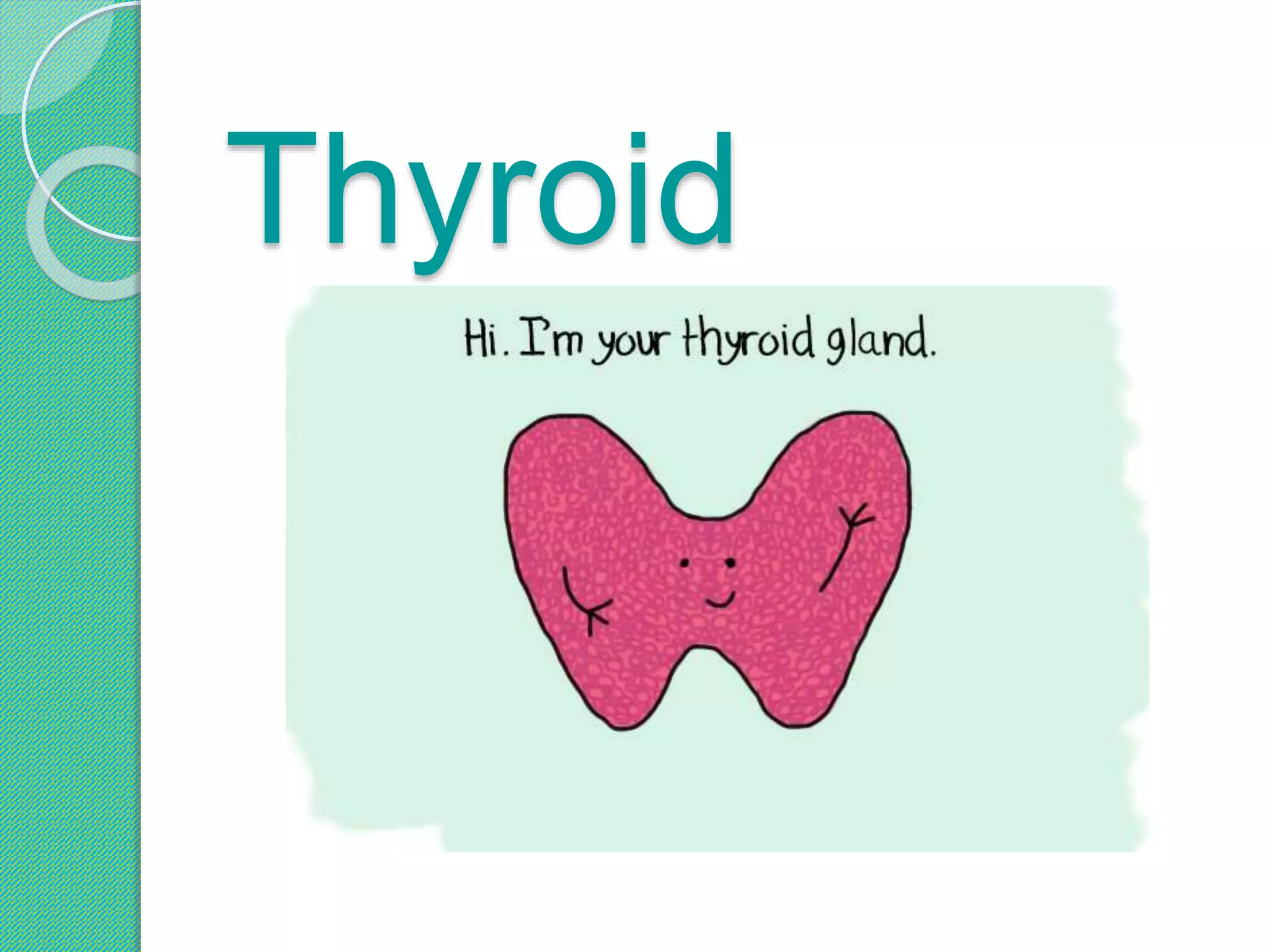
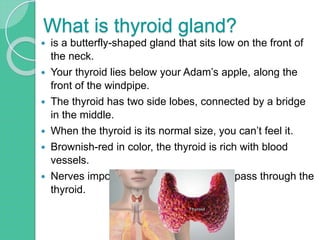
 is a butterfly-shaped gland that sits low on the front of
the neck.
 Your thyroid lies below your Adam’s apple, along the
front of the windpipe.
 The thyroid has two side lobes, connected by a bridge
in the middle.
 When the thyroid is its normal size, you can’t feel it.
 Brownish-red in color, the thyroid is rich with blood
vessels.
 Nerves important for voice quality also pass through the
thyroid.
Functions
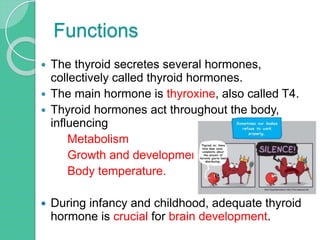
 The thyroid secretes several hormones,
collectively called thyroid hormones.
 The main hormone is thyroxine, also called T4.
 Thyroid hormones act throughout the body,
influencing
Metabolism
Growth and development
Body temperature.
 During infancy and childhood, adequate thyroid
hormone is crucial for brain development.
Disorders
 Thyroid disorders can range from a
small, harmless goiter (enlarged gland)
that needs no treatment to life-
threatening cancer.
 The most common thyroid problems
involve abnormal production of thyroid
hormones.
 Too much thyroid hormone results in a
condition known as hyperthyroidism.
 Insufficient hormone production leads to
hypothyroidism.
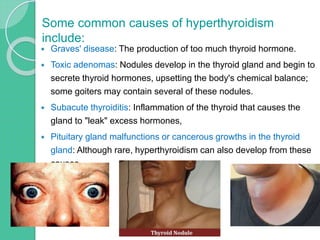
 Graves' disease: The production of too much thyroid hormone.
 Toxic adenomas: Nodules develop in the thyroid gland and begin to
secrete thyroid hormones, upsetting the body's chemical balance;
some goiters may contain several of these nodules.
 Subacute thyroiditis: Inflammation of the thyroid that causes the
gland to "leak" excess hormones,
 Pituitary gland malfunctions or cancerous growths in the thyroid
gland: Although rare, hyperthyroidism can also develop from these
causes.
Some common causes of hyperthyroidism
include:
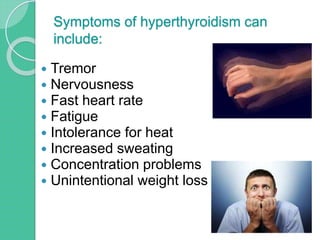
Symptoms of hyperthyroidism can
include:
 Tremor
 Nervousness
 Fast heart rate
 Fatigue
 Intolerance for heat
 Increased sweating
 Concentration problems
 Unintentional weight loss
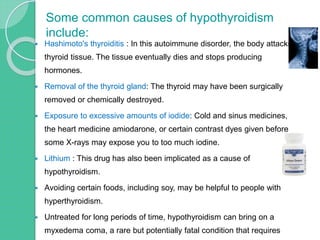
 Hashimoto's thyroiditis : In this autoimmune disorder, the body attacks
thyroid tissue. The tissue eventually dies and stops producing
hormones.
 Removal of the thyroid gland: The thyroid may have been surgically
removed or chemically destroyed.
 Exposure to excessive amounts of iodide: Cold and sinus medicines,
the heart medicine amiodarone, or certain contrast dyes given before
some X-rays may expose you to too much iodine.
 Lithium : This drug has also been implicated as a cause of
hypothyroidism.
 Avoiding certain foods, including soy, may be helpful to people with
hyperthyroidism.
 Untreated for long periods of time, hypothyroidism can bring on a
myxedema coma, a rare but potentially fatal condition that requires
Some common causes of hypothyroidism
include:
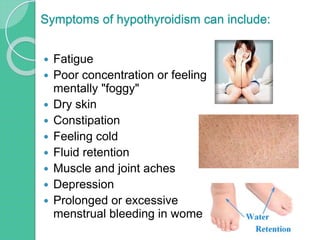
Symptoms of hypothyroidism can include:
 Fatigue
 Poor concentration or feeling
mentally "foggy"
 Dry skin
 Constipation
 Feeling cold
 Fluid retention
 Muscle and joint aches
 Depression
 Prolonged or excessive
menstrual bleeding in women
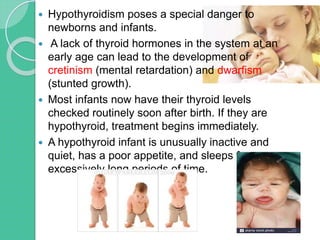
 Hypothyroidism poses a special danger to
newborns and infants.
 A lack of thyroid hormones in the system at an
early age can lead to the development of
cretinism (mental retardation) and dwarfism
(stunted growth).
 Most infants now have their thyroid levels
checked routinely soon after birth. If they are
hypothyroid, treatment begins immediately.
 A hypothyroid infant is unusually inactive and
quiet, has a poor appetite, and sleeps for
excessively long periods of time.
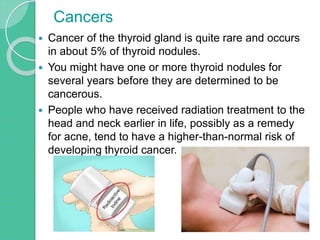
 Cancer of the thyroid gland is quite rare and occurs
in about 5% of thyroid nodules.
 You might have one or more thyroid nodules for
several years before they are determined to be
cancerous.
 People who have received radiation treatment to the
head and neck earlier in life, possibly as a remedy
for acne, tend to have a higher-than-normal risk of
developing thyroid cancer.
Cancers
Thyroid medications
 Although the effects can be unpleasant or
uncomfortable, most thyroid problems can be
managed well if properly diagnosed and treated.
 In addition to thorough medical history and physical
exam, specialized tests are used to diagnose thyroid
disorders.
 Blood tests are typically done to measure levels of
thyroid hormones and TSH.
 Ultrasound scans using radioactive
 Medications can be given to replace the missing
thyroid hormone in hypothyroidism.
 Synthetic thyroid hormone is given in pill form by
mouth.
 If hyperthyroidism is not controlled with medications,
Gender percentage
 According to different research, women are having problems with
thyroid gland 3-10 times more, than men.
 As women are more susceptible to different hormonal leaps, their
body is very sensitive to any hormonal changes and react to them
sharper than the "calm" male body. That is why iodine deficiency
often causes complications in the female reproductive system, and
not in men.
 The research findings show that thyroid hormones produced by the
thyroid gland protect the body from carcinogens and the risk of
breast cancer in women increases, when there is a shortage of
these hormones.
 Pregnant women are the most sensitive to iodine deficiency, as
during this period the woman's hormonal system undergoes serious
challenge. Besides, by 16-17th week the fetus begins to develop its
own thyroid gland, and it begins to take iodine from mother.
Summary
 Thyroid gland plays an important role in human
body.
 Abnormal production of thyroid hormones can
cause different disorders.
 Hyperthyroidism
 Hypothyroidism
 Thyroid cancer
 Sings and symptoms of hyperthyroidism and
hypothyroidism.
 Medications
 Gender percentage of thyroid disorders.

Thyroid ppt

  • 1.
  • 2.
    Objectives  What isthyroid gland?  Functions of thyroid gland.  Disorders of thyroid gland.  Causes of thyroid disorders.  Signs and symptoms.  Treatments  prevention  Gender percentage.  Summary
  • 3.
    What is thyroidgland?  is a butterfly-shaped gland that sits low on the front of the neck.  Your thyroid lies below your Adam’s apple, along the front of the windpipe.  The thyroid has two side lobes, connected by a bridge in the middle.  When the thyroid is its normal size, you can’t feel it.  Brownish-red in color, the thyroid is rich with blood vessels.  Nerves important for voice quality also pass through the thyroid.
  • 4.
    Functions  The thyroidsecretes several hormones, collectively called thyroid hormones.  The main hormone is thyroxine, also called T4.  Thyroid hormones act throughout the body, influencing Metabolism Growth and development Body temperature.  During infancy and childhood, adequate thyroid hormone is crucial for brain development.
  • 5.
    Disorders  Thyroid disorderscan range from a small, harmless goiter (enlarged gland) that needs no treatment to life- threatening cancer.  The most common thyroid problems involve abnormal production of thyroid hormones.  Too much thyroid hormone results in a condition known as hyperthyroidism.  Insufficient hormone production leads to hypothyroidism.
  • 6.
     Graves' disease:The production of too much thyroid hormone.  Toxic adenomas: Nodules develop in the thyroid gland and begin to secrete thyroid hormones, upsetting the body's chemical balance; some goiters may contain several of these nodules.  Subacute thyroiditis: Inflammation of the thyroid that causes the gland to "leak" excess hormones,  Pituitary gland malfunctions or cancerous growths in the thyroid gland: Although rare, hyperthyroidism can also develop from these causes. Some common causes of hyperthyroidism include:
  • 7.
    Symptoms of hyperthyroidismcan include:  Tremor  Nervousness  Fast heart rate  Fatigue  Intolerance for heat  Increased sweating  Concentration problems  Unintentional weight loss
  • 8.
     Hashimoto's thyroiditis: In this autoimmune disorder, the body attacks thyroid tissue. The tissue eventually dies and stops producing hormones.  Removal of the thyroid gland: The thyroid may have been surgically removed or chemically destroyed.  Exposure to excessive amounts of iodide: Cold and sinus medicines, the heart medicine amiodarone, or certain contrast dyes given before some X-rays may expose you to too much iodine.  Lithium : This drug has also been implicated as a cause of hypothyroidism.  Avoiding certain foods, including soy, may be helpful to people with hyperthyroidism.  Untreated for long periods of time, hypothyroidism can bring on a myxedema coma, a rare but potentially fatal condition that requires Some common causes of hypothyroidism include:
  • 9.
    Symptoms of hypothyroidismcan include:  Fatigue  Poor concentration or feeling mentally "foggy"  Dry skin  Constipation  Feeling cold  Fluid retention  Muscle and joint aches  Depression  Prolonged or excessive menstrual bleeding in women
  • 10.
     Hypothyroidism posesa special danger to newborns and infants.  A lack of thyroid hormones in the system at an early age can lead to the development of cretinism (mental retardation) and dwarfism (stunted growth).  Most infants now have their thyroid levels checked routinely soon after birth. If they are hypothyroid, treatment begins immediately.  A hypothyroid infant is unusually inactive and quiet, has a poor appetite, and sleeps for excessively long periods of time.
  • 11.
     Cancer ofthe thyroid gland is quite rare and occurs in about 5% of thyroid nodules.  You might have one or more thyroid nodules for several years before they are determined to be cancerous.  People who have received radiation treatment to the head and neck earlier in life, possibly as a remedy for acne, tend to have a higher-than-normal risk of developing thyroid cancer. Cancers
  • 12.
    Thyroid medications  Althoughthe effects can be unpleasant or uncomfortable, most thyroid problems can be managed well if properly diagnosed and treated.  In addition to thorough medical history and physical exam, specialized tests are used to diagnose thyroid disorders.  Blood tests are typically done to measure levels of thyroid hormones and TSH.  Ultrasound scans using radioactive  Medications can be given to replace the missing thyroid hormone in hypothyroidism.  Synthetic thyroid hormone is given in pill form by mouth.  If hyperthyroidism is not controlled with medications,
  • 13.
    Gender percentage  Accordingto different research, women are having problems with thyroid gland 3-10 times more, than men.  As women are more susceptible to different hormonal leaps, their body is very sensitive to any hormonal changes and react to them sharper than the "calm" male body. That is why iodine deficiency often causes complications in the female reproductive system, and not in men.  The research findings show that thyroid hormones produced by the thyroid gland protect the body from carcinogens and the risk of breast cancer in women increases, when there is a shortage of these hormones.  Pregnant women are the most sensitive to iodine deficiency, as during this period the woman's hormonal system undergoes serious challenge. Besides, by 16-17th week the fetus begins to develop its own thyroid gland, and it begins to take iodine from mother.
  • 14.
    Summary  Thyroid glandplays an important role in human body.  Abnormal production of thyroid hormones can cause different disorders.  Hyperthyroidism  Hypothyroidism  Thyroid cancer  Sings and symptoms of hyperthyroidism and hypothyroidism.  Medications  Gender percentage of thyroid disorders.

Editor's Notes

  • #4 Use multiple points, if necessary.
  • #5 Use brief bullets and discuss details verbally.