Menopause-
Basics and Clinical
Dr Shahjada Selim
Associate Professor
Department of Endocrinology, BSMMU
Faculty in Endocrinology, Texila American University, USA
Website: shahjadaselim.com
Menopause Basics
Learning Objectives:
• Describe the hypothalamic-pituitary-ovarian axis
• Differentiate between Perimenopause and Menopause
• Learn physiologic and anatomic changes at menopause
• Describe typical menopausal symptoms
• Perform focused history +physical for menopausal woman
• Interpret selected laboratory tests to evaluate menopause.
• Counsel patients regarding female sexuality and aging
– physical, emotional, and relationship-based issues
What does menopause mean to women?
• Cessation of menstrual periods
• End of reproductive capacity
• Hormonal changes
• Change of life, a life stage
• End of prior symptoms
• Beginning of new symptoms
• Changing emotions
• Changing body
• Aging process
• Disease risks
• Medical care needs
Woods et al. Menopause 1999.
Menopause: The Reality
• Clinical diagnosis
• Permanent cessation of menses
following the loss of ovarian activity
• Lack of menses for 12 months
• Mean age in US is 51 (45-55 years)
• Women will spend one-third to one-half
of their lives postmenopausally
Katz VL, Lentz GM, Lobo RA, Gershenson DM. Comprehensive
“The anchor point that is defined after
12 months of amenorrhea following the
final menstrual period (FMP), which
reflects a near complete but
natural diminution of ovarian hormone
secretion.”
Soules et al. Menopause 2001.
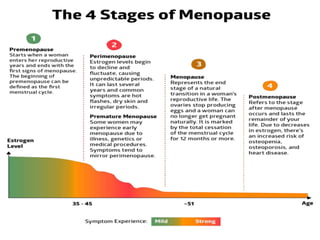
Menopause
“Occurs after 12 consecutive
months of amenorrhea, for which
there is no other obvious pathologic
or physiologic cause.”
(Average age in Western world is 51 years)
Natural (spontaneous) menopause
Utian. Climacteric 1999.
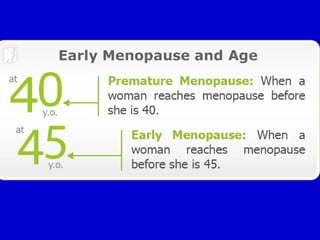
Premature menopause
“Menopause that occurs in
women at or under40 years old.”
Utian. Climacteric 1999.
Premature ovarian failure
• Hypergonadotropic
amenorrhea ≥ 40 years old
• Associated with many
other health conditions
(eg, autoimmune, toxic, genetic)
• May not be permanent
• Is not the same as
premature menopause
Premature ovarian failure
(continued)
• Ovarian insufficiency leading to
amenorrhea that occurs in women ≥ 40
• Can be transient (eg, from over-
exercising, eating disorders, high
stress levels
• Can be permanent (eg, from
autoimmune disease or genetic
abnormalities) and equivalent to
premature menopause
STRAW reproductive aging system
Length
decreases
-2 days
Stages of Reproductive Aging Workshop. Menopause 2001.
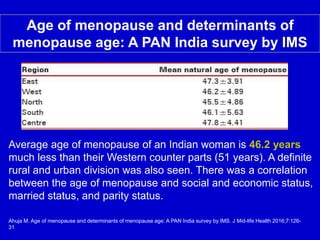
Ahuja M. Age of menopause and determinants of menopause age: A PAN India survey by IMS. J Mid-life Health 2016;7:126-
31
Average age of menopause of an Indian woman is 46.2 years
much less than their Western counter parts (51 years). A definite
rural and urban division was also seen. There was a correlation
between the age of menopause and social and economic status,
married status, and parity status.
Age of menopause and determinants of
menopause age: A PAN India survey by IMS
“Symptoms” of perimenopause
• Natural, normal changes, not a disease
• Subtle hormonal changes during the 30s
• Symptoms noticeable during the 40s
• Disturbances may be acute or gradual
• Not all midlife symptoms are attributable
to menopause
Induced menopause
“Cessation of menstruation that follows
bilateral oophorectomy (surgical
menopause), iatrogenic ablation of
ovarian function by chemotherapy
or pelvic radiation therapy.”
(No perimenopause transition for
these women)
Utian. Climacteric 1999.
Premature or induced
menopause: complicating factors
• Early loss of fertility
• More severe symptoms
• Greater risk of osteoporosis and CVD
• Possibly complicated by sequelae of
underlying disease
• Little research regarding benefits/risks
of treatment
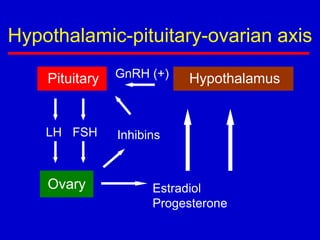
Hypothalamic-pituitary-ovarian axis
Pituitary HypothalamusGnRH (+)
Estradiol
Progesterone
LH FSH Inhibins
Ovary
Reproductive aging
• 1-2 million follicles at birth, only
approximately 1,000 by menopause
• Most follicular loss due to atresia,
not ovulation
• Atresia accelerates at around age 37
• Age-related uterine changes also
contribute to decreased fertility
Ovarian function
in perimenopause
• Ovaries begin decreasing in size
• Estradiol still dominant estrogen
• Number of follicles decreases substantially
• Production of inhibin decreases
• Remaining follicles respond poorly
to elevated FSH and LH
• Erratic ovulation results in menstrual
cycle irregularity
Decline in fertility
• Fertility wanes starting at about age 37,
before perimenopause signs occur
• By age 45, risk of spontaneous
miscarriage increases to 50%
• Fertility-enhancing techniques available
• Natural pregnancy still possible until
menopause is reached
Physiology: perimenopause
• Estrogen and progesterone levels
fluctuate erratically
• Very high serum estrogen levels
may result
• Gradual decline in testosterone with
age beginning mid-30s
Zumoff et al. J Clin Endocrinol Metab 1995.
Burger et al. J Clin Endocrinol Metab 2000.
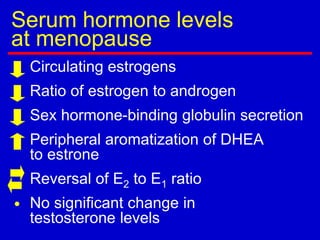
Serum hormone levels
at menopause
Circulating estrogens
Ratio of estrogen to androgen
Sex hormone-binding globulin secretion
Peripheral aromatization of DHEA
to estrone
Reversal of E2 to E1 ratio
No significant change in
testosterone levels
•
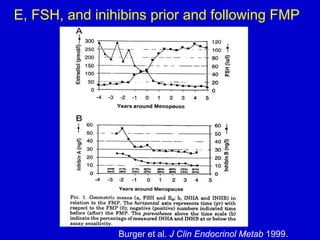
Burger et al. J Clin Endocrinol Metab 1999.
E, FSH, and inihibins prior and following FMP
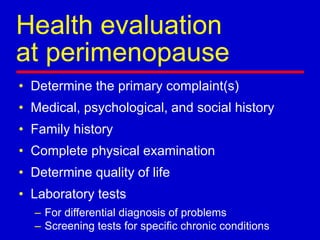
Health evaluation
at perimenopause
• Determine the primary complaint(s)
• Medical, psychological, and social history
• Family history
• Complete physical examination
• Determine quality of life
• Laboratory tests
– For differential diagnosis of problems
– Screening tests for specific chronic conditions
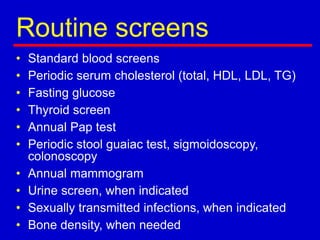
Routine screens
• Standard blood screens
• Periodic serum cholesterol (total, HDL, LDL, TG)
• Fasting glucose
• Thyroid screen
• Annual Pap test
• Periodic stool guaiac test, sigmoidoscopy,
colonoscopy
• Annual mammogram
• Urine screen, when indicated
• Sexually transmitted infections, when indicated
• Bone density, when needed
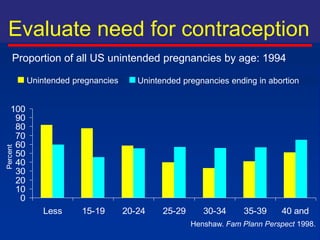
0
10
20
30
40
50
60
70
80
90
100
Less
than 15
15-19 20-24 25-29 30-34 35-39 40 and
older
Unintended Pregnancies Unintended Pregnancies Ending in Abortion
Proportion of All U.S. Unintended
Pregnancies by Age: 1994
Percent
Age (years)
Evaluate need for contraception
Proportion of all US unintended pregnancies by age: 1994
Unintended pregnancies Unintended pregnancies ending in abortion
Henshaw. Fam Plann Perspect 1998.
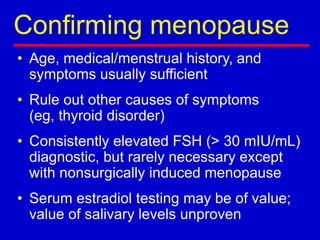
Confirming menopause
• Age, medical/menstrual history, and
symptoms usually sufficient
• Rule out other causes of symptoms
(eg, thyroid disorder)
• Consistently elevated FSH (> 30 mIU/mL)
diagnostic, but rarely necessary except
with nonsurgically induced menopause
• Serum estradiol testing may be of value;
value of salivary levels unproven
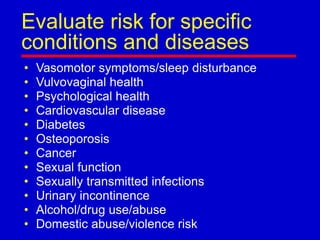
Evaluate risk for specific
conditions and diseases
• Vasomotor symptoms/sleep disturbance
• Vulvovaginal health
• Psychological health
• Cardiovascular disease
• Diabetes
• Osteoporosis
• Cancer
• Sexual function
• Sexually transmitted infections
• Urinary incontinence
• Alcohol/drug use/abuse
• Domestic abuse/violence risk
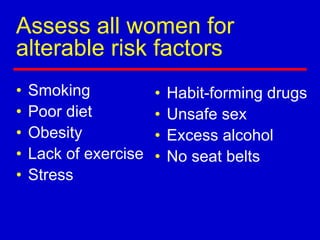
Assess all women for
alterable risk factors
• Smoking
• Poor diet
• Obesity
• Lack of exercise
• Stress
• Habit-forming drugs
• Unsafe sex
• Excess alcohol
• No seat belts
Therapeutic options
• No intervention/treatment
• Lifestyle modification
• Nonprescription remedies
• Complementary and alternative
medicine (CAM) approaches
• Prescription drugs
• Surgical procedures
Write a lifestyle Rx
• Stop smoking
• Have a nutritionally sound diet
• Achieve and maintain healthy weight
• Reduce stress
• Avoid excess alcohol
• Say no to drugs and unsafe sex
• Wear seat belts
• Exercise regularly
Benefits of regular exercise
• Decreases hot flashes
• Improves mood and sleep
• Decreases/maintains weight
• Supports joint/muscle flexibility
• Prevents bone loss
• Decreases risk of many
other diseases
“Improved control of behavioral risk
factors, such as use of tobacco, alcohol,
and other drugs, lack of exercise, and
poor nutrition, could prevent half of
premature deaths, one-third of all cases
of acute disability, and all cases of
chronic disability.”
US Preventive Services Task Force. Guide to Clinical Preventive Service 1989.
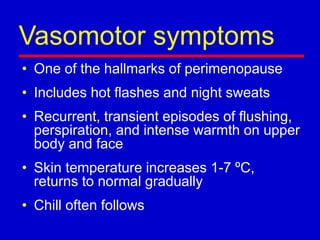
Vasomotor symptoms
• One of the hallmarks of perimenopause
• Includes hot flashes and night sweats
• Recurrent, transient episodes of flushing,
perspiration, and intense warmth on upper
body and face
• Skin temperature increases 1-7 ºC,
returns to normal gradually
• Chill often follows
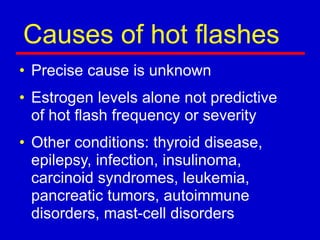
Causes of hot flashes
• Precise cause is unknown
• Estrogen levels alone not predictive
of hot flash frequency or severity
• Other conditions: thyroid disease,
epilepsy, infection, insulinoma,
carcinoid syndromes, leukemia,
pancreatic tumors, autoimmune
disorders, mast-cell disorders
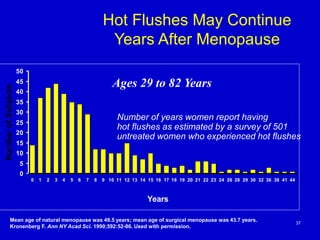
37
0
5
10
15
20
25
30
35
40
45
50
0 1 2 3 4 5 6 7 8 9 10 11 12 13 14 15 16 17 18 19 20 21 22 23 24 26 28 29 30 32 36 38 41 44
Years
NumberofSubjects
Number of years women report having
hot flushes as estimated by a survey of 501
untreated women who experienced hot flushes
Hot Flushes May Continue
Years After Menopause
Ages 29 to 82 Years
Mean age of natural menopause was 49.5 years; mean age of surgical menopause was 43.7 years.
Kronenberg F. Ann NY Acad Sci. 1990;592:52-86. Used with permission.
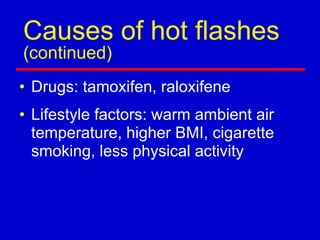
Causes of hot flashes
(continued)
• Drugs: tamoxifen, raloxifene
• Lifestyle factors: warm ambient air
temperature, higher BMI, cigarette
smoking, less physical activity
Hot Flashes: Demographics,
Lifestyle, Health
• Symptoms vary by race/ethnicity
– More African Americans and Hispanics than
Caucasians affected
– Fewer Chinese than Caucasian affected
• Significant association with
– BMI
– Passive smoke exposure
– History of premenstrual symptoms
– Use of OTC pain medication
– History of comorbidities
– Perceived stress
– Age
Gold EB et al. Am J Epidemiol. 2004;159(12):1189-1199
Alternative Approaches for Vasomotor
Symptoms: Lifestyle Adaptations
Guidelines from NAMS
– Limited effectiveness
• Cooling body core temperature
• Exercise
• Paced respirations (catecholamine control)
• Relaxing activities
– yoga, massage, meditation, paced respiration,
leisurely bath
• Avoid Triggers
– spicy food, hot drinks, caffeine, alcohol
NAMS Position Statement (Treatment of menopause-associated vasomotor symptoms) Menopause. 2004;11:11-33;
Kronenberg F, Fugh-Berman A. Ann Intern Med. 2002;137:805-813
Huntley AL, Ernst E. Menopause. 2003;10:465-76.
Non-Prescription Remedies
Side effects and drug interactions clearly
occur
Lack long-term safety and efficacy data
– Phytoestrogens/isoflavones
• Dietary or supplements (soy-derived)
• Red clover
– Black cohosh
– Vitamin E - not clinically significant
– Studies show no effect compared with placebo
• Dong quai
• Ginseng
• Evening primrose oil
NAMS Position Statement (Treatment of menopause-associated vasomotor symptoms). Menopause. 2004;11:11-33;
Kronenberg F, Fugh-Berman A. Ann Intern Med. 2002;137:805-813; Huntley AL, Ernst E. Menopause. 2003;10:465-76.
Clinical Management
Mild Vasomotor Symptoms
– For mild vasomotor symptoms
• Encourage lifestyle changes
• Non-prescription remedies- tested short term with
little efficacy over placebo but no evidence of harm
– Dietary isoflavones
– Black cohosh
– Vitamin E
Clinical Management
Mod-Severe Vasomotor Symptoms
• Hormone therapy is only FDA approved
treatment
– “gold standard”
• SSRI’s and gabapentin
–have efficacy in early studies
• Progestogens effective
– however large doses required
• Clonidine (oral or transdermal)
Lifestyle Issues in Menopause
• Vasomotor (hot flushes and night sweats)
• Low libido/painful intercourse
• Weight gain
• Memory problems, difficulty concentrating
• Mood swings
• Insomnia, fatigue
• Dizziness, rapid irregular heartbeat
• Atrophic vaginitis, bladder irritability
• Headaches
Rapkin AJ. Am J Obstet Gynecol. 2007;196(2):97-106.
OCs:
noncontraceptive benefits
• Suppress vasomotor symptoms
• Restore predictable menses
• Decrease dysmenorrhea
• Enhance BMD
• Prevent endometrial and
ovarian malignancies
OCs: when to stop
• FSH testing not reliable in
perimenopausal women or in those
using OCs
• If contraception needed, continuation
to mid-50s reasonable
• Otherwise, consider stopping early 50s
• Low-dose OC has more hormone
than EPT
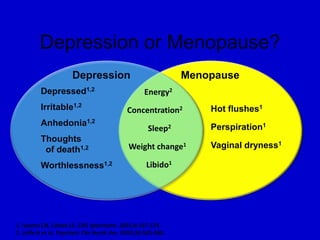
Depression or Menopause?
Depressed1,2
Weight change1
Energy2
Sleep2
Libido1
Thoughts
of death1,2
Worthlessness1,2
Concentration2
Anhedonia1,2
Hot flushes1
Perspiration1
Vaginal dryness1
1. Soares CN, Cohen LS. CNS Spectrums. 2001;6:167-174.
2. Joffe H et al. Psychiatr Clin North Am. 2003;26:563-580.
Irritable1,2
Depression Menopause
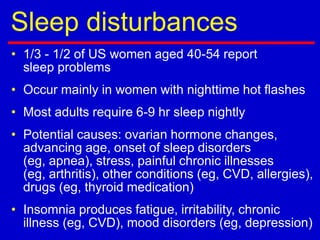
Sleep disturbances
• 1/3 - 1/2 of US women aged 40-54 report
sleep problems
• Occur mainly in women with nighttime hot flashes
• Most adults require 6-9 hr sleep nightly
• Potential causes: ovarian hormone changes,
advancing age, onset of sleep disorders
(eg, apnea), stress, painful chronic illnesses
(eg, arthritis), other conditions (eg, CVD, allergies),
drugs (eg, thyroid medication)
• Insomnia produces fatigue, irritability, chronic
illness (eg, CVD), mood disorders (eg, depression)
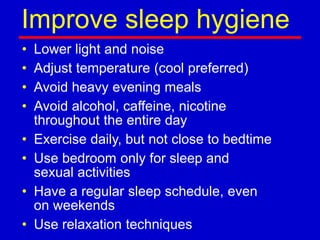
Improve sleep hygiene
• Lower light and noise
• Adjust temperature (cool preferred)
• Avoid heavy evening meals
• Avoid alcohol, caffeine, nicotine
throughout the entire day
• Exercise daily, but not close to bedtime
• Use bedroom only for sleep and
sexual activities
• Have a regular sleep schedule, even
on weekends
• Use relaxation techniques
3Erlik et al. JAMA 1981.
4Polo-Kantola et al. Am J Obstet Gynecol 1998.
5Antonijevic et al. Am J Obstet Gynecol 2000.
ET effects on sleep
• Decreases frequency of
− Night sweats1-4
− Periods of wakefulness during the night 3,4
• Reduces sleep latency 1,2
• Improves sleep in menopausal women with
insomnia, even in the absence of vasomotor
symptoms4
• Increases the percentage of REM sleep 2,5
• For EPT, use bedtime dosage of progesterone, a
mild soporific, to improve sleep
1Scharf et al. Clin Ther 1997.
2Schiff et al. Maturitas 1980.
Uterine bleeding changes
during perimenopause
• Strong predictor of perimenopause
• About 90% of women have 4-8 years of cycle
changes before reaching menopause
• No universal definition of “irregular” but unique
to each woman
• Possible changes:
– lighter bleeding (avg blood loss, < 20ml)
– heavier bleeding (avg blood loss, > 40ml)
– bleeding lasting for < 2 days or > 4 days
– cycle length < 7 days or > 28 days
– skipped periods
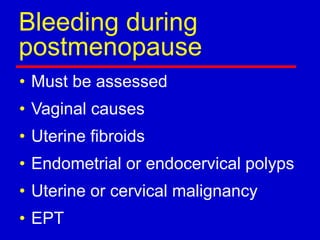
Bleeding during
postmenopause
• Must be assessed
• Vaginal causes
• Uterine fibroids
• Endometrial or endocervical polyps
• Uterine or cervical malignancy
• EPT
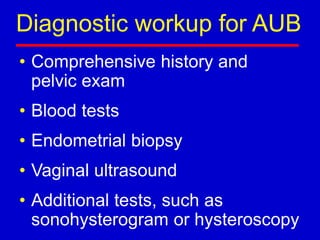
Diagnostic workup for AUB
• Comprehensive history and
pelvic exam
• Blood tests
• Endometrial biopsy
• Vaginal ultrasound
• Additional tests, such as
sonohysterogram or hysteroscopy
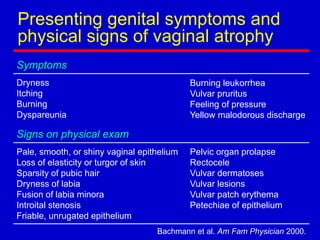
Dryness
Itching
Burning
Dyspareunia
Symptoms
Presenting genital symptoms and
physical signs of vaginal atrophy
Bachmann et al. Am Fam Physician 2000.
Pale, smooth, or shiny vaginal epithelium
Loss of elasticity or turgor of skin
Sparsity of pubic hair
Dryness of labia
Fusion of labia minora
Introital stenosis
Friable, unrugated epithelium
Signs on physical exam
Pelvic organ prolapse
Rectocele
Vulvar dermatoses
Vulvar lesions
Vulvar patch erythema
Petechiae of epithelium
Burning leukorrhea
Vulvar pruritus
Feeling of pressure
Yellow malodorous discharge
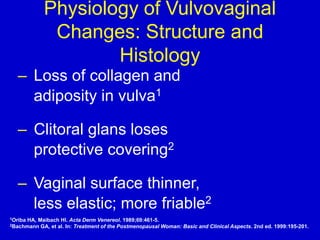
1Oriba HA, Maibach HI. Acta Derm Venereol. 1989;69:461-5.
2Bachmann GA, et al. In: Treatment of the Postmenopausal Woman: Basic and Clinical Aspects. 2nd ed. 1999:195-201.
Physiology of Vulvovaginal
Changes: Structure and
Histology
– Loss of collagen and
adiposity in vulva1
– Clitoral glans loses
protective covering2
– Vaginal surface thinner,
less elastic; more friable2
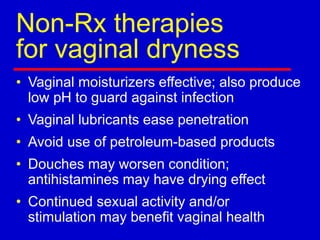
Non-Rx therapies
for vaginal dryness
• Vaginal moisturizers effective; also produce
low pH to guard against infection
• Vaginal lubricants ease penetration
• Avoid use of petroleum-based products
• Douches may worsen condition;
antihistamines may have drying effect
• Continued sexual activity and/or
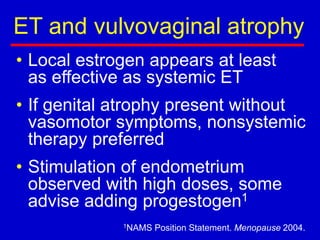
stimulation may benefit vaginal health
ET and vulvovaginal atrophy
• Local estrogen appears at least
as effective as systemic ET
• If genital atrophy present without
vasomotor symptoms, nonsystemic
therapy preferred
• Stimulation of endometrium
observed with high doses, some
advise adding progestogen1
1NAMS Position Statement. Menopause 2004.
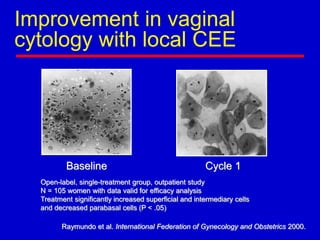
Improvement in vaginal
cytology with local CEE
Baseline Cycle 1
Raymundo et al. International Federation of Gynecology and Obstetrics 2000.
Open-label, single-treatment group, outpatient study
N = 105 women with data valid for efficacy analysis
Treatment significantly increased superficial and intermediary cells
and decreased parabasal cells (P < .05)
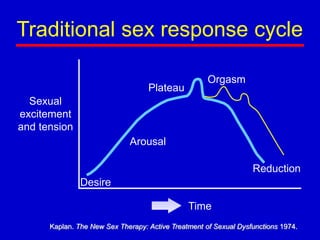
Sexual
excitement
and tension
Desire
Time
Reduction
Arousal
Plateau
Orgasm
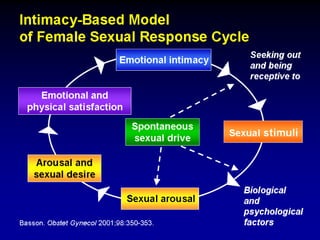
Traditional sex response cycle
Kaplan. The New Sex Therapy: Active Treatment of Sexual Dysfunctions 1974.
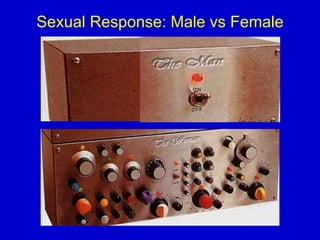
Sexual Response: Male vs Female
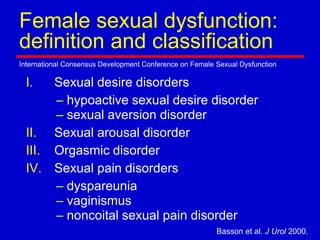
Female sexual dysfunction:
definition and classification
International Consensus Development Conference on Female Sexual Dysfunction
Basson et al. J Urol 2000.
I. Sexual desire disorders
– hypoactive sexual desire disorder
– sexual aversion disorder
II. Sexual arousal disorder
III. Orgasmic disorder
IV. Sexual pain disorders
– dyspareunia
– vaginismus
– noncoital sexual pain disorder
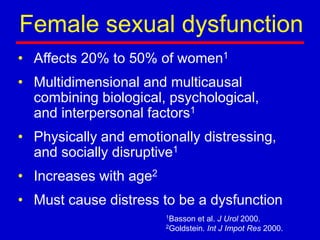
Female sexual dysfunction
• Affects 20% to 50% of women1
• Multidimensional and multicausal
combining biological, psychological,
and interpersonal factors1
• Physically and emotionally distressing,
and socially disruptive1
• Increases with age2
• Must cause distress to be a dysfunction
1Basson et al. J Urol 2000.
2Goldstein. Int J Impot Res 2000.
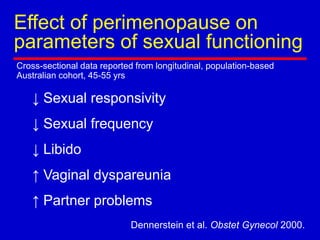
Effect of perimenopause on
parameters of sexual functioning
Cross-sectional data reported from longitudinal, population-based
Australian cohort, 45-55 yrs
↓ Sexual responsivity
↓ Sexual frequency
↓ Libido
↑ Vaginal dyspareunia
↑ Partner problems
Dennerstein et al. Obstet Gynecol 2000.
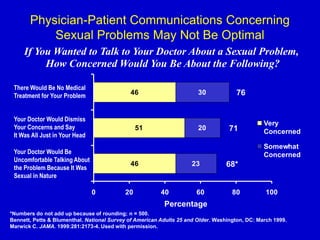
46
51
46
23
20
30
0 20 40 60 80 100
Very
Concerned
Somewhat
Concerned
*Numbers do not add up because of rounding; n = 500.
Bennett, Petts & Blumenthal. National Survey of American Adults 25 and Older. Washington, DC: March 1999.
Marwick C. JAMA. 1999:281:2173-4. Used with permission.
If You Wanted to Talk to Your Doctor About a Sexual Problem,
How Concerned Would You Be About the Following?
76
71
68*
Physician-Patient Communications Concerning
Sexual Problems May Not Be Optimal
There Would Be No Medical
Treatment for Your Problem
Your Doctor Would Dismiss
Your Concerns and Say
It Was All Just in Your Head
Your Doctor Would Be
Uncomfortable Talking About
the Problem Because It Was
Sexual in Nature
Percentage
Sexual history sample questions
• “Are you sexually active?”
• “Are you having any sexual difficulties
or problems at this time?”
• “Have you noted any change in your
sexual interest?”
• “Are you having any difficulty with
vaginal lubrication?”
• “Do you have any concerns about
your sexual health?”
Bachmann et al. Obstet Gynecol 1989.
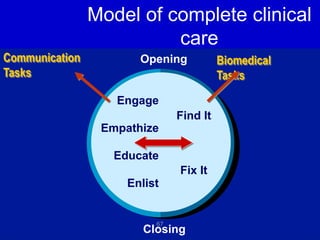
67
Model of complete clinical
care
Engage
Empathize
Educate
Enlist
Fix It
Find It
Opening
Closing
Communication
Tasks
Biomedical
Tasks
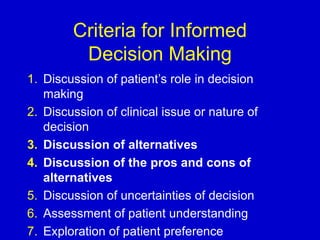
Criteria for Informed
Decision Making
1. Discussion of patient’s role in decision
making
2. Discussion of clinical issue or nature of
decision
3. Discussion of alternatives
4. Discussion of the pros and cons of
alternatives
5. Discussion of uncertainties of decision
6. Assessment of patient understanding
7. Exploration of patient preference

Menopause by Dr Shahjada Selim

  • 1.
    Menopause- Basics and Clinical DrShahjada Selim Associate Professor Department of Endocrinology, BSMMU Faculty in Endocrinology, Texila American University, USA Website: shahjadaselim.com
  • 2.
    Menopause Basics Learning Objectives: •Describe the hypothalamic-pituitary-ovarian axis • Differentiate between Perimenopause and Menopause • Learn physiologic and anatomic changes at menopause • Describe typical menopausal symptoms • Perform focused history +physical for menopausal woman • Interpret selected laboratory tests to evaluate menopause. • Counsel patients regarding female sexuality and aging – physical, emotional, and relationship-based issues
  • 3.
    What does menopausemean to women? • Cessation of menstrual periods • End of reproductive capacity • Hormonal changes • Change of life, a life stage • End of prior symptoms • Beginning of new symptoms • Changing emotions • Changing body • Aging process • Disease risks • Medical care needs Woods et al. Menopause 1999.
  • 4.
    Menopause: The Reality •Clinical diagnosis • Permanent cessation of menses following the loss of ovarian activity • Lack of menses for 12 months • Mean age in US is 51 (45-55 years) • Women will spend one-third to one-half of their lives postmenopausally Katz VL, Lentz GM, Lobo RA, Gershenson DM. Comprehensive
  • 5.
    “The anchor pointthat is defined after 12 months of amenorrhea following the final menstrual period (FMP), which reflects a near complete but natural diminution of ovarian hormone secretion.” Soules et al. Menopause 2001. Menopause
  • 6.
    “Occurs after 12consecutive months of amenorrhea, for which there is no other obvious pathologic or physiologic cause.” (Average age in Western world is 51 years) Natural (spontaneous) menopause Utian. Climacteric 1999.
  • 7.
    Premature menopause “Menopause thatoccurs in women at or under40 years old.” Utian. Climacteric 1999.
  • 8.
    Premature ovarian failure •Hypergonadotropic amenorrhea ≥ 40 years old • Associated with many other health conditions (eg, autoimmune, toxic, genetic) • May not be permanent • Is not the same as premature menopause
  • 9.
    Premature ovarian failure (continued) •Ovarian insufficiency leading to amenorrhea that occurs in women ≥ 40 • Can be transient (eg, from over- exercising, eating disorders, high stress levels • Can be permanent (eg, from autoimmune disease or genetic abnormalities) and equivalent to premature menopause
  • 11.
    STRAW reproductive agingsystem Length decreases -2 days Stages of Reproductive Aging Workshop. Menopause 2001.
  • 14.
    Ahuja M. Ageof menopause and determinants of menopause age: A PAN India survey by IMS. J Mid-life Health 2016;7:126- 31 Average age of menopause of an Indian woman is 46.2 years much less than their Western counter parts (51 years). A definite rural and urban division was also seen. There was a correlation between the age of menopause and social and economic status, married status, and parity status. Age of menopause and determinants of menopause age: A PAN India survey by IMS
  • 15.
    “Symptoms” of perimenopause •Natural, normal changes, not a disease • Subtle hormonal changes during the 30s • Symptoms noticeable during the 40s • Disturbances may be acute or gradual • Not all midlife symptoms are attributable to menopause
  • 16.
    Induced menopause “Cessation ofmenstruation that follows bilateral oophorectomy (surgical menopause), iatrogenic ablation of ovarian function by chemotherapy or pelvic radiation therapy.” (No perimenopause transition for these women) Utian. Climacteric 1999.
  • 17.
    Premature or induced menopause:complicating factors • Early loss of fertility • More severe symptoms • Greater risk of osteoporosis and CVD • Possibly complicated by sequelae of underlying disease • Little research regarding benefits/risks of treatment
  • 18.
    Hypothalamic-pituitary-ovarian axis Pituitary HypothalamusGnRH(+) Estradiol Progesterone LH FSH Inhibins Ovary
  • 19.
    Reproductive aging • 1-2million follicles at birth, only approximately 1,000 by menopause • Most follicular loss due to atresia, not ovulation • Atresia accelerates at around age 37 • Age-related uterine changes also contribute to decreased fertility
  • 20.
    Ovarian function in perimenopause •Ovaries begin decreasing in size • Estradiol still dominant estrogen • Number of follicles decreases substantially • Production of inhibin decreases • Remaining follicles respond poorly to elevated FSH and LH • Erratic ovulation results in menstrual cycle irregularity
  • 21.
    Decline in fertility •Fertility wanes starting at about age 37, before perimenopause signs occur • By age 45, risk of spontaneous miscarriage increases to 50% • Fertility-enhancing techniques available • Natural pregnancy still possible until menopause is reached
  • 22.
    Physiology: perimenopause • Estrogenand progesterone levels fluctuate erratically • Very high serum estrogen levels may result • Gradual decline in testosterone with age beginning mid-30s Zumoff et al. J Clin Endocrinol Metab 1995. Burger et al. J Clin Endocrinol Metab 2000.
  • 23.
    Serum hormone levels atmenopause Circulating estrogens Ratio of estrogen to androgen Sex hormone-binding globulin secretion Peripheral aromatization of DHEA to estrone Reversal of E2 to E1 ratio No significant change in testosterone levels •
  • 24.
    Burger et al.J Clin Endocrinol Metab 1999. E, FSH, and inihibins prior and following FMP
  • 25.
    Health evaluation at perimenopause •Determine the primary complaint(s) • Medical, psychological, and social history • Family history • Complete physical examination • Determine quality of life • Laboratory tests – For differential diagnosis of problems – Screening tests for specific chronic conditions
  • 26.
    Routine screens • Standardblood screens • Periodic serum cholesterol (total, HDL, LDL, TG) • Fasting glucose • Thyroid screen • Annual Pap test • Periodic stool guaiac test, sigmoidoscopy, colonoscopy • Annual mammogram • Urine screen, when indicated • Sexually transmitted infections, when indicated • Bone density, when needed
  • 27.
    0 10 20 30 40 50 60 70 80 90 100 Less than 15 15-19 20-2425-29 30-34 35-39 40 and older Unintended Pregnancies Unintended Pregnancies Ending in Abortion Proportion of All U.S. Unintended Pregnancies by Age: 1994 Percent Age (years) Evaluate need for contraception Proportion of all US unintended pregnancies by age: 1994 Unintended pregnancies Unintended pregnancies ending in abortion Henshaw. Fam Plann Perspect 1998.
  • 28.
    Confirming menopause • Age,medical/menstrual history, and symptoms usually sufficient • Rule out other causes of symptoms (eg, thyroid disorder) • Consistently elevated FSH (> 30 mIU/mL) diagnostic, but rarely necessary except with nonsurgically induced menopause • Serum estradiol testing may be of value; value of salivary levels unproven
  • 29.
    Evaluate risk forspecific conditions and diseases • Vasomotor symptoms/sleep disturbance • Vulvovaginal health • Psychological health • Cardiovascular disease • Diabetes • Osteoporosis • Cancer • Sexual function • Sexually transmitted infections • Urinary incontinence • Alcohol/drug use/abuse • Domestic abuse/violence risk
  • 30.
    Assess all womenfor alterable risk factors • Smoking • Poor diet • Obesity • Lack of exercise • Stress • Habit-forming drugs • Unsafe sex • Excess alcohol • No seat belts
  • 31.
    Therapeutic options • Nointervention/treatment • Lifestyle modification • Nonprescription remedies • Complementary and alternative medicine (CAM) approaches • Prescription drugs • Surgical procedures
  • 32.
    Write a lifestyleRx • Stop smoking • Have a nutritionally sound diet • Achieve and maintain healthy weight • Reduce stress • Avoid excess alcohol • Say no to drugs and unsafe sex • Wear seat belts • Exercise regularly
  • 33.
    Benefits of regularexercise • Decreases hot flashes • Improves mood and sleep • Decreases/maintains weight • Supports joint/muscle flexibility • Prevents bone loss • Decreases risk of many other diseases
  • 34.
    “Improved control ofbehavioral risk factors, such as use of tobacco, alcohol, and other drugs, lack of exercise, and poor nutrition, could prevent half of premature deaths, one-third of all cases of acute disability, and all cases of chronic disability.” US Preventive Services Task Force. Guide to Clinical Preventive Service 1989.
  • 35.
    Vasomotor symptoms • Oneof the hallmarks of perimenopause • Includes hot flashes and night sweats • Recurrent, transient episodes of flushing, perspiration, and intense warmth on upper body and face • Skin temperature increases 1-7 ºC, returns to normal gradually • Chill often follows
  • 36.
    Causes of hotflashes • Precise cause is unknown • Estrogen levels alone not predictive of hot flash frequency or severity • Other conditions: thyroid disease, epilepsy, infection, insulinoma, carcinoid syndromes, leukemia, pancreatic tumors, autoimmune disorders, mast-cell disorders
  • 37.
    37 0 5 10 15 20 25 30 35 40 45 50 0 1 23 4 5 6 7 8 9 10 11 12 13 14 15 16 17 18 19 20 21 22 23 24 26 28 29 30 32 36 38 41 44 Years NumberofSubjects Number of years women report having hot flushes as estimated by a survey of 501 untreated women who experienced hot flushes Hot Flushes May Continue Years After Menopause Ages 29 to 82 Years Mean age of natural menopause was 49.5 years; mean age of surgical menopause was 43.7 years. Kronenberg F. Ann NY Acad Sci. 1990;592:52-86. Used with permission.
  • 38.
    Causes of hotflashes (continued) • Drugs: tamoxifen, raloxifene • Lifestyle factors: warm ambient air temperature, higher BMI, cigarette smoking, less physical activity
  • 39.
    Hot Flashes: Demographics, Lifestyle,Health • Symptoms vary by race/ethnicity – More African Americans and Hispanics than Caucasians affected – Fewer Chinese than Caucasian affected • Significant association with – BMI – Passive smoke exposure – History of premenstrual symptoms – Use of OTC pain medication – History of comorbidities – Perceived stress – Age Gold EB et al. Am J Epidemiol. 2004;159(12):1189-1199
  • 40.
    Alternative Approaches forVasomotor Symptoms: Lifestyle Adaptations Guidelines from NAMS – Limited effectiveness • Cooling body core temperature • Exercise • Paced respirations (catecholamine control) • Relaxing activities – yoga, massage, meditation, paced respiration, leisurely bath • Avoid Triggers – spicy food, hot drinks, caffeine, alcohol NAMS Position Statement (Treatment of menopause-associated vasomotor symptoms) Menopause. 2004;11:11-33; Kronenberg F, Fugh-Berman A. Ann Intern Med. 2002;137:805-813 Huntley AL, Ernst E. Menopause. 2003;10:465-76.
  • 41.
    Non-Prescription Remedies Side effectsand drug interactions clearly occur Lack long-term safety and efficacy data – Phytoestrogens/isoflavones • Dietary or supplements (soy-derived) • Red clover – Black cohosh – Vitamin E - not clinically significant – Studies show no effect compared with placebo • Dong quai • Ginseng • Evening primrose oil NAMS Position Statement (Treatment of menopause-associated vasomotor symptoms). Menopause. 2004;11:11-33; Kronenberg F, Fugh-Berman A. Ann Intern Med. 2002;137:805-813; Huntley AL, Ernst E. Menopause. 2003;10:465-76.
  • 42.
    Clinical Management Mild VasomotorSymptoms – For mild vasomotor symptoms • Encourage lifestyle changes • Non-prescription remedies- tested short term with little efficacy over placebo but no evidence of harm – Dietary isoflavones – Black cohosh – Vitamin E
  • 43.
    Clinical Management Mod-Severe VasomotorSymptoms • Hormone therapy is only FDA approved treatment – “gold standard” • SSRI’s and gabapentin –have efficacy in early studies • Progestogens effective – however large doses required • Clonidine (oral or transdermal)
  • 44.
    Lifestyle Issues inMenopause • Vasomotor (hot flushes and night sweats) • Low libido/painful intercourse • Weight gain • Memory problems, difficulty concentrating • Mood swings • Insomnia, fatigue • Dizziness, rapid irregular heartbeat • Atrophic vaginitis, bladder irritability • Headaches Rapkin AJ. Am J Obstet Gynecol. 2007;196(2):97-106.
  • 45.
    OCs: noncontraceptive benefits • Suppressvasomotor symptoms • Restore predictable menses • Decrease dysmenorrhea • Enhance BMD • Prevent endometrial and ovarian malignancies
  • 46.
    OCs: when tostop • FSH testing not reliable in perimenopausal women or in those using OCs • If contraception needed, continuation to mid-50s reasonable • Otherwise, consider stopping early 50s • Low-dose OC has more hormone than EPT
  • 47.
    Depression or Menopause? Depressed1,2 Weightchange1 Energy2 Sleep2 Libido1 Thoughts of death1,2 Worthlessness1,2 Concentration2 Anhedonia1,2 Hot flushes1 Perspiration1 Vaginal dryness1 1. Soares CN, Cohen LS. CNS Spectrums. 2001;6:167-174. 2. Joffe H et al. Psychiatr Clin North Am. 2003;26:563-580. Irritable1,2 Depression Menopause
  • 48.
    Sleep disturbances • 1/3- 1/2 of US women aged 40-54 report sleep problems • Occur mainly in women with nighttime hot flashes • Most adults require 6-9 hr sleep nightly • Potential causes: ovarian hormone changes, advancing age, onset of sleep disorders (eg, apnea), stress, painful chronic illnesses (eg, arthritis), other conditions (eg, CVD, allergies), drugs (eg, thyroid medication) • Insomnia produces fatigue, irritability, chronic illness (eg, CVD), mood disorders (eg, depression)
  • 49.
    Improve sleep hygiene •Lower light and noise • Adjust temperature (cool preferred) • Avoid heavy evening meals • Avoid alcohol, caffeine, nicotine throughout the entire day • Exercise daily, but not close to bedtime • Use bedroom only for sleep and sexual activities • Have a regular sleep schedule, even on weekends • Use relaxation techniques
  • 50.
    3Erlik et al.JAMA 1981. 4Polo-Kantola et al. Am J Obstet Gynecol 1998. 5Antonijevic et al. Am J Obstet Gynecol 2000. ET effects on sleep • Decreases frequency of − Night sweats1-4 − Periods of wakefulness during the night 3,4 • Reduces sleep latency 1,2 • Improves sleep in menopausal women with insomnia, even in the absence of vasomotor symptoms4 • Increases the percentage of REM sleep 2,5 • For EPT, use bedtime dosage of progesterone, a mild soporific, to improve sleep 1Scharf et al. Clin Ther 1997. 2Schiff et al. Maturitas 1980.
  • 51.
    Uterine bleeding changes duringperimenopause • Strong predictor of perimenopause • About 90% of women have 4-8 years of cycle changes before reaching menopause • No universal definition of “irregular” but unique to each woman • Possible changes: – lighter bleeding (avg blood loss, < 20ml) – heavier bleeding (avg blood loss, > 40ml) – bleeding lasting for < 2 days or > 4 days – cycle length < 7 days or > 28 days – skipped periods
  • 52.
    Bleeding during postmenopause • Mustbe assessed • Vaginal causes • Uterine fibroids • Endometrial or endocervical polyps • Uterine or cervical malignancy • EPT
  • 53.
    Diagnostic workup forAUB • Comprehensive history and pelvic exam • Blood tests • Endometrial biopsy • Vaginal ultrasound • Additional tests, such as sonohysterogram or hysteroscopy
  • 54.
    Dryness Itching Burning Dyspareunia Symptoms Presenting genital symptomsand physical signs of vaginal atrophy Bachmann et al. Am Fam Physician 2000. Pale, smooth, or shiny vaginal epithelium Loss of elasticity or turgor of skin Sparsity of pubic hair Dryness of labia Fusion of labia minora Introital stenosis Friable, unrugated epithelium Signs on physical exam Pelvic organ prolapse Rectocele Vulvar dermatoses Vulvar lesions Vulvar patch erythema Petechiae of epithelium Burning leukorrhea Vulvar pruritus Feeling of pressure Yellow malodorous discharge
  • 55.
    1Oriba HA, MaibachHI. Acta Derm Venereol. 1989;69:461-5. 2Bachmann GA, et al. In: Treatment of the Postmenopausal Woman: Basic and Clinical Aspects. 2nd ed. 1999:195-201. Physiology of Vulvovaginal Changes: Structure and Histology – Loss of collagen and adiposity in vulva1 – Clitoral glans loses protective covering2 – Vaginal surface thinner, less elastic; more friable2
  • 56.
    Non-Rx therapies for vaginaldryness • Vaginal moisturizers effective; also produce low pH to guard against infection • Vaginal lubricants ease penetration • Avoid use of petroleum-based products • Douches may worsen condition; antihistamines may have drying effect • Continued sexual activity and/or stimulation may benefit vaginal health
  • 57.
    ET and vulvovaginalatrophy • Local estrogen appears at least as effective as systemic ET • If genital atrophy present without vasomotor symptoms, nonsystemic therapy preferred • Stimulation of endometrium observed with high doses, some advise adding progestogen1 1NAMS Position Statement. Menopause 2004.
  • 58.
    Improvement in vaginal cytologywith local CEE Baseline Cycle 1 Raymundo et al. International Federation of Gynecology and Obstetrics 2000. Open-label, single-treatment group, outpatient study N = 105 women with data valid for efficacy analysis Treatment significantly increased superficial and intermediary cells and decreased parabasal cells (P < .05)
  • 59.
    Sexual excitement and tension Desire Time Reduction Arousal Plateau Orgasm Traditional sexresponse cycle Kaplan. The New Sex Therapy: Active Treatment of Sexual Dysfunctions 1974.
  • 60.
  • 62.
    Female sexual dysfunction: definitionand classification International Consensus Development Conference on Female Sexual Dysfunction Basson et al. J Urol 2000. I. Sexual desire disorders – hypoactive sexual desire disorder – sexual aversion disorder II. Sexual arousal disorder III. Orgasmic disorder IV. Sexual pain disorders – dyspareunia – vaginismus – noncoital sexual pain disorder
  • 63.
    Female sexual dysfunction •Affects 20% to 50% of women1 • Multidimensional and multicausal combining biological, psychological, and interpersonal factors1 • Physically and emotionally distressing, and socially disruptive1 • Increases with age2 • Must cause distress to be a dysfunction 1Basson et al. J Urol 2000. 2Goldstein. Int J Impot Res 2000.
  • 64.
    Effect of perimenopauseon parameters of sexual functioning Cross-sectional data reported from longitudinal, population-based Australian cohort, 45-55 yrs ↓ Sexual responsivity ↓ Sexual frequency ↓ Libido ↑ Vaginal dyspareunia ↑ Partner problems Dennerstein et al. Obstet Gynecol 2000.
  • 65.
    46 51 46 23 20 30 0 20 4060 80 100 Very Concerned Somewhat Concerned *Numbers do not add up because of rounding; n = 500. Bennett, Petts & Blumenthal. National Survey of American Adults 25 and Older. Washington, DC: March 1999. Marwick C. JAMA. 1999:281:2173-4. Used with permission. If You Wanted to Talk to Your Doctor About a Sexual Problem, How Concerned Would You Be About the Following? 76 71 68* Physician-Patient Communications Concerning Sexual Problems May Not Be Optimal There Would Be No Medical Treatment for Your Problem Your Doctor Would Dismiss Your Concerns and Say It Was All Just in Your Head Your Doctor Would Be Uncomfortable Talking About the Problem Because It Was Sexual in Nature Percentage
  • 66.
    Sexual history samplequestions • “Are you sexually active?” • “Are you having any sexual difficulties or problems at this time?” • “Have you noted any change in your sexual interest?” • “Are you having any difficulty with vaginal lubrication?” • “Do you have any concerns about your sexual health?” Bachmann et al. Obstet Gynecol 1989.
  • 67.
    67 Model of completeclinical care Engage Empathize Educate Enlist Fix It Find It Opening Closing Communication Tasks Biomedical Tasks
  • 68.
    Criteria for Informed DecisionMaking 1. Discussion of patient’s role in decision making 2. Discussion of clinical issue or nature of decision 3. Discussion of alternatives 4. Discussion of the pros and cons of alternatives 5. Discussion of uncertainties of decision 6. Assessment of patient understanding 7. Exploration of patient preference