HYPOTHYROIDISM
Presented by - Dr.Tapas Tripathi
Moderator – Prof (Dr).Pankaj Bansal
Hypothroidism
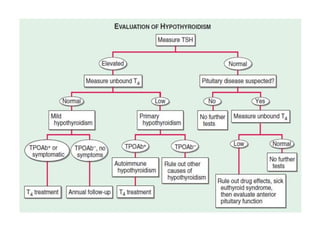
 Reduced production of thyroid hormone is the central feature of the clinical
state termed hypothyroidism.
 Permanent loss or destruction of the thyroid through processes such as
autoimmune destruction, referred to as Hashimoto disease or irradiation
injury is described as primary hypothyroidism.
 Hypothyroidism due to transient or progressive impairment of hormone
biosynthesis is typically associated with compensatory thyroid
enlargement.
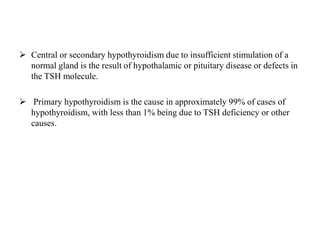
 Central or secondary hypothyroidism due to insufficient stimulation of a
normal gland is the result of hypothalamic or pituitary disease or defects in
the TSH molecule.
 Primary hypothyroidism is the cause in approximately 99% of cases of
hypothyroidism, with less than 1% being due to TSH deficiency or other
causes.
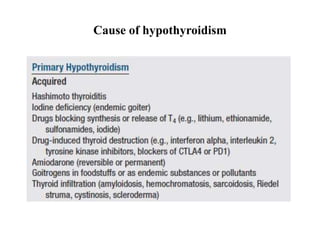
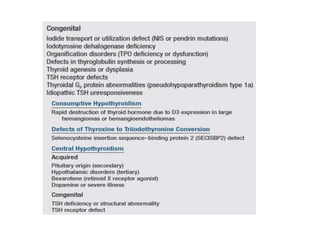
Cause of hypothyroidism
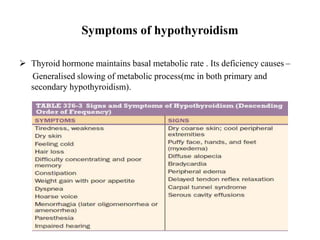
Symptoms of hypothyroidism
 Thyroid hormone maintains basal metabolic rate . Its deficiency causes –
Generalised slowing of metabolic process(mc in both primary and
secondary hypothyroidism).
 Accumulation of glycosaminoglycans – mostly hyaluronic acid – in
interstitial space of many tissues that causes -
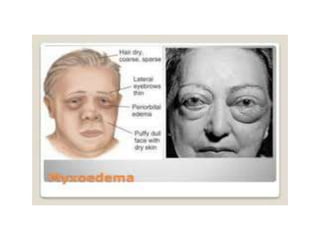
1. Macroglossia
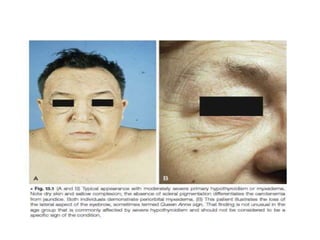
2. Periorbital edema
3. Non pitting edema
4. Puffiness of face
5. Carpal tunnel syndrome
Clinical Manifestations of Hypothyroidism –
Skin
 Cool and pale skin due to reduced blood flow .
 Glycosaminoglycans is hygroscopic, producing the mucinous edema that is
responsible for the thickened features and puffy appearance (myxedema) .
 Enlargement of the tongue ,thickening of the pharyngeal and laryngeal
mucous membranes due to GAG deposition .
 Hypercarotenemia gives the skin a yellow tint but does not cause scleral
icterus .
 Skin becomes dry and coarse due to reduced secretions of the sweat
glands and sebaceous glands .
 Wounds of the skin tend to heal slowly. Easy bruising is due to an increase
in capillary fragility.
 Head and body hair becomes dry and brittle, lacks luster, and tends to fall
out.
Clinical Manifestations of Hypothyroidism –
Cardiovascular System
 Reduced myocardial contractility ,pulse rate, stroke volume and
bradycardia.
 Increased peripheral resistance leads to hypertension, particularly diastolic
HTN.
 Pericardial effusions seen in up to 30% of patients.
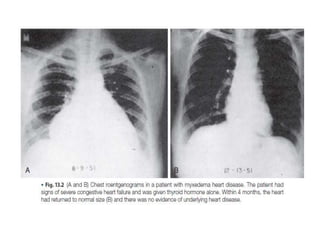
 Chest x rays findings are cardiomegaly , interstitial edema, myofibrillary
swelling, LV dilatation and pericardial effusion.
.
 Ecg changes are –
 Sinus bradycardia, prolongation of the PR interval
 Low amplitude of the P wave and QRS complex,
 Alterations of the ST segment
 Flattened or inverted T waves.
Clinical Manifestations of Hypothyroidism –
Respiratory System
 Lung volumes - normal, but maximal breathing capacity and diffusing
capacity are reduced.
 In severe case, involvement of respiratory muscles and depression of both
the hypoxic and hypercapnic ventilatory drives leads to alveolar
hypoventilation and carbon dioxide retention.
 Obstructive sleep apnea is due to macroglossia.
Clinical Manifestations of Hypothyroidism –
Muscular System
 Stiffness and aching of muscles and are worsened by cold temperatures.
 Delayed muscle contraction and relaxation cause slowness of movement
and delayed tendon jerks.
 Muscle mass may be reduced or enlarged due to interstitial myxedema.
Myoclonus may be present.
 The electromyogram may be normal or may exhibit disordered discharge,
hyperirritability, and polyphasic action potentials.
Clinical Manifestations of Hypothyroidism
Skeletal System
 Thyroid hormone is essential for normal growth and maturation of the
skeleton.
 Growth failure is due to impaired protein synthesis and reduction in
growth hormone, but especially of insulin-like growth factor 1 .
 Before puberty, thyroid hormone plays a major role in the maturation of
bone.
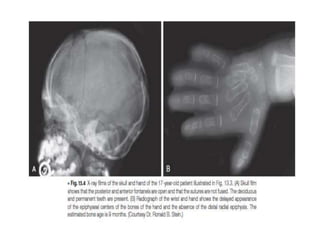
 Deficiency of thyroid hormone in early life leads to both a delay in
development and epiphyseal dysgenesis.
 Impairment of linear growth leads to dwarfism, in which the limbs are
disproportionately short but cartilage growth is unaffected .
 Children with prolonged hypothyroidism, even after adequate treatment, do
not reach predicted height based on midparental height calculations.
Clinical Manifestations of Hypothyroidism
Reproductive System
 Infantile hypothyroidism leads to sexual immaturity and delay in puberty
followed by anovulatory cycles in girls.
 Libido is decreased in both sexes, and there may be oligomenorrhea or
amenorrhea in long-standing disease.
 Fertility is reduced, and incidence of miscarriage is increased.
 Prolactin levels are increased and may contribute to alterations in libido
and fertility and cause galactorrhea.
 In adult women, severe hypothyroidism may be a/w diminished libido and
failure of ovulation.
 Hypothyroidism in men may cause diminished libido, erectile dysfunction,
and oligospermia.
Clinical Manifestations of Hypothyroidism
Central and Peripheral Nervous Systems
 Thyroid hormone is essential for the development of the CNS.
 Deficiency in fetal life or at birth impairs neurologic development,
including hypoplasia of cortical neurons with poor development of cellular
processes, retarded myelination, and reduced vascularity.
 If the deficiency is not corrected in early postnatal life, the damage is
irreversible.
 All intellectual functions, including speech, are slowed in thyroid hormone
deficiency.
 In severe cases, decreased cerebral blood flow may lead to cerebral
hypoxia.
 Loss of initiative is present and memory defects are common, lethargy and
somnolence are prominent.
 Psychiatric disorders are common and are usually of the paranoid or
depressive type and may induce agitation (myxedema madness).
 Headaches are frequent. Cerebral hypoxia may predispose to confusional
attacks and syncope, which may be prolonged and lead to stupor or coma.
 Epileptic seizures can occur in myxedema coma.
 Night blindness is due to deficient synthesis of the pigment required for
dark adaptation.
 Hearing loss of the perceptive type is frequent due to myxedema of the
eighth cranial nerve and serous otitis media.
 Numbness and tingling sensation of the extremities are frequent.
 Due to compression by glycosaminoglycan deposits around the median
nerve leads to carpal tunnel (carpal tunnel syndrome).
 Electroencephalographic changes include slow alpha-wave activity and
general loss of amplitude.
Clinical Manifestations of Hypothyroidism
Gastrointestinal System
 Most patients experience a modest gain in weight which is caused by
retention of fluid by the hydrophilic glycoprotein deposits in the tissues .
 Decreased peristaltic activity and decreased food intake leads to
constipation. The latter may lead to fecal impaction (myxedema
megacolon).
 Ascites is unusual in hypothyroidism, but it can occur, usually in
association with pleural and pericardial effusions.
 In a population study of those without diagnosed thyroid disease, men (but
not women) with an elevated TSH had a 3.8-fold increased risk of
cholelithiasis.
 Hypothyroidism is being recognized as a predisposing factor for NAFLD.
 Circulating antibodies against gastric parietal cells about 1/3rd of patients
and may be secondary to atrophy of the gastric mucosa.
 Overt pernicious anemia is reported in about 12% of patients with primary
hypothyroidism.
Metabolic Abnormalities
 Hyponatremia may result from a reduction in free water clearance.
 Reversible increases in serum creatinine occur in 20 ~ 90% of hypothyroid
patients.
 lipid clearance may be decreased, resulting in an elevation in the serum
concentrations of free fatty acids , total and LDL cholesterol.
 Plasma homocysteine concentrations are increased in some hypothyroid
patients.
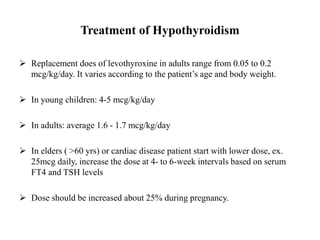
Treatment of Hypothyroidism
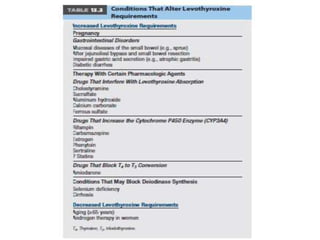
 Replacement does of levothyroxine in adults range from 0.05 to 0.2
mcg/kg/day. It varies according to the patient’s age and body weight.
 In young children: 4-5 mcg/kg/day
 In adults: average 1.6 - 1.7 mcg/kg/day
 In elders ( >60 yrs) or cardiac disease patient start with lower dose, ex.
25mcg daily, increase the dose at 4- to 6-week intervals based on serum
FT4 and TSH levels
 Dose should be increased about 25% during pregnancy.
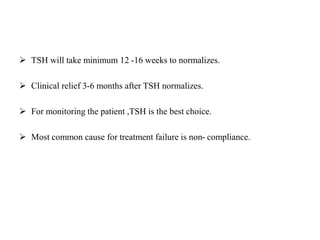
 TSH will take minimum 12 -16 weeks to normalizes.
 Clinical relief 3-6 months after TSH normalizes.
 For monitoring the patient ,TSH is the best choice.
 Most common cause for treatment failure is non- compliance.
Hashimoto’s Thyroiditis
 Autoimmunity is responsible for over 90% of non iatrogenic
hypothyroidism in countries with iodine sufficiency.
 Average age of onset is between 40 and 60 years.
 More common in female as compare to male
 Juvenile and adolescent autoimmune thyroiditis may be self-limiting.
 Hashimoto thyroiditis is the commonest cause of goiter in iodine-sufficient
regions, atrophic thyroiditis (primary myxedema)presents a hypothyroidism
without a goiter.
 Risk factor –Genetic susceptibility
 HLA DR3,HLADR4,HLADR5
 CTLA4 , PTPN22 and MAGI3 Polymorphism
 It is associated with other autoimmune disorders like-
 Pernicious anemia
 Systemic lupus erythematosus
 Addison disease
 Celiac disease,
 Diabetes mellitus type 1
 Vitiligo.
 Increased risk of pre malignant condition :
 Extra nodal marginal zone B cell lymphoma
 Papillary carcinoma of Thyroid
Pathophysiology
 T-cell–mediated tissue injury is believed to be the most important cause of
autoimmune thyroid follicular cell destruction.
 Perforin-containing cytotoxic CD8+ T cells are abundant in the
intrathyroidal lymphocytic infiltrate in Hashimoto thyroiditis.
 These T cells increase during the evolution of disease and recognize both
thyroglobulin and TPO.
 Cytokines released by T cells and other inflammatory cells cause Hürthle
cell formation and thyroid dysfunction.
 Apoptosis is an additional pathway for thyroid cell destruction.
 Characteristic finding:
Deposition of glycosaminoglycans – mostly hyaluronic acid – in interstitial
space of many tissues that causes-
 Macroglossia
 Periorbital edema
 Non pitting edema and puffiness.
 The accumalation is due not to excessive synthesis but to decreased
destruction of glycosaminoglycans.
 Sign and symptoms – Fatigue (mc) Slowing of speech Cold intolerence
Constipation Weight gain Delayed DTR
Hair loss Bradycardia Dry & coarse skin
Subclinical Hypothyroidism
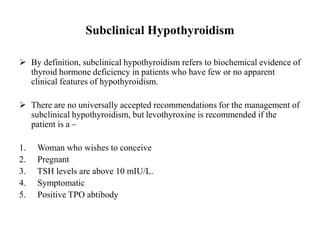
 By definition, subclinical hypothyroidism refers to biochemical evidence of
thyroid hormone deficiency in patients who have few or no apparent
clinical features of hypothyroidism.
 There are no universally accepted recommendations for the management of
subclinical hypothyroidism, but levothyroxine is recommended if the
patient is a –
1. Woman who wishes to conceive
2. Pregnant
3. TSH levels are above 10 mIU/L.
4. Symptomatic
5. Positive TPO abtibody
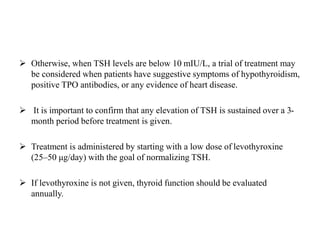
 Otherwise, when TSH levels are below 10 mIU/L, a trial of treatment may
be considered when patients have suggestive symptoms of hypothyroidism,
positive TPO antibodies, or any evidence of heart disease.
 It is important to confirm that any elevation of TSH is sustained over a 3-
month period before treatment is given.
 Treatment is administered by starting with a low dose of levothyroxine
(25–50 μg/day) with the goal of normalizing TSH.
 If levothyroxine is not given, thyroid function should be evaluated
annually.
Hypothyroidism in pregnancy
 Maternal hypothyroidism may both adversely affect fetal neural
development and be a/w adverse gestational outcomes (miscarriage,
preterm delivery).
 The presence of thyroid autoantibodies alone, in a euthyroid patient, is also
associated with miscarriage and preterm delivery.
 Prior to conception, levothyroxine therapy should be targeted to maintain a
serum TSH in the normal range but <2.5 mIU/L for hypothyroid women.
 Thyroid function should be evaluated immediately after pregnancy is
confirmed and every 4 weeks during the first half of the pregnancy, with
less frequent testing after 20 weeks’ gestation (every 6–8 weeks).
 The levothyroxine dose may need to be increased by up to 45% during
pregnancy.
 After delivery, levothyroxine doses typically return to prepregnancy levels.
 Pregnant women should be counseled to separate ingestion of prenatal
vitamins and iron supplements from levothyroxine.
Myxedema Coma
 Myxedema coma is the ultimate stage of severe long-standing
hypothyroidism.
 Affects older patients, occurs most commonly during the winter months
and is a/w a high mortality rate (20-40%).
 Triggers factors – Exposure to cold Infection
Trauma Myocardial infarction ,
Stroke CNS depressants or anesthetics.
 Presentation – Reduced level of Consciousness/seizure
 Hypothermia
 Hypoglycemia
 Hypoventilation (leads to carbon dioxide retention and narcosis)
 Hyponatremia
 Bradycardia ( decreased CO)
Treatment
 Levothyroxine can initially be administered as a single IV bolus of 200–
400 μg, which serves as a loading dose, followed by a daily oral dose of 1.6
μg/kg/day, reduced by 25% if administered IV.
 If suitable IV preparation is not available, the same initial dose of
levothyroxine can be given by nasogastric tube
 An initial loading dose of 5–20 μg liothyronine should be followed by 2.5–
10 μg 8 hourly, with lower doses for those at cardiovascular risk.
 Hydrocortisone (50 mg iv Q6H) should also be given because of the
possibility of relative adrenocortical insufficiency as the metabolic rate
increases.
 Hypotonic fluids should not be given because of the danger of water
intoxication owing to the reduced free water clearance of the hypothyroid
patient.
 External warming is indicated only if the temperature is <30°C, as it can
result in cardiovascular collapse.
 Hypertonic saline or IV glucose may be needed if there is severe
hyponatremia or hypoglycemia.
Thank you

thyroid hypothyroidism.pptx

  • 1.
    HYPOTHYROIDISM Presented by -Dr.Tapas Tripathi Moderator – Prof (Dr).Pankaj Bansal
  • 2.
    Hypothroidism  Reduced productionof thyroid hormone is the central feature of the clinical state termed hypothyroidism.  Permanent loss or destruction of the thyroid through processes such as autoimmune destruction, referred to as Hashimoto disease or irradiation injury is described as primary hypothyroidism.  Hypothyroidism due to transient or progressive impairment of hormone biosynthesis is typically associated with compensatory thyroid enlargement.
  • 3.
     Central orsecondary hypothyroidism due to insufficient stimulation of a normal gland is the result of hypothalamic or pituitary disease or defects in the TSH molecule.  Primary hypothyroidism is the cause in approximately 99% of cases of hypothyroidism, with less than 1% being due to TSH deficiency or other causes.
  • 4.
  • 6.
    Symptoms of hypothyroidism Thyroid hormone maintains basal metabolic rate . Its deficiency causes – Generalised slowing of metabolic process(mc in both primary and secondary hypothyroidism).
  • 7.
     Accumulation ofglycosaminoglycans – mostly hyaluronic acid – in interstitial space of many tissues that causes - 1. Macroglossia 2. Periorbital edema 3. Non pitting edema 4. Puffiness of face 5. Carpal tunnel syndrome
  • 8.
    Clinical Manifestations ofHypothyroidism – Skin  Cool and pale skin due to reduced blood flow .  Glycosaminoglycans is hygroscopic, producing the mucinous edema that is responsible for the thickened features and puffy appearance (myxedema) .  Enlargement of the tongue ,thickening of the pharyngeal and laryngeal mucous membranes due to GAG deposition .
  • 9.
     Hypercarotenemia givesthe skin a yellow tint but does not cause scleral icterus .  Skin becomes dry and coarse due to reduced secretions of the sweat glands and sebaceous glands .  Wounds of the skin tend to heal slowly. Easy bruising is due to an increase in capillary fragility.  Head and body hair becomes dry and brittle, lacks luster, and tends to fall out.
  • 11.
    Clinical Manifestations ofHypothyroidism – Cardiovascular System  Reduced myocardial contractility ,pulse rate, stroke volume and bradycardia.  Increased peripheral resistance leads to hypertension, particularly diastolic HTN.  Pericardial effusions seen in up to 30% of patients.  Chest x rays findings are cardiomegaly , interstitial edema, myofibrillary swelling, LV dilatation and pericardial effusion. .
  • 12.
     Ecg changesare –  Sinus bradycardia, prolongation of the PR interval  Low amplitude of the P wave and QRS complex,  Alterations of the ST segment  Flattened or inverted T waves.
  • 13.
    Clinical Manifestations ofHypothyroidism – Respiratory System  Lung volumes - normal, but maximal breathing capacity and diffusing capacity are reduced.  In severe case, involvement of respiratory muscles and depression of both the hypoxic and hypercapnic ventilatory drives leads to alveolar hypoventilation and carbon dioxide retention.  Obstructive sleep apnea is due to macroglossia.
  • 15.
    Clinical Manifestations ofHypothyroidism – Muscular System  Stiffness and aching of muscles and are worsened by cold temperatures.  Delayed muscle contraction and relaxation cause slowness of movement and delayed tendon jerks.  Muscle mass may be reduced or enlarged due to interstitial myxedema. Myoclonus may be present.  The electromyogram may be normal or may exhibit disordered discharge, hyperirritability, and polyphasic action potentials.
  • 16.
    Clinical Manifestations ofHypothyroidism Skeletal System  Thyroid hormone is essential for normal growth and maturation of the skeleton.  Growth failure is due to impaired protein synthesis and reduction in growth hormone, but especially of insulin-like growth factor 1 .  Before puberty, thyroid hormone plays a major role in the maturation of bone.  Deficiency of thyroid hormone in early life leads to both a delay in development and epiphyseal dysgenesis.
  • 17.
     Impairment oflinear growth leads to dwarfism, in which the limbs are disproportionately short but cartilage growth is unaffected .  Children with prolonged hypothyroidism, even after adequate treatment, do not reach predicted height based on midparental height calculations.
  • 19.
    Clinical Manifestations ofHypothyroidism Reproductive System  Infantile hypothyroidism leads to sexual immaturity and delay in puberty followed by anovulatory cycles in girls.  Libido is decreased in both sexes, and there may be oligomenorrhea or amenorrhea in long-standing disease.  Fertility is reduced, and incidence of miscarriage is increased.  Prolactin levels are increased and may contribute to alterations in libido and fertility and cause galactorrhea.
  • 20.
     In adultwomen, severe hypothyroidism may be a/w diminished libido and failure of ovulation.  Hypothyroidism in men may cause diminished libido, erectile dysfunction, and oligospermia.
  • 21.
    Clinical Manifestations ofHypothyroidism Central and Peripheral Nervous Systems  Thyroid hormone is essential for the development of the CNS.  Deficiency in fetal life or at birth impairs neurologic development, including hypoplasia of cortical neurons with poor development of cellular processes, retarded myelination, and reduced vascularity.  If the deficiency is not corrected in early postnatal life, the damage is irreversible.  All intellectual functions, including speech, are slowed in thyroid hormone deficiency.
  • 22.
     In severecases, decreased cerebral blood flow may lead to cerebral hypoxia.  Loss of initiative is present and memory defects are common, lethargy and somnolence are prominent.  Psychiatric disorders are common and are usually of the paranoid or depressive type and may induce agitation (myxedema madness).  Headaches are frequent. Cerebral hypoxia may predispose to confusional attacks and syncope, which may be prolonged and lead to stupor or coma.
  • 23.
     Epileptic seizurescan occur in myxedema coma.  Night blindness is due to deficient synthesis of the pigment required for dark adaptation.  Hearing loss of the perceptive type is frequent due to myxedema of the eighth cranial nerve and serous otitis media.
  • 24.
     Numbness andtingling sensation of the extremities are frequent.  Due to compression by glycosaminoglycan deposits around the median nerve leads to carpal tunnel (carpal tunnel syndrome).  Electroencephalographic changes include slow alpha-wave activity and general loss of amplitude.
  • 25.
    Clinical Manifestations ofHypothyroidism Gastrointestinal System  Most patients experience a modest gain in weight which is caused by retention of fluid by the hydrophilic glycoprotein deposits in the tissues .  Decreased peristaltic activity and decreased food intake leads to constipation. The latter may lead to fecal impaction (myxedema megacolon).  Ascites is unusual in hypothyroidism, but it can occur, usually in association with pleural and pericardial effusions.
  • 26.
     In apopulation study of those without diagnosed thyroid disease, men (but not women) with an elevated TSH had a 3.8-fold increased risk of cholelithiasis.  Hypothyroidism is being recognized as a predisposing factor for NAFLD.  Circulating antibodies against gastric parietal cells about 1/3rd of patients and may be secondary to atrophy of the gastric mucosa.  Overt pernicious anemia is reported in about 12% of patients with primary hypothyroidism.
  • 27.
    Metabolic Abnormalities  Hyponatremiamay result from a reduction in free water clearance.  Reversible increases in serum creatinine occur in 20 ~ 90% of hypothyroid patients.  lipid clearance may be decreased, resulting in an elevation in the serum concentrations of free fatty acids , total and LDL cholesterol.  Plasma homocysteine concentrations are increased in some hypothyroid patients.
  • 30.
    Treatment of Hypothyroidism Replacement does of levothyroxine in adults range from 0.05 to 0.2 mcg/kg/day. It varies according to the patient’s age and body weight.  In young children: 4-5 mcg/kg/day  In adults: average 1.6 - 1.7 mcg/kg/day  In elders ( >60 yrs) or cardiac disease patient start with lower dose, ex. 25mcg daily, increase the dose at 4- to 6-week intervals based on serum FT4 and TSH levels  Dose should be increased about 25% during pregnancy.
  • 31.
     TSH willtake minimum 12 -16 weeks to normalizes.  Clinical relief 3-6 months after TSH normalizes.  For monitoring the patient ,TSH is the best choice.  Most common cause for treatment failure is non- compliance.
  • 33.
    Hashimoto’s Thyroiditis  Autoimmunityis responsible for over 90% of non iatrogenic hypothyroidism in countries with iodine sufficiency.  Average age of onset is between 40 and 60 years.  More common in female as compare to male  Juvenile and adolescent autoimmune thyroiditis may be self-limiting.  Hashimoto thyroiditis is the commonest cause of goiter in iodine-sufficient regions, atrophic thyroiditis (primary myxedema)presents a hypothyroidism without a goiter.
  • 34.
     Risk factor–Genetic susceptibility  HLA DR3,HLADR4,HLADR5  CTLA4 , PTPN22 and MAGI3 Polymorphism  It is associated with other autoimmune disorders like-  Pernicious anemia  Systemic lupus erythematosus  Addison disease  Celiac disease,  Diabetes mellitus type 1  Vitiligo.  Increased risk of pre malignant condition :  Extra nodal marginal zone B cell lymphoma  Papillary carcinoma of Thyroid
  • 35.
    Pathophysiology  T-cell–mediated tissueinjury is believed to be the most important cause of autoimmune thyroid follicular cell destruction.  Perforin-containing cytotoxic CD8+ T cells are abundant in the intrathyroidal lymphocytic infiltrate in Hashimoto thyroiditis.  These T cells increase during the evolution of disease and recognize both thyroglobulin and TPO.  Cytokines released by T cells and other inflammatory cells cause Hürthle cell formation and thyroid dysfunction.  Apoptosis is an additional pathway for thyroid cell destruction.
  • 36.
     Characteristic finding: Depositionof glycosaminoglycans – mostly hyaluronic acid – in interstitial space of many tissues that causes-  Macroglossia  Periorbital edema  Non pitting edema and puffiness.  The accumalation is due not to excessive synthesis but to decreased destruction of glycosaminoglycans.  Sign and symptoms – Fatigue (mc) Slowing of speech Cold intolerence Constipation Weight gain Delayed DTR Hair loss Bradycardia Dry & coarse skin
  • 37.
    Subclinical Hypothyroidism  Bydefinition, subclinical hypothyroidism refers to biochemical evidence of thyroid hormone deficiency in patients who have few or no apparent clinical features of hypothyroidism.  There are no universally accepted recommendations for the management of subclinical hypothyroidism, but levothyroxine is recommended if the patient is a – 1. Woman who wishes to conceive 2. Pregnant 3. TSH levels are above 10 mIU/L. 4. Symptomatic 5. Positive TPO abtibody
  • 38.
     Otherwise, whenTSH levels are below 10 mIU/L, a trial of treatment may be considered when patients have suggestive symptoms of hypothyroidism, positive TPO antibodies, or any evidence of heart disease.  It is important to confirm that any elevation of TSH is sustained over a 3- month period before treatment is given.  Treatment is administered by starting with a low dose of levothyroxine (25–50 μg/day) with the goal of normalizing TSH.  If levothyroxine is not given, thyroid function should be evaluated annually.
  • 40.
    Hypothyroidism in pregnancy Maternal hypothyroidism may both adversely affect fetal neural development and be a/w adverse gestational outcomes (miscarriage, preterm delivery).  The presence of thyroid autoantibodies alone, in a euthyroid patient, is also associated with miscarriage and preterm delivery.  Prior to conception, levothyroxine therapy should be targeted to maintain a serum TSH in the normal range but <2.5 mIU/L for hypothyroid women.  Thyroid function should be evaluated immediately after pregnancy is confirmed and every 4 weeks during the first half of the pregnancy, with less frequent testing after 20 weeks’ gestation (every 6–8 weeks).  The levothyroxine dose may need to be increased by up to 45% during pregnancy.
  • 41.
     After delivery,levothyroxine doses typically return to prepregnancy levels.  Pregnant women should be counseled to separate ingestion of prenatal vitamins and iron supplements from levothyroxine.
  • 42.
    Myxedema Coma  Myxedemacoma is the ultimate stage of severe long-standing hypothyroidism.  Affects older patients, occurs most commonly during the winter months and is a/w a high mortality rate (20-40%).  Triggers factors – Exposure to cold Infection Trauma Myocardial infarction , Stroke CNS depressants or anesthetics.
  • 44.
     Presentation –Reduced level of Consciousness/seizure  Hypothermia  Hypoglycemia  Hypoventilation (leads to carbon dioxide retention and narcosis)  Hyponatremia  Bradycardia ( decreased CO)
  • 45.
    Treatment  Levothyroxine caninitially be administered as a single IV bolus of 200– 400 μg, which serves as a loading dose, followed by a daily oral dose of 1.6 μg/kg/day, reduced by 25% if administered IV.  If suitable IV preparation is not available, the same initial dose of levothyroxine can be given by nasogastric tube  An initial loading dose of 5–20 μg liothyronine should be followed by 2.5– 10 μg 8 hourly, with lower doses for those at cardiovascular risk.
  • 46.
     Hydrocortisone (50mg iv Q6H) should also be given because of the possibility of relative adrenocortical insufficiency as the metabolic rate increases.  Hypotonic fluids should not be given because of the danger of water intoxication owing to the reduced free water clearance of the hypothyroid patient.  External warming is indicated only if the temperature is <30°C, as it can result in cardiovascular collapse.  Hypertonic saline or IV glucose may be needed if there is severe hyponatremia or hypoglycemia.
  • 47.