Research Hypothesis
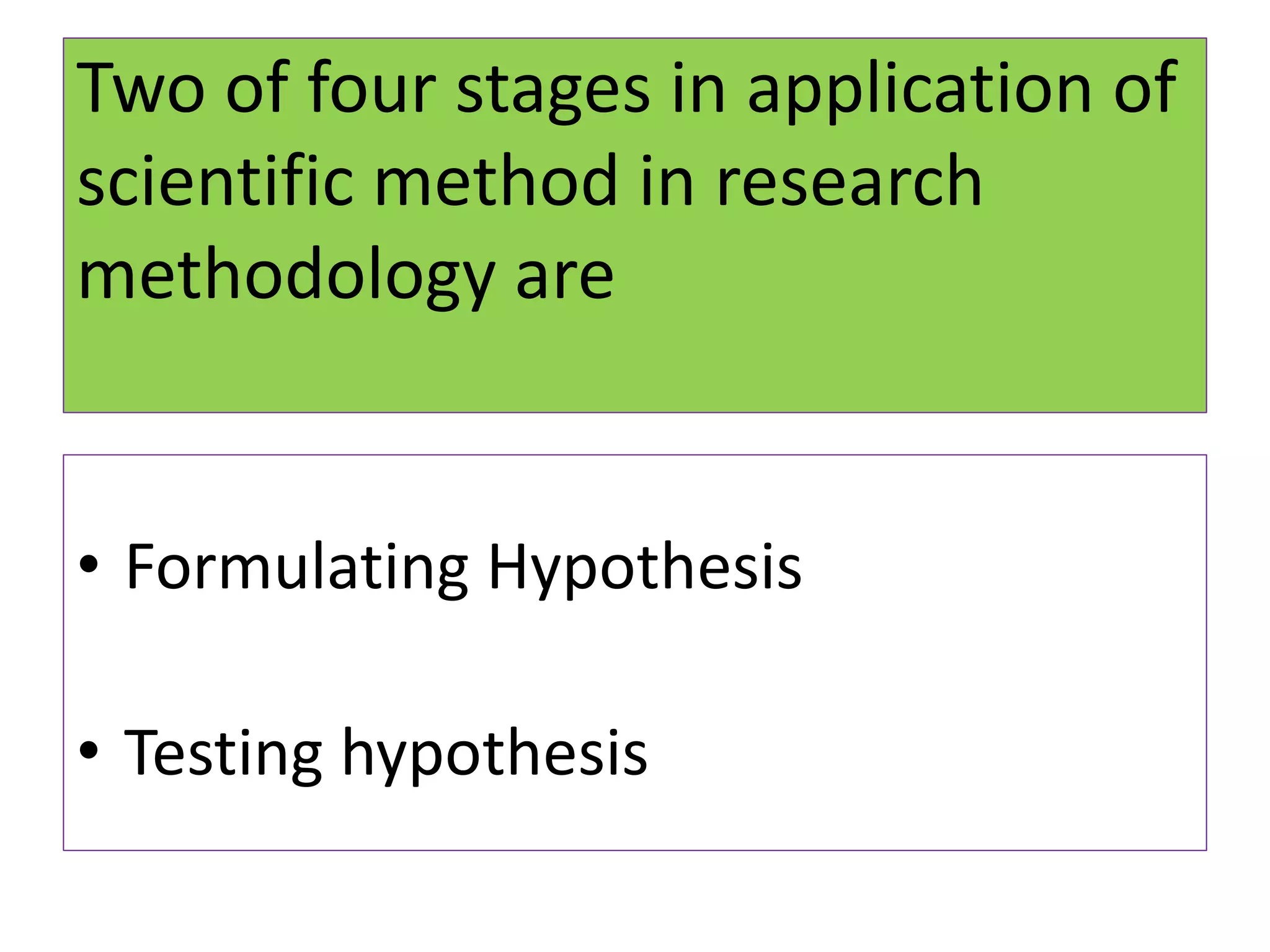
Two of four stages in application of
scientific method in research
methodology are
• Formulating Hypothesis
• Testing hypothesis
• It is very essential for the scientist
to understand the meaning and
nature of hypothesis.
• Hypothesis need to be clear,
precise and capable of being
tested.
Hypothesis
Hypothesis
• Hypothesis is a tentative solution of a
problem.
• It is an important part of scientific
research.
• Aim to make predictions about some
outcome.
Example
• The researcher is investigating the history of a
village which not have basis for making
prediction .
• Hypothesis is not required in such fact finding
studies.
• The amount of quality and evidence
determine the hypothesis.
Null hypothesis
Hypothesis shows there is
no statistical significance
between two variables in
the hypothesis.
Non directional hypothesis.
No relationship between
two variables.
Null hypothesis
Academic performance of college
student who participate in sports.
Academic performance of college
student who non-participate in
sports.
Null hypothesis
• If it is tested statistically then it is
called statistical hypothesis.
• Researcher must remain unbiased
throughout the study.
• It is the hypothesis that the
researcher tries to disprove.
Null hypothesis
Example 1 : If the hypothesis is that
the consumption of a particular
medicine reduces the chances of heart
arrest.
The null hypothesis will be “ the
consumption of the medicine does not
reduce the chances of heart arrest.
Example 2: random test
scores collected from
men differ from women
The null hypothesis will be the
mean test score of men is same
as that of the women.
Statistical hypothesis are tested using
four step process.
• First step : The analyst to state the two
hypotheses so that one can be right.
• Second step: Formulate the analysis plan
which outlines how the data will be evaluated.
• Third step: carry out the plan and physically
analyse the sample data.
• Fourth step: Analyse the results and reject or
accept the null hypothesis.
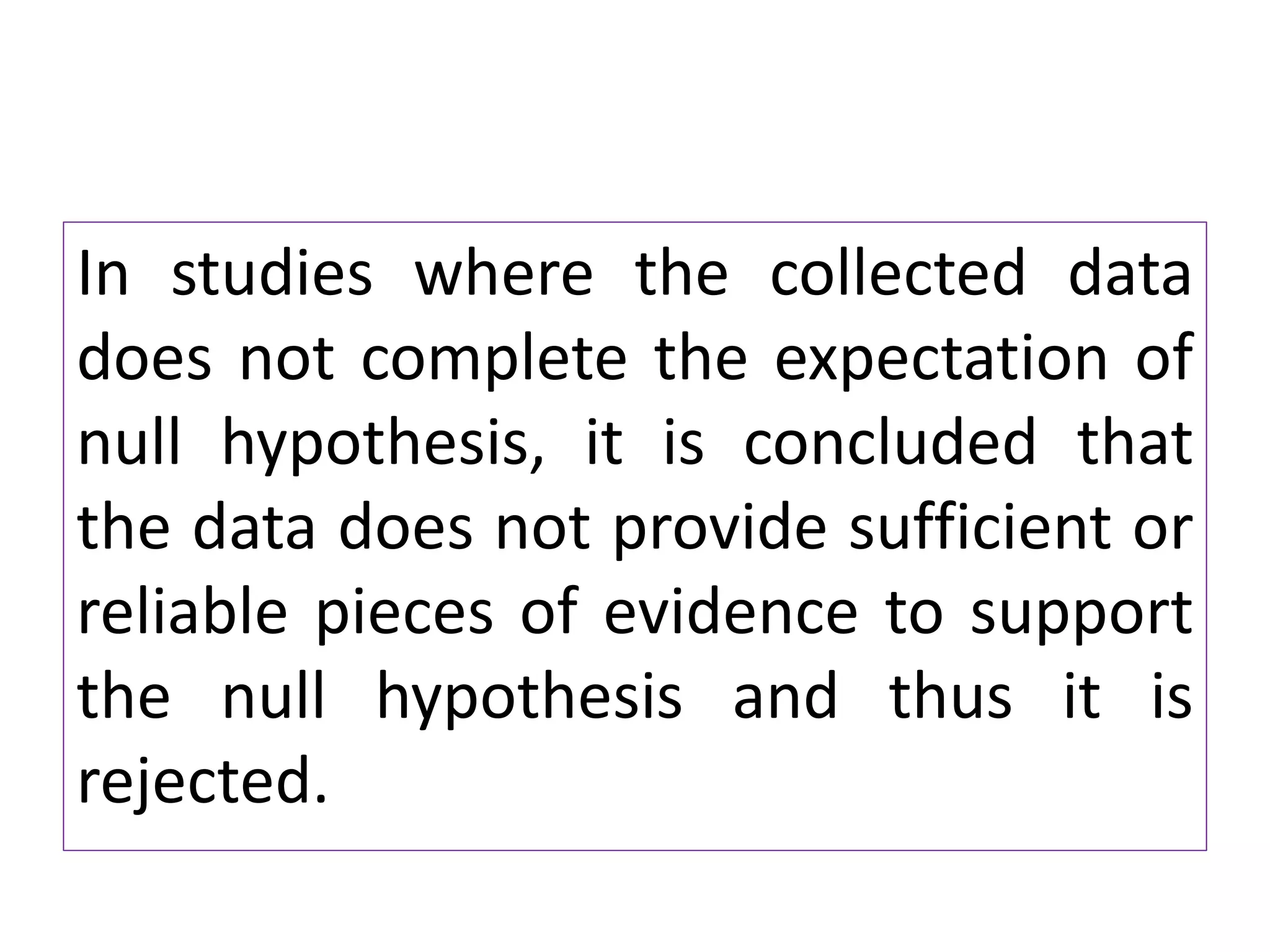
In studies where the collected data
does not complete the expectation of
null hypothesis, it is concluded that
the data does not provide sufficient or
reliable pieces of evidence to support
the null hypothesis and thus it is
rejected.
Alternative hypothesis
• It defines there is a statistically
important relationship between two
variables.
• It reflects that there will be an
observed effect for our experiment.
• It is contradictory to the null
hypothesis
For example the null hypothesis
might be “ there was no change in
the water level this spring.
The alternative hypothesis
would be “ there was a change
in the water level this spring.”
• The hypothesis is to be proved that
indicates that the results of the study is
significant.
• The sample observation is not result just
from chance but from some non random
cause.
• It is a hypothesis that the researcher tries
to prove.
Alternative hypothesis
The null hypothesis for all the three alternative
hypothesis, would be
If the null hypothesis is rejected then we accept
the alternative hypothesis.
If the null hypothesis is not rejected, then we do
not accept the alternative hypothesis.
Alternative hypothesis
Three types of alternative hypothesis
•Left tailed
•Right tailed
•Two tailed
One tail - Left tail test Left tailed :
sample proportion[ μ1] is less than a
specified value denoted by [μ2]
H1: μ1 < μ2
One tail – Right Tail test
Right tailed: sample proportion is
greater than some value H1: μ1 > μ2
Two tail or non directional test
Two tailed: sample proportion is not
equal to a specific value
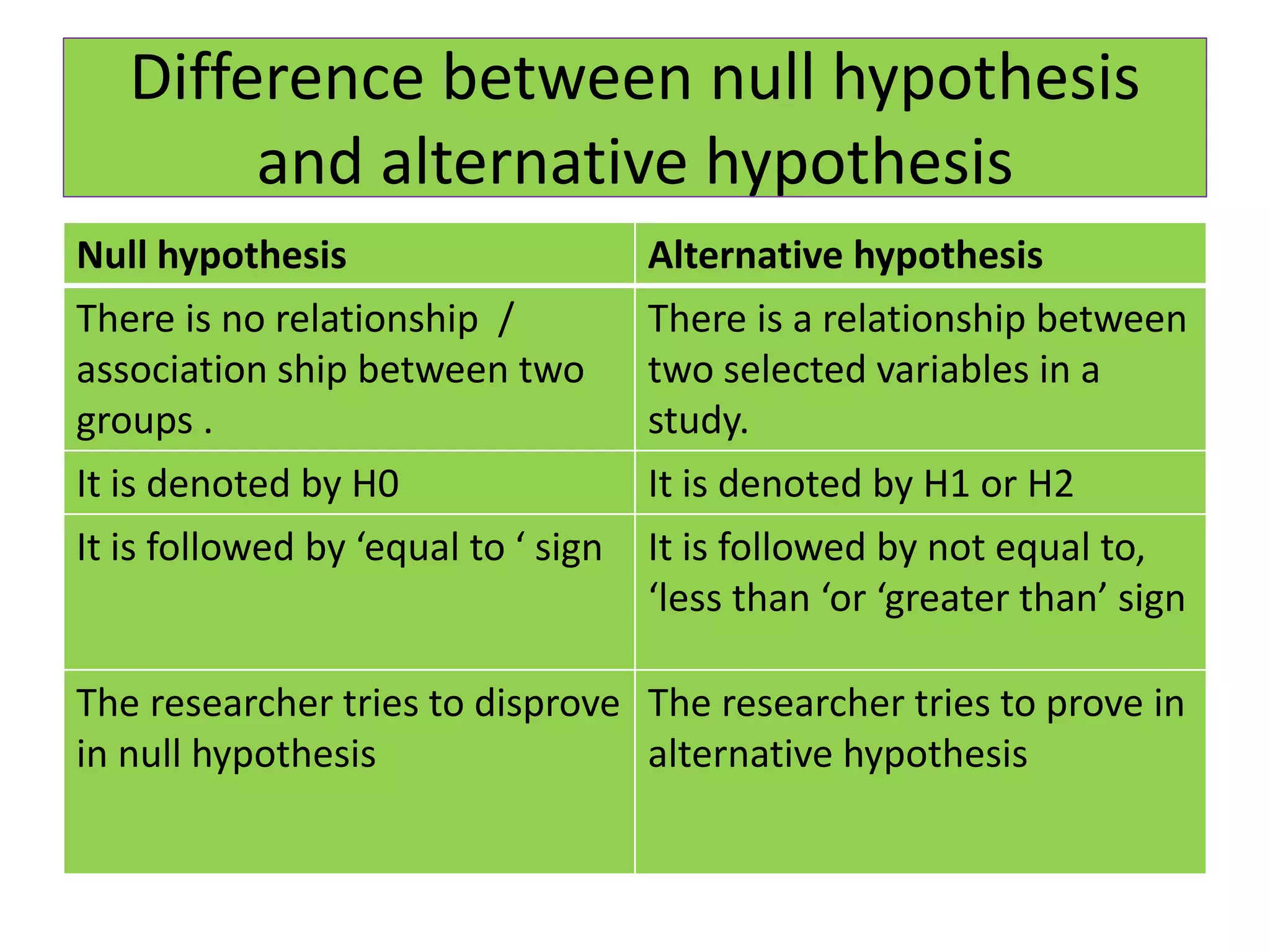
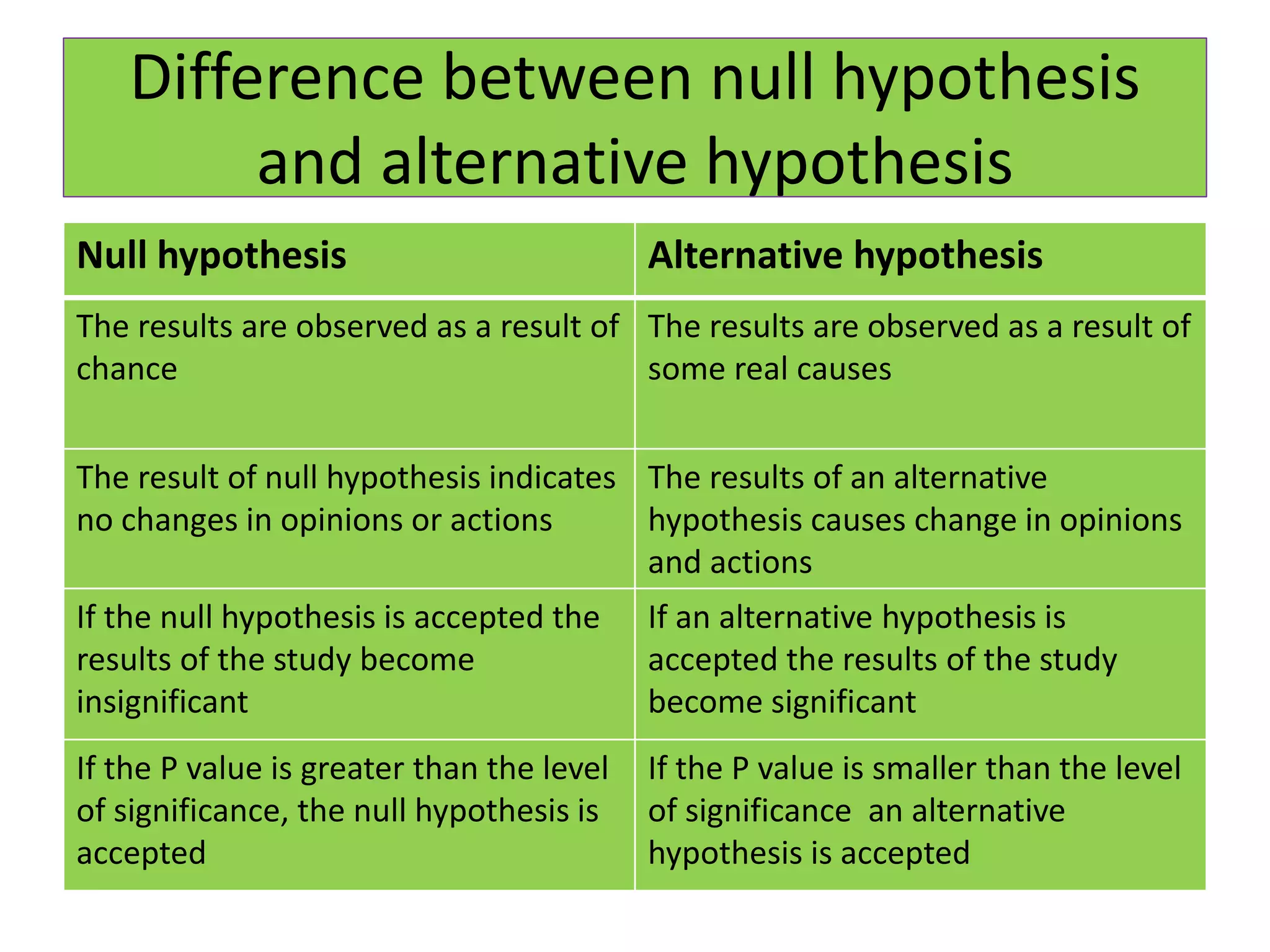
Difference between null hypothesis
and alternative hypothesis
Null hypothesis Alternative hypothesis
There is no relationship /
association ship between two
groups .
There is a relationship between
two selected variables in a
study.
It is denoted by H0 It is denoted by H1 or H2
It is followed by ‘equal to ‘ sign It is followed by not equal to,
‘less than ‘or ‘greater than’ sign
The researcher tries to disprove
in null hypothesis
The researcher tries to prove in
alternative hypothesis
Difference between null hypothesis
and alternative hypothesis
Null hypothesis Alternative hypothesis
The results are observed as a result of
chance
The results are observed as a result of
some real causes
The result of null hypothesis indicates
no changes in opinions or actions
The results of an alternative
hypothesis causes change in opinions
and actions
If the null hypothesis is accepted the
results of the study become
insignificant
If an alternative hypothesis is
accepted the results of the study
become significant
If the P value is greater than the level
of significance, the null hypothesis is
accepted
If the P value is smaller than the level
of significance an alternative
hypothesis is accepted
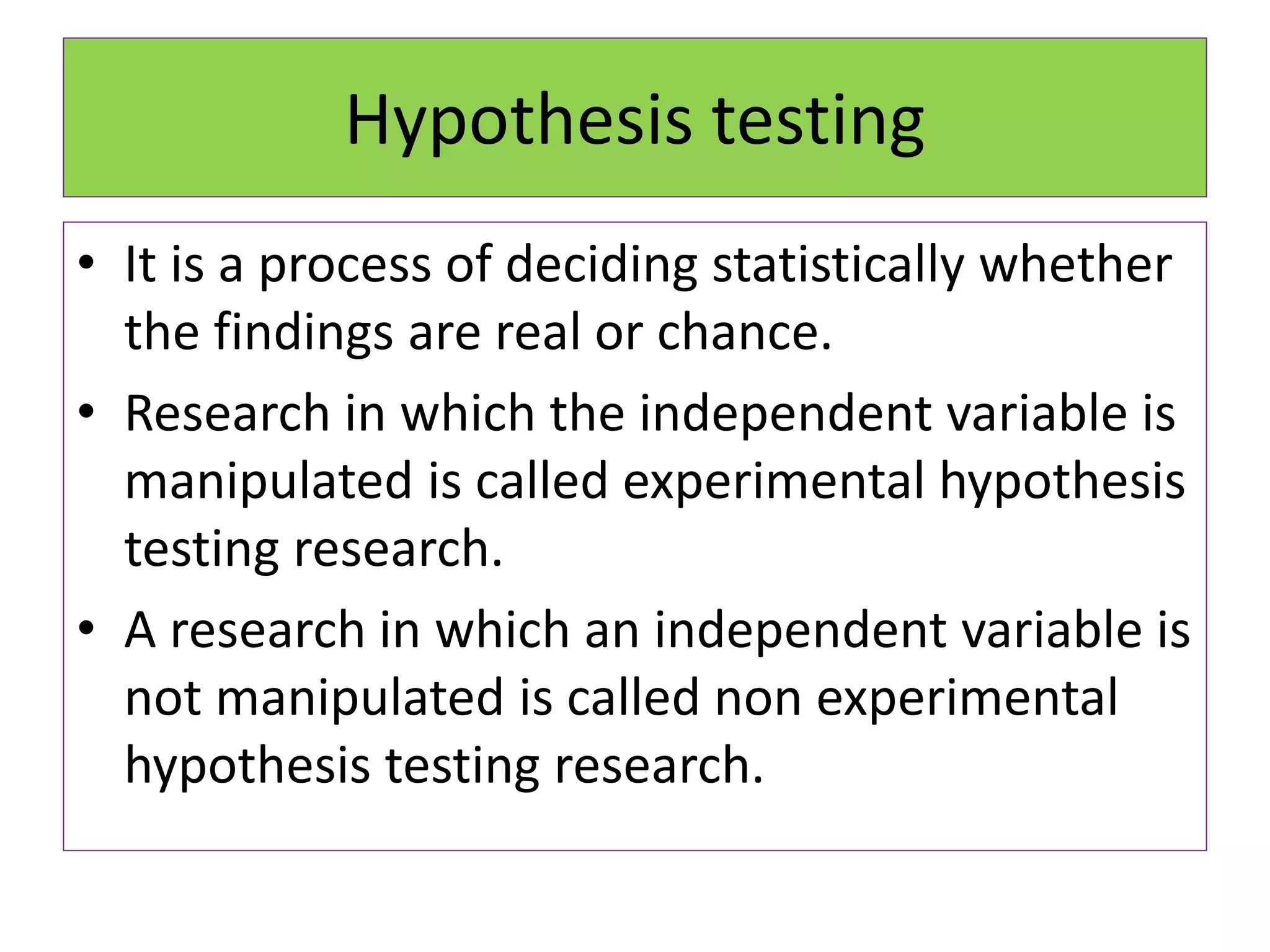
Hypothesis testing
• It is a process of deciding statistically whether
the findings are real or chance.
• Research in which the independent variable is
manipulated is called experimental hypothesis
testing research.
• A research in which an independent variable is
not manipulated is called non experimental
hypothesis testing research.
• The use of null hypothesis is quite frequent.
• If the significance level is 5 % it means that the
researcher is ready to take 5% risk to reject
the null hypothesis when it happens to be
true.
• P value is used as an alternative to rejection
points to provide the smallest level of
significance at which the null hypothesis
would be rejected.
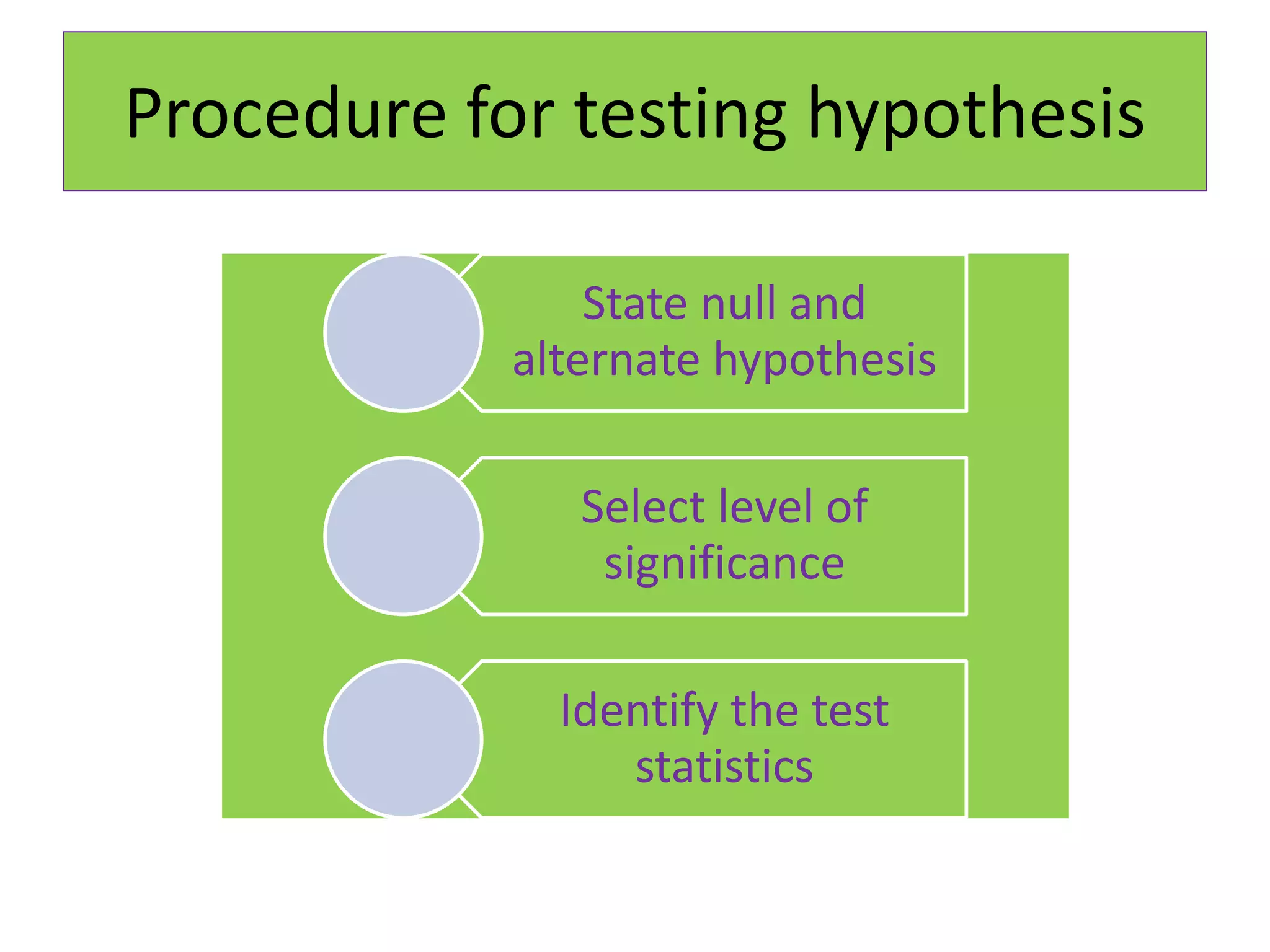
Procedure for testing hypothesis
State null and
alternate hypothesis
Select level of
significance
Identify the test
statistics
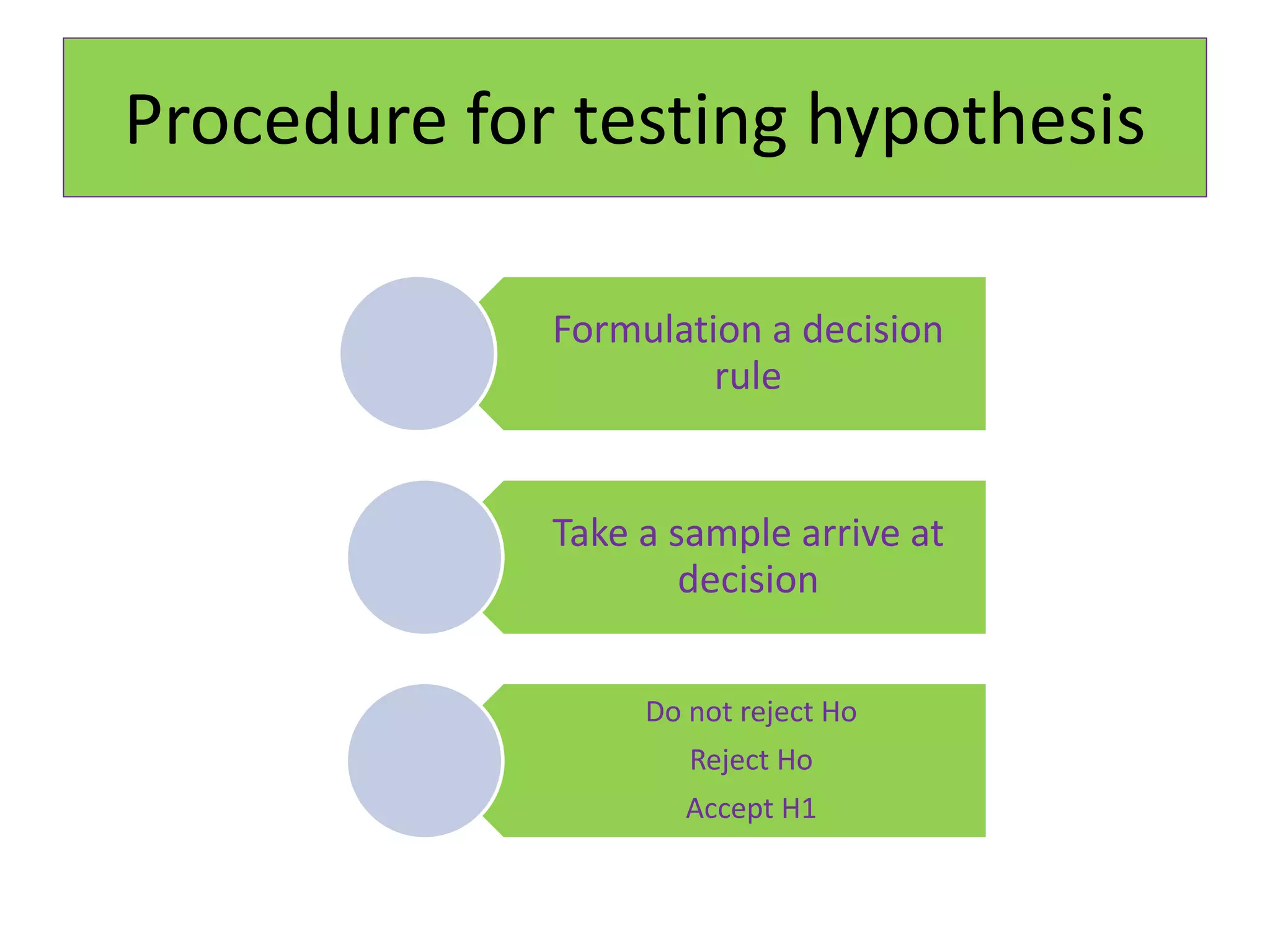
Procedure for testing hypothesis
Formulation a decision
rule
Take a sample arrive at
decision
Do not reject Ho
Reject Ho
Accept H1
Hypothesis

Hypothesis

  • 1.
  • 2.
    Two of fourstages in application of scientific method in research methodology are • Formulating Hypothesis • Testing hypothesis
  • 3.
    • It isvery essential for the scientist to understand the meaning and nature of hypothesis. • Hypothesis need to be clear, precise and capable of being tested. Hypothesis
  • 4.
    Hypothesis • Hypothesis isa tentative solution of a problem. • It is an important part of scientific research. • Aim to make predictions about some outcome.
  • 5.
    Example • The researcheris investigating the history of a village which not have basis for making prediction . • Hypothesis is not required in such fact finding studies. • The amount of quality and evidence determine the hypothesis.
  • 6.
    Null hypothesis Hypothesis showsthere is no statistical significance between two variables in the hypothesis.
  • 7.
    Non directional hypothesis. Norelationship between two variables. Null hypothesis
  • 8.
    Academic performance ofcollege student who participate in sports. Academic performance of college student who non-participate in sports. Null hypothesis
  • 9.
    • If itis tested statistically then it is called statistical hypothesis. • Researcher must remain unbiased throughout the study. • It is the hypothesis that the researcher tries to disprove. Null hypothesis
  • 10.
    Example 1 :If the hypothesis is that the consumption of a particular medicine reduces the chances of heart arrest. The null hypothesis will be “ the consumption of the medicine does not reduce the chances of heart arrest.
  • 11.
    Example 2: randomtest scores collected from men differ from women The null hypothesis will be the mean test score of men is same as that of the women.
  • 12.
    Statistical hypothesis aretested using four step process. • First step : The analyst to state the two hypotheses so that one can be right. • Second step: Formulate the analysis plan which outlines how the data will be evaluated. • Third step: carry out the plan and physically analyse the sample data. • Fourth step: Analyse the results and reject or accept the null hypothesis.
  • 13.
    In studies wherethe collected data does not complete the expectation of null hypothesis, it is concluded that the data does not provide sufficient or reliable pieces of evidence to support the null hypothesis and thus it is rejected.
  • 14.
    Alternative hypothesis • Itdefines there is a statistically important relationship between two variables. • It reflects that there will be an observed effect for our experiment. • It is contradictory to the null hypothesis
  • 15.
    For example thenull hypothesis might be “ there was no change in the water level this spring. The alternative hypothesis would be “ there was a change in the water level this spring.”
  • 16.
    • The hypothesisis to be proved that indicates that the results of the study is significant. • The sample observation is not result just from chance but from some non random cause. • It is a hypothesis that the researcher tries to prove. Alternative hypothesis
  • 17.
    The null hypothesisfor all the three alternative hypothesis, would be If the null hypothesis is rejected then we accept the alternative hypothesis. If the null hypothesis is not rejected, then we do not accept the alternative hypothesis. Alternative hypothesis
  • 18.
    Three types ofalternative hypothesis •Left tailed •Right tailed •Two tailed
  • 19.
    One tail -Left tail test Left tailed : sample proportion[ μ1] is less than a specified value denoted by [μ2] H1: μ1 < μ2
  • 20.
    One tail –Right Tail test Right tailed: sample proportion is greater than some value H1: μ1 > μ2
  • 21.
    Two tail ornon directional test Two tailed: sample proportion is not equal to a specific value
  • 22.
    Difference between nullhypothesis and alternative hypothesis Null hypothesis Alternative hypothesis There is no relationship / association ship between two groups . There is a relationship between two selected variables in a study. It is denoted by H0 It is denoted by H1 or H2 It is followed by ‘equal to ‘ sign It is followed by not equal to, ‘less than ‘or ‘greater than’ sign The researcher tries to disprove in null hypothesis The researcher tries to prove in alternative hypothesis
  • 23.
    Difference between nullhypothesis and alternative hypothesis Null hypothesis Alternative hypothesis The results are observed as a result of chance The results are observed as a result of some real causes The result of null hypothesis indicates no changes in opinions or actions The results of an alternative hypothesis causes change in opinions and actions If the null hypothesis is accepted the results of the study become insignificant If an alternative hypothesis is accepted the results of the study become significant If the P value is greater than the level of significance, the null hypothesis is accepted If the P value is smaller than the level of significance an alternative hypothesis is accepted
  • 24.
    Hypothesis testing • Itis a process of deciding statistically whether the findings are real or chance. • Research in which the independent variable is manipulated is called experimental hypothesis testing research. • A research in which an independent variable is not manipulated is called non experimental hypothesis testing research.
  • 25.
    • The useof null hypothesis is quite frequent. • If the significance level is 5 % it means that the researcher is ready to take 5% risk to reject the null hypothesis when it happens to be true. • P value is used as an alternative to rejection points to provide the smallest level of significance at which the null hypothesis would be rejected.
  • 26.
    Procedure for testinghypothesis State null and alternate hypothesis Select level of significance Identify the test statistics
  • 27.
    Procedure for testinghypothesis Formulation a decision rule Take a sample arrive at decision Do not reject Ho Reject Ho Accept H1