INSECT
DIGESTIVE
SYSTEM
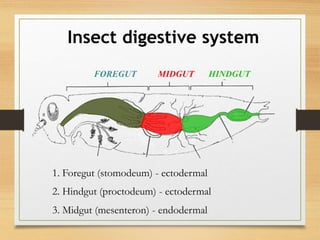
FOREGUT MIDGUT HINDGUT
Insect digestive system
1. Foregut (stomodeum) - ectodermal
2. Hindgut (proctodeum) - ectodermal
3. Midgut (mesenteron) - endodermal
Index
• Alimentary canal
1. Foregut
2. Midgut
3. Hindgut
• Salivary glands
1. Types
2. Composition of Saliva
3. Regulation
4. Functions of salivary glands
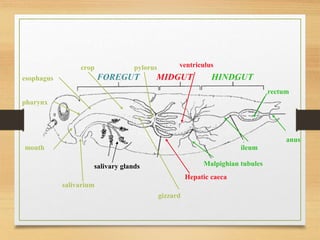
pharynx
esophagus
crop
Malpighian tubulessalivary glands
mouth
salivarium
Hepatic caeca
gizzard
pylorus
ileum
rectum
ventriculus
anus
FOREGUT MIDGUT HINDGUT
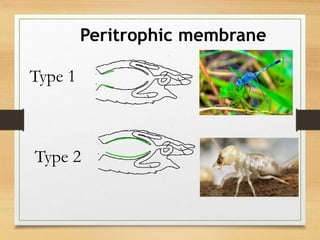
Peritrophic membrane
Type 1
Type 2
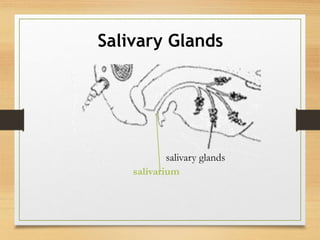
Salivary Glands
salivary glands
salivarium
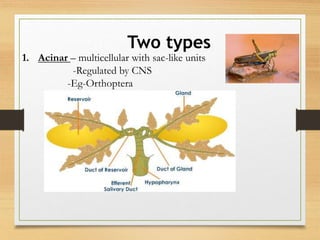
Two types
1. Acinar – multicellular with sac-like units
-Regulated by CNS
-Eg-Orthoptera
2. Tubular – Regulated by serotonin from hemolymph.
-Eg- Diptera , Lepidoptera , Hymenoptera
Composition
• Depends on diet of insect.
• Consist of-
1. Amylase-Starch to Maltose
2. Invertase-Sucrose to Glucose and fructose
3. Lipase-Fat to fatty acid and glycerol
4. Pectinase
5. Hyaluronidase
6. Antihaemostatic agent
Subesophageal
ganglion
Stomatogastric NS
Regulation
1. By stomatogastric nervous system and subesophagal
ganglion
2. Neurohormone
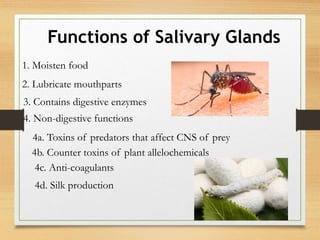
Functions of Salivary Glands
1. Moisten food
2. Lubricate mouthparts
3. Contains digestive enzymes
4. Non-digestive functions
4a. Toxins of predators that affect CNS of prey
4b. Counter toxins of plant allelochemicals
4c. Anti-coagulants
4d. Silk production
Insect digestive system

Insect digestive system