OSMOREGULATION IN
BIRDS AND MAMMALS
OSMOREGULATION
 There needs to be a balance between water
ingested and water eliminated.
 In order to maintain homeostatic levels of
water, the body must undergo
osmoregulation.
 The amount of water eliminated depends
upon 1.) amount of water ingested
recently.
 2.) perspiration rate.
 3.) ventillation rate.
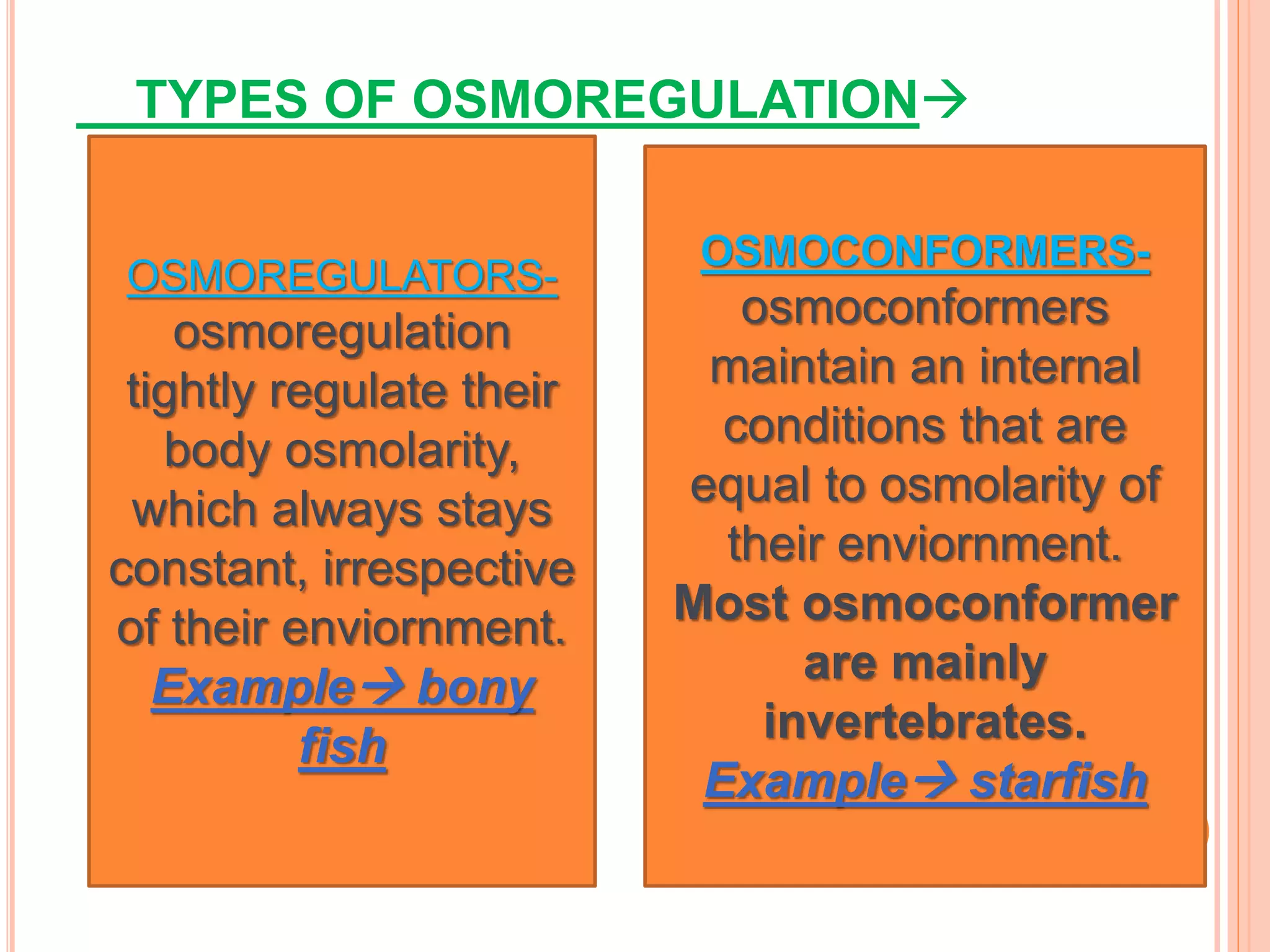
TYPES OF OSMOREGULATION
OSMOREGULATORS-
osmoregulation
tightly regulate their
body osmolarity,
which always stays
constant, irrespective
of their enviornment.
Example bony
fish
OSMOCONFORMERS-
osmoconformers
maintain an internal
conditions that are
equal to osmolarity of
their enviornment.
Most osmoconformer
are mainly
invertebrates.
Example starfish
OSMOREGULATION IN BIRDS
Osmoregulation refers to the various
mechanism by which birds regulate
water and electrolyte levels in their
bodies.
The ‘osmo’ in osmoregulation refers to
osmosis, the process by which water
passes, through semipermeable
membrane in response to difference in
solute concentration.
birds inhibit all enviornment fresh
water, marine, estuaries, terrestial,
polar, temprate, desert.
 As birds do not have urinary bladder, the urine is
refluxed from the cloaca into colon.
 Birds do not posses a separate organ where urine
can be stored until excreted or where post renal
modification of urine can be accomplished, i.e. birds
do not have a urinary bladder. Birds utilize three
organs or organ system to maintain homeostasis of
total body water.
1) kidney 2) gastrointestinal tract 3) nasal or
orbital salt glands.
1.) KIDNEY the role of bird kidney like
the kidneys of other vertebrates filteration,
excretion, or secretion, absorption.
*They filter water and some substance from
blood, such as waste products of
metabolism and ions.
*Avian kidneys are divided into units called
lobules. Each lobule has a cortex and
medulla.
*the functional unit of kidney is the
nephron, avian kidney have two types of
nephron.
A) Reptilian type  no loop of henle in the
cortex.
B) Mammalian type long loop of henle in
medulla.
 In birds only a small percentage of nephrons(15-20%)
contain loop of henle. Nephron filter the blood plasma
to eliminate waste product.
 Other than mammals, birds are only vertebrates that
conserve body water by producing urine osmotically
more concentrated than the plasma from which it is
derived.
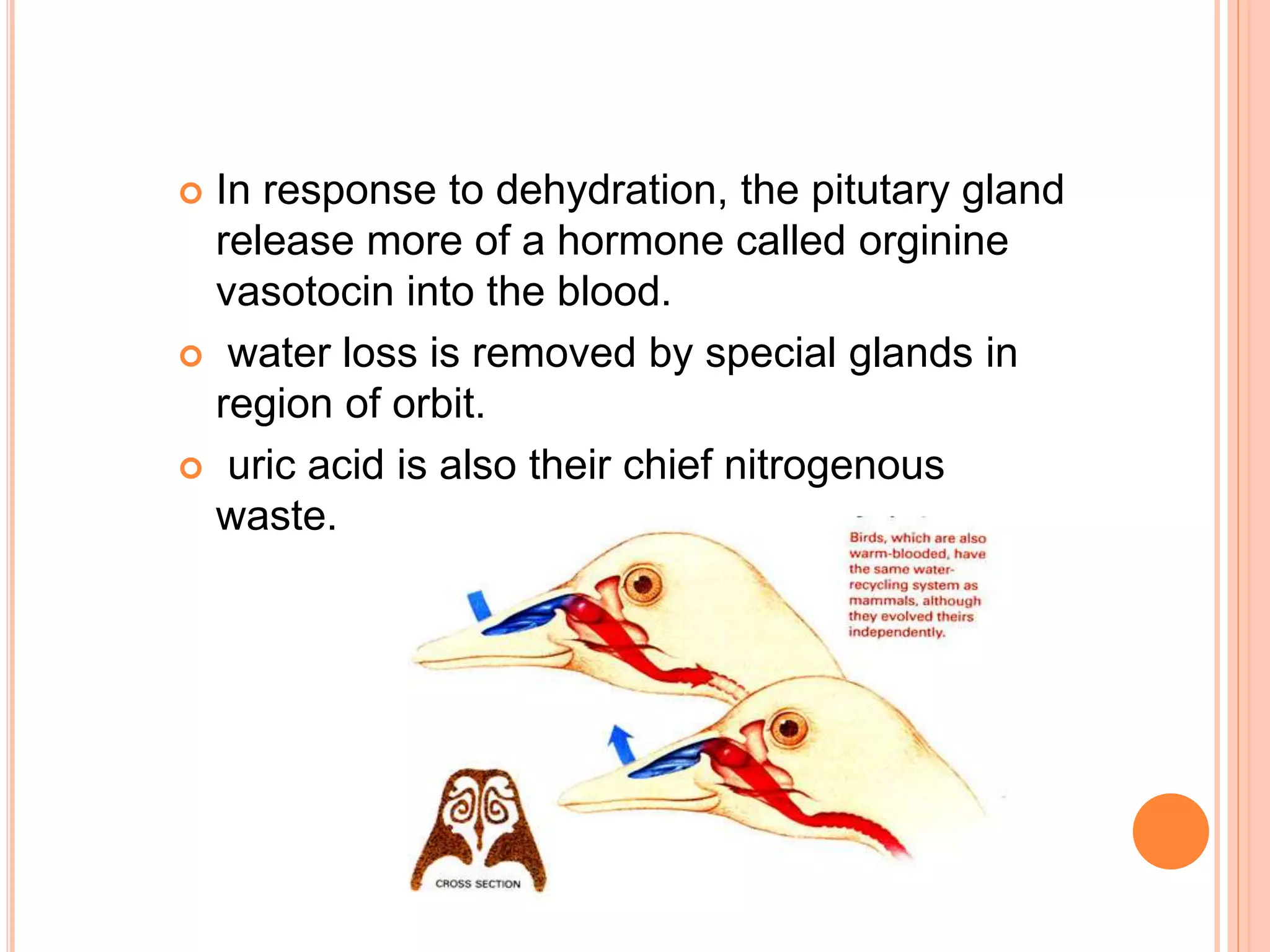
 In response to dehydration, the pitutary gland
release more of a hormone called orginine
vasotocin into the blood.
 water loss is removed by special glands in
region of orbit.
 uric acid is also their chief nitrogenous
waste.
OSMOREGULATION IN MAMMALS
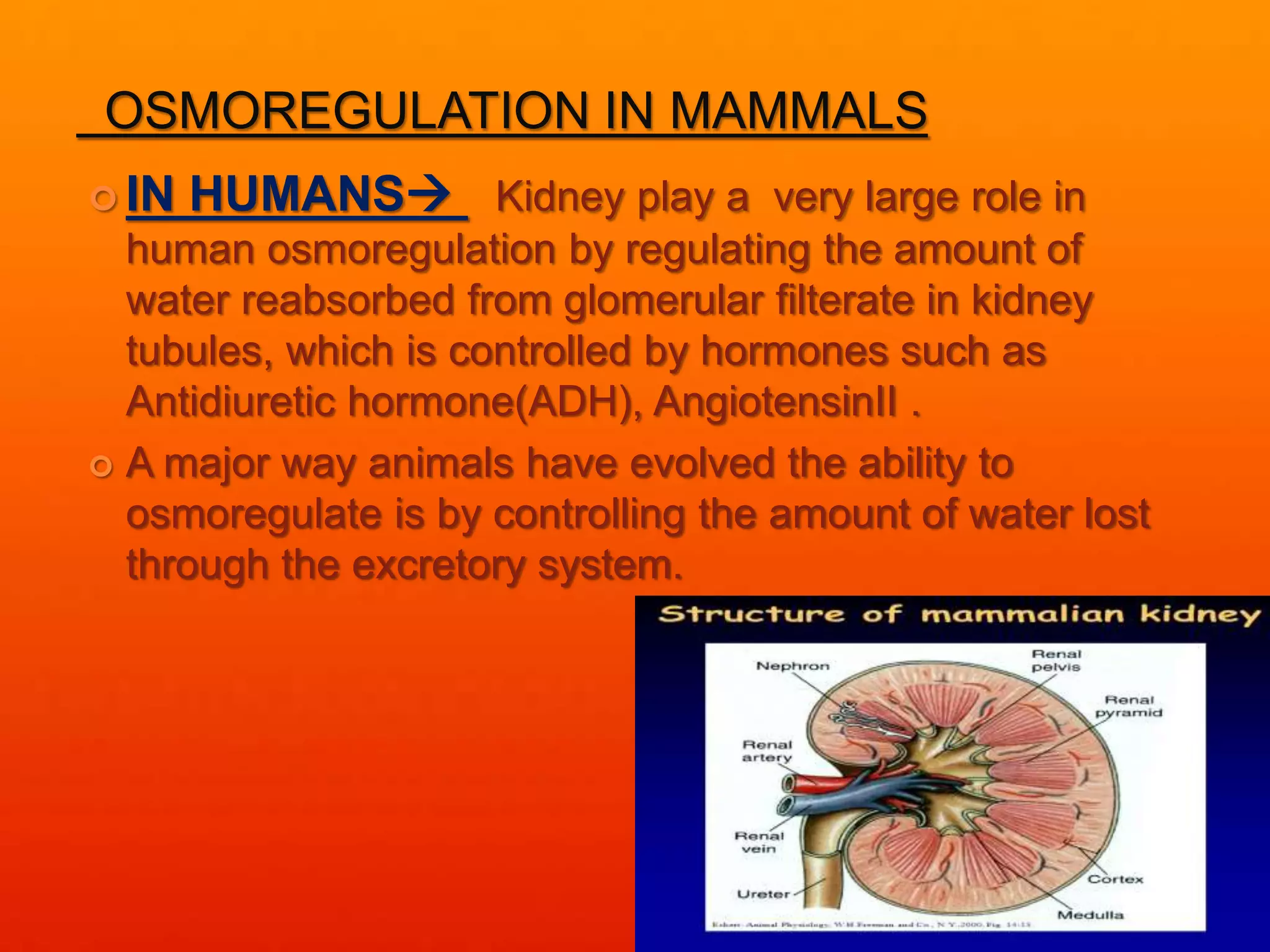
 IN HUMANS Kidney play a very large role in
human osmoregulation by regulating the amount of
water reabsorbed from glomerular filterate in kidney
tubules, which is controlled by hormones such as
Antidiuretic hormone(ADH), AngiotensinII .
 A major way animals have evolved the ability to
osmoregulate is by controlling the amount of water lost
through the excretory system.
EXCRETORY SYSTEM
 Dipose of metabolic waste.
 Regulate solute concentration in the body.
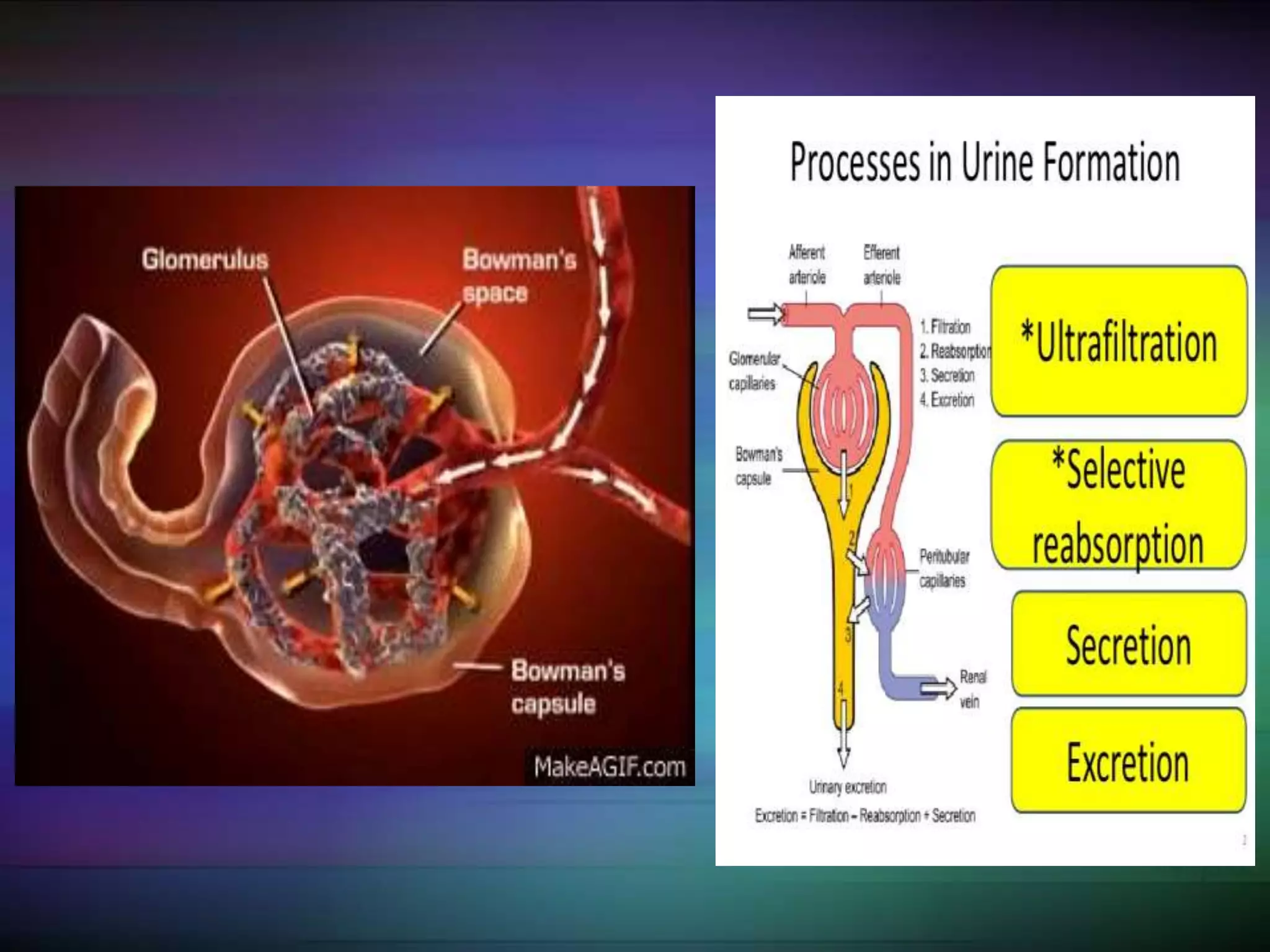
 There are four major process
 FILTERATION Pressure-filtering of body fluids
producing a filterate ( water, salt, sugars, amino acids).
 REABSORPTION Reclaiming valuable solutes (
glucose, salts, amino acids) from the filterate.
 SECRETION Addition of larger molecule like toxins
and other excess solutes from the body fluids to the filterate.
 EXCRETION The filterate leaves the system.
HORMONES REGULATE KIDNEY
FUNCTION
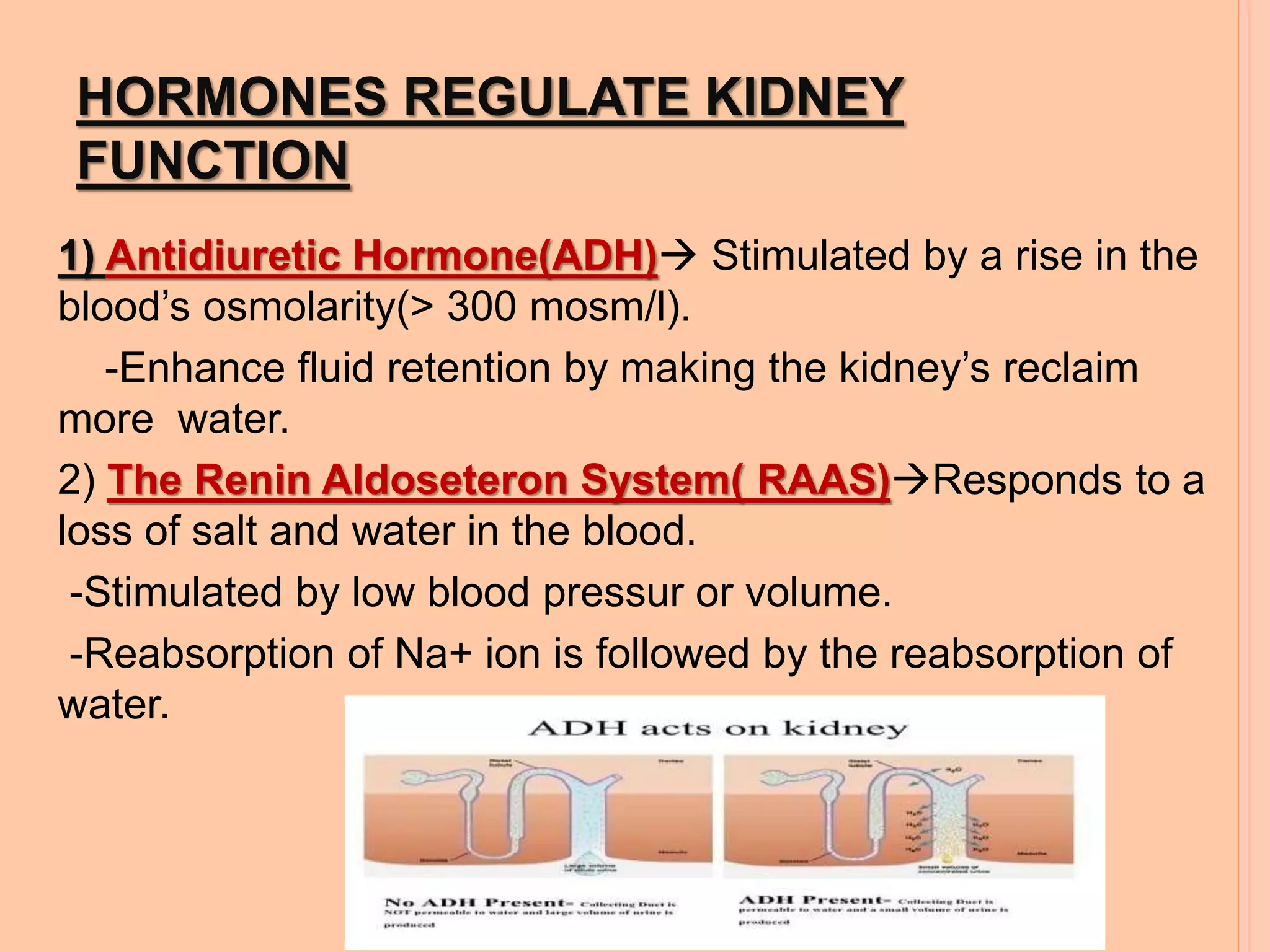
1) Antidiuretic Hormone(ADH) Stimulated by a rise in the
blood’s osmolarity(> 300 mosm/l).
-Enhance fluid retention by making the kidney’s reclaim
more water.
2) The Renin Aldoseteron System( RAAS)Responds to a
loss of salt and water in the blood.
-Stimulated by low blood pressur or volume.
-Reabsorption of Na+ ion is followed by the reabsorption of
water.
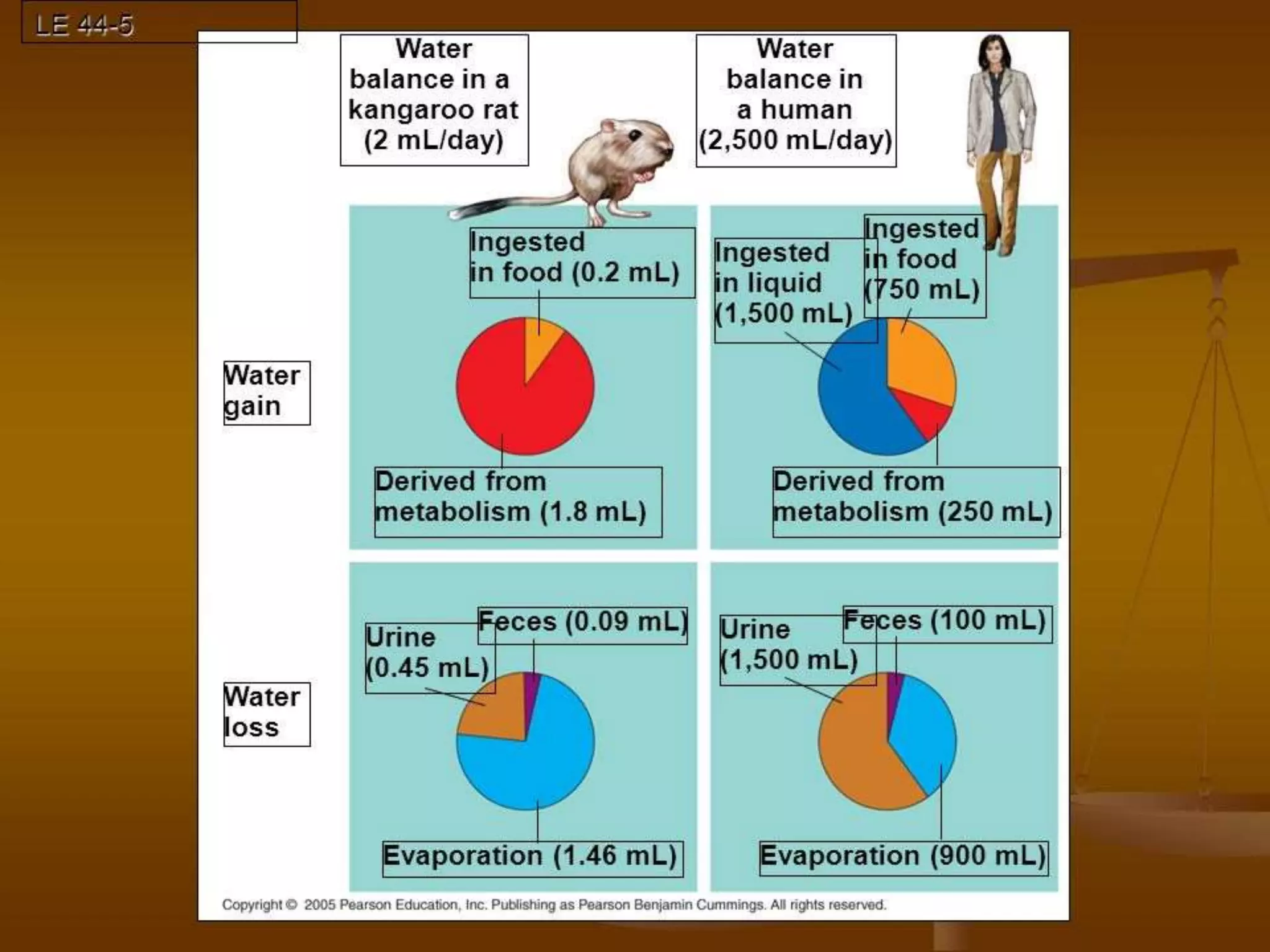
IN KANGAROO RATS
 Lives in the desert and fur prevents loss of water to the air,
and during the day, it remains in a cool burrows.
 Rat’s nasal passage has a highly convoluted mucous
membrane surface that capture condensed water from
exhaled air.
Osmoregulation in birds and mammals

Osmoregulation in birds and mammals

  • 1.
  • 2.
    OSMOREGULATION  There needsto be a balance between water ingested and water eliminated.  In order to maintain homeostatic levels of water, the body must undergo osmoregulation.  The amount of water eliminated depends upon 1.) amount of water ingested recently.  2.) perspiration rate.  3.) ventillation rate.
  • 3.
    TYPES OF OSMOREGULATION OSMOREGULATORS- osmoregulation tightlyregulate their body osmolarity, which always stays constant, irrespective of their enviornment. Example bony fish OSMOCONFORMERS- osmoconformers maintain an internal conditions that are equal to osmolarity of their enviornment. Most osmoconformer are mainly invertebrates. Example starfish
  • 4.
    OSMOREGULATION IN BIRDS Osmoregulationrefers to the various mechanism by which birds regulate water and electrolyte levels in their bodies. The ‘osmo’ in osmoregulation refers to osmosis, the process by which water passes, through semipermeable membrane in response to difference in solute concentration. birds inhibit all enviornment fresh water, marine, estuaries, terrestial, polar, temprate, desert.
  • 5.
     As birdsdo not have urinary bladder, the urine is refluxed from the cloaca into colon.  Birds do not posses a separate organ where urine can be stored until excreted or where post renal modification of urine can be accomplished, i.e. birds do not have a urinary bladder. Birds utilize three organs or organ system to maintain homeostasis of total body water. 1) kidney 2) gastrointestinal tract 3) nasal or orbital salt glands.
  • 7.
    1.) KIDNEY therole of bird kidney like the kidneys of other vertebrates filteration, excretion, or secretion, absorption. *They filter water and some substance from blood, such as waste products of metabolism and ions. *Avian kidneys are divided into units called lobules. Each lobule has a cortex and medulla. *the functional unit of kidney is the nephron, avian kidney have two types of nephron. A) Reptilian type  no loop of henle in the cortex. B) Mammalian type long loop of henle in medulla.
  • 8.
     In birdsonly a small percentage of nephrons(15-20%) contain loop of henle. Nephron filter the blood plasma to eliminate waste product.  Other than mammals, birds are only vertebrates that conserve body water by producing urine osmotically more concentrated than the plasma from which it is derived.
  • 9.
     In responseto dehydration, the pitutary gland release more of a hormone called orginine vasotocin into the blood.  water loss is removed by special glands in region of orbit.  uric acid is also their chief nitrogenous waste.
  • 10.
    OSMOREGULATION IN MAMMALS IN HUMANS Kidney play a very large role in human osmoregulation by regulating the amount of water reabsorbed from glomerular filterate in kidney tubules, which is controlled by hormones such as Antidiuretic hormone(ADH), AngiotensinII .  A major way animals have evolved the ability to osmoregulate is by controlling the amount of water lost through the excretory system.
  • 11.
    EXCRETORY SYSTEM  Diposeof metabolic waste.  Regulate solute concentration in the body.  There are four major process  FILTERATION Pressure-filtering of body fluids producing a filterate ( water, salt, sugars, amino acids).  REABSORPTION Reclaiming valuable solutes ( glucose, salts, amino acids) from the filterate.  SECRETION Addition of larger molecule like toxins and other excess solutes from the body fluids to the filterate.  EXCRETION The filterate leaves the system.
  • 13.
    HORMONES REGULATE KIDNEY FUNCTION 1)Antidiuretic Hormone(ADH) Stimulated by a rise in the blood’s osmolarity(> 300 mosm/l). -Enhance fluid retention by making the kidney’s reclaim more water. 2) The Renin Aldoseteron System( RAAS)Responds to a loss of salt and water in the blood. -Stimulated by low blood pressur or volume. -Reabsorption of Na+ ion is followed by the reabsorption of water.
  • 14.
    IN KANGAROO RATS Lives in the desert and fur prevents loss of water to the air, and during the day, it remains in a cool burrows.  Rat’s nasal passage has a highly convoluted mucous membrane surface that capture condensed water from exhaled air.