PROTISTS
Synopsis
 INTRODUCTION
 HISTORY
 TYPES OF PROTISTS
1. ANIMAL LIKE PROTISTS
2. PLANT LIKE PROTISTS
3. FUNGUS LIKE PROTISTS
 PROTISTS AND THE ENVIRONMENT
 ALGAL BLOOMS
 PROTISTS AND THE INDUSTRY
 PROTISTS AND THE HUMAN HEALTH
Introduction
 In five kingdom classification(scheme proposed by R. Whittaker
in 1969), Protists make up a kingdom called “Protista”, composed
of “Organisms which are unicellular or unicellular-colonial and
which form no tissue.
 Protists are the eukaryotes that are not members of the kingdom
Plantae, Animalia or Fungi. Most Protists are unicellular, but few
have hundreds or even thousands of cells.
 Protists can be autotrophic or heterotrophic.
 They move by cilia, flagella or pseudopodia.
History
 John Hogg – He proposed kingdom Protoctista for microorganisms in 1961.
 Ernst Haeckel – He suggested kingdom Protista inn 1996. He included
bacteria and all other microorganisms like amoeba in this kingdom.
 Herbert Copeland – He separated prokaryotes from the kingdom Protista in
1966 and raised the prokaryotes to a status of separated kingdom.
 Robert Whittaker – He gave five kingdom classification system in 1969. He
included unicellular eukaryotes in kingdom Protista.
 Margulis and Schwartz – They modified the five kingdom classification
system in 1982. They also included colonial and simple multicellular
organisms in kingdom Protista.
Now, kingdom Protista have unicellular, colonial and simple multicellular
organisms.
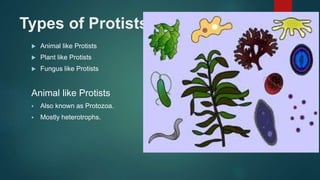
Types of Protists
 Animal like Protists
 Plant like Protists
 Fungus like Protists
Animal like Protists
 Also known as Protozoa.
 Mostly heterotrophs.
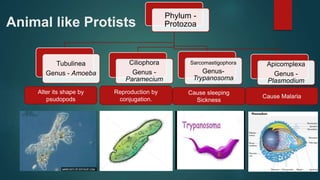
Animal like Protists
Phylum -
Protozoa
Tubulinea
Genus - Amoeba
Ciliophora
Genus -
Paramecium
Sarcomastigophora
Genus-
Trypanosoma
Apicomplexa
Genus -
Plasmodium
Alter its shape by
psudopods
Reproduction by
conjugation.
Cause sleeping
Sickness
Cause Malaria
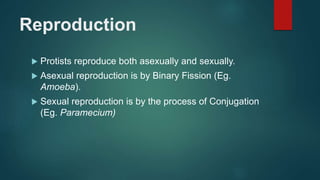
Reproduction
 Protists reproduce both asexually and sexually.
 Asexual reproduction is by Binary Fission (Eg.
Amoeba).
 Sexual reproduction is by the process of Conjugation
(Eg. Paramecium)
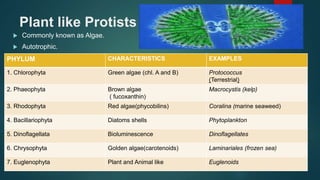
Plant like Protists
 Commonly known as Algae.
 Autotrophic.
PHYLUM CHARACTERISTICS EXAMPLES
1. Chlorophyta Green algae (chl. A and B) Protococcus
(Terrestrial)
2. Phaeophyta Brown algae
( fucoxanthin)
Macrocystis (kelp)
3. Rhodophyta Red algae(phycobilins) Coralina (marine seaweed)
4. Bacillariophyta Diatoms shells Phytoplankton
5. Dinoflagellata Bioluminescence Dinoflagellates
6. Chrysophyta Golden algae(carotenoids) Laminariales (frozen sea)
7. Euglenophyta Plant and Animal like Euglenoids
Reproduction in Algae
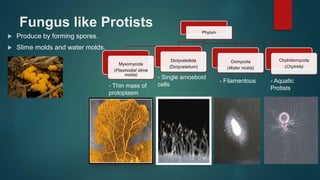
Fungus like Protists
 Produce by forming spores.
 Slime molds and water molds.
Phylum
Myxomycota
(Plasmodial slime
molds)
Dictyostellida
(Dictyostelium)
Oomycota
(Water molds)
Chytridomycota
(Chytrids)
- Thin mass of
protoplasm
- Single amoeboid
cells
- Filamentous - Aquatic
Protists
Reproduction in fungus like protists
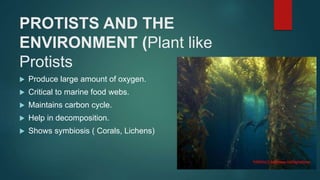
PROTISTS AND THE
ENVIRONMENT (Plant like
Protists
 Produce large amount of oxygen.
 Critical to marine food webs.
 Maintains carbon cycle.
 Help in decomposition.
 Shows symbiosis ( Corals, Lichens)
ALGAL BLOOMS
 Increase temperature and increase in nutrients (nitrates and
phosphates) leads to increased algal population.
 Harmful to fishes and human (red tide).
PROTISTS AND THE INDUSTRY
 Food source (kelps and sea weeds).
 By-products used in cosmetics, drugs and gelatins.
 Agar polysaccharides from cell wall of red algae.
 Diatoms shell is used as abrasive.
PROTISTS AND HUMAN HEALTH
(Animal like protists)
 MALARIA – Caused by Plasmodium.
 SLEEPING SICKNESS – Caused by Trypanosoma and spread
by Tsetse fly.
 TRICHOMONIASIS – Caused by Trichomonas (mastigophoran).
It is most common sexually transmitted disease ( Discolored
discharge, genital itching, the urge to urinate).
p

Protists

  • 1.
  • 2.
    Synopsis  INTRODUCTION  HISTORY TYPES OF PROTISTS 1. ANIMAL LIKE PROTISTS 2. PLANT LIKE PROTISTS 3. FUNGUS LIKE PROTISTS  PROTISTS AND THE ENVIRONMENT  ALGAL BLOOMS  PROTISTS AND THE INDUSTRY  PROTISTS AND THE HUMAN HEALTH
  • 3.
    Introduction  In fivekingdom classification(scheme proposed by R. Whittaker in 1969), Protists make up a kingdom called “Protista”, composed of “Organisms which are unicellular or unicellular-colonial and which form no tissue.  Protists are the eukaryotes that are not members of the kingdom Plantae, Animalia or Fungi. Most Protists are unicellular, but few have hundreds or even thousands of cells.  Protists can be autotrophic or heterotrophic.  They move by cilia, flagella or pseudopodia.
  • 4.
    History  John Hogg– He proposed kingdom Protoctista for microorganisms in 1961.  Ernst Haeckel – He suggested kingdom Protista inn 1996. He included bacteria and all other microorganisms like amoeba in this kingdom.  Herbert Copeland – He separated prokaryotes from the kingdom Protista in 1966 and raised the prokaryotes to a status of separated kingdom.  Robert Whittaker – He gave five kingdom classification system in 1969. He included unicellular eukaryotes in kingdom Protista.  Margulis and Schwartz – They modified the five kingdom classification system in 1982. They also included colonial and simple multicellular organisms in kingdom Protista. Now, kingdom Protista have unicellular, colonial and simple multicellular organisms.
  • 5.
    Types of Protists Animal like Protists  Plant like Protists  Fungus like Protists Animal like Protists  Also known as Protozoa.  Mostly heterotrophs.
  • 6.
    Animal like Protists Phylum- Protozoa Tubulinea Genus - Amoeba Ciliophora Genus - Paramecium Sarcomastigophora Genus- Trypanosoma Apicomplexa Genus - Plasmodium Alter its shape by psudopods Reproduction by conjugation. Cause sleeping Sickness Cause Malaria
  • 7.
    Reproduction  Protists reproduceboth asexually and sexually.  Asexual reproduction is by Binary Fission (Eg. Amoeba).  Sexual reproduction is by the process of Conjugation (Eg. Paramecium)
  • 9.
    Plant like Protists Commonly known as Algae.  Autotrophic. PHYLUM CHARACTERISTICS EXAMPLES 1. Chlorophyta Green algae (chl. A and B) Protococcus (Terrestrial) 2. Phaeophyta Brown algae ( fucoxanthin) Macrocystis (kelp) 3. Rhodophyta Red algae(phycobilins) Coralina (marine seaweed) 4. Bacillariophyta Diatoms shells Phytoplankton 5. Dinoflagellata Bioluminescence Dinoflagellates 6. Chrysophyta Golden algae(carotenoids) Laminariales (frozen sea) 7. Euglenophyta Plant and Animal like Euglenoids
  • 11.
  • 12.
    Fungus like Protists Produce by forming spores.  Slime molds and water molds. Phylum Myxomycota (Plasmodial slime molds) Dictyostellida (Dictyostelium) Oomycota (Water molds) Chytridomycota (Chytrids) - Thin mass of protoplasm - Single amoeboid cells - Filamentous - Aquatic Protists
  • 13.
  • 14.
    PROTISTS AND THE ENVIRONMENT(Plant like Protists  Produce large amount of oxygen.  Critical to marine food webs.  Maintains carbon cycle.  Help in decomposition.  Shows symbiosis ( Corals, Lichens)
  • 15.
    ALGAL BLOOMS  Increasetemperature and increase in nutrients (nitrates and phosphates) leads to increased algal population.  Harmful to fishes and human (red tide). PROTISTS AND THE INDUSTRY  Food source (kelps and sea weeds).  By-products used in cosmetics, drugs and gelatins.  Agar polysaccharides from cell wall of red algae.  Diatoms shell is used as abrasive.
  • 16.
    PROTISTS AND HUMANHEALTH (Animal like protists)  MALARIA – Caused by Plasmodium.  SLEEPING SICKNESS – Caused by Trypanosoma and spread by Tsetse fly.  TRICHOMONIASIS – Caused by Trichomonas (mastigophoran). It is most common sexually transmitted disease ( Discolored discharge, genital itching, the urge to urinate).
  • 17.