Layers of the Atmosphere
Atmosphere
Layers of the
Atmosphere
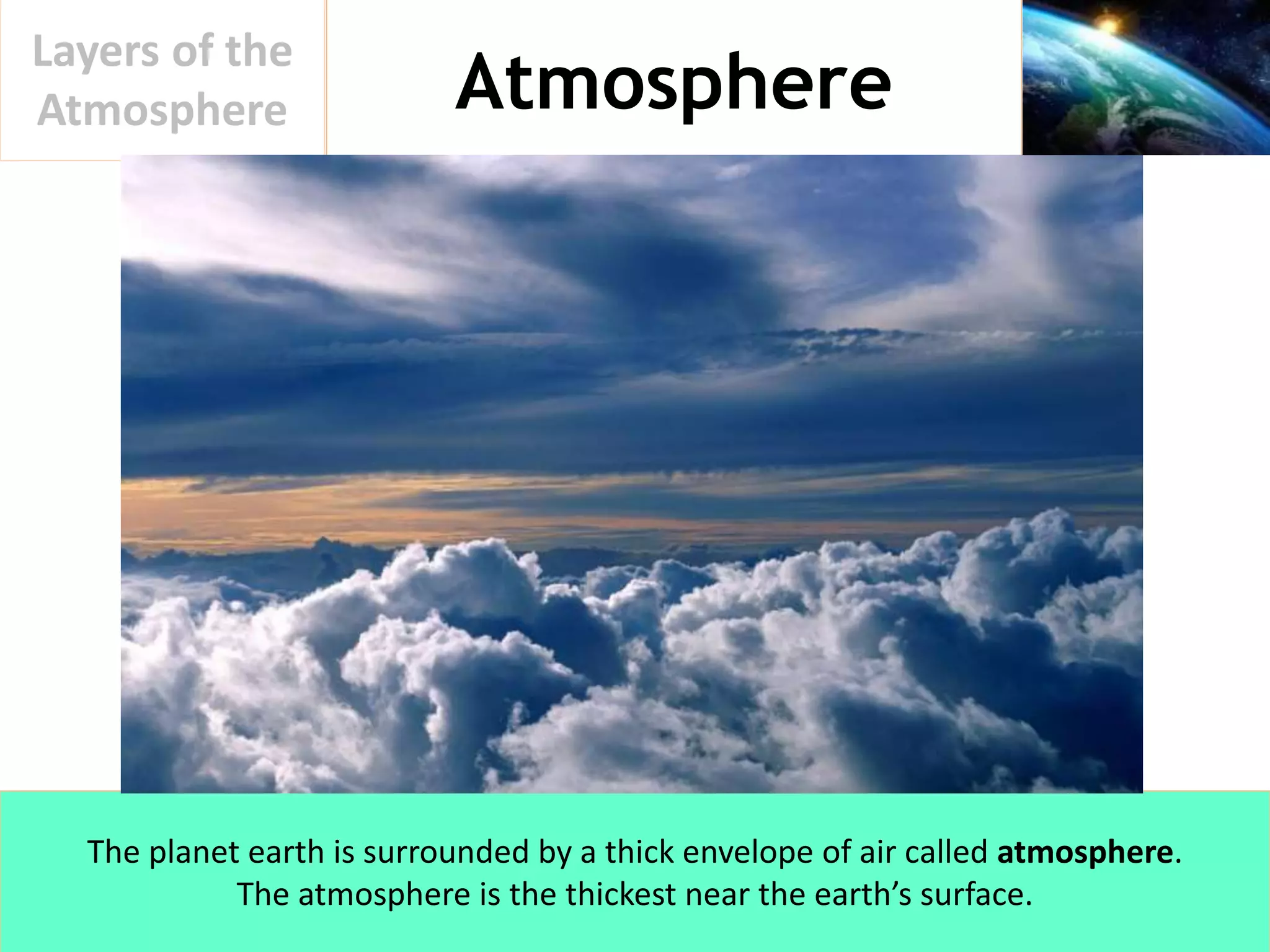
The planet earth is surrounded by a thick envelope of air called atmosphere.
The atmosphere is the thickest near the earth’s surface.
Atmosphere
Layers of the
Atmosphere
The atmosphere is divided into five layers.
Atmosphere
Layers of the
Atmosphere
The atmosphere’s thickness keeps on decreasing with height and it
eventually merges with space.
Troposphere
Layers of the
Atmosphere
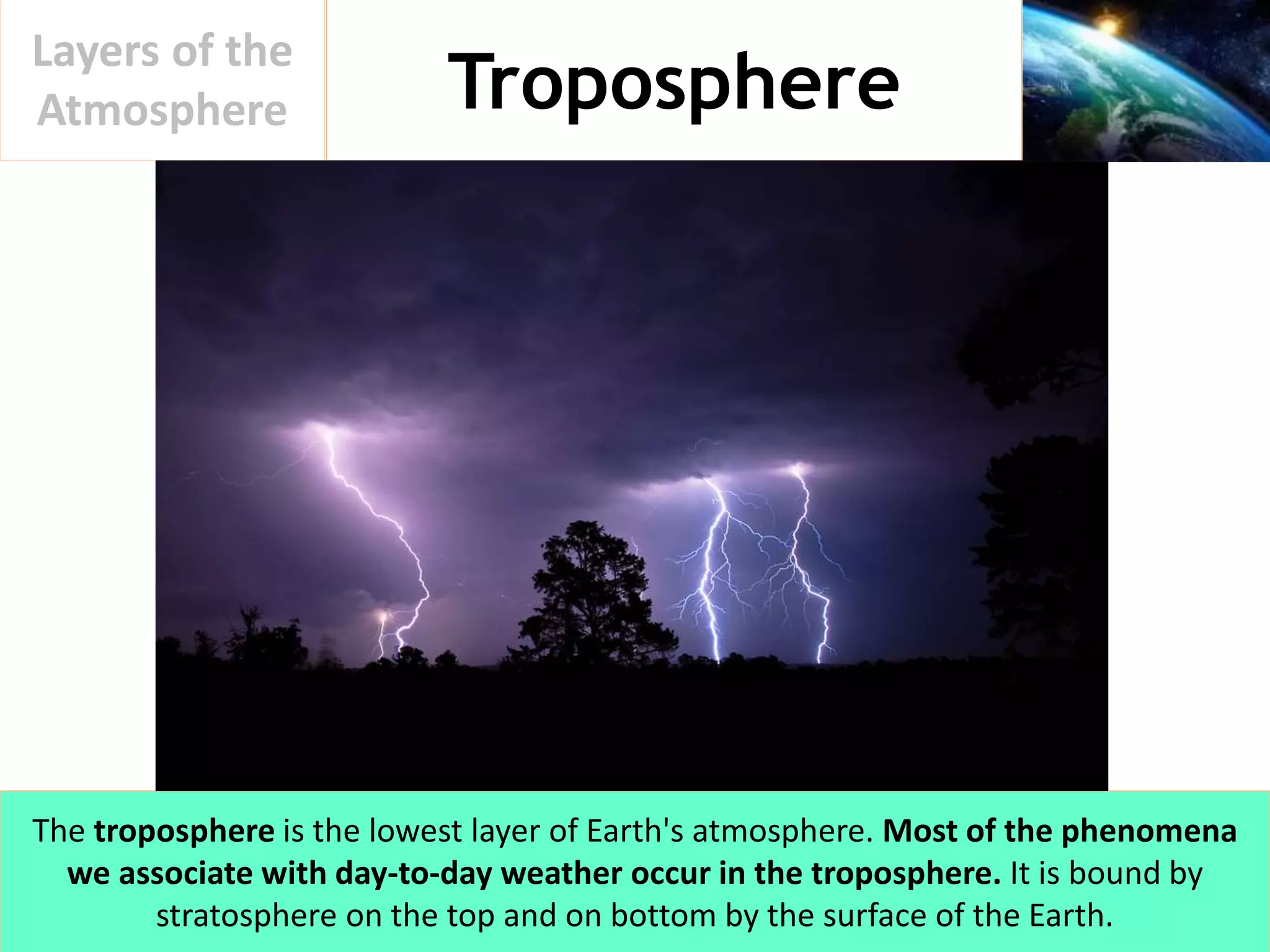
The troposphere is the lowest layer of Earth's atmosphere. Most of the phenomena
we associate with day-to-day weather occur in the troposphere. It is bound by
stratosphere on the top and on bottom by the surface of the Earth.
Stratosphere
Layers of the
Atmosphere
Stratosphere is the second layer of the atmosphere as you go upward. It is bound by
troposphere below and mesosphere above. Mostly aircraft fly in this layer as it
is quite stable. Stratosphere is important as it contains ozone gas which
absorbs harmful ultraviolet rays of the sun.
Mesosphere
Layers of the
Atmosphere
The mesosphere starts about 50 km above the ground and goes all the way up to 85 km high. The
layer below it is called the stratosphere. The layer above it is the thermosphere. Mesosphere prevents
small rocks called meteoroids coming from space from reaching the earth’s surface by burning
them. These rocks can cause destruction on earth if they fall on it.
Thermosphere
Layers of the
Atmosphere
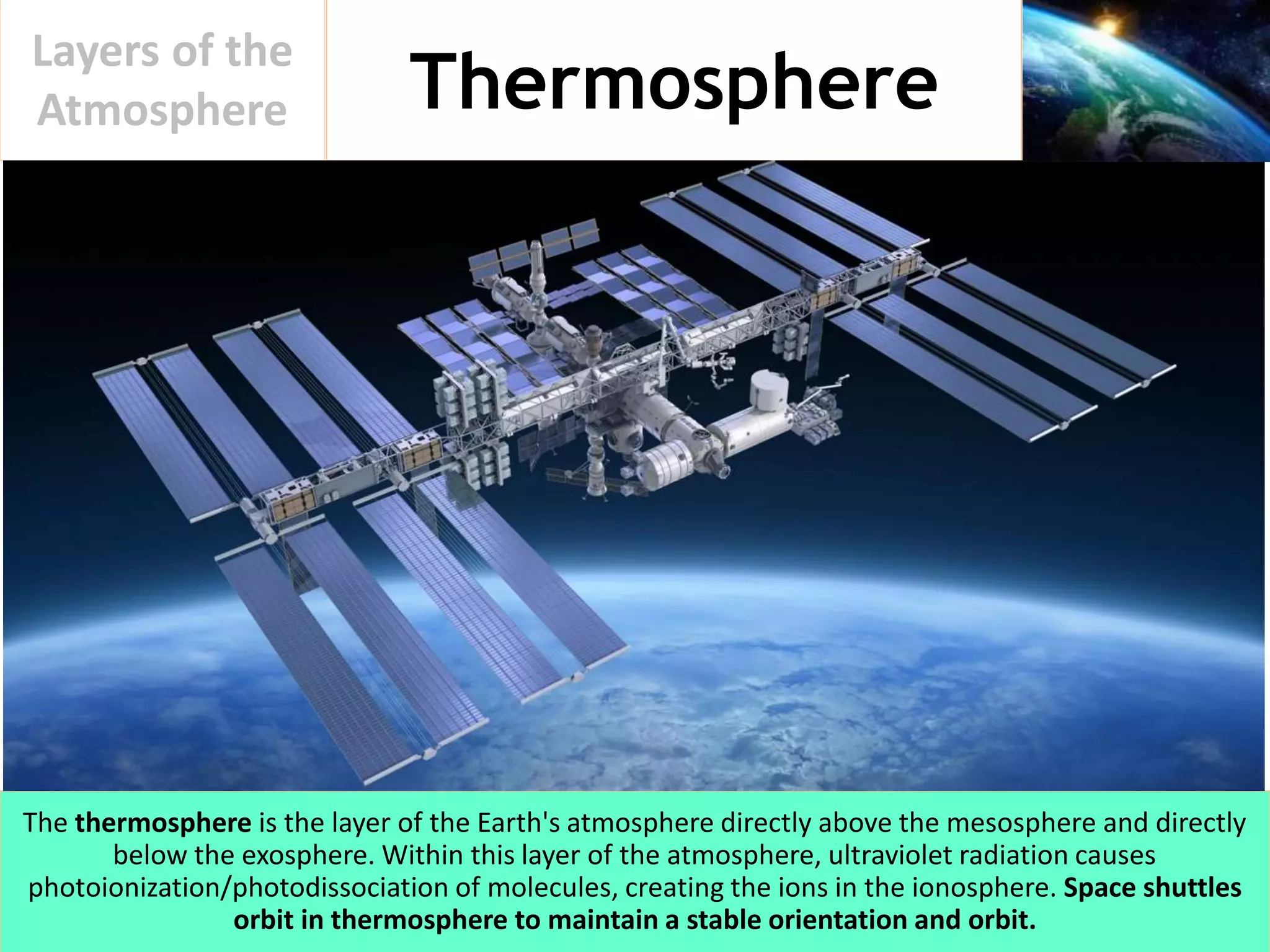
The thermosphere is the layer of the Earth's atmosphere directly above the mesosphere and directly
below the exosphere. Within this layer of the atmosphere, ultraviolet radiation causes
photoionization/photodissociation of molecules, creating the ions in the ionosphere. Space shuttles
orbit in thermosphere to maintain a stable orientation and orbit.
Exosphere
Layers of the
Atmosphere
The exosphere is the outermost layer of the Earth's atmosphere where the atmosphere thins out
and merges with interplanetary space. It starts at an altitude of about 500 km and goes out to
about 10,000 km. Within this region particles of atmosphere can travel for hundreds of kilometers
in a ballistic trajectory before bumping into any other particles of the atmosphere. It helps
in long distance communication through radio, mobiles, etc.
This presentation is a result of my experiences while I was
helping out my son with his school assignments and project
work. I am happy to share this with other students and their
parents. Hope you find this informative and useful. Thank you.
- Prashant Mahajan -
All pictures belong to their original authors, photographers.

Layers of the Atmosphere

  • 1.
    Layers of theAtmosphere
  • 2.
    Atmosphere Layers of the Atmosphere Theplanet earth is surrounded by a thick envelope of air called atmosphere. The atmosphere is the thickest near the earth’s surface.
  • 3.
    Atmosphere Layers of the Atmosphere Theatmosphere is divided into five layers.
  • 4.
    Atmosphere Layers of the Atmosphere Theatmosphere’s thickness keeps on decreasing with height and it eventually merges with space.
  • 5.
    Troposphere Layers of the Atmosphere Thetroposphere is the lowest layer of Earth's atmosphere. Most of the phenomena we associate with day-to-day weather occur in the troposphere. It is bound by stratosphere on the top and on bottom by the surface of the Earth.
  • 6.
    Stratosphere Layers of the Atmosphere Stratosphereis the second layer of the atmosphere as you go upward. It is bound by troposphere below and mesosphere above. Mostly aircraft fly in this layer as it is quite stable. Stratosphere is important as it contains ozone gas which absorbs harmful ultraviolet rays of the sun.
  • 7.
    Mesosphere Layers of the Atmosphere Themesosphere starts about 50 km above the ground and goes all the way up to 85 km high. The layer below it is called the stratosphere. The layer above it is the thermosphere. Mesosphere prevents small rocks called meteoroids coming from space from reaching the earth’s surface by burning them. These rocks can cause destruction on earth if they fall on it.
  • 8.
    Thermosphere Layers of the Atmosphere Thethermosphere is the layer of the Earth's atmosphere directly above the mesosphere and directly below the exosphere. Within this layer of the atmosphere, ultraviolet radiation causes photoionization/photodissociation of molecules, creating the ions in the ionosphere. Space shuttles orbit in thermosphere to maintain a stable orientation and orbit.
  • 9.
    Exosphere Layers of the Atmosphere Theexosphere is the outermost layer of the Earth's atmosphere where the atmosphere thins out and merges with interplanetary space. It starts at an altitude of about 500 km and goes out to about 10,000 km. Within this region particles of atmosphere can travel for hundreds of kilometers in a ballistic trajectory before bumping into any other particles of the atmosphere. It helps in long distance communication through radio, mobiles, etc.
  • 11.
    This presentation isa result of my experiences while I was helping out my son with his school assignments and project work. I am happy to share this with other students and their parents. Hope you find this informative and useful. Thank you. - Prashant Mahajan - All pictures belong to their original authors, photographers.