
HURRICANE
ACADEMIC LECTURE
What is a hurricane?
• Hurricanes are giant, spiraling
tropical storms that can pack
wind speeds of over 160 miles
(257 kilometers) an hour and
unleash more than 2.4 trillion
gallons (9 trillion liters) of rain a
day.
Other names
• These same tropical storms are
known as cyclones in the
northern Indian Ocean and
Bay of Bengal, and as
typhoons in the western
Pacific Ocean.
• The Atlantic Ocean’s hurricane
season peaks from mid-August to
late October and averages five to
six hurricanes per year.
How are they formed?
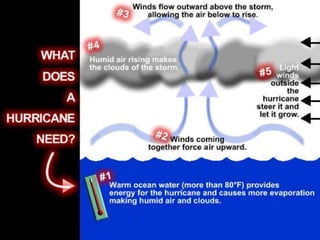
• Hurricanes begin as tropical
disturbances in warm ocean waters
with surface temperatures of at least
80 degrees Fahrenheit (26.5 degrees
Celsius). These low pressure systems
are fed by energy from the warm
seas.
• If a storm achieves wind speeds of 38 miles
(61 kilometers) an hour, it becomes known as
a tropical depression.
Once a group of thunderstorms has come
together under the right atmospheric
conditions for a long enough time, they may
organize into a tropical depression. Winds near
the center are constantly between 20 and 34
knots (23 - 39 mph).
• A tropical depression becomes a tropical
storm, and is given a name, when its sustained
wind speeds top 39 miles (63 kilometers) an
hour.
Alex
Bonnie
Colin
Danielle
Earl
Fiona
Gaston
Hermine
Igor
Julia
Karl
Lisa
Matthew
Nicole
Otto
Paula
Richard
Shary
Tomas
Virginie
Walter
• When a storm’s sustained wind
speeds reach 74 miles (119
kilometers) an hour it becomes a
hurricane and earns a category
rating of 1 to 5 on the Saffir-
Simpson scale.
How do they become stronger?
• Hurricanes are enormous heat
engines that generate energy on a
staggering scale. They draw heat
from warm, moist ocean air and
release it through condensation of
water vapor in thunderstorms.
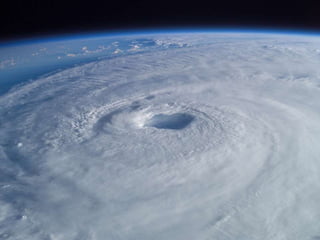
The Eye
• Hurricanes spin around a low-pressure center
known as the “eye.” It is 20- to 30-mile-wide
(32- to 48-kilometer-wide) and this is area
notoriously calm. But the eye is surrounded
by a circular “eye wall” that hosts the storm’s
strongest winds and rain.
How dangerous?
• These storms bring destruction ashore in
many different ways. When a hurricane makes
landfall it often produces a devastating storm
surge that can reach 20 feet (6 meters) high
and extend nearly 100 miles (161 kilometers).
Ninety percent of all hurricane deaths result
from storm surges.
How dangerous?
• A hurricane’s high winds are also destructive
and may spawn tornadoes. Torrential rains
cause further damage by spawning floods and
landslides, which may occur many miles
inland.
• The best defense against a hurricane is an
accurate forecast that gives people time to get
out of its way.
Hurricane

Hurricane

  • 1.
  • 2.
    What is ahurricane? • Hurricanes are giant, spiraling tropical storms that can pack wind speeds of over 160 miles (257 kilometers) an hour and unleash more than 2.4 trillion gallons (9 trillion liters) of rain a day.
  • 4.
    Other names • Thesesame tropical storms are known as cyclones in the northern Indian Ocean and Bay of Bengal, and as typhoons in the western Pacific Ocean.
  • 5.
    • The AtlanticOcean’s hurricane season peaks from mid-August to late October and averages five to six hurricanes per year.
  • 6.
    How are theyformed?
  • 8.
    • Hurricanes beginas tropical disturbances in warm ocean waters with surface temperatures of at least 80 degrees Fahrenheit (26.5 degrees Celsius). These low pressure systems are fed by energy from the warm seas.
  • 9.
    • If astorm achieves wind speeds of 38 miles (61 kilometers) an hour, it becomes known as a tropical depression. Once a group of thunderstorms has come together under the right atmospheric conditions for a long enough time, they may organize into a tropical depression. Winds near the center are constantly between 20 and 34 knots (23 - 39 mph).
  • 11.
    • A tropicaldepression becomes a tropical storm, and is given a name, when its sustained wind speeds top 39 miles (63 kilometers) an hour. Alex Bonnie Colin Danielle Earl Fiona Gaston Hermine Igor Julia Karl Lisa Matthew Nicole Otto Paula Richard Shary Tomas Virginie Walter
  • 12.
    • When astorm’s sustained wind speeds reach 74 miles (119 kilometers) an hour it becomes a hurricane and earns a category rating of 1 to 5 on the Saffir- Simpson scale.
  • 14.
    How do theybecome stronger? • Hurricanes are enormous heat engines that generate energy on a staggering scale. They draw heat from warm, moist ocean air and release it through condensation of water vapor in thunderstorms.
  • 15.
    The Eye • Hurricanesspin around a low-pressure center known as the “eye.” It is 20- to 30-mile-wide (32- to 48-kilometer-wide) and this is area notoriously calm. But the eye is surrounded by a circular “eye wall” that hosts the storm’s strongest winds and rain.
  • 17.
    How dangerous? • Thesestorms bring destruction ashore in many different ways. When a hurricane makes landfall it often produces a devastating storm surge that can reach 20 feet (6 meters) high and extend nearly 100 miles (161 kilometers). Ninety percent of all hurricane deaths result from storm surges.
  • 18.
    How dangerous? • Ahurricane’s high winds are also destructive and may spawn tornadoes. Torrential rains cause further damage by spawning floods and landslides, which may occur many miles inland.
  • 19.
    • The bestdefense against a hurricane is an accurate forecast that gives people time to get out of its way.