Putting Users in UX
Episode 2
Research Methods for Design
 	
  
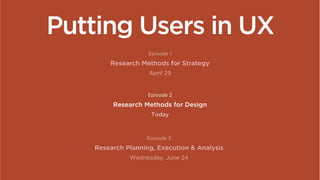
Putting Users in UX
Episode 1
Research Methods for Strategy
April 29
Episode 2
Research Methods for Design
Today
Episode 3
Research Planning, Execution & Analysis
Wednesday, June 24
Meet Usability Matters
•  Passionate about making technology work
for people
•  Thrive in solving complex design problems
•  Dedication to finding the right solution
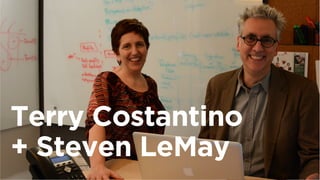
Terry Costantino
+ Steven LeMay
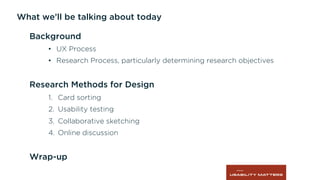
What we’ll be talking about today
Background
•  UX Process
•  Research Process, particularly determining research objectives
Research Methods for Design
1.  Card sorting
2.  Usability testing
3.  Collaborative sketching
4.  Online discussion
Wrap-up
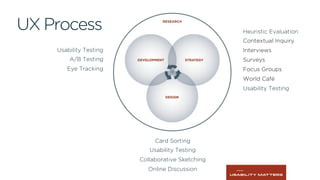
UX Process
Usability Testing
A/B Testing
Eye Tracking
Heuristic Evaluation
Contextual Inquiry
Interviews
Surveys
Focus Groups
World Café
Usability Testing
Card Sorting
Usability Testing
Collaborative Sketching
Online Discussion
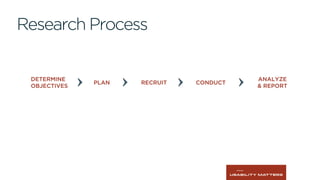
DETERMINE
OBJECTIVES
PLAN RECRUIT CONDUCT
ANALYZE
& REPORT
Research Process
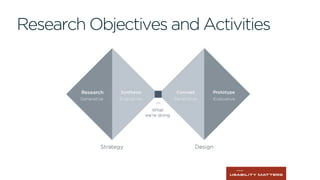
Research Objectives and Activities
Assess the site’s ability to inform and drive users to conversion:
•  Do participants understand the offer?
•  Does the content drive them to subscribe?
•  Is there enough of the right kinds of information on the site for participants to
make the decision to subscribe?
•  Is the site meeting their expectations? Is anything missing?
  
Assess the ease of use of the subscription flow?
•  Are participants able to understand requirements for subscribing?
•  Is anything confusing or unclear?
Research Objectives - Examples
Getting Users into
UX Design
1.  Card sorting
2.  Usability testing
3.  Collaborative sketching
4.  Online discussions
1Card Sorting
Understanding how users think about information
Card Sorting
Understand how your audience thinks about information.
•  How do they group things?
•  What do they call those groups?
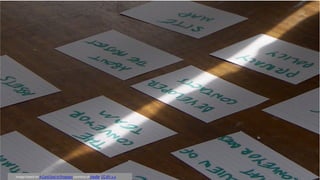
Image	
  based	
  on	
  A	
  Card	
  Sort	
  in	
  Progress	
  courtesy	
  of	
  Yandle,	
  CC-­‐BY	
  2.0	
  
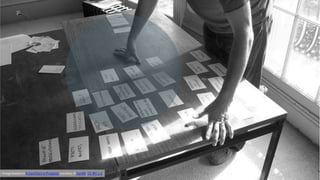
Image	
  based	
  on	
  A	
  Card	
  Sort	
  in	
  Progress	
  courtesy	
  of	
  Yandle,	
  CC-­‐BY	
  2.0	
  
2Usability Testing
Finding conceptual and tactical barriers to use and usability
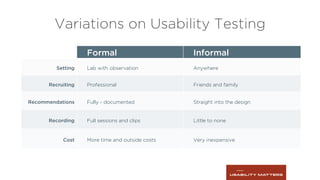
Variations on Usability Testing
Formal Informal
Setting Lab with observation Anywhere
Recruiting Professional Friends and family
Recommendations Fully - documented Straight into the design
Recording Full sessions and clips Little to none
Cost More time and outside costs Very inexpensive
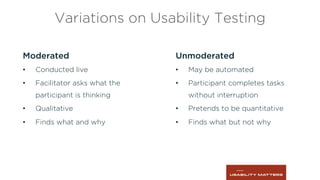
Variations on Usability Testing
Moderated
•  Conducted live
•  Facilitator asks what the
participant is thinking
•  Qualitative
•  Finds what and why
Unmoderated
•  May be automated
•  Participant completes tasks
without interruption
•  Pretends to be quantitative
•  Finds what but not why
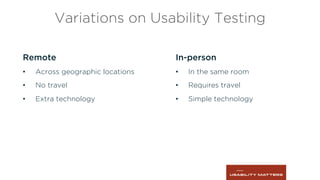
Variations on Usability Testing
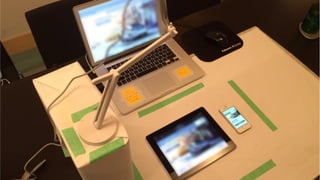
Remote
•  Across geographic locations
•  No travel
•  Extra technology
In-person
•  In the same room
•  Requires travel
•  Simple technology
3Collaborative Sketching
Working in small groups to sketch an experience
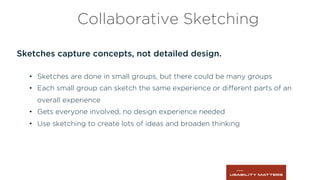
Sketches capture concepts, not detailed design.
•  Sketches are done in small groups, but there could be many groups
•  Each small group can sketch the same experience or different parts of an
overall experience
•  Gets everyone involved, no design experience needed
•  Use sketching to create lots of ideas and broaden thinking
Collaborative Sketching
Image based on Graduate Program Design Workshop courtesy of the Scottish Government, CC-BY 2.0
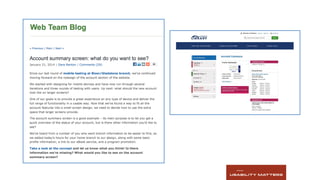
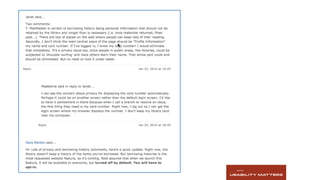
4Online Discussions
Getting users to discuss your ideas and designs online
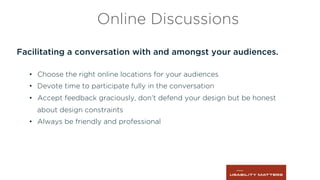
Facilitating a conversation with and amongst your audiences.
•  Choose the right online locations for your audiences
•  Devote time to participate fully in the conversation
•  Accept feedback graciously, don’t defend your design but be honest
about design constraints
•  Always be friendly and professional
Online Discussions
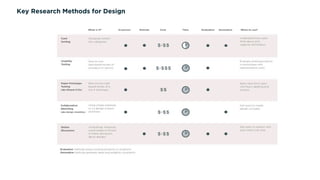
Key Research Methods for Design
 	
  
Questions?
 	
  
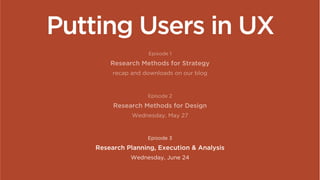
Putting Users in UX
Episode 1
Research Methods for Strategy
recap and downloads on our blog
Episode 2
Research Methods for Design
Wednesday, May 27
Episode 3
Research Planning, Execution & Analysis
Wednesday, June 24
 	
  
Thank You
Terry Costantino and Steven LeMay
Usability Matters
215 Spadina Ave., Toronto ON, M5T 2C7
Follow us on Twitter: @umatters
416 598 7770
terry@usabilitymatters.com
steven@usabilitymatters.com

Putting Users in UX: Research Methods for Design

  • 1.
        Putting Usersin UX Episode 2 Research Methods for Design
  • 2.
        Putting Usersin UX Episode 1 Research Methods for Strategy April 29 Episode 2 Research Methods for Design Today Episode 3 Research Planning, Execution & Analysis Wednesday, June 24
  • 3.
    Meet Usability Matters • Passionate about making technology work for people •  Thrive in solving complex design problems •  Dedication to finding the right solution
  • 4.
  • 5.
    What we’ll betalking about today Background •  UX Process •  Research Process, particularly determining research objectives Research Methods for Design 1.  Card sorting 2.  Usability testing 3.  Collaborative sketching 4.  Online discussion Wrap-up
  • 6.
    UX Process Usability Testing A/BTesting Eye Tracking Heuristic Evaluation Contextual Inquiry Interviews Surveys Focus Groups World Café Usability Testing Card Sorting Usability Testing Collaborative Sketching Online Discussion
  • 7.
  • 8.
  • 9.
    Assess the site’sability to inform and drive users to conversion: •  Do participants understand the offer? •  Does the content drive them to subscribe? •  Is there enough of the right kinds of information on the site for participants to make the decision to subscribe? •  Is the site meeting their expectations? Is anything missing?    Assess the ease of use of the subscription flow? •  Are participants able to understand requirements for subscribing? •  Is anything confusing or unclear? Research Objectives - Examples
  • 10.
    Getting Users into UXDesign 1.  Card sorting 2.  Usability testing 3.  Collaborative sketching 4.  Online discussions
  • 11.
    1Card Sorting Understanding howusers think about information
  • 12.
    Card Sorting Understand howyour audience thinks about information. •  How do they group things? •  What do they call those groups?
  • 13.
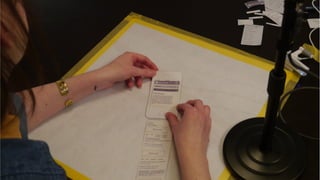
    Image  based  on  A  Card  Sort  in  Progress  courtesy  of  Yandle,  CC-­‐BY  2.0  
  • 14.
    Image  based  on  A  Card  Sort  in  Progress  courtesy  of  Yandle,  CC-­‐BY  2.0  
  • 15.
    2Usability Testing Finding conceptualand tactical barriers to use and usability
  • 17.
    Variations on UsabilityTesting Formal Informal Setting Lab with observation Anywhere Recruiting Professional Friends and family Recommendations Fully - documented Straight into the design Recording Full sessions and clips Little to none Cost More time and outside costs Very inexpensive
  • 18.
    Variations on UsabilityTesting Moderated •  Conducted live •  Facilitator asks what the participant is thinking •  Qualitative •  Finds what and why Unmoderated •  May be automated •  Participant completes tasks without interruption •  Pretends to be quantitative •  Finds what but not why
  • 19.
    Variations on UsabilityTesting Remote •  Across geographic locations •  No travel •  Extra technology In-person •  In the same room •  Requires travel •  Simple technology
  • 22.
    3Collaborative Sketching Working insmall groups to sketch an experience
  • 23.
    Sketches capture concepts,not detailed design. •  Sketches are done in small groups, but there could be many groups •  Each small group can sketch the same experience or different parts of an overall experience •  Gets everyone involved, no design experience needed •  Use sketching to create lots of ideas and broaden thinking Collaborative Sketching
  • 24.
    Image based onGraduate Program Design Workshop courtesy of the Scottish Government, CC-BY 2.0
  • 25.
    4Online Discussions Getting usersto discuss your ideas and designs online
  • 26.
    Facilitating a conversationwith and amongst your audiences. •  Choose the right online locations for your audiences •  Devote time to participate fully in the conversation •  Accept feedback graciously, don’t defend your design but be honest about design constraints •  Always be friendly and professional Online Discussions
  • 29.
  • 30.
  • 31.
        Putting Usersin UX Episode 1 Research Methods for Strategy recap and downloads on our blog Episode 2 Research Methods for Design Wednesday, May 27 Episode 3 Research Planning, Execution & Analysis Wednesday, June 24
  • 32.
        Thank You TerryCostantino and Steven LeMay Usability Matters 215 Spadina Ave., Toronto ON, M5T 2C7 Follow us on Twitter: @umatters 416 598 7770 terry@usabilitymatters.com steven@usabilitymatters.com