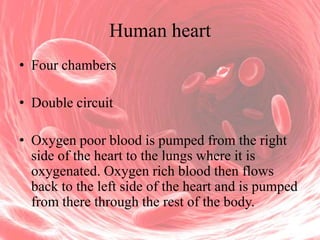
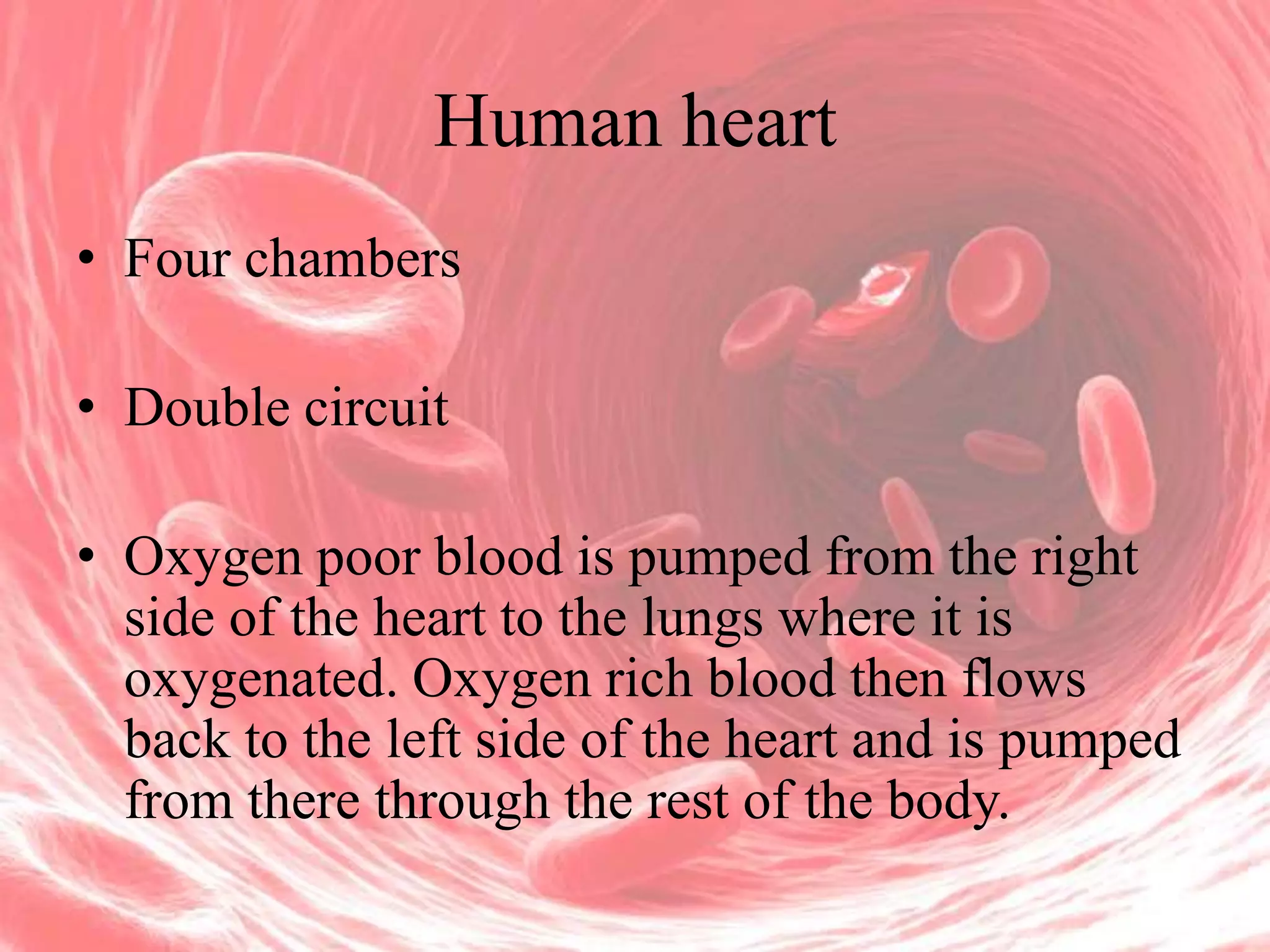
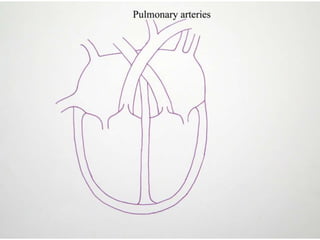
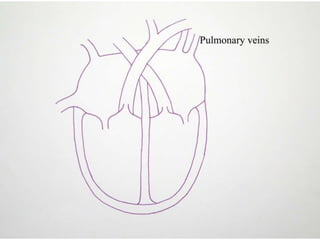
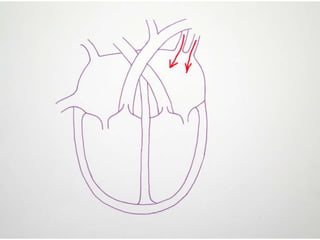
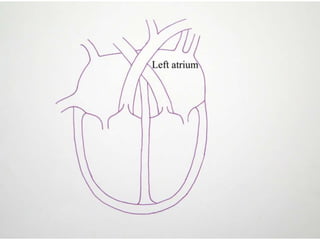
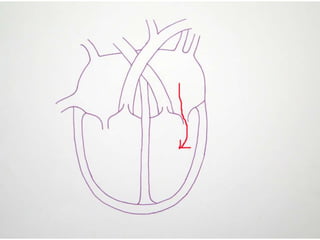
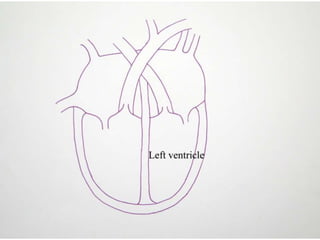
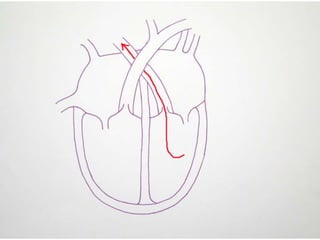
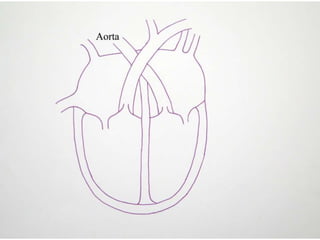
Human heart
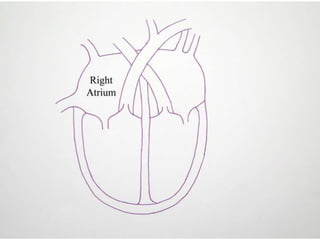
• Four chambers
• Double circuit

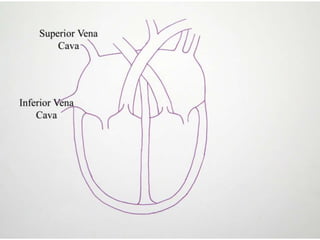
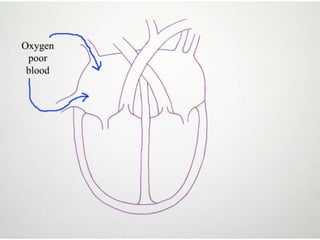
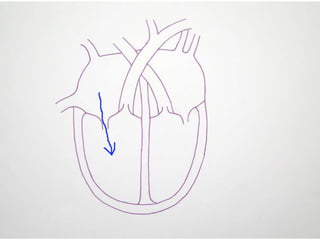
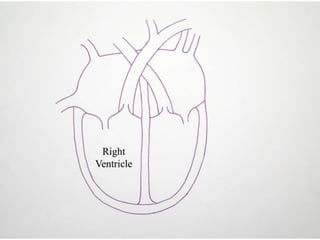
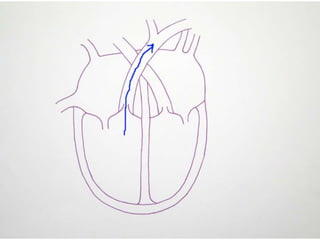
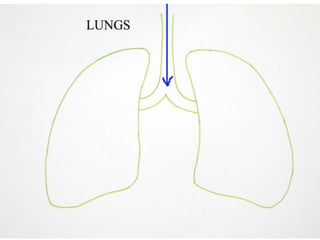
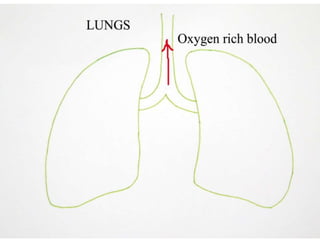
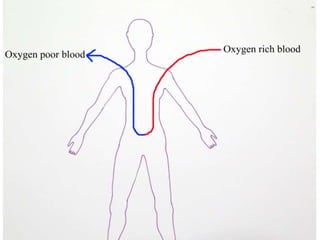
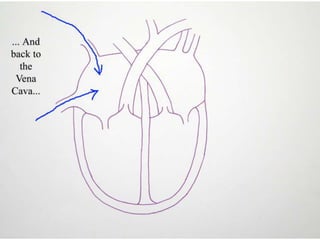
• Oxygen poor blood is pumped from the right
side of the heart to the lungs where it is
oxygenated. Oxygen rich blood then flows
back to the left side of the heart and is pumped
from there through the rest of the body.
Fish heart
•
•
•
•
•
•

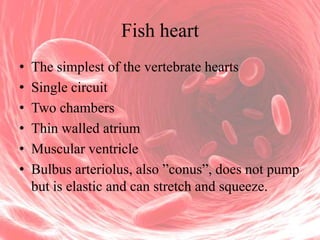
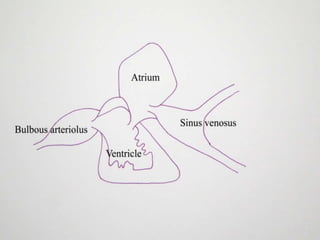
The simplest of the vertebrate hearts
Single circuit
Two chambers
Thin walled atrium
Muscular ventricle
Bulbus arteriolus, also ”conus”, does not pump
but is elastic and can stretch and squeeze.
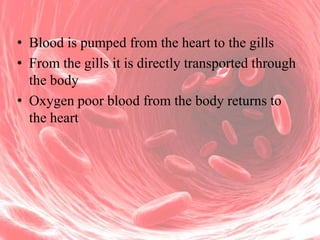
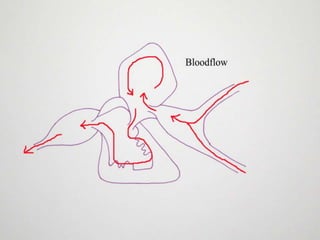
• Blood is pumped from the heart to the gills
• From the gills it is directly transported through
the body
• Oxygen poor blood from the body returns to
the heart
Reptile heart
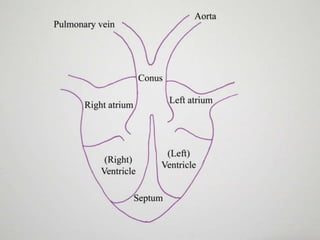
• Three chambers
• Two atria, one ventricle and one conus
OR
• Four chambers
• Two atria, two ventricles and one conus
• Wall (septum) between the ventricles is
incomplete
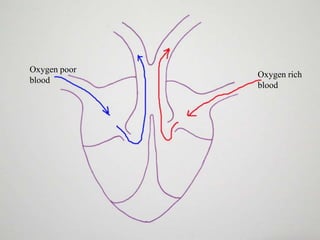
• Some mixing of oxygenated and deoxygenated
blood, minimized by timing of the contractions
Oxygen poor
blood

Oxygen rich
blood
Crocodile heart
• The reptilian exception
• Four chambers
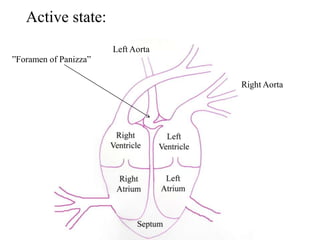
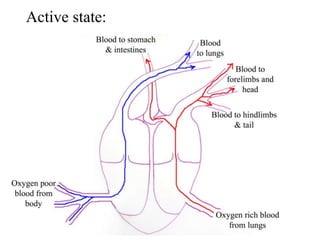
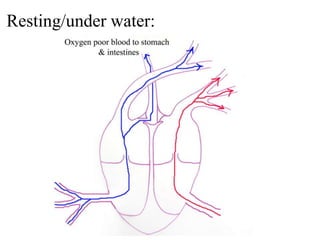
• ”Foramen fo Panizza” can direct oxygen poor
blood to the lungs OR to the stomach.
• Why? One theory is that it helps digest bony
meals. Blood flowing from the body is rich in
CO2 which is a building block in gastric acid.
Thus, directing the CO2 rich blood to the
stomach could actually help in digestion.
Active state:
Left Aorta
”Foramen of Panizza”
Right Aorta
Active state:
Resting/under water:
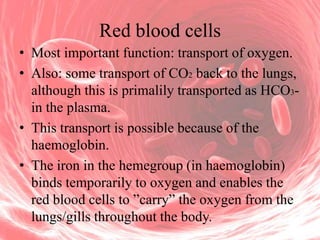
Red blood cells
• Most important function: transport of oxygen.
• Also: some transport of CO2 back to the lungs,
although this is primalily transported as HCO3in the plasma.
• This transport is possible because of the
haemoglobin.
• The iron in the hemegroup (in haemoglobin)
binds temporarily to oxygen and enables the
red blood cells to ”carry” the oxygen from the
lungs/gills throughout the body.
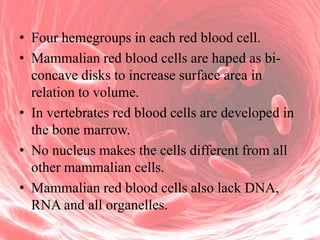
• Four hemegroups in each red blood cell.
• Mammalian red blood cells are haped as biconcave disks to increase surface area in
relation to volume.
• In vertebrates red blood cells are developed in
the bone marrow.
• No nucleus makes the cells different from all
other mammalian cells.
• Mammalian red blood cells also lack DNA,
RNA and all organelles.

Human, fish and reptile heart

  • 1.
    Human heart • Fourchambers • Double circuit • Oxygen poor blood is pumped from the right side of the heart to the lungs where it is oxygenated. Oxygen rich blood then flows back to the left side of the heart and is pumped from there through the rest of the body.
  • 20.
    Fish heart • • • • • • The simplestof the vertebrate hearts Single circuit Two chambers Thin walled atrium Muscular ventricle Bulbus arteriolus, also ”conus”, does not pump but is elastic and can stretch and squeeze.
  • 21.
    • Blood ispumped from the heart to the gills • From the gills it is directly transported through the body • Oxygen poor blood from the body returns to the heart
  • 24.
    Reptile heart • Threechambers • Two atria, one ventricle and one conus OR • Four chambers • Two atria, two ventricles and one conus
  • 25.
    • Wall (septum)between the ventricles is incomplete • Some mixing of oxygenated and deoxygenated blood, minimized by timing of the contractions
  • 27.
  • 28.
    Crocodile heart • Thereptilian exception • Four chambers • ”Foramen fo Panizza” can direct oxygen poor blood to the lungs OR to the stomach. • Why? One theory is that it helps digest bony meals. Blood flowing from the body is rich in CO2 which is a building block in gastric acid. Thus, directing the CO2 rich blood to the stomach could actually help in digestion.
  • 29.
    Active state: Left Aorta ”Foramenof Panizza” Right Aorta
  • 30.
  • 31.
  • 32.
    Red blood cells •Most important function: transport of oxygen. • Also: some transport of CO2 back to the lungs, although this is primalily transported as HCO3in the plasma. • This transport is possible because of the haemoglobin. • The iron in the hemegroup (in haemoglobin) binds temporarily to oxygen and enables the red blood cells to ”carry” the oxygen from the lungs/gills throughout the body.
  • 33.
    • Four hemegroupsin each red blood cell. • Mammalian red blood cells are haped as biconcave disks to increase surface area in relation to volume. • In vertebrates red blood cells are developed in the bone marrow. • No nucleus makes the cells different from all other mammalian cells. • Mammalian red blood cells also lack DNA, RNA and all organelles.