The Circulatory System
The Learning Objectives
• Define the parts of the circulatory system and
  what they do

• Point out the four chambers of the heart and
  what they do

• Compare arteries, capillaries, and veins
Before We Get Into The
 Heart of the Lesson
The Cold Heart Facts
- The heart is a muscle

- The heart is a little larger than your clenched fist

- Your heart beats about 100,000 times in one day and about
35 million times in a year. During an average lifetime, the
human heart will beat more than 2.5 billion times.

- Give a tennis ball a good, hard squeeze. You're using about the
same amount of force your heart uses to pump blood out to the
body. Even at rest, the muscles of the heart work hard—twice as
hard as the leg muscles of a person sprinting
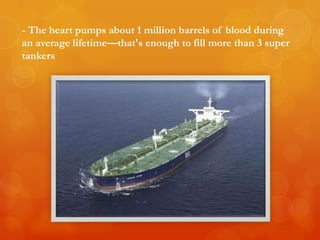
- The heart pumps about 1 million barrels of blood during
an average lifetime—that's enough to fill more than 3 super
tankers
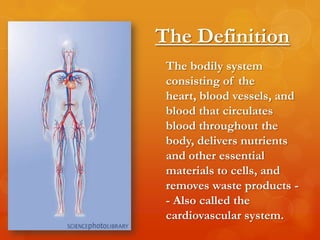
The Definition
 The bodily system
 consisting of the
 heart, blood vessels, and
 blood that circulates
 blood throughout the
 body, delivers nutrients
 and other essential
 materials to cells, and
 removes waste products -
 - Also called the
 cardiovascular system.
The Circulatory System
What it consists of:
    - Heart
    - Blood Vessels
    - Blood

What it does:
    - Circulates blood throughout the body
    - Delivers nutrients to cells
    - Removes waste products from cells
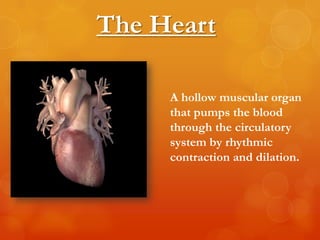
The Heart

     A hollow muscular organ
     that pumps the blood
     through the circulatory
     system by rhythmic
     contraction and dilation.
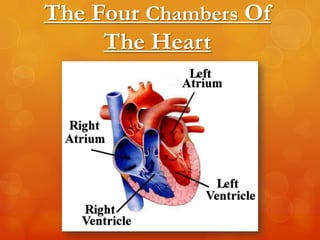
The Four Chambers Of
     The Heart
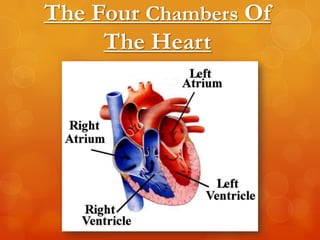
Left Atrium: Takes oxygen-rich blood from the
lungs and pumps it into the left ventricle


Left Ventricle: Pumps the oxygen-rich blood
through the aorta which sends it out into the body


Right Atrium: Takes the used blood from the body
that no longer has oxygen and pumps it into the
right ventricle


Right Ventricle: Pumps the oxygen-less blood into
the lungs where it picks up oxygen again
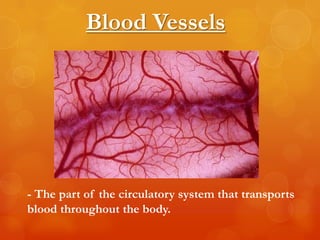
Blood Vessels


- The part of the circulatory system that transports
blood throughout the body.
Three Types of Blood Vessels
1) Arteries: carry oxygen-rich blood away from the
heart

2) Veins: carry blood containing waste products
to different organs (kidneys, liver, etc.) and then
back to the heart

3) Capillaries: enable the actual exchange of water and
chemicals between the blood and the tissues – for
example…diffusion of oxygen within the lungs
The Four Chambers Of
     The Heart
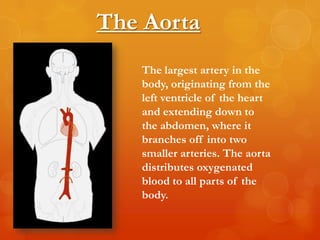
The Aorta
   The largest artery in the
   body, originating from the
   left ventricle of the heart
   and extending down to
   the abdomen, where it
   branches off into two
   smaller arteries. The aorta
   distributes oxygenated
   blood to all parts of the
   body.
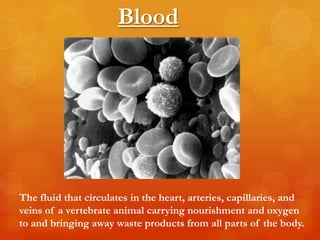
Blood


The fluid that circulates in the heart, arteries, capillaries, and
veins of a vertebrate animal carrying nourishment and oxygen
to and bringing away waste products from all parts of the body.
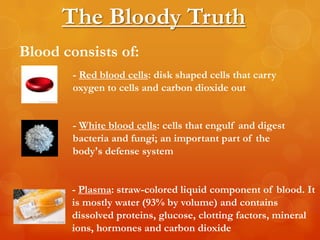
The Bloody Truth
Blood consists of:
        - Red blood cells: disk shaped cells that carry
        oxygen to cells and carbon dioxide out


        - White blood cells: cells that engulf and digest
        bacteria and fungi; an important part of the
        body's defense system


       - Plasma: straw-colored liquid component of blood. It
       is mostly water (93% by volume) and contains
       dissolved proteins, glucose, clotting factors, mineral
       ions, hormones and carbon dioxide
Blood’s Role in the Digestive Process
Blood and Breathing
Homework
Option 1) Write an essay that details a day in the life of
a red blood cell as it travels through the circulatory
system … where did you go and what happened


Option 2) Draw the circulatory system and point out
the three different types of blood vessels, the heart and
its chambers, the lungs, and red blood cells.

The circulatory system

  • 1.
  • 2.
    The Learning Objectives •Define the parts of the circulatory system and what they do • Point out the four chambers of the heart and what they do • Compare arteries, capillaries, and veins
  • 3.
    Before We GetInto The Heart of the Lesson
  • 4.
    The Cold HeartFacts - The heart is a muscle - The heart is a little larger than your clenched fist - Your heart beats about 100,000 times in one day and about 35 million times in a year. During an average lifetime, the human heart will beat more than 2.5 billion times. - Give a tennis ball a good, hard squeeze. You're using about the same amount of force your heart uses to pump blood out to the body. Even at rest, the muscles of the heart work hard—twice as hard as the leg muscles of a person sprinting
  • 5.
    - The heartpumps about 1 million barrels of blood during an average lifetime—that's enough to fill more than 3 super tankers
  • 6.
    The Definition Thebodily system consisting of the heart, blood vessels, and blood that circulates blood throughout the body, delivers nutrients and other essential materials to cells, and removes waste products - - Also called the cardiovascular system.
  • 7.
    The Circulatory System Whatit consists of: - Heart - Blood Vessels - Blood What it does: - Circulates blood throughout the body - Delivers nutrients to cells - Removes waste products from cells
  • 8.
    The Heart A hollow muscular organ that pumps the blood through the circulatory system by rhythmic contraction and dilation.
  • 9.
    The Four ChambersOf The Heart
  • 10.
    Left Atrium: Takesoxygen-rich blood from the lungs and pumps it into the left ventricle Left Ventricle: Pumps the oxygen-rich blood through the aorta which sends it out into the body Right Atrium: Takes the used blood from the body that no longer has oxygen and pumps it into the right ventricle Right Ventricle: Pumps the oxygen-less blood into the lungs where it picks up oxygen again
  • 12.
    Blood Vessels - Thepart of the circulatory system that transports blood throughout the body.
  • 13.
    Three Types ofBlood Vessels 1) Arteries: carry oxygen-rich blood away from the heart 2) Veins: carry blood containing waste products to different organs (kidneys, liver, etc.) and then back to the heart 3) Capillaries: enable the actual exchange of water and chemicals between the blood and the tissues – for example…diffusion of oxygen within the lungs
  • 15.
    The Four ChambersOf The Heart
  • 16.
    The Aorta The largest artery in the body, originating from the left ventricle of the heart and extending down to the abdomen, where it branches off into two smaller arteries. The aorta distributes oxygenated blood to all parts of the body.
  • 17.
    Blood The fluid thatcirculates in the heart, arteries, capillaries, and veins of a vertebrate animal carrying nourishment and oxygen to and bringing away waste products from all parts of the body.
  • 18.
    The Bloody Truth Bloodconsists of: - Red blood cells: disk shaped cells that carry oxygen to cells and carbon dioxide out - White blood cells: cells that engulf and digest bacteria and fungi; an important part of the body's defense system - Plasma: straw-colored liquid component of blood. It is mostly water (93% by volume) and contains dissolved proteins, glucose, clotting factors, mineral ions, hormones and carbon dioxide
  • 19.
    Blood’s Role inthe Digestive Process
  • 20.
  • 21.
    Homework Option 1) Writean essay that details a day in the life of a red blood cell as it travels through the circulatory system … where did you go and what happened Option 2) Draw the circulatory system and point out the three different types of blood vessels, the heart and its chambers, the lungs, and red blood cells.