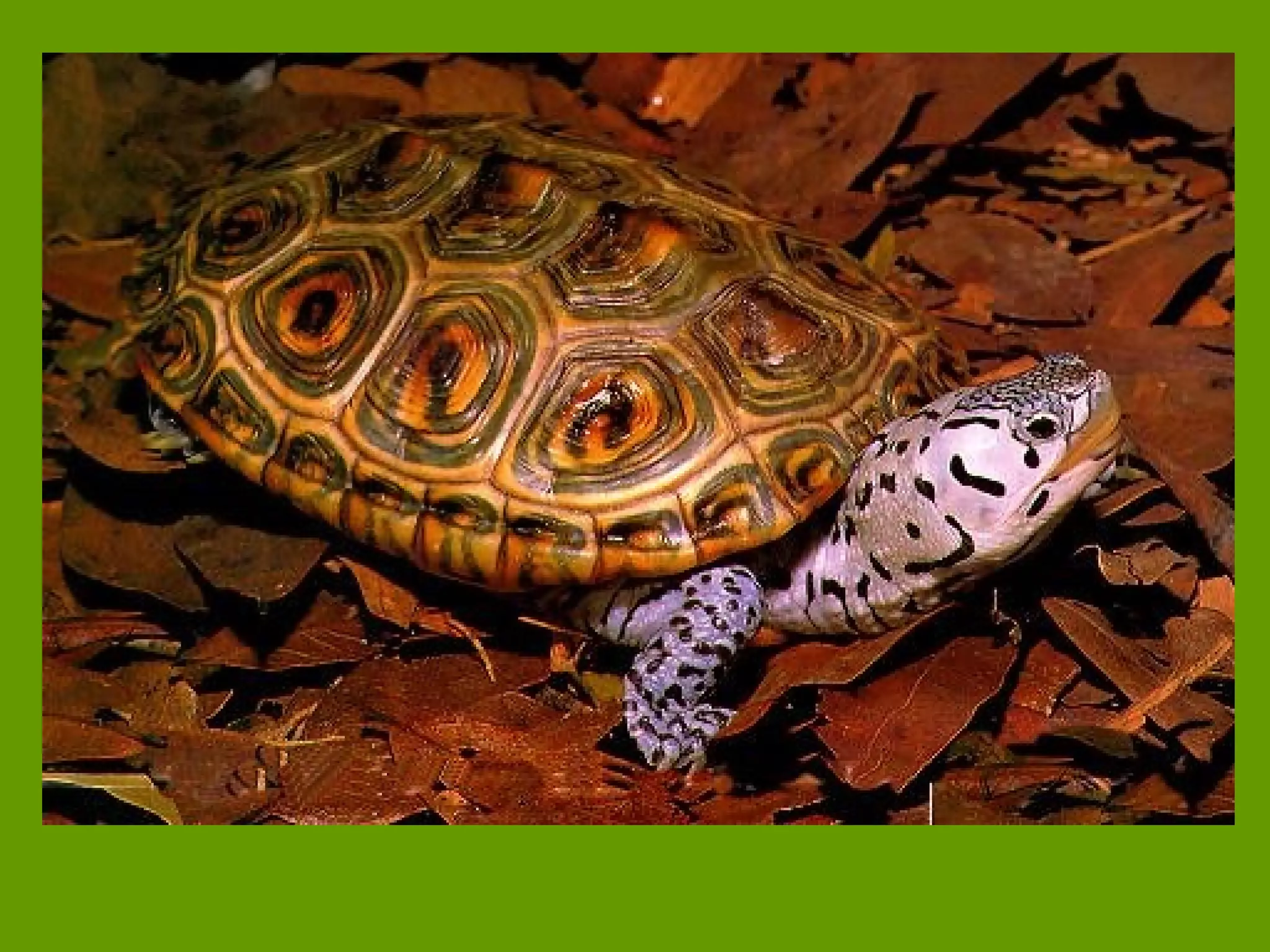
Class: Reptilia
By Mr. “getting a puppy” Chapman
Class: Reptilia
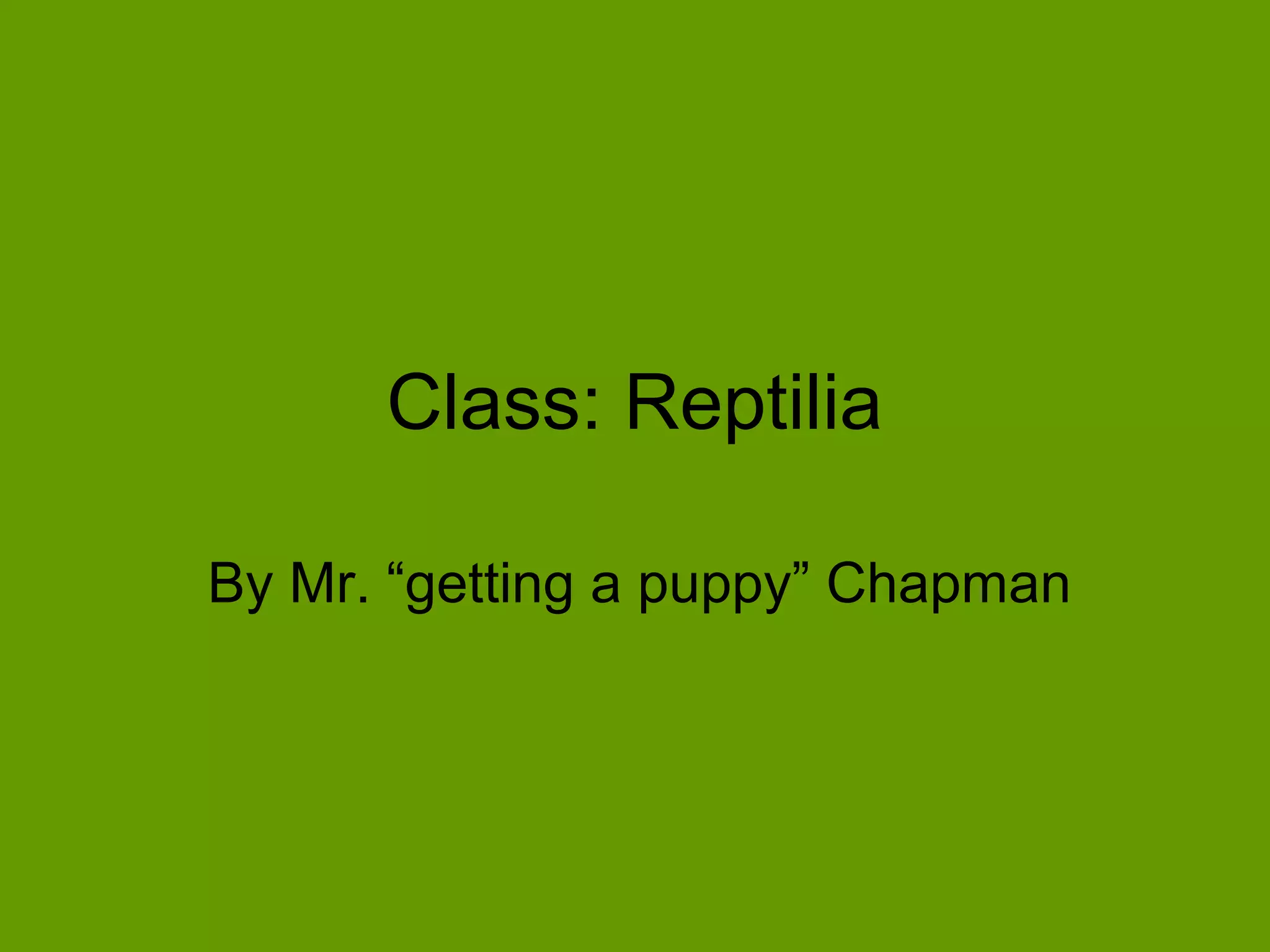
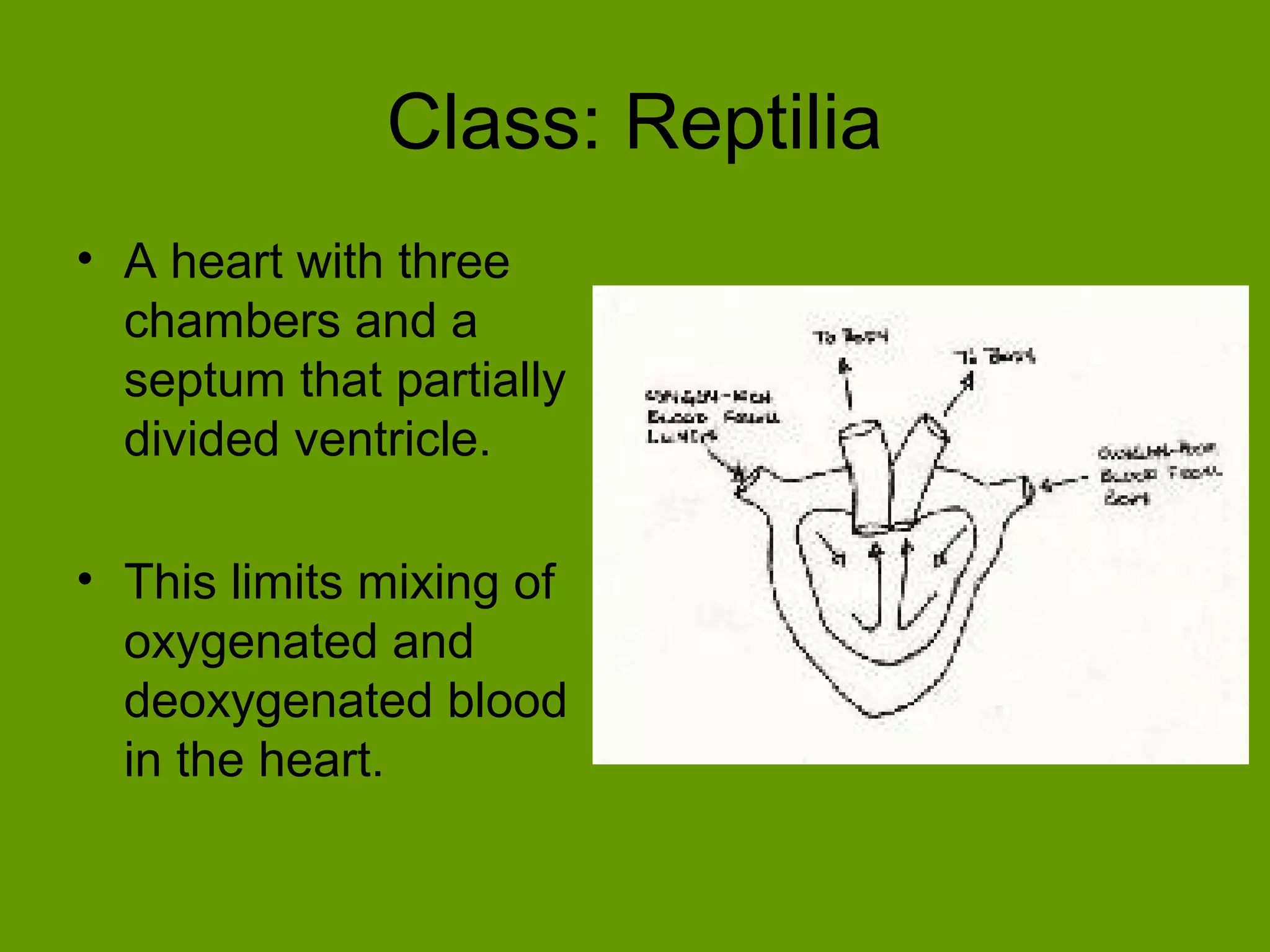
• A heart with three
chambers and a
septum that partially
divided ventricle.
• This limits mixing of
oxygenated and
deoxygenated blood
in the heart.
Class: Reptilia
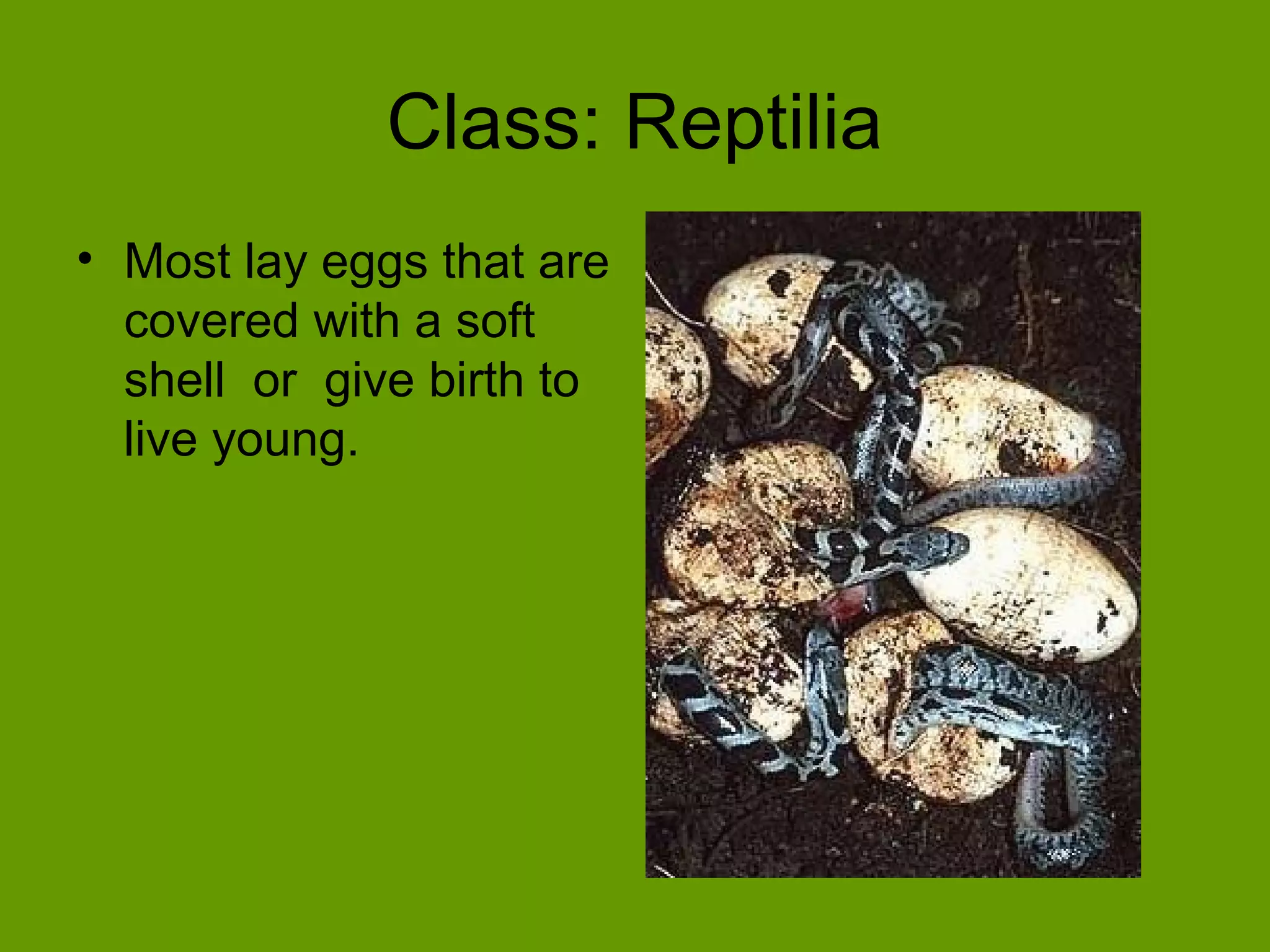
• Most lay eggs that are
covered with a soft
shell or give birth to
live young.
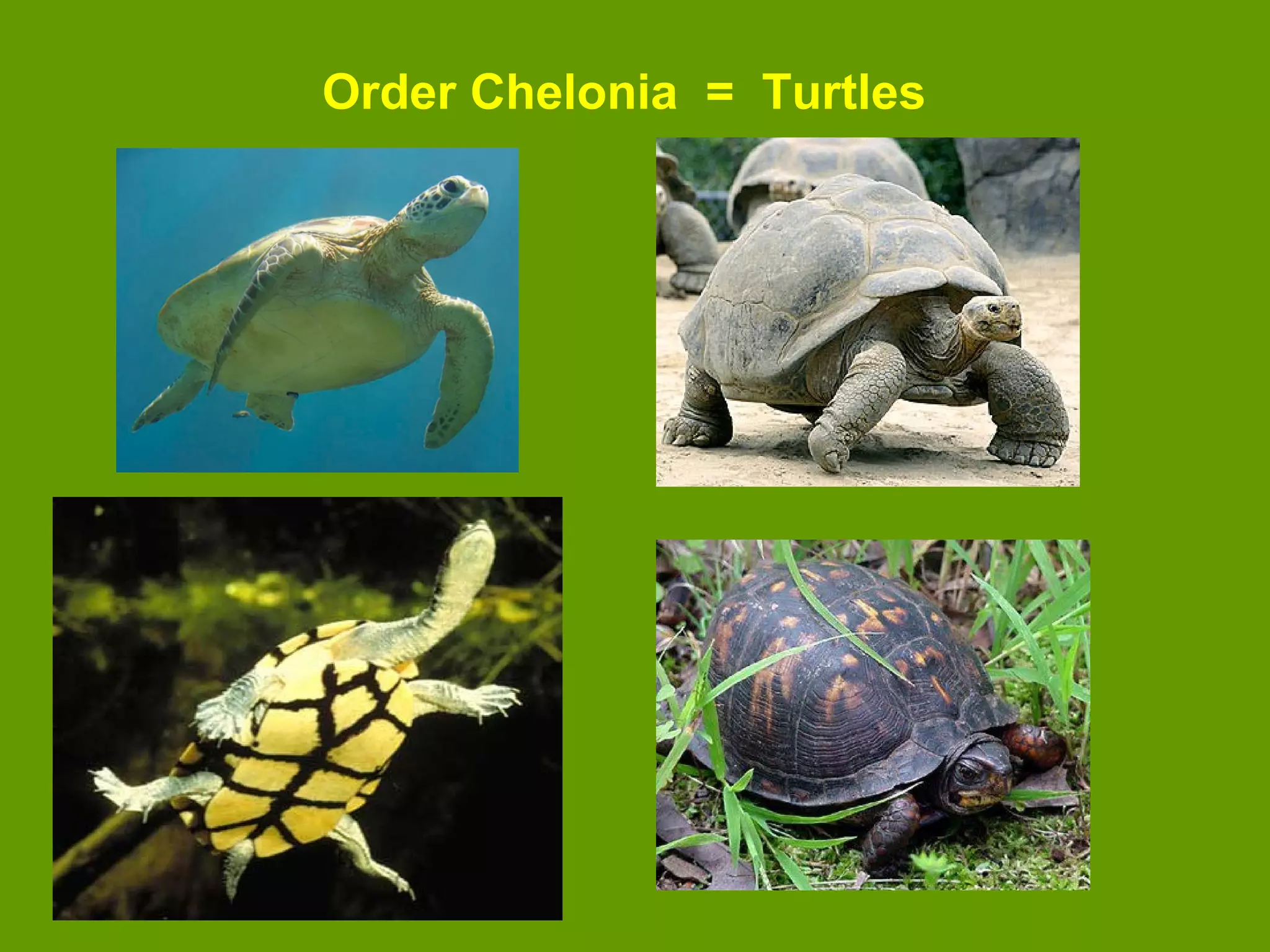
Order Chelonia = Turtles
250 species
All turtles lay eggs in nests they dig in the ground
No teeth, instead the edges of the jaws are hard
and sharp.
Order Chelonia = Turtles
250 species
Diet is diverse….
Order Chelonia = Turtles
250 species
Diet is diverse….
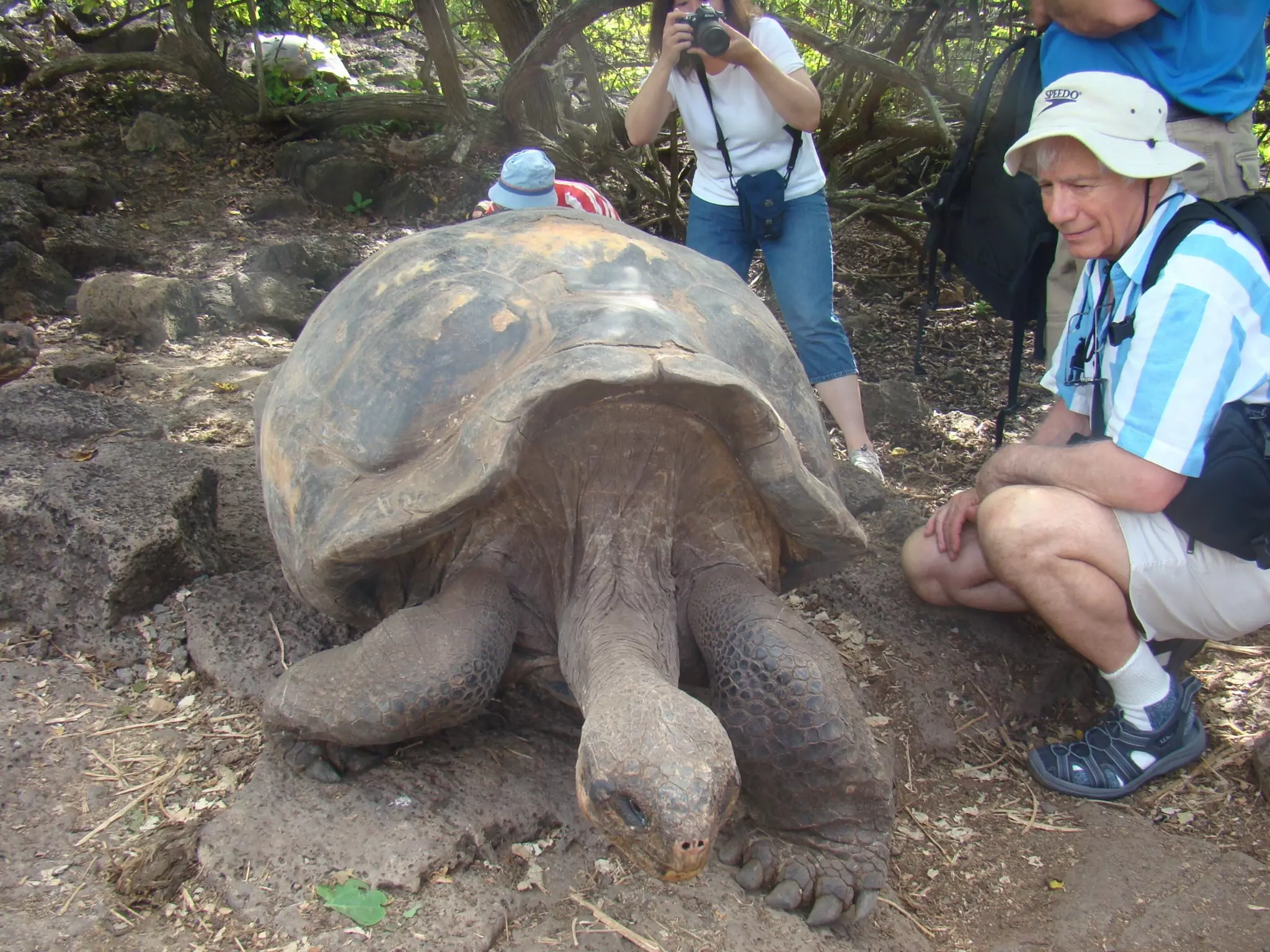
1. Tortoises (land turtles) are
vegetarians.
Order Chelonia = Turtles
250 species
Diet is diverse….
1. Tortoises (land turtles) are
vegetarians.
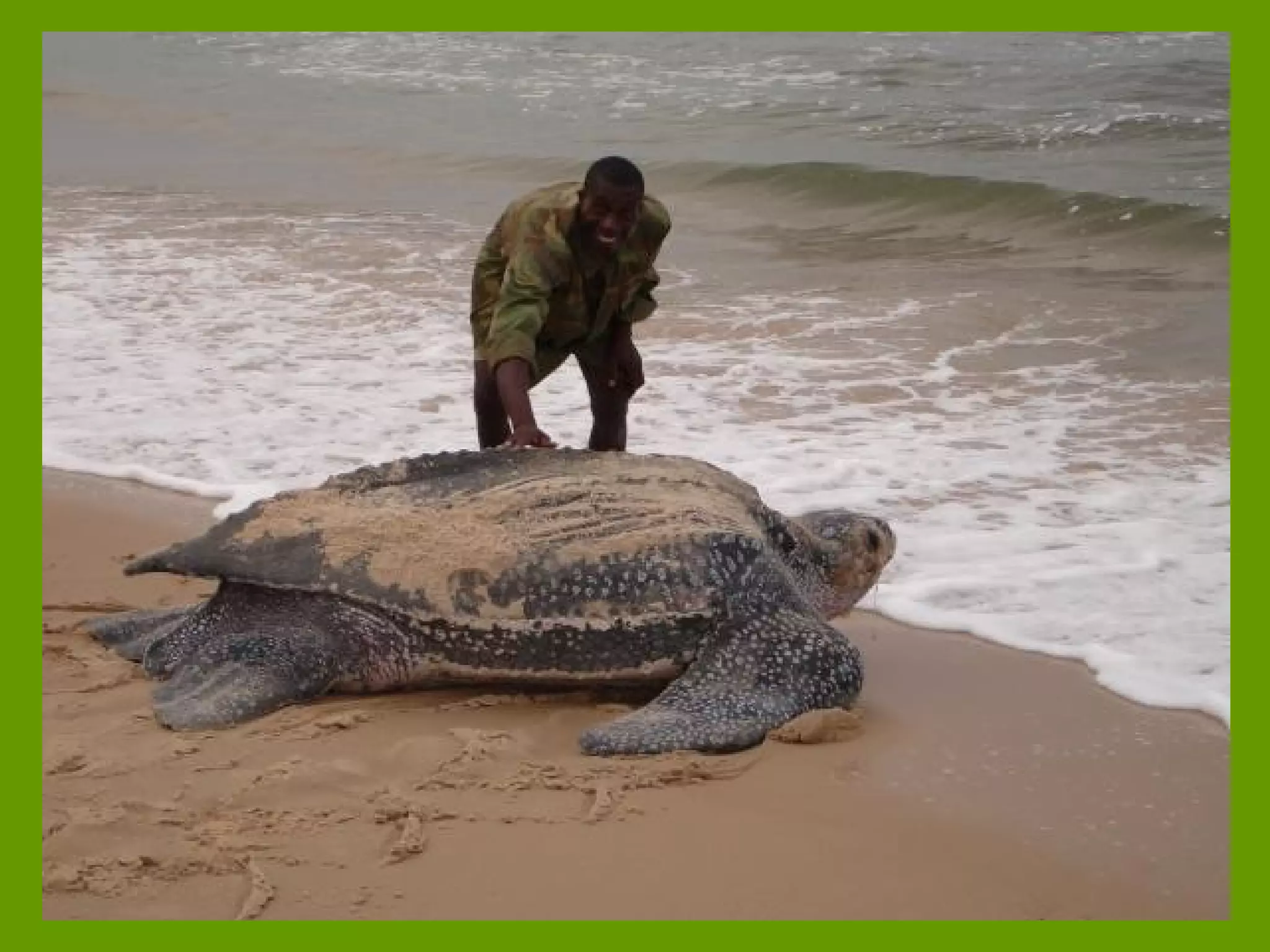
2. Leatherback Sea Turtle – diet is
exclusively jellyfish.
Order Chelonia = Turtles
250 species
Diet is diverse….
1. Tortoises (land turtles) are
vegetarians.
2. Leatherback Sea Turtle – diet is
exclusively jellyfish.
3. Most species are omnivores – they
eat plants and
animals.
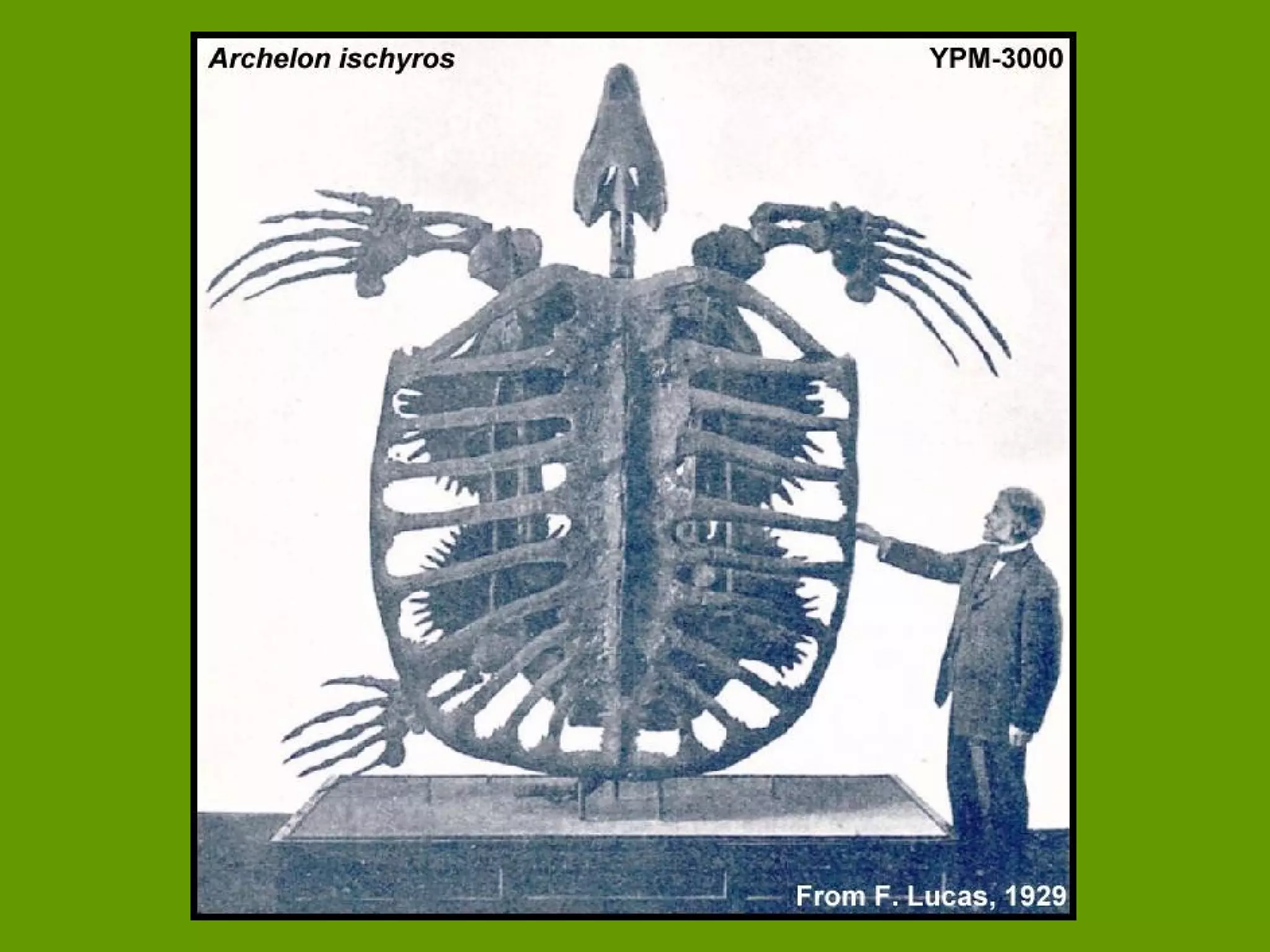
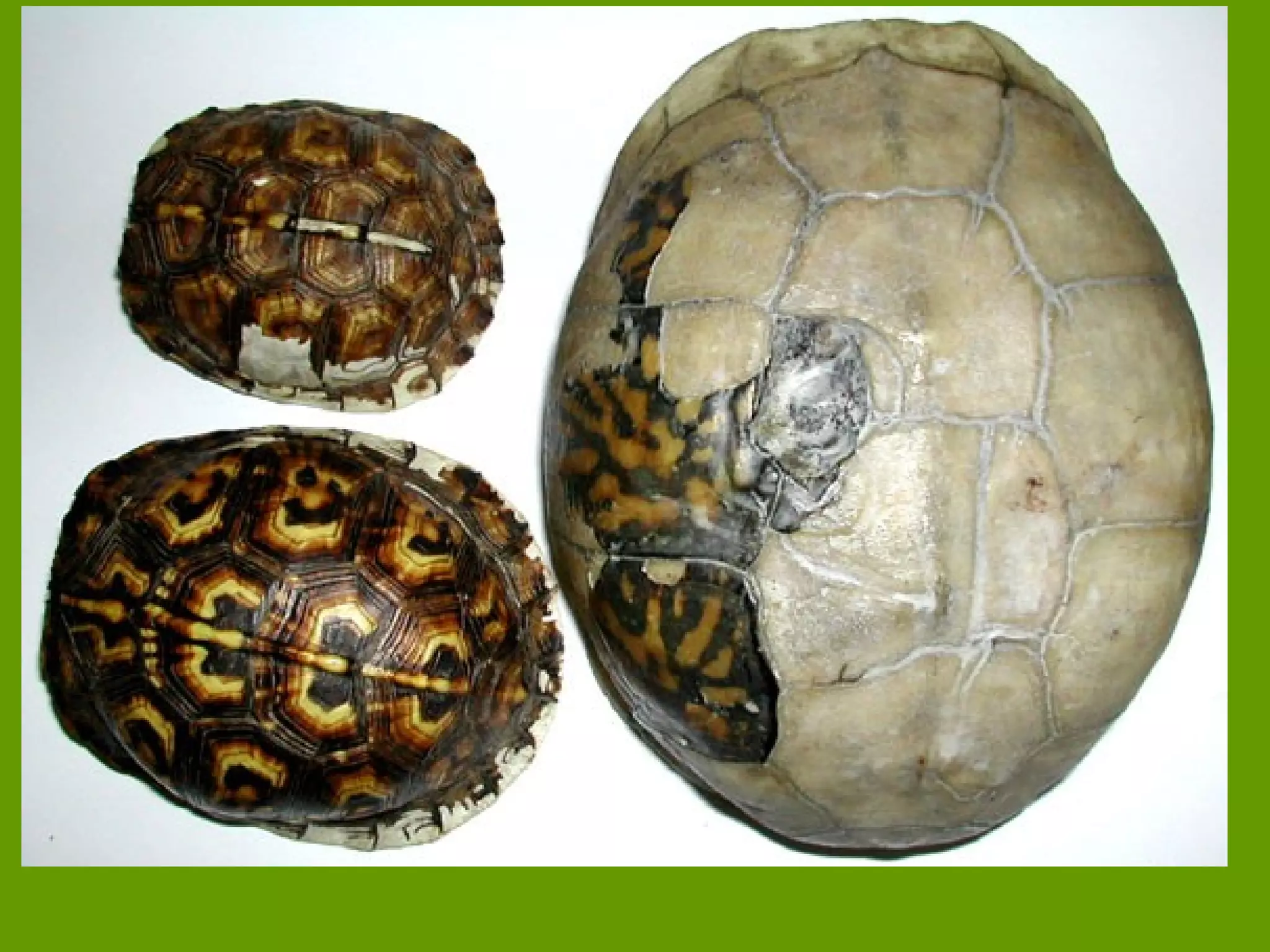
The shell is every turtle’s most notable characteristic.
Carapace –
The shell is every turtle’s most notable characteristic.
Carapace – ribs and spine fused together.
The shell is every turtle’s most notable characteristic.
Carapace – ribs and spine fused together.
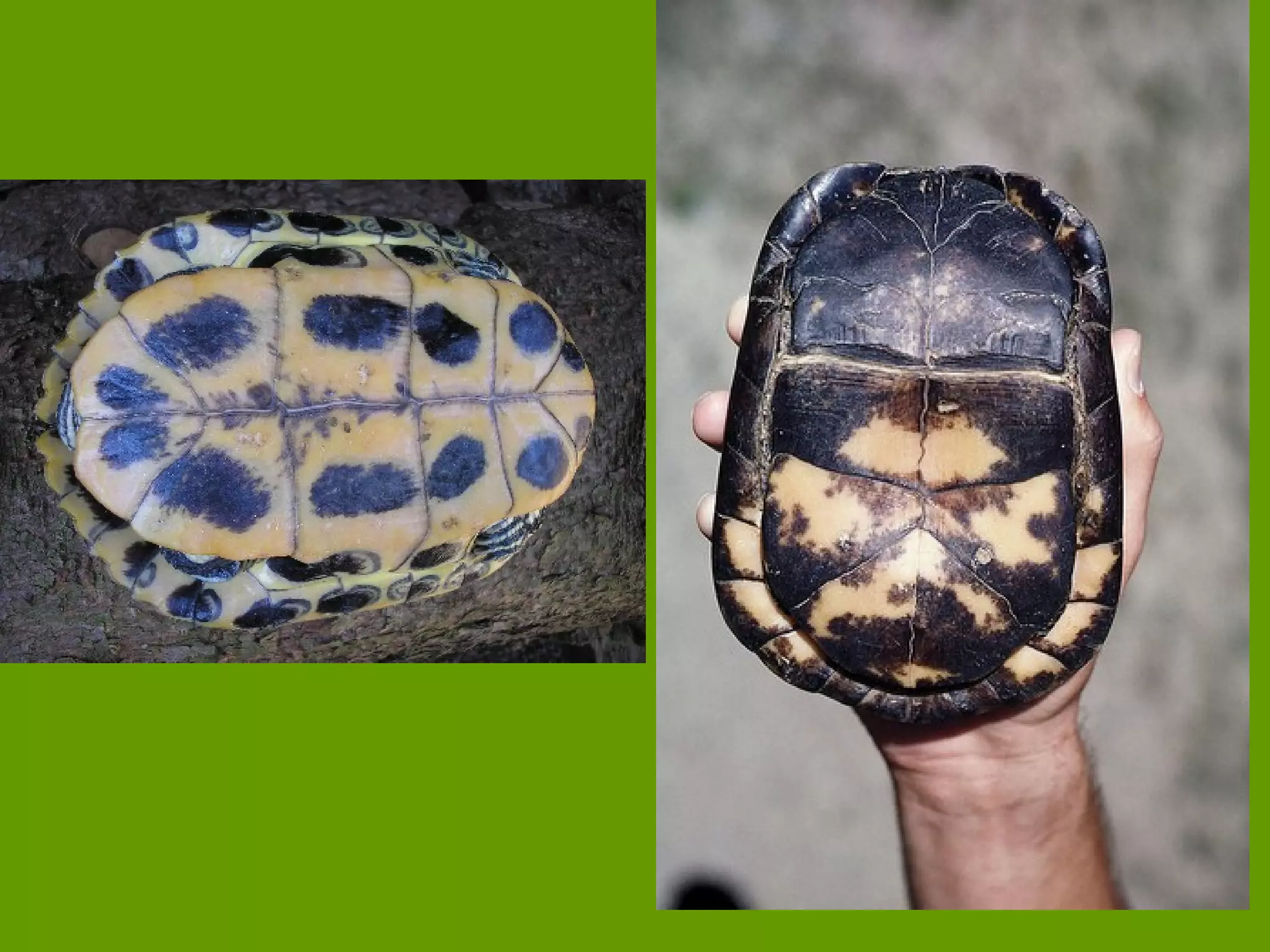
Plastron – enlarged sternum.
The shell is every turtle’s most notable characteristic.
Carapace – ribs and spine fused together.
Plastron – enlarged sternum.
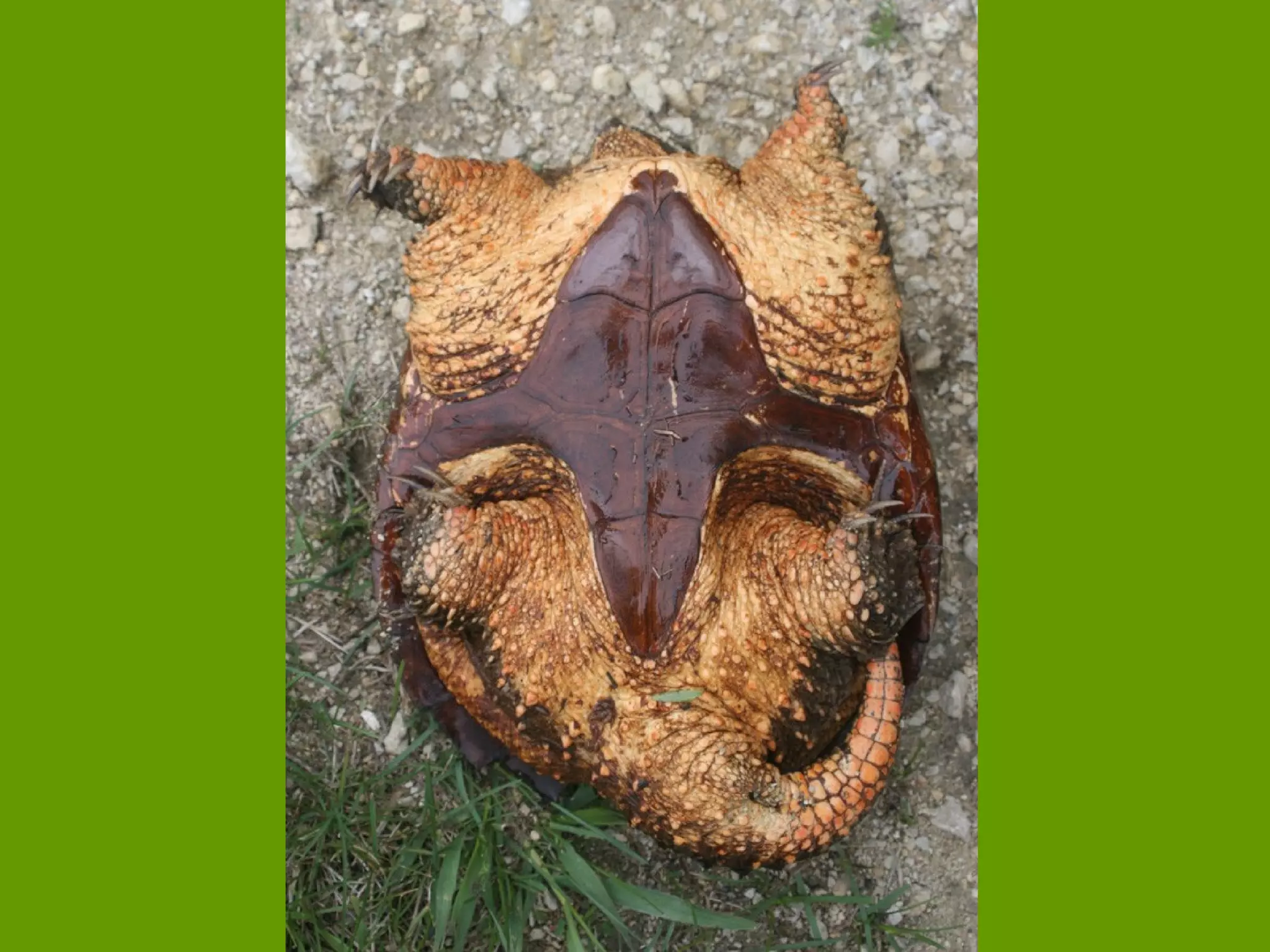
The plastron’s size varies with species.
The shell is every turtle’s most notable characteristic.
Carapace – ribs and spine fused together.
Plastron – enlarged sternum.
The plastron’s size varies with species.
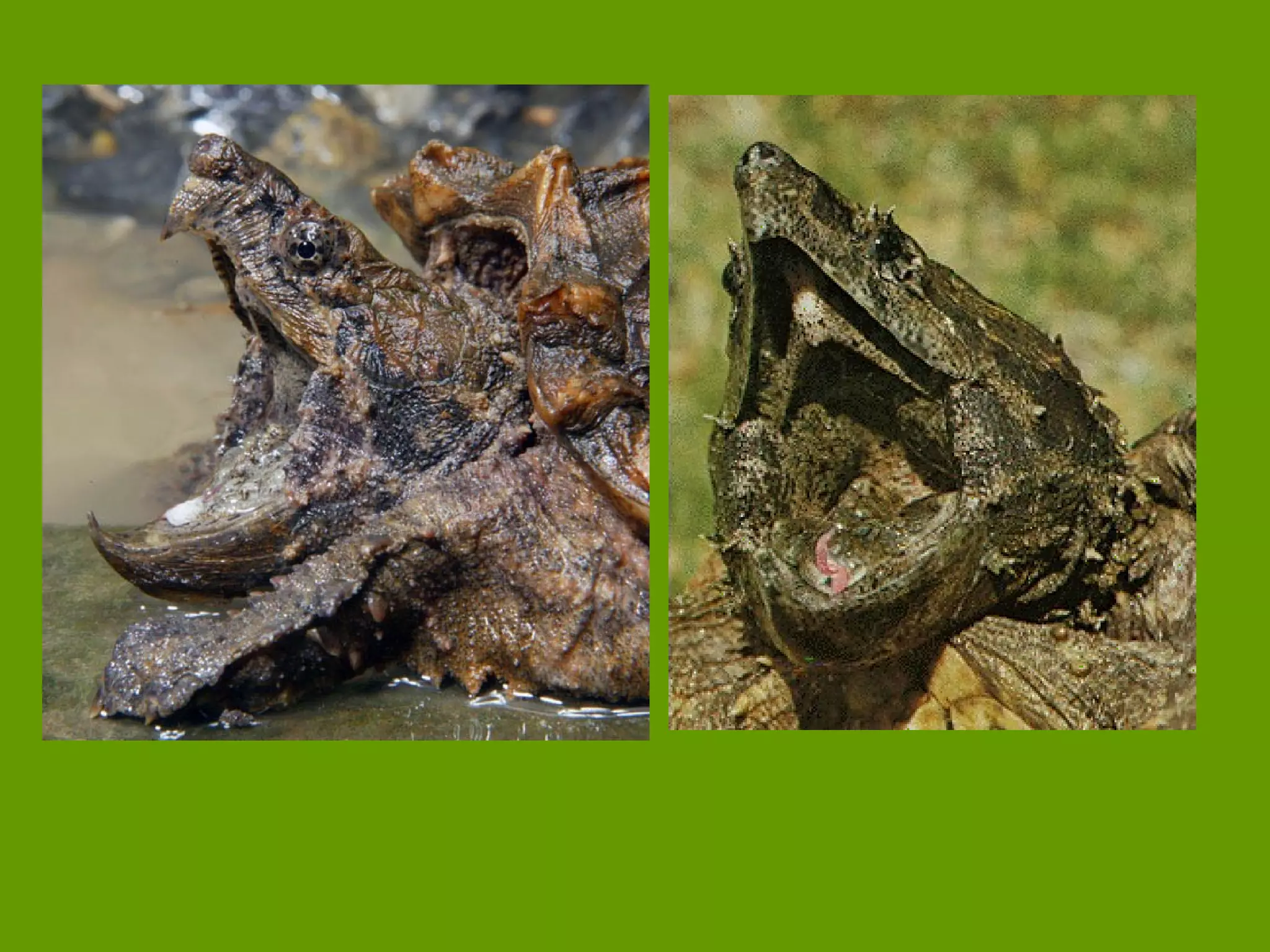
For example – snapping turtles have a small, cross-
shaped plastron. It offers little protection.
The shell is every turtle’s most notable characteristic.
Carapace – ribs and spine fused together.
Plastron – enlarged sternum.
The plastron’s size varies with species.
For example – snapping turtles have a small, cross-
shaped plastron. It offers little protection.
However the jaws are strong and the back of the
carapace is strongly serrated. Both provide
protection.
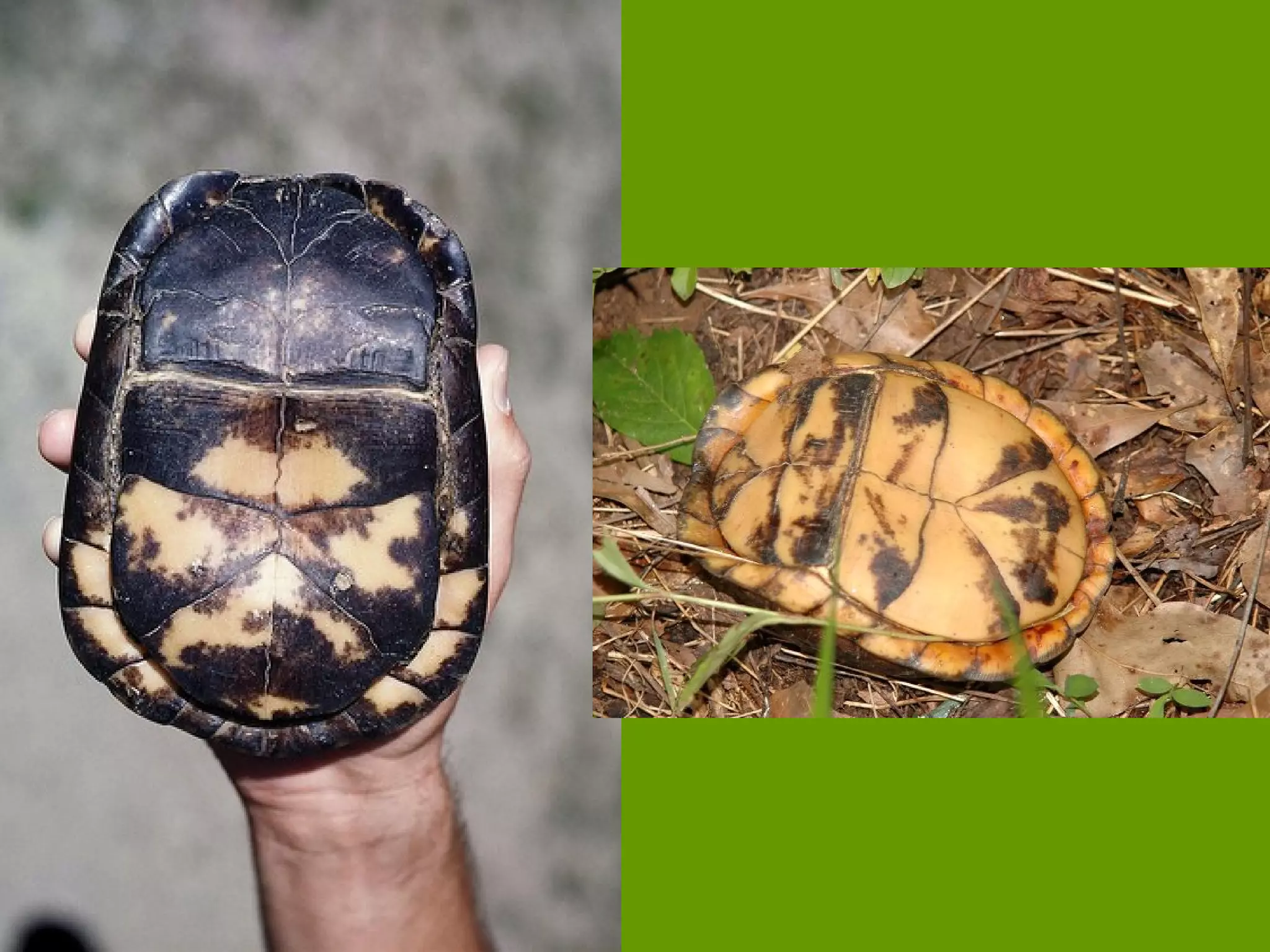
A box turtle’s plastron is hinged.
Box turtles can pull their legs, tail, and head under
their shell and close the hinge.
A box turtle’s plastron is hinged.
Box turtles can pull their legs, tail, and head under
their shell and close the hinge.
This is the source of their name.
A box turtle’s plastron is hinged.A box turtle’s plastron is hinged.
Box turtles can pull their legs, tail, and head underBox turtles can pull their legs, tail, and head under
their shell and close the hinge.their shell and close the hinge.
This is the source of their name.This is the source of their name.
*You can also tell the sex of a box turtle based on
its plastron.
A box turtle’s plastron is hinged.
Box turtles can pull their legs, tail, and head under
their shell and close the hinge.
This is the source of their name.
*You can also tell the sex of a box turtle based on
its plastron.
Males have a concave plastron.
A box turtle’s plastron is hinged.
Box turtles can pull their legs, tail, and head under
their shell and close the hinge.
This is the source of their name.
*You can also tell the sex of a box turtle based on
its plastron.
Males have a concave plastron.
Females have a flat plastron.
Turtle Mating
• Males plastron are usually concaved, so
the male can climb on the back of the
female.
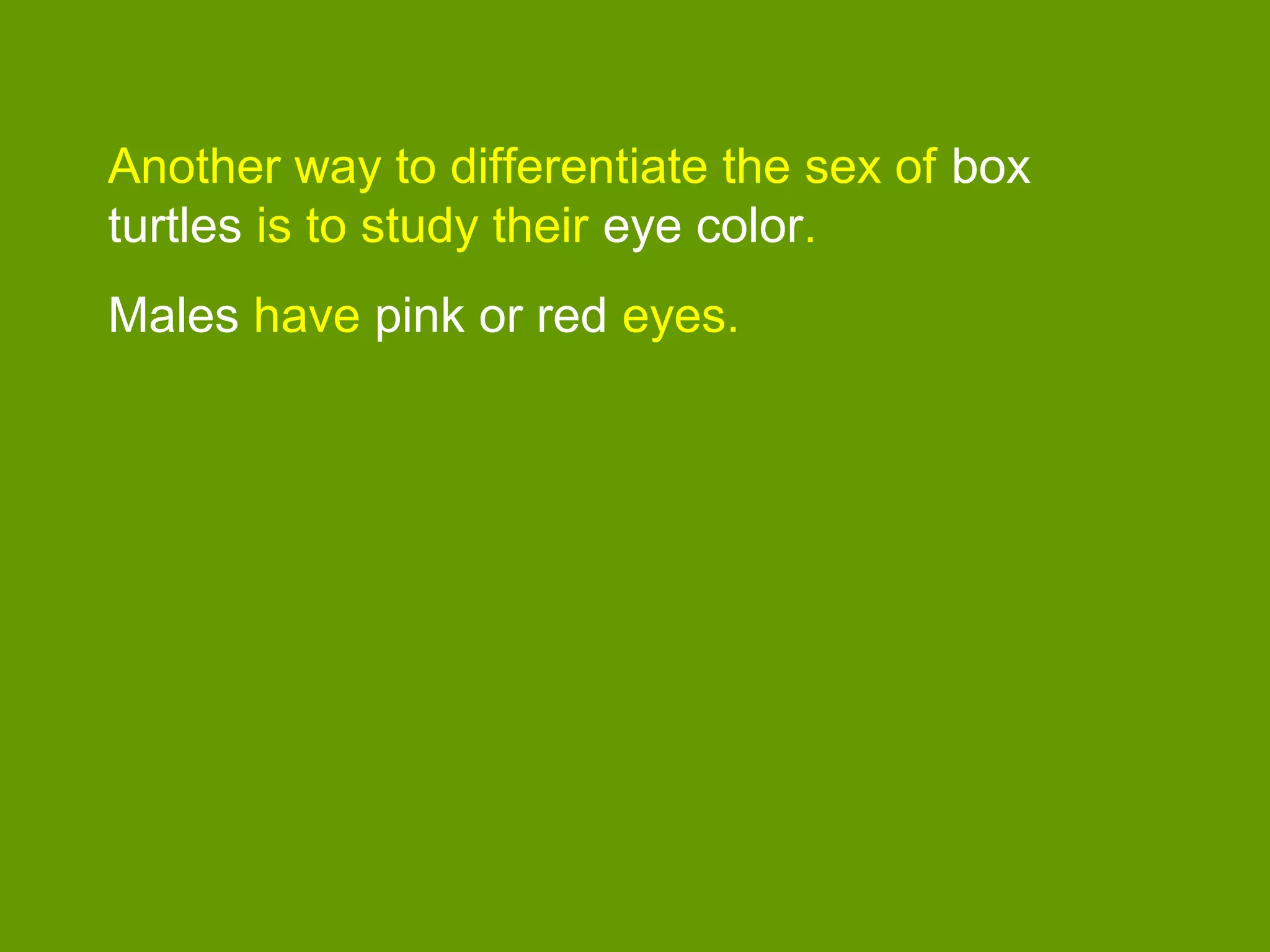
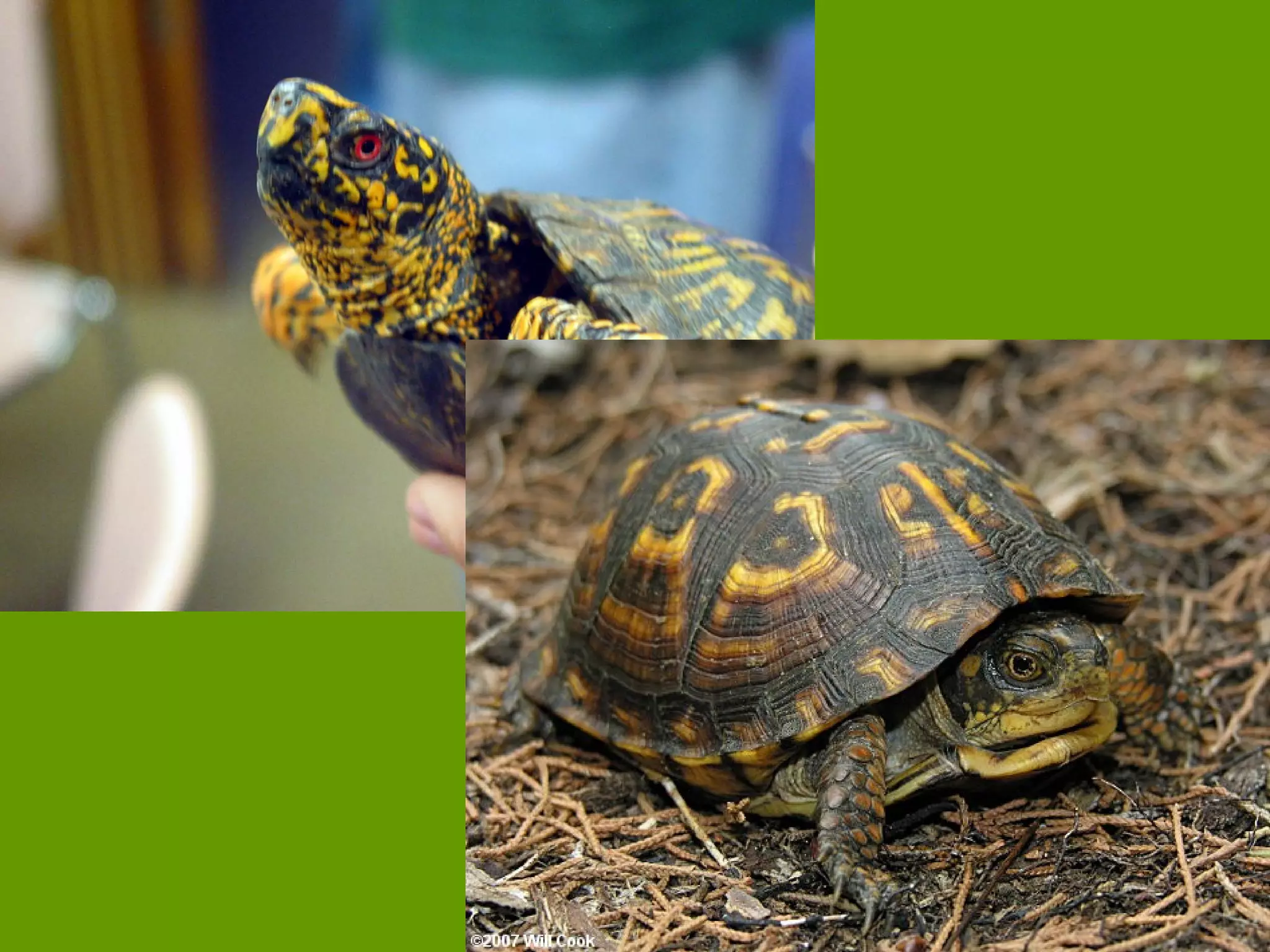
Another way to differentiate the sex of box
turtles is to study their eye color.
Another way to differentiate the sex of box
turtles is to study their eye color.
Males have pink or red eyes.
Another way to differentiate the sex of box
turtles is to study their eye color.
Males have pink or red eyes.
Females have brown or yellow eyes.
For turtle species that live in ponds and rivers…
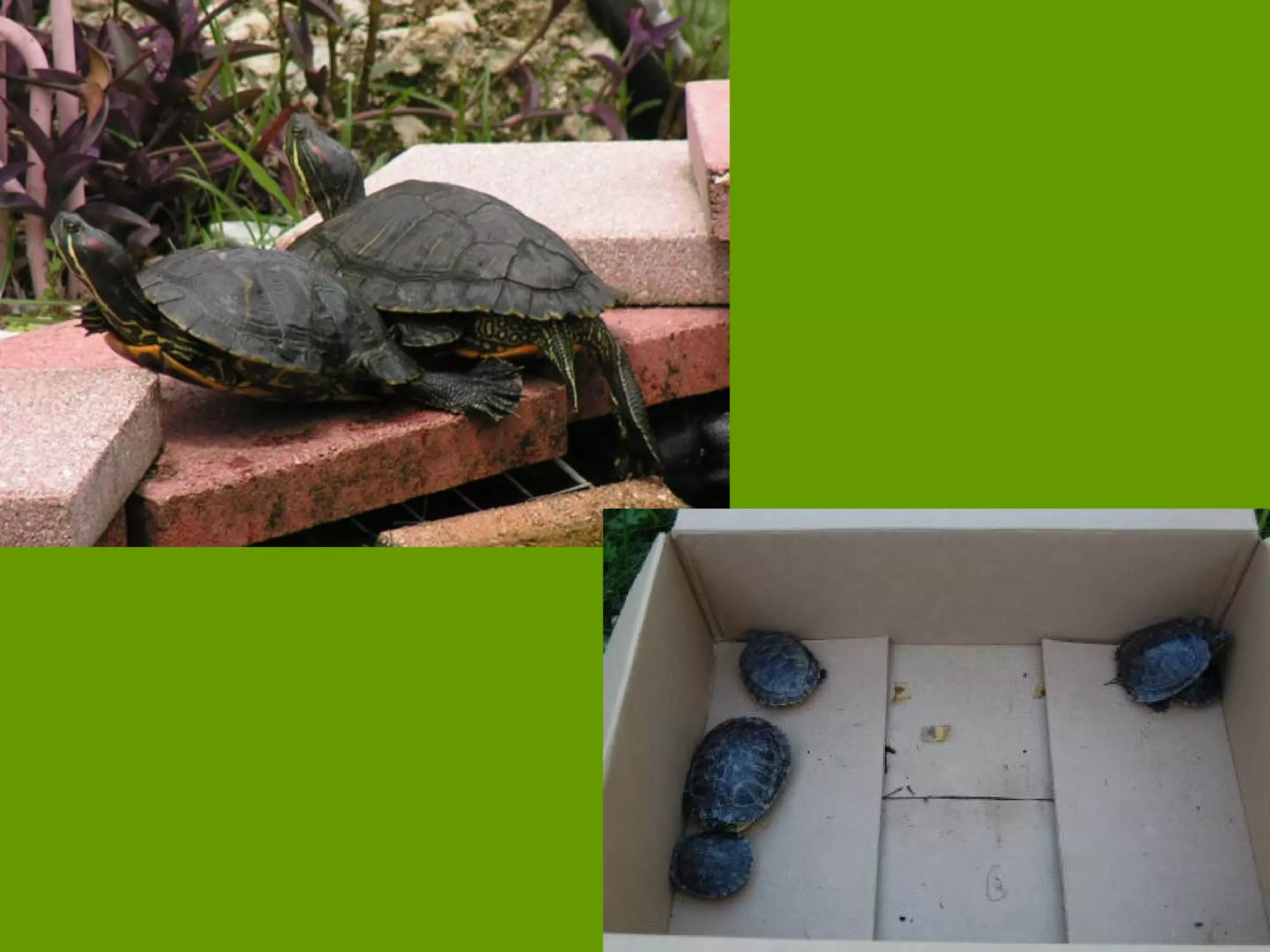
Examples – painted turtles, red-eared sliders,
and map turtles
For turtle species that live in ponds and rivers…
Examples – painted turtles, red-eared sliders,
and map turtles
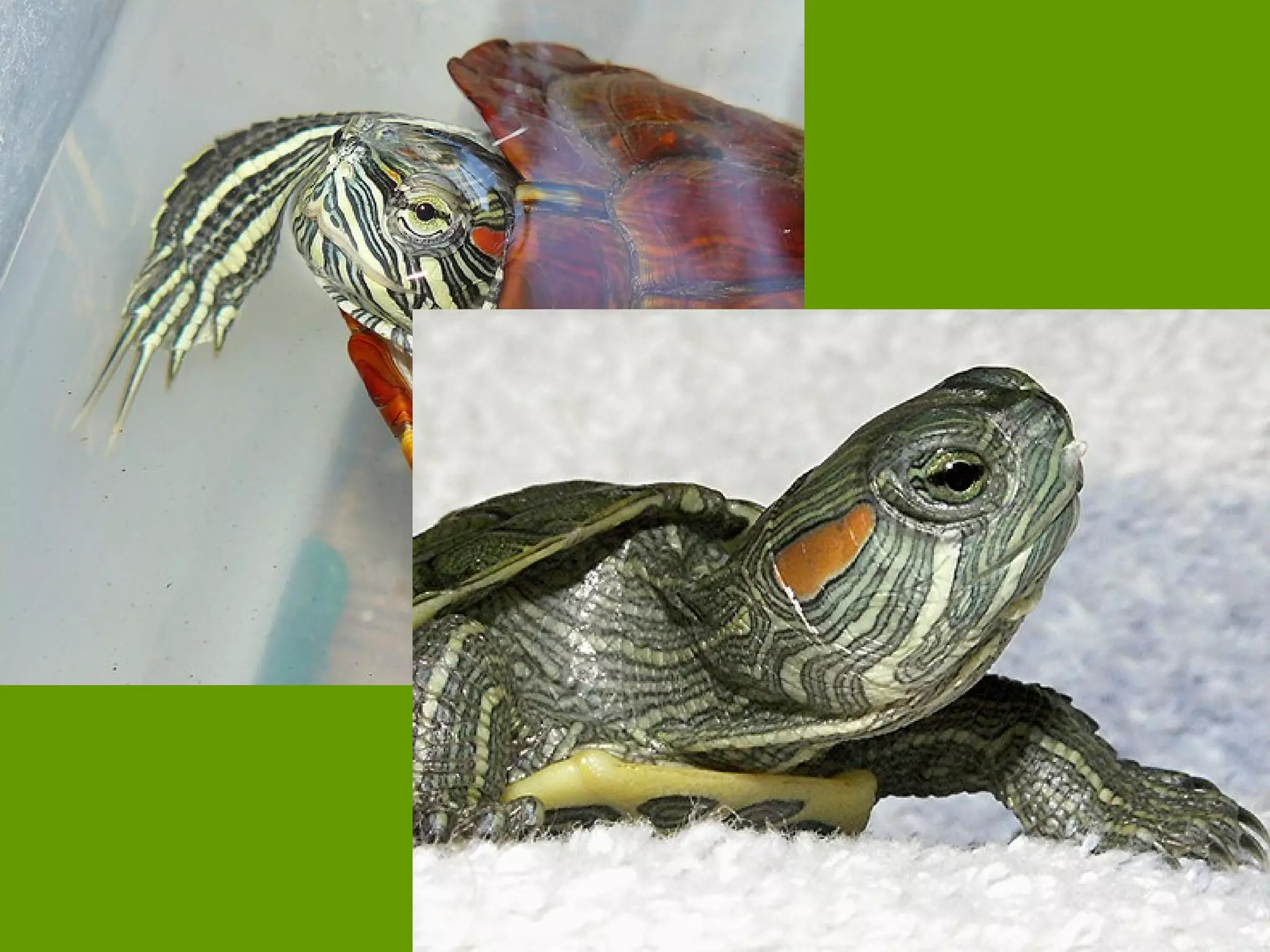
….. you study the length of their front toe nails.
For turtle species that live in ponds and rivers…
Examples – painted turtles, red-eared sliders,
and map turtles
….. you study the length of their front toe nails.
Males have extremely long nails.
For turtle species that live in ponds and rivers…
Examples – painted turtles, red-eared sliders,
and map turtles
….. you study the length of their front toe nails.
Males have extremely long nails.
Females have short nails.
For turtle species that live in ponds and rivers…
Examples – painted turtles, red-eared sliders,
and map turtles
….. you study the length of their front toe nails.
Males have extremely long nails.
Females have short nails.
Males vibrate their front nails against the face of
a female during courtship.
Video Clip
And finally….. regardless of the species you can
tell male turtles from females…..
And finally….. regardless of the species you can
tell male turtles from females…..
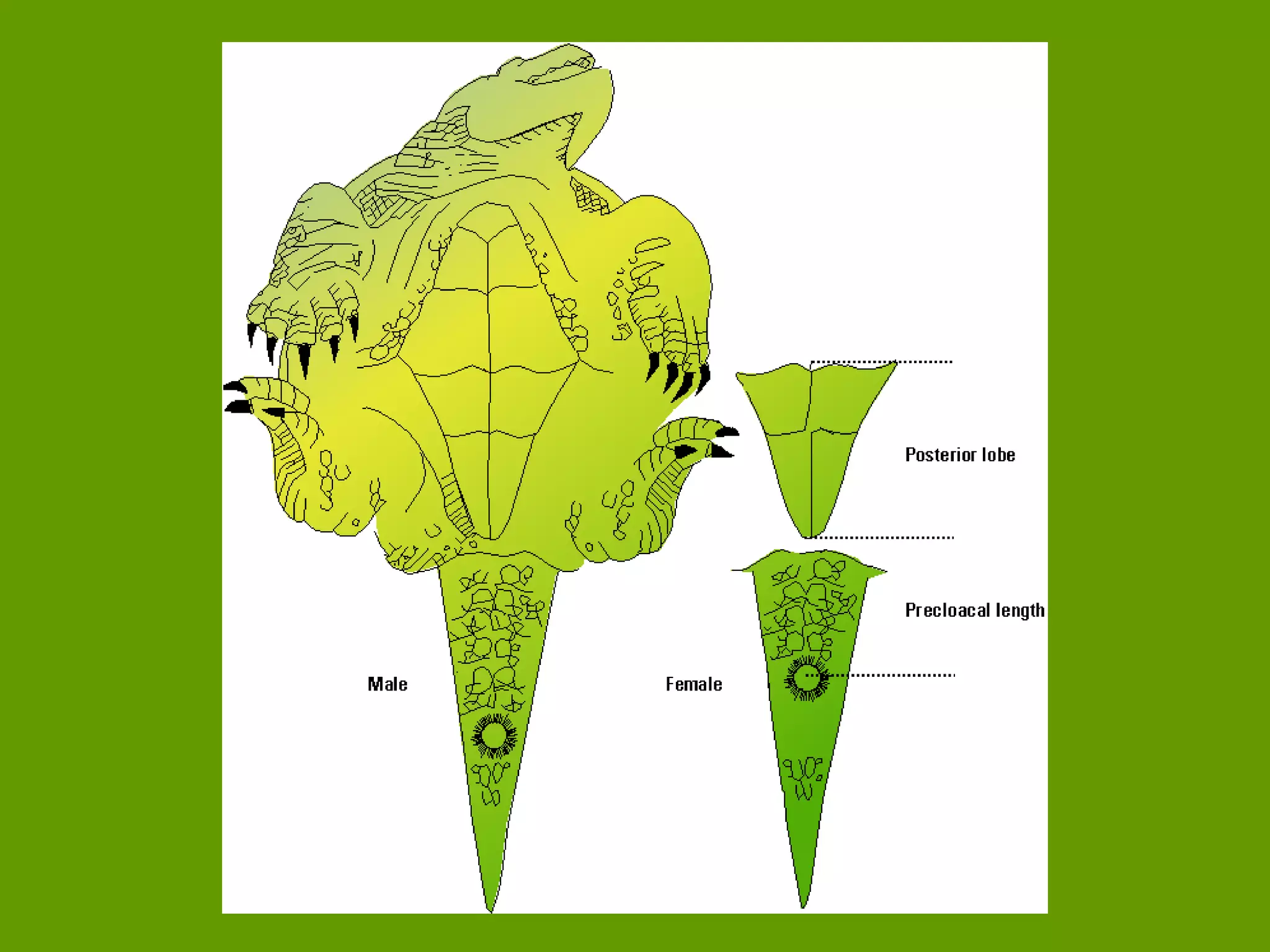
by the position of the cloaca on the turtle’s tail.
And finally….. regardless of the species you can
tell male turtles from females…..
by the position of the cloaca on the turtle’s tail.
If it’s close to tip > Male
And finally….. regardless of the species you can
tell male turtles from females…..
by the position of the cloaca on the turtle’s tail.
If it’s close to tip > Male
If it’s close to base > Female
Reasons for cloacal position…….
Males have to curl their tail to the female’s cloaca
to insert their penis while mating.
Reasons for cloacal position…….
Males have to curl their tail to the female’s cloacaMales have to curl their tail to the female’s cloaca
to insert their penis while mating.to insert their penis while mating.
Females have to lay eggs. If the cloaca was at
the tip of the tail they wouldn’t be able to squeeze
the eggs out because the cloaca would be too
small.
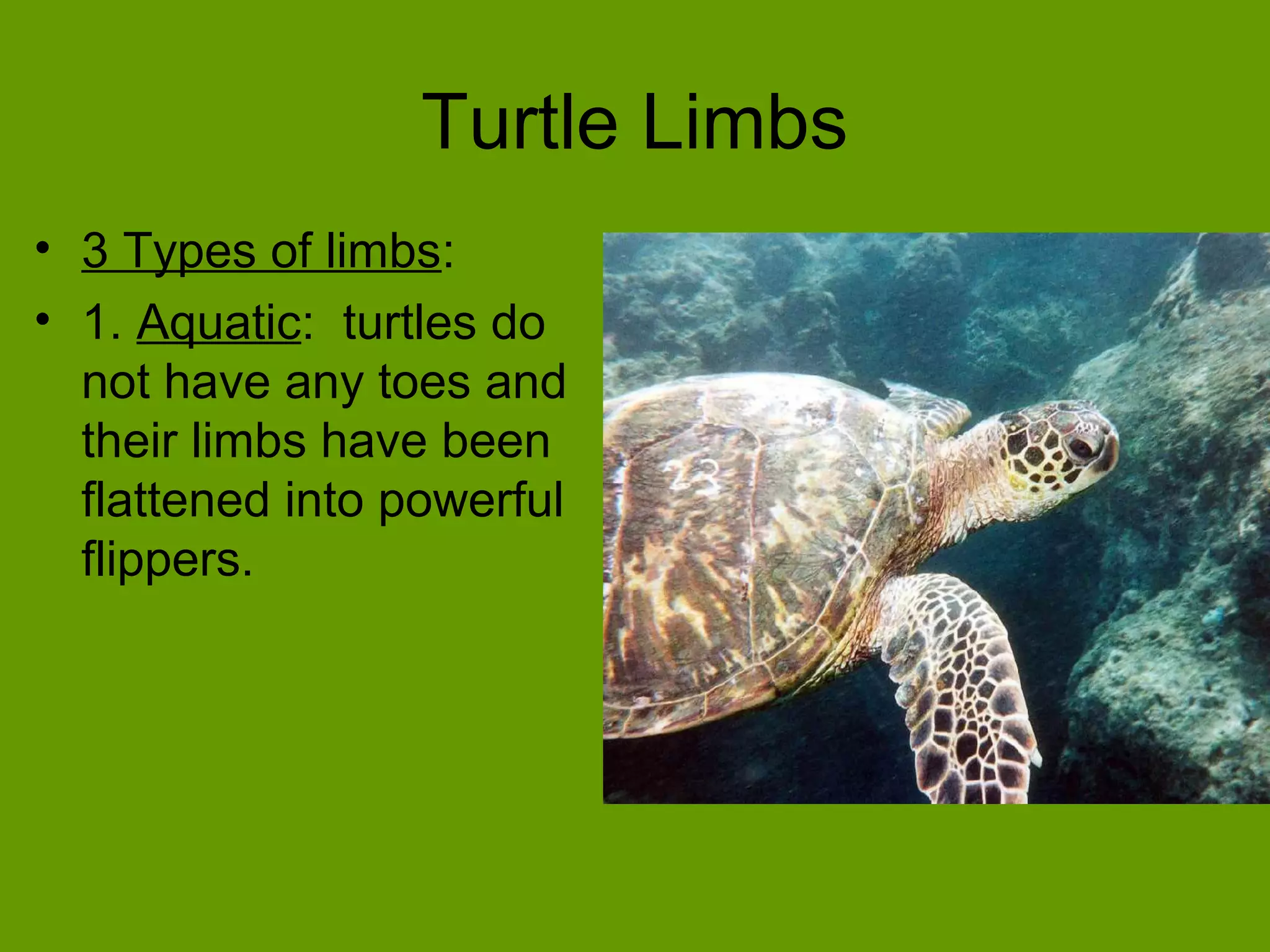
Turtle Limbs
• 3 Types of limbs:
• 1. Aquatic: turtles do
not have any toes and
their limbs have been
flattened into powerful
flippers.
Turtle Limbs
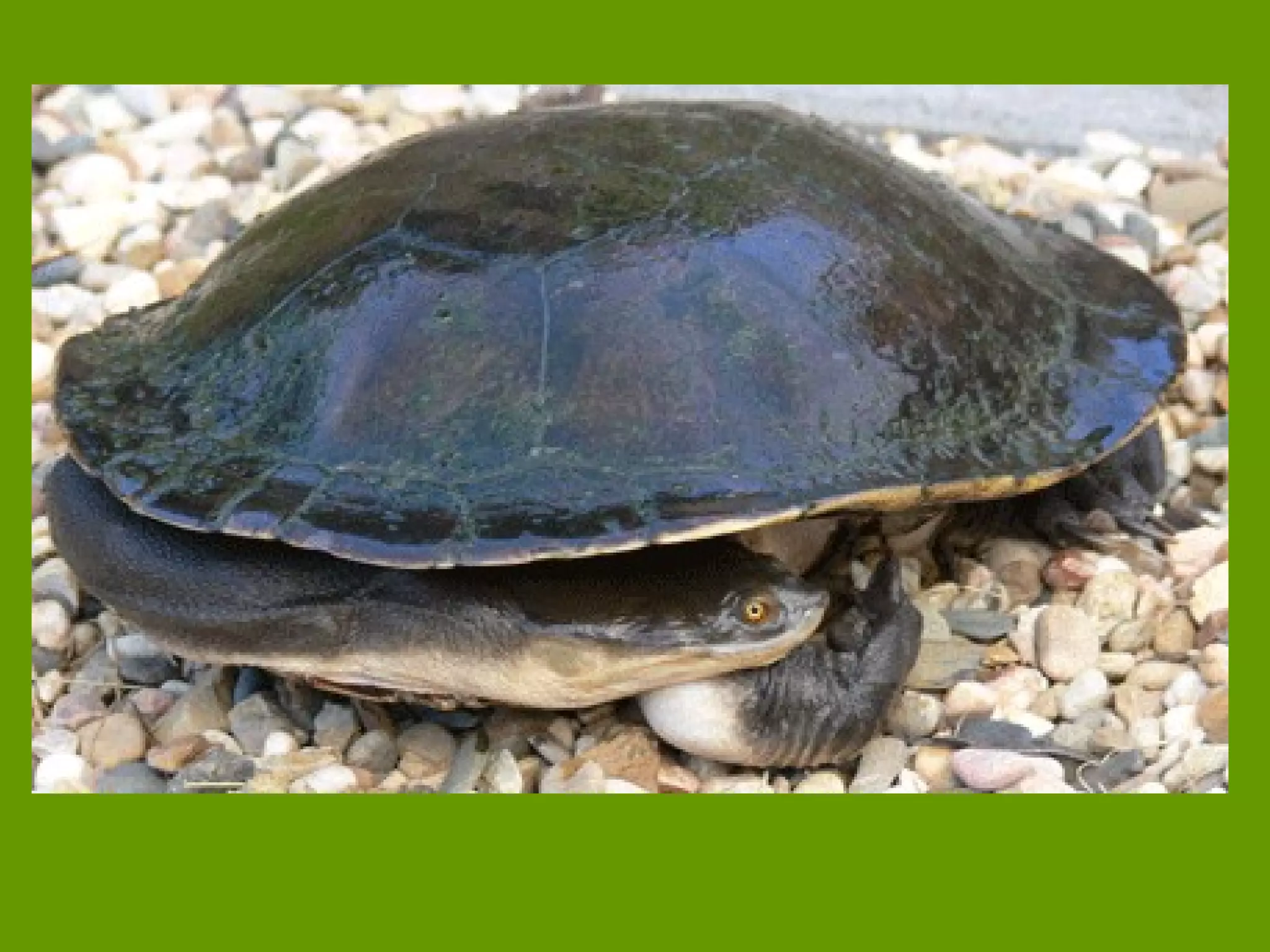
• 2. Semi-aquatic:
turtles have flatten,
long limbs with
webbed toes to help
with swimming.
• Ex. Red Ear Turtles,
Painted, or Musk
Turtles.
Turtle Limbs
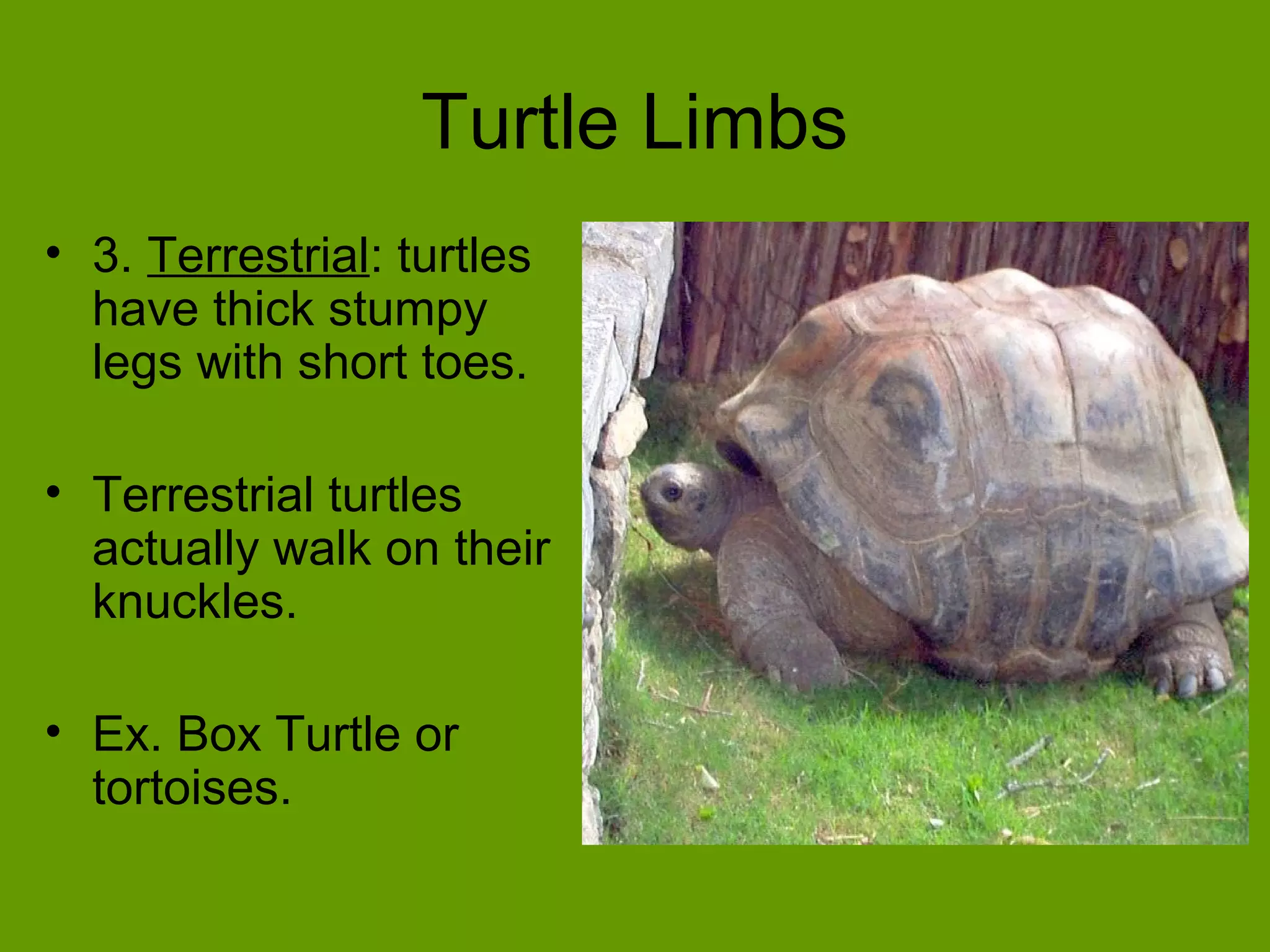
• 3. Terrestrial: turtles
have thick stumpy
legs with short toes.
• Terrestrial turtles
actually walk on their
knuckles.
• Ex. Box Turtle or
tortoises.
There are no venomous turtles.
Turtle Notes 2016
Turtle Notes 2016
Turtle Notes 2016
Turtle Notes 2016
Turtle Notes 2016
Turtle Notes 2016
Turtle Notes 2016
Turtle Notes 2016

Turtle Notes 2016

  • 1.
    Class: Reptilia By Mr.“getting a puppy” Chapman
  • 2.
    Class: Reptilia • Aheart with three chambers and a septum that partially divided ventricle. • This limits mixing of oxygenated and deoxygenated blood in the heart.
  • 3.
    Class: Reptilia • Mostlay eggs that are covered with a soft shell or give birth to live young.
  • 4.
  • 5.
    Order Chelonia =Turtles 250 species All turtles lay eggs in nests they dig in the ground No teeth, instead the edges of the jaws are hard and sharp.
  • 6.
    Order Chelonia =Turtles 250 species Diet is diverse….
  • 7.
    Order Chelonia =Turtles 250 species Diet is diverse…. 1. Tortoises (land turtles) are vegetarians.
  • 9.
    Order Chelonia =Turtles 250 species Diet is diverse…. 1. Tortoises (land turtles) are vegetarians. 2. Leatherback Sea Turtle – diet is exclusively jellyfish.
  • 12.
    Order Chelonia =Turtles 250 species Diet is diverse…. 1. Tortoises (land turtles) are vegetarians. 2. Leatherback Sea Turtle – diet is exclusively jellyfish. 3. Most species are omnivores – they eat plants and animals.
  • 14.
    The shell isevery turtle’s most notable characteristic.
  • 15.
    The shell isevery turtle’s most notable characteristic. Carapace –
  • 16.
    The shell isevery turtle’s most notable characteristic. Carapace – ribs and spine fused together.
  • 19.
    The shell isevery turtle’s most notable characteristic. Carapace – ribs and spine fused together. Plastron – enlarged sternum.
  • 22.
    The shell isevery turtle’s most notable characteristic. Carapace – ribs and spine fused together. Plastron – enlarged sternum. The plastron’s size varies with species.
  • 23.
    The shell isevery turtle’s most notable characteristic. Carapace – ribs and spine fused together. Plastron – enlarged sternum. The plastron’s size varies with species. For example – snapping turtles have a small, cross- shaped plastron. It offers little protection.
  • 25.
    The shell isevery turtle’s most notable characteristic. Carapace – ribs and spine fused together. Plastron – enlarged sternum. The plastron’s size varies with species. For example – snapping turtles have a small, cross- shaped plastron. It offers little protection. However the jaws are strong and the back of the carapace is strongly serrated. Both provide protection.
  • 26.
    A box turtle’splastron is hinged.
  • 28.
    A box turtle’splastron is hinged. Box turtles can pull their legs, tail, and head under their shell and close the hinge.
  • 29.
    A box turtle’splastron is hinged. Box turtles can pull their legs, tail, and head under their shell and close the hinge. This is the source of their name.
  • 30.
    A box turtle’splastron is hinged.A box turtle’s plastron is hinged. Box turtles can pull their legs, tail, and head underBox turtles can pull their legs, tail, and head under their shell and close the hinge.their shell and close the hinge. This is the source of their name.This is the source of their name. *You can also tell the sex of a box turtle based on its plastron.
  • 32.
    A box turtle’splastron is hinged. Box turtles can pull their legs, tail, and head under their shell and close the hinge. This is the source of their name. *You can also tell the sex of a box turtle based on its plastron. Males have a concave plastron.
  • 33.
    A box turtle’splastron is hinged. Box turtles can pull their legs, tail, and head under their shell and close the hinge. This is the source of their name. *You can also tell the sex of a box turtle based on its plastron. Males have a concave plastron. Females have a flat plastron.
  • 34.
    Turtle Mating • Malesplastron are usually concaved, so the male can climb on the back of the female.
  • 35.
    Another way todifferentiate the sex of box turtles is to study their eye color.
  • 36.
    Another way todifferentiate the sex of box turtles is to study their eye color. Males have pink or red eyes.
  • 37.
    Another way todifferentiate the sex of box turtles is to study their eye color. Males have pink or red eyes. Females have brown or yellow eyes.
  • 39.
    For turtle speciesthat live in ponds and rivers…
  • 40.
    For turtle speciesthat live in ponds and rivers… Examples – painted turtles, red-eared sliders, and map turtles
  • 41.
    For turtle speciesthat live in ponds and rivers… Examples – painted turtles, red-eared sliders, and map turtles ….. you study the length of their front toe nails.
  • 42.
    For turtle speciesthat live in ponds and rivers… Examples – painted turtles, red-eared sliders, and map turtles ….. you study the length of their front toe nails. Males have extremely long nails.
  • 43.
    For turtle speciesthat live in ponds and rivers… Examples – painted turtles, red-eared sliders, and map turtles ….. you study the length of their front toe nails. Males have extremely long nails. Females have short nails.
  • 45.
    For turtle speciesthat live in ponds and rivers… Examples – painted turtles, red-eared sliders, and map turtles ….. you study the length of their front toe nails. Males have extremely long nails. Females have short nails. Males vibrate their front nails against the face of a female during courtship.
  • 46.
  • 47.
    And finally….. regardlessof the species you can tell male turtles from females…..
  • 48.
    And finally….. regardlessof the species you can tell male turtles from females….. by the position of the cloaca on the turtle’s tail.
  • 49.
    And finally….. regardlessof the species you can tell male turtles from females….. by the position of the cloaca on the turtle’s tail. If it’s close to tip > Male
  • 50.
    And finally….. regardlessof the species you can tell male turtles from females….. by the position of the cloaca on the turtle’s tail. If it’s close to tip > Male If it’s close to base > Female
  • 53.
    Reasons for cloacalposition…….
  • 54.
    Reasons for cloacalposition……. Males have to curl their tail to the female’s cloaca to insert their penis while mating.
  • 55.
    Reasons for cloacalposition……. Males have to curl their tail to the female’s cloacaMales have to curl their tail to the female’s cloaca to insert their penis while mating.to insert their penis while mating. Females have to lay eggs. If the cloaca was at the tip of the tail they wouldn’t be able to squeeze the eggs out because the cloaca would be too small.
  • 57.
    Turtle Limbs • 3Types of limbs: • 1. Aquatic: turtles do not have any toes and their limbs have been flattened into powerful flippers.
  • 58.
    Turtle Limbs • 2.Semi-aquatic: turtles have flatten, long limbs with webbed toes to help with swimming. • Ex. Red Ear Turtles, Painted, or Musk Turtles.
  • 59.
    Turtle Limbs • 3.Terrestrial: turtles have thick stumpy legs with short toes. • Terrestrial turtles actually walk on their knuckles. • Ex. Box Turtle or tortoises.
  • 60.
    There are novenomous turtles.