The Excretory
   System
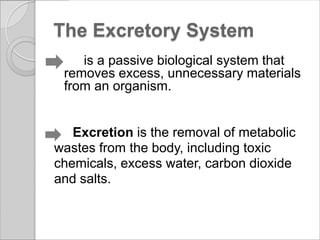
The Excretory System
    is a passive biological system that
 removes excess, unnecessary materials
 from an organism.


   Excretion is the removal of metabolic
wastes from the body, including toxic
chemicals, excess water, carbon dioxide
and salts.
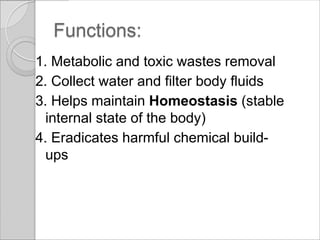
Functions:
1. Metabolic and toxic wastes removal
2. Collect water and filter body fluids
3. Helps maintain Homeostasis (stable
  internal state of the body)
4. Eradicates harmful chemical build-
  ups
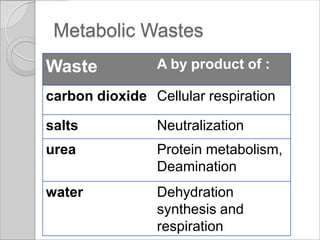
Metabolic Wastes
Waste           A by product of :

carbon dioxide Cellular respiration

salts           Neutralization
urea            Protein metabolism,
                Deamination
water           Dehydration
                synthesis and
                respiration
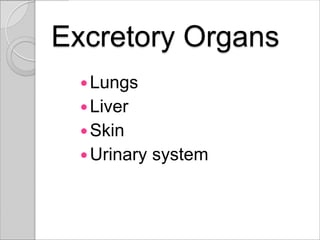
Excretory Organs
   Lungs
   Liver
   Skin
   Urinary   system
Lungs
    A pair of cone-shaped, porous and
 spongy, located in the chest that are
 composed of bronchioles, alveoli,
 blood vessels, lymphatic, nerves and
 elastic connective tissues.
    As an excretory organ, it releases
 carbon dioxide and some water vapor
 as a waste product through
 respiration.
The Lungs
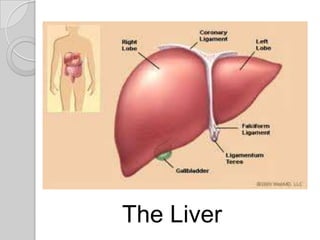
Liver
   Function is for deamination


         A process by which some
        proteins & other nitrogenous
        compounds are broken down
        in the liver.
         As a result, urea is formed.
The Liver
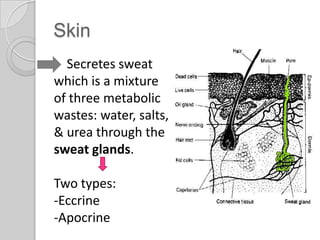
Skin
  Secretes sweat
which is a mixture
of three metabolic
wastes: water, salts,
& urea through the
sweat glands.

Two types:
-Eccrine
-Apocrine
Urinary System
 A group    of organs in the body
    concerned with filtering out excess
    fluid and other substances from the
    bloodstream.

   Urination or Micturition is the act by
    which urine (combination of salt,
    water, and urea), is expelled from the
    urinary bladder
Functions
 Excretion of urine
 Maintains an appropriate fluid volume
 Regulates the concentrations of
  various electrolytes in the body fluids
 Maintains normal pH of the blood
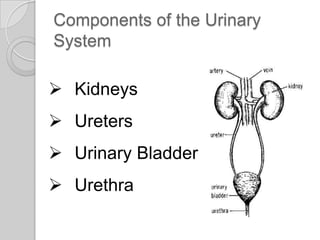
Components of the Urinary
System

 Kidneys
 Ureters
 Urinary Bladder
 Urethra
Kidneys
 A pair of bean shaped, reddish brown organs
  about the size of your fist.
 Measures 10-12cm in length, 5-7cm wide, and 2-
  5cm thick.
 Site of urine manufacture

    Functions:

 filter blood ,
 process the filtrate to form urine,
 produce hormones and enzymes that regulate
  blood pressure and red blood cell production
 regulate blood pH.
3 Major Regions
 Renal Cortex
      - The outer layer with lots and lots of
            nephrons
      - The filtering layer
 Renal Medulla
     - Middle layer
      - The Collecting layer
     - Contains the Renal Pyramids
 Renal Pelvis
      - Center of the kidney
      - The Draining Layer
       - Connects with the ureters
Kidney
Nephrons
   The basic structural and functional unit of the
    kidney
   Comes from the Greek word (nephros)
    meaning kidney.
   A long tubule with a series of associated
    blood vessels
   Chief function is to regulate water and soluble
    substances
   Each kidney has more than 1,000,000 of
    them
   Each nephron is made of a cup shaped
    portion called Bowman’s capsule, tubules
    and a network of capillaries.
Nephro
How is urine formed ?
Three major processes are involved in the
 formation of urine:

 filtration -filters the blood to produce a
  filtrate
 reabsorption - selectively reabsorbs
  needed water and essential solutes from
  the filtrate
 secretion - moves substances into the
  filtrate for removal as part of the urine
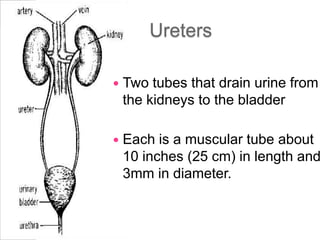
Ureters

   Two tubes that drain urine from
    the kidneys to the bladder

   Each is a muscular tube about
    10 inches (25 cm) in length and
    3mm in diameter.
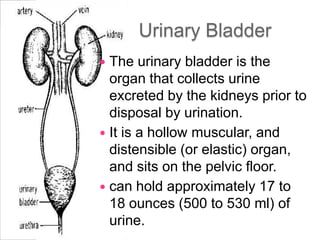
Urinary Bladder
 The urinary bladder is the
  organ that collects urine
  excreted by the kidneys prior to
  disposal by urination.
 It is a hollow muscular, and
  distensible (or elastic) organ,
  and sits on the pelvic floor.
 can hold approximately 17 to
  18 ounces (500 to 530 ml) of
  urine.
Urethra
 A tube which connects the
  urinary bladder to the outside
  of the body
 The function of the urethra is to
  remove urine from the body
  through urination
 It measures about 1.5 inches
  (3.8 cm) in a woman but up to
  8 inches (20 cm) in a man.
 The urethral sphincter is a
  collective name for the muscles
  used to control the flow of urine
  from the urinary bladder.
Common Diseases
 of the Excretory
      System
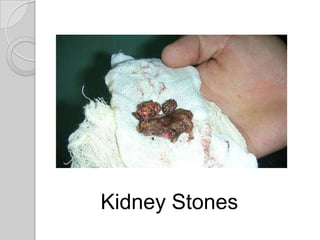
Kidney Stones
(Nephrolithiasis)
   Hard masses that form in the urinary tract
    from crystals that have separated from the
    urine.

   Causes:
      Dietary factors
      Recurrent UT

• Symptoms:
      Extreme Pain
      Cramping in the back and lower abdomen
      Nausea
      Vomiting
Kidney Stones
Urinary Tract Infection (UTI)
   A bacterial infection that affects part of the urinary tract.

   Causes:
    ◦ Bacteria from the bowel that live on the skin near the
      rectum or in the vagina.
    ◦ Sexual Intercourse
    ◦ Waiting too long to urinate

• Symptoms:
   • Painful urination
   • Frequent urination or urge to urinate (or both)
   • Fever
   • Flank Pain
Acne(Acne vulgaris)
   Kind of skin disorder that occurs when
    the oil glands in the skin are, such as
    affected by bacteria.

   Causes:
    ◦ Hormone changes

    Most acne form on the face, neck, back,
     chest, and shoulders.
Athlete’s foot (Tinea pedis)
 Fungal infection of the skin.
 Occurs between the toes
 Caused by fungi in the
  genus Trichophyton

   Symptoms:
      Various degree of itching of burning
      Blister and cracked skin
Athlete’s foot
Bladder Cancer
   A type of malignancy arising from
    epithelial lining of the urinary bladder

   Causes:
      Smoking
      Chemical exposures
      Improper Diet

 Symptoms:
      Blood in the urine
      Frequent urination
      Feeling the need to urinate without results
Thank You !!!
    XD

The excretory system

  • 1.
  • 2.
    The Excretory System is a passive biological system that removes excess, unnecessary materials from an organism. Excretion is the removal of metabolic wastes from the body, including toxic chemicals, excess water, carbon dioxide and salts.
  • 3.
    Functions: 1. Metabolic andtoxic wastes removal 2. Collect water and filter body fluids 3. Helps maintain Homeostasis (stable internal state of the body) 4. Eradicates harmful chemical build- ups
  • 4.
    Metabolic Wastes Waste A by product of : carbon dioxide Cellular respiration salts Neutralization urea Protein metabolism, Deamination water Dehydration synthesis and respiration
  • 5.
    Excretory Organs  Lungs  Liver  Skin  Urinary system
  • 6.
    Lungs A pair of cone-shaped, porous and spongy, located in the chest that are composed of bronchioles, alveoli, blood vessels, lymphatic, nerves and elastic connective tissues. As an excretory organ, it releases carbon dioxide and some water vapor as a waste product through respiration.
  • 7.
  • 8.
    Liver Function is for deamination A process by which some proteins & other nitrogenous compounds are broken down in the liver. As a result, urea is formed.
  • 9.
  • 10.
    Skin Secretessweat which is a mixture of three metabolic wastes: water, salts, & urea through the sweat glands. Two types: -Eccrine -Apocrine
  • 11.
    Urinary System  Agroup of organs in the body concerned with filtering out excess fluid and other substances from the bloodstream.  Urination or Micturition is the act by which urine (combination of salt, water, and urea), is expelled from the urinary bladder
  • 12.
    Functions  Excretion ofurine  Maintains an appropriate fluid volume  Regulates the concentrations of various electrolytes in the body fluids  Maintains normal pH of the blood
  • 13.
    Components of theUrinary System  Kidneys  Ureters  Urinary Bladder  Urethra
  • 14.
    Kidneys  A pairof bean shaped, reddish brown organs about the size of your fist.  Measures 10-12cm in length, 5-7cm wide, and 2- 5cm thick.  Site of urine manufacture Functions:  filter blood ,  process the filtrate to form urine,  produce hormones and enzymes that regulate blood pressure and red blood cell production  regulate blood pH.
  • 15.
    3 Major Regions Renal Cortex - The outer layer with lots and lots of nephrons - The filtering layer  Renal Medulla - Middle layer - The Collecting layer - Contains the Renal Pyramids  Renal Pelvis - Center of the kidney - The Draining Layer - Connects with the ureters
  • 16.
  • 17.
    Nephrons  The basic structural and functional unit of the kidney  Comes from the Greek word (nephros) meaning kidney.  A long tubule with a series of associated blood vessels  Chief function is to regulate water and soluble substances  Each kidney has more than 1,000,000 of them  Each nephron is made of a cup shaped portion called Bowman’s capsule, tubules and a network of capillaries.
  • 18.
  • 19.
    How is urineformed ? Three major processes are involved in the formation of urine:  filtration -filters the blood to produce a filtrate  reabsorption - selectively reabsorbs needed water and essential solutes from the filtrate  secretion - moves substances into the filtrate for removal as part of the urine
  • 20.
    Ureters  Two tubes that drain urine from the kidneys to the bladder  Each is a muscular tube about 10 inches (25 cm) in length and 3mm in diameter.
  • 21.
    Urinary Bladder  Theurinary bladder is the organ that collects urine excreted by the kidneys prior to disposal by urination.  It is a hollow muscular, and distensible (or elastic) organ, and sits on the pelvic floor.  can hold approximately 17 to 18 ounces (500 to 530 ml) of urine.
  • 22.
    Urethra  A tubewhich connects the urinary bladder to the outside of the body  The function of the urethra is to remove urine from the body through urination  It measures about 1.5 inches (3.8 cm) in a woman but up to 8 inches (20 cm) in a man.  The urethral sphincter is a collective name for the muscles used to control the flow of urine from the urinary bladder.
  • 23.
    Common Diseases ofthe Excretory System
  • 24.
    Kidney Stones (Nephrolithiasis)  Hard masses that form in the urinary tract from crystals that have separated from the urine.  Causes:  Dietary factors  Recurrent UT • Symptoms:  Extreme Pain  Cramping in the back and lower abdomen  Nausea  Vomiting
  • 25.
  • 26.
    Urinary Tract Infection(UTI)  A bacterial infection that affects part of the urinary tract.  Causes: ◦ Bacteria from the bowel that live on the skin near the rectum or in the vagina. ◦ Sexual Intercourse ◦ Waiting too long to urinate • Symptoms: • Painful urination • Frequent urination or urge to urinate (or both) • Fever • Flank Pain
  • 27.
    Acne(Acne vulgaris)  Kind of skin disorder that occurs when the oil glands in the skin are, such as affected by bacteria.  Causes: ◦ Hormone changes Most acne form on the face, neck, back, chest, and shoulders.
  • 28.
    Athlete’s foot (Tineapedis)  Fungal infection of the skin.  Occurs between the toes  Caused by fungi in the genus Trichophyton  Symptoms:  Various degree of itching of burning  Blister and cracked skin
  • 29.
  • 30.
    Bladder Cancer  A type of malignancy arising from epithelial lining of the urinary bladder  Causes:  Smoking  Chemical exposures  Improper Diet  Symptoms:  Blood in the urine  Frequent urination  Feeling the need to urinate without results
  • 31.