Excretory System
 is a passive biological system that removes excess,
 unnecessary materials from an organism, so as to help
 maintain homeostasis within the organism and
 prevent damage to the body.
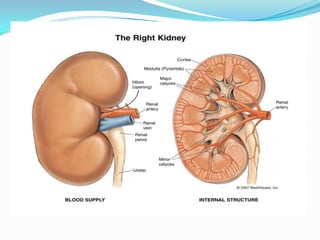
 Renal Cortex-  It contains the renal corpuscles and
 the renal tubules except for parts of the loop of
 Henle which descend into the renal medulla. It also
 contains blood vessels and cortical collecting ducts.

 Renal Medulla- split up into a number of sections,
 known as the renal pyramids. Blood enters into the
 kidney via the renal artery, which then splits up to
 form the accurate arterioles.
 Renal Artery- takes blood into the kidney and renal
 vein transports blood out of the kidney.

 Renal Vein-    are veins that drain the kidney. They
 connect the kidney to the inferior vena cava. They
 carry the blood purified by the kidney. It also divides
 into 2 divisions upon entering the kidney.

 Nephron- Its chief function is to regulate the
 concentration of water and soluble substances like
 sodium salts by filtering the blood, reabsorbing what
 is needed and excreting the rest as urine
:
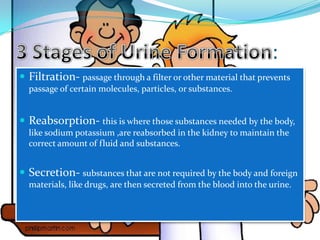
 Filtration- passage through a filter or other material that prevents
  passage of certain molecules, particles, or substances.


 Reabsorption- this is where those substances needed by the body,
  like sodium potassium ,are reabsorbed in the kidney to maintain the
  correct amount of fluid and substances.


 Secretion- substances that are not required by the body and foreign
  materials, like drugs, are then secreted from the blood into the urine.
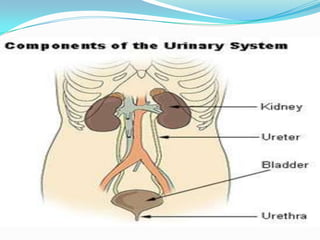
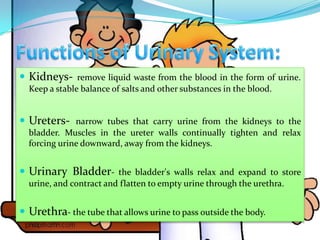
 Kidneys- remove liquid waste from the blood in the form of urine.
  Keep a stable balance of salts and other substances in the blood.


 Ureters- narrow tubes that carry urine from the kidneys to the
  bladder. Muscles in the ureter walls continually tighten and relax
  forcing urine downward, away from the kidneys.


 Urinary Bladder- the bladder's walls relax and expand to store
  urine, and contract and flatten to empty urine through the urethra.


 Urethra- the tube that allows urine to pass outside the body.
Group Members:
 Alvarez, Dennis L.
 Cumpio, Joyce L.
 Atillo, Judith Fay
 Arcena, Sharmaine
 Pilola, Rangie
 Creer, Wilma Ephephita
 Ornopia, Julie

THE EXCRETORY SYSTEM

  • 2.
    Excretory System  isa passive biological system that removes excess, unnecessary materials from an organism, so as to help maintain homeostasis within the organism and prevent damage to the body.
  • 4.
     Renal Cortex- It contains the renal corpuscles and the renal tubules except for parts of the loop of Henle which descend into the renal medulla. It also contains blood vessels and cortical collecting ducts.  Renal Medulla- split up into a number of sections, known as the renal pyramids. Blood enters into the kidney via the renal artery, which then splits up to form the accurate arterioles.
  • 5.
     Renal Artery-takes blood into the kidney and renal vein transports blood out of the kidney.  Renal Vein- are veins that drain the kidney. They connect the kidney to the inferior vena cava. They carry the blood purified by the kidney. It also divides into 2 divisions upon entering the kidney.  Nephron- Its chief function is to regulate the concentration of water and soluble substances like sodium salts by filtering the blood, reabsorbing what is needed and excreting the rest as urine
  • 6.
    :  Filtration- passagethrough a filter or other material that prevents passage of certain molecules, particles, or substances.  Reabsorption- this is where those substances needed by the body, like sodium potassium ,are reabsorbed in the kidney to maintain the correct amount of fluid and substances.  Secretion- substances that are not required by the body and foreign materials, like drugs, are then secreted from the blood into the urine.
  • 8.
     Kidneys- removeliquid waste from the blood in the form of urine. Keep a stable balance of salts and other substances in the blood.  Ureters- narrow tubes that carry urine from the kidneys to the bladder. Muscles in the ureter walls continually tighten and relax forcing urine downward, away from the kidneys.  Urinary Bladder- the bladder's walls relax and expand to store urine, and contract and flatten to empty urine through the urethra.  Urethra- the tube that allows urine to pass outside the body.
  • 9.
    Group Members:  Alvarez,Dennis L.  Cumpio, Joyce L.  Atillo, Judith Fay  Arcena, Sharmaine  Pilola, Rangie  Creer, Wilma Ephephita  Ornopia, Julie