PREPARED BY…
KUSH SEHGAL
 The chemical
breakdown of complex
biological molecules
into their component
parts.
 Lipids to fatty acids
 Proteins to individual
amino acids
 Carbohydrates into
simple sugars
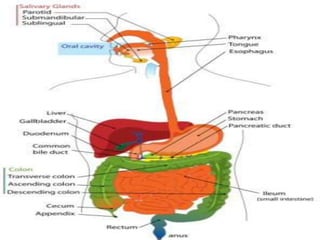
Esophagus
Stomach
Small Intestine
Large Intestine
Gall bladder
Liver
Pancreas
 Structures in the mouth that aids
digestion:
 Teeth – cut, tear, crush and
grind food.
 Salivary glands – produce and
secrete saliva into the oral
cavity.
 Parotid (beneath the cheeks)
 Submaxillary (below the jaw
bone)
 Sublingual (below the
tongue)
– saliva moistens
the food and contains enzymes
(ptyalin or salivary amylase)
that begins digestion of starch
into smaller polysaccharides
 the tube that connects your
mouth and your stomach
 A straight muscular tube that is about
10 inches (25 cm) long which
connects the mouth with the
stomach
 Food takes about 4 to 8 seconds as it
passes through to the stomach.
 Its walls contain smooth muscles that
contracts in wavy motion
(Peristalsis).
 Peristalsis propels food and liquid
slowly down the esophagus into
the stomach.
 Cardiac Sphincter (ring-like valve)
relaxes to allow food into the
stomach.
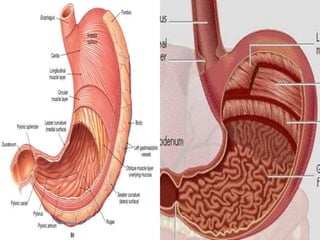
 J-shaped muscular sac
 Has inner folds (rugae) that
increases the surface area of the
stomach.
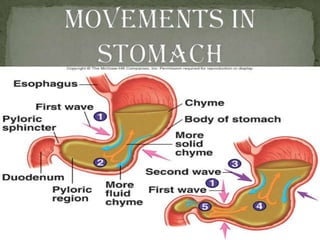
 Churns and grinds together the
bolus into smaller pieces.
 Food is mixed with gastric juices
(hydrochloric acid and enzymes)
secreted by the stomach walls.
 HCL helps break down food and
kills bacteria that came along with
the food.
 Pepsin – major enzyme; converts proteins
into peptides in the presence of HCL.
 Mucus – lubricates food and protects the
gastric lining from strong digestive juices.
 Converts the bolus into a liquid (chyme)
after 4 hrs of mechanical and chemical
digestion
 Chyme passes through the pyloric
sphincter into the small intestine.
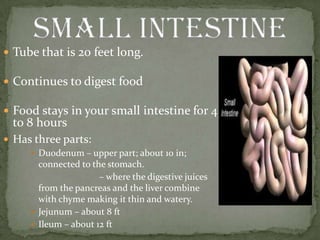
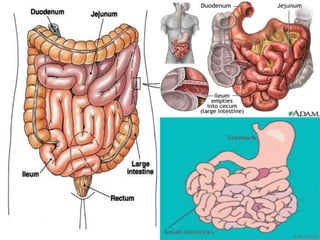
 Tube that is 20 feet long.
 Continues to digest food
 Food stays in your small intestine for 4
to 8 hours
 Has three parts:
 Duodenum – upper part; about 10 in;
connected to the stomach.
– where the digestive juices
from the pancreas and the liver combine
with chyme making it thin and watery.
 Jejunum – about 8 ft
 Ileum – about 12 ft
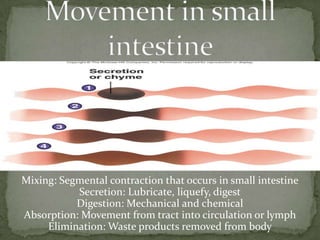
Mixing: Segmental contraction that occurs in small intestine
Secretion: Lubricate, liquefy, digest
Digestion: Mechanical and chemical
Absorption: Movement from tract into circulation or lymph
Elimination: Waste products removed from body
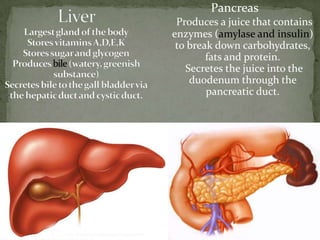
Pancreas
Produces a juice that contains
enzymes (amylase and insulin)
to break down carbohydrates,
fats and protein.
Secretes the juice into the
duodenum through the
pancreatic duct.
 Storage tank for bile (a greenish-yellow liquid)
that helps your body break down and use fats
Located under your liver
Shaped like a pear
 Stores bile in between meals
 Secretes bile to the duodenum
through the bile duct during
mealtime.
 Bile contains bile salts, pigments,
cholesterol and phospholipids.
 Bile is an emulsifier NOT an
enzyme.
 Emulsifier – dissolves fat into the
watery contents of the intestine.
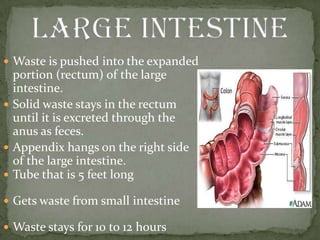
 Waste is pushed into the expanded
portion (rectum) of the large
intestine.
 Solid waste stays in the rectum
until it is excreted through the
anus as feces.
 Appendix hangs on the right side
of the large intestine.
 Tube that is 5 feet long
 Gets waste from small intestine
 Waste stays for 10 to 12 hours
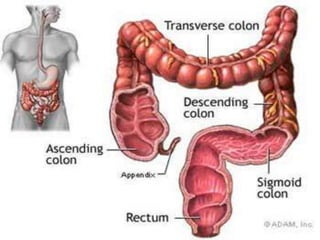
 Colon is part of large
intestines. The colon forms
waste material that is going
to be sent out of body.
They are of three types…
1. ascending colon
2.transverse colon
3. descending colon
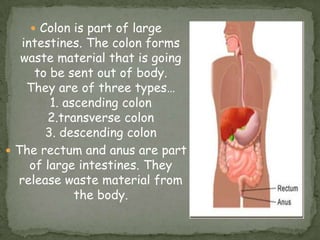
 The rectum and anus are part
of large intestines. They
release waste material from
the body.
~Kush sehgal…

Human digestive system

  • 1.
  • 2.
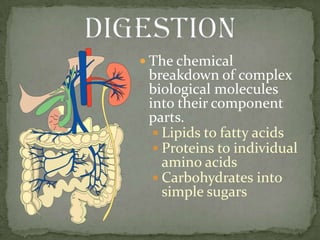
     The chemical breakdownof complex biological molecules into their component parts.  Lipids to fatty acids  Proteins to individual amino acids  Carbohydrates into simple sugars
  • 3.
  • 4.
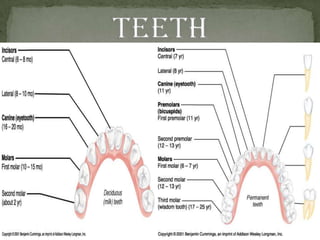
     Structures inthe mouth that aids digestion:  Teeth – cut, tear, crush and grind food.  Salivary glands – produce and secrete saliva into the oral cavity.  Parotid (beneath the cheeks)  Submaxillary (below the jaw bone)  Sublingual (below the tongue) – saliva moistens the food and contains enzymes (ptyalin or salivary amylase) that begins digestion of starch into smaller polysaccharides
  • 8.
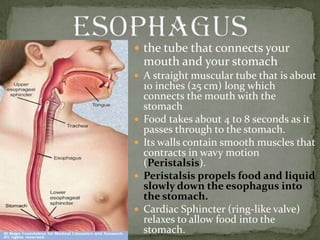
     the tubethat connects your mouth and your stomach  A straight muscular tube that is about 10 inches (25 cm) long which connects the mouth with the stomach  Food takes about 4 to 8 seconds as it passes through to the stomach.  Its walls contain smooth muscles that contracts in wavy motion (Peristalsis).  Peristalsis propels food and liquid slowly down the esophagus into the stomach.  Cardiac Sphincter (ring-like valve) relaxes to allow food into the stomach.
  • 9.
     J-shaped muscularsac  Has inner folds (rugae) that increases the surface area of the stomach.  Churns and grinds together the bolus into smaller pieces.  Food is mixed with gastric juices (hydrochloric acid and enzymes) secreted by the stomach walls.  HCL helps break down food and kills bacteria that came along with the food.
  • 11.
     Pepsin –major enzyme; converts proteins into peptides in the presence of HCL.  Mucus – lubricates food and protects the gastric lining from strong digestive juices.  Converts the bolus into a liquid (chyme) after 4 hrs of mechanical and chemical digestion  Chyme passes through the pyloric sphincter into the small intestine.
  • 13.
     Tube thatis 20 feet long.  Continues to digest food  Food stays in your small intestine for 4 to 8 hours  Has three parts:  Duodenum – upper part; about 10 in; connected to the stomach. – where the digestive juices from the pancreas and the liver combine with chyme making it thin and watery.  Jejunum – about 8 ft  Ileum – about 12 ft
  • 15.
    Mixing: Segmental contractionthat occurs in small intestine Secretion: Lubricate, liquefy, digest Digestion: Mechanical and chemical Absorption: Movement from tract into circulation or lymph Elimination: Waste products removed from body
  • 16.
    Pancreas Produces a juicethat contains enzymes (amylase and insulin) to break down carbohydrates, fats and protein. Secretes the juice into the duodenum through the pancreatic duct.
  • 17.
     Storage tankfor bile (a greenish-yellow liquid) that helps your body break down and use fats Located under your liver Shaped like a pear  Stores bile in between meals  Secretes bile to the duodenum through the bile duct during mealtime.  Bile contains bile salts, pigments, cholesterol and phospholipids.  Bile is an emulsifier NOT an enzyme.  Emulsifier – dissolves fat into the watery contents of the intestine.
  • 18.
     Waste ispushed into the expanded portion (rectum) of the large intestine.  Solid waste stays in the rectum until it is excreted through the anus as feces.  Appendix hangs on the right side of the large intestine.  Tube that is 5 feet long  Gets waste from small intestine  Waste stays for 10 to 12 hours
  • 20.
     Colon ispart of large intestines. The colon forms waste material that is going to be sent out of body. They are of three types… 1. ascending colon 2.transverse colon 3. descending colon  The rectum and anus are part of large intestines. They release waste material from the body.
  • 22.