HRM AUDITING – PRINCIPLES,
PRACTICE AND PROCESS
CHARLES COTTER Ph.D. candidate, MBA, B.A (Hons), B.A
www.slideshare.net/CharlesCotter
IMPLATS, SPRINGS
21-22 SEPTEMBER 2017
2-DAY, TRAINING PROGRAMME
OVERVIEW
• Introduction and Preview
• HRM Auditing – Principles and Practices
• HRM Auditing Process
• Case Study
• Conclusion and Review
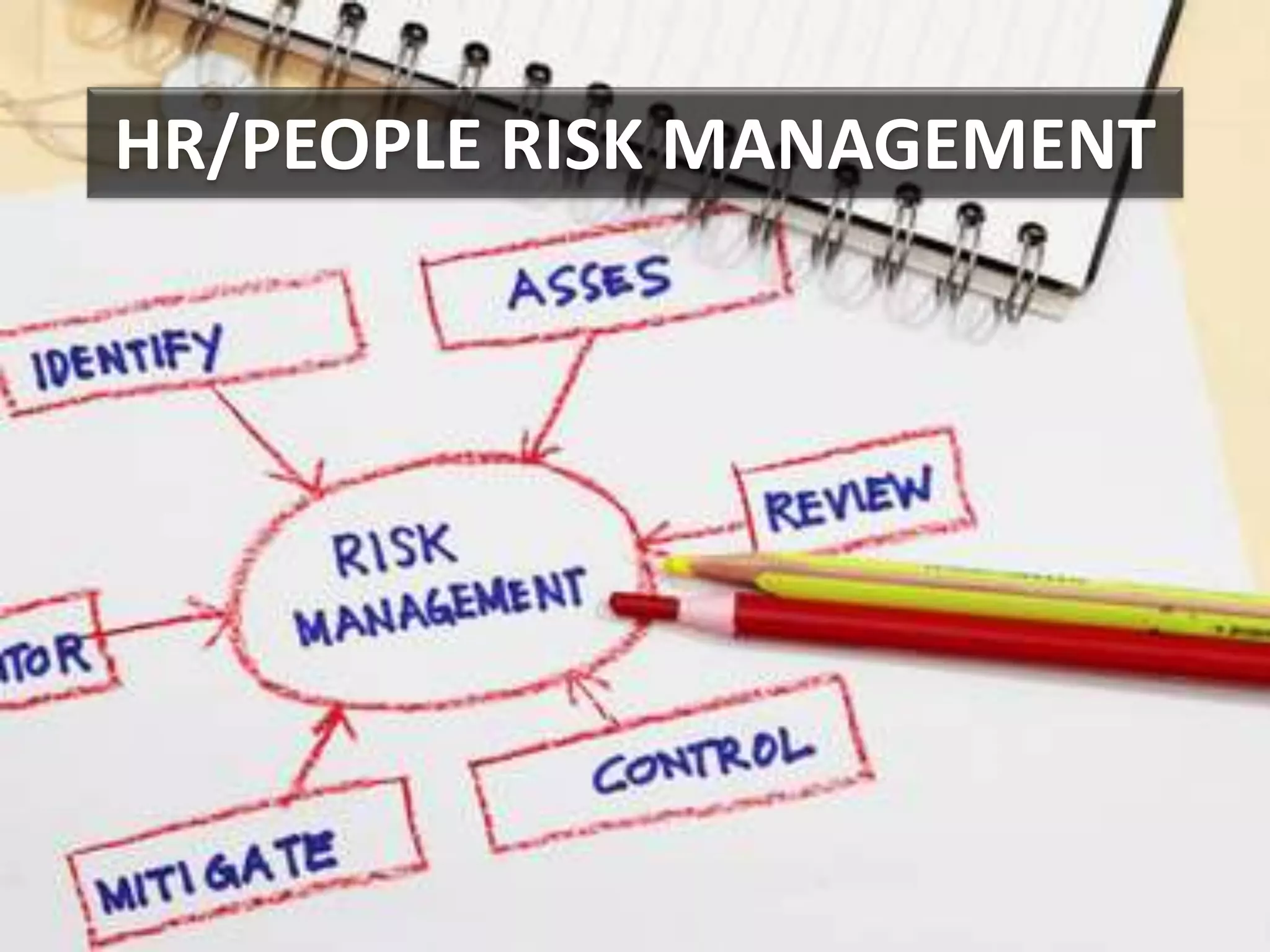
HR/PEOPLE RISK MANAGEMENT
HRM AUDITING
INTRODUCTORY LEARNING ACTIVITY
• Refer to page 3 of the Learner Manual
• Complete the following statement by inserting one (1) word.
As a HR Manager, in order to effectively conduct a HRM
audit at Implats, I need to/to
be…………………………………………………………………..
• Jot this word down and find other learners who have
written down the same word.
• Write this word down on the flip-chart. Each learner will be
allowed the opportunity to elaborate on their respective
choice of words.
THE FUNDAMENTALS OF HRM
AUDITING
• Defining a HRM Audit
• The driving forces of HRM Auditing
• The purpose, objectives and functions of HRM
Auditing
• Benefits and costs (drawbacks) of HRM Auditing
ORIGIN OF THE WORD, “AUDIT”
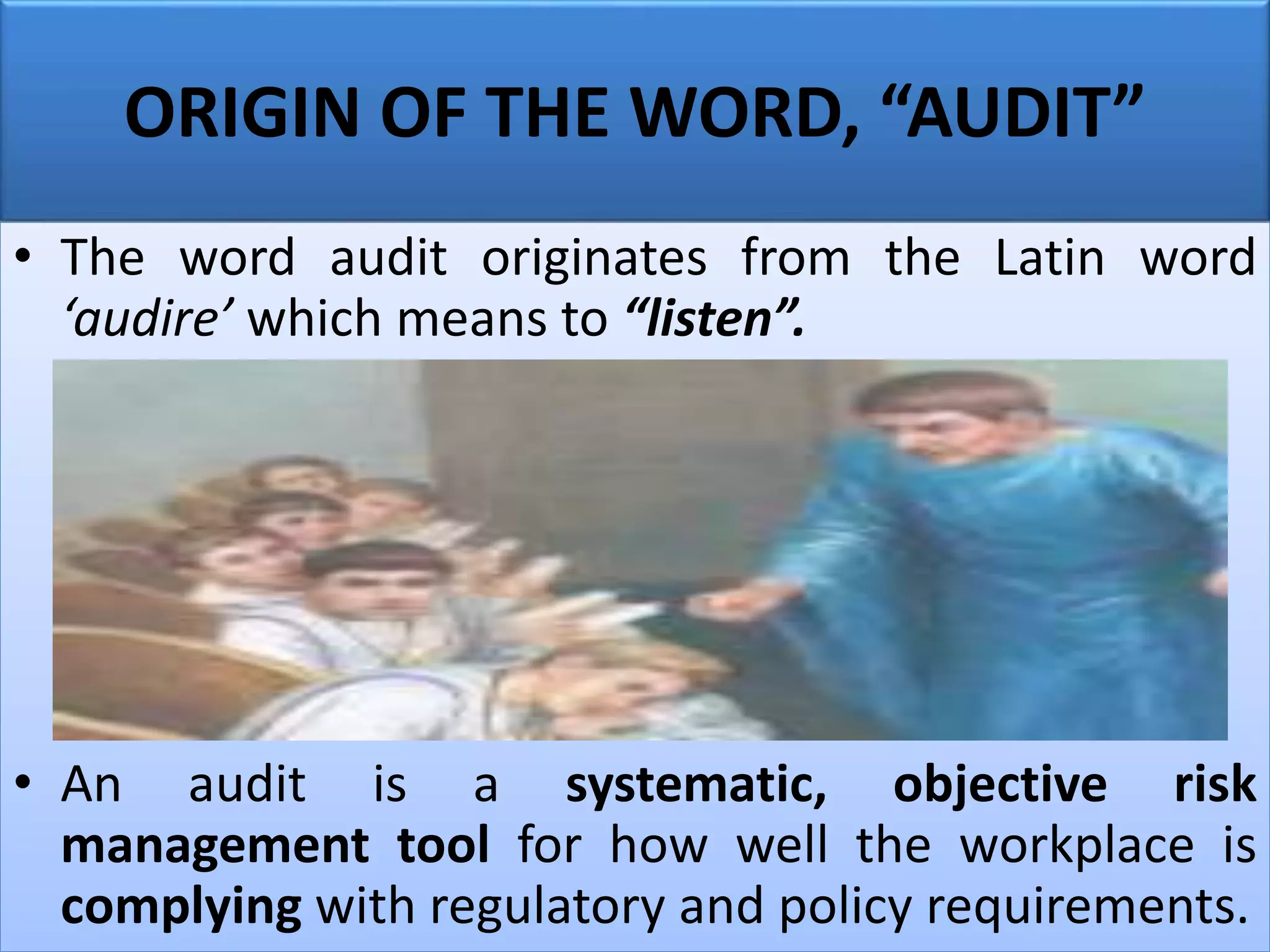
• The word audit originates from the Latin word
‘audire’ which means to “listen”.
• An audit is a systematic, objective risk
management tool for how well the workplace is
complying with regulatory and policy requirements.
DEFINING HRM AUDIT
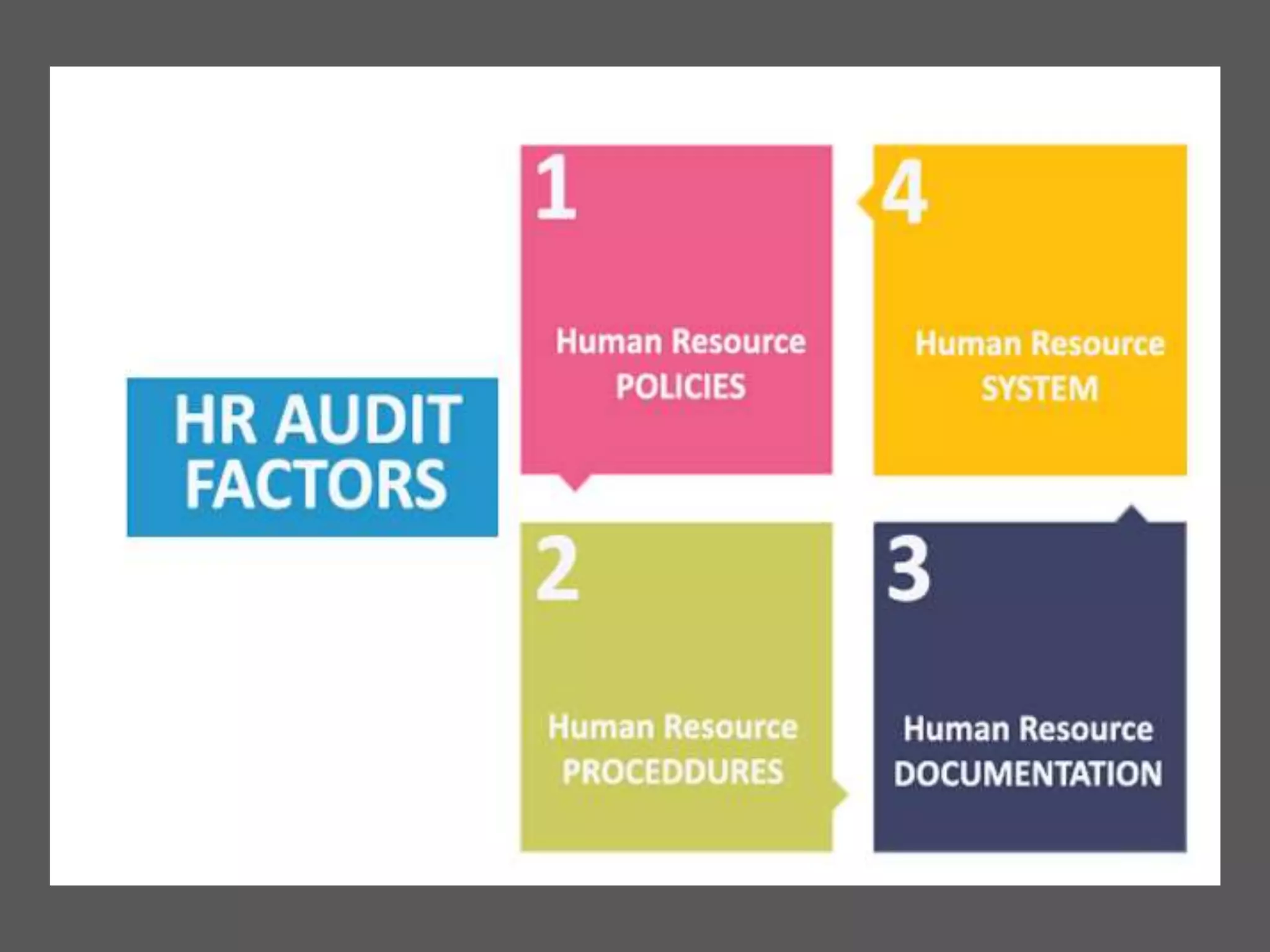
• An HR Audit as “an intensely objective look at the company’s HR policies,
practices, procedures and strategies in order to protect the company,
establish best practices and identify opportunities for improvement.”
(SHRM)
• A Human Resources Audit is a review of current Human Resources
practices, policies, procedures, documentation and systems and will assist
you to identify strengths and needs for improvement.
• It will provide direction and recommend the courses of action to be taken
to ensure compliance with ever-changing laws, rules and regulations.
• A HR audit is a way to diagnose problems in a company’s HR department.
• Auditing is evidence based.
DRIVING FORCES OF HRM AUDITING
• Alignment of HR strategies and practices with strategic objectives of the
organization;
• Managing employment practice liability risks;
• Government compliance (skills audit);
• Understanding and determining the impact of HR policies, procedures and
practices;
• People investments need to be quantified to demonstrate a return on
investment; and
• Roughly, over two-thirds of an organization’s money is spent on people.
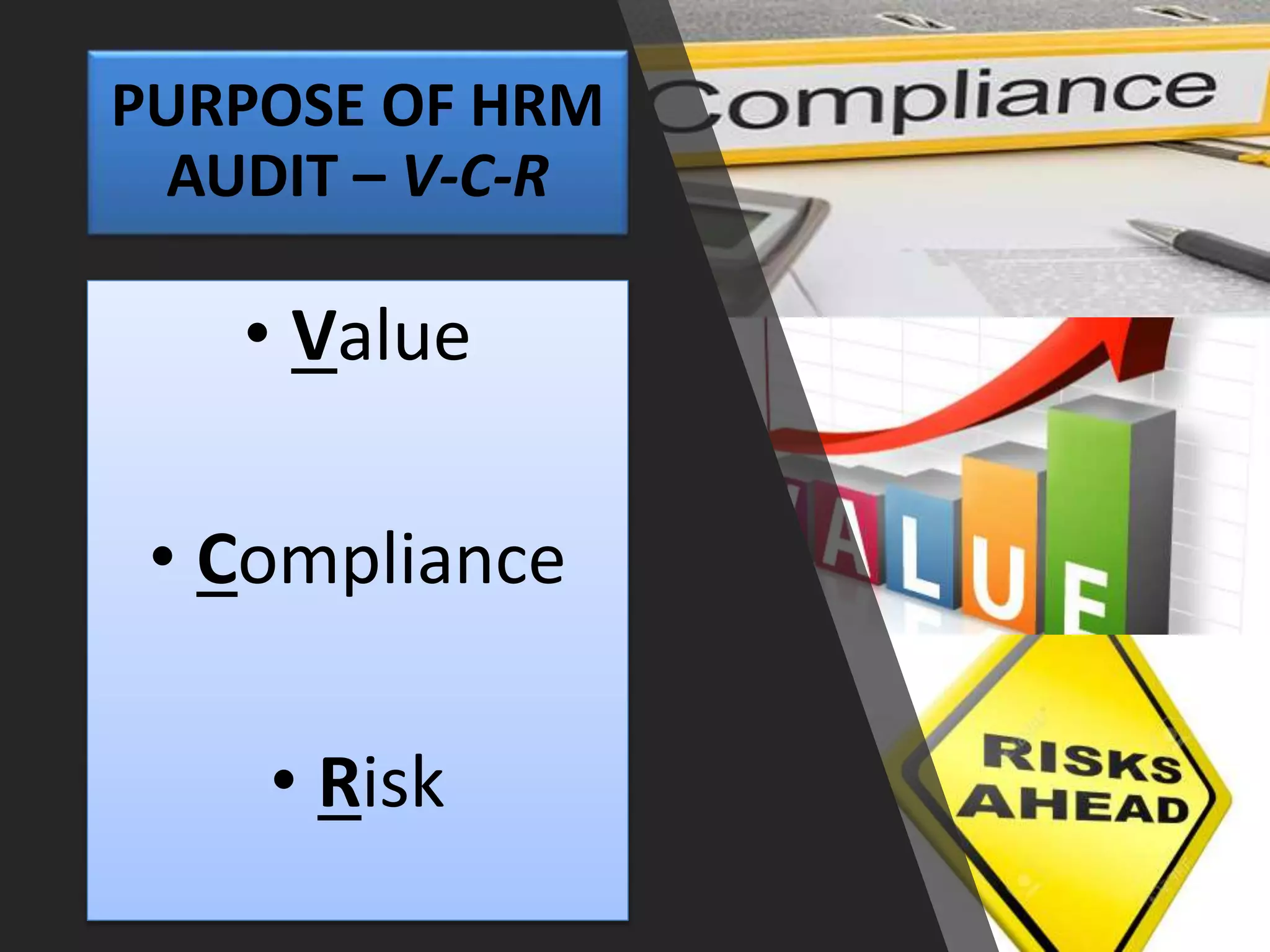
PURPOSE OF HRM
AUDIT – V-C-R
• Value
• Compliance
• Risk
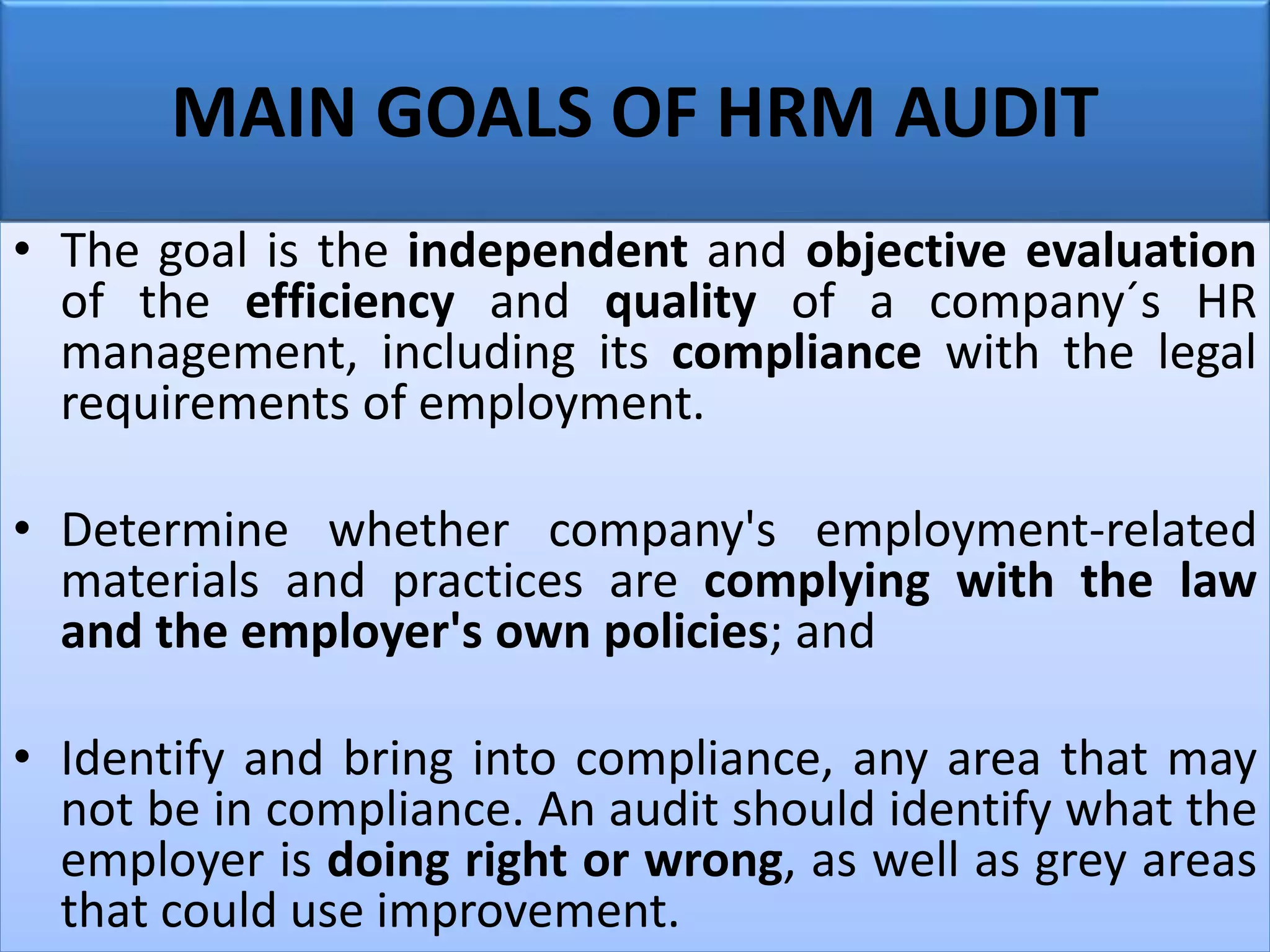
MAIN GOALS OF HRM AUDIT
• The goal is the independent and objective evaluation
of the efficiency and quality of a company´s HR
management, including its compliance with the legal
requirements of employment.
• Determine whether company's employment-related
materials and practices are complying with the law
and the employer's own policies; and
• Identify and bring into compliance, any area that may
not be in compliance. An audit should identify what the
employer is doing right or wrong, as well as grey areas
that could use improvement.
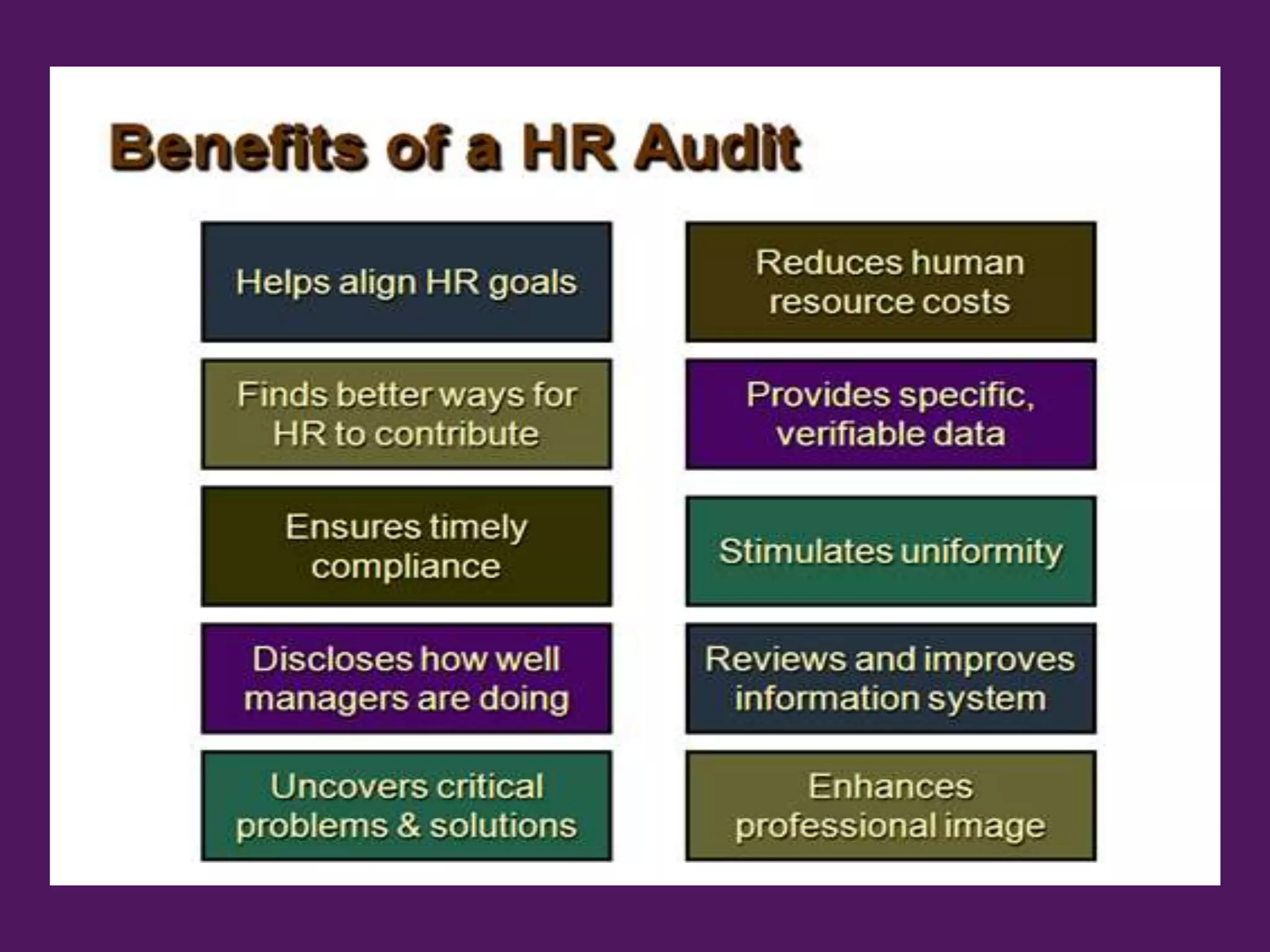
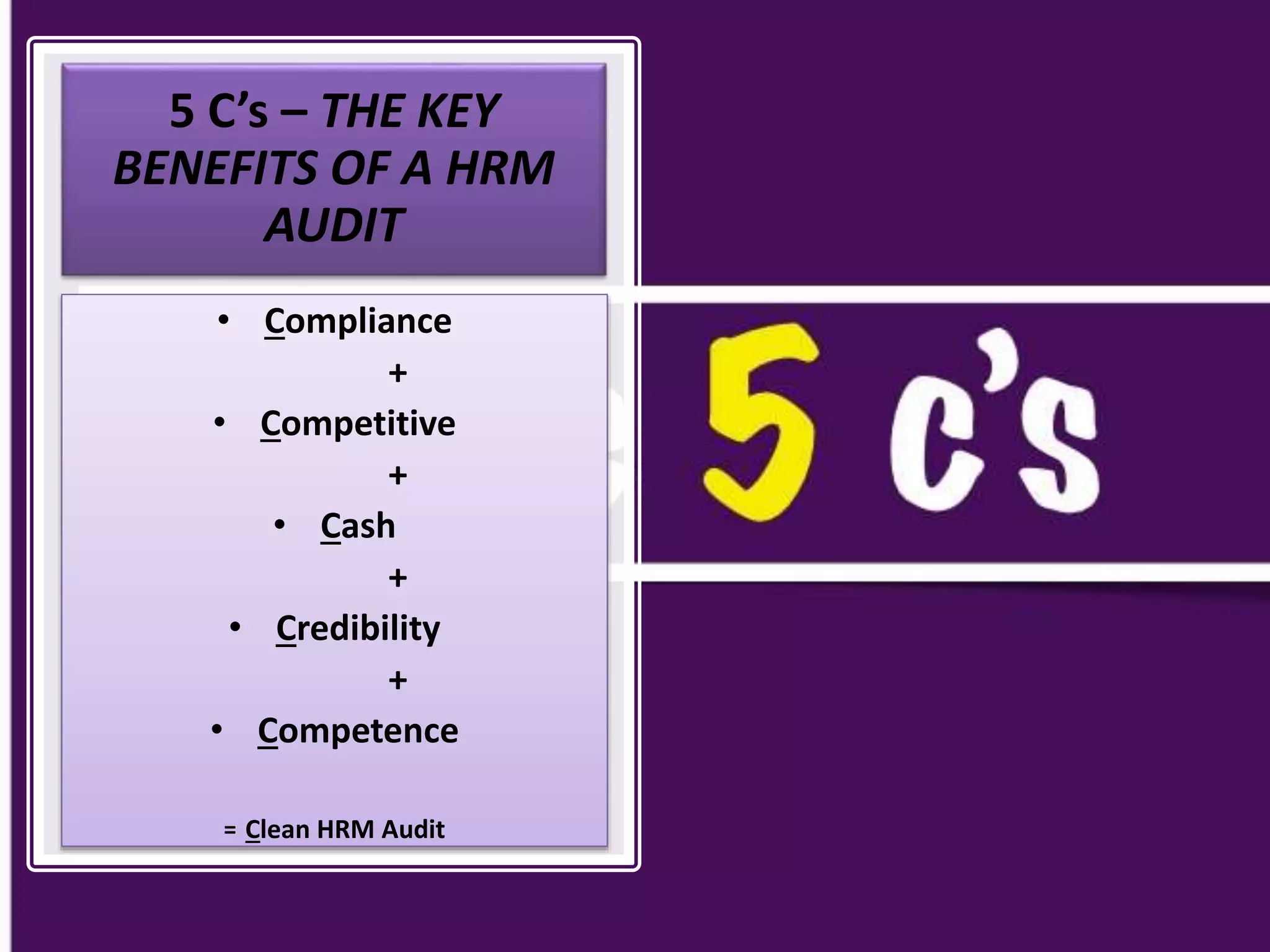
5 C’s – THE KEY
BENEFITS OF A HRM
AUDIT
• Compliance
+
• Competitive
+
• Cash
+
• Credibility
+
• Competence
= Clean HRM Audit
V-I-P HRM AUDITING
• Valid (accurate & correct
Measurement)
• Interrogative (3rd degree)
• Protective (against HR, people &
reputational risks)
8 CRITICAL SUCCESS FACTORS OF HRM
AUDITING
• #1: Organizational readiness for HRM Auditing
• #2: Adequate resources
• #3: The right people
• #4: The audit requires the support of all trade unions and key role players in the SBU
• #5: Guided by a policy
• #6: Under the supervision of a subject matter expert.
• #7: The auditing of HR should be put in the HR calendar and should synchronise properly
with other business processes in the organization
• #8: Senior management commitment and support and the general co-operation of key
stakeholders
10 KEY PRINCIPLES OF HRM AUDITING
• #1: Need for independence;
• #2: Audit activities should be budgeted for properly;
• #3: Acknowledgement that there are many types of
audits;
• #4: Each type of an HR audit has its own purpose and
objectives;
• #5: Establish timeframes for every phase/step of the
audit;
10 KEY PRINCIPLES OF HRM AUDITING
• #6: Training of auditors is a must;
• #7: Set standards for the HR Audits;
• #8: Agreement on reporting template;
• #9: Auditors should sign a confidentiality agreement;
and
• #10: Auditors should agree beforehand on
communication strategy.
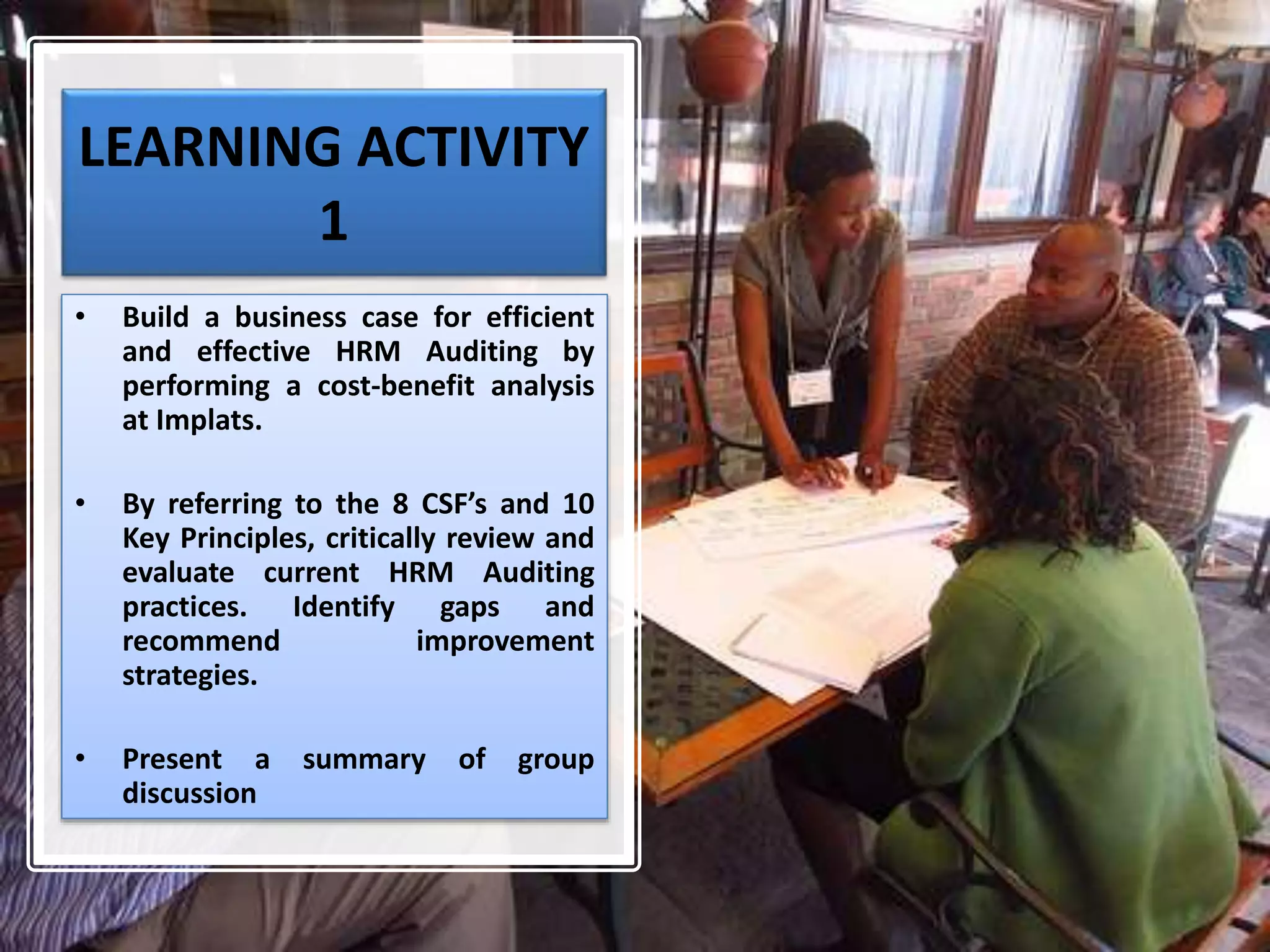
LEARNING ACTIVITY
1
• Build a business case for efficient
and effective HRM Auditing by
performing a cost-benefit analysis
at Implats.
• By referring to the 8 CSF’s and 10
Key Principles, critically review and
evaluate current HRM Auditing
practices. Identify gaps and
recommend improvement
strategies.
• Present a summary of group
discussion
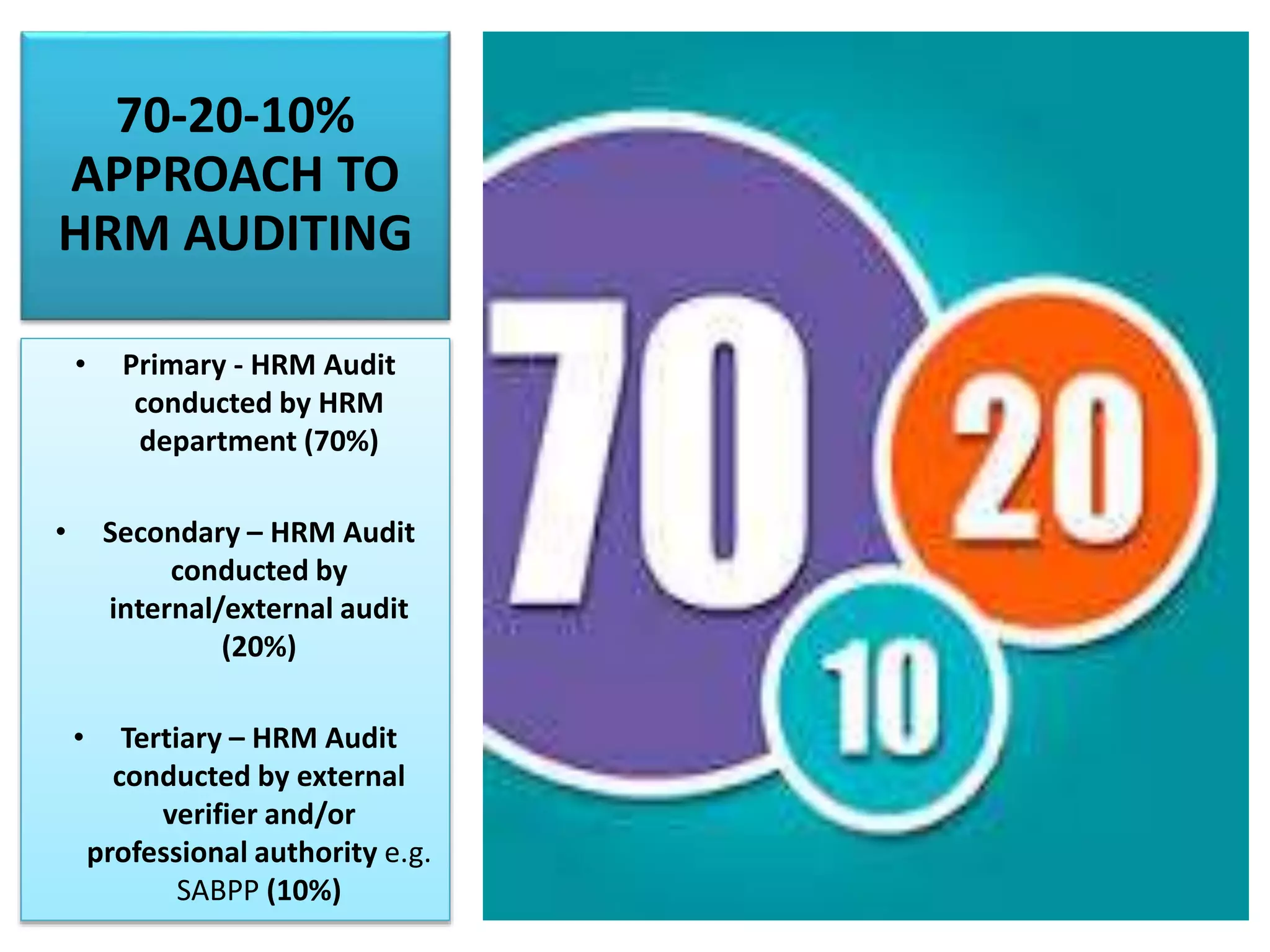
70-20-10%
APPROACH TO
HRM AUDITING
• Primary - HRM Audit
conducted by HRM
department (70%)
• Secondary – HRM Audit
conducted by
internal/external audit
(20%)
• Tertiary – HRM Audit
conducted by external
verifier and/or
professional authority e.g.
SABPP (10%)
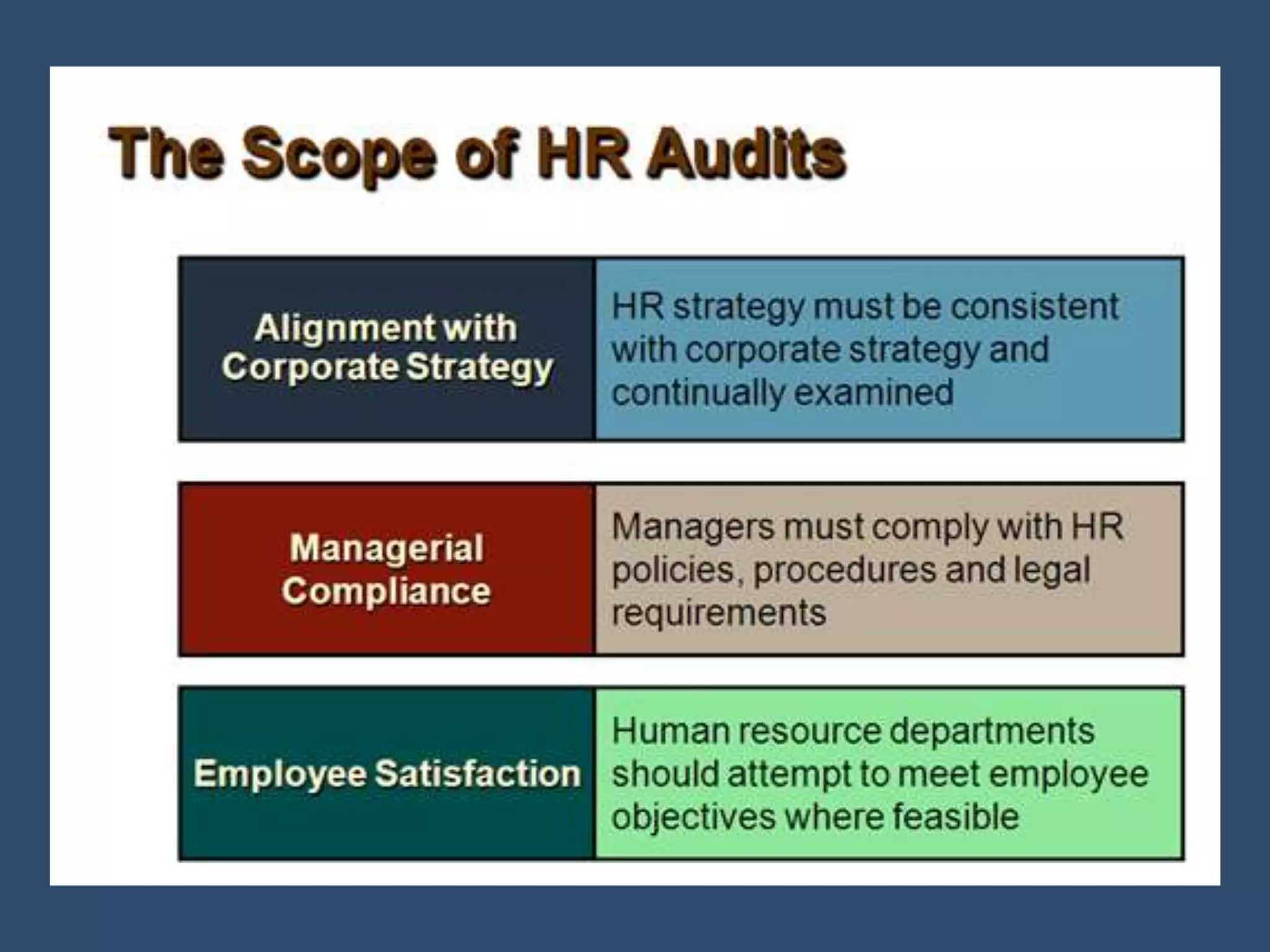
THE SCOPE OF HRM AUDITING
• Evaluation of the organization’s operational HR policies,
practices and processes and their effectiveness in achieving
strategic organizational goals.
• Assessment of current HR metrics for reasonableness and
results.
Efficient
Effective
Ethical
Economic use of talent to achieve organizational goals.
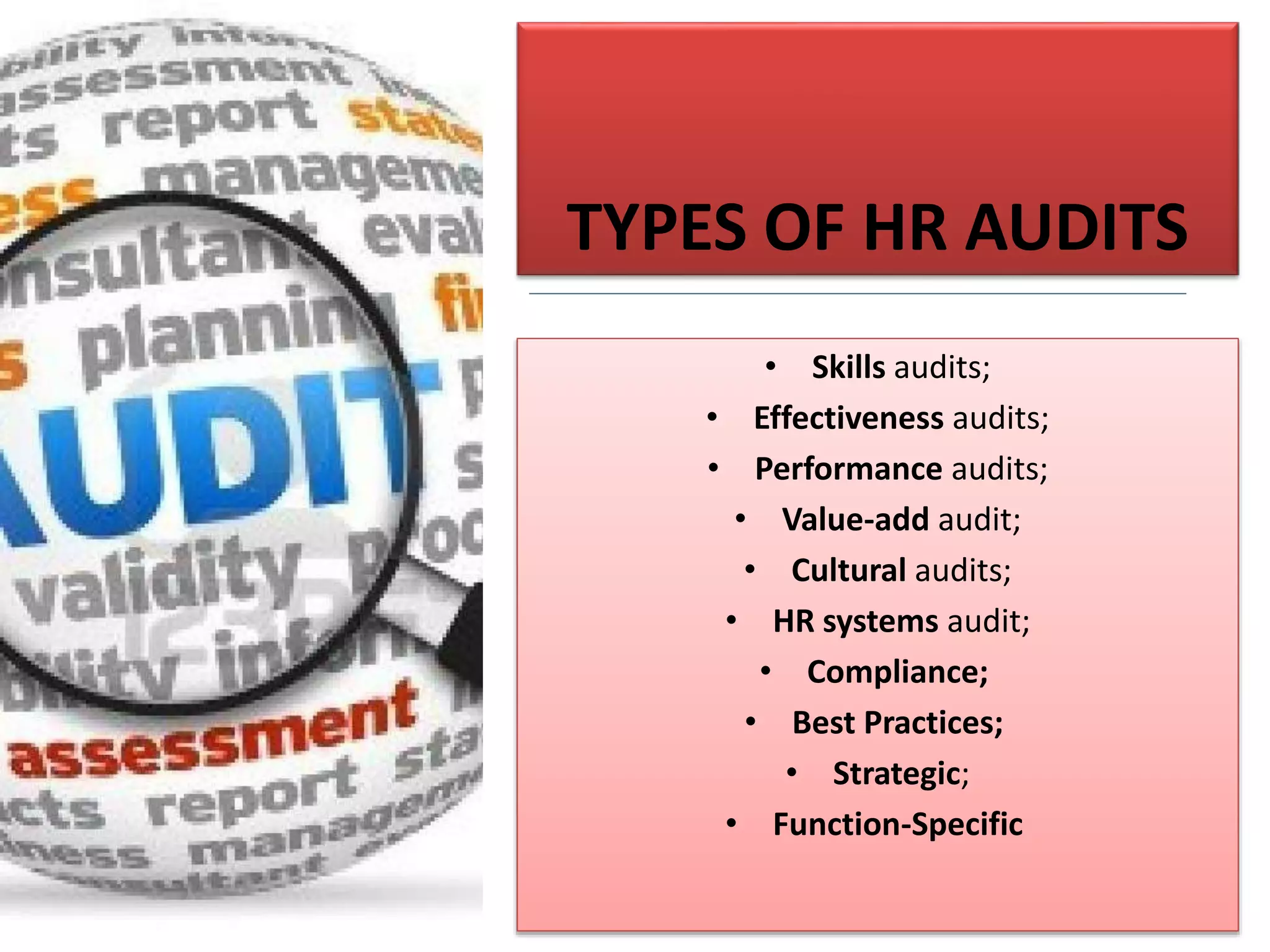
TYPES OF HR AUDITS
• Skills audits;
• Effectiveness audits;
• Performance audits;
• Value-add audit;
• Cultural audits;
• HR systems audit;
• Compliance;
• Best Practices;
• Strategic;
• Function-Specific
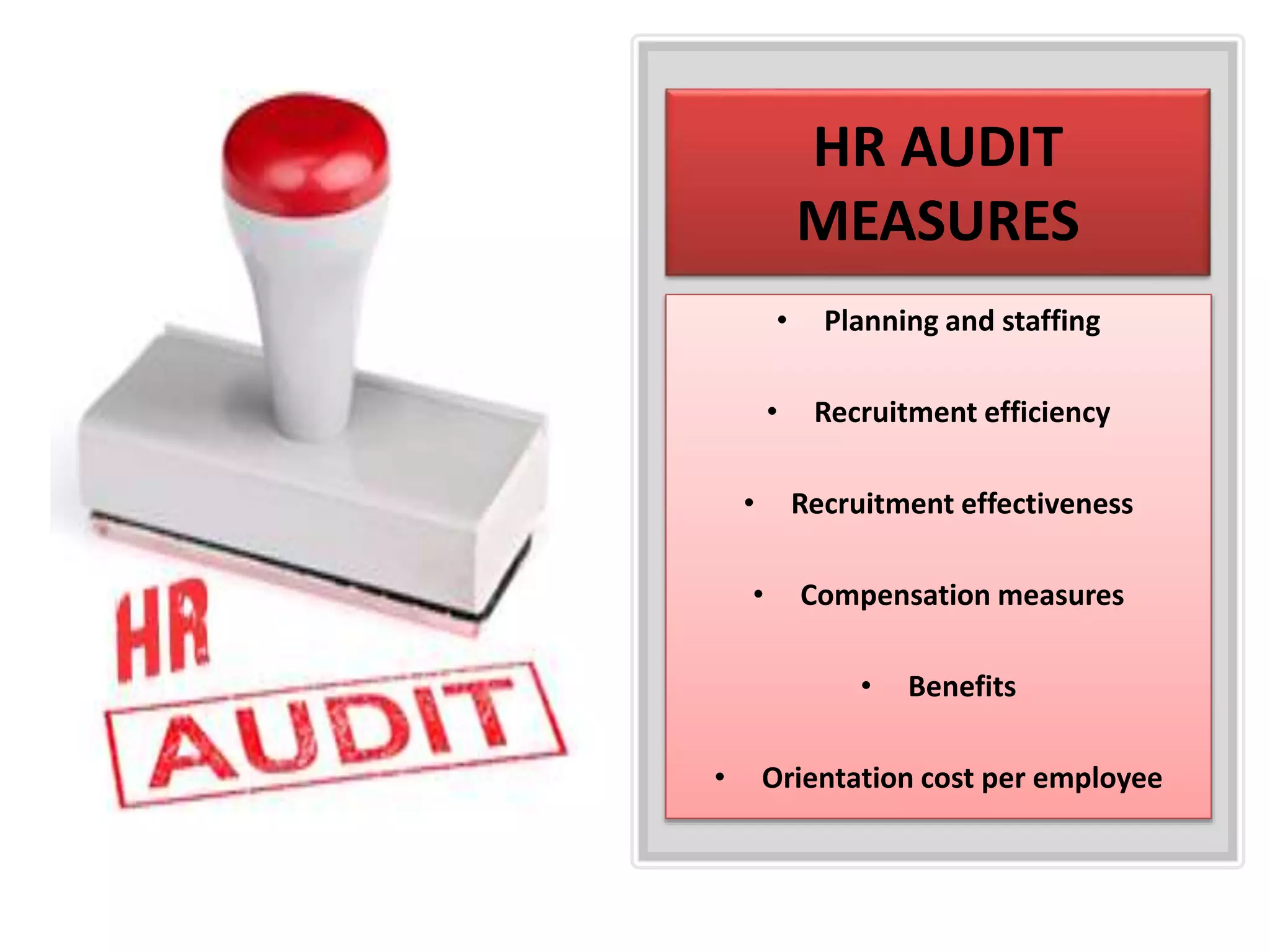
HR AUDIT
MEASURES
• Planning and staffing
• Recruitment efficiency
• Recruitment effectiveness
• Compensation measures
• Benefits
• Orientation cost per employee
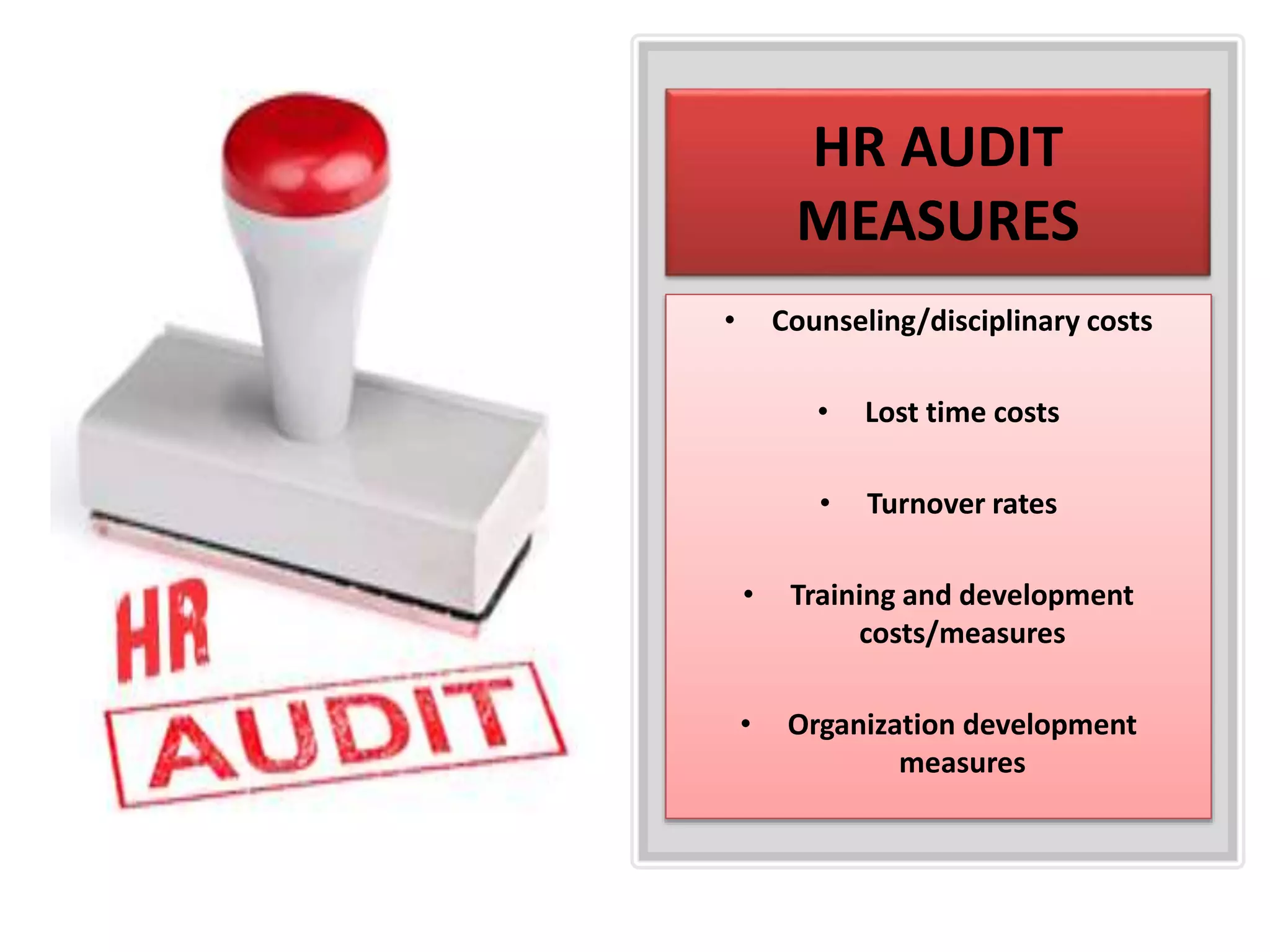
HR AUDIT
MEASURES
• Counseling/disciplinary costs
• Lost time costs
• Turnover rates
• Training and development
costs/measures
• Organization development
measures
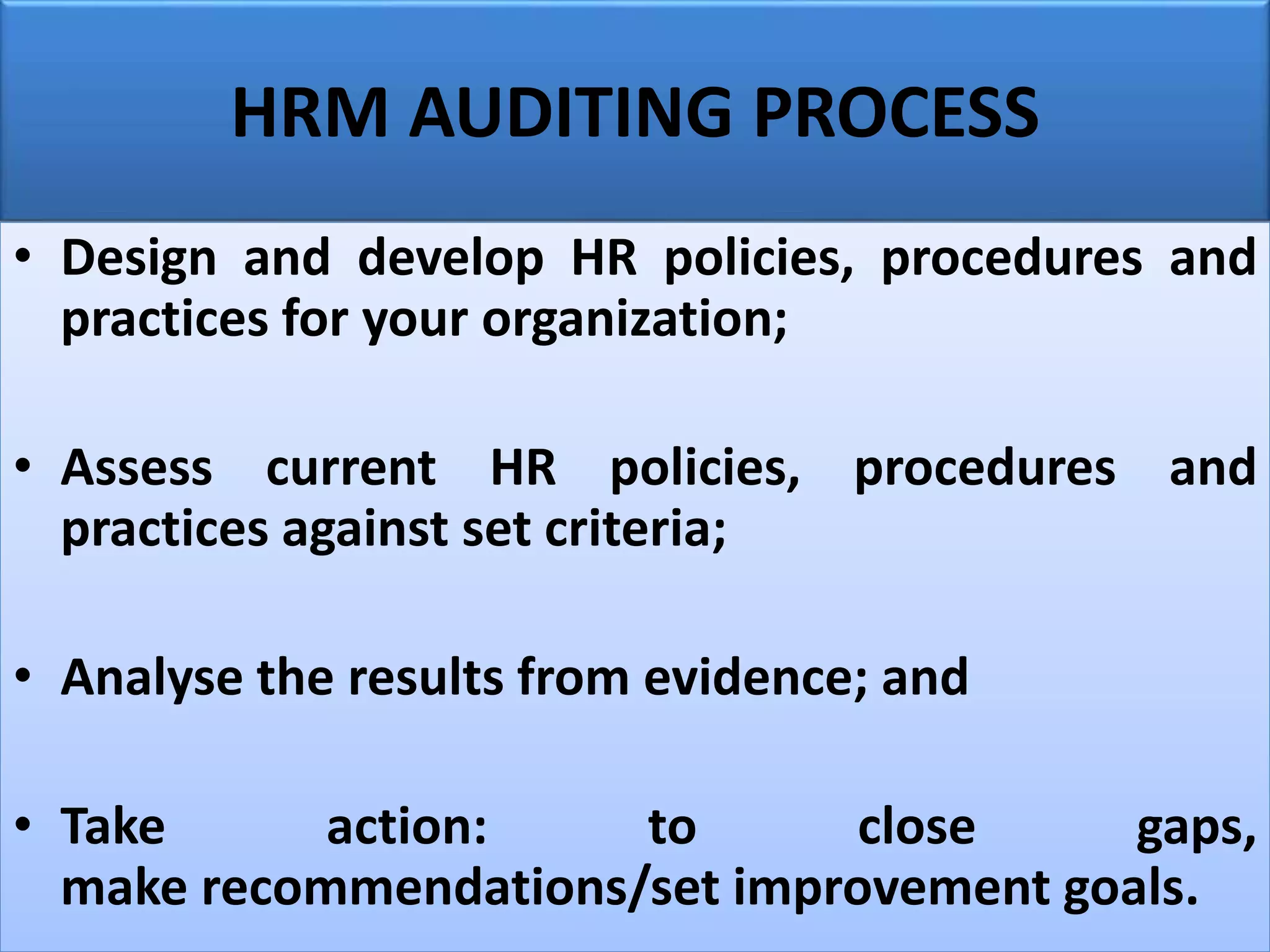
HRM AUDITING PROCESS
• Design and develop HR policies, procedures and
practices for your organization;
• Assess current HR policies, procedures and
practices against set criteria;
• Analyse the results from evidence; and
• Take action: to close gaps,
make recommendations/set improvement goals.
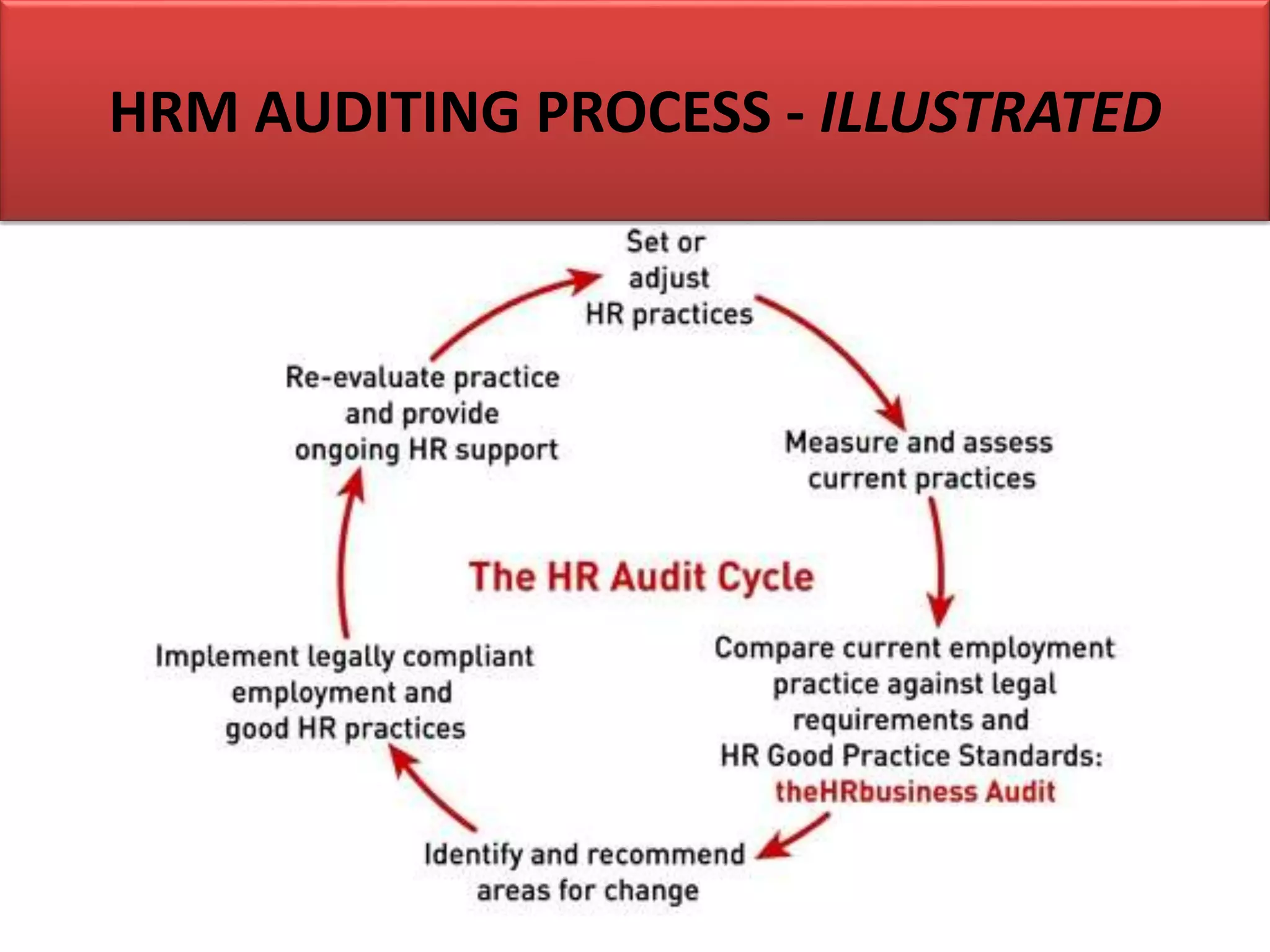
HRM AUDITING PROCESS - ILLUSTRATED
HRM AUDIT ACTION
PLAN
• Phase 1:
Foundational/Initiation
• Phase 2: Assessment
• Phase 3: Concluding and
Reporting
PHASE 1:
FOUNDATIONAL/INITIATION
• Audit set-up actions
• Audit planning actions
 Determine the purpose and objectives of the audit
 Determine the scope of the audit
 Determine the organizational components to be audited
 Determine the auditing tool to be used
 Determine costs and resources needed to perform the
audit
 Determine audit team governance
LEARNING ACTIVITY
2
• Apply phase 1:
Foundational/Initiation
of the HRM Auditing
process at Implats.
Audit set-up actions
Audit Planning actions
• Present a summary of
group discussion
PHASE 2: ASSESSMENT
• General comments
• Identify key organizational metrics - determine
employment issues accountability
• Formulating auditing methodology and tools
• Developing a checklist (Refer to Annexure A)
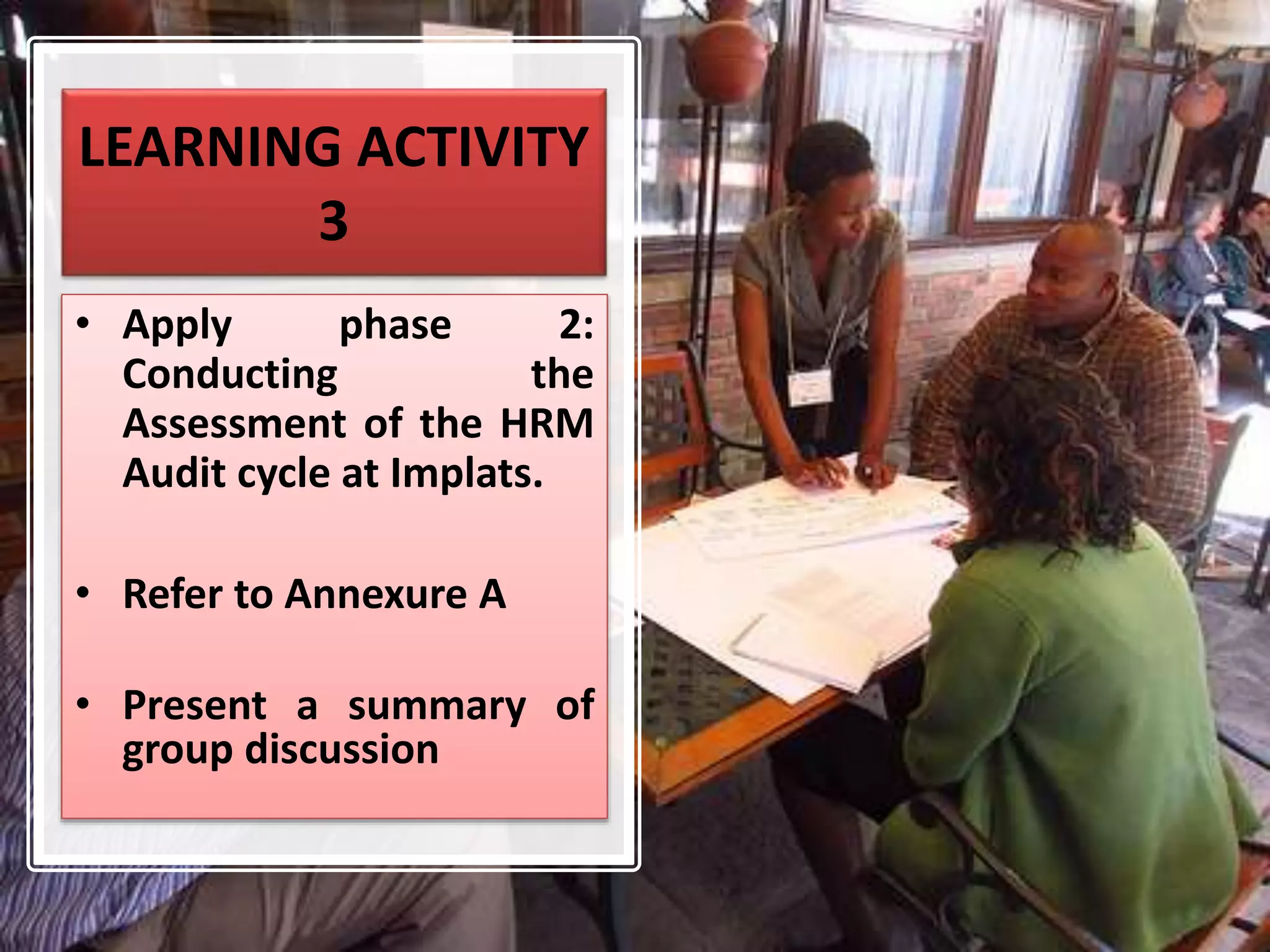
LEARNING ACTIVITY
3
• Apply phase 2:
Conducting the
Assessment of the HRM
Audit cycle at Implats.
• Refer to Annexure A
• Present a summary of
group discussion
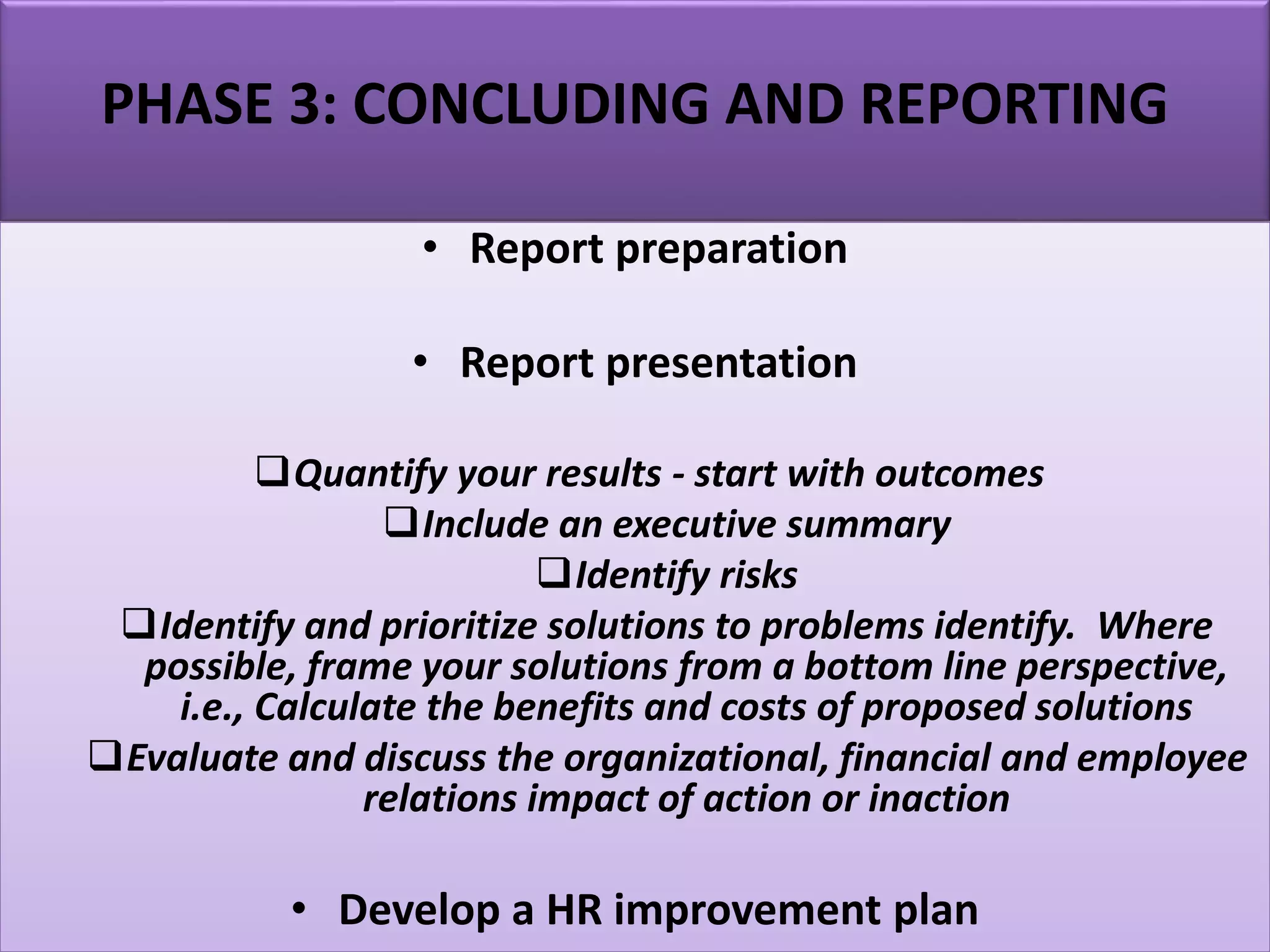
PHASE 3: CONCLUDING AND REPORTING
• Report preparation
• Report presentation
Quantify your results - start with outcomes
Include an executive summary
Identify risks
Identify and prioritize solutions to problems identify. Where
possible, frame your solutions from a bottom line perspective,
i.e., Calculate the benefits and costs of proposed solutions
Evaluate and discuss the organizational, financial and employee
relations impact of action or inaction
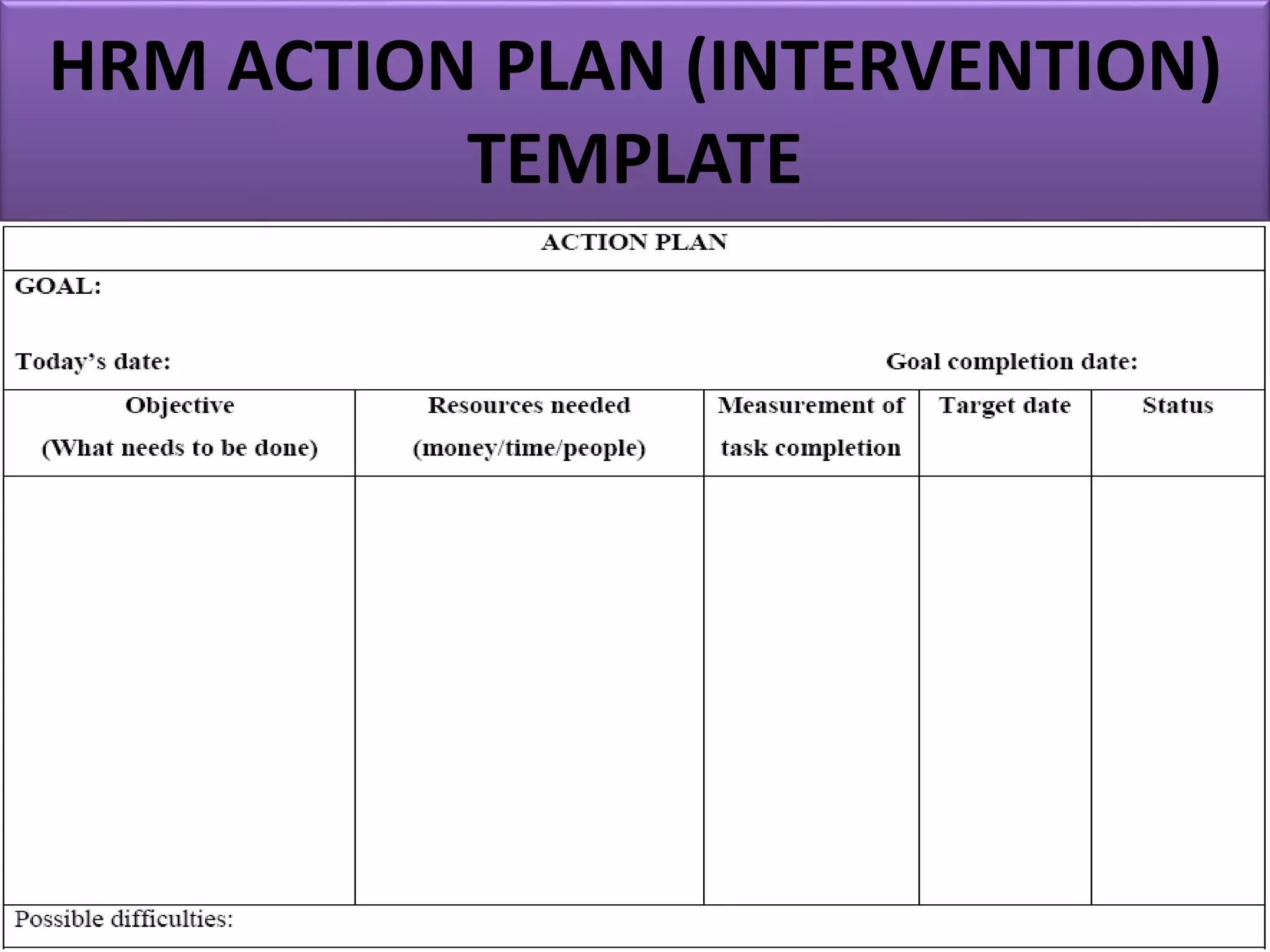
• Develop a HR improvement plan
HRM ACTION PLAN (INTERVENTION)
TEMPLATE
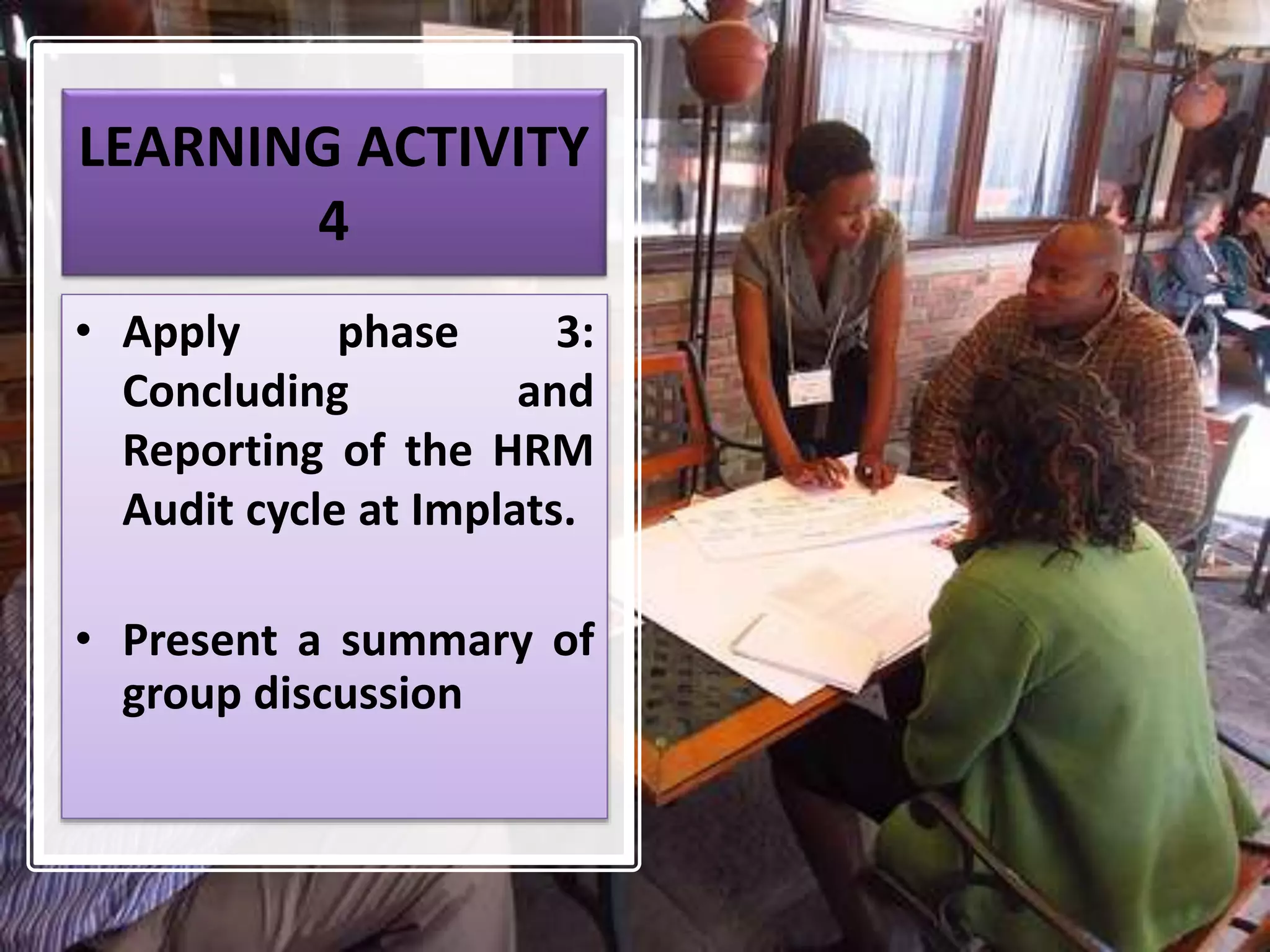
LEARNING ACTIVITY
4
• Apply phase 3:
Concluding and
Reporting of the HRM
Audit cycle at Implats.
• Present a summary of
group discussion
CASE STUDY: STREAMLINING HRM AUDITING
AND RISK MANAGEMENT (24 HOUR FITNESS)
• Refer to and review pages 55-57
Timeliness of the reports
Accuracy of the information
Customer Service
Compliance
• “By working closely with our new partner, we finally
achieved what every HR team longs for: more time to
devote to meaningful strategic human resource
initiatives.”
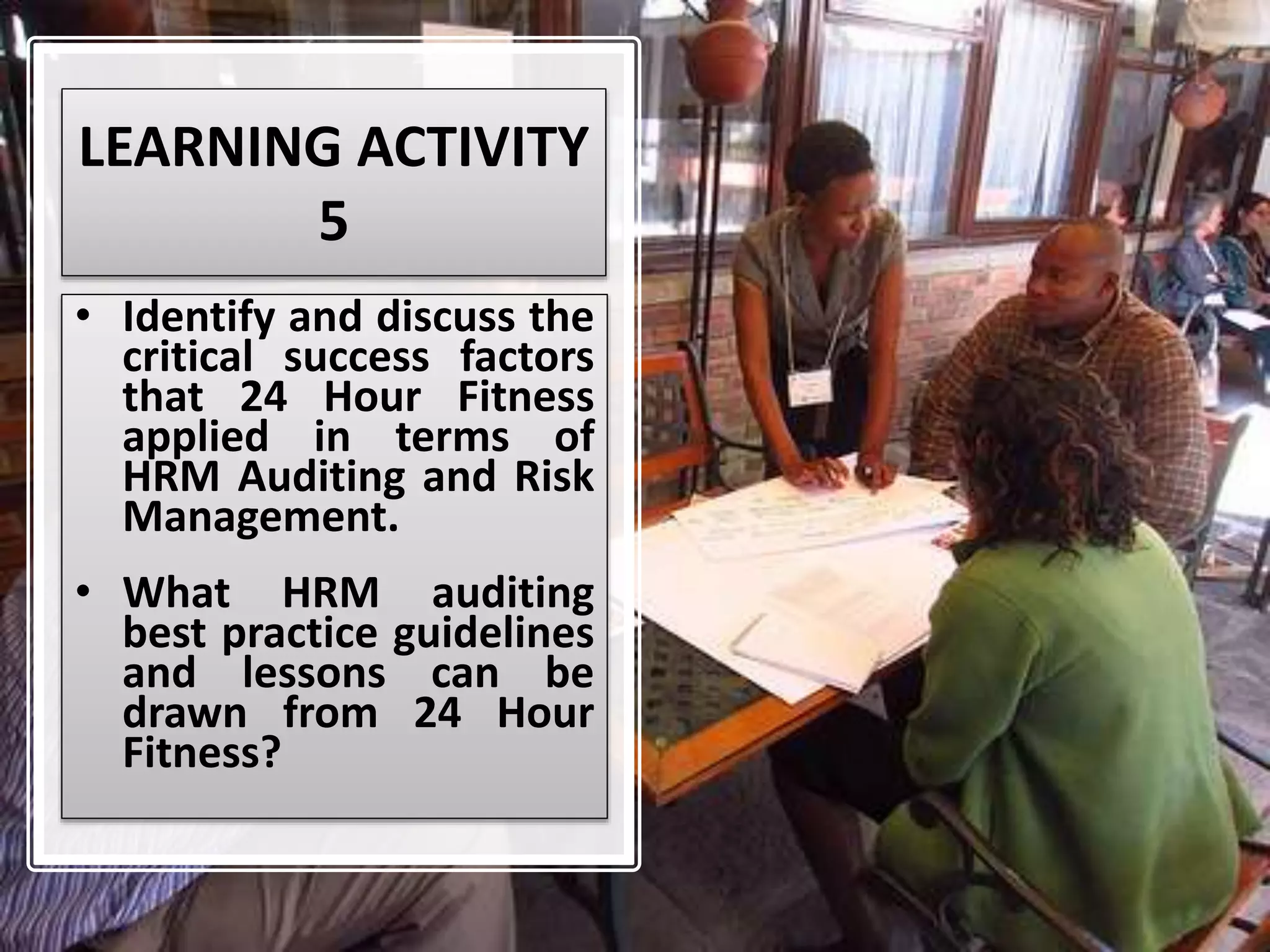
LEARNING ACTIVITY
5
• Identify and discuss the
critical success factors
that 24 Hour Fitness
applied in terms of
HRM Auditing and Risk
Management.
• What HRM auditing
best practice guidelines
and lessons can be
drawn from 24 Hour
Fitness?
CONCLUSION
• Key points
• Summary
• Questions
• Training Administration
• Certification
CONTACT DETAILS
• Charles Cotter
• (+27) 84 562 9446
• charlescot@polka.co.za
• LinkedIn
• Twitter: @Charles_Cotter
• http://www.slideshare.net/CharlesCotter

HRM Auditing – Principles, Practice and Process

  • 1.
    HRM AUDITING –PRINCIPLES, PRACTICE AND PROCESS CHARLES COTTER Ph.D. candidate, MBA, B.A (Hons), B.A www.slideshare.net/CharlesCotter IMPLATS, SPRINGS 21-22 SEPTEMBER 2017
  • 2.
    2-DAY, TRAINING PROGRAMME OVERVIEW •Introduction and Preview • HRM Auditing – Principles and Practices • HRM Auditing Process • Case Study • Conclusion and Review
  • 4.
  • 5.
  • 6.
    INTRODUCTORY LEARNING ACTIVITY •Refer to page 3 of the Learner Manual • Complete the following statement by inserting one (1) word. As a HR Manager, in order to effectively conduct a HRM audit at Implats, I need to/to be………………………………………………………………….. • Jot this word down and find other learners who have written down the same word. • Write this word down on the flip-chart. Each learner will be allowed the opportunity to elaborate on their respective choice of words.
  • 7.
    THE FUNDAMENTALS OFHRM AUDITING • Defining a HRM Audit • The driving forces of HRM Auditing • The purpose, objectives and functions of HRM Auditing • Benefits and costs (drawbacks) of HRM Auditing
  • 8.
    ORIGIN OF THEWORD, “AUDIT” • The word audit originates from the Latin word ‘audire’ which means to “listen”. • An audit is a systematic, objective risk management tool for how well the workplace is complying with regulatory and policy requirements.
  • 9.
    DEFINING HRM AUDIT •An HR Audit as “an intensely objective look at the company’s HR policies, practices, procedures and strategies in order to protect the company, establish best practices and identify opportunities for improvement.” (SHRM) • A Human Resources Audit is a review of current Human Resources practices, policies, procedures, documentation and systems and will assist you to identify strengths and needs for improvement. • It will provide direction and recommend the courses of action to be taken to ensure compliance with ever-changing laws, rules and regulations. • A HR audit is a way to diagnose problems in a company’s HR department. • Auditing is evidence based.
  • 10.
    DRIVING FORCES OFHRM AUDITING • Alignment of HR strategies and practices with strategic objectives of the organization; • Managing employment practice liability risks; • Government compliance (skills audit); • Understanding and determining the impact of HR policies, procedures and practices; • People investments need to be quantified to demonstrate a return on investment; and • Roughly, over two-thirds of an organization’s money is spent on people.
  • 12.
    PURPOSE OF HRM AUDIT– V-C-R • Value • Compliance • Risk
  • 13.
    MAIN GOALS OFHRM AUDIT • The goal is the independent and objective evaluation of the efficiency and quality of a company´s HR management, including its compliance with the legal requirements of employment. • Determine whether company's employment-related materials and practices are complying with the law and the employer's own policies; and • Identify and bring into compliance, any area that may not be in compliance. An audit should identify what the employer is doing right or wrong, as well as grey areas that could use improvement.
  • 15.
    5 C’s –THE KEY BENEFITS OF A HRM AUDIT • Compliance + • Competitive + • Cash + • Credibility + • Competence = Clean HRM Audit
  • 16.
    V-I-P HRM AUDITING •Valid (accurate & correct Measurement) • Interrogative (3rd degree) • Protective (against HR, people & reputational risks)
  • 17.
    8 CRITICAL SUCCESSFACTORS OF HRM AUDITING • #1: Organizational readiness for HRM Auditing • #2: Adequate resources • #3: The right people • #4: The audit requires the support of all trade unions and key role players in the SBU • #5: Guided by a policy • #6: Under the supervision of a subject matter expert. • #7: The auditing of HR should be put in the HR calendar and should synchronise properly with other business processes in the organization • #8: Senior management commitment and support and the general co-operation of key stakeholders
  • 18.
    10 KEY PRINCIPLESOF HRM AUDITING • #1: Need for independence; • #2: Audit activities should be budgeted for properly; • #3: Acknowledgement that there are many types of audits; • #4: Each type of an HR audit has its own purpose and objectives; • #5: Establish timeframes for every phase/step of the audit;
  • 19.
    10 KEY PRINCIPLESOF HRM AUDITING • #6: Training of auditors is a must; • #7: Set standards for the HR Audits; • #8: Agreement on reporting template; • #9: Auditors should sign a confidentiality agreement; and • #10: Auditors should agree beforehand on communication strategy.
  • 20.
    LEARNING ACTIVITY 1 • Builda business case for efficient and effective HRM Auditing by performing a cost-benefit analysis at Implats. • By referring to the 8 CSF’s and 10 Key Principles, critically review and evaluate current HRM Auditing practices. Identify gaps and recommend improvement strategies. • Present a summary of group discussion
  • 21.
    70-20-10% APPROACH TO HRM AUDITING •Primary - HRM Audit conducted by HRM department (70%) • Secondary – HRM Audit conducted by internal/external audit (20%) • Tertiary – HRM Audit conducted by external verifier and/or professional authority e.g. SABPP (10%)
  • 22.
    THE SCOPE OFHRM AUDITING
  • 23.
    THE SCOPE OFHRM AUDITING • Evaluation of the organization’s operational HR policies, practices and processes and their effectiveness in achieving strategic organizational goals. • Assessment of current HR metrics for reasonableness and results. Efficient Effective Ethical Economic use of talent to achieve organizational goals.
  • 26.
    TYPES OF HRAUDITS • Skills audits; • Effectiveness audits; • Performance audits; • Value-add audit; • Cultural audits; • HR systems audit; • Compliance; • Best Practices; • Strategic; • Function-Specific
  • 27.
    HR AUDIT MEASURES • Planningand staffing • Recruitment efficiency • Recruitment effectiveness • Compensation measures • Benefits • Orientation cost per employee
  • 28.
    HR AUDIT MEASURES • Counseling/disciplinarycosts • Lost time costs • Turnover rates • Training and development costs/measures • Organization development measures
  • 29.
  • 30.
    HRM AUDITING PROCESS •Design and develop HR policies, procedures and practices for your organization; • Assess current HR policies, procedures and practices against set criteria; • Analyse the results from evidence; and • Take action: to close gaps, make recommendations/set improvement goals.
  • 32.
    HRM AUDITING PROCESS- ILLUSTRATED
  • 33.
    HRM AUDIT ACTION PLAN •Phase 1: Foundational/Initiation • Phase 2: Assessment • Phase 3: Concluding and Reporting
  • 34.
    PHASE 1: FOUNDATIONAL/INITIATION • Auditset-up actions • Audit planning actions  Determine the purpose and objectives of the audit  Determine the scope of the audit  Determine the organizational components to be audited  Determine the auditing tool to be used  Determine costs and resources needed to perform the audit  Determine audit team governance
  • 35.
    LEARNING ACTIVITY 2 • Applyphase 1: Foundational/Initiation of the HRM Auditing process at Implats. Audit set-up actions Audit Planning actions • Present a summary of group discussion
  • 36.
    PHASE 2: ASSESSMENT •General comments • Identify key organizational metrics - determine employment issues accountability • Formulating auditing methodology and tools • Developing a checklist (Refer to Annexure A)
  • 38.
    LEARNING ACTIVITY 3 • Applyphase 2: Conducting the Assessment of the HRM Audit cycle at Implats. • Refer to Annexure A • Present a summary of group discussion
  • 39.
    PHASE 3: CONCLUDINGAND REPORTING • Report preparation • Report presentation Quantify your results - start with outcomes Include an executive summary Identify risks Identify and prioritize solutions to problems identify. Where possible, frame your solutions from a bottom line perspective, i.e., Calculate the benefits and costs of proposed solutions Evaluate and discuss the organizational, financial and employee relations impact of action or inaction • Develop a HR improvement plan
  • 42.
    HRM ACTION PLAN(INTERVENTION) TEMPLATE
  • 43.
    LEARNING ACTIVITY 4 • Applyphase 3: Concluding and Reporting of the HRM Audit cycle at Implats. • Present a summary of group discussion
  • 45.
    CASE STUDY: STREAMLININGHRM AUDITING AND RISK MANAGEMENT (24 HOUR FITNESS) • Refer to and review pages 55-57 Timeliness of the reports Accuracy of the information Customer Service Compliance • “By working closely with our new partner, we finally achieved what every HR team longs for: more time to devote to meaningful strategic human resource initiatives.”
  • 46.
    LEARNING ACTIVITY 5 • Identifyand discuss the critical success factors that 24 Hour Fitness applied in terms of HRM Auditing and Risk Management. • What HRM auditing best practice guidelines and lessons can be drawn from 24 Hour Fitness?
  • 47.
    CONCLUSION • Key points •Summary • Questions • Training Administration • Certification
  • 48.
    CONTACT DETAILS • CharlesCotter • (+27) 84 562 9446 • charlescot@polka.co.za • LinkedIn • Twitter: @Charles_Cotter • http://www.slideshare.net/CharlesCotter