

MEANING
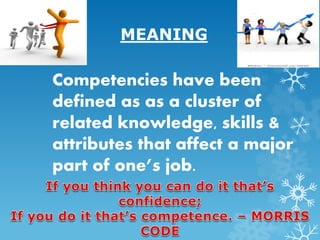
Competencies have been
defined as as a cluster of
related knowledge, skills &
attributes that affect a major
part of one’s job.
MEANING
 It is a process through which one assess & determines one’s
strength’s as an individual worker, & in some cases, as a part of
an organisation.
 Competency mapping looks at areas like emotional intelligence,
team structure, decision making.
 Other examples of competency include initiave , influence , result
orientation , service orientation, and concern for quality.
 Several organisations try to understand how they could
effectively utilise competencies of their employees to help
employees reach their optimum growth level & also benefit the
organisation in the form of increased productivity.
DEFINITION
Competency mapping refers to the
process of identifying key competencies
for a particular position in an
organisation, and then using it for job
evaluation, recruitment, training and
development.
Core competencies are the few
competencies that are essential for the
successful performance of a given job.
RANKIN (2002)
“Competencies are definition of skills and
behaviors that organizations expect their staff
to practice in work.”
United Nations Industrial Development
Organisation (2002)
“A competency is a set of skills, related
knowledge and attributes that allow an
individual to successfully perform a task or an
activity within a specific function or job.”
DEFINITION

 Competency Map: A competency map is a list of an
individual’s competencies that represent the factors most
critical to success in given jobs, departments, organizations, or
industries that are part of the individual’s current career plan.
 Competency Mapping: Competency mapping is a process an
individual uses to identify and describe competencies that are
the most critical to success in a work situation or work role.
 Competency profiling :It is the process of identifying the
knowledge, skills, abilities, attitudes, and judgment required
for effective performance in a particular occupation or
profession. Competency profiling is business/company
specific.
Different Concepts Of
Competency Mapping
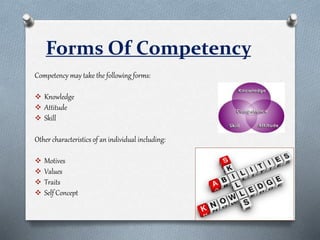
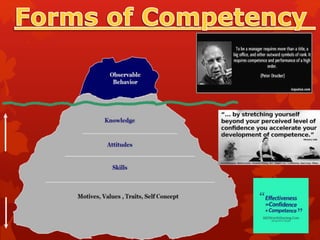
Forms Of Competency
Competency may take the following forms:
 Knowledge
 Attitude
 Skill
Other characteristics of an individual including:
 Motives
 Values
 Traits
 Self Concept
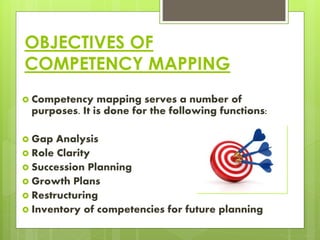
OBJECTIVES OF
COMPETENCY MAPPING
 Competency mapping serves a number of
purposes. It is done for the following functions:
 Gap Analysis
 Role Clarity
 Succession Planning
 Growth Plans
 Restructuring
 Inventory of competencies for future planning
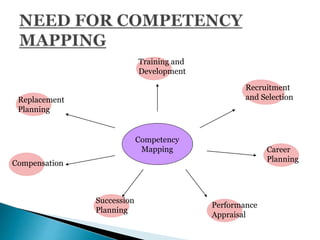
Training and
Development
Recruitment
and Selection
Career
Planning
Performance
Appraisal
Succession
Planning
Compensation
Replacement
Planning
Competency
Mapping
 Experts
 HR Specialists
 Job Analysts
 Psychologists
Who can identify the
competencies?
BROAD CATEGORIES IN COMPETENCY
1.Generic
 Competencies which are considered essential for
all employees regardless of their function or
level. For example - Communication, initiative,
listening skills etc.
2.Managerial Competencies
 Competencies which are considered essential for
managerial or supervisory responsibility
Broad categories in
competency
3.Technical / Functional
 Specific competencies which are
considered essential to perform a specific
role in the organisation within a defined
technical or functional area of work.
TOOLS FOR DEVELOPING
COMPETENCIES
O Literature Review: A preliminary approach
for defining job content and identifying required
competencies is to conduct a review of the
literature to learn about previous studies of the
job or similar jobs.
O Focus Groups: In focus groups, a facilitator
works with a small group of job incumbents, their
managers, supervisees, clients, or others to
define the job content or to identify the
competencies they believe are essential for
performance.
TOOLS FOR DEVELOPING
COMPETENCIES
Structured Interviews:
In structured interviews, carefully
planned questions are asked individually
of job incumbents, their managers, or
others familiar with the job.
Benchmarking interviews with other
organizations are especially useful in
achieving a broader view of the job or
determining which competencies are more
universally deemed necessary for a
particular job.
TOOLS FOR DEVELOPING
COMPETENCIES
Behavioral Event Interviews: In
behavioral event interviews (BEI),
top performers are interviewed
individually about what they did,
thought, said, and felt in challenging
or difficult situations. The
competencies that were instrumental
in their success are extrapolated
from their stories. Often, average
and low performers are also
interviewed to provide a comparison.
 Surveys:
In surveys, job incumbents, their supervisors, and
perhaps senior managers complete a questionnaire
administered either in print or electronically. The
survey content is based on previous data collection
 Observations:
In this data collection method, the research team
visits high-performing incumbents and observes
them at work. The more complex the job and the
greater the variety in job tasks, the more time is
required for an observation.
Uses of
Competency
Mapping
Requirement for specific
jobs
Recruitment & selection of
employees
Exploiting HR
Team Building
Promotions & Growth
Opportunities
Self knowledge
Advantages of
competency mapping
Gives accurate results.
Plays a major role in
recruitment, placement &
training of employees.
Makes an organisation different
from the other organisation due
to its stratergies.
PROBLEMS WITH COMPETENCY
MAPPING
 Under utilisation of one’s competencies.
 It is time consuming & expensive.
LAST BUT NOT THE LEAST ! A SHORT VIDEO
ON OUR TOPIC !
Competency Mapping

Competency Mapping

  • 5.
    MEANING Competencies have been definedas as a cluster of related knowledge, skills & attributes that affect a major part of one’s job.
  • 6.
    MEANING  It isa process through which one assess & determines one’s strength’s as an individual worker, & in some cases, as a part of an organisation.  Competency mapping looks at areas like emotional intelligence, team structure, decision making.  Other examples of competency include initiave , influence , result orientation , service orientation, and concern for quality.  Several organisations try to understand how they could effectively utilise competencies of their employees to help employees reach their optimum growth level & also benefit the organisation in the form of increased productivity.
  • 7.
    DEFINITION Competency mapping refersto the process of identifying key competencies for a particular position in an organisation, and then using it for job evaluation, recruitment, training and development. Core competencies are the few competencies that are essential for the successful performance of a given job.
  • 8.
    RANKIN (2002) “Competencies aredefinition of skills and behaviors that organizations expect their staff to practice in work.” United Nations Industrial Development Organisation (2002) “A competency is a set of skills, related knowledge and attributes that allow an individual to successfully perform a task or an activity within a specific function or job.” DEFINITION
  • 9.
      Competency Map:A competency map is a list of an individual’s competencies that represent the factors most critical to success in given jobs, departments, organizations, or industries that are part of the individual’s current career plan.  Competency Mapping: Competency mapping is a process an individual uses to identify and describe competencies that are the most critical to success in a work situation or work role.  Competency profiling :It is the process of identifying the knowledge, skills, abilities, attitudes, and judgment required for effective performance in a particular occupation or profession. Competency profiling is business/company specific. Different Concepts Of Competency Mapping
  • 10.
    Forms Of Competency Competencymay take the following forms:  Knowledge  Attitude  Skill Other characteristics of an individual including:  Motives  Values  Traits  Self Concept
  • 12.
    OBJECTIVES OF COMPETENCY MAPPING Competency mapping serves a number of purposes. It is done for the following functions:  Gap Analysis  Role Clarity  Succession Planning  Growth Plans  Restructuring  Inventory of competencies for future planning
  • 13.
  • 14.
     Experts  HRSpecialists  Job Analysts  Psychologists Who can identify the competencies?
  • 15.
    BROAD CATEGORIES INCOMPETENCY 1.Generic  Competencies which are considered essential for all employees regardless of their function or level. For example - Communication, initiative, listening skills etc. 2.Managerial Competencies  Competencies which are considered essential for managerial or supervisory responsibility
  • 16.
    Broad categories in competency 3.Technical/ Functional  Specific competencies which are considered essential to perform a specific role in the organisation within a defined technical or functional area of work.
  • 17.
    TOOLS FOR DEVELOPING COMPETENCIES OLiterature Review: A preliminary approach for defining job content and identifying required competencies is to conduct a review of the literature to learn about previous studies of the job or similar jobs. O Focus Groups: In focus groups, a facilitator works with a small group of job incumbents, their managers, supervisees, clients, or others to define the job content or to identify the competencies they believe are essential for performance.
  • 18.
    TOOLS FOR DEVELOPING COMPETENCIES StructuredInterviews: In structured interviews, carefully planned questions are asked individually of job incumbents, their managers, or others familiar with the job. Benchmarking interviews with other organizations are especially useful in achieving a broader view of the job or determining which competencies are more universally deemed necessary for a particular job.
  • 19.
    TOOLS FOR DEVELOPING COMPETENCIES BehavioralEvent Interviews: In behavioral event interviews (BEI), top performers are interviewed individually about what they did, thought, said, and felt in challenging or difficult situations. The competencies that were instrumental in their success are extrapolated from their stories. Often, average and low performers are also interviewed to provide a comparison.
  • 20.
     Surveys: In surveys,job incumbents, their supervisors, and perhaps senior managers complete a questionnaire administered either in print or electronically. The survey content is based on previous data collection  Observations: In this data collection method, the research team visits high-performing incumbents and observes them at work. The more complex the job and the greater the variety in job tasks, the more time is required for an observation.
  • 21.
    Uses of Competency Mapping Requirement forspecific jobs Recruitment & selection of employees Exploiting HR Team Building Promotions & Growth Opportunities Self knowledge
  • 22.
    Advantages of competency mapping Givesaccurate results. Plays a major role in recruitment, placement & training of employees. Makes an organisation different from the other organisation due to its stratergies.
  • 23.
    PROBLEMS WITH COMPETENCY MAPPING Under utilisation of one’s competencies.  It is time consuming & expensive.
  • 24.
    LAST BUT NOTTHE LEAST ! A SHORT VIDEO ON OUR TOPIC !