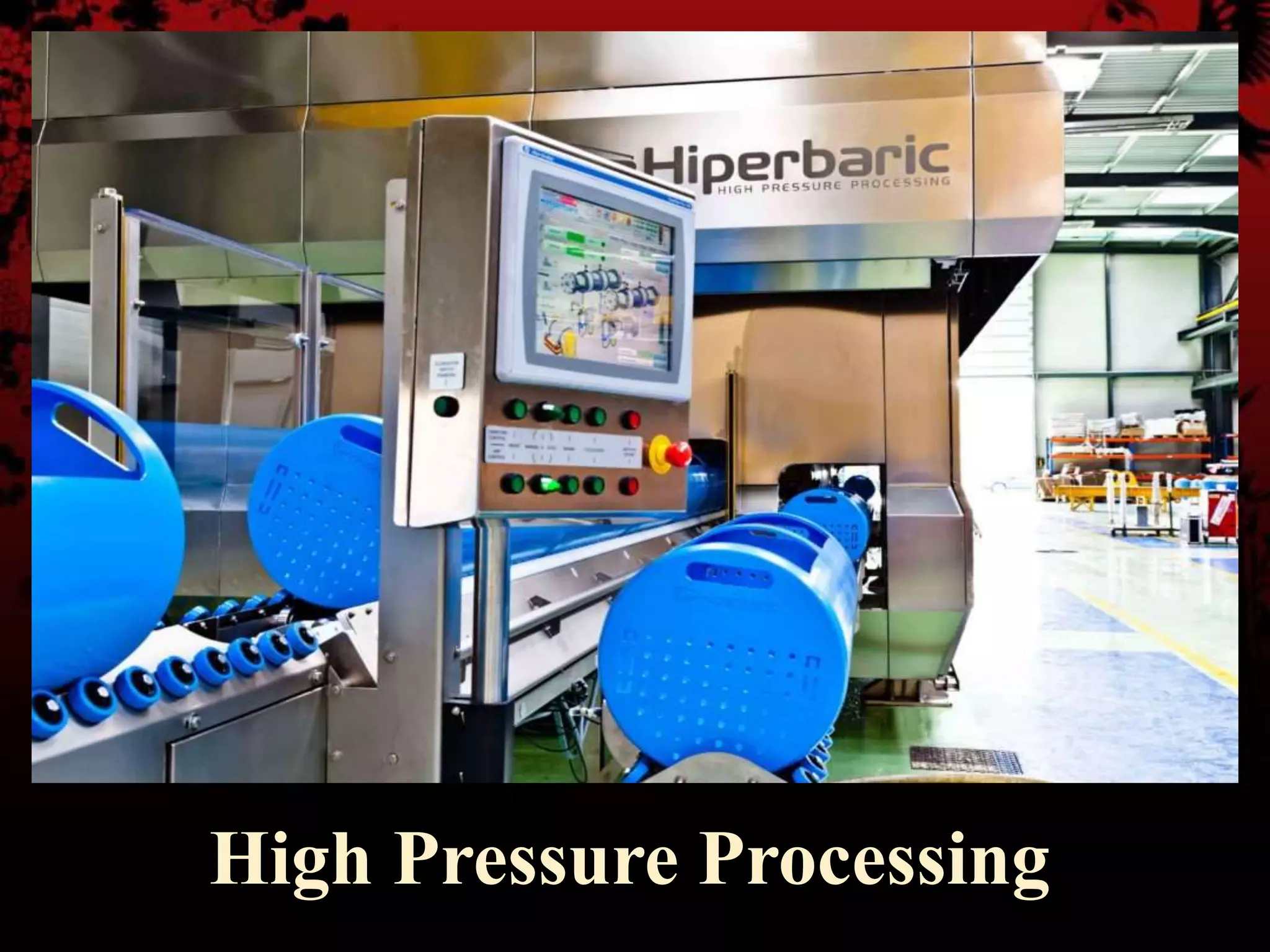

High Pressure Processing
IMPORTANCE
High pressure processing (HPP) is a promising
“non-thermal” technology that has been
developed with the aim of obtaining
microbiologically safe food products while
avoiding undesirable changes in the sensory,
physicochemical, and nutritional properties of
foods. Thus HPP has become one of the
innovative food processing technologies most
accepted by consumers.
HISTORY
First research in 1890s – high pressure destruction
kinetics of Listeria monocytogenes Scott A in raw
milk.
Non-thermal processing technology (combination
with heat possible).
First commercialized in Japan in the early 1990s
for pasteurization of acid foods for chilled storage.
High pressure treated foodstuffs have been
marketed in Japan since 1990, in Europe and the
United States since 1996 & Australia since 2001.
Rapid commercialization since 2000.
High pressure processing (HPP), is a
method of preserving and sterilizing
food, in which a product is processed
under very high pressure, leading to
the inactivation of certain
microorganisms and enzymes in the
food.
Also known as Pascalization.
High Pressures applied at short periods
of time (20minutes).
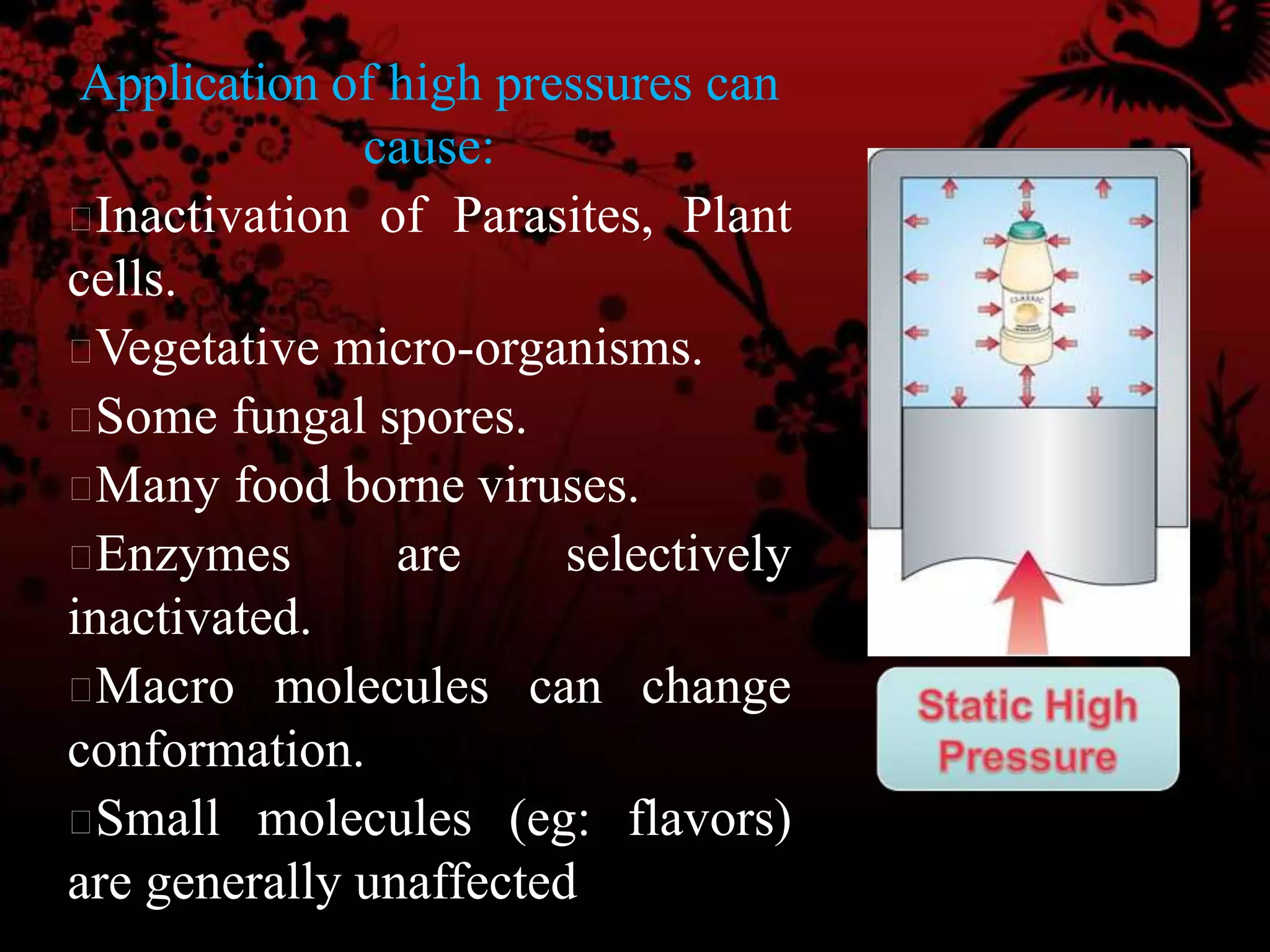
Application of high pressures can
cause:
Inactivation of Parasites, Plant
cells.
Vegetative micro-organisms.
Some fungal spores.
Many food borne viruses.
Enzymes are selectively
inactivated.
Macro molecules can change
conformation.
Small molecules (eg: flavors)
are generally unaffected
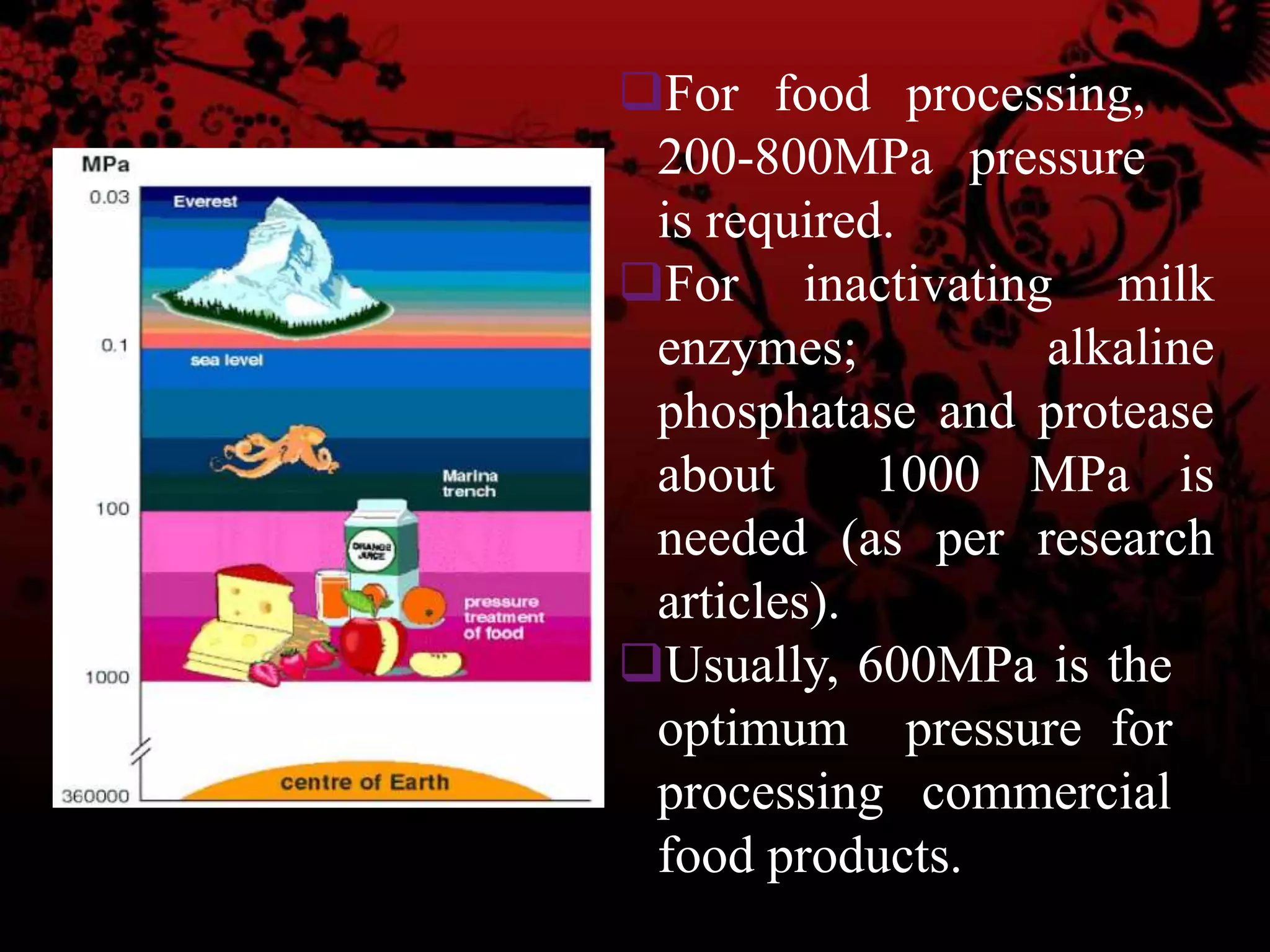
For food processing,
200-800MPa pressure
is required.
For inactivating milk
enzymes; alkaline
phosphatase and protease
about 1000 MPa is
needed (as per research
articles).
Usually, 600MPa is the
optimum pressure for
processing commercial
food products.
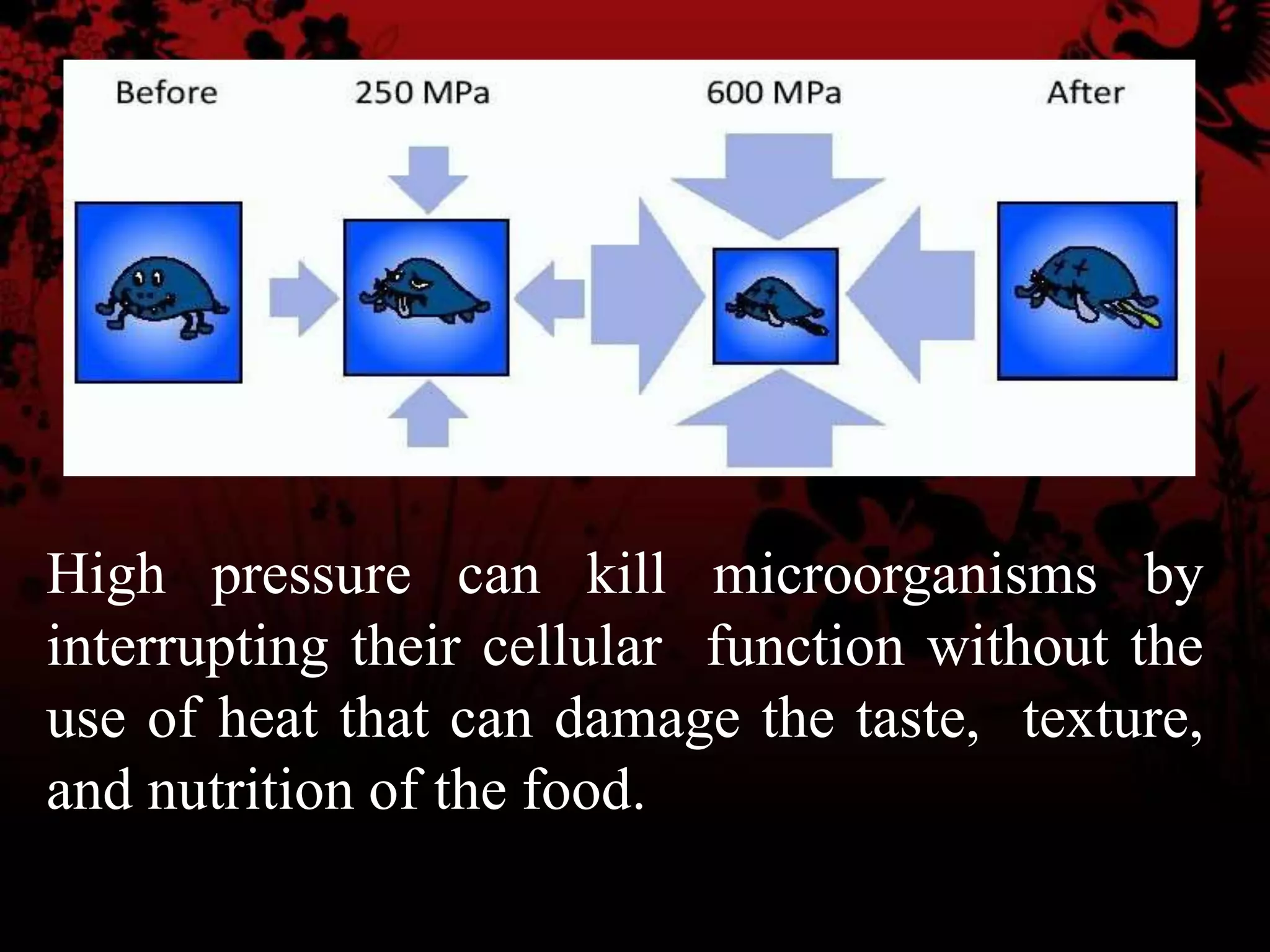
High pressure can kill microorganisms by
interrupting their cellular function without the
use of heat that can damage the taste, texture,
and nutrition of the food.
Processing
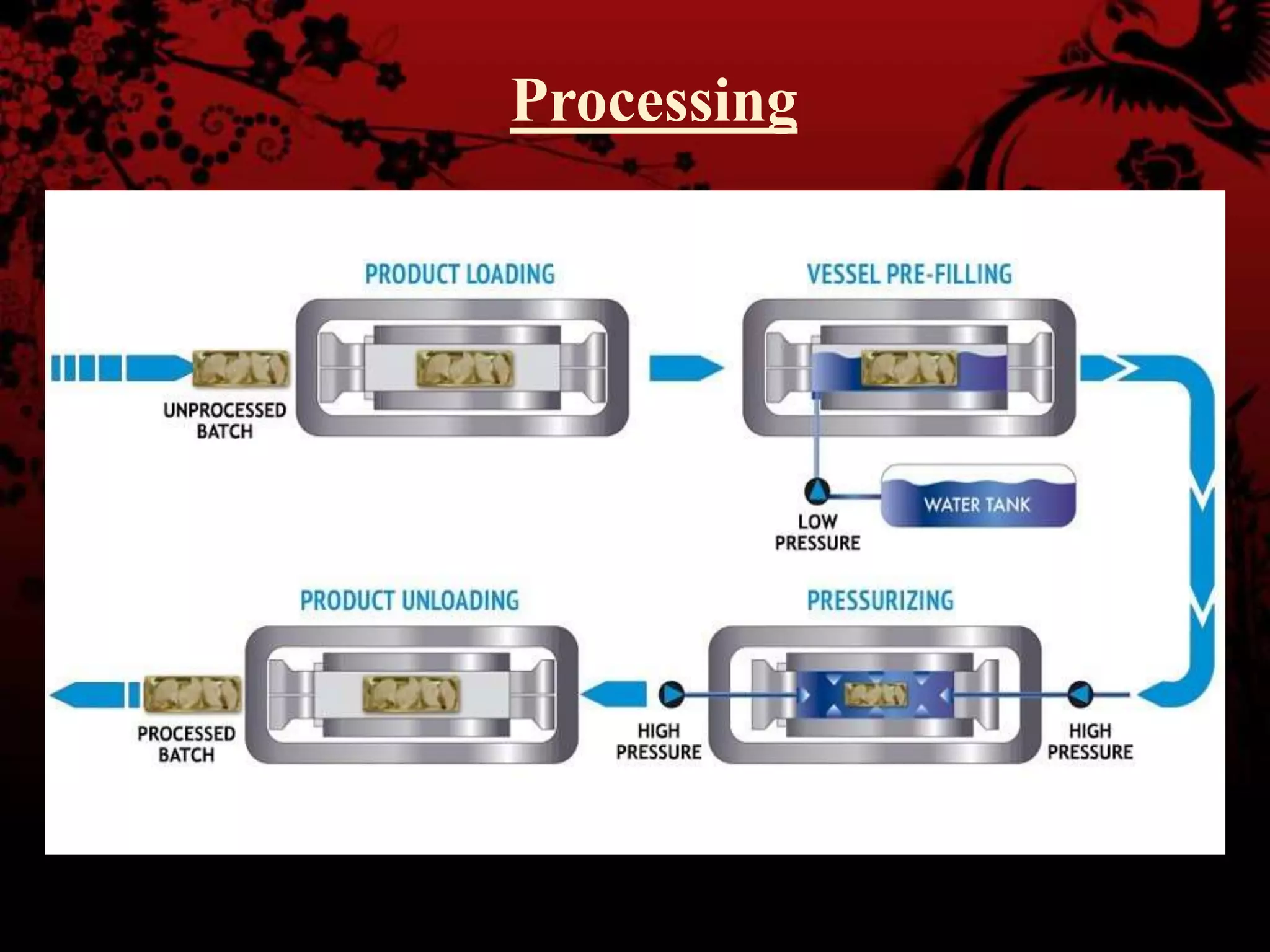
HPP systems are available in two types
Batch process
Semi-Continuous process
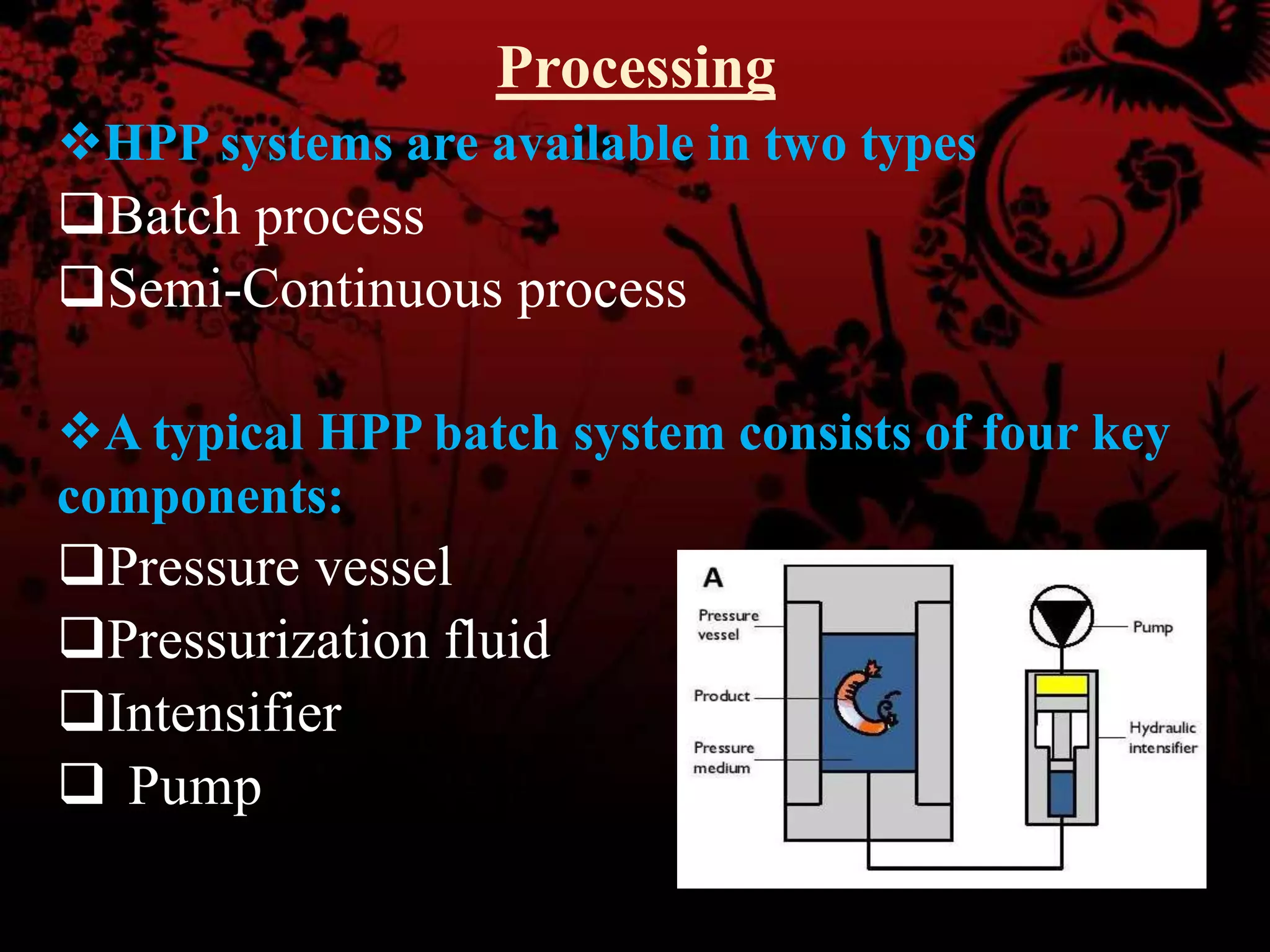
A typical HPP batch system consists of four key
components:
Pressure vessel
Pressurization fluid
Intensifier
 Pump
Processing
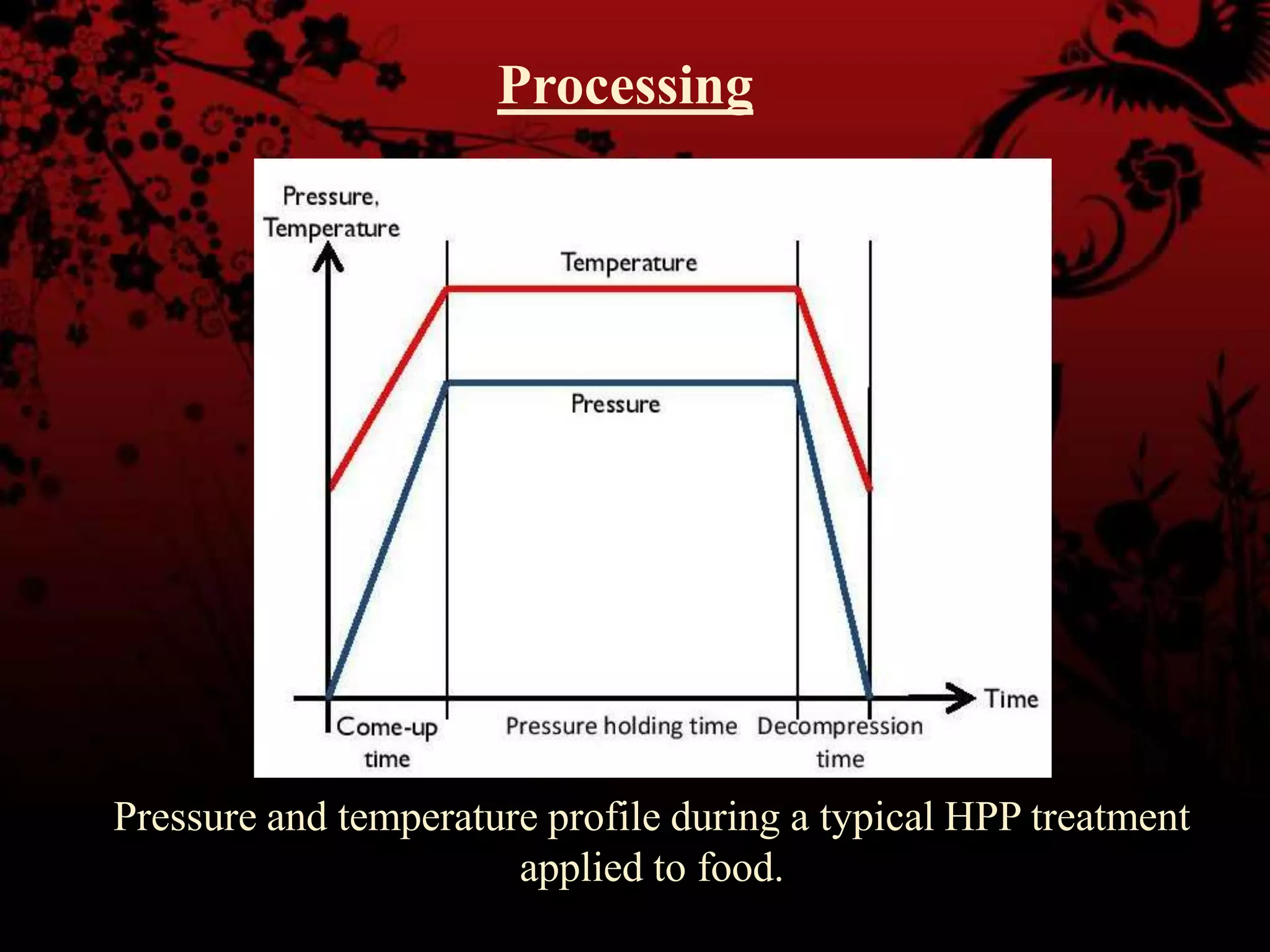
Pressure and temperature profile during a typical HPP treatment
applied to food.
Processing
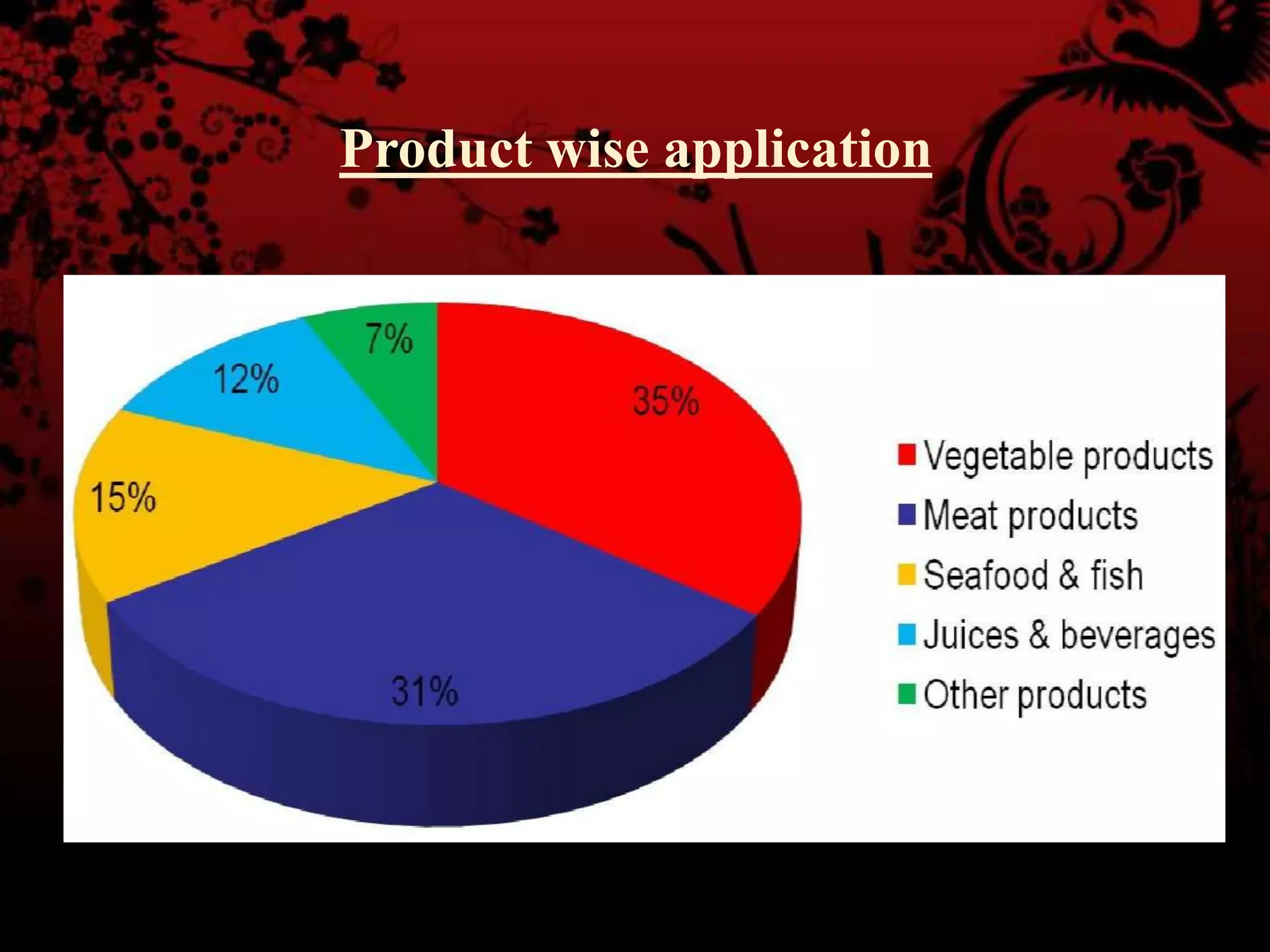
Product wise application
Food suitable for HPP
Low-medium moisture, semi-solid/solid foods, vacuum
packaged:
Dry-cured or cooked meat products
Cheese
Fish, seafood, marinated products
Ready to eat meals, sauces
High moisture, solid foods, vacuum packaged:
Fruits, marmalades/jams
Vegetables
High moisture, liquid foods in plastic bottle/flexible packaging:
Dairy products
Fruit juices
Bioactive beverages
Application of HPP
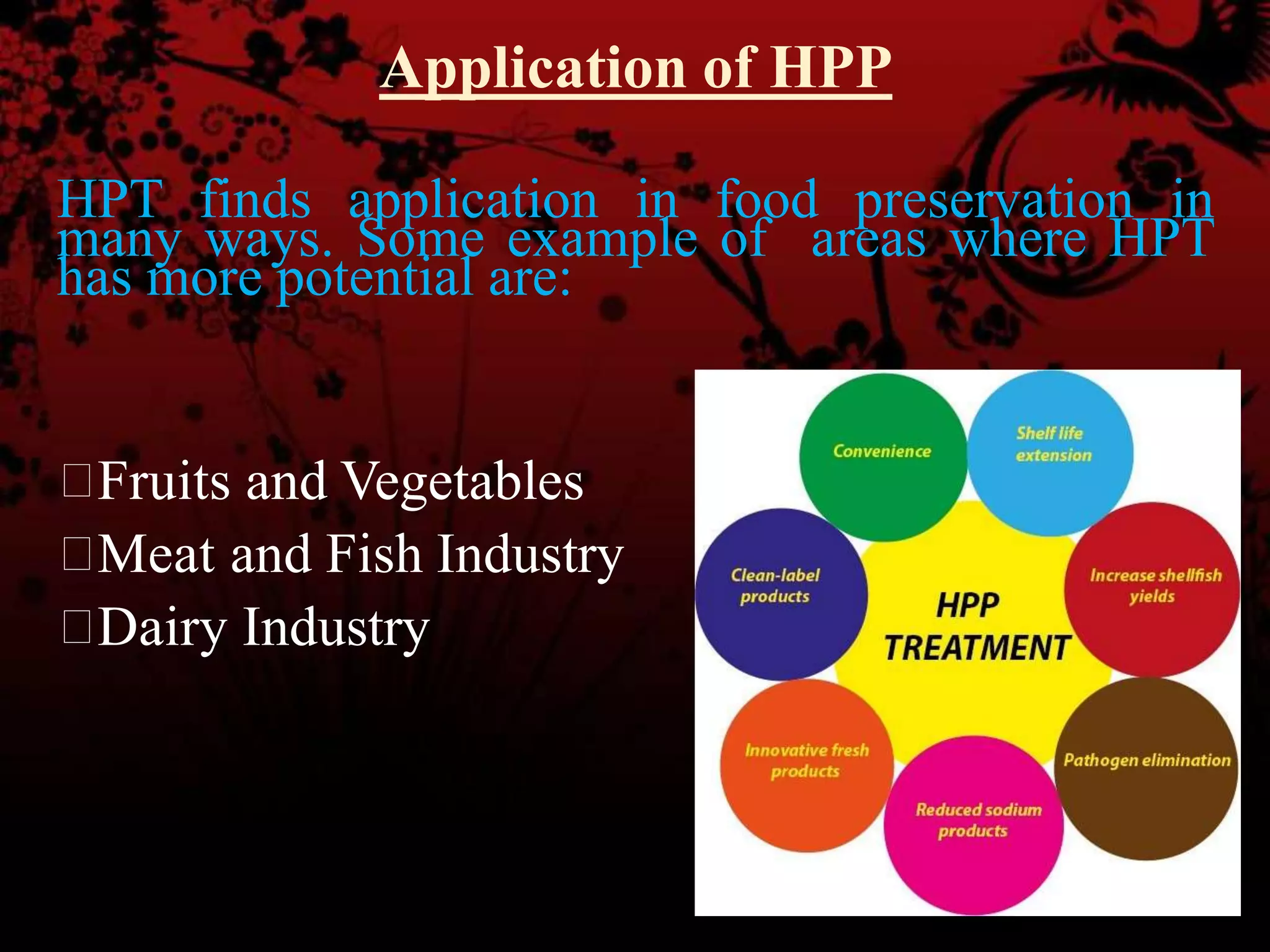
HPT finds application in food preservation in
many ways. Some example of areas where HPT
has more potential are:
Fruits and Vegetables
Meat and Fish Industry
Dairy Industry
Pressure And Holding Time For HPP
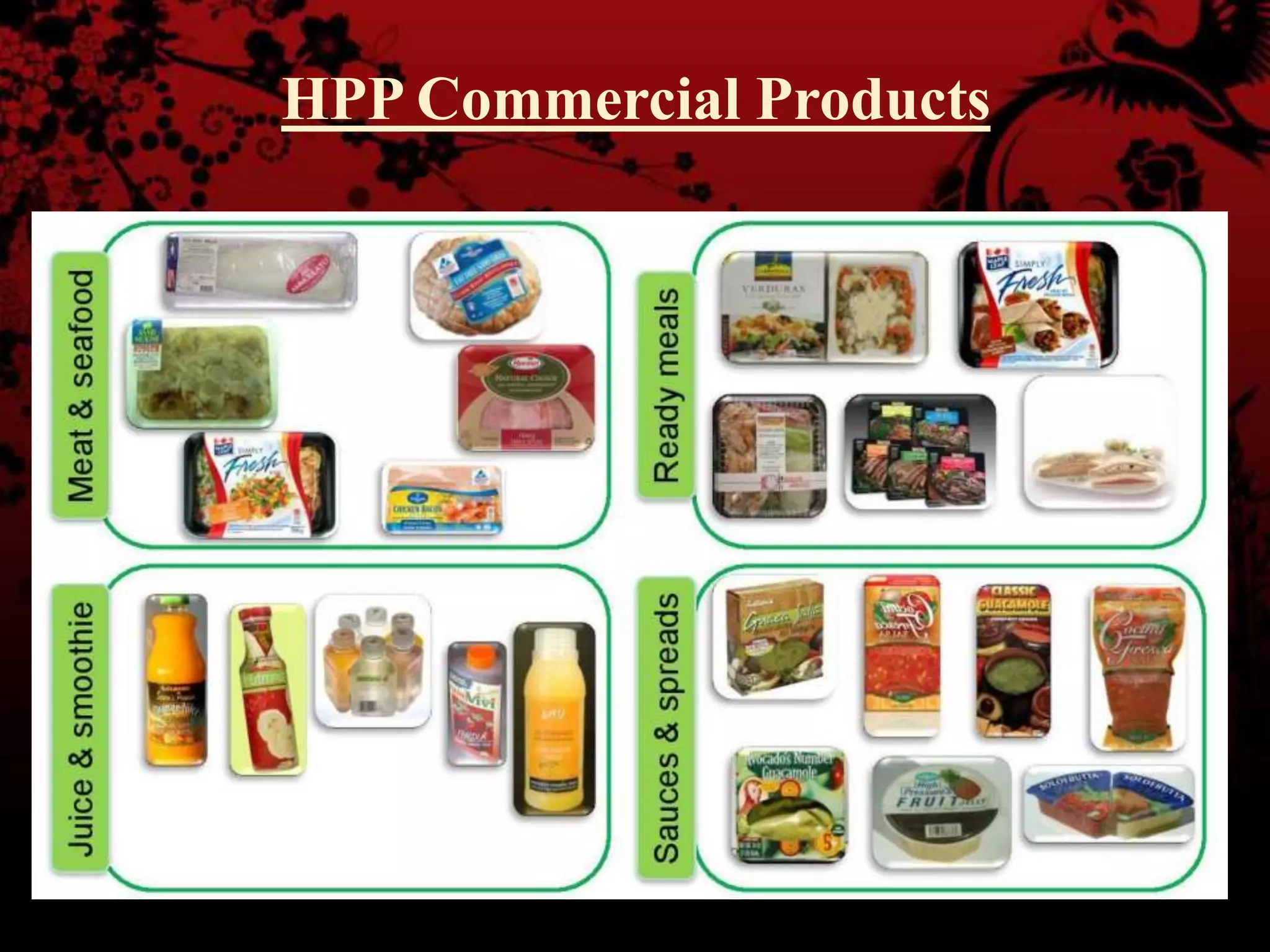
HPP Commercial Products
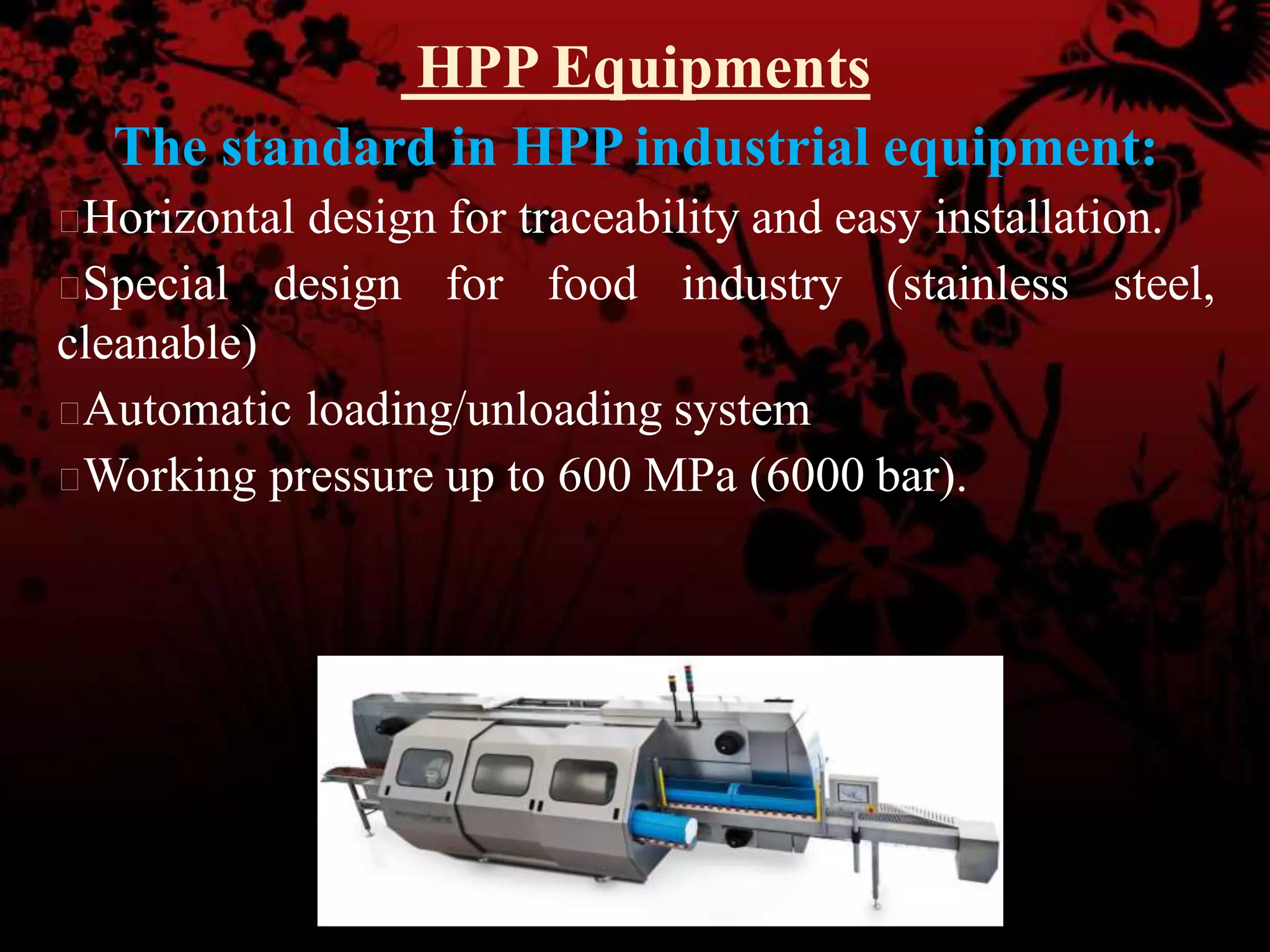
HPP Equipments
HPP equipment are of two types.
Horizontal Model Vertical Model
HPP Equipments
The standard in HPP industrial equipment:
Horizontal design for traceability and easy installation.
Special design for food industry (stainless steel,
cleanable)
Automatic loading/unloading system
Working pressure up to 600 MPa (6000 bar).
HPP Packiging Materials-
Plastic-Laminated Materials
Nylon/Coextruded Ethyl Vinyl Alcohol
Nylon/pp
Nylon/ Aluminum Oxide (ALOx) /CPP
PET/PE
Aluminum foil-Laminated Pouches
PET/AI/PP
Nylon/AI/PP
Deposited coatings of Silicon Oxide
Blenders of polymers
Nano composite materials
Nylon
Coextruded
EVOH
Aluminum Foil
HPP Food Packiging
Conclusion-
Consumers: HPP is a consumer acceptable, environmental
friendly, scientifically recognized method to achieve higher
quality in certain foods
Processing: Pressure transmission is instantaneous,
uniform, short processing times, assured safety in whole
pack, suitable for solids and
liquids
Quality: Retains flavor and nutrition
Environmentally: Safe and no process by‐products, no
emissions
Packaging: Package design, geometry and format should be
tailored for HPP, Packaging films and laminate structure
generally survive HPP well, but MAP and HPP at high
temperature can cause delamination and defects.
Reference-
hpp/ http://www.hopefresh.com/
http://www.hiperbaric.com/en/hpp
http://www.suflux.com/EN/products/FoodIsostaticPress.
html
http://www.promatecfoodventures.com/doc/FoodTechnol
ogy_1108feat_preservingfoods.pdf
http://www.thenfl.com/wp-content/uploads/High-
Pressure-Processing-Insights_20131.pdf
High Pressure Processing (HPP)

High Pressure Processing (HPP)

  • 1.
  • 2.
    IMPORTANCE High pressure processing(HPP) is a promising “non-thermal” technology that has been developed with the aim of obtaining microbiologically safe food products while avoiding undesirable changes in the sensory, physicochemical, and nutritional properties of foods. Thus HPP has become one of the innovative food processing technologies most accepted by consumers.
  • 3.
    HISTORY First research in1890s – high pressure destruction kinetics of Listeria monocytogenes Scott A in raw milk. Non-thermal processing technology (combination with heat possible). First commercialized in Japan in the early 1990s for pasteurization of acid foods for chilled storage. High pressure treated foodstuffs have been marketed in Japan since 1990, in Europe and the United States since 1996 & Australia since 2001. Rapid commercialization since 2000.
  • 4.
    High pressure processing(HPP), is a method of preserving and sterilizing food, in which a product is processed under very high pressure, leading to the inactivation of certain microorganisms and enzymes in the food. Also known as Pascalization. High Pressures applied at short periods of time (20minutes).
  • 5.
    Application of highpressures can cause: Inactivation of Parasites, Plant cells. Vegetative micro-organisms. Some fungal spores. Many food borne viruses. Enzymes are selectively inactivated. Macro molecules can change conformation. Small molecules (eg: flavors) are generally unaffected
  • 6.
    For food processing, 200-800MPapressure is required. For inactivating milk enzymes; alkaline phosphatase and protease about 1000 MPa is needed (as per research articles). Usually, 600MPa is the optimum pressure for processing commercial food products.
  • 7.
    High pressure cankill microorganisms by interrupting their cellular function without the use of heat that can damage the taste, texture, and nutrition of the food.
  • 8.
    Processing HPP systems areavailable in two types Batch process Semi-Continuous process A typical HPP batch system consists of four key components: Pressure vessel Pressurization fluid Intensifier  Pump
  • 9.
    Processing Pressure and temperatureprofile during a typical HPP treatment applied to food.
  • 10.
  • 11.
  • 12.
    Food suitable forHPP Low-medium moisture, semi-solid/solid foods, vacuum packaged: Dry-cured or cooked meat products Cheese Fish, seafood, marinated products Ready to eat meals, sauces High moisture, solid foods, vacuum packaged: Fruits, marmalades/jams Vegetables High moisture, liquid foods in plastic bottle/flexible packaging: Dairy products Fruit juices Bioactive beverages
  • 13.
    Application of HPP HPTfinds application in food preservation in many ways. Some example of areas where HPT has more potential are: Fruits and Vegetables Meat and Fish Industry Dairy Industry
  • 14.
  • 15.
  • 16.
    HPP Equipments HPP equipmentare of two types. Horizontal Model Vertical Model
  • 17.
    HPP Equipments The standardin HPP industrial equipment: Horizontal design for traceability and easy installation. Special design for food industry (stainless steel, cleanable) Automatic loading/unloading system Working pressure up to 600 MPa (6000 bar).
  • 18.
    HPP Packiging Materials- Plastic-LaminatedMaterials Nylon/Coextruded Ethyl Vinyl Alcohol Nylon/pp Nylon/ Aluminum Oxide (ALOx) /CPP PET/PE Aluminum foil-Laminated Pouches PET/AI/PP Nylon/AI/PP Deposited coatings of Silicon Oxide Blenders of polymers Nano composite materials Nylon Coextruded EVOH Aluminum Foil
  • 19.
  • 20.
    Conclusion- Consumers: HPP isa consumer acceptable, environmental friendly, scientifically recognized method to achieve higher quality in certain foods Processing: Pressure transmission is instantaneous, uniform, short processing times, assured safety in whole pack, suitable for solids and liquids Quality: Retains flavor and nutrition Environmentally: Safe and no process by‐products, no emissions Packaging: Package design, geometry and format should be tailored for HPP, Packaging films and laminate structure generally survive HPP well, but MAP and HPP at high temperature can cause delamination and defects.
  • 21.