TOPIC
SPRAY DRYING OF
MILK
SPRAY DRYING
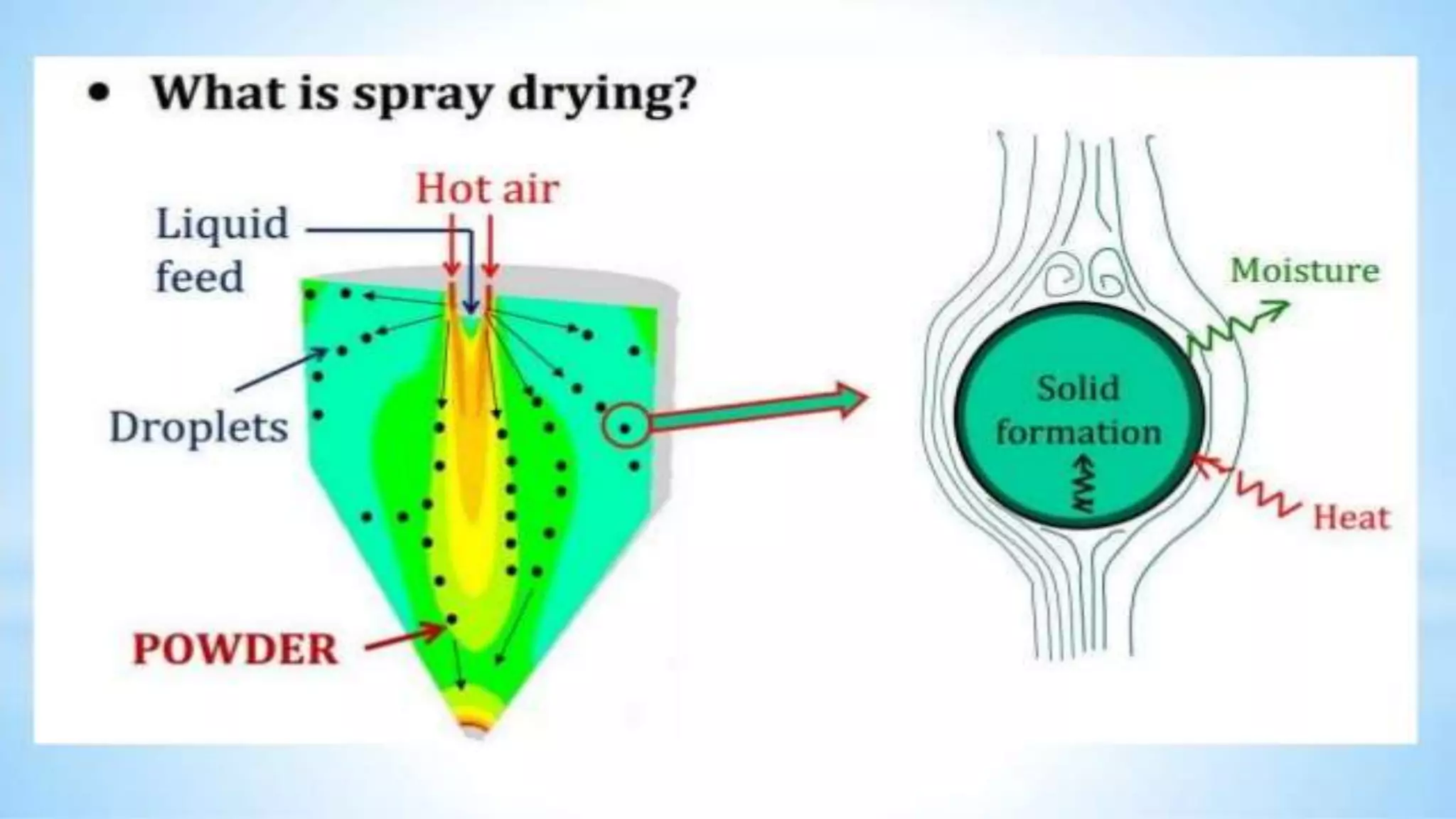
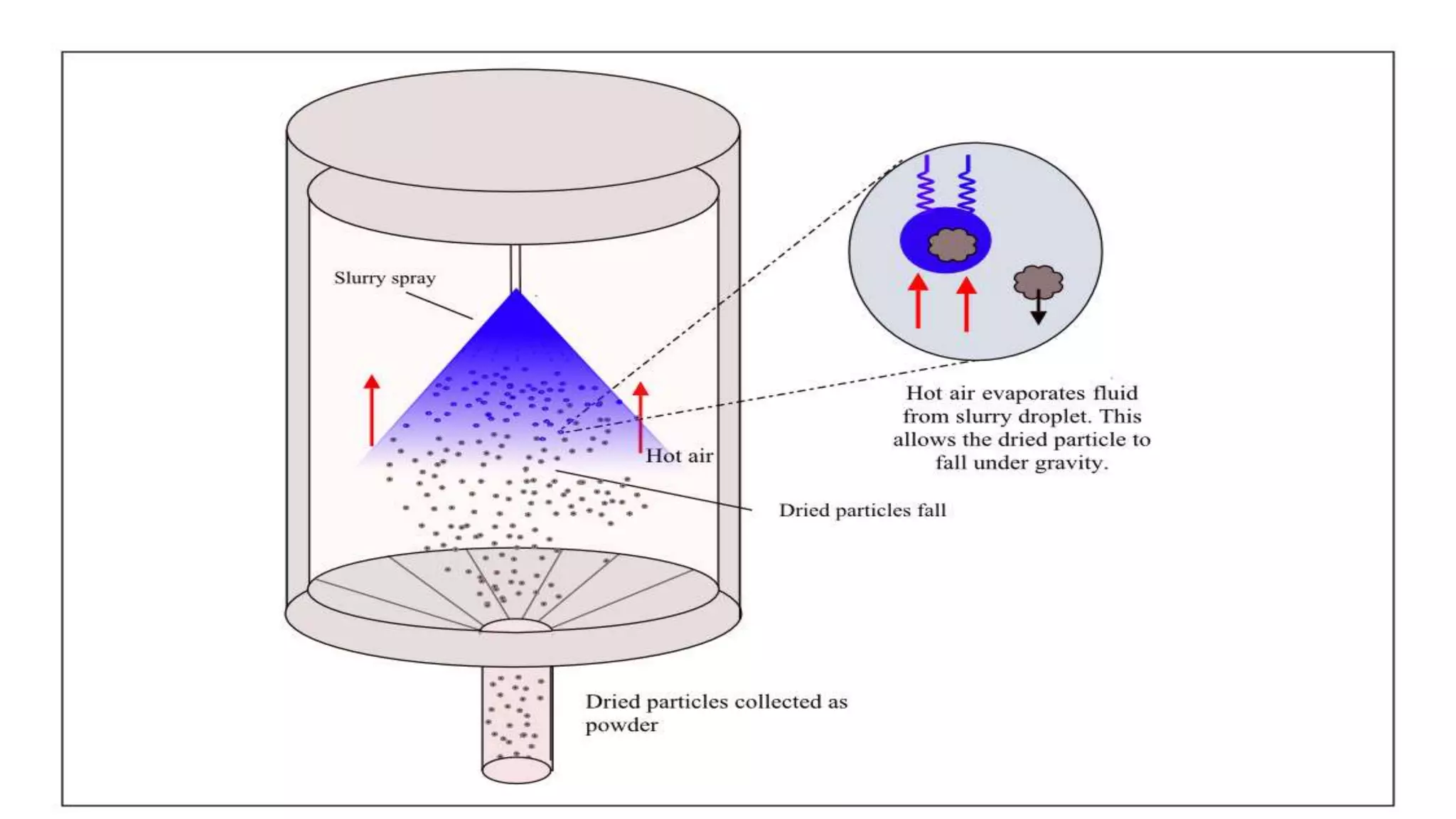
Spray drying is a method of producing a dry powder from a liquid or slurry by
rapidly drying with a hot gas
Collection
 Milk is mostly collected in insulated tankers transferred to processing units
 Raw milk on arrival at the factory is rapid tested for
 Temperature
 Hygiene
 Antibiotics
 Water addition
 Adulteration
 On acceptance
 The milk is pumped into a silo storage tank at the processing plant
 Held at temperatures below 7 C and usually below 5 C.
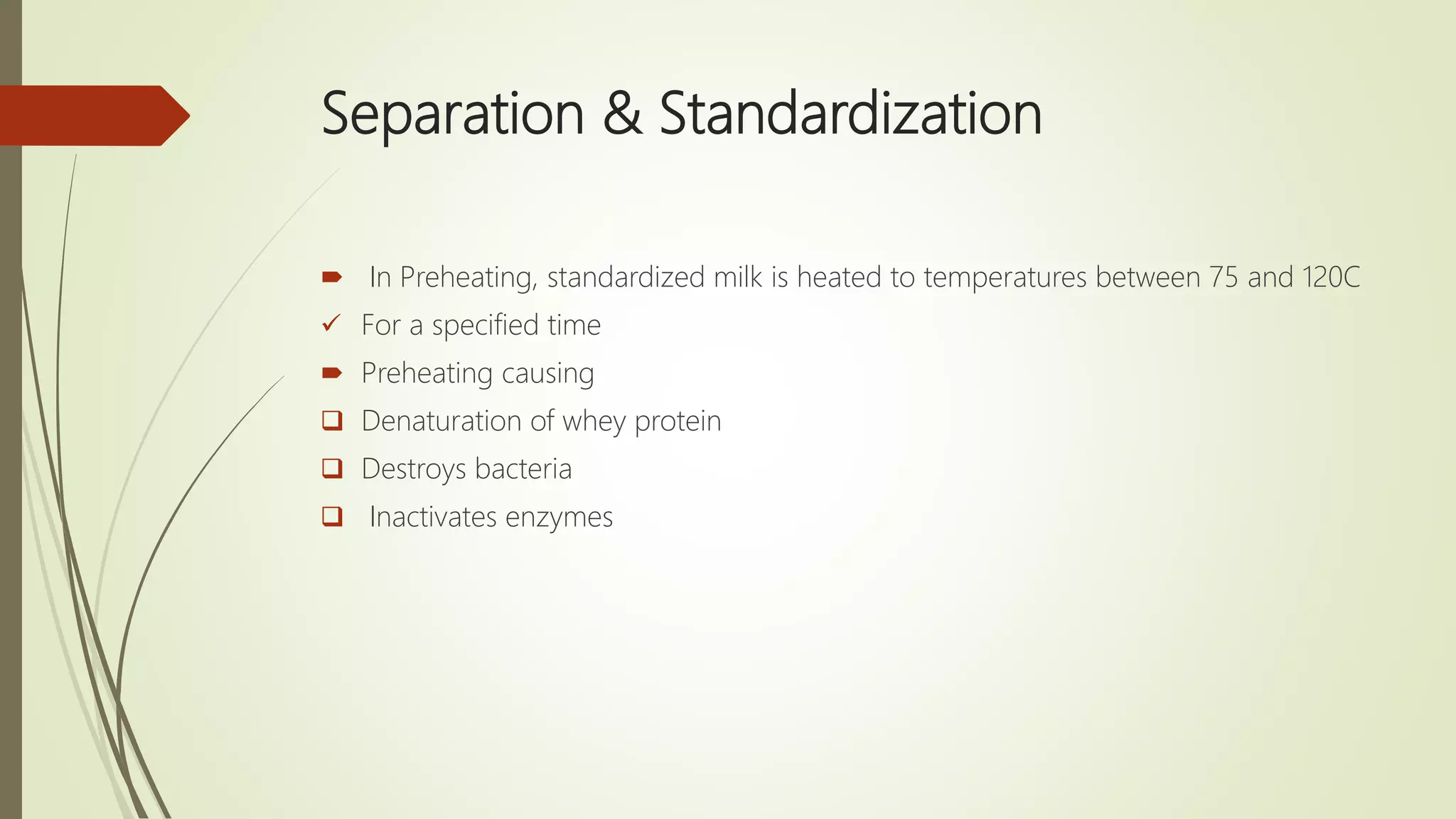
Separation & Standardization
 In Preheating, standardized milk is heated to temperatures between 75 and 120C
 For a specified time
 Preheating causing
 Denaturation of whey protein
 Destroys bacteria
 Inactivates enzymes
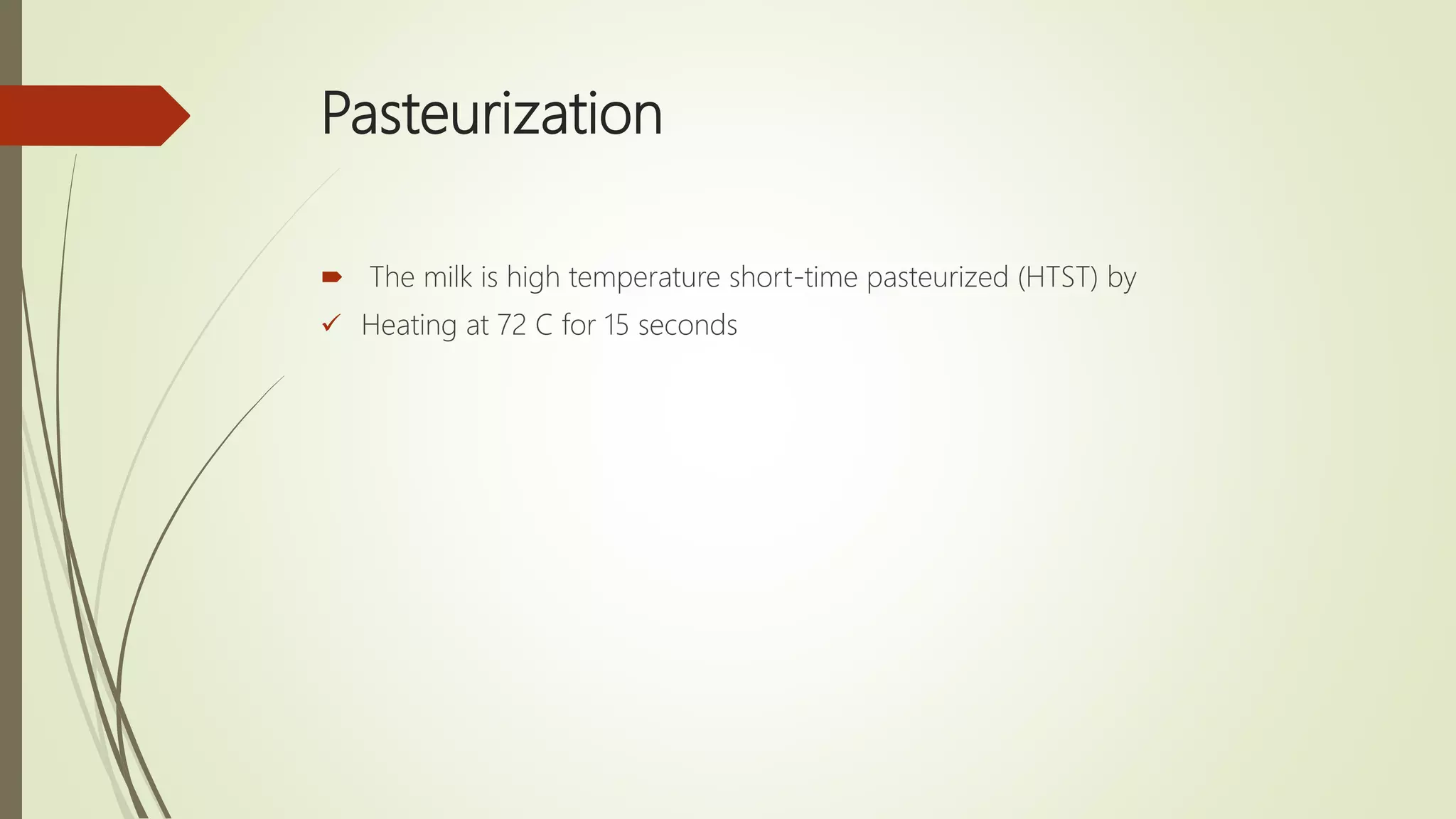
Pasteurization
 The milk is high temperature short-time pasteurized (HTST) by
 Heating at 72 C for 15 seconds
Preheating
 In Preheating, standardized milk is heated to temperatures between 75 and 120C
 For a specified time
 Preheating causing
 Denaturation of whey protein
 Destroys bacteria
 Inactivates enzymes
Evaporation
 Boiling the milk under a vacuum at temperatures below 72C in a falling film on the inside of
vertical tubes, and removing the water as vapor
 For spray drying, milk is concentrated to 40-50%
Homogenization
 It is not mandatory.
 During homogenization free fat is transformed into globules due to protein
adsorption.
 Pressure is 5-15 MPa
 Homogenization of highly concentrated milk (more than 3:1) destabilizes protein
and decreases powder solubility.
Heating
 Before entering the drying chamber
 Concentrated milk feed is slightly heated
 To reduce its viscosity
 To increase the energy available for drying
Air Filtration
 Air filter is used to prevent contamination due to dust or any other particulate
matter
Feed Pump
 Three piston pump with pressures upto 300-400 bar is used for pumping feed
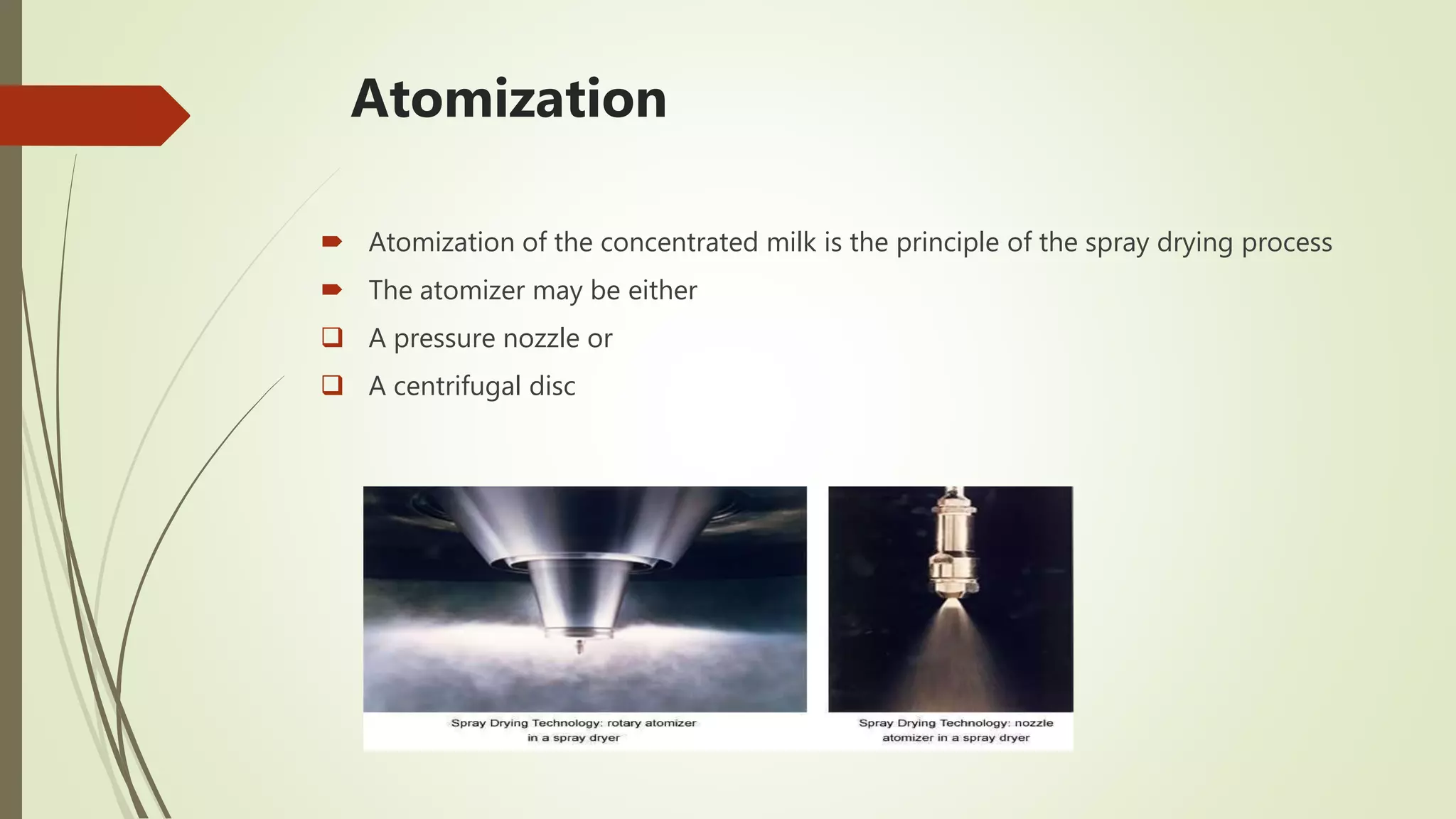
Atomization
 Atomization of the concentrated milk is the principle of the spray drying process
 The atomizer may be either
 A pressure nozzle or
 A centrifugal disc
CONTINUE...
 By atomization the concentrate is converted into droplets of size10-200 um, with
the greatest portion in the range 40-80um
 The concentrate is converted into droplets of size10-200 um
 With the greatest portion in the range 40-80um
Drying Chamber
 Concentrated milk feed comes in contact with hot air here and is dried
 Co-current flow of hot air is preferred
 By controlling the size of the droplets,
 The air temperature
 And the airflow
 It is possible to evaporate almost all the moisture while exposing the solids to
relatively low temperatures
 External hammers are used on the cone to avoid buildup of dried particles
Cyclone Separator
 The principle of cyclone separation is based on the centrifugal force exerted on
a particle
 It separates particles based on their density. Fines are sent forward to the filters.
PACKAGING AND STORAGE
 Milk powders are immensely more stable than fresh milk but protection from
moisture
 Milk powder is packed into either plastic-lined multi-wall bags
APPLICATIONS
 Food: Milk powder, coffee, tea, eggs, cereal, spices, flavorings, blood, starch and
starch derivatives, vitamins, enzymes, stevia, colorings , animal feed, etc.
 Pharmaceutical: Antibiotics, medical ingredients , additives
 Industrial: Paint pigments, ceramic materials, catalyst supports, microalgae
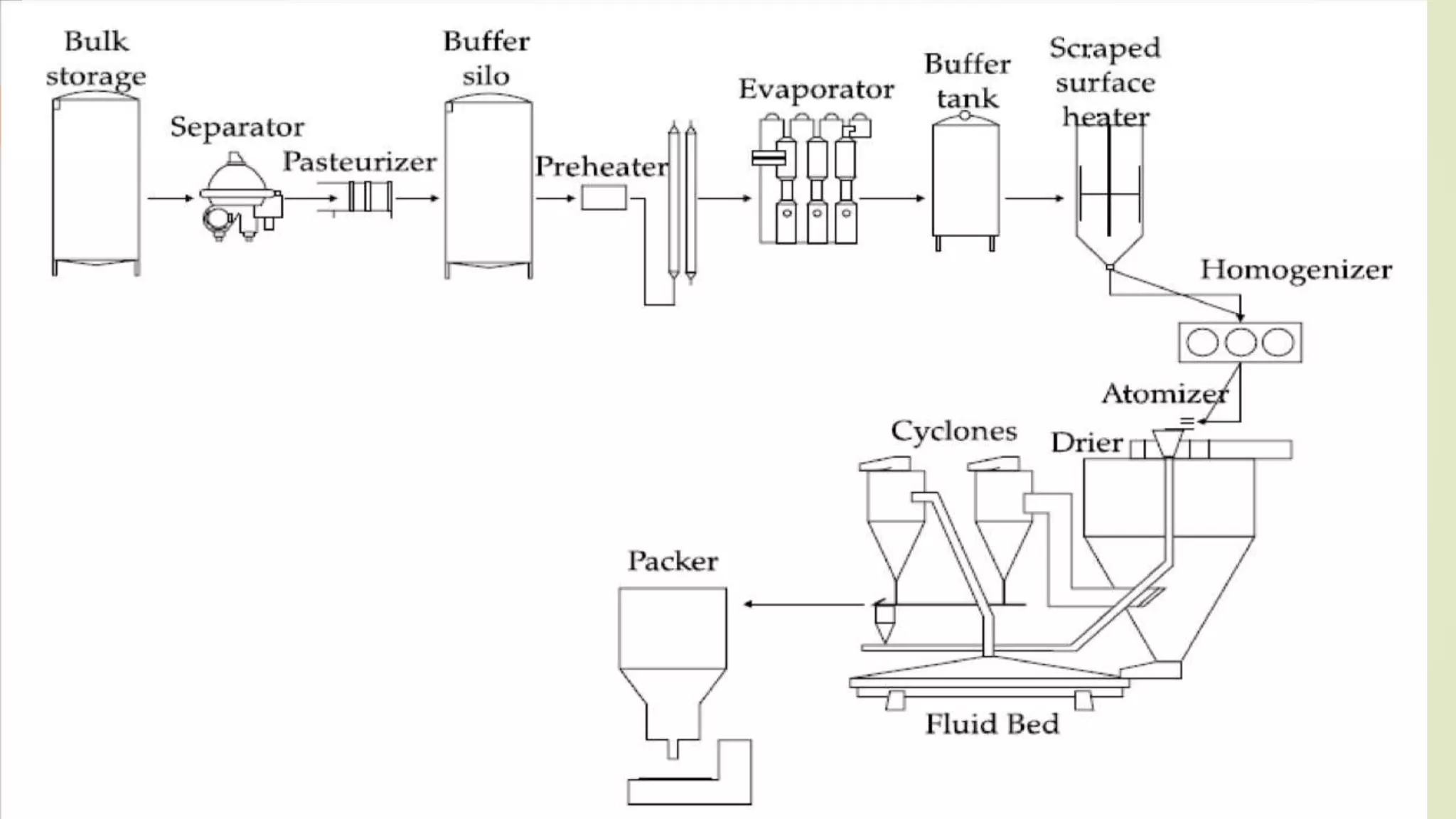
SPRAY DRYING IN MILK PROCESS

SPRAY DRYING IN MILK PROCESS

  • 2.
  • 3.
    SPRAY DRYING Spray dryingis a method of producing a dry powder from a liquid or slurry by rapidly drying with a hot gas
  • 6.
    Collection  Milk ismostly collected in insulated tankers transferred to processing units  Raw milk on arrival at the factory is rapid tested for  Temperature  Hygiene  Antibiotics  Water addition  Adulteration  On acceptance  The milk is pumped into a silo storage tank at the processing plant  Held at temperatures below 7 C and usually below 5 C.
  • 7.
    Separation & Standardization In Preheating, standardized milk is heated to temperatures between 75 and 120C  For a specified time  Preheating causing  Denaturation of whey protein  Destroys bacteria  Inactivates enzymes
  • 8.
    Pasteurization  The milkis high temperature short-time pasteurized (HTST) by  Heating at 72 C for 15 seconds
  • 9.
    Preheating  In Preheating,standardized milk is heated to temperatures between 75 and 120C  For a specified time  Preheating causing  Denaturation of whey protein  Destroys bacteria  Inactivates enzymes
  • 10.
    Evaporation  Boiling themilk under a vacuum at temperatures below 72C in a falling film on the inside of vertical tubes, and removing the water as vapor  For spray drying, milk is concentrated to 40-50%
  • 11.
    Homogenization  It isnot mandatory.  During homogenization free fat is transformed into globules due to protein adsorption.  Pressure is 5-15 MPa  Homogenization of highly concentrated milk (more than 3:1) destabilizes protein and decreases powder solubility.
  • 12.
    Heating  Before enteringthe drying chamber  Concentrated milk feed is slightly heated  To reduce its viscosity  To increase the energy available for drying
  • 13.
    Air Filtration  Airfilter is used to prevent contamination due to dust or any other particulate matter
  • 14.
    Feed Pump  Threepiston pump with pressures upto 300-400 bar is used for pumping feed
  • 15.
    Atomization  Atomization ofthe concentrated milk is the principle of the spray drying process  The atomizer may be either  A pressure nozzle or  A centrifugal disc
  • 16.
    CONTINUE...  By atomizationthe concentrate is converted into droplets of size10-200 um, with the greatest portion in the range 40-80um  The concentrate is converted into droplets of size10-200 um  With the greatest portion in the range 40-80um
  • 17.
    Drying Chamber  Concentratedmilk feed comes in contact with hot air here and is dried  Co-current flow of hot air is preferred  By controlling the size of the droplets,  The air temperature  And the airflow  It is possible to evaporate almost all the moisture while exposing the solids to relatively low temperatures  External hammers are used on the cone to avoid buildup of dried particles
  • 18.
    Cyclone Separator  Theprinciple of cyclone separation is based on the centrifugal force exerted on a particle  It separates particles based on their density. Fines are sent forward to the filters.
  • 19.
    PACKAGING AND STORAGE Milk powders are immensely more stable than fresh milk but protection from moisture  Milk powder is packed into either plastic-lined multi-wall bags
  • 21.
    APPLICATIONS  Food: Milkpowder, coffee, tea, eggs, cereal, spices, flavorings, blood, starch and starch derivatives, vitamins, enzymes, stevia, colorings , animal feed, etc.  Pharmaceutical: Antibiotics, medical ingredients , additives  Industrial: Paint pigments, ceramic materials, catalyst supports, microalgae