A. INDUMATHI
Assistant Professor
PG & Research Department of Biotechnology
BON SECOURS COLLEGE FOR WOMEN
Thanjavur
 Today, a large range of colorful, flavorful confections are
available in the market, which serve as a treat to the tongue
as well as our eyes.
 May it be the candies, bite-size chocolates, cookies, lollies,
or other sweets; not only children but grown-ups also favor
them.
 Adults being health conscious, consume them with
confessions.
 Multi – Component confectionery products are not new, their
complexity had increased tremendously during the past 100
years or so.
 The demand for new taste and textural sensations are the
governing factors in confectionery industry.
 They are attributed largely by the ingredients used for the
preparation of confectionery products.
 In Europe and US, syrups, caramel, cocoa powder, milk
powder, and sugar are generally used.
 In Indian subcontinent, the confections are often generally
referred to as Mithai, which is based on the main
ingredient khoyaa; the thick hard cream of milk.
 Mithai is also made from Halwaa, the wheat extract or it can
be made from gram flour.
 Confectionery is an art of making confections by
using sugar and a carbohydrate based binding
medium.
 The confections is broadly divided into the five
categories they are namely,
 Flour confection.
 Sugar confection.
 Chocolate confection.
 Milk confection.
 Other confections.
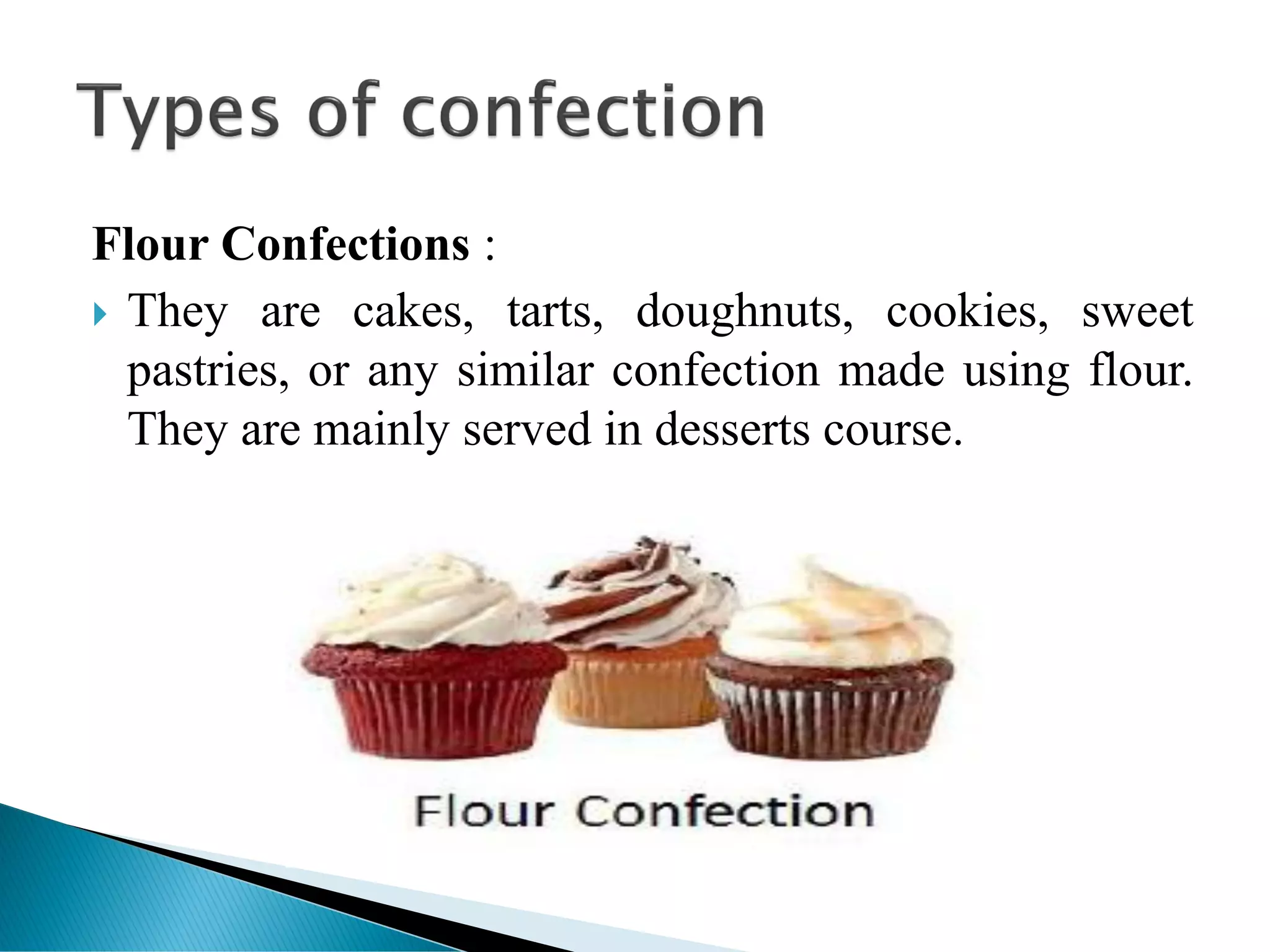
Flour Confections :
 They are cakes, tarts, doughnuts, cookies, sweet
pastries, or any similar confection made using flour.
They are mainly served in desserts course.
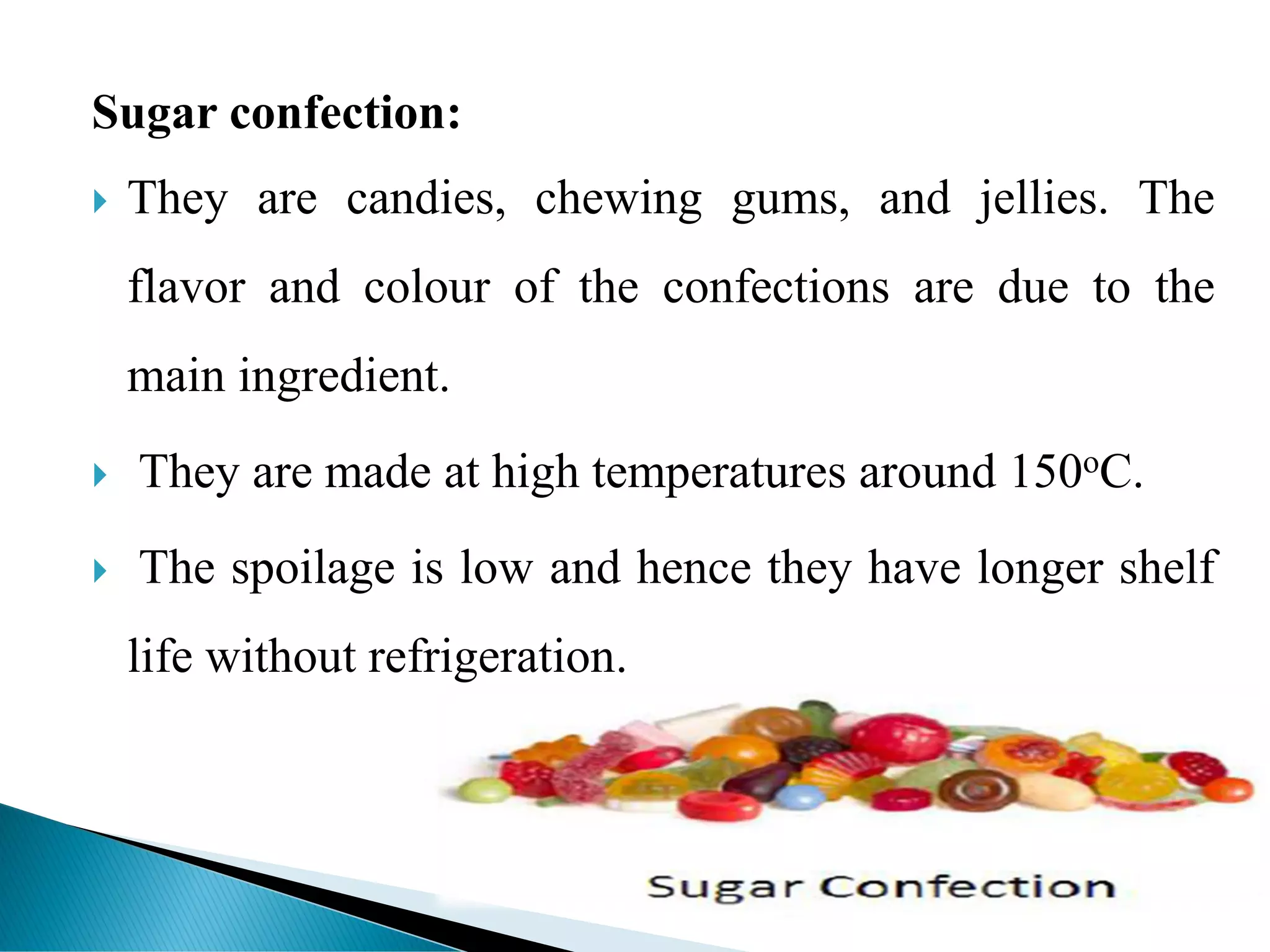
Sugar confection:
 They are candies, chewing gums, and jellies. The
flavor and colour of the confections are due to the
main ingredient.
 They are made at high temperatures around 150oC.
 The spoilage is low and hence they have longer shelf
life without refrigeration.
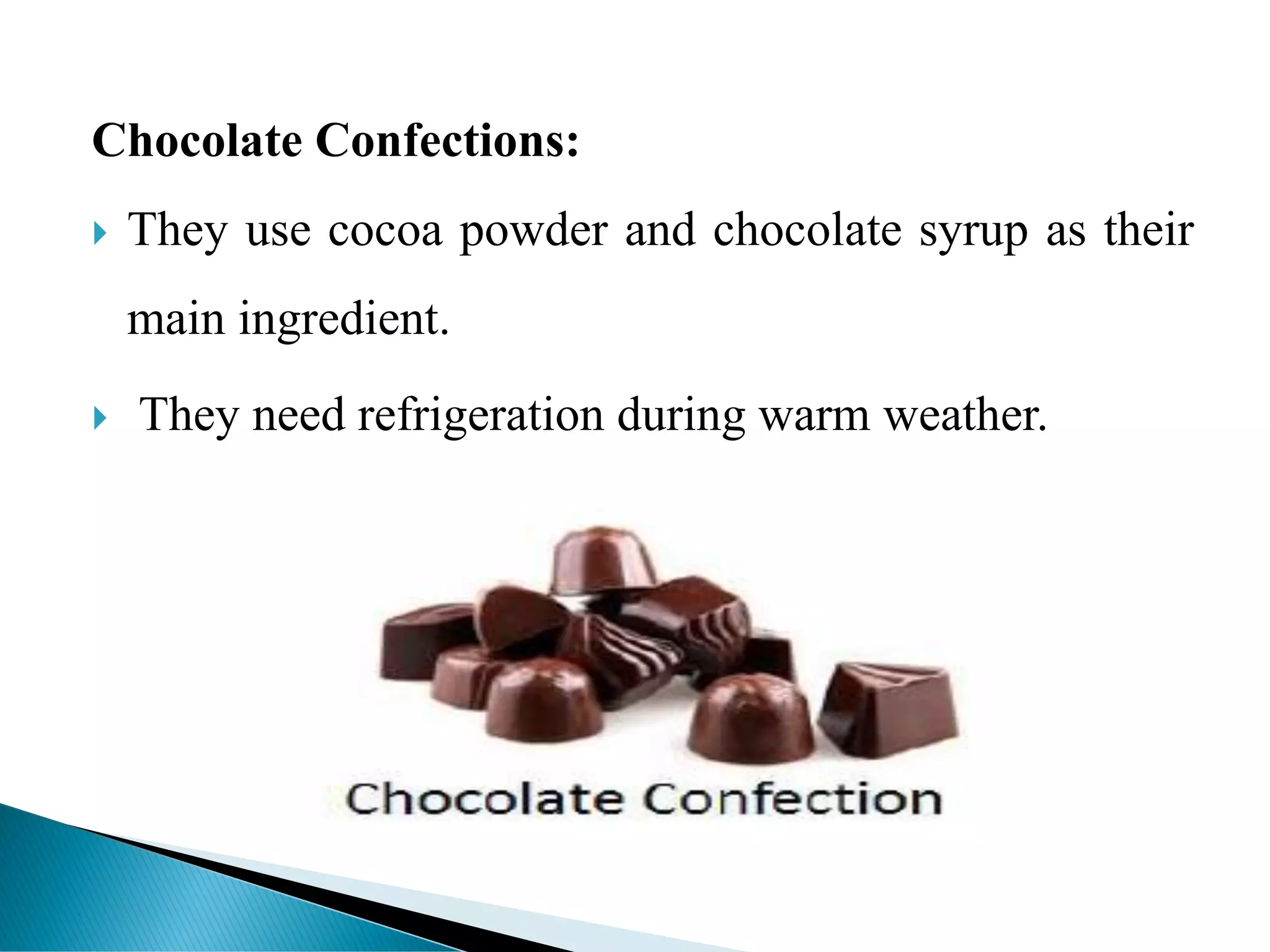
Chocolate Confections:
 They use cocoa powder and chocolate syrup as their
main ingredient.
 They need refrigeration during warm weather.
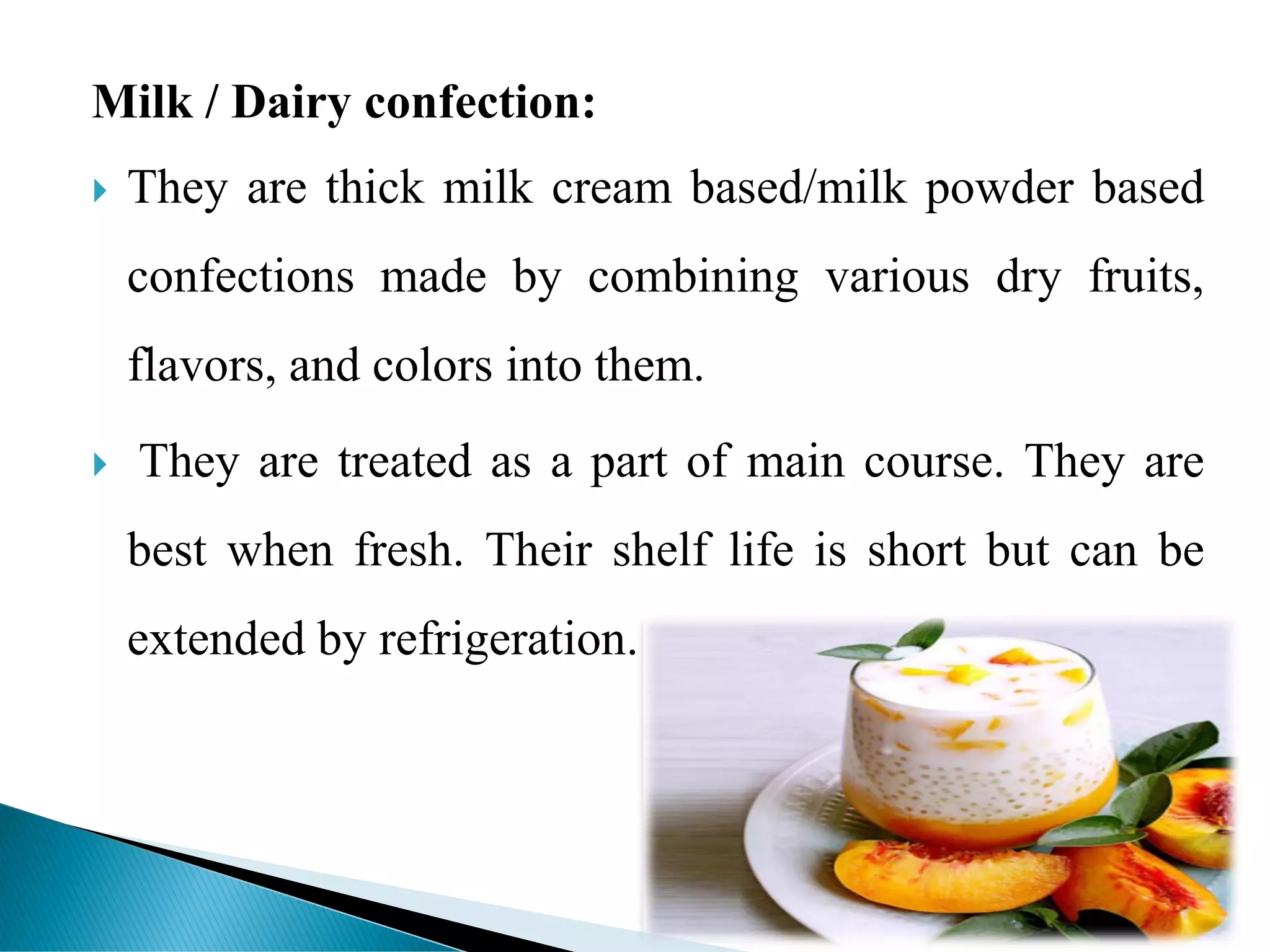
Milk / Dairy confection:
 They are thick milk cream based/milk powder based
confections made by combining various dry fruits,
flavors, and colors into them.
 They are treated as a part of main course. They are
best when fresh. Their shelf life is short but can be
extended by refrigeration.
Other confections:
 They are made from extract of soaked
wheat, which is flavored, thickened, and
colored.
 The major ingredients used in confectionery industry are
◦ Sugar
◦ Invert Sugar
◦ Glucose Syrup (Corn Syrup)
◦ Dairy Ingredients
◦ Vegetable Fats
◦ Hydrocolloids- Gums & Gelling agents
◦ Emulsifiers
◦ Colours, Flavours
◦ Antioxidants, Acidulants
◦ Salt
◦ Sugar substitutes
Sugar confectionery → Boiled
sweets
Toffee/
Fudge
Gums/
Pastilles
Chewing
Gum
Liquorice
Type of Sugar ↓
White granulated Yes Yes Yes Yes Yes
Specially white granulated Yes Yes Yes No Yes
Screened specialities Yes Yes Yes No No
Milled specialities Yes Yes No Yes No
Brown sugar No Yes No No Yes
Liquid sugar Yes Yes Yes No No
Syrups and treacles No Yes No No Yes
Table 1.1 Forms of sugar commonly used in sugar confectionery
(Source: Edward, W.P., The science of sugar confectionery)
Sugar (Glucose/Sucrose) − It is required to bring sweetness to the
confection.
•Solubility- 66% at Room temp. & 83% under boiling condition
•Available in no. of forms depending on particle size.
Invert Sugar: is available as syrup only.
•Significance- can be prepared at high concentrations as high
as 80% at ambient conditions.
•Have sufficiently low water activity – making the product
hygroscopic and capable of restricting microbial proliferation.
•High cost of it , has declined its use with effective replacement
of glucose syrup.
•However, it can be produced/ recovered by treating sugar
containing waste, thus making economical considerations for
the manufacturers.
Glucose syrup: - commercial name is Corn syrup.
• Has largely replaced invert sugar as confectionery ingredient.
•Maltose is the major constituent of Corn syrup solids (CSS) , but
not Dextrose.
•The most common type of Glucose syrup in confectionery is 42
DE.
•The other grade product is 68DE – same as invert sugar syrup.
•It is solely used in Chocolate confectionery.
•The flavour of the chocolate depends upon the Cocoa solid: sugar
ratio in the formulations.
Dairy Ingredients: Choices either
Sweetened Condensed Milk / Milk powder.
•Sweetened Condensed Milk : most referred in Toffee
manufacturing.
•Earliest way of producing a stable and long life product from
milk.
•Advantage: milk fat can be replaced with vegetable fat when
req.
•Toffees made from SCM are smoother and less damaged.
•It has good shelf life with out refrigeration.
•However, being stick it needs handling skills .
Milk Powder − It brings thick and moist physique to the confection.
•Advantageous in terms of economy, quality, nutritive properties,
functional properties and storage stability as well.
•In terms of nutritional considerations , they do not form a major
part of diet.
•The less severe heat treatment during milk powder production can
create problems.
• The bacterial enzyme lipases present are much more resistant to
heat treatment.
•If the substrate is butterfat, then it may give ‘buttery’ or ‘creamy
flavour’
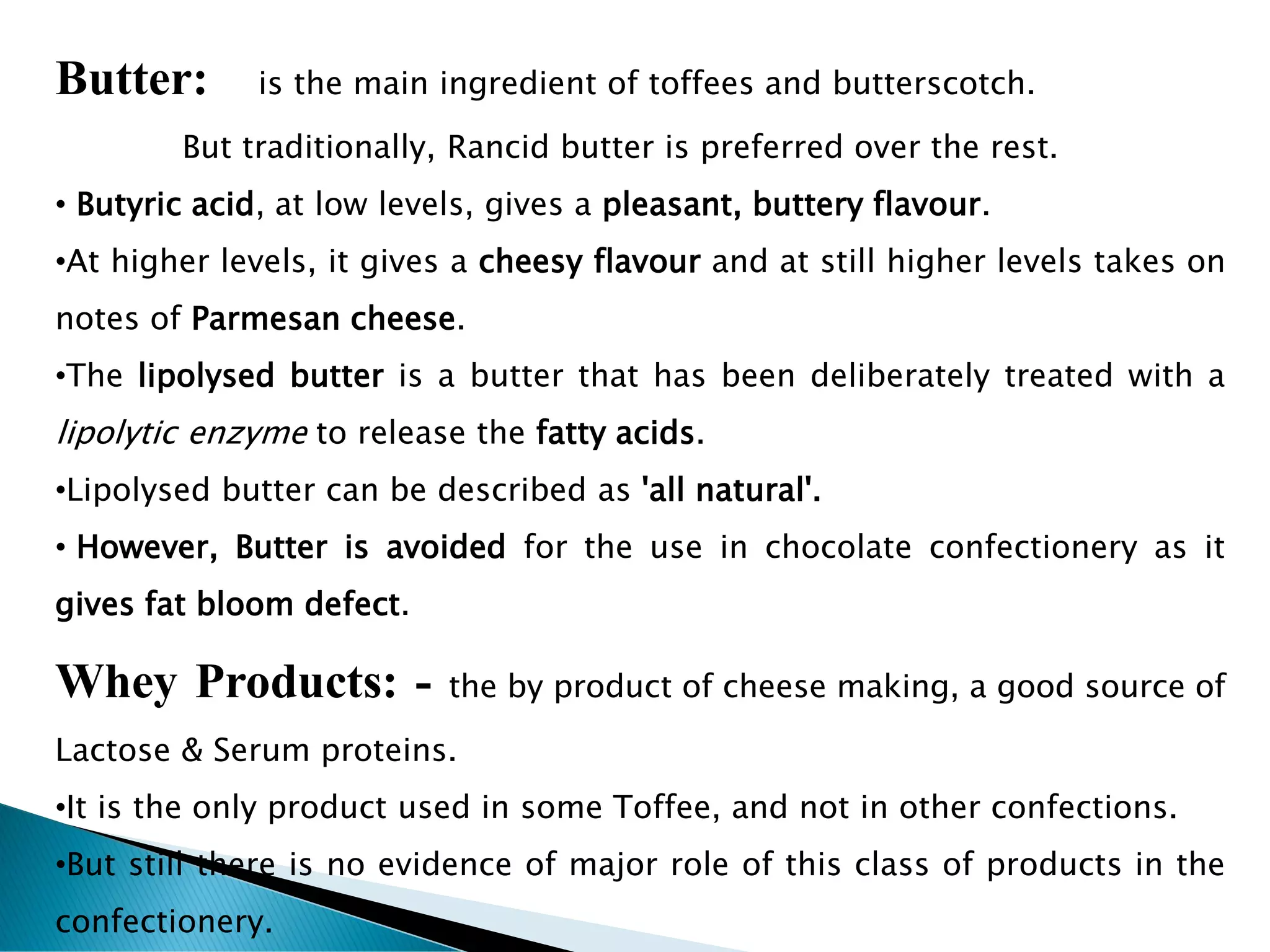
Butter: is the main ingredient of toffees and butterscotch.
But traditionally, Rancid butter is preferred over the rest.
• Butyric acid, at low levels, gives a pleasant, buttery flavour.
•At higher levels, it gives a cheesy flavour and at still higher levels takes on
notes of Parmesan cheese.
•The lipolysed butter is a butter that has been deliberately treated with a
lipolytic enzyme to release the fatty acids.
•Lipolysed butter can be described as 'all natural'.
• However, Butter is avoided for the use in chocolate confectionery as it
gives fat bloom defect.
Whey Products: - the by product of cheese making, a good source of
Lactose & Serum proteins.
•It is the only product used in some Toffee, and not in other confections.
•But still there is no evidence of major role of this class of products in the
confectionery.
Vegetable Fats:
•The are the ultimate choice as a substitute for milk fat.
•Very economic- cost of Vegetable oils-Rs. 9-15/lt, Ghee- Rs. 400/lt.
•The most commonly used- in toffee manufacturing is hardened
Palm Kernel oil.
•Palm Kernel oil is quiet cheap but is lauric fat, that influences the
shelf life because of the soapy rancidity.
Hydrocolloids- Gums & Gelling Agents
•These ingredients are the thickeners and stabilizers.
•Exclusively in confectionery products which require long, tough,
gum-like textures. Agent Chemistry Properties Source
Gelatine Protein
Thermo-reversible
gelling
Bovine or Porcine
hides or bones
Starch Carbohydrates Wheat, Maize, Potato
(cereals and tubers)
Agar agar Polysaccharide Red seaweed
Carrageenan Sulfated
polysaccharide
Red seaweed
Gum acacia Polysaccharide Gum Trees of Acacia
senegal
Gellan gum Polysaccharide Thermo-reversible or
irreversible gelling
Pseudomonal elodea
Alginates Polysaccharide
Irreversible gelling
Brown seaweed
Pectin Polygalacturonic acid Citrus peel
Guar gum Galactomannan
Thickening
Seed of Cyamopsis
tetragonolobus
Locust bean gum Galactomannan Endosperm of locust
bean
Xanthan gum Polysaccharide Xanthomonas
campestris
Egg albumin Protein Whipping,
irreversible gelling
Egg white
Enzyme
modified soy
protein
Protein Whipping Soybean
Table1.2Chemistry,propertiesandsourcesofvarious
hydrocolloids
(Source:Edward,W.P.,Thescienceofsugarconfectionery)
Emulsifiers:
• Emulsifiers are used in a range of confectionery products except in fat-
free products such as boiled sweets, gums or jellies.
•Many times it makes essential to use emulsifiers as most chocolate
based confections are fat rich.
•Use of wrong emulsifier or an excess of emulsifier causes handling
problems.
•Milk proteins are one of its classes which have good emulsification
properties.
•Emulsifiers can be eliminated from the recipe of toffees or caramels by
using a larger quantity of milk solids.
•Distilled monoglycerides are high purity emulsifiers.
•Toffee is the class of sugar confectionery which mostly use the
emulsifiers.
•The structure/ Texture also contains emulsifier as the essential
ingredient.
Colours:
• Colour additives are widely used in foods and beverages to mask
variations, and make products more visually appealing .
• Chocolate confectionery need not any colouring agent in their
formulations, but at present the use of colours in foods is strictly
regulated and ensured for the safety.
• Colour has an important influence on flavour perception and so
consumer acceptance.
•The colouring substances should possess several attributes and they are:
➢It should be stable to heat and light.
➢It should be stable to reducing sugar and resistance to sulfur
dioxide is also useful.
➢It should be water soluble. Most sugar confectionery products
contain very little of the fat.
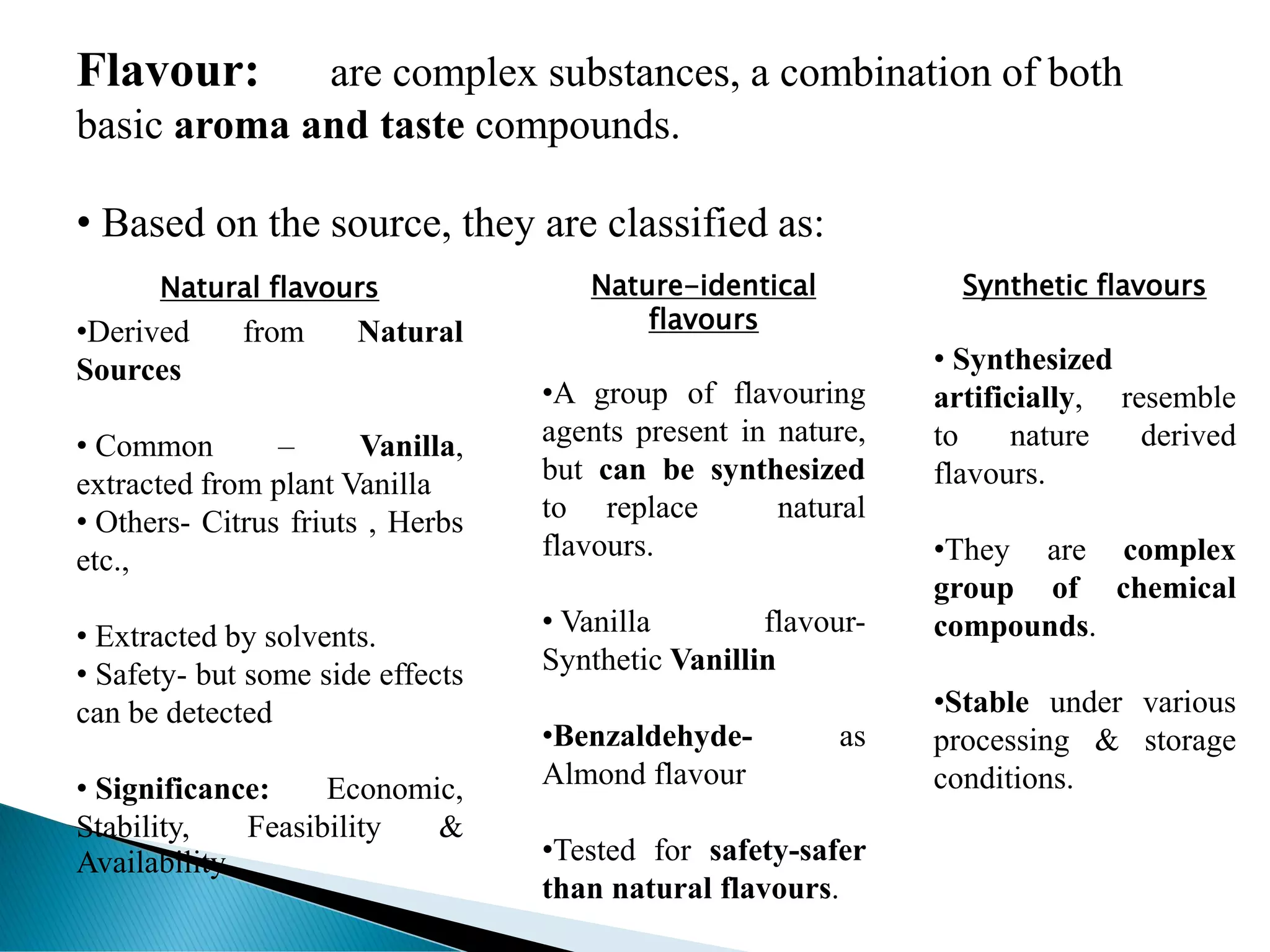
Flavour: are complex substances, a combination of both
basic aroma and taste compounds.
• Based on the source, they are classified as:
Natural flavours
•Derived from Natural
Sources
• Common – Vanilla,
extracted from plant Vanilla
• Others- Citrus friuts , Herbs
etc.,
• Extracted by solvents.
• Safety- but some side effects
can be detected
• Significance: Economic,
Stability, Feasibility &
Availability.
Nature-identical
flavours
•A group of flavouring
agents present in nature,
but can be synthesized
to replace natural
flavours.
• Vanilla flavour-
Synthetic Vanillin
•Benzaldehyde- as
Almond flavour
•Tested for safety-safer
than natural flavours.
Synthetic flavours
• Synthesized
artificially, resemble
to nature derived
flavours.
•They are complex
group of chemical
compounds.
•Stable under various
processing & storage
conditions.
Anti oxidants:
•Used to check the oxidation of lipid in the food system.
•Therefore extend the Shelf life & imparting the Stability.
•BHT (Butylated hydroxanisol) – a gallate based antioxidant –
used widely in confectionery recipe.
•Tocopherol- Natural antioxidant can be used but, effect is not as
good as synthetic food grade antioxidants.
Salt:
• Widely used in food industry, but in confectionery- guided by
only one property – flavour enhancing ability
• Can be used in the confectionery @ 0.5 % to improve the flavour
profile of the product.
Acidulant:
•The only use of Acidulant is to assist the in-situ inversion process
during boiling of the content.
• Citric acid or Tartaric acid is used whenever needed in the
recipe for the assistance in the inversion of sucrose.
• Apart from the inversion, it also gives pleasant Acid notes.
Sugar Substitutes: Sugar – replaced with 2 components
❖Bulking Sweeteners-includes, polyols like sorbitol, lactitol,
polydextrose, maltitol, isomalt, erythritol, etc.
❖Intense Sweeteners- imparts enough sweetness comparable to
conventional sugar confectionery.
•A blend of sweeteners provides more sweetness than the sum of
the amount provided by each individually.
• Fruits/Dry Fruits/Nuts − They are a prominent ingredient.
Fruits are cooked with or without sugar to get sweet thick pulp.
Dry fruit pieces, Nut powders, broken Nuts, or roasted nuts are
used.
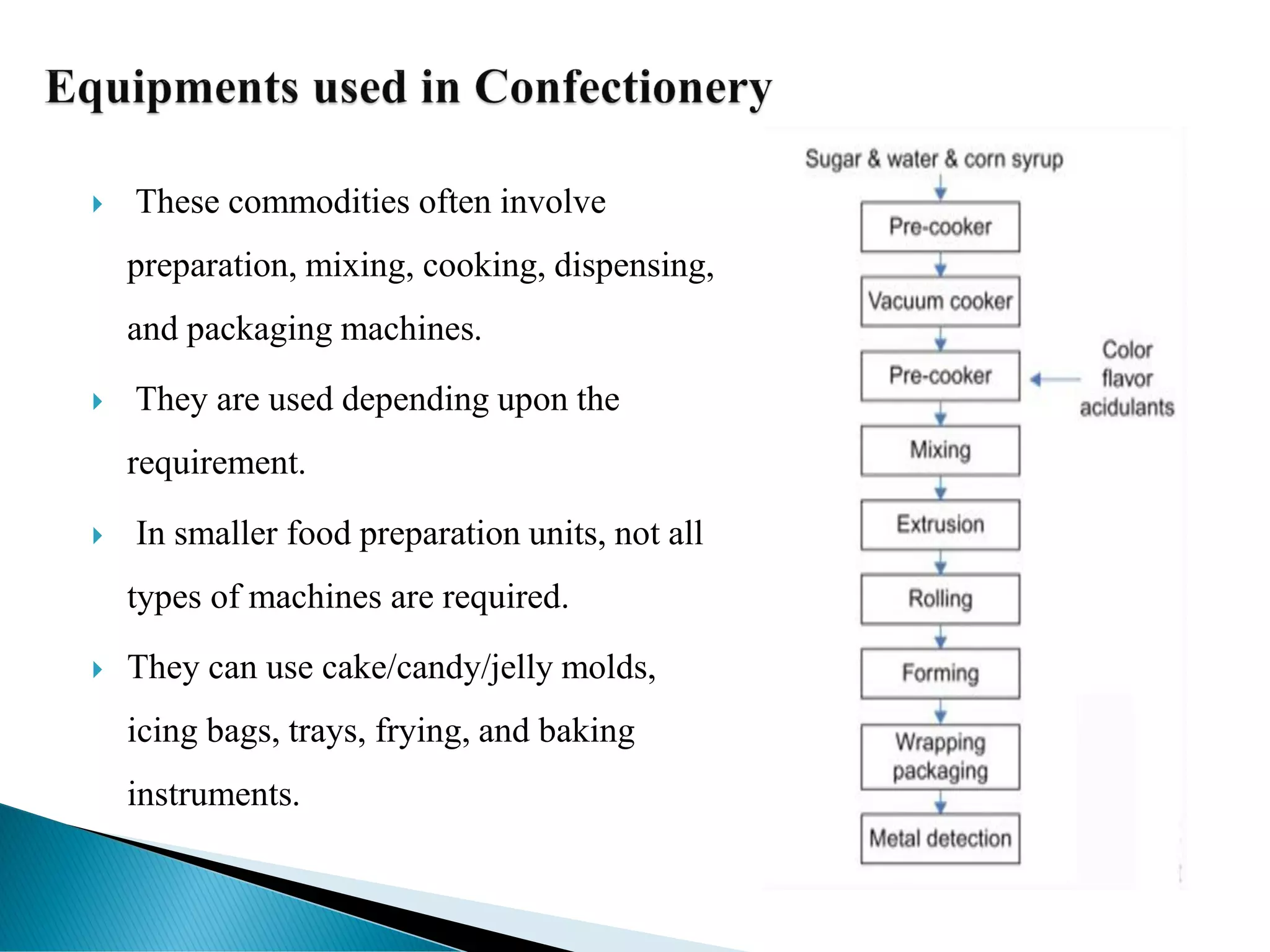
 These commodities often involve
preparation, mixing, cooking, dispensing,
and packaging machines.
 They are used depending upon the
requirement.
 In smaller food preparation units, not all
types of machines are required.
 They can use cake/candy/jelly molds,
icing bags, trays, frying, and baking
instruments.
 Dissolving- dissolved in water or a
mixture of water and glucose syrup.
 Emulsifying- The fat and skim milk solids
are added into the dissolved sugar or
glucose syrup which makes the emulsion.
 Cooking- It is controlled by measuring the
boiling point of 118-132°C for regular
toffee and 146-154°C for hard toffee
 Shaping the Toffee- Toffee is normally
run into trays, cut into slabs or used as a
component of other confectionery.
◦ There are three processes used for
shaping toffees for individual twist
wrapping.
✓ Slab Process- This is a very old-
fashioned way of shaping toffee. The
toffee is poured, usually manually,
onto water-cooled slabs. In order to
facilitate manipulation of the toffee
the slabs are coated with a release
agent.
✓ Cut and Wrap Process-the toffee is
cooled, usually by pouring it onto a
cooled metal drum or band , then fed
to rollers that shape the mass into a
cone and then a rope.
 The product is cut with a rotating knife
and the pieces are fed onto the wrapping
paper and twist wrapped.
✓ Depositing/ Moulding- The high
technology method is to deposit the
toffee into rubber moulds.
▪ Toffee Texture- the proportion of rework
improves toffee texture and improves
flow characteristics in depositing
processes.
▪ Packaging and storage- mostly packed in
individual wraps can be made from
waxed paper, aluminium foil and
cellulose film or a combination of these.
▪ Mostly stored under the ambient
conditions of temperature and humidity.
Toffee Manufacturing
Let us see a few popular confections −
 Caramel − Wet caramel is prepared by melting sugar with
water then cooked with milk powder. Dry caramel is prepared
by cooking sugar by itself until it liquefies and caramelizes.
 Chocolates − Bite-sized confectioneries generally made with
chocolate.
 Dodol − A toffee-like confection prepared in South East Asian
countries such Indonesia, Malaysia, and the Philippines.
•Fondant − It is a thick paste made of sugar and water. It is often
flavored and colored, used in preparation of sweets, icing, and cake
decoration.
•Fudge − It is made by boiling milk, milk powder, and sugar
together.
•Halwaa − It is made of the extract of wheat soaked overnight,
sieved and cooked with sugar and color till it becomes thick. It is
often arranged in layers, and cut into cubes.
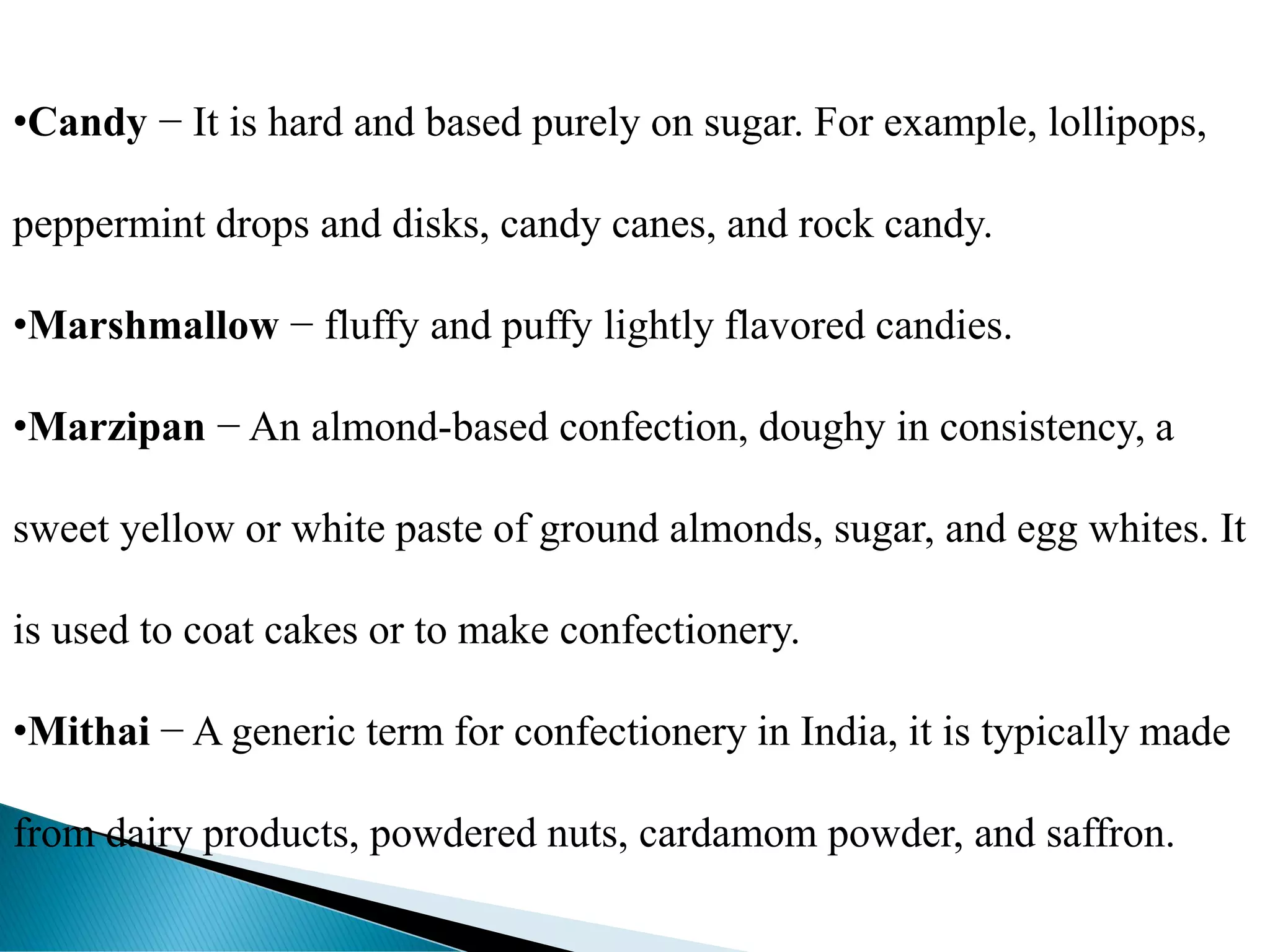
•Candy − It is hard and based purely on sugar. For example, lollipops,
peppermint drops and disks, candy canes, and rock candy.
•Marshmallow − fluffy and puffy lightly flavored candies.
•Marzipan − An almond-based confection, doughy in consistency, a
sweet yellow or white paste of ground almonds, sugar, and egg whites. It
is used to coat cakes or to make confectionery.
•Mithai − A generic term for confectionery in India, it is typically made
from dairy products, powdered nuts, cardamom powder, and saffron.
Confectioneries - Food Technology

Confectioneries - Food Technology

  • 1.
    A. INDUMATHI Assistant Professor PG& Research Department of Biotechnology BON SECOURS COLLEGE FOR WOMEN Thanjavur
  • 2.
     Today, alarge range of colorful, flavorful confections are available in the market, which serve as a treat to the tongue as well as our eyes.  May it be the candies, bite-size chocolates, cookies, lollies, or other sweets; not only children but grown-ups also favor them.  Adults being health conscious, consume them with confessions.
  • 3.
     Multi –Component confectionery products are not new, their complexity had increased tremendously during the past 100 years or so.  The demand for new taste and textural sensations are the governing factors in confectionery industry.  They are attributed largely by the ingredients used for the preparation of confectionery products.
  • 4.
     In Europeand US, syrups, caramel, cocoa powder, milk powder, and sugar are generally used.  In Indian subcontinent, the confections are often generally referred to as Mithai, which is based on the main ingredient khoyaa; the thick hard cream of milk.  Mithai is also made from Halwaa, the wheat extract or it can be made from gram flour.
  • 5.
     Confectionery isan art of making confections by using sugar and a carbohydrate based binding medium.  The confections is broadly divided into the five categories they are namely,  Flour confection.  Sugar confection.  Chocolate confection.  Milk confection.  Other confections.
  • 6.
    Flour Confections : They are cakes, tarts, doughnuts, cookies, sweet pastries, or any similar confection made using flour. They are mainly served in desserts course.
  • 7.
    Sugar confection:  Theyare candies, chewing gums, and jellies. The flavor and colour of the confections are due to the main ingredient.  They are made at high temperatures around 150oC.  The spoilage is low and hence they have longer shelf life without refrigeration.
  • 8.
    Chocolate Confections:  Theyuse cocoa powder and chocolate syrup as their main ingredient.  They need refrigeration during warm weather.
  • 9.
    Milk / Dairyconfection:  They are thick milk cream based/milk powder based confections made by combining various dry fruits, flavors, and colors into them.  They are treated as a part of main course. They are best when fresh. Their shelf life is short but can be extended by refrigeration.
  • 10.
    Other confections:  Theyare made from extract of soaked wheat, which is flavored, thickened, and colored.
  • 11.
     The majoringredients used in confectionery industry are ◦ Sugar ◦ Invert Sugar ◦ Glucose Syrup (Corn Syrup) ◦ Dairy Ingredients ◦ Vegetable Fats ◦ Hydrocolloids- Gums & Gelling agents ◦ Emulsifiers ◦ Colours, Flavours ◦ Antioxidants, Acidulants ◦ Salt ◦ Sugar substitutes
  • 12.
    Sugar confectionery →Boiled sweets Toffee/ Fudge Gums/ Pastilles Chewing Gum Liquorice Type of Sugar ↓ White granulated Yes Yes Yes Yes Yes Specially white granulated Yes Yes Yes No Yes Screened specialities Yes Yes Yes No No Milled specialities Yes Yes No Yes No Brown sugar No Yes No No Yes Liquid sugar Yes Yes Yes No No Syrups and treacles No Yes No No Yes Table 1.1 Forms of sugar commonly used in sugar confectionery (Source: Edward, W.P., The science of sugar confectionery) Sugar (Glucose/Sucrose) − It is required to bring sweetness to the confection. •Solubility- 66% at Room temp. & 83% under boiling condition •Available in no. of forms depending on particle size.
  • 13.
    Invert Sugar: isavailable as syrup only. •Significance- can be prepared at high concentrations as high as 80% at ambient conditions. •Have sufficiently low water activity – making the product hygroscopic and capable of restricting microbial proliferation. •High cost of it , has declined its use with effective replacement of glucose syrup. •However, it can be produced/ recovered by treating sugar containing waste, thus making economical considerations for the manufacturers.
  • 14.
    Glucose syrup: -commercial name is Corn syrup. • Has largely replaced invert sugar as confectionery ingredient. •Maltose is the major constituent of Corn syrup solids (CSS) , but not Dextrose. •The most common type of Glucose syrup in confectionery is 42 DE. •The other grade product is 68DE – same as invert sugar syrup. •It is solely used in Chocolate confectionery. •The flavour of the chocolate depends upon the Cocoa solid: sugar ratio in the formulations.
  • 15.
    Dairy Ingredients: Choiceseither Sweetened Condensed Milk / Milk powder. •Sweetened Condensed Milk : most referred in Toffee manufacturing. •Earliest way of producing a stable and long life product from milk. •Advantage: milk fat can be replaced with vegetable fat when req. •Toffees made from SCM are smoother and less damaged. •It has good shelf life with out refrigeration. •However, being stick it needs handling skills .
  • 16.
    Milk Powder −It brings thick and moist physique to the confection. •Advantageous in terms of economy, quality, nutritive properties, functional properties and storage stability as well. •In terms of nutritional considerations , they do not form a major part of diet. •The less severe heat treatment during milk powder production can create problems. • The bacterial enzyme lipases present are much more resistant to heat treatment. •If the substrate is butterfat, then it may give ‘buttery’ or ‘creamy flavour’
  • 17.
    Butter: is themain ingredient of toffees and butterscotch. But traditionally, Rancid butter is preferred over the rest. • Butyric acid, at low levels, gives a pleasant, buttery flavour. •At higher levels, it gives a cheesy flavour and at still higher levels takes on notes of Parmesan cheese. •The lipolysed butter is a butter that has been deliberately treated with a lipolytic enzyme to release the fatty acids. •Lipolysed butter can be described as 'all natural'. • However, Butter is avoided for the use in chocolate confectionery as it gives fat bloom defect. Whey Products: - the by product of cheese making, a good source of Lactose & Serum proteins. •It is the only product used in some Toffee, and not in other confections. •But still there is no evidence of major role of this class of products in the confectionery.
  • 18.
    Vegetable Fats: •The arethe ultimate choice as a substitute for milk fat. •Very economic- cost of Vegetable oils-Rs. 9-15/lt, Ghee- Rs. 400/lt. •The most commonly used- in toffee manufacturing is hardened Palm Kernel oil. •Palm Kernel oil is quiet cheap but is lauric fat, that influences the shelf life because of the soapy rancidity.
  • 19.
    Hydrocolloids- Gums &Gelling Agents •These ingredients are the thickeners and stabilizers. •Exclusively in confectionery products which require long, tough, gum-like textures. Agent Chemistry Properties Source Gelatine Protein Thermo-reversible gelling Bovine or Porcine hides or bones Starch Carbohydrates Wheat, Maize, Potato (cereals and tubers) Agar agar Polysaccharide Red seaweed Carrageenan Sulfated polysaccharide Red seaweed Gum acacia Polysaccharide Gum Trees of Acacia senegal Gellan gum Polysaccharide Thermo-reversible or irreversible gelling Pseudomonal elodea Alginates Polysaccharide Irreversible gelling Brown seaweed Pectin Polygalacturonic acid Citrus peel Guar gum Galactomannan Thickening Seed of Cyamopsis tetragonolobus Locust bean gum Galactomannan Endosperm of locust bean Xanthan gum Polysaccharide Xanthomonas campestris Egg albumin Protein Whipping, irreversible gelling Egg white Enzyme modified soy protein Protein Whipping Soybean Table1.2Chemistry,propertiesandsourcesofvarious hydrocolloids (Source:Edward,W.P.,Thescienceofsugarconfectionery)
  • 20.
    Emulsifiers: • Emulsifiers areused in a range of confectionery products except in fat- free products such as boiled sweets, gums or jellies. •Many times it makes essential to use emulsifiers as most chocolate based confections are fat rich. •Use of wrong emulsifier or an excess of emulsifier causes handling problems. •Milk proteins are one of its classes which have good emulsification properties. •Emulsifiers can be eliminated from the recipe of toffees or caramels by using a larger quantity of milk solids. •Distilled monoglycerides are high purity emulsifiers. •Toffee is the class of sugar confectionery which mostly use the emulsifiers. •The structure/ Texture also contains emulsifier as the essential ingredient.
  • 21.
    Colours: • Colour additivesare widely used in foods and beverages to mask variations, and make products more visually appealing . • Chocolate confectionery need not any colouring agent in their formulations, but at present the use of colours in foods is strictly regulated and ensured for the safety. • Colour has an important influence on flavour perception and so consumer acceptance. •The colouring substances should possess several attributes and they are: ➢It should be stable to heat and light. ➢It should be stable to reducing sugar and resistance to sulfur dioxide is also useful. ➢It should be water soluble. Most sugar confectionery products contain very little of the fat.
  • 22.
    Flavour: are complexsubstances, a combination of both basic aroma and taste compounds. • Based on the source, they are classified as: Natural flavours •Derived from Natural Sources • Common – Vanilla, extracted from plant Vanilla • Others- Citrus friuts , Herbs etc., • Extracted by solvents. • Safety- but some side effects can be detected • Significance: Economic, Stability, Feasibility & Availability. Nature-identical flavours •A group of flavouring agents present in nature, but can be synthesized to replace natural flavours. • Vanilla flavour- Synthetic Vanillin •Benzaldehyde- as Almond flavour •Tested for safety-safer than natural flavours. Synthetic flavours • Synthesized artificially, resemble to nature derived flavours. •They are complex group of chemical compounds. •Stable under various processing & storage conditions.
  • 23.
    Anti oxidants: •Used tocheck the oxidation of lipid in the food system. •Therefore extend the Shelf life & imparting the Stability. •BHT (Butylated hydroxanisol) – a gallate based antioxidant – used widely in confectionery recipe. •Tocopherol- Natural antioxidant can be used but, effect is not as good as synthetic food grade antioxidants. Salt: • Widely used in food industry, but in confectionery- guided by only one property – flavour enhancing ability • Can be used in the confectionery @ 0.5 % to improve the flavour profile of the product.
  • 24.
    Acidulant: •The only useof Acidulant is to assist the in-situ inversion process during boiling of the content. • Citric acid or Tartaric acid is used whenever needed in the recipe for the assistance in the inversion of sucrose. • Apart from the inversion, it also gives pleasant Acid notes. Sugar Substitutes: Sugar – replaced with 2 components ❖Bulking Sweeteners-includes, polyols like sorbitol, lactitol, polydextrose, maltitol, isomalt, erythritol, etc. ❖Intense Sweeteners- imparts enough sweetness comparable to conventional sugar confectionery. •A blend of sweeteners provides more sweetness than the sum of the amount provided by each individually.
  • 25.
    • Fruits/Dry Fruits/Nuts− They are a prominent ingredient. Fruits are cooked with or without sugar to get sweet thick pulp. Dry fruit pieces, Nut powders, broken Nuts, or roasted nuts are used.
  • 26.
     These commoditiesoften involve preparation, mixing, cooking, dispensing, and packaging machines.  They are used depending upon the requirement.  In smaller food preparation units, not all types of machines are required.  They can use cake/candy/jelly molds, icing bags, trays, frying, and baking instruments.
  • 27.
     Dissolving- dissolvedin water or a mixture of water and glucose syrup.  Emulsifying- The fat and skim milk solids are added into the dissolved sugar or glucose syrup which makes the emulsion.  Cooking- It is controlled by measuring the boiling point of 118-132°C for regular toffee and 146-154°C for hard toffee  Shaping the Toffee- Toffee is normally run into trays, cut into slabs or used as a component of other confectionery. ◦ There are three processes used for shaping toffees for individual twist wrapping. ✓ Slab Process- This is a very old- fashioned way of shaping toffee. The toffee is poured, usually manually, onto water-cooled slabs. In order to facilitate manipulation of the toffee the slabs are coated with a release agent. ✓ Cut and Wrap Process-the toffee is cooled, usually by pouring it onto a cooled metal drum or band , then fed to rollers that shape the mass into a cone and then a rope.  The product is cut with a rotating knife and the pieces are fed onto the wrapping paper and twist wrapped. ✓ Depositing/ Moulding- The high technology method is to deposit the toffee into rubber moulds. ▪ Toffee Texture- the proportion of rework improves toffee texture and improves flow characteristics in depositing processes. ▪ Packaging and storage- mostly packed in individual wraps can be made from waxed paper, aluminium foil and cellulose film or a combination of these. ▪ Mostly stored under the ambient conditions of temperature and humidity. Toffee Manufacturing
  • 28.
    Let us seea few popular confections −  Caramel − Wet caramel is prepared by melting sugar with water then cooked with milk powder. Dry caramel is prepared by cooking sugar by itself until it liquefies and caramelizes.  Chocolates − Bite-sized confectioneries generally made with chocolate.  Dodol − A toffee-like confection prepared in South East Asian countries such Indonesia, Malaysia, and the Philippines.
  • 29.
    •Fondant − Itis a thick paste made of sugar and water. It is often flavored and colored, used in preparation of sweets, icing, and cake decoration. •Fudge − It is made by boiling milk, milk powder, and sugar together. •Halwaa − It is made of the extract of wheat soaked overnight, sieved and cooked with sugar and color till it becomes thick. It is often arranged in layers, and cut into cubes.
  • 30.
    •Candy − Itis hard and based purely on sugar. For example, lollipops, peppermint drops and disks, candy canes, and rock candy. •Marshmallow − fluffy and puffy lightly flavored candies. •Marzipan − An almond-based confection, doughy in consistency, a sweet yellow or white paste of ground almonds, sugar, and egg whites. It is used to coat cakes or to make confectionery. •Mithai − A generic term for confectionery in India, it is typically made from dairy products, powdered nuts, cardamom powder, and saffron.