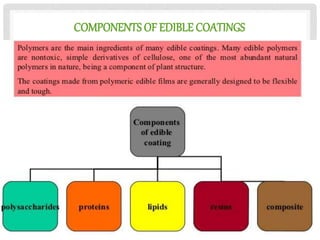
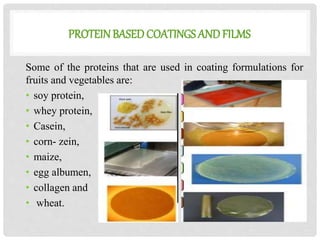
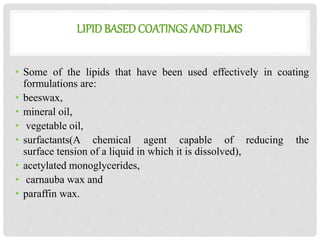
Edible coatings can be made from polysaccharides like starch, pectin, cellulose, and alginate. They provide strength and integrity while inhibiting oxygen, aroma, and oil transfer but are not effective moisture barriers. Protein coatings also act as oxygen barriers and use proteins like soy, whey, and zein. Lipid coatings use beeswax, oils, and waxes for moisture barrier properties. Composite coatings combine materials for improved preservation of fruits and vegetables by reducing water loss, browning, and extending shelf life. Thickness must be optimized to prevent quality issues from limited gas exchange.