Dr Vinodh Kumar,O.R
Division of Epidemiology
ICAR-Indian Veterinary Research Institute
Izatnagar, Uttar Pradesh, India
Analyse multiple isolates
within a given species
Study the small differences
between the same species.
 In epidemiological
studies, and to study the
pathogenesis of infection.
The process of
differentiating strains
based on their
phenotypic and
genotypic differences is
known as 'typing'.
Phenotypic techniques
detect characteristics expressed by the microorganism
Genotypic techniques
direct DNA-based analysis of chromosomal or
extrachromosomal genetic elements
Based on size, staining properties, biochemical
properties and antigenic properties
Biotyping
Phage typing
Bacteriocine typing
Serotyping
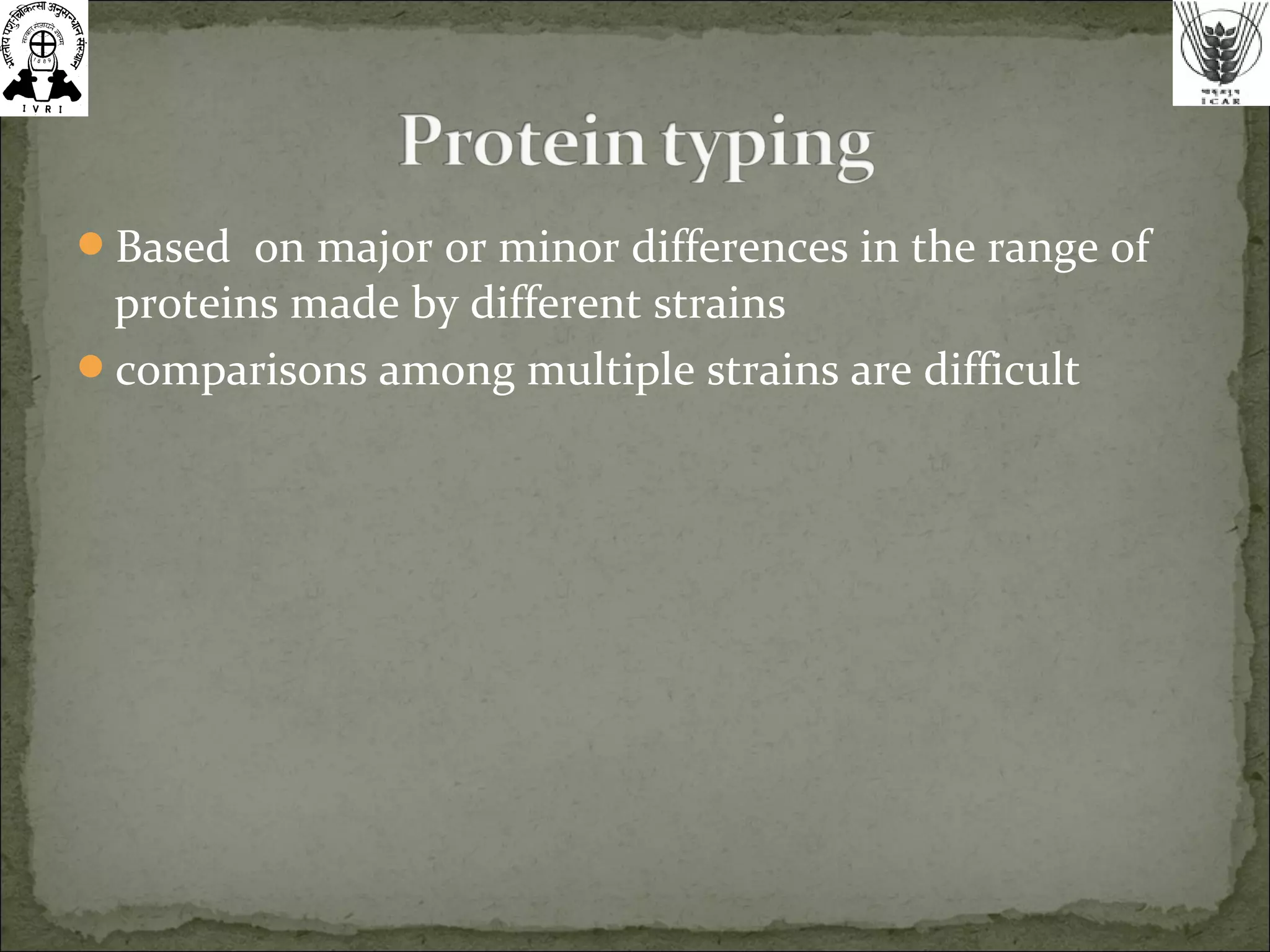
Antimicrobial Susceptibility Typing (Antibiogram):
Protein typing
Multilocus Enzyme Electrophoresis (MLEE)
 Based on study of the microbial DNA, the
chromosome and plasmid, their composition,
homology and presence or absence of specific genes
Plasmid analysis
Restriction Endonuclease Analysis
PFGE of Chromosomal DNA
Southern blot analysis
Nucleotide Sequence Analysis
Metabolic activities expressed by an isolate, colonial
morphology and environmental tolerances
Manual or automated
referred as ‘biotypes’
Based on the pattern of resistance or susceptibility to
a standard set of bacteriophages
 referred as ‘phage types’
 Based on the susceptibility to a set of bacterial
peptides (bacteriocine) produced by certain bacteria.
Bacterocines produced by a particular strain are
usually only active against other strains of the same
species.
 Based on antigenic determinants expressed on the
cell surface
referred as ‘Serotypes’
 Based on comparison of different isolates to a set of
antibiotics
Based on major or minor differences in the range of
proteins made by different strains
comparisons among multiple strains are difficult
The isolates are analysed for differences in the
eletrophoretic mobilities of a set of metablolic
enzymes
referred to as ‘electromorph’
 Based on the number and sizes of plasmids carried by
an isolate
Can be determined by preparing a plasmid extract
and subjecting to gel electrophoresis
A restriction endonuclease enzymatically cuts DNA at
a specific nucleotide recognition sequence
Bacterial DNA is digested with endonucleases that
have relatively frequent restriction sites
A variation of agarose gel electrophoresis
The orientation of the electric field across the gel is
changed periodically
Large fragments can be effectively separated by size
Detect only the particular restriction fragment
fragments transferred to nitrocellulose membranes
and detected by labelled DNA probes
Variations in the number and sizes of the fragments
Ribotyping:
 Blotting of restriction enzyme digestion of rRNA,
and one or more tRNAs
Genotype information
Automated techniques to sequence
Possible to compare multiple isolates.
Microbial typing

Microbial typing

  • 1.
    Dr Vinodh Kumar,O.R Divisionof Epidemiology ICAR-Indian Veterinary Research Institute Izatnagar, Uttar Pradesh, India
  • 2.
    Analyse multiple isolates withina given species Study the small differences between the same species.  In epidemiological studies, and to study the pathogenesis of infection. The process of differentiating strains based on their phenotypic and genotypic differences is known as 'typing'.
  • 3.
    Phenotypic techniques detect characteristicsexpressed by the microorganism Genotypic techniques direct DNA-based analysis of chromosomal or extrachromosomal genetic elements
  • 4.
    Based on size,staining properties, biochemical properties and antigenic properties Biotyping Phage typing Bacteriocine typing Serotyping Antimicrobial Susceptibility Typing (Antibiogram): Protein typing Multilocus Enzyme Electrophoresis (MLEE)
  • 5.
     Based onstudy of the microbial DNA, the chromosome and plasmid, their composition, homology and presence or absence of specific genes Plasmid analysis Restriction Endonuclease Analysis PFGE of Chromosomal DNA Southern blot analysis Nucleotide Sequence Analysis
  • 6.
    Metabolic activities expressedby an isolate, colonial morphology and environmental tolerances Manual or automated referred as ‘biotypes’
  • 7.
    Based on thepattern of resistance or susceptibility to a standard set of bacteriophages  referred as ‘phage types’
  • 8.
     Based onthe susceptibility to a set of bacterial peptides (bacteriocine) produced by certain bacteria. Bacterocines produced by a particular strain are usually only active against other strains of the same species.
  • 9.
     Based onantigenic determinants expressed on the cell surface referred as ‘Serotypes’
  • 10.
     Based oncomparison of different isolates to a set of antibiotics
  • 11.
    Based on majoror minor differences in the range of proteins made by different strains comparisons among multiple strains are difficult
  • 12.
    The isolates areanalysed for differences in the eletrophoretic mobilities of a set of metablolic enzymes referred to as ‘electromorph’
  • 13.
     Based onthe number and sizes of plasmids carried by an isolate Can be determined by preparing a plasmid extract and subjecting to gel electrophoresis
  • 14.
    A restriction endonucleaseenzymatically cuts DNA at a specific nucleotide recognition sequence Bacterial DNA is digested with endonucleases that have relatively frequent restriction sites
  • 15.
    A variation ofagarose gel electrophoresis The orientation of the electric field across the gel is changed periodically Large fragments can be effectively separated by size
  • 16.
    Detect only theparticular restriction fragment fragments transferred to nitrocellulose membranes and detected by labelled DNA probes Variations in the number and sizes of the fragments Ribotyping:  Blotting of restriction enzyme digestion of rRNA, and one or more tRNAs
  • 17.
    Genotype information Automated techniquesto sequence Possible to compare multiple isolates.