Vishal L. Kulkarni
Dept. of Microbiology
Hepatitis B & C
Hepatitis B
 It is a liver disease caused by the hepatitis B virus
(HBV).
 It ranges in severity from a mild illness, lasting a few
weeks (acute), to a serious long-term (chronic)
illness that can lead to liver disease or liver cancer.
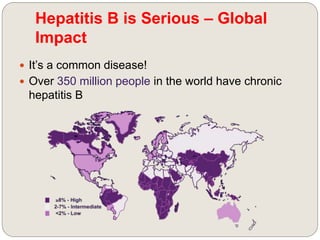
Hepatitis B is Serious – Global
Impact
 It’s a common disease!
 Over 350 million people in the world have chronic
hepatitis B
HBV classification and morphology :
 Family -Hepadnaviridae.
 Genus- Orthohepadnavirus
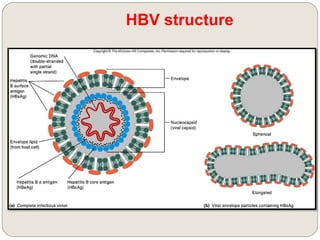
 42 nm DNA virus with outer envelope and inner
core.
 Blumberg in 1965 discovered , named as Australia
antigen.
 Later it was found to be surface component of HBV.
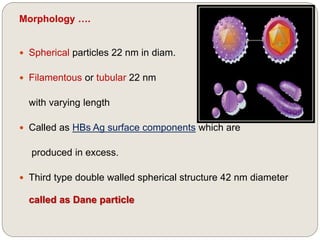
Morphology ….
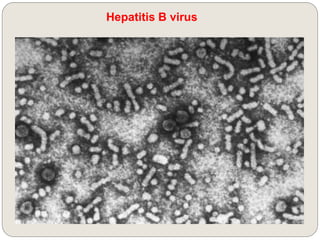
 Spherical particles 22 nm in diam.
 Filamentous or tubular 22 nm
with varying length
 Called as HBs Ag surface components which are
produced in excess.
 Third type double walled spherical structure 42 nm diameter
called as Dane particle
HBV structure
Hepatitis B virus
Epidemiology:
 Natural infection occurs only in humans.
 No animal reservoir.
 Virus is maintained in large pools of carrier.
 Usually occur as sporadics.
 Occasional outbreaks occur in hospitals, orphanages
and institutions for mentally handicapped.
 India falls in intermediate group: carrier rate 2-7%.
High in southern part of India .
Carrier :
- Person with detectable HBsAg in blood for more than
six months.
Super carrier:
- High titres of HBsAg+HBeAg+ DNA polymerase
+HBV in circulation.
- Elevated transaminases. Highly infectious.
Simple carrier:
- Low titres of HBsAg
- Negative for HBeAg, DNA polymerase ,HBV. Low
infectivity
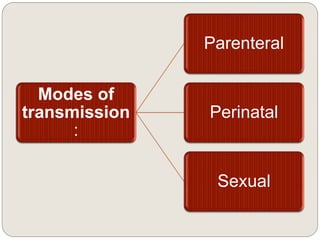
Modes of
transmission
:
Parenteral
Perinatal
Sexual
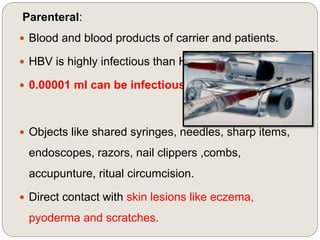
Parenteral:
 Blood and blood products of carrier and patients.
 HBV is highly infectious than HIV.
 0.00001 ml can be infectious..!
 Objects like shared syringes, needles, sharp items,
endoscopes, razors, nail clippers ,combs,
accupunture, ritual circumcision.
 Direct contact with skin lesions like eczema,
pyoderma and scratches.
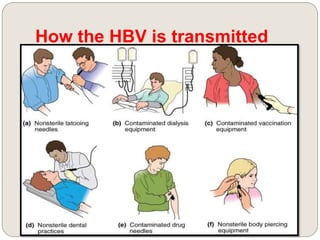
How the HBV is transmitted
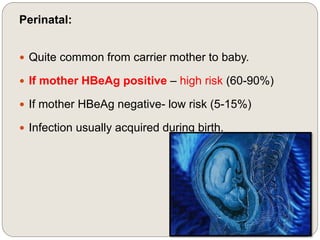
Perinatal:
 Quite common from carrier mother to baby.
 If mother HBeAg positive – high risk (60-90%)
 If mother HBeAg negative- low risk (5-15%)
 Infection usually acquired during birth.
Sexual:
 more common in developed countries, particularly in
promiscuous homosexuals.
 Can also occur by artificial insemination.
 Saliva ,breast milk, semen, vaginal secretion ,urine,
bile and feces also contains virus.
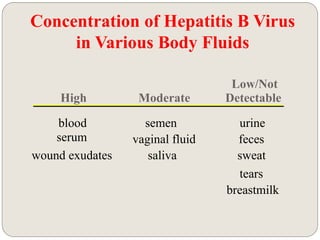
High Moderate
Low/Not
Detectable
blood semen urine
serum vaginal fluid feces
wound exudates saliva sweat
tears
breastmilk
Concentration of Hepatitis B Virus
in Various Body Fluids
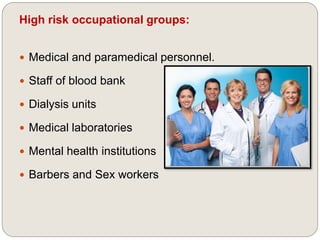
High risk occupational groups:
 Medical and paramedical personnel.
 Staff of blood bank
 Dialysis units
 Medical laboratories
 Mental health institutions
 Barbers and Sex workers
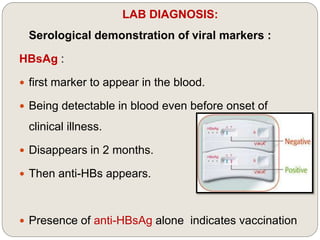
LAB DIAGNOSIS:
Serological demonstration of viral markers :
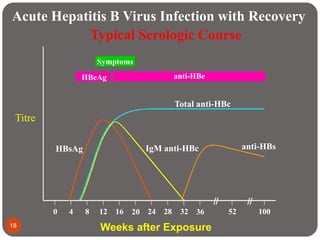
HBsAg :
 first marker to appear in the blood.
 Being detectable in blood even before onset of
clinical illness.
 Disappears in 2 months.
 Then anti-HBs appears.
 Presence of anti-HBsAg alone indicates vaccination
Symptoms
HBeAg anti-HBe
Total anti-HBc
IgM anti-HBc anti-HBsHBsAg
0 4 8 12 16 20 24 28 32 36 52 100
Acute Hepatitis B Virus Infection with Recovery
Typical Serologic Course
Weeks after Exposure
Titre
18
HBcAg:
 Not demonstrable in circulation.
 Antibody appears after 1-2 wk of appearance HBsAg.
 Earliest antibody marker to be seen in blood.
IgM anti- HBc: acute infection
IgG anti- HBc: remote infection
HBeAg:
 Appears concurrently with HBsAg.
 Indicator of active intrahepatic viral replication.
 Its presence denotes high infectivity.
Prophylaxis :
 Avoiding risky practices like promiscuous
sex, injectable drug abuse, direct or indirect
contact with blood, semen or other body fluids of patients
and carrier.
 Use of disposable syringes, needles.
 Screening of blood, semen and organ donors.
 Health education
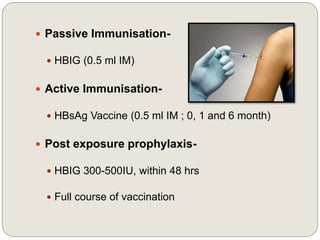
 Immunization : Best method
 Passive Immunisation-
 HBIG (0.5 ml IM)
 Active Immunisation-
 HBsAg Vaccine (0.5 ml IM ; 0, 1 and 6 month)
 Post exposure prophylaxis-
 HBIG 300-500IU, within 48 hrs
 Full course of vaccination
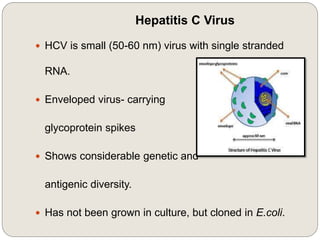
Hepatitis C Virus
 HCV is small (50-60 nm) virus with single stranded
RNA.
 Enveloped virus- carrying
glycoprotein spikes
 Shows considerable genetic and
antigenic diversity.
 Has not been grown in culture, but cloned in E.coli.
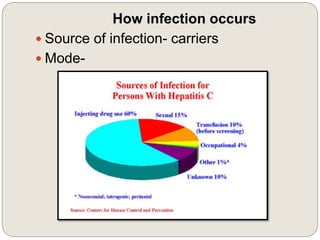
How infection occurs
 Source of infection- carriers
 Mode-
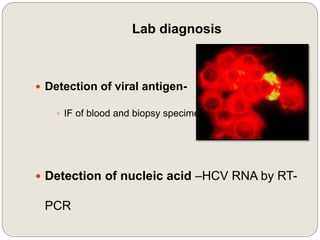
Lab diagnosis
 Detection of viral antigen-
 IF of blood and biopsy specimen
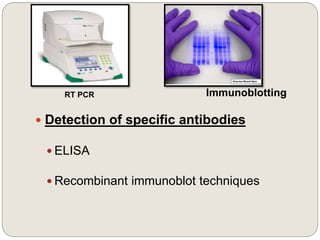
 Detection of nucleic acid –HCV RNA by RT-
PCR
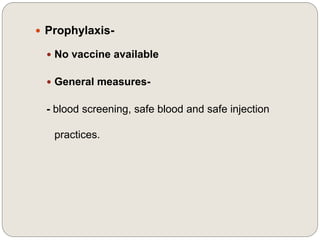
Immunoblotting
 Detection of specific antibodies
 ELISA
 Recombinant immunoblot techniques
RT PCR
 Prophylaxis-
 No vaccine available
 General measures-
- blood screening, safe blood and safe injection
practices.
Thank You…

Hepatitis b & c

  • 1.
    Vishal L. Kulkarni Dept.of Microbiology Hepatitis B & C
  • 2.
    Hepatitis B  Itis a liver disease caused by the hepatitis B virus (HBV).  It ranges in severity from a mild illness, lasting a few weeks (acute), to a serious long-term (chronic) illness that can lead to liver disease or liver cancer.
  • 3.
    Hepatitis B isSerious – Global Impact  It’s a common disease!  Over 350 million people in the world have chronic hepatitis B
  • 4.
    HBV classification andmorphology :  Family -Hepadnaviridae.  Genus- Orthohepadnavirus  42 nm DNA virus with outer envelope and inner core.  Blumberg in 1965 discovered , named as Australia antigen.  Later it was found to be surface component of HBV.
  • 5.
    Morphology ….  Sphericalparticles 22 nm in diam.  Filamentous or tubular 22 nm with varying length  Called as HBs Ag surface components which are produced in excess.  Third type double walled spherical structure 42 nm diameter called as Dane particle
  • 6.
  • 7.
  • 8.
    Epidemiology:  Natural infectionoccurs only in humans.  No animal reservoir.  Virus is maintained in large pools of carrier.  Usually occur as sporadics.  Occasional outbreaks occur in hospitals, orphanages and institutions for mentally handicapped.  India falls in intermediate group: carrier rate 2-7%. High in southern part of India .
  • 9.
    Carrier : - Personwith detectable HBsAg in blood for more than six months. Super carrier: - High titres of HBsAg+HBeAg+ DNA polymerase +HBV in circulation. - Elevated transaminases. Highly infectious. Simple carrier: - Low titres of HBsAg - Negative for HBeAg, DNA polymerase ,HBV. Low infectivity
  • 10.
  • 11.
    Parenteral:  Blood andblood products of carrier and patients.  HBV is highly infectious than HIV.  0.00001 ml can be infectious..!  Objects like shared syringes, needles, sharp items, endoscopes, razors, nail clippers ,combs, accupunture, ritual circumcision.  Direct contact with skin lesions like eczema, pyoderma and scratches.
  • 12.
    How the HBVis transmitted
  • 13.
    Perinatal:  Quite commonfrom carrier mother to baby.  If mother HBeAg positive – high risk (60-90%)  If mother HBeAg negative- low risk (5-15%)  Infection usually acquired during birth.
  • 14.
    Sexual:  more commonin developed countries, particularly in promiscuous homosexuals.  Can also occur by artificial insemination.  Saliva ,breast milk, semen, vaginal secretion ,urine, bile and feces also contains virus.
  • 15.
    High Moderate Low/Not Detectable blood semenurine serum vaginal fluid feces wound exudates saliva sweat tears breastmilk Concentration of Hepatitis B Virus in Various Body Fluids
  • 16.
    High risk occupationalgroups:  Medical and paramedical personnel.  Staff of blood bank  Dialysis units  Medical laboratories  Mental health institutions  Barbers and Sex workers
  • 17.
    LAB DIAGNOSIS: Serological demonstrationof viral markers : HBsAg :  first marker to appear in the blood.  Being detectable in blood even before onset of clinical illness.  Disappears in 2 months.  Then anti-HBs appears.  Presence of anti-HBsAg alone indicates vaccination
  • 18.
    Symptoms HBeAg anti-HBe Total anti-HBc IgManti-HBc anti-HBsHBsAg 0 4 8 12 16 20 24 28 32 36 52 100 Acute Hepatitis B Virus Infection with Recovery Typical Serologic Course Weeks after Exposure Titre 18
  • 19.
    HBcAg:  Not demonstrablein circulation.  Antibody appears after 1-2 wk of appearance HBsAg.  Earliest antibody marker to be seen in blood. IgM anti- HBc: acute infection IgG anti- HBc: remote infection HBeAg:  Appears concurrently with HBsAg.  Indicator of active intrahepatic viral replication.  Its presence denotes high infectivity.
  • 20.
    Prophylaxis :  Avoidingrisky practices like promiscuous sex, injectable drug abuse, direct or indirect contact with blood, semen or other body fluids of patients and carrier.  Use of disposable syringes, needles.  Screening of blood, semen and organ donors.  Health education  Immunization : Best method
  • 21.
     Passive Immunisation- HBIG (0.5 ml IM)  Active Immunisation-  HBsAg Vaccine (0.5 ml IM ; 0, 1 and 6 month)  Post exposure prophylaxis-  HBIG 300-500IU, within 48 hrs  Full course of vaccination
  • 22.
    Hepatitis C Virus HCV is small (50-60 nm) virus with single stranded RNA.  Enveloped virus- carrying glycoprotein spikes  Shows considerable genetic and antigenic diversity.  Has not been grown in culture, but cloned in E.coli.
  • 23.
    How infection occurs Source of infection- carriers  Mode-
  • 24.
    Lab diagnosis  Detectionof viral antigen-  IF of blood and biopsy specimen  Detection of nucleic acid –HCV RNA by RT- PCR
  • 25.
    Immunoblotting  Detection ofspecific antibodies  ELISA  Recombinant immunoblot techniques RT PCR
  • 26.
     Prophylaxis-  Novaccine available  General measures- - blood screening, safe blood and safe injection practices.
  • 27.