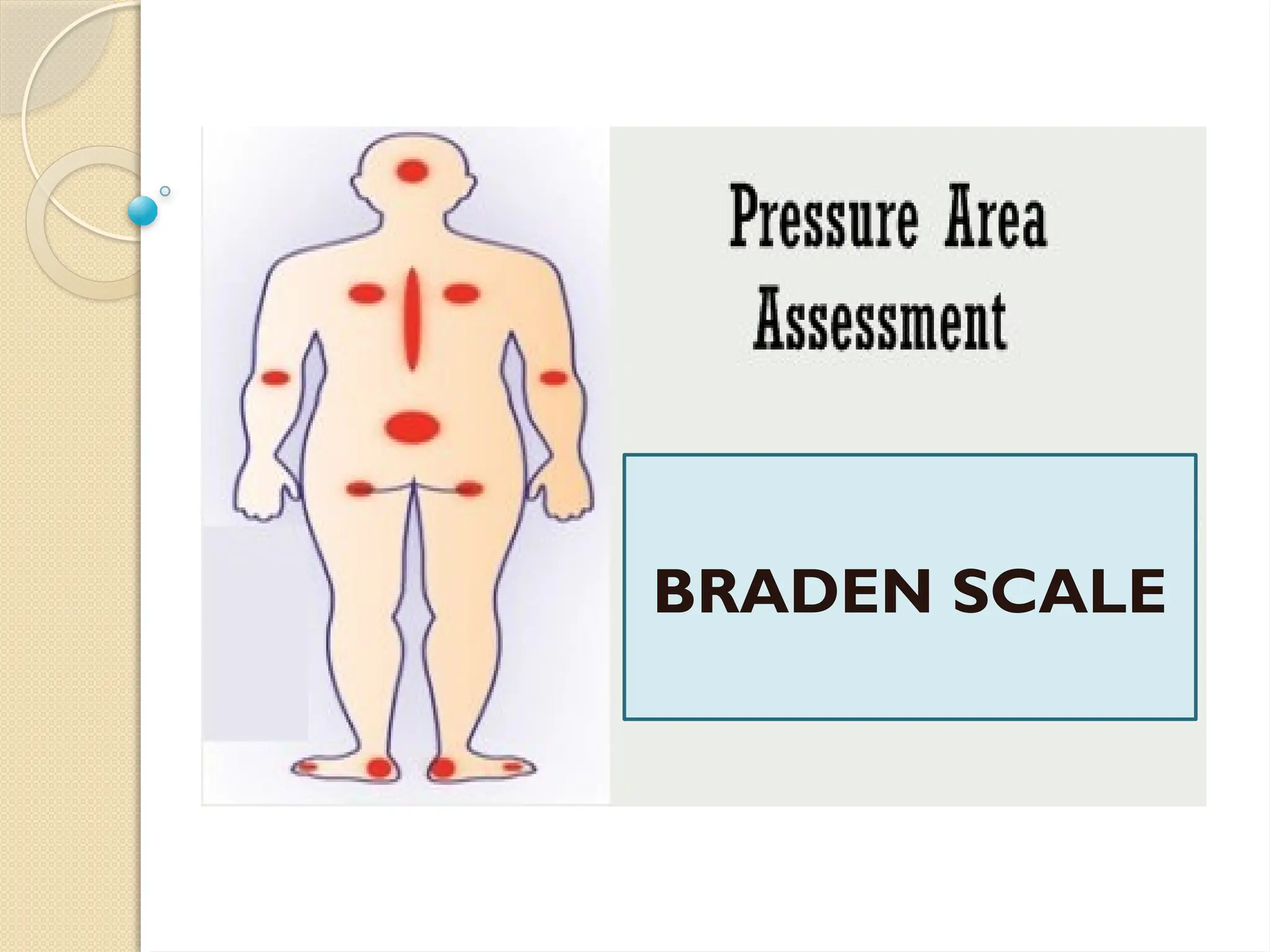
BRADEN SCALE
Introduction
 Developed 1984 by Braden and Bergstrom.
 The scale consists of six subscales and
the total scores range from 6-23.
 A lower Braden score indicates higher
levels of risk for pressure ulcer
development.
Six Parameters
1. Sensory perception
2. Moisture
3. Activity
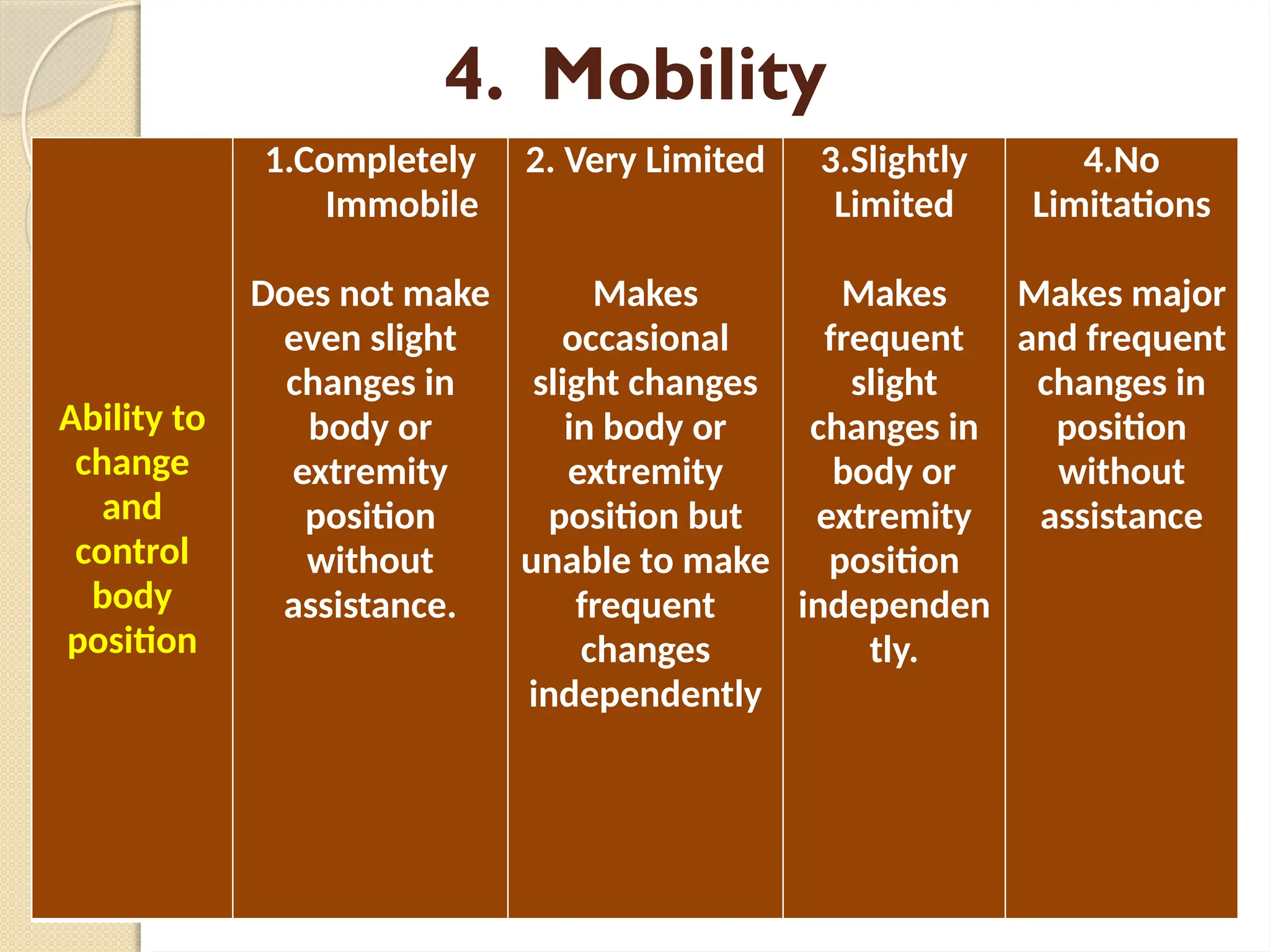
4. Mobility
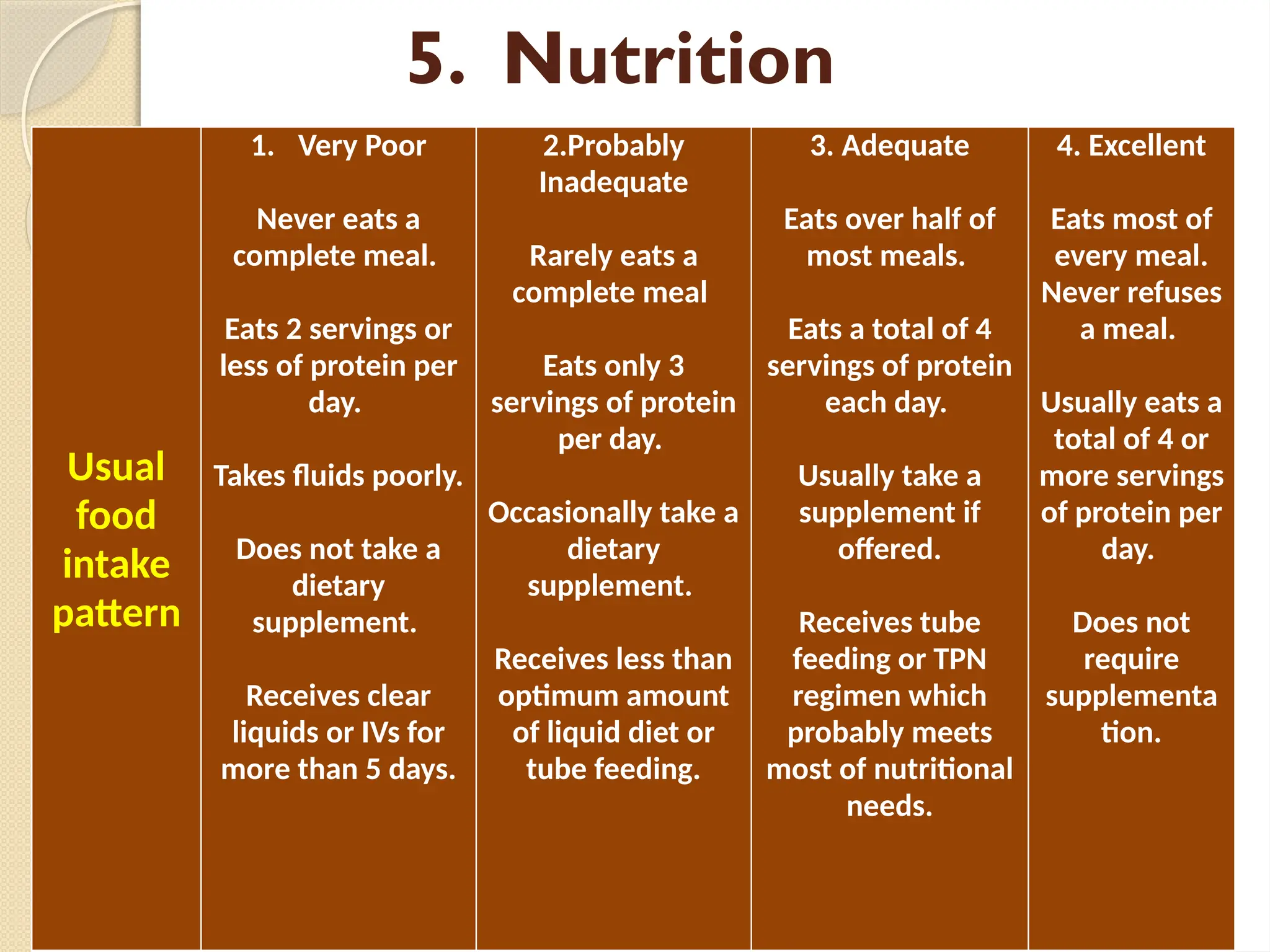
5. Nutrition
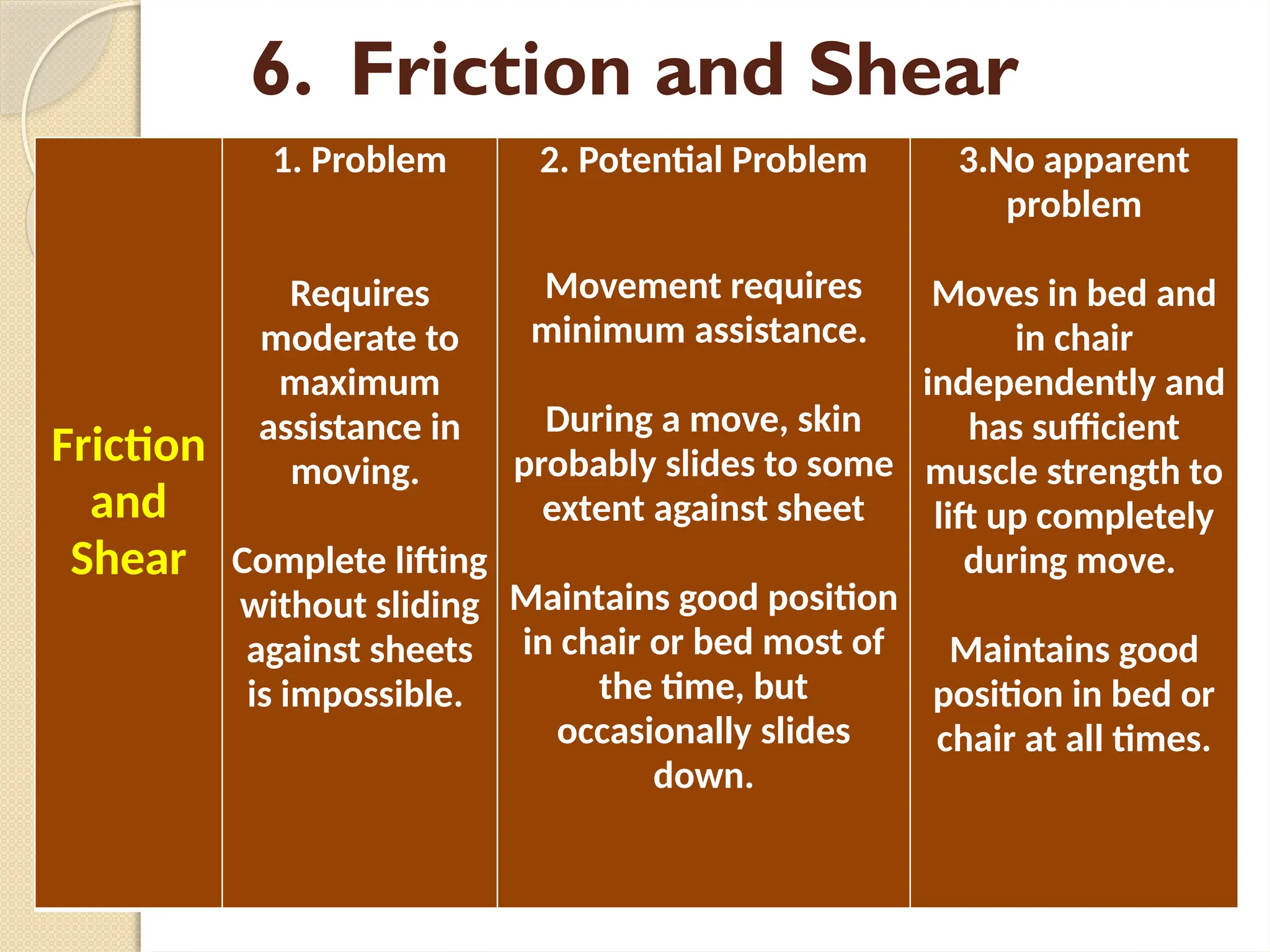
6. Friction and shear
Instructions for Scoring
 Complete the form by scoring each item from 1-4
(1 for low level of functioning and 4 for highest level
of functioning) for the first five risk factors and 1-3
for the last risk factor.
 The lower the score, the greater the risk.
19-23 = No risk
15-18 = Mild Risk
13-14 = Moderate Risk
10-12 = High Risk
9 or less =Very High Risk
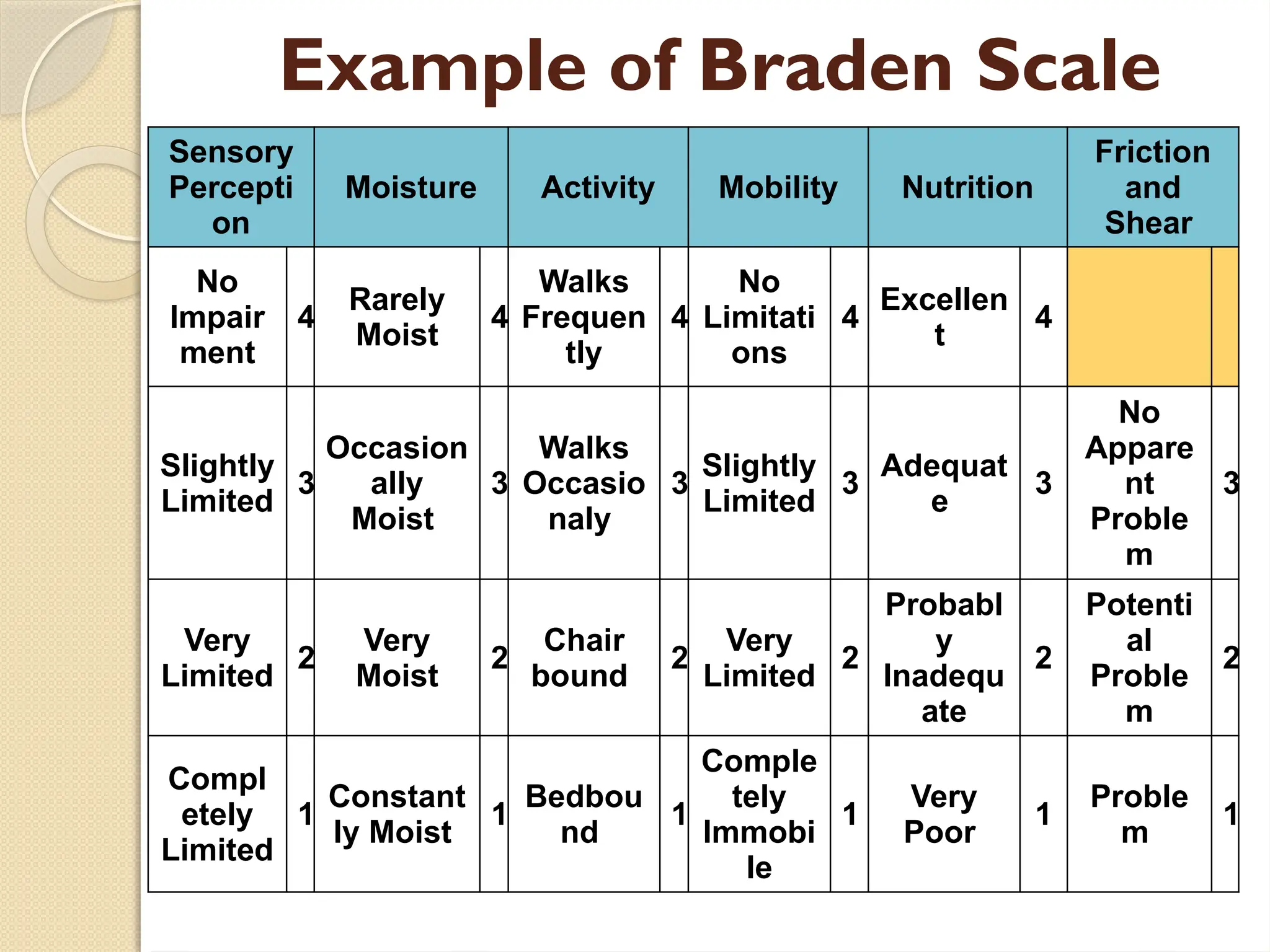
Example of Braden Scale
Sensory
Percepti
on
Moisture Activity Mobility Nutrition
Friction
and
Shear
No
Impair
ment
4
Rarely
Moist
4
Walks
Frequen
tly
4
No
Limitati
ons
4
Excellen
t
4
Slightly
Limited
3
Occasion
ally
Moist
3
Walks
Occasio
naly
3
Slightly
Limited
3
Adequat
e
3
No
Appare
nt
Proble
m
3
Very
Limited
2
Very
Moist
2
Chair
bound
2
Very
Limited
2
Probabl
y
Inadequ
ate
2
Potenti
al
Proble
m
2
Compl
etely
Limited
1
Constant
ly Moist
1
Bedbou
nd
1
Comple
tely
Immobi
le
1
Very
Poor
1
Proble
m
1
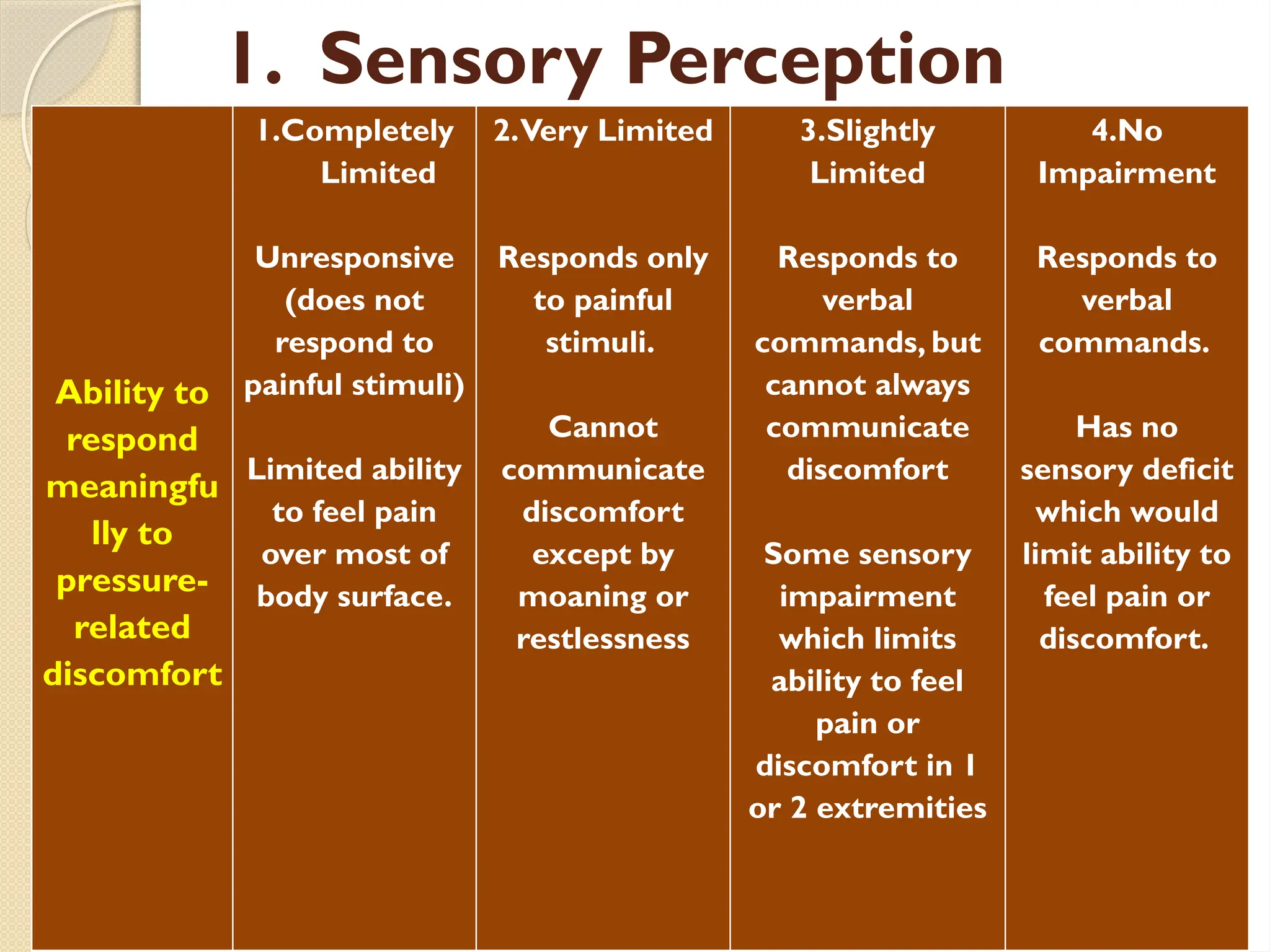
1. Sensory Perception
Ability to
respond
meaningfu
lly to
pressure-
related
discomfort
1.Completely
Limited
Unresponsive
(does not
respond to
painful stimuli)
Limited ability
to feel pain
over most of
body surface.
2.Very Limited
Responds only
to painful
stimuli.
Cannot
communicate
discomfort
except by
moaning or
restlessness
3.Slightly
Limited
Responds to
verbal
commands, but
cannot always
communicate
discomfort
Some sensory
impairment
which limits
ability to feel
pain or
discomfort in 1
or 2 extremities
4.No
Impairment
Responds to
verbal
commands.
Has no
sensory deficit
which would
limit ability to
feel pain or
discomfort.
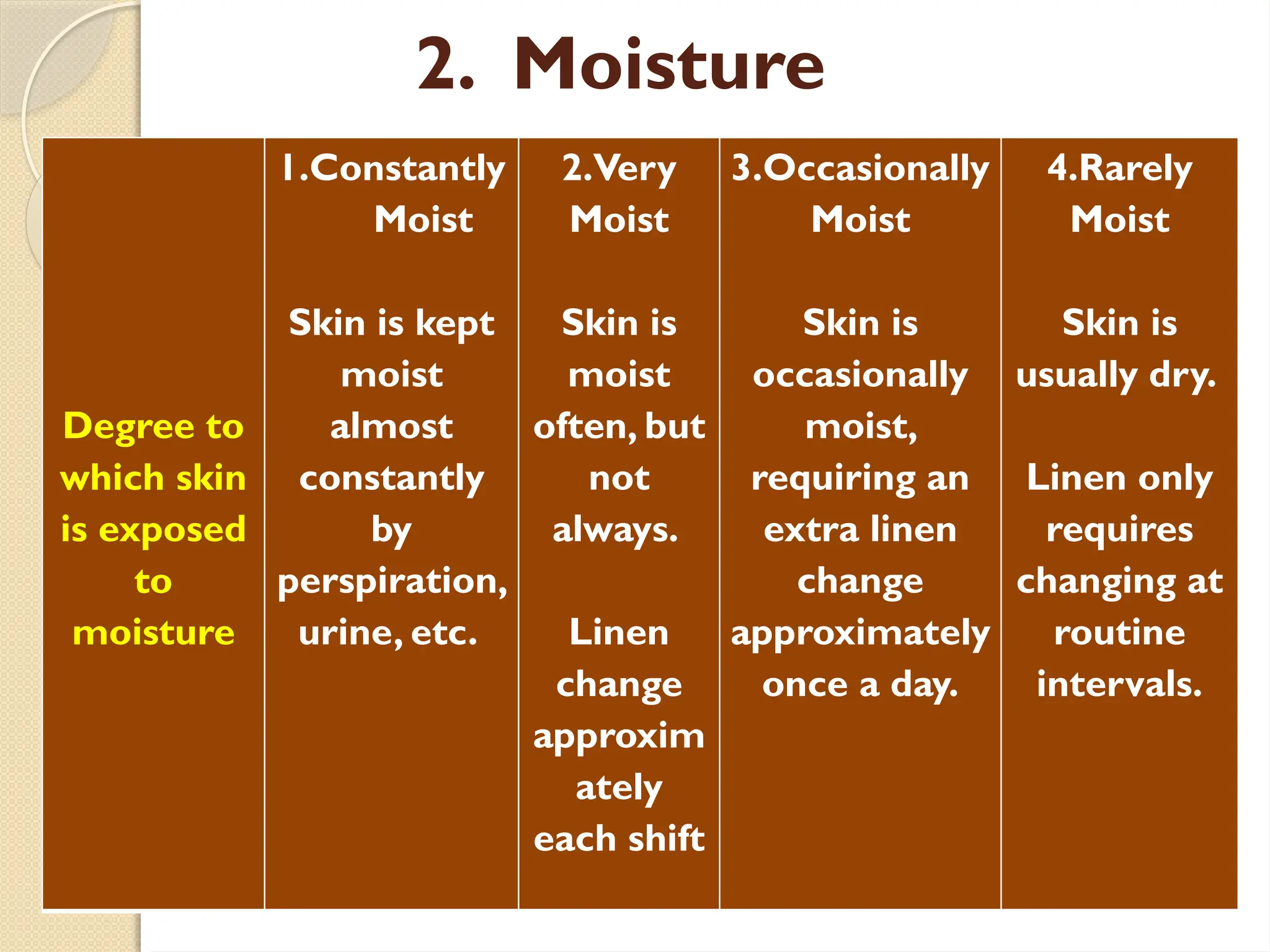
2. Moisture
Degree to
which skin
is exposed
to
moisture
1.Constantly
Moist
Skin is kept
moist
almost
constantly
by
perspiration,
urine, etc.
2.Very
Moist
Skin is
moist
often, but
not
always.
Linen
change
approxim
ately
each shift
3.Occasionally
Moist
Skin is
occasionally
moist,
requiring an
extra linen
change
approximately
once a day.
4.Rarely
Moist
Skin is
usually dry.
Linen only
requires
changing at
routine
intervals.
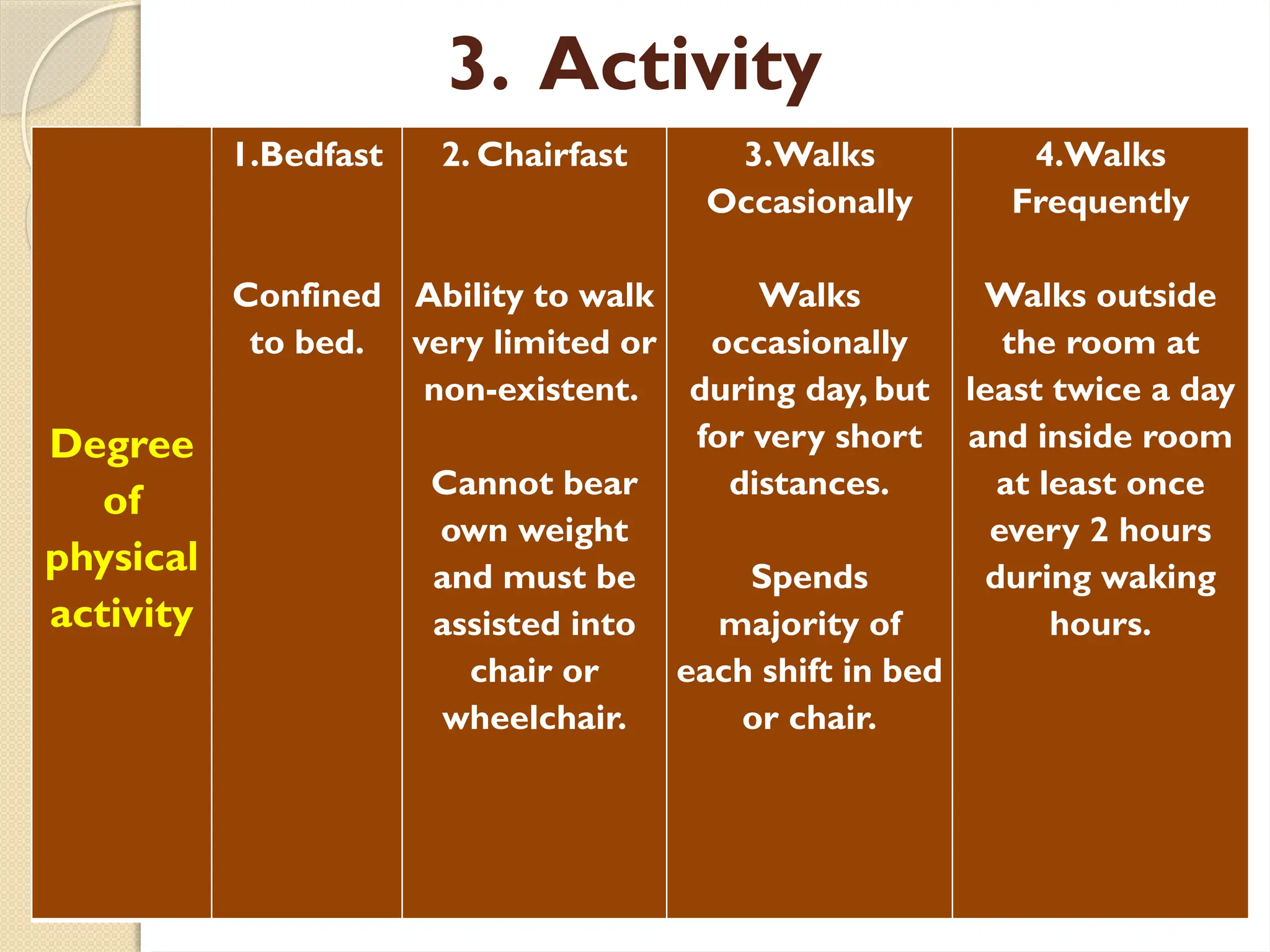
3. Activity
Degree
of
physical
activity
1.Bedfast
Confined
to bed.
2. Chairfast
Ability to walk
very limited or
non-existent.
Cannot bear
own weight
and must be
assisted into
chair or
wheelchair.
3.Walks
Occasionally
Walks
occasionally
during day, but
for very short
distances.
Spends
majority of
each shift in bed
or chair.
4.Walks
Frequently
Walks outside
the room at
least twice a day
and inside room
at least once
every 2 hours
during waking
hours.
4. Mobility
Ability to
change
and
control
body
position
1.Completely
Immobile
Does not make
even slight
changes in
body or
extremity
position
without
assistance.
2. Very Limited
Makes
occasional
slight changes
in body or
extremity
position but
unable to make
frequent
changes
independently
3.Slightly
Limited
Makes
frequent
slight
changes in
body or
extremity
position
independen
tly.
4.No
Limitations
Makes major
and frequent
changes in
position
without
assistance
5. Nutrition
Usual
food
intake
pattern
1. Very Poor
Never eats a
complete meal.
Eats 2 servings or
less of protein per
day.
Takes fluids poorly.
Does not take a
dietary
supplement.
Receives clear
liquids or IVs for
more than 5 days.
2.Probably
Inadequate
Rarely eats a
complete meal
Eats only 3
servings of protein
per day.
Occasionally take a
dietary
supplement.
Receives less than
optimum amount
of liquid diet or
tube feeding.
3. Adequate
Eats over half of
most meals.
Eats a total of 4
servings of protein
each day.
Usually take a
supplement if
offered.
Receives tube
feeding or TPN
regimen which
probably meets
most of nutritional
needs.
4. Excellent
Eats most of
every meal.
Never refuses
a meal.
Usually eats a
total of 4 or
more servings
of protein per
day.
Does not
require
supplementa
tion.
6. Friction and Shear
Friction
and
Shear
1. Problem
Requires
moderate to
maximum
assistance in
moving.
Complete lifting
without sliding
against sheets
is impossible.
2. Potential Problem
Movement requires
minimum assistance.
During a move, skin
probably slides to some
extent against sheet
Maintains good position
in chair or bed most of
the time, but
occasionally slides
down.
3.No apparent
problem
Moves in bed and
in chair
independently and
has sufficient
muscle strength to
lift up completely
during move.
Maintains good
position in bed or
chair at all times.
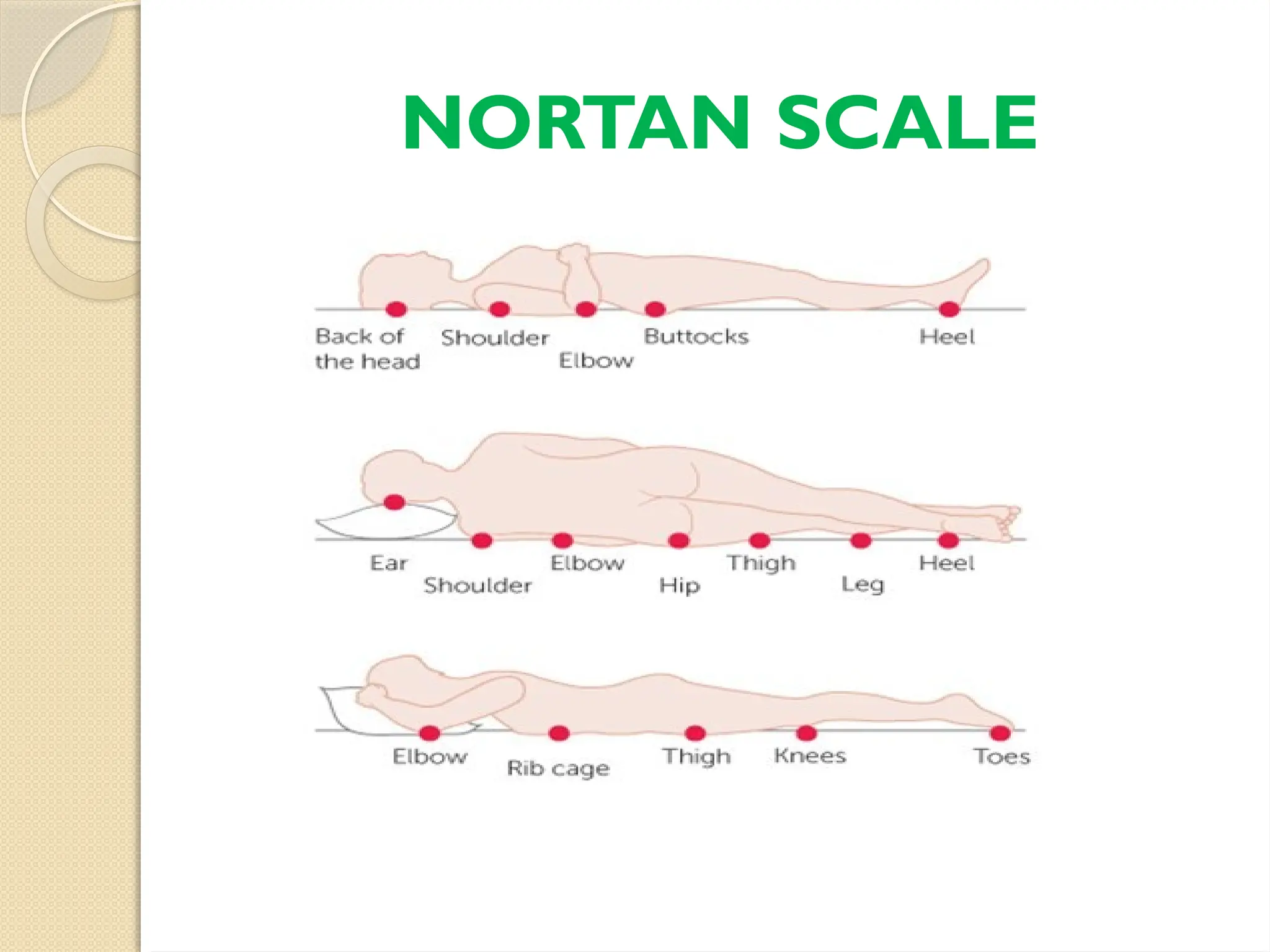
NORTAN SCALE
INTRODUTION
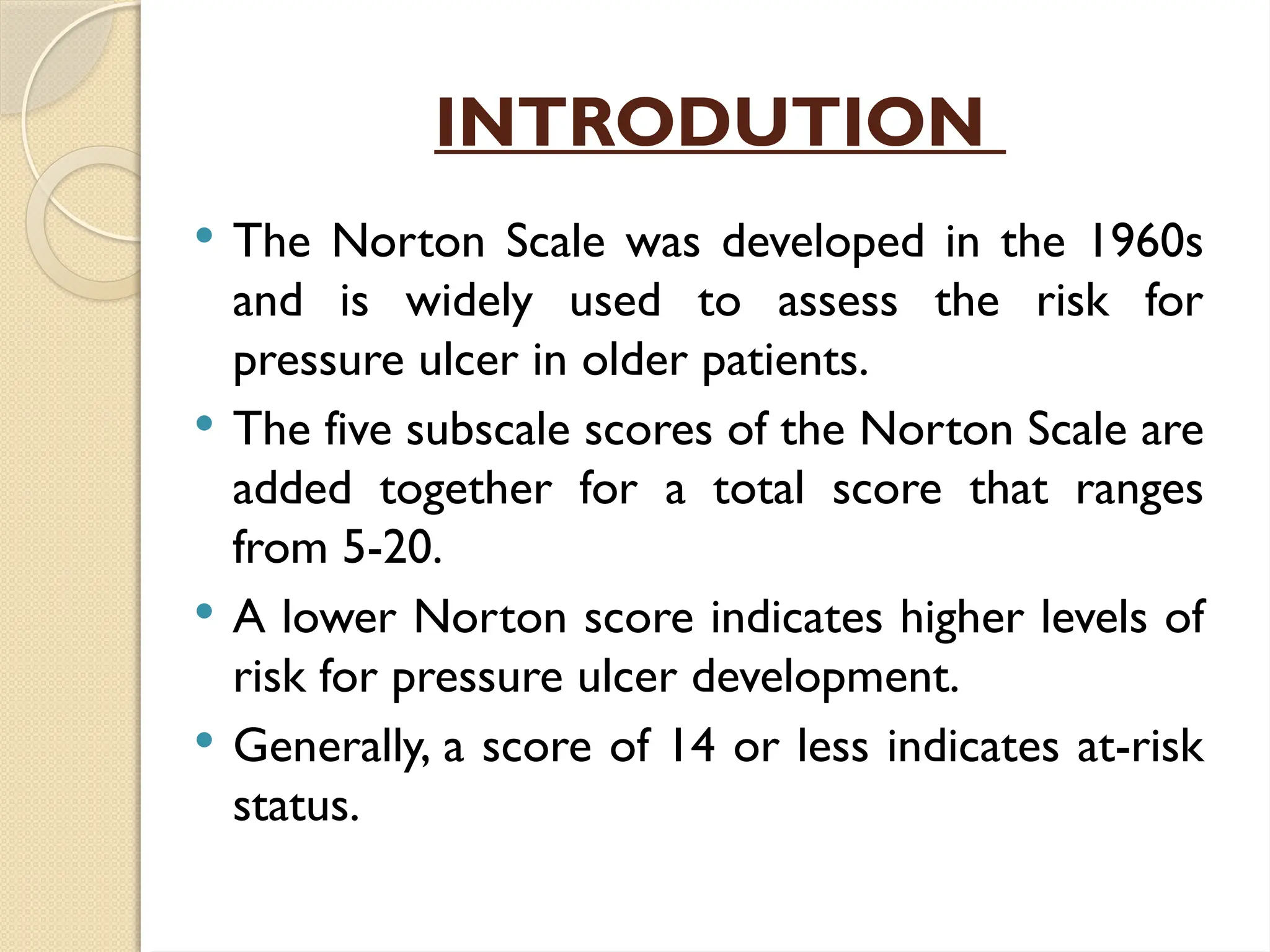
 The Norton Scale was developed in the 1960s
and is widely used to assess the risk for
pressure ulcer in older patients.
 The five subscale scores of the Norton Scale are
added together for a total score that ranges
from 5-20.
 A lower Norton score indicates higher levels of
risk for pressure ulcer development.
 Generally, a score of 14 or less indicates at-risk
status.
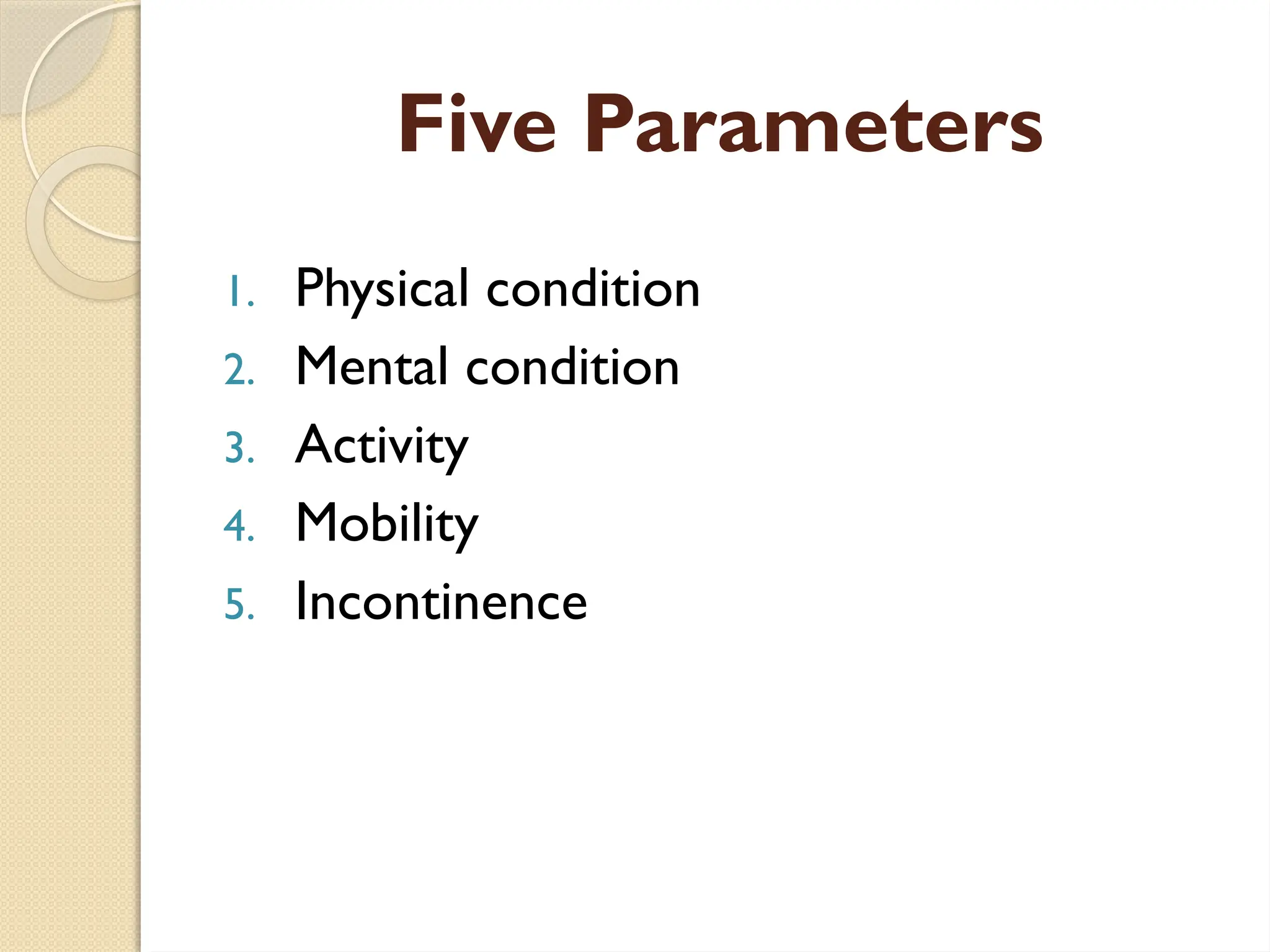
Five Parameters
1. Physical condition
2. Mental condition
3. Activity
4. Mobility
5. Incontinence
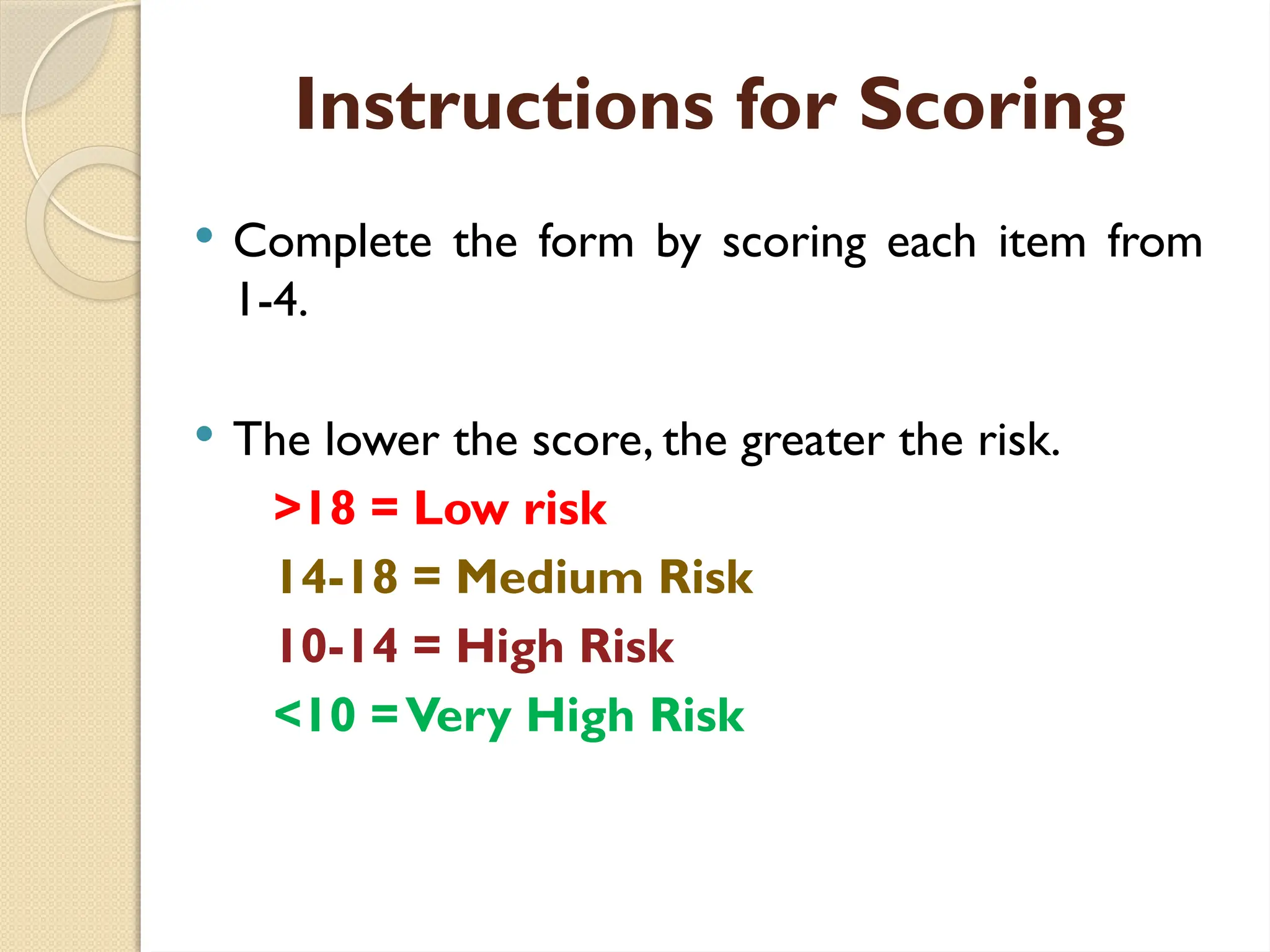
Instructions for Scoring
 Complete the form by scoring each item from
1-4.
 The lower the score, the greater the risk.
>18 = Low risk
14-18 = Medium Risk
10-14 = High Risk
<10 =Very High Risk
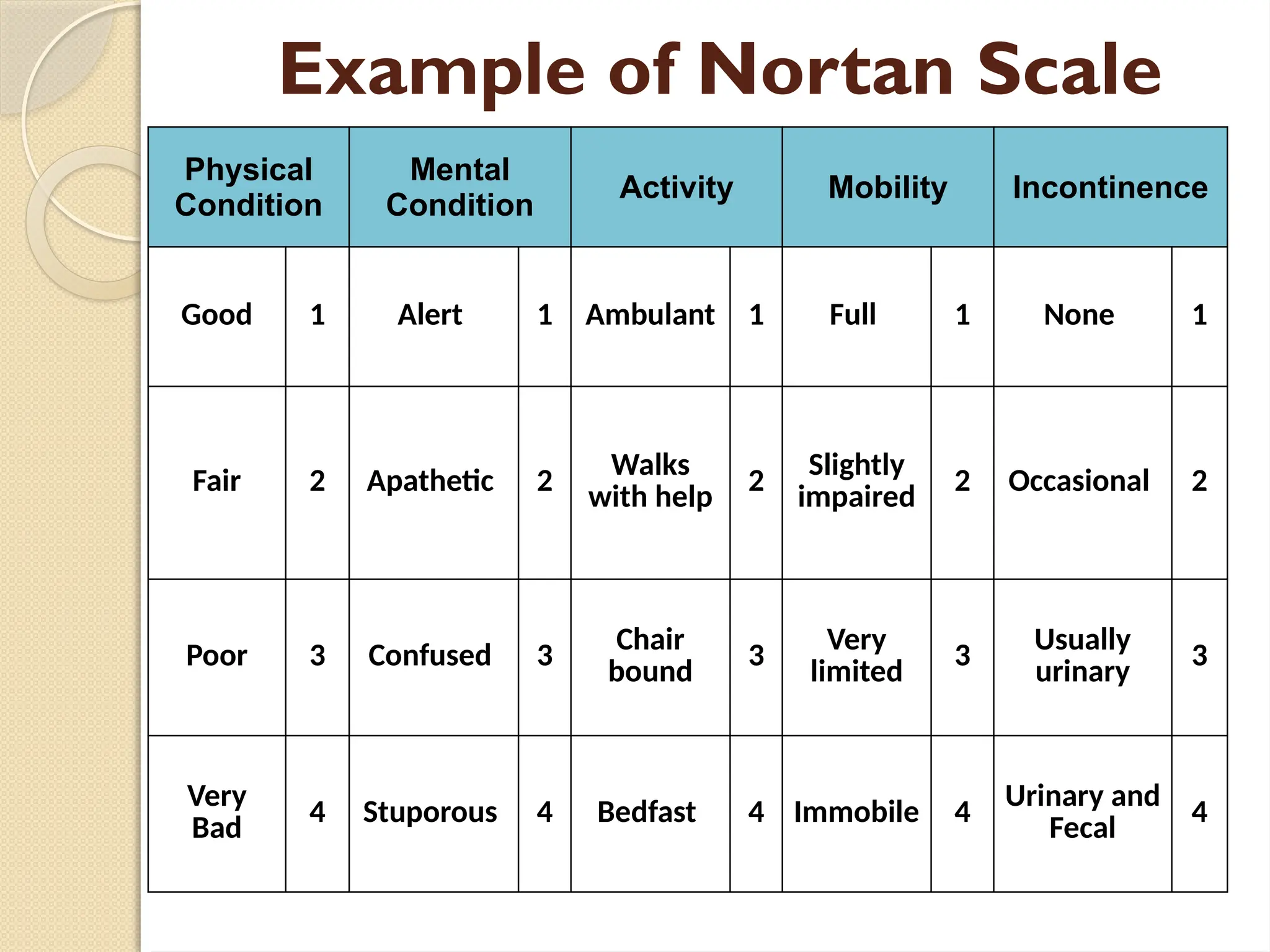
Example of Nortan Scale
Physical
Condition
Mental
Condition
Activity Mobility Incontinence
Good 1 Alert 1 Ambulant 1 Full 1 None 1
Fair 2 Apathetic 2
Walks
with help
2
Slightly
impaired
2 Occasional 2
Poor 3 Confused 3
Chair
bound
3
Very
limited
3
Usually
urinary
3
Very
Bad 4 Stuporous 4 Bedfast 4 Immobile 4
Urinary and
Fecal 4
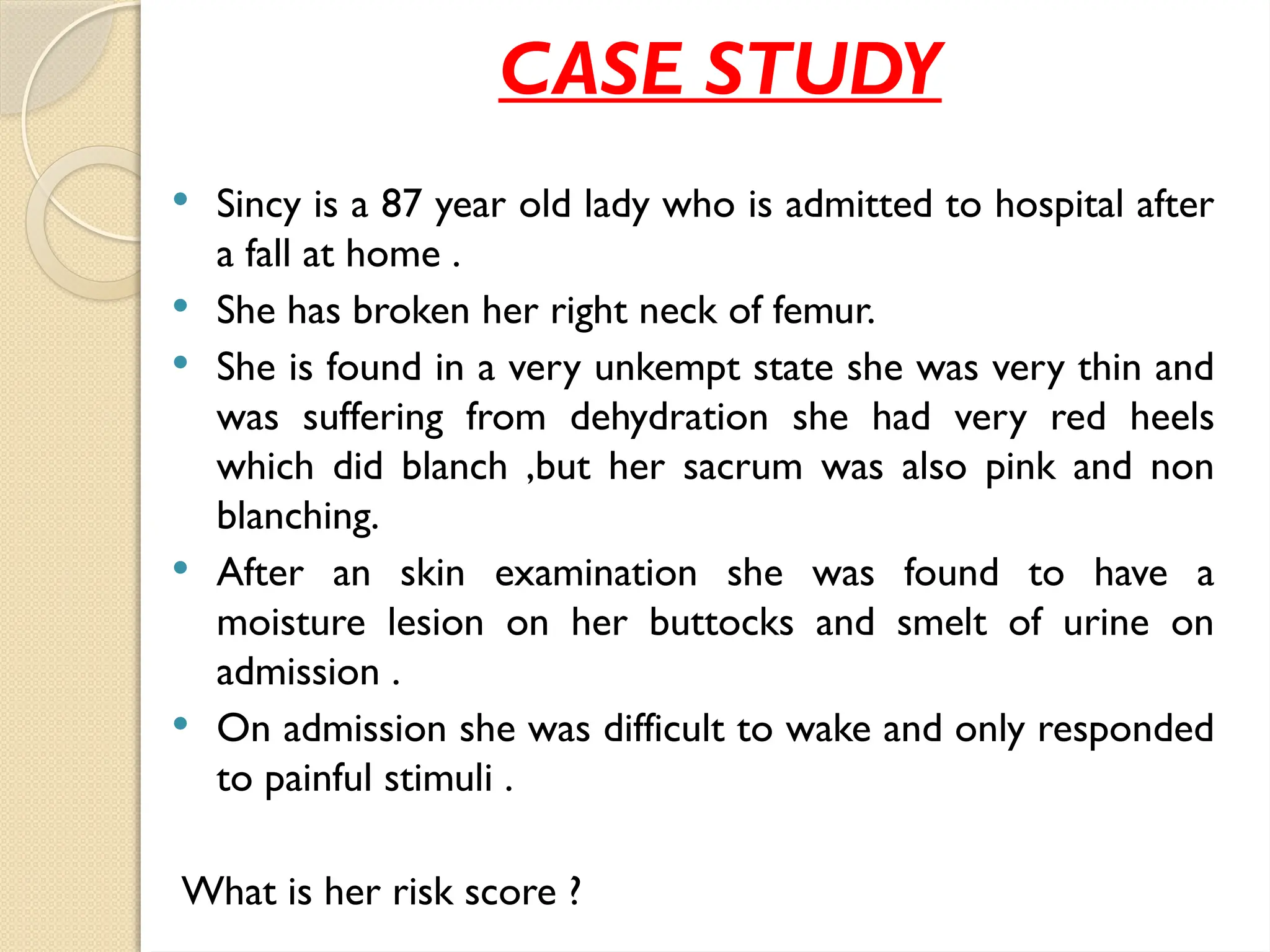
CASE STUDY
 Sincy is a 87 year old lady who is admitted to hospital after
a fall at home .
 She has broken her right neck of femur.
 She is found in a very unkempt state she was very thin and
was suffering from dehydration she had very red heels
which did blanch ,but her sacrum was also pink and non
blanching.
 After an skin examination she was found to have a
moisture lesion on her buttocks and smelt of urine on
admission .
 On admission she was difficult to wake and only responded
to painful stimuli .
What is her risk score ?

braden scale.pptx fuundamental braden scale

  • 1.
  • 2.
    Introduction  Developed 1984by Braden and Bergstrom.  The scale consists of six subscales and the total scores range from 6-23.  A lower Braden score indicates higher levels of risk for pressure ulcer development.
  • 3.
    Six Parameters 1. Sensoryperception 2. Moisture 3. Activity 4. Mobility 5. Nutrition 6. Friction and shear
  • 4.
    Instructions for Scoring Complete the form by scoring each item from 1-4 (1 for low level of functioning and 4 for highest level of functioning) for the first five risk factors and 1-3 for the last risk factor.  The lower the score, the greater the risk. 19-23 = No risk 15-18 = Mild Risk 13-14 = Moderate Risk 10-12 = High Risk 9 or less =Very High Risk
  • 5.
    Example of BradenScale Sensory Percepti on Moisture Activity Mobility Nutrition Friction and Shear No Impair ment 4 Rarely Moist 4 Walks Frequen tly 4 No Limitati ons 4 Excellen t 4 Slightly Limited 3 Occasion ally Moist 3 Walks Occasio naly 3 Slightly Limited 3 Adequat e 3 No Appare nt Proble m 3 Very Limited 2 Very Moist 2 Chair bound 2 Very Limited 2 Probabl y Inadequ ate 2 Potenti al Proble m 2 Compl etely Limited 1 Constant ly Moist 1 Bedbou nd 1 Comple tely Immobi le 1 Very Poor 1 Proble m 1
  • 6.
    1. Sensory Perception Abilityto respond meaningfu lly to pressure- related discomfort 1.Completely Limited Unresponsive (does not respond to painful stimuli) Limited ability to feel pain over most of body surface. 2.Very Limited Responds only to painful stimuli. Cannot communicate discomfort except by moaning or restlessness 3.Slightly Limited Responds to verbal commands, but cannot always communicate discomfort Some sensory impairment which limits ability to feel pain or discomfort in 1 or 2 extremities 4.No Impairment Responds to verbal commands. Has no sensory deficit which would limit ability to feel pain or discomfort.
  • 7.
    2. Moisture Degree to whichskin is exposed to moisture 1.Constantly Moist Skin is kept moist almost constantly by perspiration, urine, etc. 2.Very Moist Skin is moist often, but not always. Linen change approxim ately each shift 3.Occasionally Moist Skin is occasionally moist, requiring an extra linen change approximately once a day. 4.Rarely Moist Skin is usually dry. Linen only requires changing at routine intervals.
  • 8.
    3. Activity Degree of physical activity 1.Bedfast Confined to bed. 2.Chairfast Ability to walk very limited or non-existent. Cannot bear own weight and must be assisted into chair or wheelchair. 3.Walks Occasionally Walks occasionally during day, but for very short distances. Spends majority of each shift in bed or chair. 4.Walks Frequently Walks outside the room at least twice a day and inside room at least once every 2 hours during waking hours.
  • 9.
    4. Mobility Ability to change and control body position 1.Completely Immobile Doesnot make even slight changes in body or extremity position without assistance. 2. Very Limited Makes occasional slight changes in body or extremity position but unable to make frequent changes independently 3.Slightly Limited Makes frequent slight changes in body or extremity position independen tly. 4.No Limitations Makes major and frequent changes in position without assistance
  • 10.
    5. Nutrition Usual food intake pattern 1. VeryPoor Never eats a complete meal. Eats 2 servings or less of protein per day. Takes fluids poorly. Does not take a dietary supplement. Receives clear liquids or IVs for more than 5 days. 2.Probably Inadequate Rarely eats a complete meal Eats only 3 servings of protein per day. Occasionally take a dietary supplement. Receives less than optimum amount of liquid diet or tube feeding. 3. Adequate Eats over half of most meals. Eats a total of 4 servings of protein each day. Usually take a supplement if offered. Receives tube feeding or TPN regimen which probably meets most of nutritional needs. 4. Excellent Eats most of every meal. Never refuses a meal. Usually eats a total of 4 or more servings of protein per day. Does not require supplementa tion.
  • 11.
    6. Friction andShear Friction and Shear 1. Problem Requires moderate to maximum assistance in moving. Complete lifting without sliding against sheets is impossible. 2. Potential Problem Movement requires minimum assistance. During a move, skin probably slides to some extent against sheet Maintains good position in chair or bed most of the time, but occasionally slides down. 3.No apparent problem Moves in bed and in chair independently and has sufficient muscle strength to lift up completely during move. Maintains good position in bed or chair at all times.
  • 12.
  • 13.
    INTRODUTION  The NortonScale was developed in the 1960s and is widely used to assess the risk for pressure ulcer in older patients.  The five subscale scores of the Norton Scale are added together for a total score that ranges from 5-20.  A lower Norton score indicates higher levels of risk for pressure ulcer development.  Generally, a score of 14 or less indicates at-risk status.
  • 14.
    Five Parameters 1. Physicalcondition 2. Mental condition 3. Activity 4. Mobility 5. Incontinence
  • 15.
    Instructions for Scoring Complete the form by scoring each item from 1-4.  The lower the score, the greater the risk. >18 = Low risk 14-18 = Medium Risk 10-14 = High Risk <10 =Very High Risk
  • 16.
    Example of NortanScale Physical Condition Mental Condition Activity Mobility Incontinence Good 1 Alert 1 Ambulant 1 Full 1 None 1 Fair 2 Apathetic 2 Walks with help 2 Slightly impaired 2 Occasional 2 Poor 3 Confused 3 Chair bound 3 Very limited 3 Usually urinary 3 Very Bad 4 Stuporous 4 Bedfast 4 Immobile 4 Urinary and Fecal 4
  • 17.
    CASE STUDY  Sincyis a 87 year old lady who is admitted to hospital after a fall at home .  She has broken her right neck of femur.  She is found in a very unkempt state she was very thin and was suffering from dehydration she had very red heels which did blanch ,but her sacrum was also pink and non blanching.  After an skin examination she was found to have a moisture lesion on her buttocks and smelt of urine on admission .  On admission she was difficult to wake and only responded to painful stimuli . What is her risk score ?