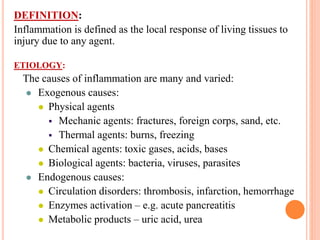
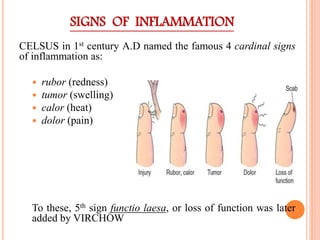
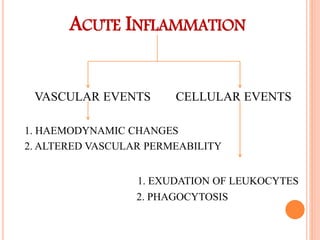
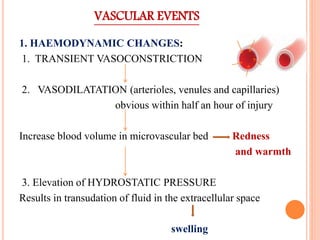
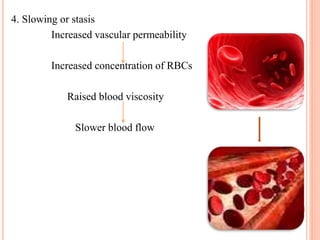
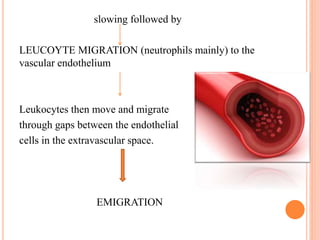
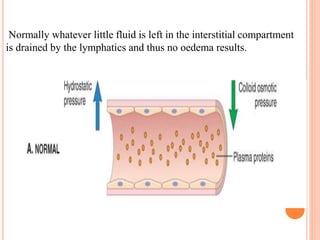
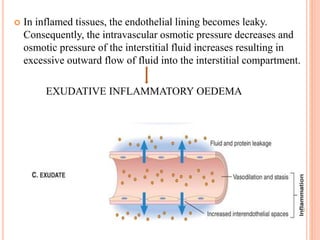
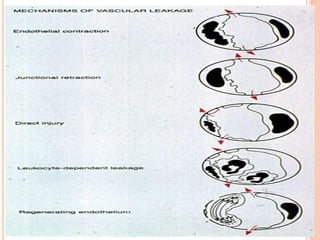
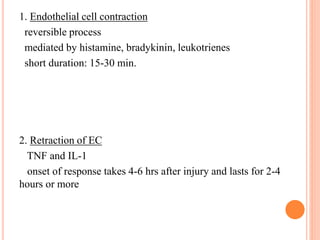
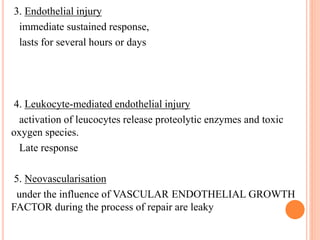
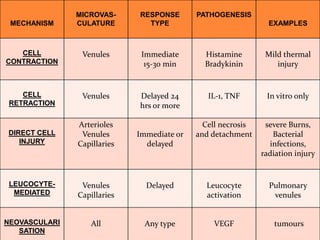
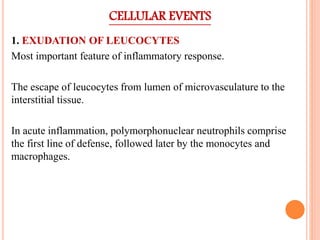
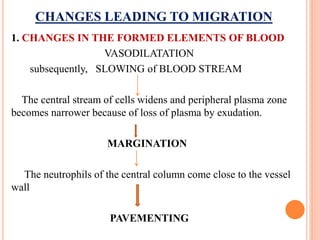
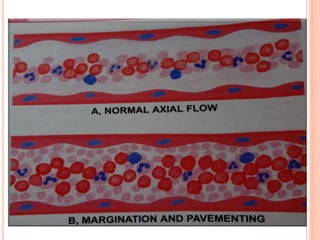
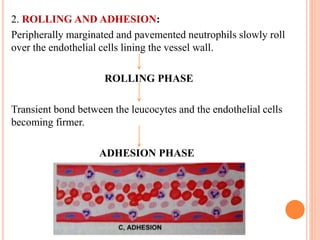
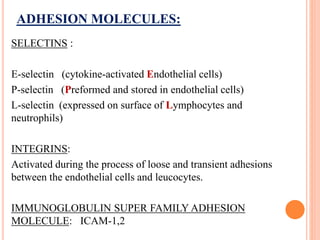
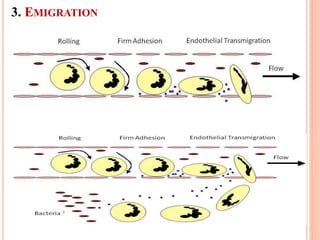
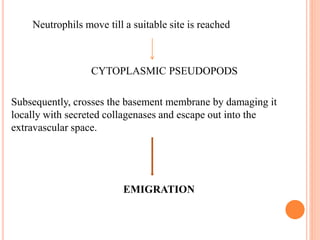
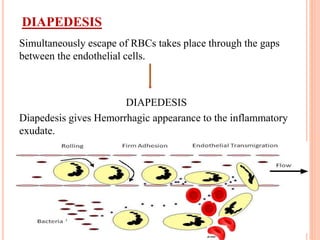
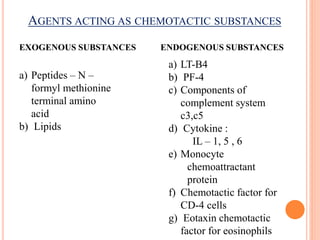
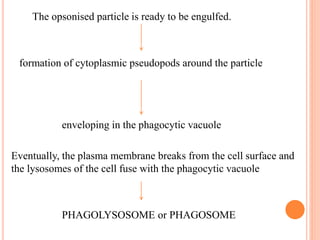
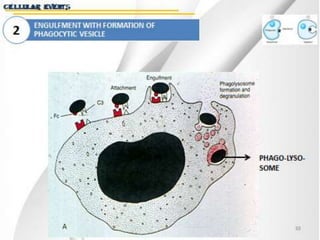
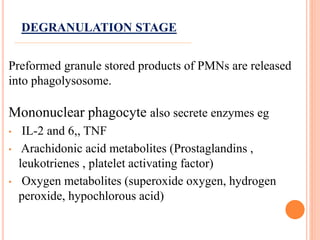
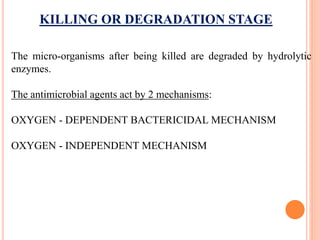
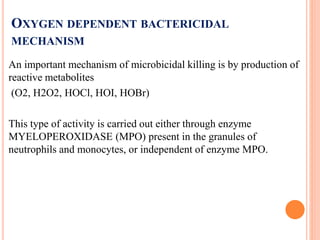
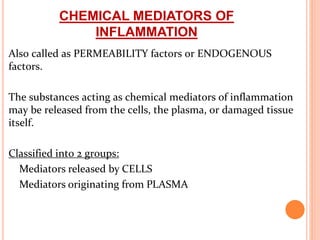
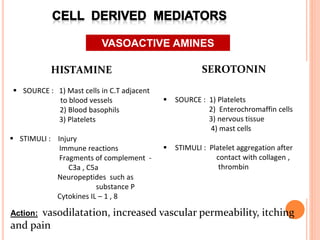
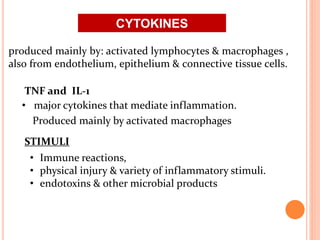
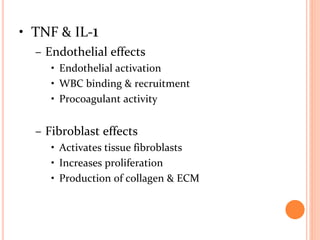
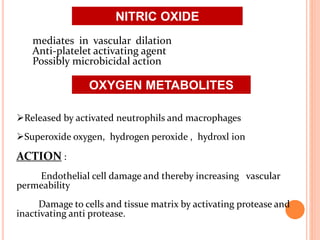
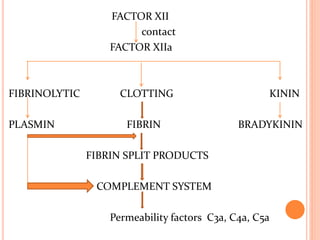
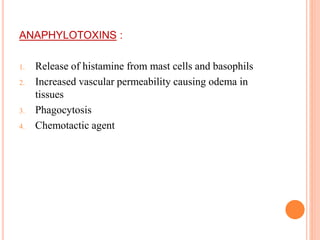
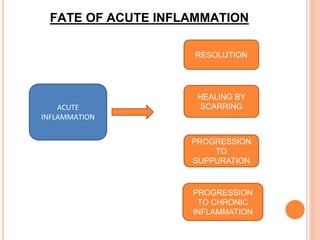
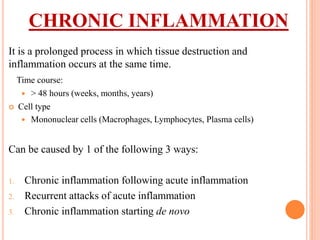
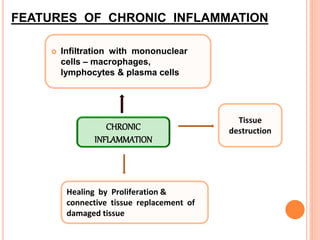
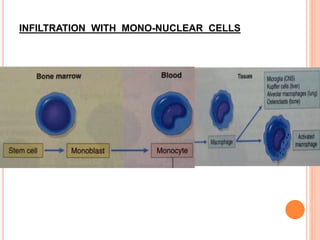
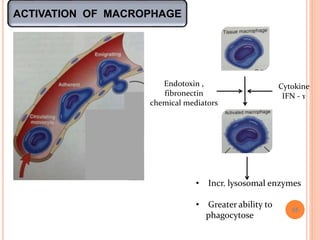
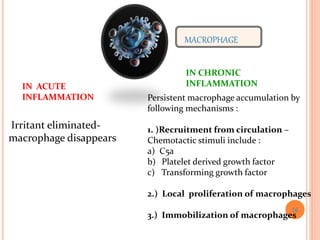
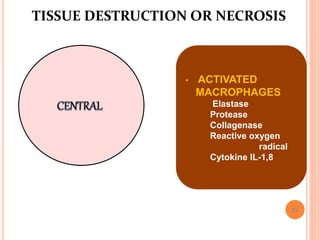
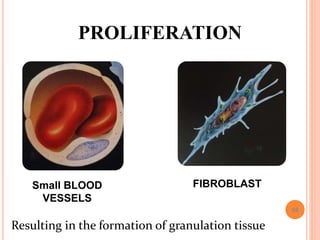
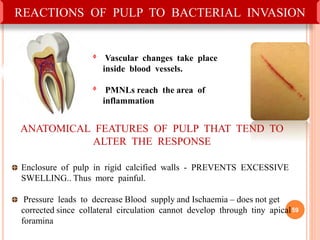
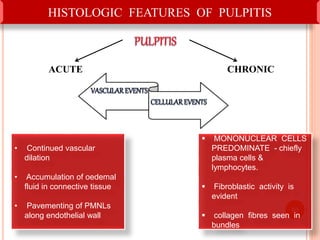
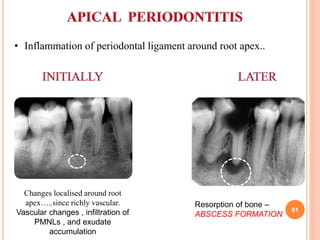
Inflammation can be acute or chronic. Acute inflammation is characterized by rapid onset, short duration, and neutrophil infiltration. The classic signs are redness, swelling, heat, pain, and loss of function. Chemotactic factors recruit neutrophils from the bloodstream into tissues through a multi-step process. Neutrophils then phagocytose pathogens and debris. Chemical mediators like histamine, bradykinin, prostaglandins, and cytokines are released to increase vascular permeability and perpetuate the inflammatory response. Chronic inflammation is long-lasting with lymphocyte and macrophage involvement, potentially progressing to tissue damage if unresolved.




![Inflammation [autosaved]](https://cdn.slidesharecdn.com/ss_thumbnails/inflammationautosaved-180806124543-thumbnail.jpg?width=640&height=640&fit=bounds)


