
AUTOIMMUNE 
HEMOLYTIC ANEMIA
• One of the most common causes of acquired 
hemolytic anemia. 
• Two types of antibodies are involved: 
IgG (warm agglutinins) 
IgM (cold agglutinins)
WARM AUTOIMMUNE HEMOLYTIC 
ANEMIA
Causes: 
• Idiopathic: most frequently. 
• Viral infection: HIV & infectious mononucleosis 
• Patients with SLE, rheumatoid arthritis, Scleroderma, 
Dermatomyositis & Ulcerative colitis. 
• Chronic lymphocytic leukemia & non-Hodgkin 
lymphoma. 
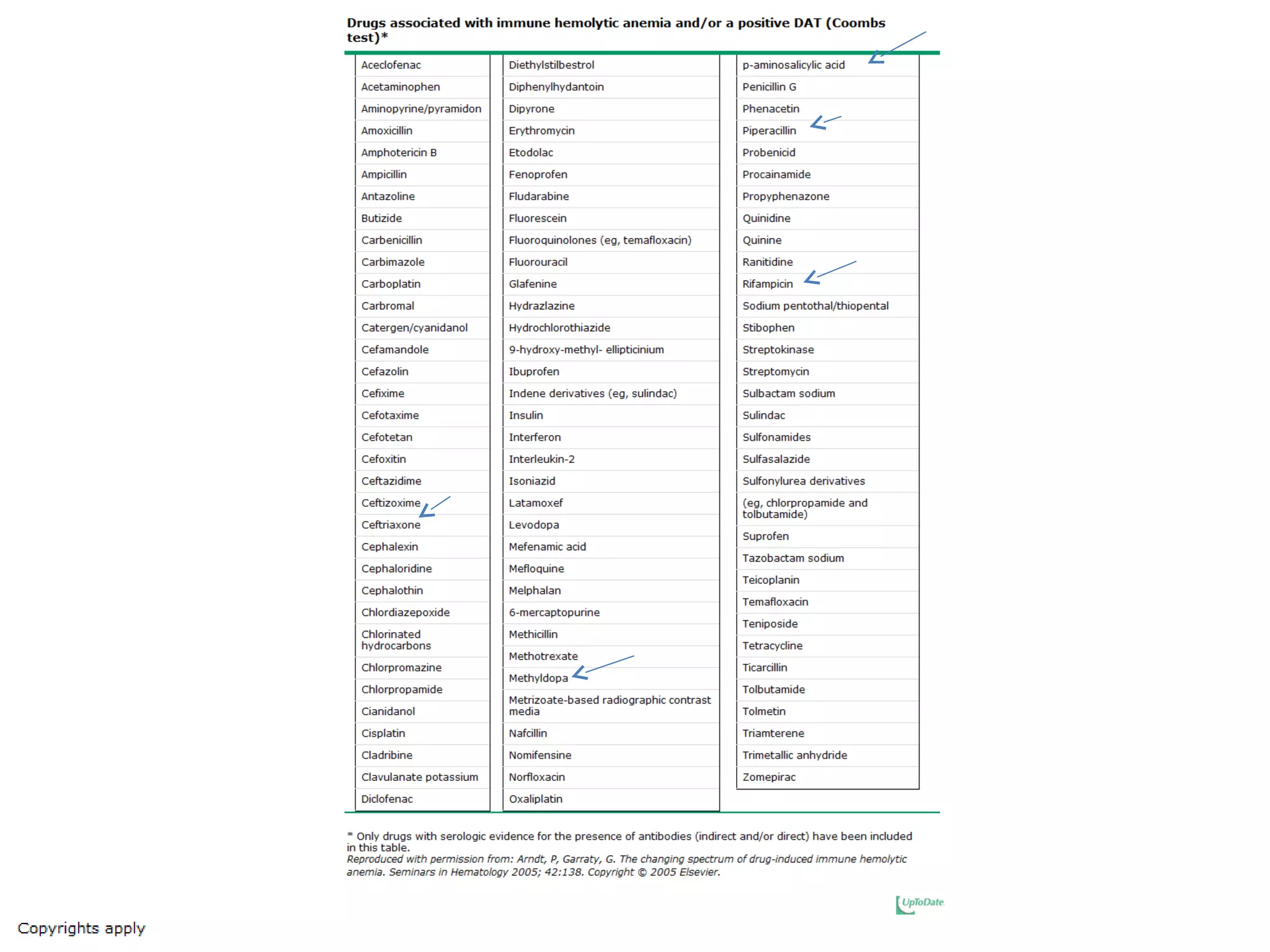
• Drugs:
Clinical picture: 
• Varies greatly with the amount and 
effectiveness of causative antibody ranging 
from no symptoms to life threating clinical 
syndrome. 
• Clinical picture of underlying causes 
associated.
Complications 
• Lymphoproliferative disorders: 18% of 
patients with Idiopathic AIHA. 
• Venous thromboembolism: described in 
adults with Idiopathic AIHA, patients with 
underlying HIV, antiphospholipid and lupus 
anticoagulant +ve patients.
Lab. findings: 
• Normocytic normochromic 
anemia 
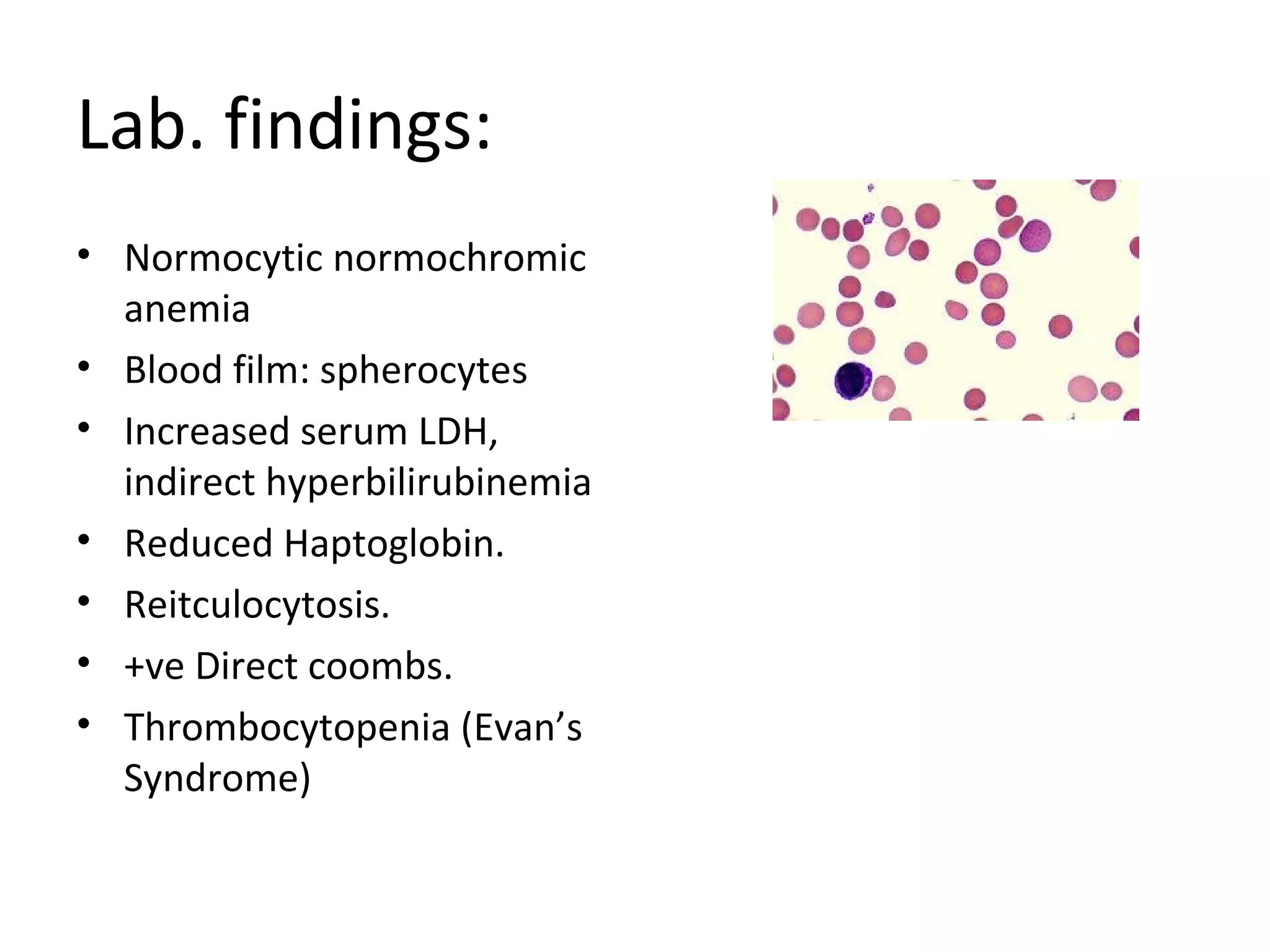
• Blood film: spherocytes 
• Increased serum LDH, 
indirect hyperbilirubinemia 
• Reduced Haptoglobin. 
• Reitculocytosis. 
• +ve Direct coombs. 
• Thrombocytopenia (Evan’s 
Syndrome)
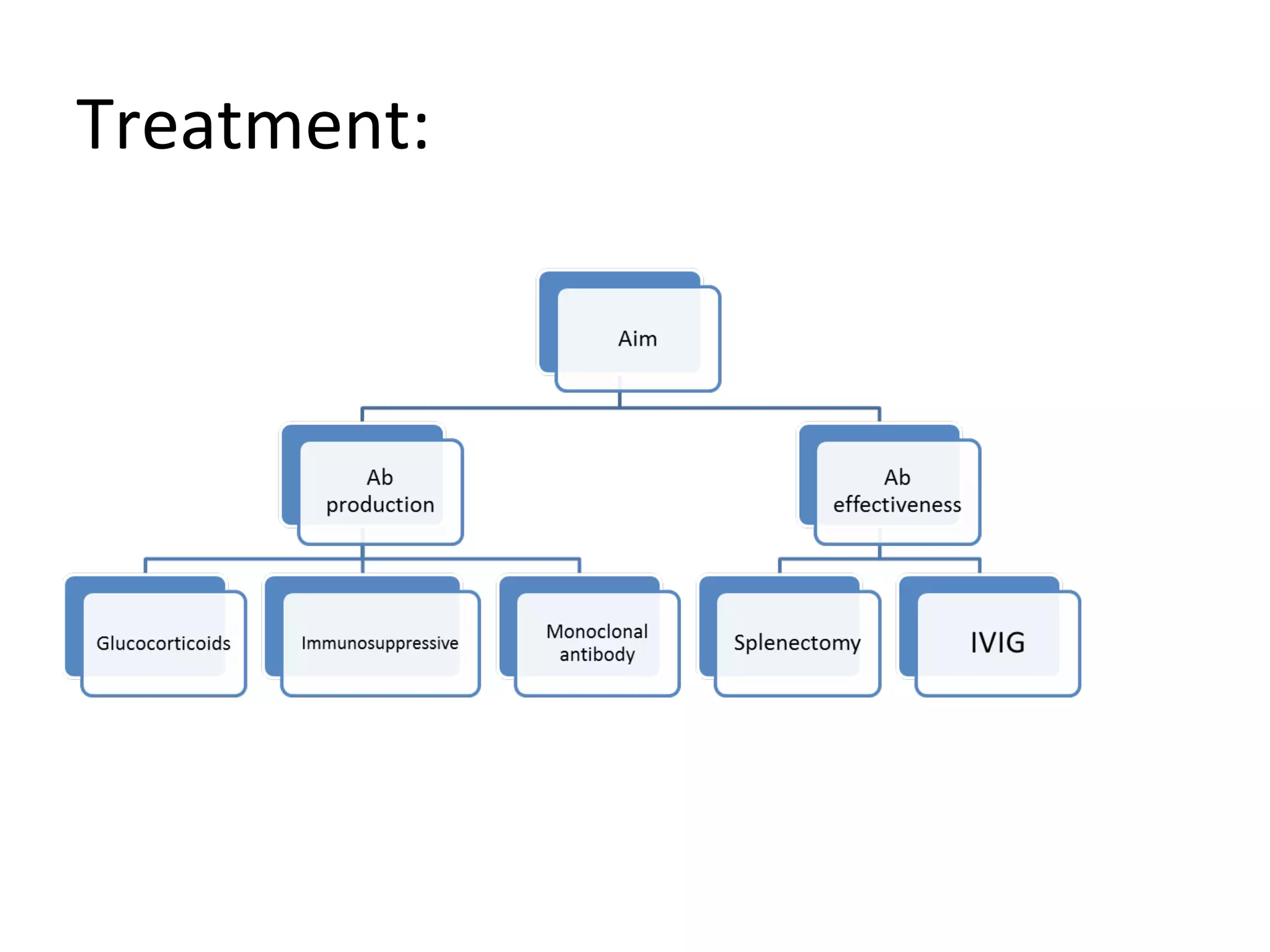
Treatment:
COLD AUTOIMMUNE HEMOLYTIC 
ANEMIA
• Cold agglutinin disease typically characterized 
by the presence of IgM antibodies directed 
against RBC membrane. 
• They are produced either in response to 
infection or by neoplastic growth of a single 
immunocyte clone.
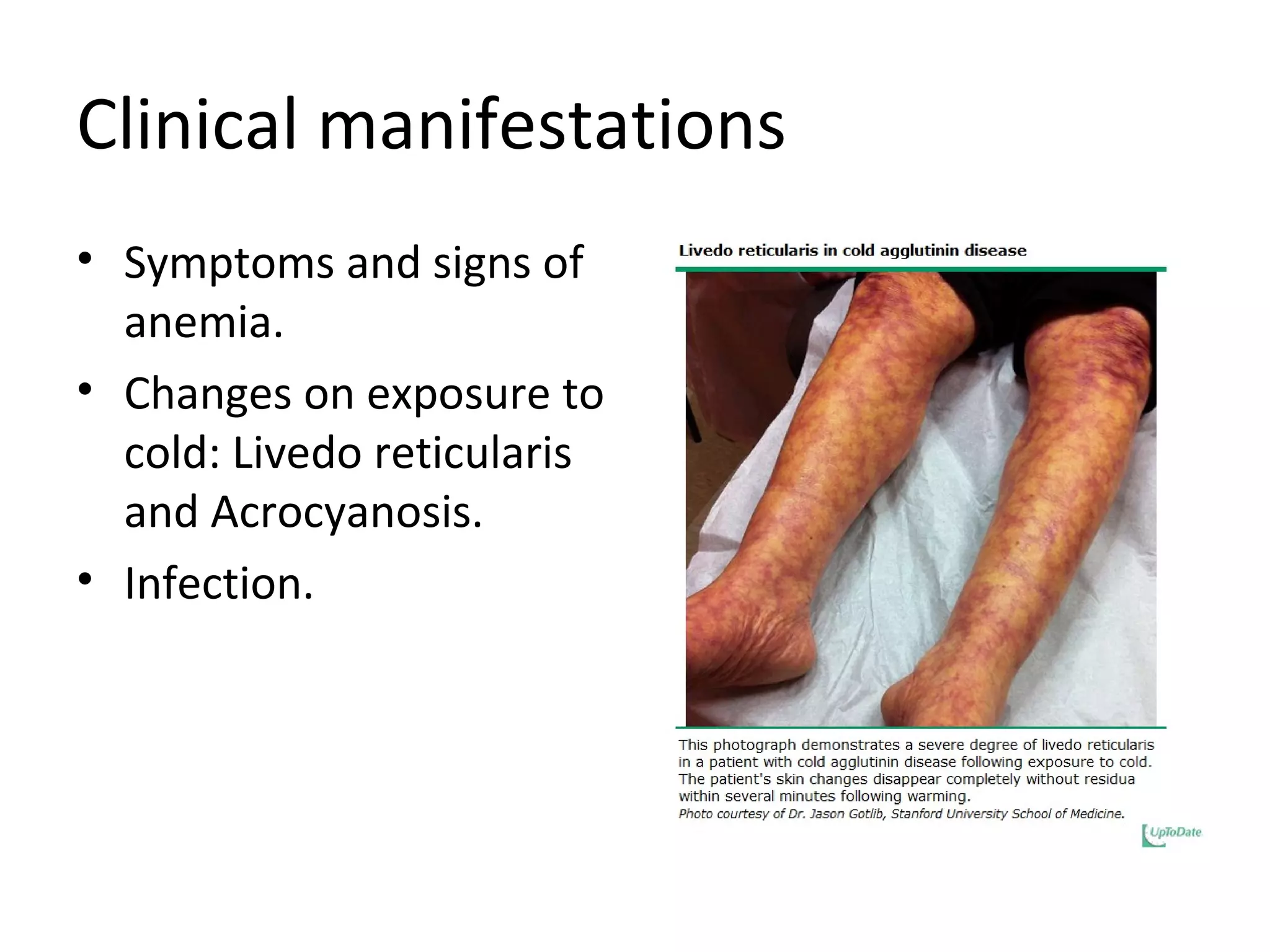
Clinical manifestations 
• Symptoms and signs of 
anemia. 
• Changes on exposure to 
cold: Livedo reticularis 
and Acrocyanosis. 
• Infection.
Lab. Findings: 
• Presence of high titer of cold agglutinins. 
• +ve direct coombs. 
• Additional diagnosis of mycoplasma infection, 
infectious mononucleosis or lymphoma.
Treatment 
• Avoidance of cold. 
• Cytotoxic agents. 
• Rituximab. 
• Plasmapharesis.
Thank you

Hemolytic anemia

  • 1.
  • 2.
    • One ofthe most common causes of acquired hemolytic anemia. • Two types of antibodies are involved: IgG (warm agglutinins) IgM (cold agglutinins)
  • 3.
  • 4.
    Causes: • Idiopathic:most frequently. • Viral infection: HIV & infectious mononucleosis • Patients with SLE, rheumatoid arthritis, Scleroderma, Dermatomyositis & Ulcerative colitis. • Chronic lymphocytic leukemia & non-Hodgkin lymphoma. • Drugs:
  • 6.
    Clinical picture: •Varies greatly with the amount and effectiveness of causative antibody ranging from no symptoms to life threating clinical syndrome. • Clinical picture of underlying causes associated.
  • 7.
    Complications • Lymphoproliferativedisorders: 18% of patients with Idiopathic AIHA. • Venous thromboembolism: described in adults with Idiopathic AIHA, patients with underlying HIV, antiphospholipid and lupus anticoagulant +ve patients.
  • 8.
    Lab. findings: •Normocytic normochromic anemia • Blood film: spherocytes • Increased serum LDH, indirect hyperbilirubinemia • Reduced Haptoglobin. • Reitculocytosis. • +ve Direct coombs. • Thrombocytopenia (Evan’s Syndrome)
  • 9.
  • 10.
  • 11.
    • Cold agglutinindisease typically characterized by the presence of IgM antibodies directed against RBC membrane. • They are produced either in response to infection or by neoplastic growth of a single immunocyte clone.
  • 12.
    Clinical manifestations •Symptoms and signs of anemia. • Changes on exposure to cold: Livedo reticularis and Acrocyanosis. • Infection.
  • 13.
    Lab. Findings: •Presence of high titer of cold agglutinins. • +ve direct coombs. • Additional diagnosis of mycoplasma infection, infectious mononucleosis or lymphoma.
  • 14.
    Treatment • Avoidanceof cold. • Cytotoxic agents. • Rituximab. • Plasmapharesis.
  • 15.