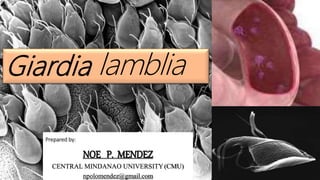
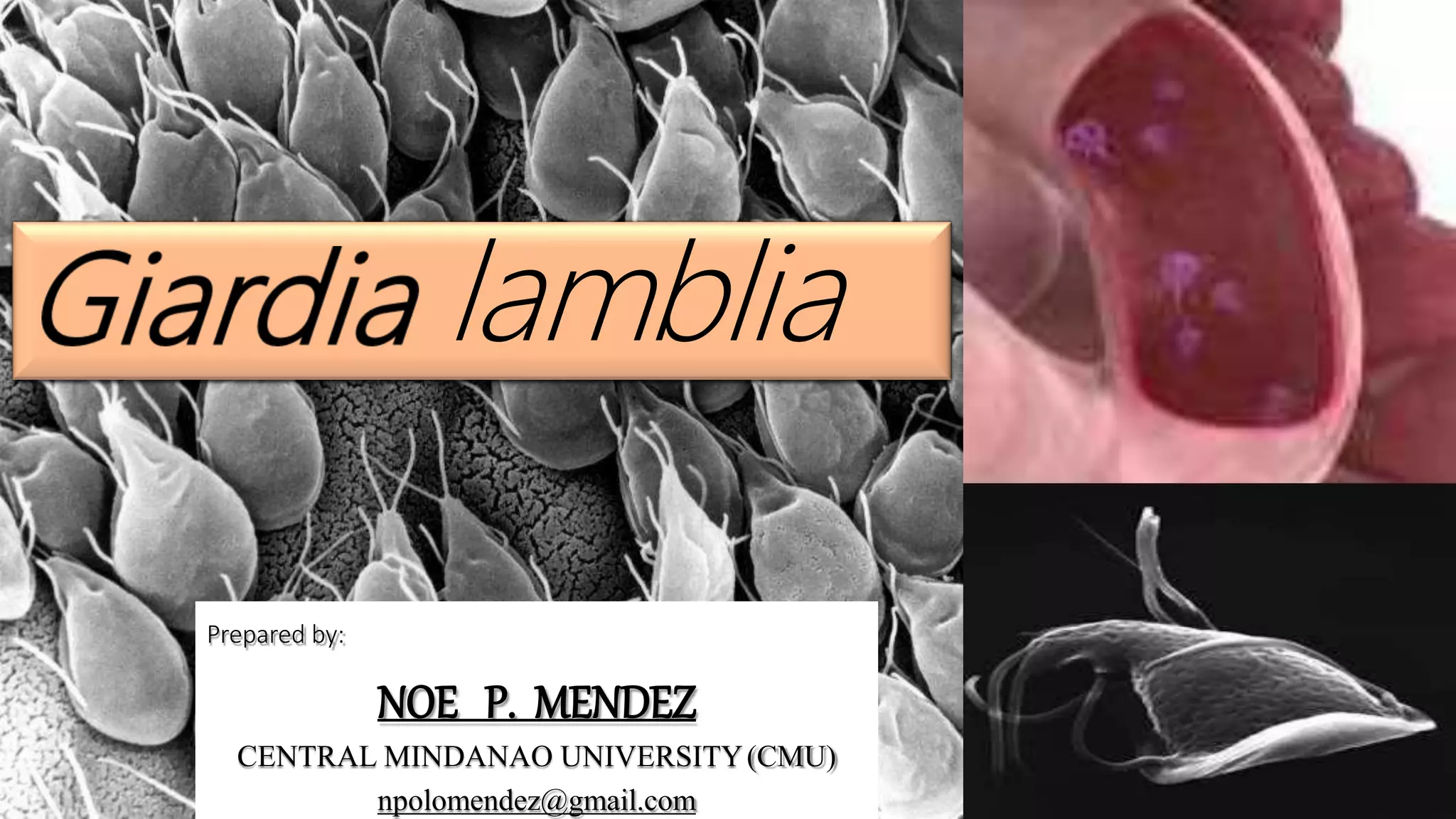
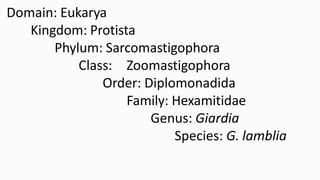
- Giardia lamblia is a unicellular parasite that causes giardiasis in humans. It was first observed by Van Leeuwenhoek in 1681 and named after Alfred Giard.
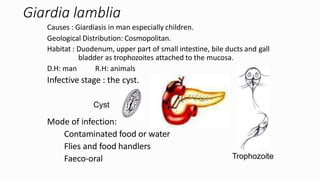
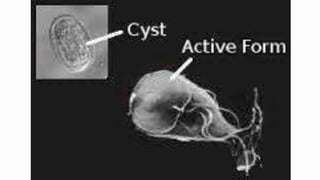
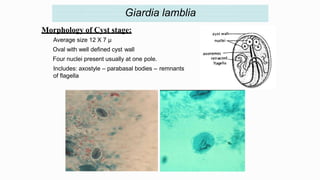
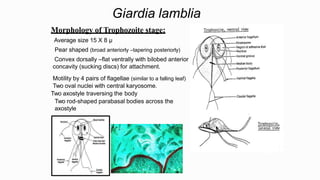
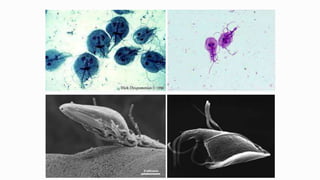
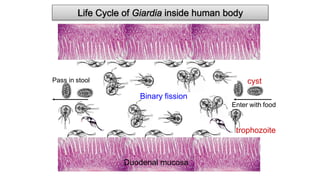
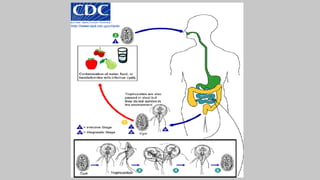
- It exists in two forms - a cyst form which is infective, and a trophozoite form which attaches to the small intestine mucosa. The cyst is ingested and the trophozoite emerges to attach and feed.
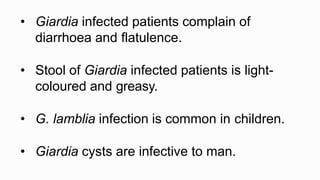
- Symptoms of giardiasis include diarrhea, flatulence, and greasy stool. The infection is common in children and spreads through contaminated food, water, or direct fecal-oral transmission.


![3-_Giardia_lamblia[1].ppt](https://cdn.slidesharecdn.com/ss_thumbnails/3-giardialamblia1-230308222541-5f0a9947-thumbnail.jpg?width=640&height=640&fit=bounds)


