Module 3: Hand Hygiene
Presentation outline
• Learning objectives
• PPP 3.1: Importance and kinds of hand hygiene
• PPP 3.2: Hand washing techniques
• PPP 3.3: Hand antisepsis and antiseptic hand rub
• PPP 3.4: Surgical hand scrub
• PPP 3.5: Improving hand hygiene practices
Learning objectives
3
At the end of this module, participants will
be able to:
• Explain the rational for hand hygiene
• List the kinds of hand hygiene technique
• Explain the purpose of each kinds of hand hygiene
technique
• Demonstrate how to prepare and use antiseptic
hand rub
• Demonstrate the different hand hygiene techniques
• Mention common malpractices related with hand
hygiene
PPP 3.1 Importance and kinds of
Hand hygiene
Why hand hygiene is important?
 Hand hygiene is a general term referring to any
action of hand cleaning
 Reduces the number of disease-causing
microorganisms on hands and arms
 Minimize cross-contamination
 It is the most important way to reduce the spread of
infections in the health care selling.
Kinds of Hand hygiene practices
 Hand washing
 Hand Antisepsis
 Antiseptic Hand-rub
 Surgical Hand scrub
The decision to choose which type of
hand hygiene practice depends on:
 Intensity of contact with patient and /or blood and
body fluids,
 The likelihood of microbial transmission,
 Patient’s susceptibility to infection, and
 Procedure being performed
 The activity or area of practice
PPP 3.2 Hand washing
Techniques
Hand washing
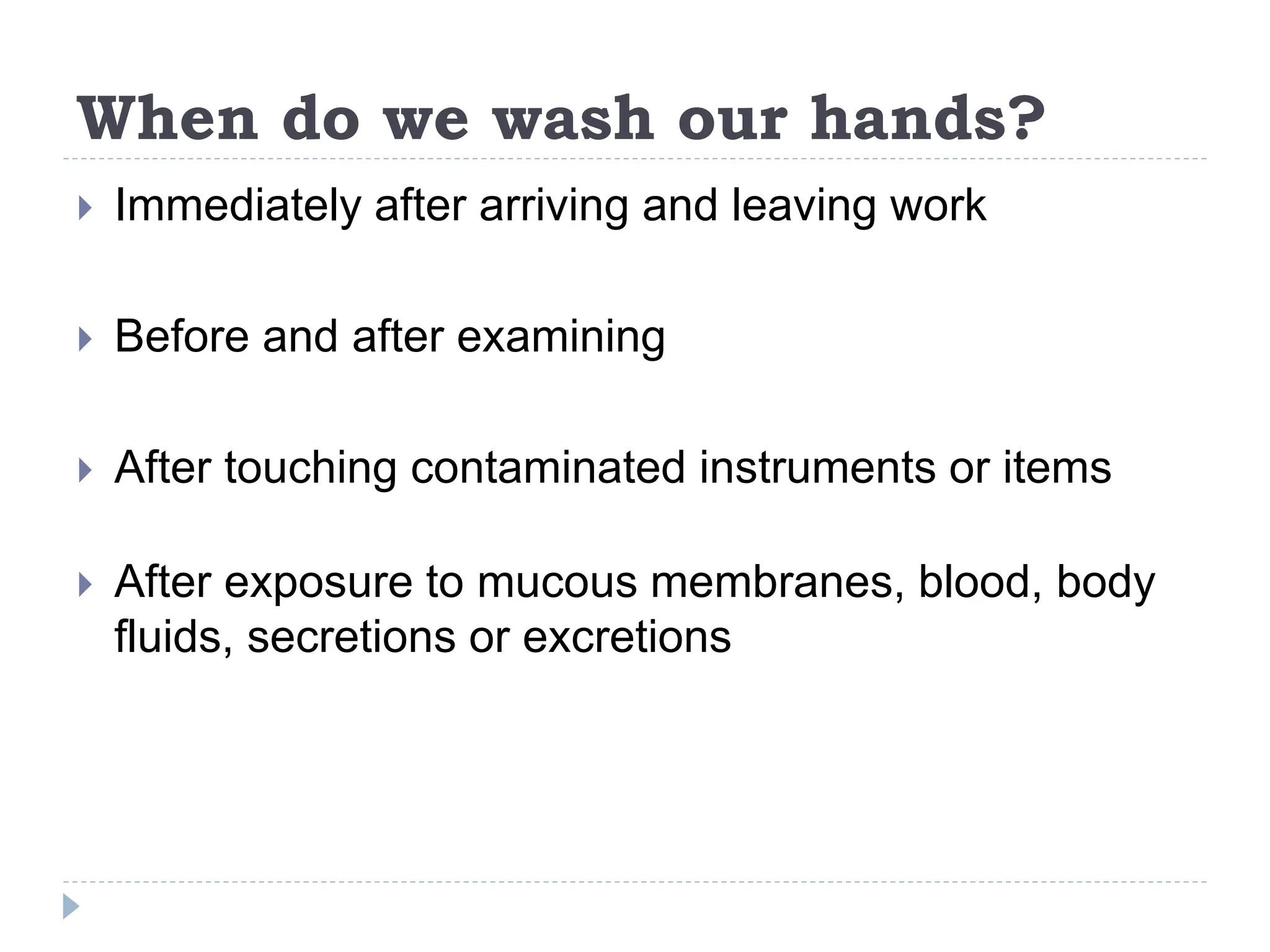
Purpose: to mechanically remove soil and debris from
skin and reduce the number of transient
microorganisms.
 It is THE SINGLE most important measure in
reducing the spread of infection!
When do we wash our hands?
 Immediately after arriving and leaving work
 Before and after examining
 After touching contaminated instruments or items
 After exposure to mucous membranes, blood, body
fluids, secretions or excretions
When do we wash our hands?
 Before putting on gloves and after removing
them
 Whenever our hands become visibly soiled
 After blowing nose or covering a sneeze
 Before eating or serving food
 After visiting the toilet
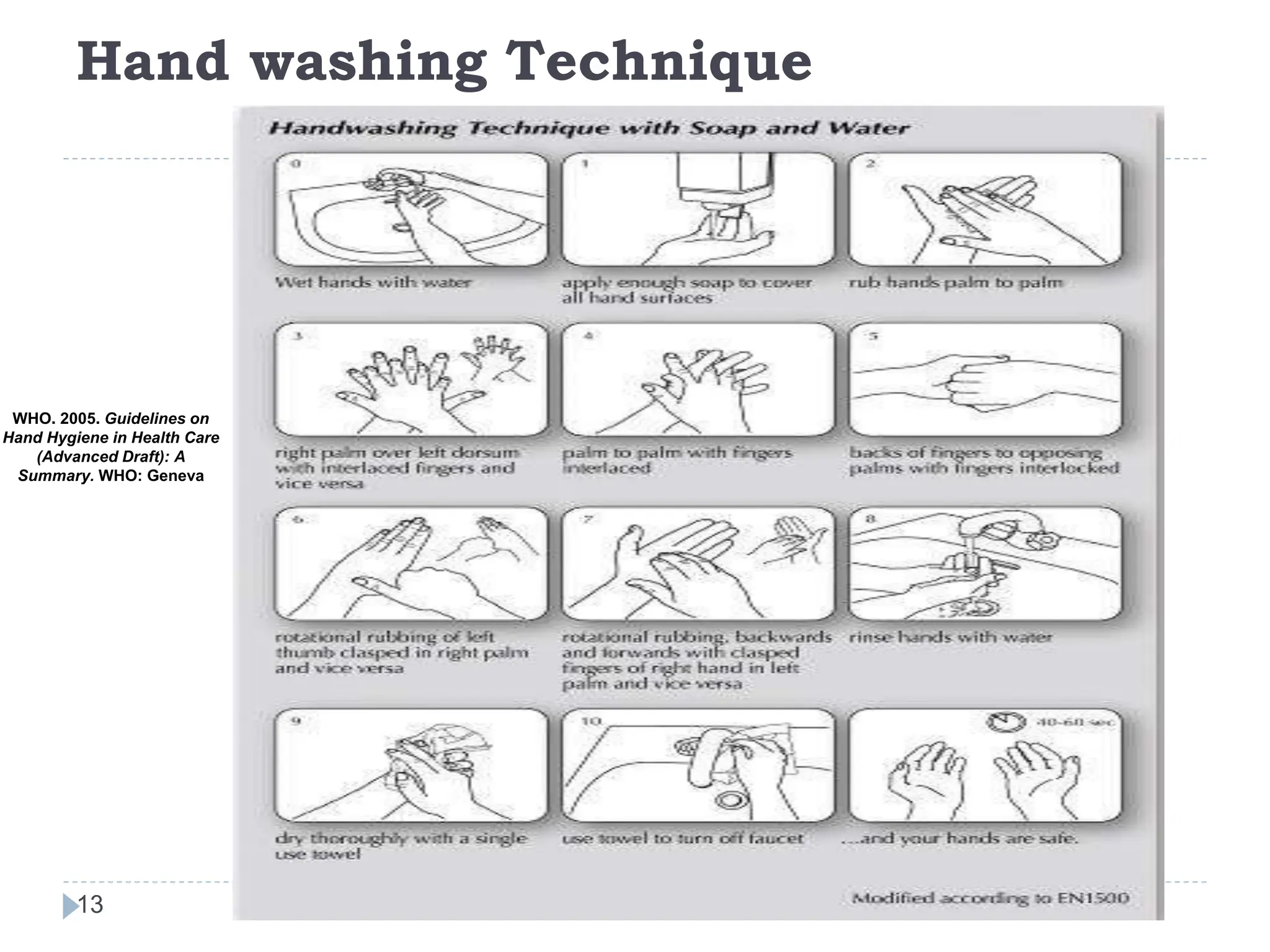
Steps for routine hand washing:
 Thoroughly wet hands with water.
 Apply plain soap (antiseptic agent is not
necessary).
 Vigorously rub all areas of hands and fingers for
10–15 seconds, paying close attention to areas
under fingernails and between fingers.
 Rinse hands thoroughly with clean water.
 Dry hands with personal dry clean towel or paper
towel
 Use a paper towel or a single use towel after
drying hands to turn off the water
Hand washing Technique
13
WHO. 2005. Guidelines on
Hand Hygiene in Health Care
(Advanced Draft): A
Summary. WHO: Geneva
PPP 3.3 Hand antisepsis
and
antisepsis hand rub
Hand Antisepsis
15
Purpose: Remove soil and debris as well as to
reduce both transient and resident flora
 It is similar to plain hand washing except that the
soap or detergent contains an antiseptic agent
(often chlorhexidine, Iodophoris, triclosan)
[[Hand antisepsis should be done before:
• Examining or caring for highly susceptible
patients
• Performing an invasive procedure
• Leaving the room of patients on Contact
Precautions (e.g. hepatitis A or E)
Antiseptic Hand rub
16
Purpose: to inhibit or kill transient and resident flora.
 Considered to be more effective than antimicrobial hand
washing agents or plain soap and water,
 It is quicker and easier to perform,
 but it should not be used when the hands are visibly
soiled.
 Do not rinse hands after applying hand rub
Advantages of Alcohol-based
hand rubs
 Require less time
 Act faster
 More accessible than sinks
 More effective for standard hand washing than soap
 Can even provide improved skin condition.
Antiseptic Handrub
18
Preparation of Alcohol-based solution for hand rub:
 Add glycerin or sorbitol to alcohol (2 ml. in 100 ml. of
60–90% ethyl or isopropyl alcohol solution)
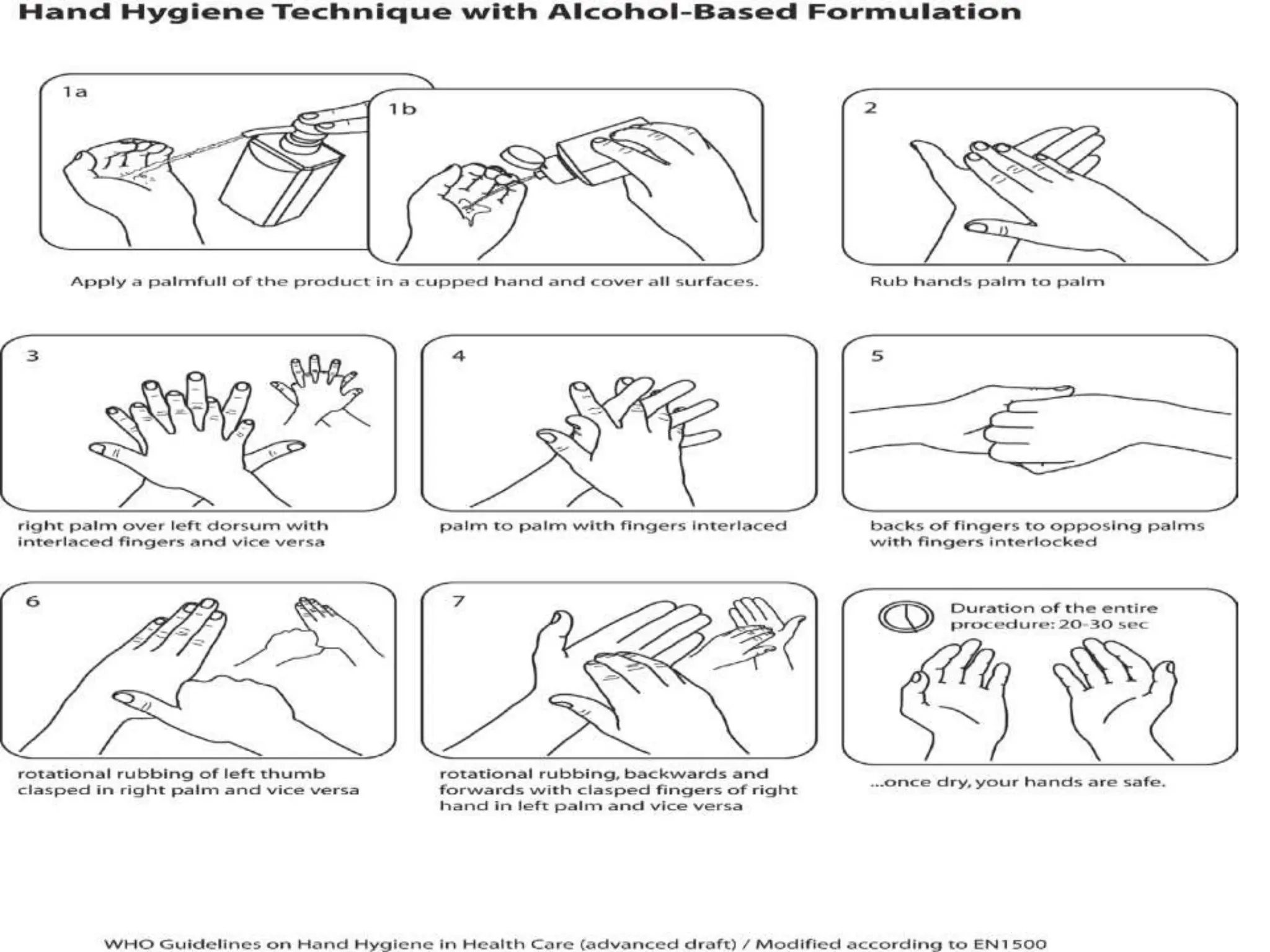
The technique for performing antiseptic hand rub is:
 Apply enough alcohol-based hand rub to cover the entire
surface of hands and fingers (about a teaspoonful -5ml)
 continue rubbing the solution over hands until they are dry
(15-30 seconds). ).
 Rub the solution vigorously into hands, especially between
fingers and under the nails, until dry.
PPP 3.4 Surgical Hand scrub
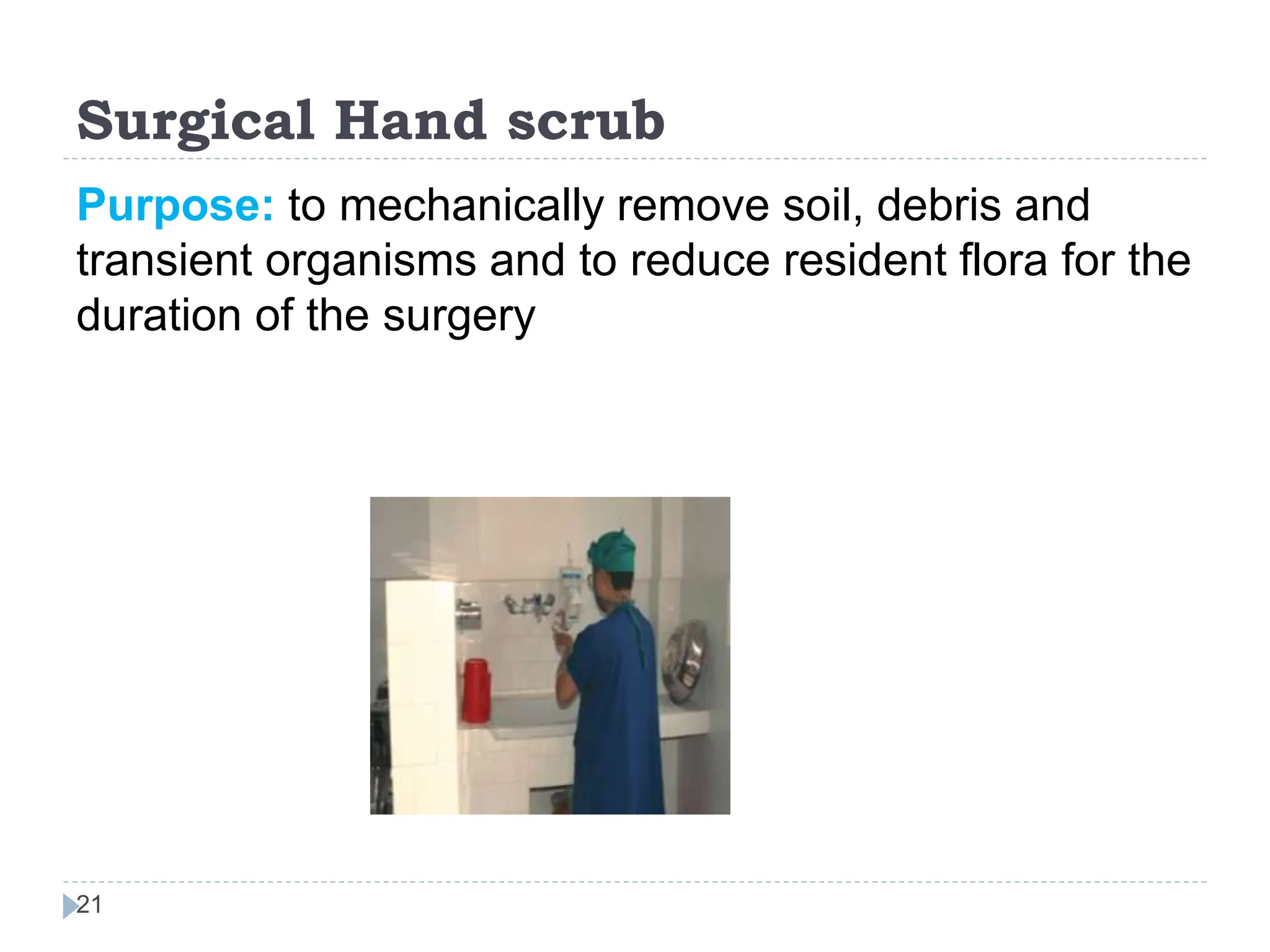
Surgical Hand scrub
21
Purpose: to mechanically remove soil, debris and
transient organisms and to reduce resident flora for the
duration of the surgery
Steps in Surgical Hand-scrub
22
 Remove rings, watches, and bracelets.
 Thoroughly wash hands and forearms to the elbow with
soap and water.
 Clean nails with a nail cleaner.
 Rinse hands and forearms with water.
 Apply an antiseptic agent (soap)
 Vigorously wash all surfaces of hands, fingers, and
forearms for at least 2 minutes.
Steps ….Cont’d
23
 Rinse hands and arms thoroughly with
clean water, holding hands higher than
elbows.
 Keep hands up and away from the body,
do not touch any surface or article.
 and dry hands with a clean sterile dry
towel.
 Put on sterile or HLD gloves.
PPP 3.5 Improving hand
hygiene practices
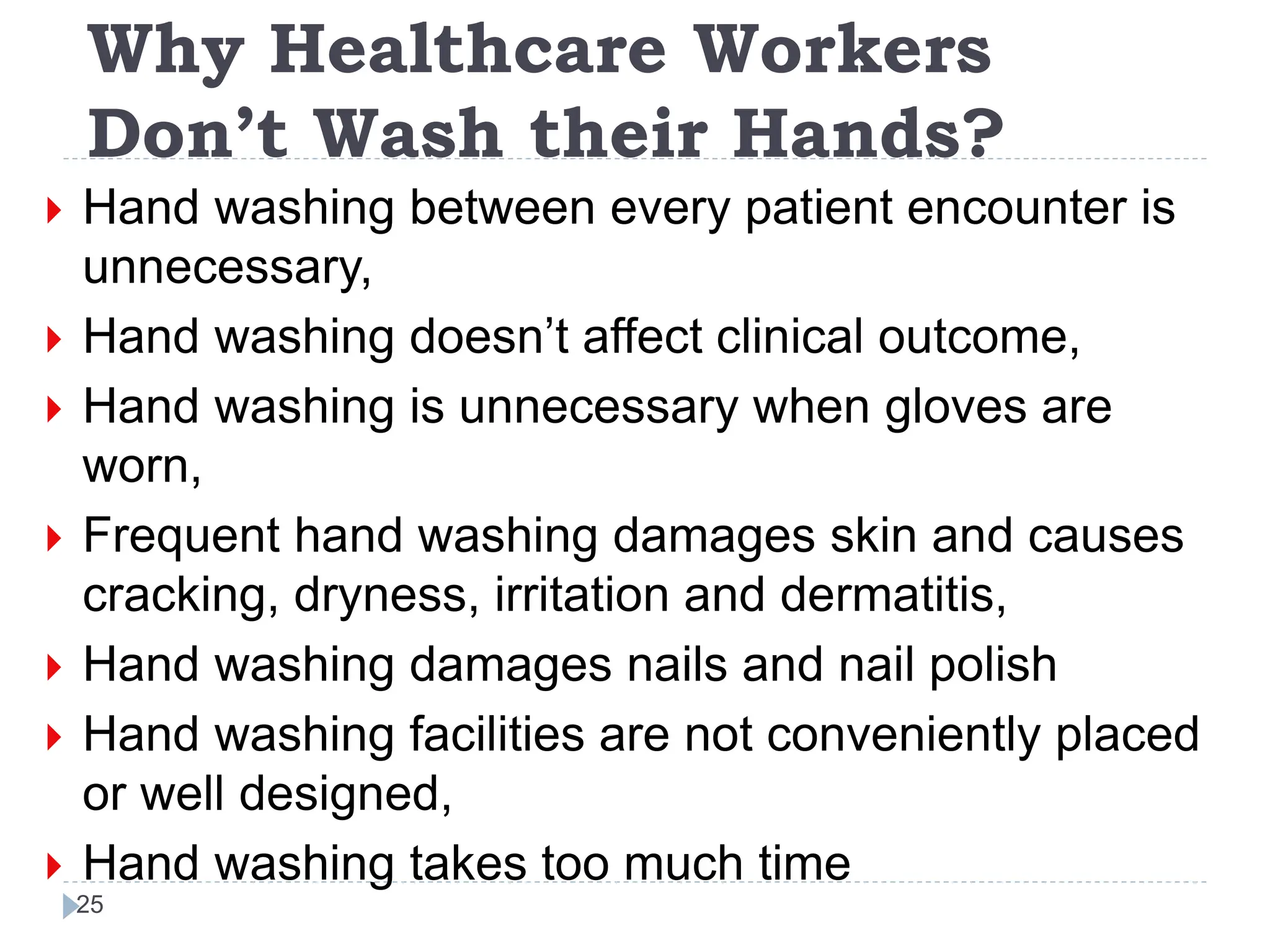
Why Healthcare Workers
Don’t Wash their Hands?
25
 Hand washing between every patient encounter is
unnecessary,
 Hand washing doesn’t affect clinical outcome,
 Hand washing is unnecessary when gloves are
worn,
 Frequent hand washing damages skin and causes
cracking, dryness, irritation and dermatitis,
 Hand washing damages nails and nail polish
 Hand washing facilities are not conveniently placed
or well designed,
 Hand washing takes too much time
Issues and considerations related
to hand hygiene
 Gloves:
o Wearing gloves do not replace the need for hand hygiene.
 Hand lotions and hand Creams:
o hand lotions, creams and moisturizing skin care products
that are water based and without fragrance can be used
o Do not use oil based barrier products
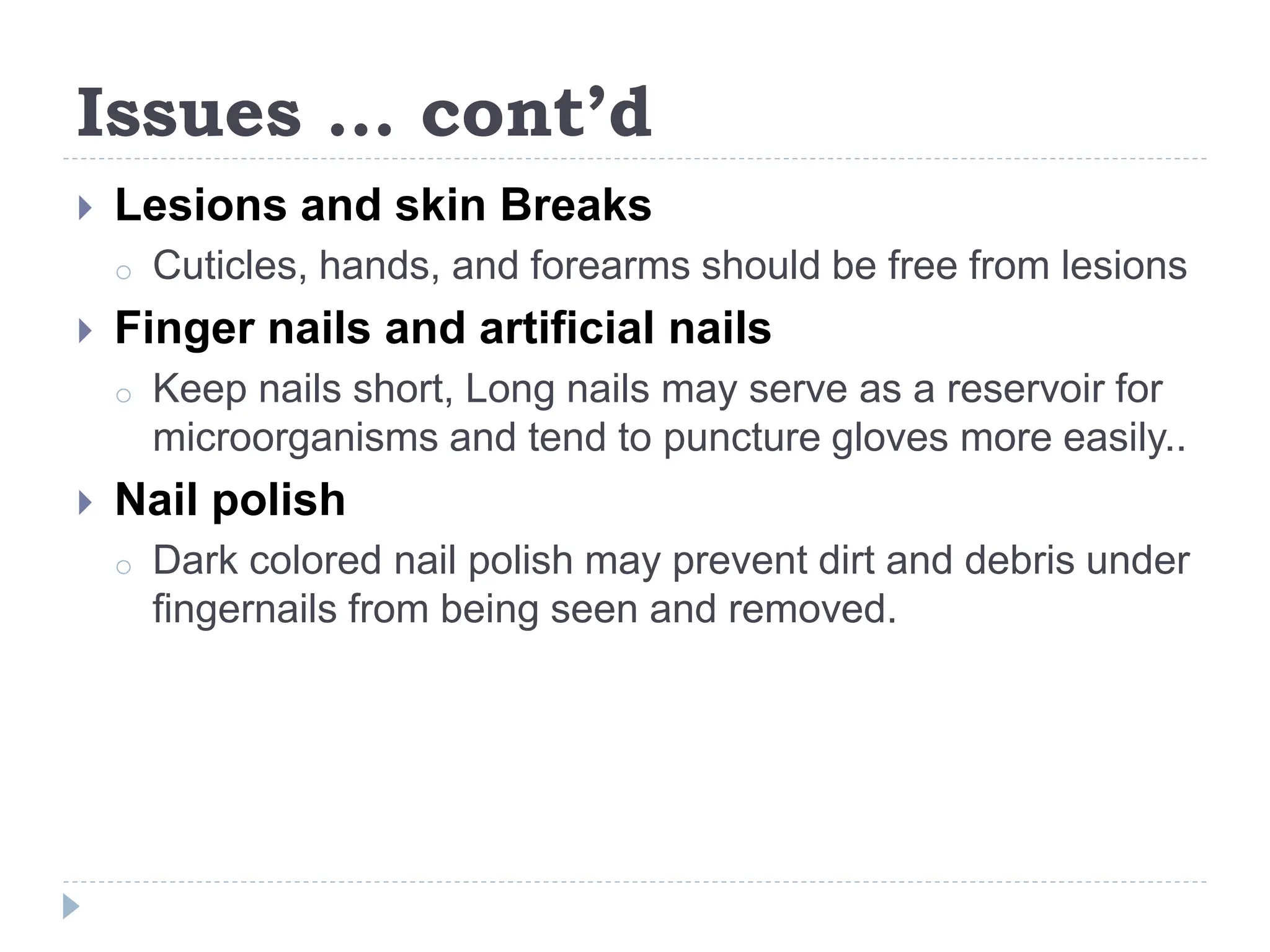
Issues … cont’d
 Lesions and skin Breaks
o Cuticles, hands, and forearms should be free from lesions
 Finger nails and artificial nails
o Keep nails short, Long nails may serve as a reservoir for
microorganisms and tend to puncture gloves more easily..
 Nail polish
o Dark colored nail polish may prevent dirt and debris under
fingernails from being seen and removed.
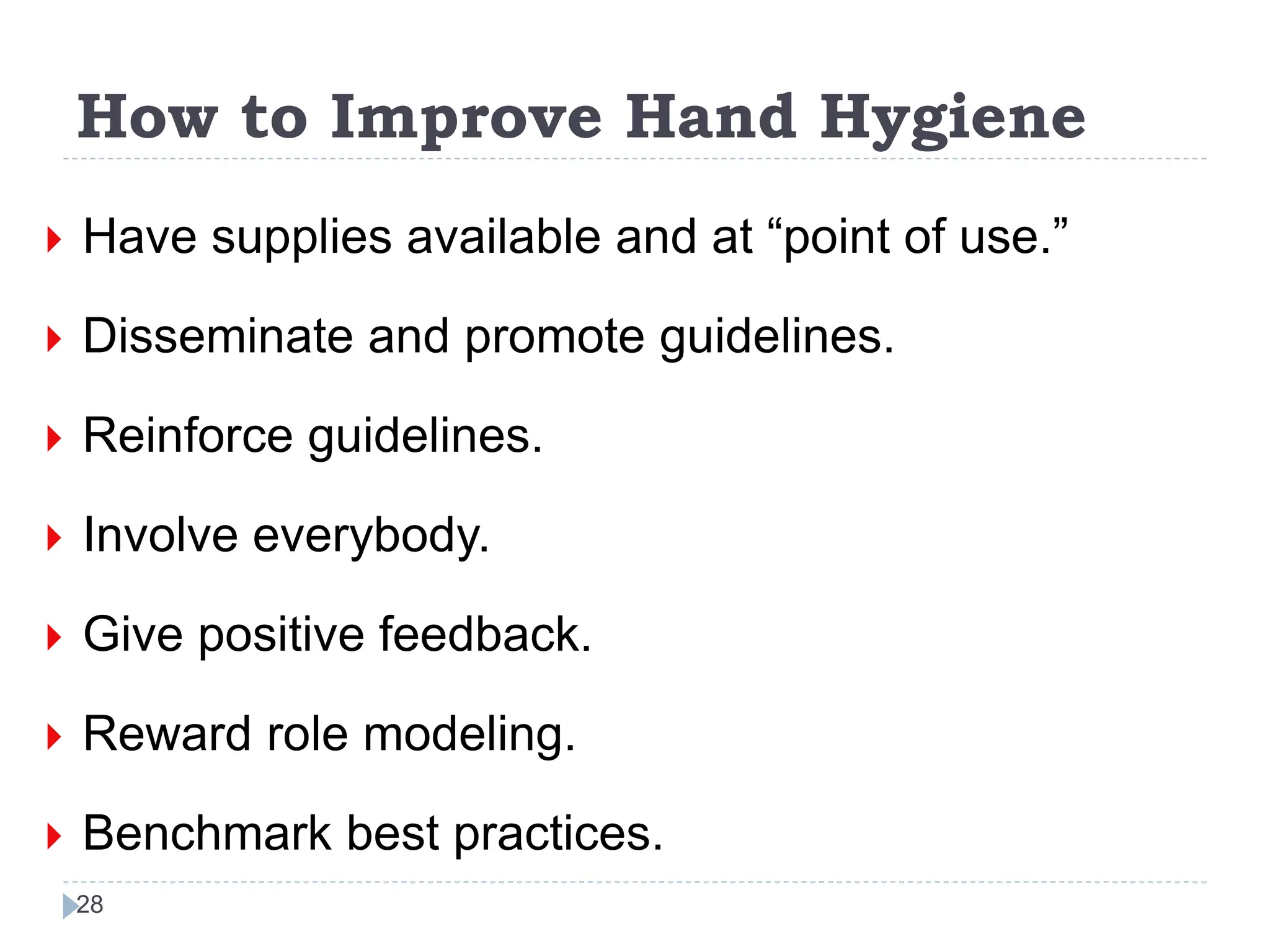
How to Improve Hand Hygiene
28
 Have supplies available and at “point of use.”
 Disseminate and promote guidelines.
 Reinforce guidelines.
 Involve everybody.
 Give positive feedback.
 Reward role modeling.
 Benchmark best practices.
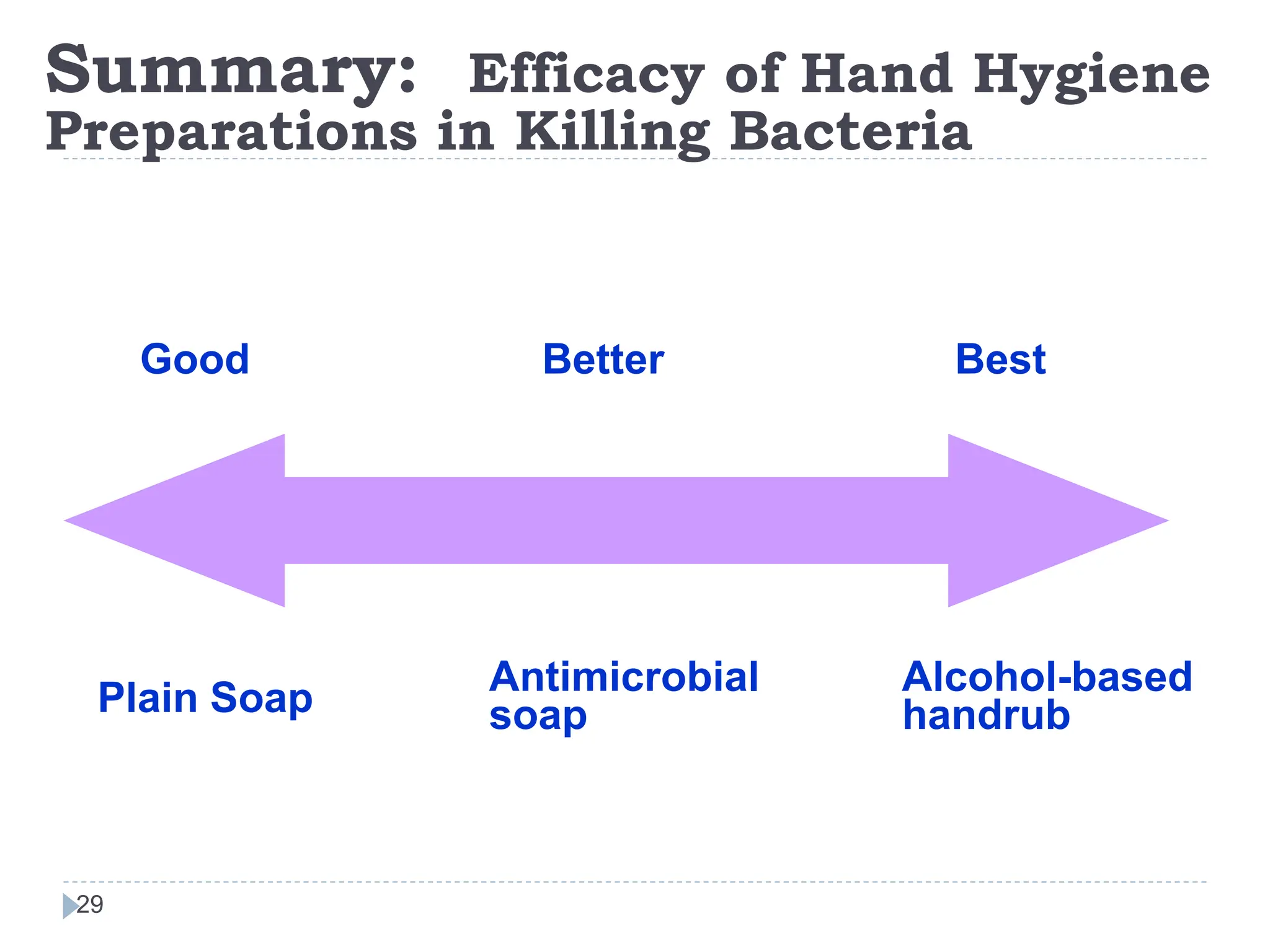
Summary: Efficacy of Hand Hygiene
Preparations in Killing Bacteria
29
Good Better Best
Plain Soap Antimicrobial
soap
Alcohol-based
handrub
Module 3_ Hand Hygiene.ppt

Module 3_ Hand Hygiene.ppt

  • 1.
  • 2.
    Presentation outline • Learningobjectives • PPP 3.1: Importance and kinds of hand hygiene • PPP 3.2: Hand washing techniques • PPP 3.3: Hand antisepsis and antiseptic hand rub • PPP 3.4: Surgical hand scrub • PPP 3.5: Improving hand hygiene practices
  • 3.
    Learning objectives 3 At theend of this module, participants will be able to: • Explain the rational for hand hygiene • List the kinds of hand hygiene technique • Explain the purpose of each kinds of hand hygiene technique • Demonstrate how to prepare and use antiseptic hand rub • Demonstrate the different hand hygiene techniques • Mention common malpractices related with hand hygiene
  • 4.
    PPP 3.1 Importanceand kinds of Hand hygiene
  • 5.
    Why hand hygieneis important?  Hand hygiene is a general term referring to any action of hand cleaning  Reduces the number of disease-causing microorganisms on hands and arms  Minimize cross-contamination  It is the most important way to reduce the spread of infections in the health care selling.
  • 6.
    Kinds of Handhygiene practices  Hand washing  Hand Antisepsis  Antiseptic Hand-rub  Surgical Hand scrub
  • 7.
    The decision tochoose which type of hand hygiene practice depends on:  Intensity of contact with patient and /or blood and body fluids,  The likelihood of microbial transmission,  Patient’s susceptibility to infection, and  Procedure being performed  The activity or area of practice
  • 8.
    PPP 3.2 Handwashing Techniques
  • 9.
    Hand washing Purpose: tomechanically remove soil and debris from skin and reduce the number of transient microorganisms.  It is THE SINGLE most important measure in reducing the spread of infection!
  • 10.
    When do wewash our hands?  Immediately after arriving and leaving work  Before and after examining  After touching contaminated instruments or items  After exposure to mucous membranes, blood, body fluids, secretions or excretions
  • 11.
    When do wewash our hands?  Before putting on gloves and after removing them  Whenever our hands become visibly soiled  After blowing nose or covering a sneeze  Before eating or serving food  After visiting the toilet
  • 12.
    Steps for routinehand washing:  Thoroughly wet hands with water.  Apply plain soap (antiseptic agent is not necessary).  Vigorously rub all areas of hands and fingers for 10–15 seconds, paying close attention to areas under fingernails and between fingers.  Rinse hands thoroughly with clean water.  Dry hands with personal dry clean towel or paper towel  Use a paper towel or a single use towel after drying hands to turn off the water
  • 13.
    Hand washing Technique 13 WHO.2005. Guidelines on Hand Hygiene in Health Care (Advanced Draft): A Summary. WHO: Geneva
  • 14.
    PPP 3.3 Handantisepsis and antisepsis hand rub
  • 15.
    Hand Antisepsis 15 Purpose: Removesoil and debris as well as to reduce both transient and resident flora  It is similar to plain hand washing except that the soap or detergent contains an antiseptic agent (often chlorhexidine, Iodophoris, triclosan) [[Hand antisepsis should be done before: • Examining or caring for highly susceptible patients • Performing an invasive procedure • Leaving the room of patients on Contact Precautions (e.g. hepatitis A or E)
  • 16.
    Antiseptic Hand rub 16 Purpose:to inhibit or kill transient and resident flora.  Considered to be more effective than antimicrobial hand washing agents or plain soap and water,  It is quicker and easier to perform,  but it should not be used when the hands are visibly soiled.  Do not rinse hands after applying hand rub
  • 17.
    Advantages of Alcohol-based handrubs  Require less time  Act faster  More accessible than sinks  More effective for standard hand washing than soap  Can even provide improved skin condition.
  • 18.
    Antiseptic Handrub 18 Preparation ofAlcohol-based solution for hand rub:  Add glycerin or sorbitol to alcohol (2 ml. in 100 ml. of 60–90% ethyl or isopropyl alcohol solution) The technique for performing antiseptic hand rub is:  Apply enough alcohol-based hand rub to cover the entire surface of hands and fingers (about a teaspoonful -5ml)  continue rubbing the solution over hands until they are dry (15-30 seconds). ).  Rub the solution vigorously into hands, especially between fingers and under the nails, until dry.
  • 20.
    PPP 3.4 SurgicalHand scrub
  • 21.
    Surgical Hand scrub 21 Purpose:to mechanically remove soil, debris and transient organisms and to reduce resident flora for the duration of the surgery
  • 22.
    Steps in SurgicalHand-scrub 22  Remove rings, watches, and bracelets.  Thoroughly wash hands and forearms to the elbow with soap and water.  Clean nails with a nail cleaner.  Rinse hands and forearms with water.  Apply an antiseptic agent (soap)  Vigorously wash all surfaces of hands, fingers, and forearms for at least 2 minutes.
  • 23.
    Steps ….Cont’d 23  Rinsehands and arms thoroughly with clean water, holding hands higher than elbows.  Keep hands up and away from the body, do not touch any surface or article.  and dry hands with a clean sterile dry towel.  Put on sterile or HLD gloves.
  • 24.
    PPP 3.5 Improvinghand hygiene practices
  • 25.
    Why Healthcare Workers Don’tWash their Hands? 25  Hand washing between every patient encounter is unnecessary,  Hand washing doesn’t affect clinical outcome,  Hand washing is unnecessary when gloves are worn,  Frequent hand washing damages skin and causes cracking, dryness, irritation and dermatitis,  Hand washing damages nails and nail polish  Hand washing facilities are not conveniently placed or well designed,  Hand washing takes too much time
  • 26.
    Issues and considerationsrelated to hand hygiene  Gloves: o Wearing gloves do not replace the need for hand hygiene.  Hand lotions and hand Creams: o hand lotions, creams and moisturizing skin care products that are water based and without fragrance can be used o Do not use oil based barrier products
  • 27.
    Issues … cont’d Lesions and skin Breaks o Cuticles, hands, and forearms should be free from lesions  Finger nails and artificial nails o Keep nails short, Long nails may serve as a reservoir for microorganisms and tend to puncture gloves more easily..  Nail polish o Dark colored nail polish may prevent dirt and debris under fingernails from being seen and removed.
  • 28.
    How to ImproveHand Hygiene 28  Have supplies available and at “point of use.”  Disseminate and promote guidelines.  Reinforce guidelines.  Involve everybody.  Give positive feedback.  Reward role modeling.  Benchmark best practices.
  • 29.
    Summary: Efficacy ofHand Hygiene Preparations in Killing Bacteria 29 Good Better Best Plain Soap Antimicrobial soap Alcohol-based handrub