Nandeesha S.L
Aerosol Drug Administration
Definition
 Aerosol drug administration is the administration of a
drug via air particles delivered by an appropriate
device that is inhaled and absorbed into the patient's
bodyvia the lungs.
Purpose
 Rapid absorption and localization effects of the drug.
 Most commonly used in asthmatic conditions or specific
lung conditions that cause difficulty in breathing.
 Diseases including emphysema, asthma, chronic obstructive
pulmonary disease (COPD), and other similar conditions
warrant and necessitate the use administration of drugs by
this route of administration.
 To treat temporary and permanent breathlessness
Nebulization
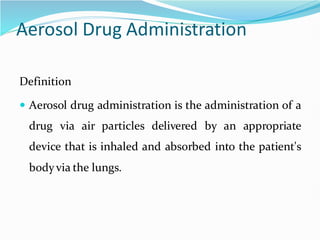
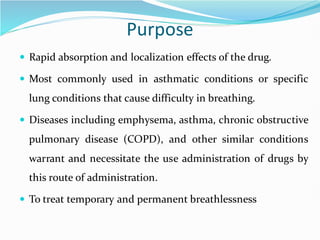
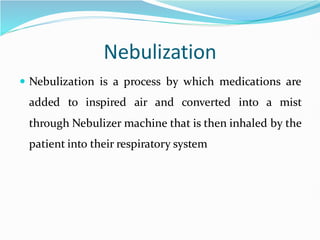
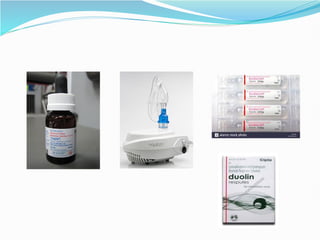
 Nebulization is a process by which medications are
added to inspired air and converted into a mist
through Nebulizer machine that is then inhaled by the
patient into their respiratory system
Safety considerations
 Perform hand hygiene.
 Check room for additional precautions.
 Introduce yourself to patient.
 Confirm patient ID using two patient identifiers
 Check allergy band for any allergies.
 Complete necessaryfocused assessments
 Providepatient education as necessary.
 Plan medication administration to avoid disruption
 Dispense medication in a quietarea
 Avoid conversationwith others.
 Prepare medications for ONE patient ata time.
 Follow the SIX RIGHTS of medication administration.
 The right patient
 The right medication (drug)
 The right dose
 The right route
 The right time
 The right documentation
 Assemblenebulizeras per manufacturer’s instructions.
 Add medication as prescribed by pouring medication
into the nebulizercup.
 Some medications may be mixed together if there are no
contraindications.
 Some medications may require the addition of saline per
prescription for dilution.
 Use a mask if patient is unable to tolerate a
mouthpiece, and an adaptor specific to tracheostomies
if the patient has a tracheostomy.
 Position patient sitting up in a chair or in bed at greater
than 45 degrees.
 Assess pulse, respiratory rate, breath sounds, pulse
oximetry, and peak flow measurement (if ordered)
before beginning treatment.
 Turn on air to nebulizerand ensure that a sufficient
mist is visibleexiting nebulizerchamber. A flow rate of
6 to 10 L should provide sufficient misting.
 Ensure that nebulizerchamber containing medication
is securely fastened.
 Ensure that chamber is connected to face mask or
mouthpiece, and that nebulizertubing is connected to
compressed air or oxygen flowmeter.
 If mouthpiece is being used, ensure lips are sealed
around mouthpiece.
 Have patient take slow, deep, inspiratory breaths.
Encourage a brief 2- to 3-second pause at the end of
inspiration, and continue with passive exhalations.
 Have patient repeat this breathing pattern until
medication is complete and there is no visible misting.
This process takes approximately 8 to 10 minutes.
 Tap nebulizerchamber occasionallyand at the end of the treatment.
 Monitor patient’s pulse rate during treatment, especiallyif beta-adrenergic
bronchodilators are being used.
 Once treatment is complete, turn flowmeteroff and disconnectnebulizer.
 Rinse, dry, and store nebulizeras per agency policy.
 If inhaled medication included steroids, have patient rinse mouth and gargle
with warm waterafter treatment.
 Once treatment is complete, encouragepatient to perform deepbreathing and
coughing exercises to helpremoveexpectorate mucous.
 Return patient to a comfortable and safe position.
 Perform hand hygiene.
 Document treatment and record and report any unusualevents or findings to
the appropriate health care provider.
Medication by Metered Dose Inhaler (MDI)
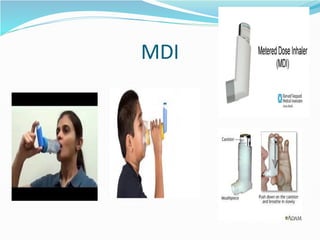
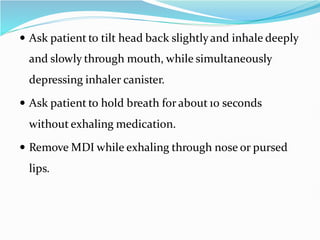
 A metered dose inhaler (MDI) is a small handheld
device that disperses medication into the airways via an
aerosol spray or mist through the activation of a
propellant. A measured dose of the drug is delivered
with each push of a canister, and dosing is usually
achieved with one or two puffs.
MDI
 Assemble MDI as per manufacturer’s instructions.
 If MDI has not been used for several days, give it a test spray
into the air, taking care not to inhale the medication.
 Ensure that canister is securely inserted into the holder and
remove the mouthpiece cover.
 Shake canister well before delivery (5 or 6 shakes).
 Position patient sitting up in a chair or in bed at greater than
45 degrees.
 Assess pulse, respiratory rate, breath sounds, pulse oximetry,
and peak flow measurement (if ordered) before beginning
treatment.
 Without spacer:
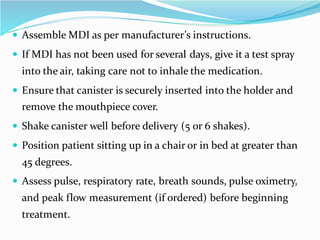
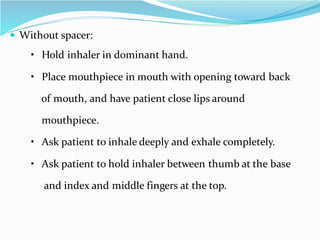
• Hold inhaler in dominant hand.
• Place mouthpiece in mouth with opening toward back
of mouth, and have patient close lips around
mouthpiece.
• Ask patient to inhale deeply and exhale completely.
• Ask patient to hold inhaler between thumb at the base
and index and middle fingers at the top.
 Ask patient to tilt head back slightlyand inhale deeply
and slowly through mouth, while simultaneously
depressing inhaler canister.
 Ask patient to hold breath for about 10 seconds
without exhaling medication.
 Remove MDI while exhaling through nose or pursed
lips.
 With spacer:
✓Insert MDI into end of spacer device.
✓Ask patient to place spacer mouthpiece in mouth and
close lips around mouthpiece, avoiding any exhalation
openings on spacer.
✓Ask patient to breathe regularly.
✓Have patient depress medication canister to spray one
puff into spacer device.
✓Ask patient to breathe in deeplyand slowlyfor about 5
seconds and to then hold breath at the end of
inspiration for about 10 seconds.
✓If one medication: have patient wait 20 to 30 seconds
between inhalations
✓If more than one medication: have patient wait 2 to 5
minutes between inhalations.
 Have patient rinse mouth and gargle with warm water
about 2 minutes after treatment.
 Return patient to a comfortableand safe position.
 Perform hand hygiene.
 Document treatment as per agency policy, and record
and report any unusual events or findings to the
appropriate health care provider.

Aerosols Medication administration.pdf

  • 1.
  • 2.
    Aerosol Drug Administration Definition Aerosol drug administration is the administration of a drug via air particles delivered by an appropriate device that is inhaled and absorbed into the patient's bodyvia the lungs.
  • 3.
    Purpose  Rapid absorptionand localization effects of the drug.  Most commonly used in asthmatic conditions or specific lung conditions that cause difficulty in breathing.  Diseases including emphysema, asthma, chronic obstructive pulmonary disease (COPD), and other similar conditions warrant and necessitate the use administration of drugs by this route of administration.  To treat temporary and permanent breathlessness
  • 4.
    Nebulization  Nebulization isa process by which medications are added to inspired air and converted into a mist through Nebulizer machine that is then inhaled by the patient into their respiratory system
  • 6.
    Safety considerations  Performhand hygiene.  Check room for additional precautions.  Introduce yourself to patient.  Confirm patient ID using two patient identifiers  Check allergy band for any allergies.  Complete necessaryfocused assessments  Providepatient education as necessary.  Plan medication administration to avoid disruption  Dispense medication in a quietarea  Avoid conversationwith others.  Prepare medications for ONE patient ata time.  Follow the SIX RIGHTS of medication administration.
  • 7.
     The rightpatient  The right medication (drug)  The right dose  The right route  The right time  The right documentation
  • 8.
     Assemblenebulizeras permanufacturer’s instructions.  Add medication as prescribed by pouring medication into the nebulizercup.  Some medications may be mixed together if there are no contraindications.  Some medications may require the addition of saline per prescription for dilution.
  • 9.
     Use amask if patient is unable to tolerate a mouthpiece, and an adaptor specific to tracheostomies if the patient has a tracheostomy.  Position patient sitting up in a chair or in bed at greater than 45 degrees.  Assess pulse, respiratory rate, breath sounds, pulse oximetry, and peak flow measurement (if ordered) before beginning treatment.
  • 10.
     Turn onair to nebulizerand ensure that a sufficient mist is visibleexiting nebulizerchamber. A flow rate of 6 to 10 L should provide sufficient misting.  Ensure that nebulizerchamber containing medication is securely fastened.  Ensure that chamber is connected to face mask or mouthpiece, and that nebulizertubing is connected to compressed air or oxygen flowmeter.
  • 11.
     If mouthpieceis being used, ensure lips are sealed around mouthpiece.  Have patient take slow, deep, inspiratory breaths. Encourage a brief 2- to 3-second pause at the end of inspiration, and continue with passive exhalations.  Have patient repeat this breathing pattern until medication is complete and there is no visible misting. This process takes approximately 8 to 10 minutes.
  • 12.
     Tap nebulizerchamberoccasionallyand at the end of the treatment.  Monitor patient’s pulse rate during treatment, especiallyif beta-adrenergic bronchodilators are being used.  Once treatment is complete, turn flowmeteroff and disconnectnebulizer.  Rinse, dry, and store nebulizeras per agency policy.  If inhaled medication included steroids, have patient rinse mouth and gargle with warm waterafter treatment.  Once treatment is complete, encouragepatient to perform deepbreathing and coughing exercises to helpremoveexpectorate mucous.  Return patient to a comfortable and safe position.  Perform hand hygiene.  Document treatment and record and report any unusualevents or findings to the appropriate health care provider.
  • 13.
    Medication by MeteredDose Inhaler (MDI)  A metered dose inhaler (MDI) is a small handheld device that disperses medication into the airways via an aerosol spray or mist through the activation of a propellant. A measured dose of the drug is delivered with each push of a canister, and dosing is usually achieved with one or two puffs.
  • 14.
  • 15.
     Assemble MDIas per manufacturer’s instructions.  If MDI has not been used for several days, give it a test spray into the air, taking care not to inhale the medication.  Ensure that canister is securely inserted into the holder and remove the mouthpiece cover.  Shake canister well before delivery (5 or 6 shakes).  Position patient sitting up in a chair or in bed at greater than 45 degrees.  Assess pulse, respiratory rate, breath sounds, pulse oximetry, and peak flow measurement (if ordered) before beginning treatment.
  • 16.
     Without spacer: •Hold inhaler in dominant hand. • Place mouthpiece in mouth with opening toward back of mouth, and have patient close lips around mouthpiece. • Ask patient to inhale deeply and exhale completely. • Ask patient to hold inhaler between thumb at the base and index and middle fingers at the top.
  • 17.
     Ask patientto tilt head back slightlyand inhale deeply and slowly through mouth, while simultaneously depressing inhaler canister.  Ask patient to hold breath for about 10 seconds without exhaling medication.  Remove MDI while exhaling through nose or pursed lips.
  • 18.
     With spacer: ✓InsertMDI into end of spacer device. ✓Ask patient to place spacer mouthpiece in mouth and close lips around mouthpiece, avoiding any exhalation openings on spacer. ✓Ask patient to breathe regularly. ✓Have patient depress medication canister to spray one puff into spacer device.
  • 19.
    ✓Ask patient tobreathe in deeplyand slowlyfor about 5 seconds and to then hold breath at the end of inspiration for about 10 seconds. ✓If one medication: have patient wait 20 to 30 seconds between inhalations ✓If more than one medication: have patient wait 2 to 5 minutes between inhalations.
  • 20.
     Have patientrinse mouth and gargle with warm water about 2 minutes after treatment.  Return patient to a comfortableand safe position.  Perform hand hygiene.  Document treatment as per agency policy, and record and report any unusual events or findings to the appropriate health care provider.