ROSS IBABAO
IC COORDINATOR
KJO HOSPITAL
Blood and Body Fluid Spill
Management
IC/PL-020
What are Body Fluids?
 “any fluid found in, produced by, or excreted from
the human body which includes blood, urine, feces,
saliva, tears, breast milk, cerebrospinal fluid (CSF),
semen, vaginal fluid, amniotic fluid, pleural fluid,
peritoneal fluid, bile, digestive juices, vomit and
pus.” In terms of standard infection control
precautions practice, body fluids are considered
hazardous and should be dealt with immediately.
General Considerations
 Treat all body fluids as if
they were infected.
 Follow Standard
Precautions to ensure
occupational safety
 Update training at least
annually to maintain
occupational safety
Blood Borne Pathogens
 Examples of Potentially
infectious body fluids
include
 Blood
 Semen
 Spinal fluid
 Fecal Matter
 Any body fluid that is
visibly contaminated with
blood
 Common Modes of
accidental
transmission
 Accidental puncture
 Contact between broken
skin and infected body
fluids
 Contact between mucous
membranes and infected
body fluids
Modes of Transmission
 BBP’s can enter your
system through:
 OPEN SORES
 CUTS
 ABRASIONS
 ACNE
 SUNBURNS or
BLISTERS
 BBP’s may also be
transmitted through
mucous membranes of
the:
 EYES
 NOSE
 MOUTH
Protecting Yourself
 Use Standard Precautions
Body Fluid Spills
 In the event of a body fluid spill (blood or other
fluid on the floor, pool deck or fitness machine)
 Remove customers from the immediate area
 Clean the area using appropriate cleaning solution
 Always utilize barriers to protect yourself from accidental
exposure
Disposal of Contaminated Materials
 Always use a protective barrier between you and
the fluid and/or victim.
 All contaminated materials used in first aid and
clean up (rags, towels, gauze, gloves, etc) should be
placed in a Yellow BIOHAZARD BAG and
properly disposed of in the BIOHAZARD
CONTAINER.
 DO NOT PLACE SOILED RAGS AND TOWELS IN
THE WASHER.
 Dispose of them in BIOHAZARD CONTAINERS.
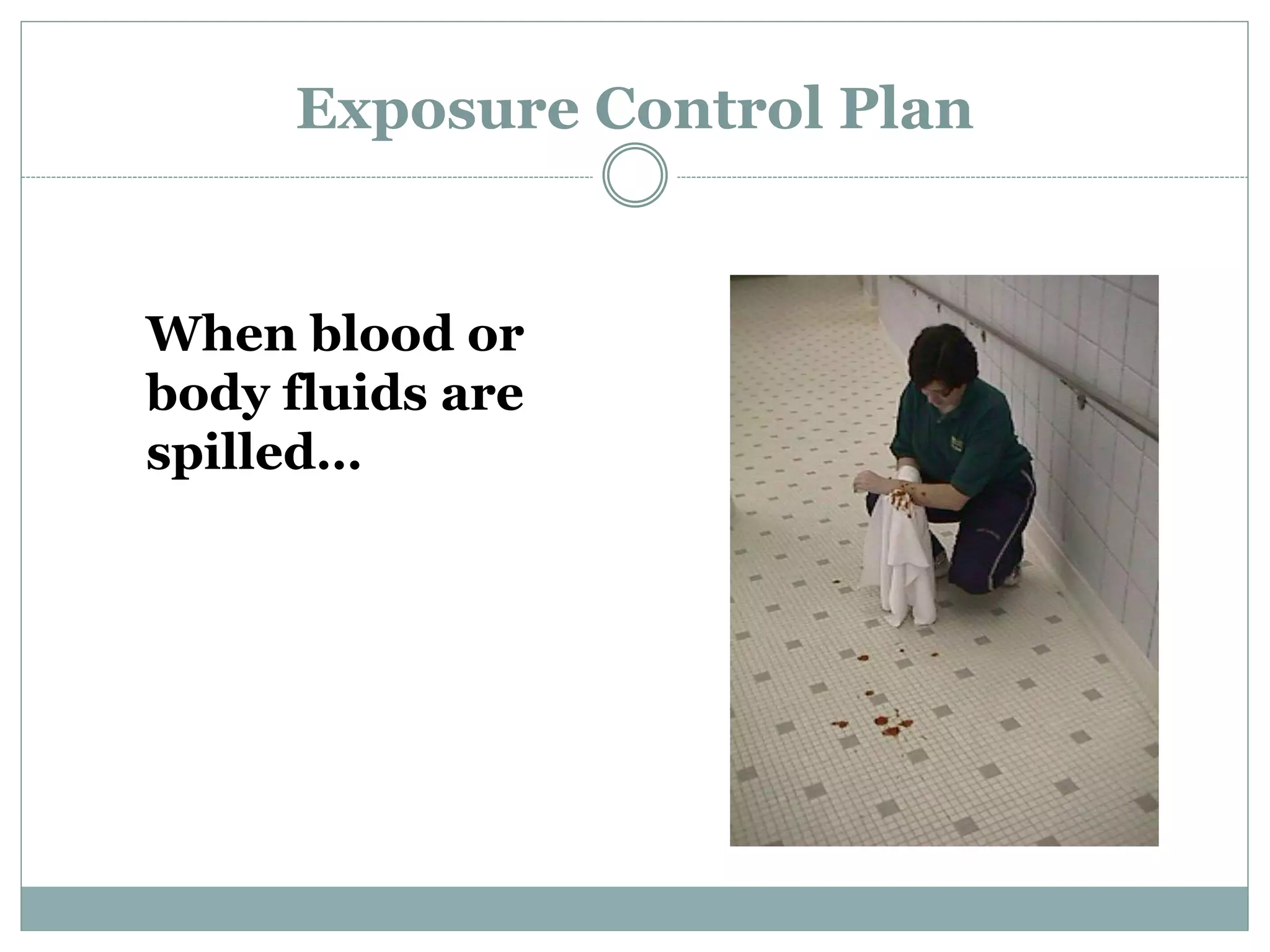
Exposure Control Plan
When blood or
body fluids are
spilled…
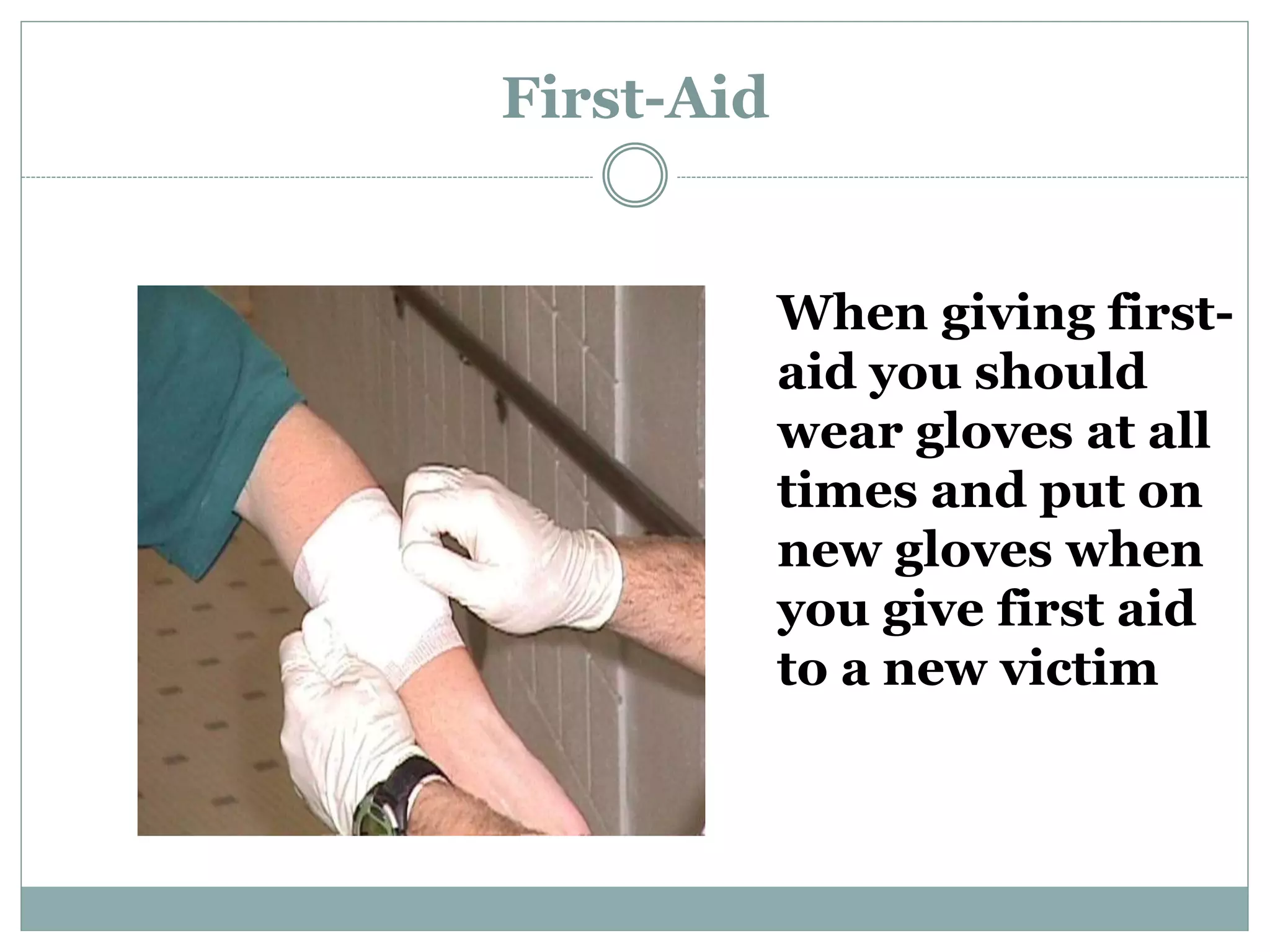
First-Aid
When giving first-
aid you should
wear gloves at all
times and put on
new gloves when
you give first aid
to a new victim
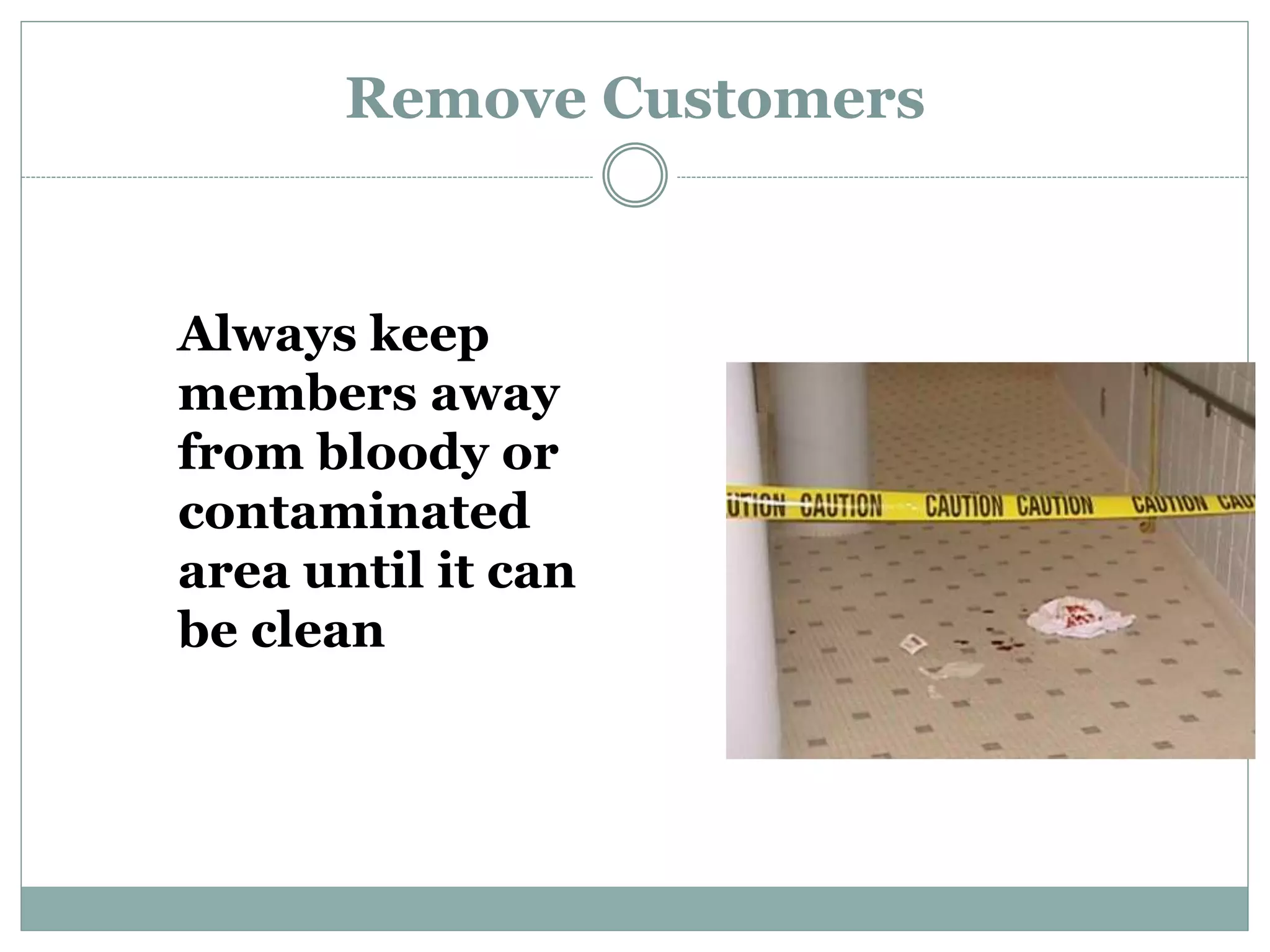
Remove Customers
Always keep
members away
from bloody or
contaminated
area until it can
be clean
How to Contain The Spill?
20-IC PL 020,6 - BLOOD AND BODY FLUID SPILL MANAGEMENT.pdf
Blood and Body Fluid Spill Management.jpg
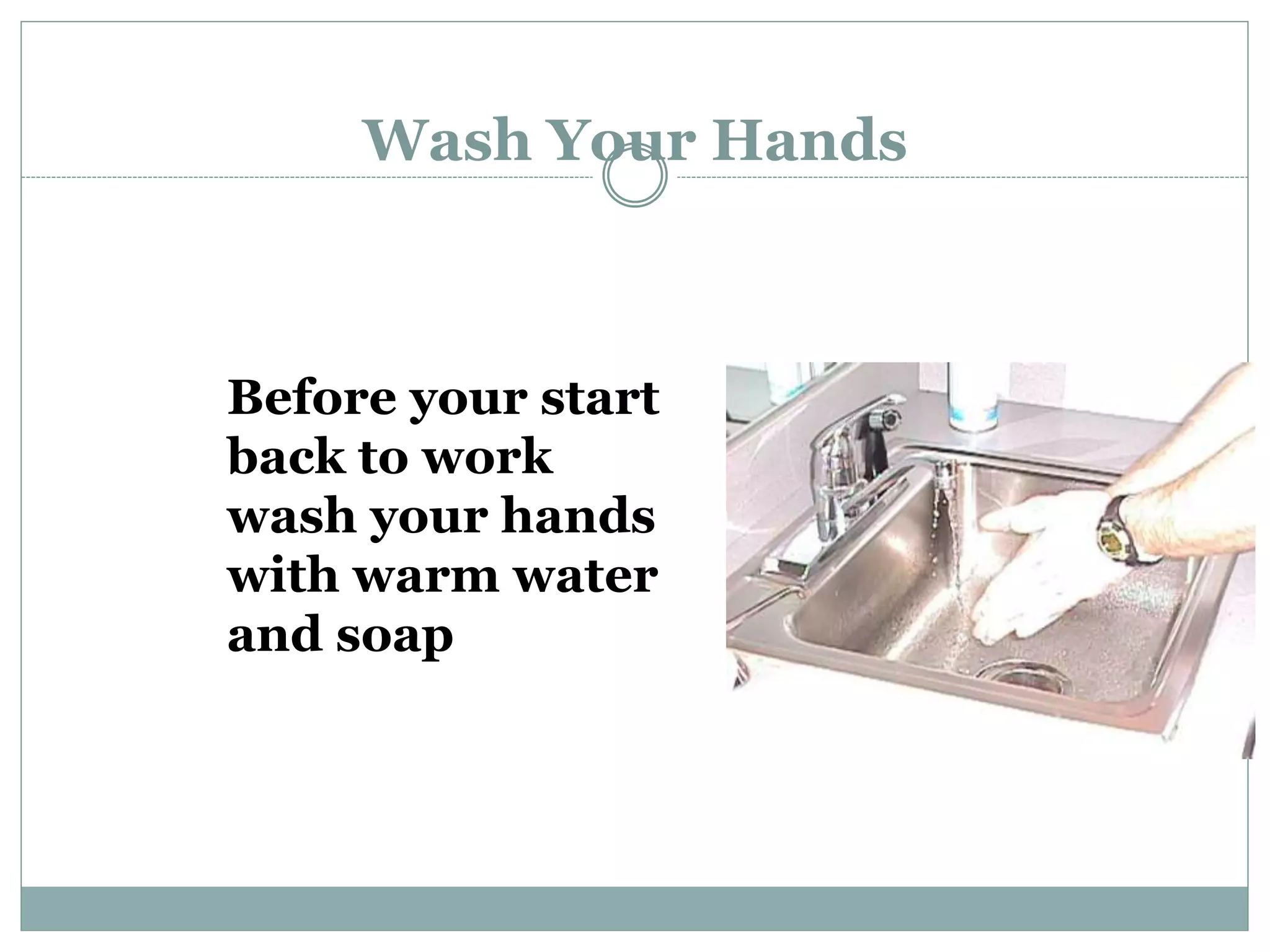
Wash Your Hands
Before your start
back to work
wash your hands
with warm water
and soap
ACCIDENTAL EXPOSURE
 IF YOU ARE EXPOSED, YOU SHOULD:
 Wash the exposed area thoroughly with copious
amounts of soap and running water.
 Contaminated eyes and mucous membranes
should be irrigated for 15 minutes using normal
saline or water.
 Report Exposure to your supervisor
 Then call the attention of ICP 2176/2097
RECAP
 ALWAYS USE A PROTECTIVE BARRIER
BETWEEN YOURSELF AND POTENTIALLY
INFECTIOUS MATERIALS!
 One careless mistake could expose you or our
patient to deadly diseases.
 Dispose of contaminated material properly to
ensure the safety of our patient and our staff.
 THINK BEFORE YOU ACT!
 PROTECT YOURSELF!
Blood and Body Fluid Spill Management

Blood and Body Fluid Spill Management

  • 1.
    ROSS IBABAO IC COORDINATOR KJOHOSPITAL Blood and Body Fluid Spill Management IC/PL-020
  • 2.
    What are BodyFluids?  “any fluid found in, produced by, or excreted from the human body which includes blood, urine, feces, saliva, tears, breast milk, cerebrospinal fluid (CSF), semen, vaginal fluid, amniotic fluid, pleural fluid, peritoneal fluid, bile, digestive juices, vomit and pus.” In terms of standard infection control precautions practice, body fluids are considered hazardous and should be dealt with immediately.
  • 3.
    General Considerations  Treatall body fluids as if they were infected.  Follow Standard Precautions to ensure occupational safety  Update training at least annually to maintain occupational safety
  • 4.
    Blood Borne Pathogens Examples of Potentially infectious body fluids include  Blood  Semen  Spinal fluid  Fecal Matter  Any body fluid that is visibly contaminated with blood  Common Modes of accidental transmission  Accidental puncture  Contact between broken skin and infected body fluids  Contact between mucous membranes and infected body fluids
  • 5.
    Modes of Transmission BBP’s can enter your system through:  OPEN SORES  CUTS  ABRASIONS  ACNE  SUNBURNS or BLISTERS  BBP’s may also be transmitted through mucous membranes of the:  EYES  NOSE  MOUTH
  • 6.
    Protecting Yourself  UseStandard Precautions
  • 7.
    Body Fluid Spills In the event of a body fluid spill (blood or other fluid on the floor, pool deck or fitness machine)  Remove customers from the immediate area  Clean the area using appropriate cleaning solution  Always utilize barriers to protect yourself from accidental exposure
  • 8.
    Disposal of ContaminatedMaterials  Always use a protective barrier between you and the fluid and/or victim.  All contaminated materials used in first aid and clean up (rags, towels, gauze, gloves, etc) should be placed in a Yellow BIOHAZARD BAG and properly disposed of in the BIOHAZARD CONTAINER.  DO NOT PLACE SOILED RAGS AND TOWELS IN THE WASHER.  Dispose of them in BIOHAZARD CONTAINERS.
  • 9.
    Exposure Control Plan Whenblood or body fluids are spilled…
  • 10.
    First-Aid When giving first- aidyou should wear gloves at all times and put on new gloves when you give first aid to a new victim
  • 11.
    Remove Customers Always keep membersaway from bloody or contaminated area until it can be clean
  • 12.
    How to ContainThe Spill? 20-IC PL 020,6 - BLOOD AND BODY FLUID SPILL MANAGEMENT.pdf Blood and Body Fluid Spill Management.jpg
  • 13.
    Wash Your Hands Beforeyour start back to work wash your hands with warm water and soap
  • 14.
    ACCIDENTAL EXPOSURE  IFYOU ARE EXPOSED, YOU SHOULD:  Wash the exposed area thoroughly with copious amounts of soap and running water.  Contaminated eyes and mucous membranes should be irrigated for 15 minutes using normal saline or water.  Report Exposure to your supervisor  Then call the attention of ICP 2176/2097
  • 15.
    RECAP  ALWAYS USEA PROTECTIVE BARRIER BETWEEN YOURSELF AND POTENTIALLY INFECTIOUS MATERIALS!  One careless mistake could expose you or our patient to deadly diseases.  Dispose of contaminated material properly to ensure the safety of our patient and our staff.  THINK BEFORE YOU ACT!  PROTECT YOURSELF!