HAIR Disorders
Presented by :Jagruti Marathe
• Hair is a unique character found on all mammals but not on other
animals
• In humans it is a special and cherished feature, especially in
females.
• Its main functions are in protection of the skin from possible
dameges.
• Eyebrows and eyelashes, for example, stop things entering the
eyes, while scalp hair prevents sunlight, cold, and physical damage
to the head and neck.
• Mammalian skin produces hair almost all over the body surface
except for a few areas of the body, i.e., sole of the foot, palm of the
hand, buccal surface of the lip, and portions of external genitalia .
• Human hair is usually classified according to three conventional
ethnic human subgroups, i.e., African, Asian, and European.
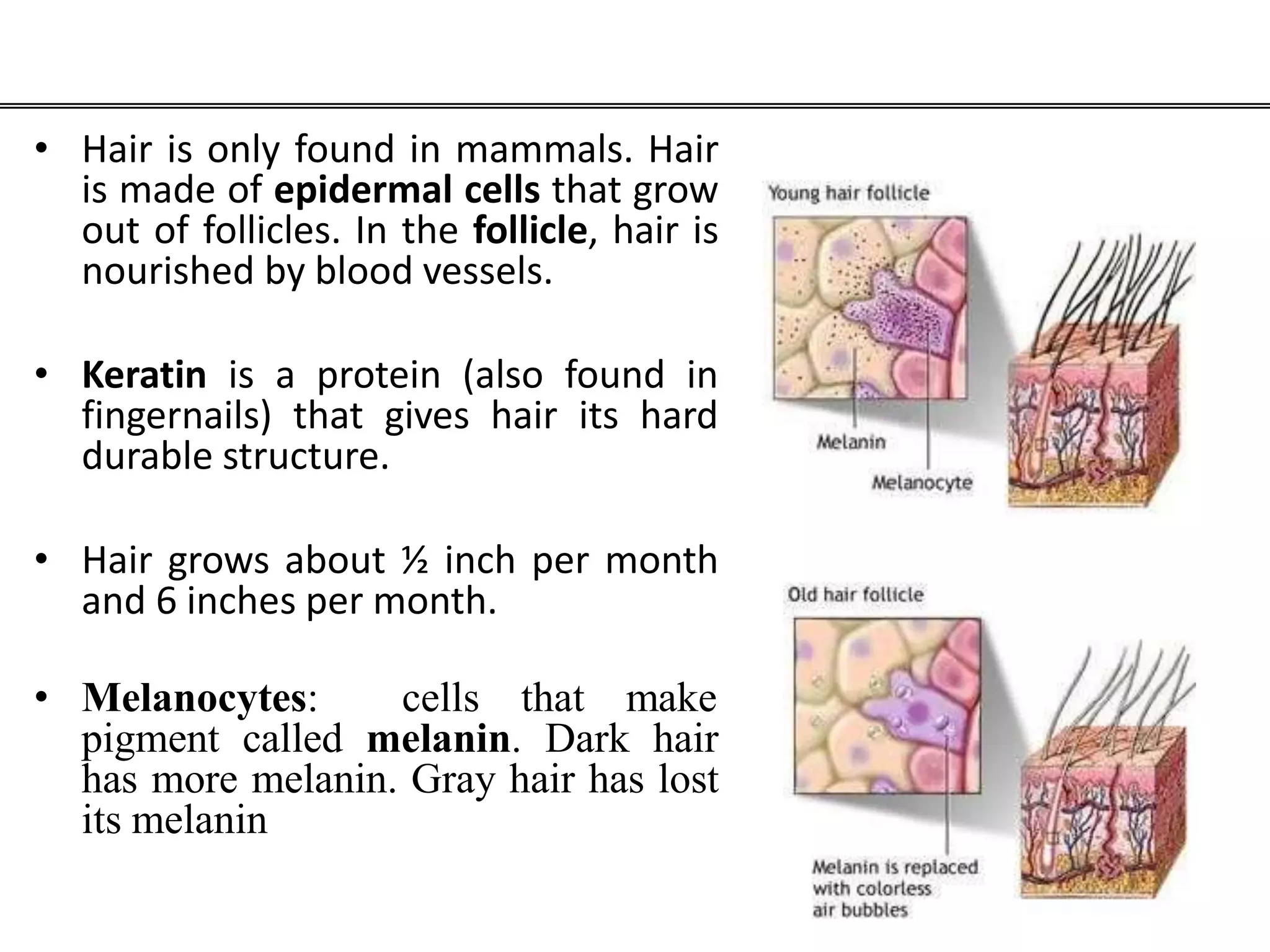
• Hair is only found in mammals. Hair
is made of epidermal cells that grow
out of follicles. In the follicle, hair is
nourished by blood vessels.
• Keratin is a protein (also found in
fingernails) that gives hair its hard
durable structure.
• Hair grows about ½ inch per month
and 6 inches per month.
• Melanocytes: cells that make
pigment called melanin. Dark hair
has more melanin. Gray hair has lost
its melanin
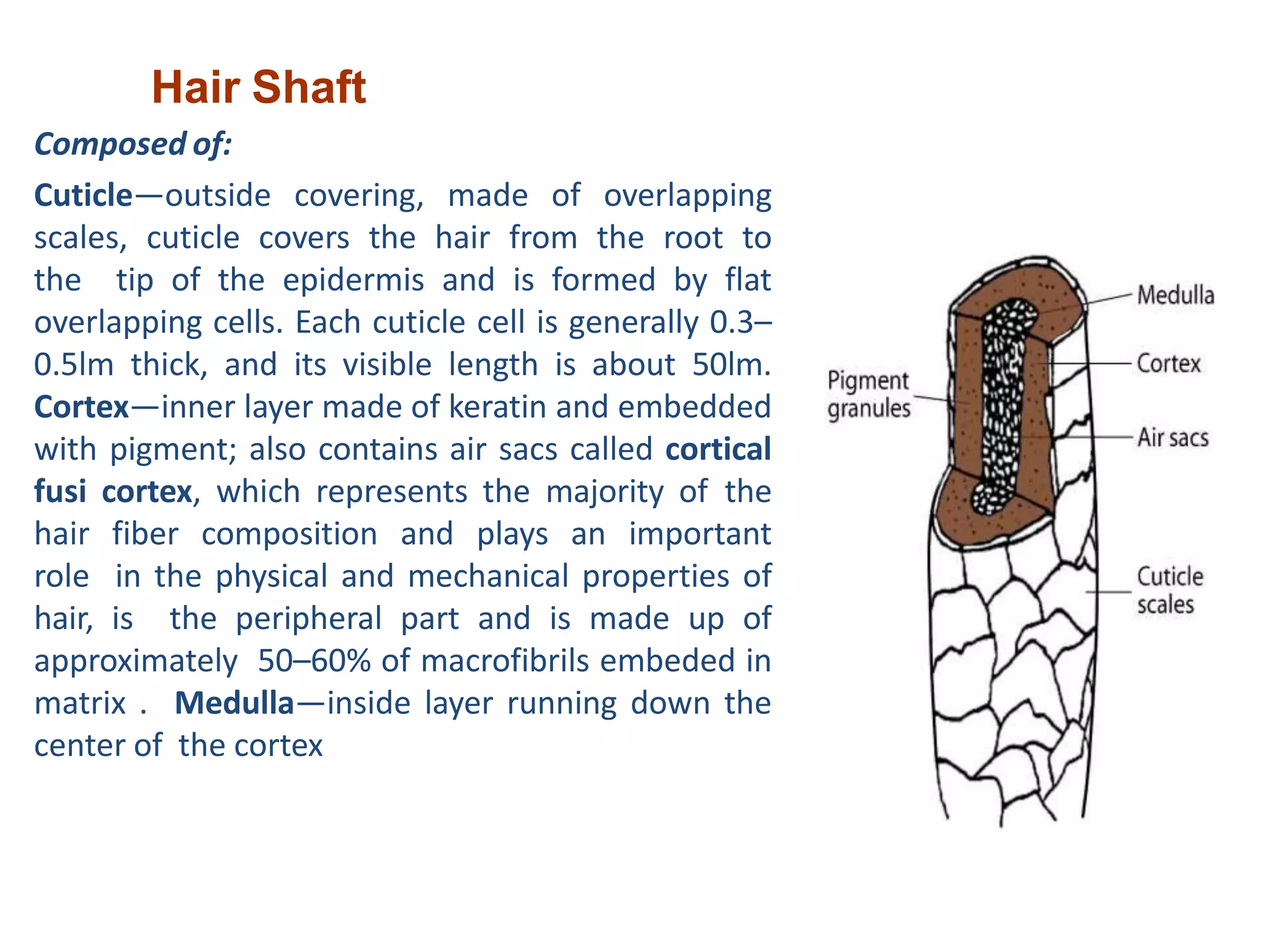
Hair Shaft
Composed of:
Cuticle—outside covering, made of overlapping
scales, cuticle covers the hair from the root to
the tip of the epidermis and is formed by flat
overlapping cells. Each cuticle cell is generally 0.3–
0.5lm thick, and its visible length is about 50lm.
Cortex—inner layer made of keratin and embedded
with pigment; also contains air sacs called cortical
fusi cortex, which represents the majority of the
hair fiber composition and plays an important
role in the physical and mechanical properties of
hair, is the peripheral part and is made up of
approximately 50–60% of macrofibrils embeded in
matrix . Medulla—inside layer running down the
center of the cortex
The Cuticle
The cuticle is the outermost layer of hair which is covered with
scales. The scales point toward the tip of the hair. Scales differ
among species of animals and are named based on their
appearance. The three basic patterns are:
Coronal
Spinous
Imbricate
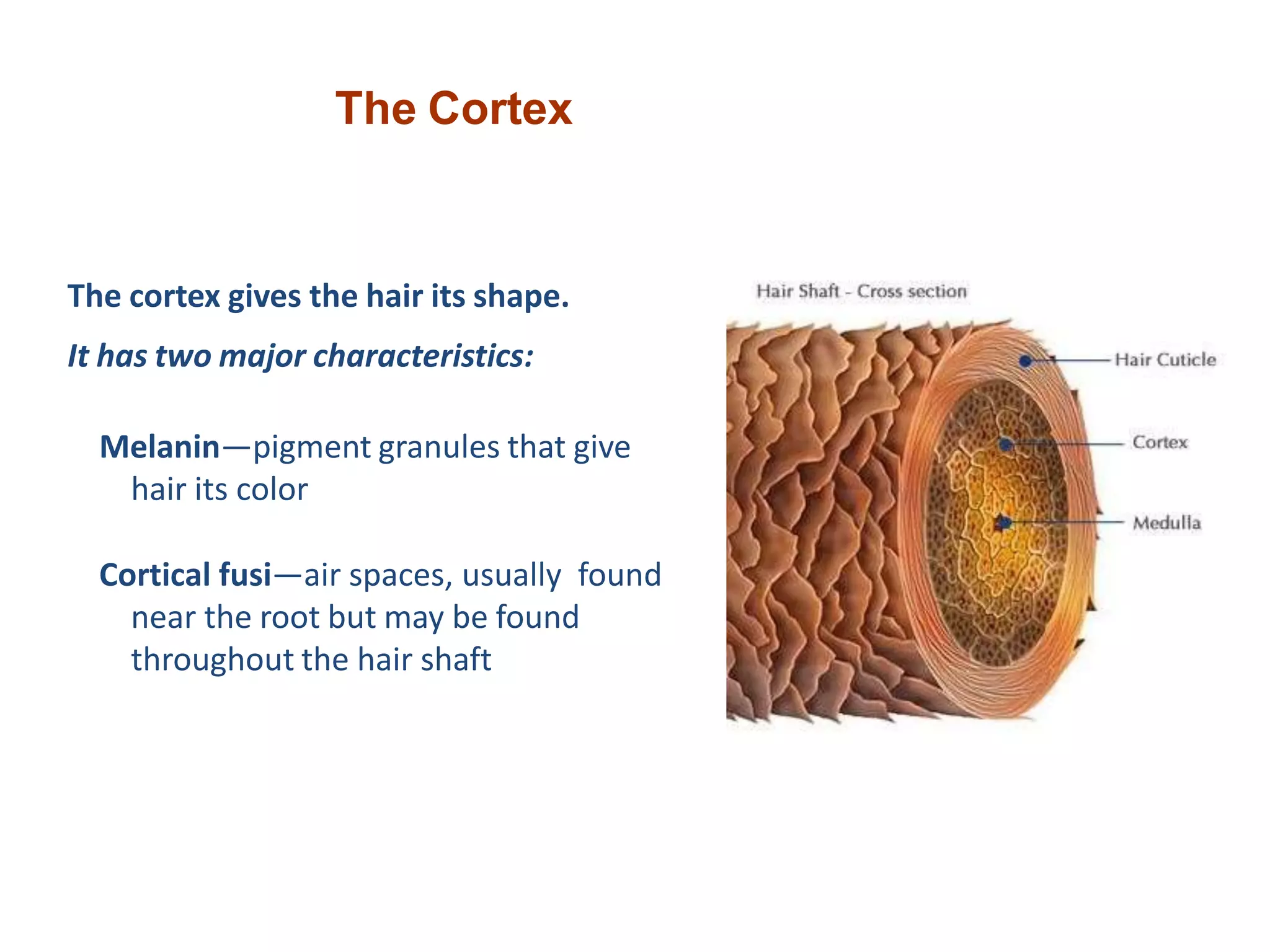
The Cortex
The cortex gives the hair its shape.
It has two major characteristics:
Melanin—pigment granules that give
hair its color
Cortical fusi—air spaces, usually found
near the root but may be found
throughout the hair shaft
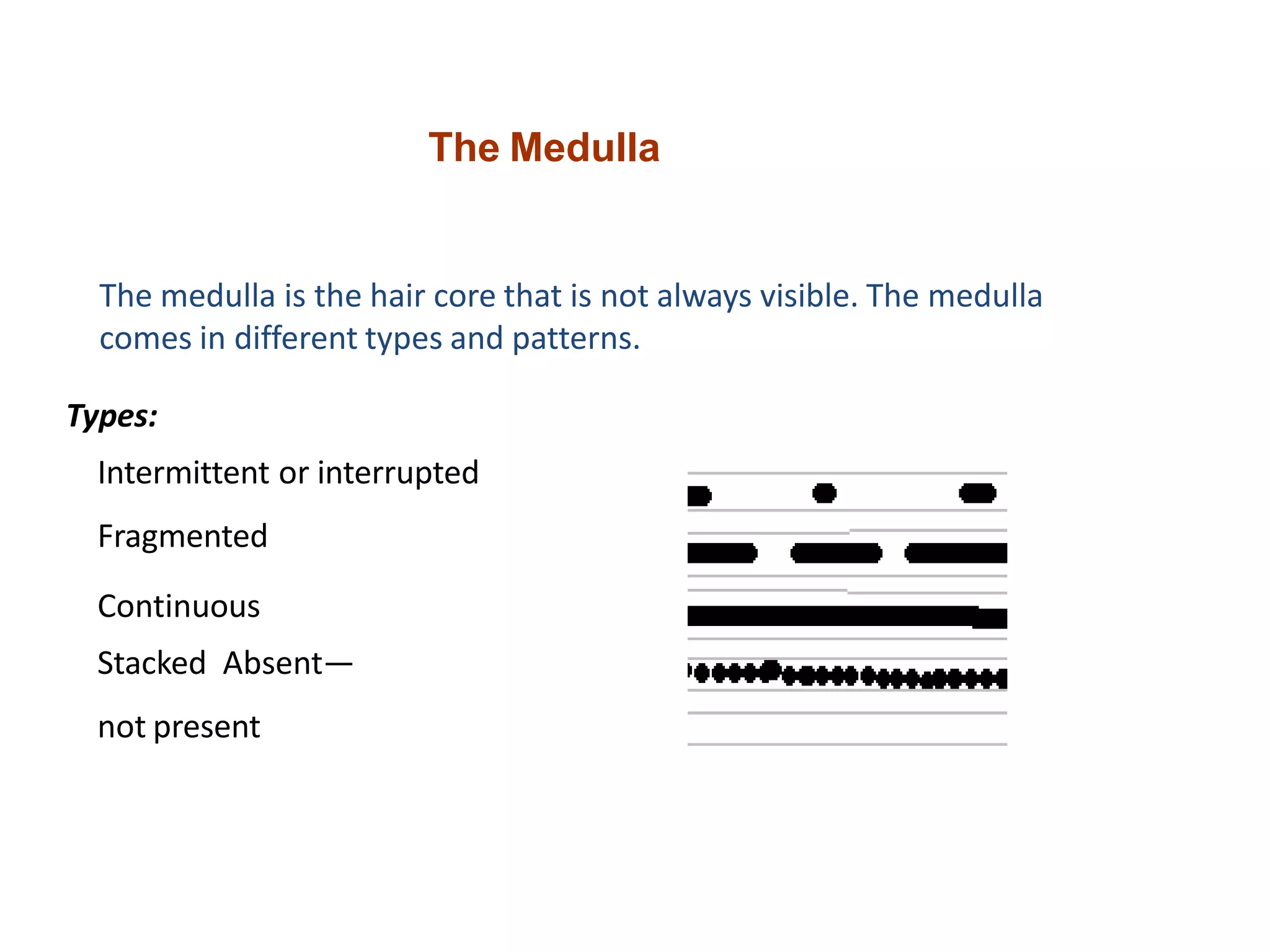
The Medulla
The medulla is the hair core that is not always visible. The medulla
comes in different types and patterns.
Types:
Intermittent or interrupted
Fragmented
Continuous
Stacked Absent—
not present
Human medulla may be continuous, fragmented, or absent.
Animal hair medullas:
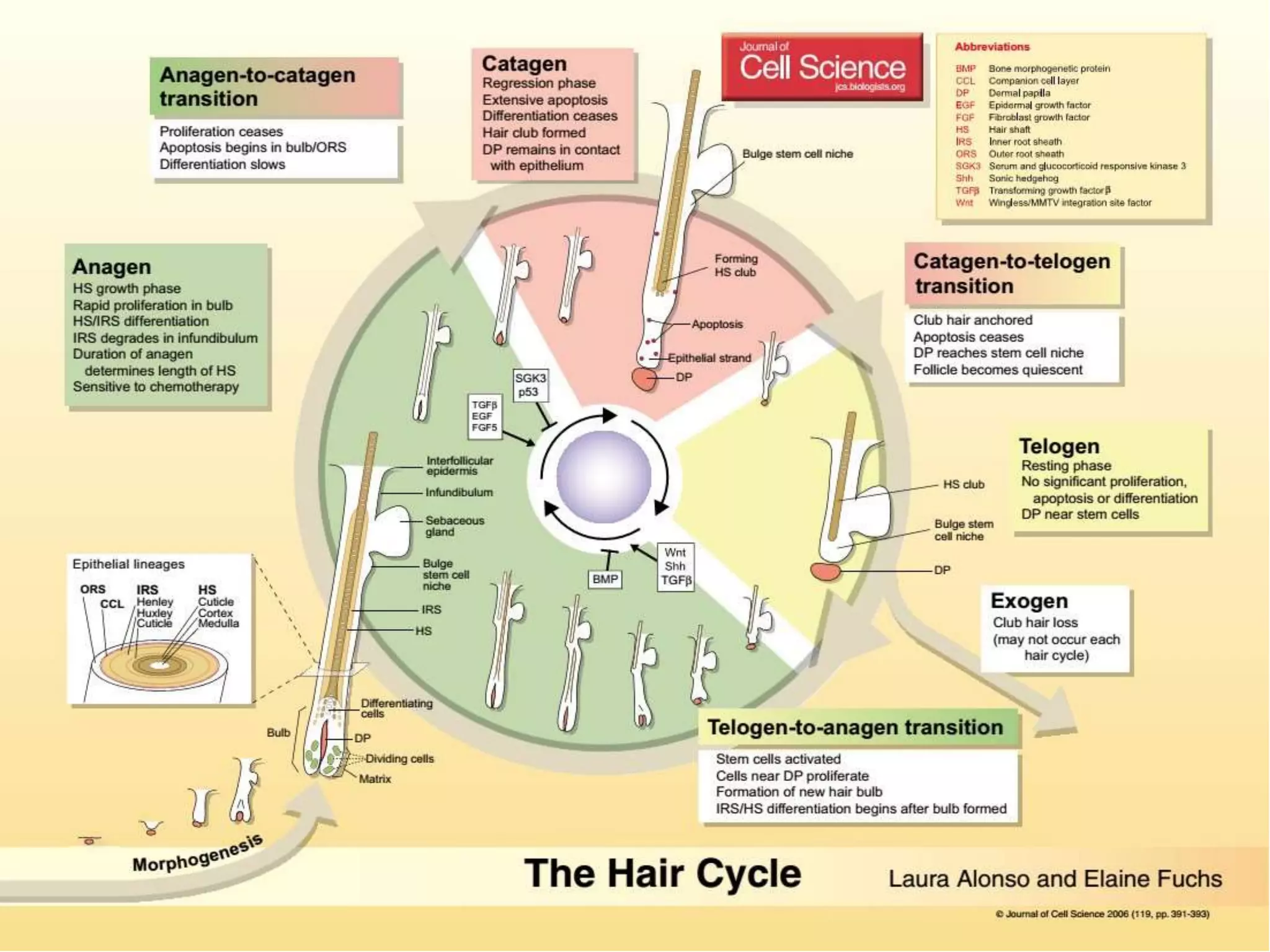
Physiology of the hair: hair growth
cycle
• The development of hair is a dynamic, cyclic process in which the
duration of growth cycles is coordinated by many hormones and
cytokines.
• Hair growth depends not only on where the hair is growing but also
on some other factors, such as the individual’s age and stage of
development, nutritional habits, or environmental alterations like
day-length.
• Important players of this cycle are mainly cytokines (hormones),
which are able to instruct the follicle to undergo appropriate
changes, so that each hair can be in a different stage of
growth cycle compared to the adjacent hairs
• Hair follicles grow in repeated cycles, in which stages of rapid
growth and hair shaft formation alternate with stages of
apoptosis-driven hair follicle.
• In particular, the hair growth cycle can be divided into three
distinct phases:
(i) Anagen or growth phase;
(ii) Catagen or transitional phase;
(iii) Telogen or resting phase
 Anagen:
• The anagen phase is an active growth phase, during which the hair
follicle enlarges reaching its characteristic onion shape and a hair fiber is
produced.
• It can be divided into six stages (I–VI). During anagen I–V (proanagen),
hair progenitor cells proliferate, envelope the growing dermal papilla,
grow downwards into the skin, and begin to differentiate into the hair
shaft and Inner Root Sheath (IRS); then, the newly formed hair shaft
begins to develop and the melanocytes located in the hair matrix
pigment producing activity
• In anagen VI (metanagen), full restoration of the hair fiber-producing
unit is realized, which is characterized by formation of the epithelial hair
bulb surrounding the dermal papilla, located deep in the subcutaneous
tissue, and the new hair shaft appears from the skin surface. This phase
can last for several years in hair follicles
 Catagen:
• The catagen phase starts when the anagen growth phase
comes to the end.
• At the beginning of the catagen phase, differentiation
and proliferation of hair matrix keratinocytes decreases
significantly, the pigment-producing activity of melanocytes
stops, and hair shaft production is completed.
• The hair follicle undergoes apoptosis-driven regression
resulting in a reduction of about one-sixth of the normal
diameter.
• During catagen, a specialized structure, the club hair, is
formed.
• The keratinized brush-like structure at the base of the
club hair is surrounded by epithelial cells of the ORS and
anchors the hair in the telogen follicle.
• This phase lasts for a few weeks
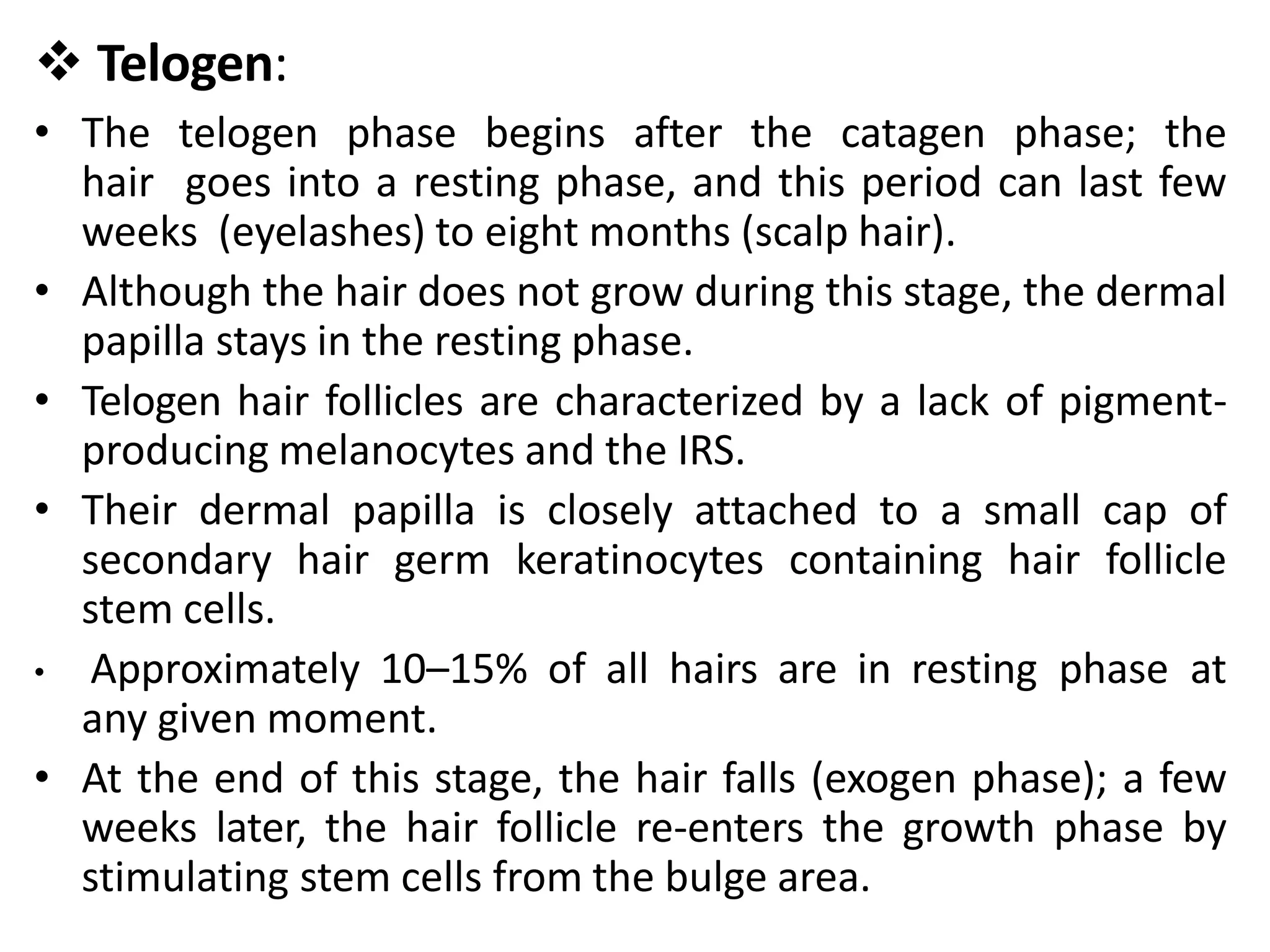
 Telogen:
• The telogen phase begins after the catagen phase; the
hair goes into a resting phase, and this period can last few
weeks (eyelashes) to eight months (scalp hair).
• Although the hair does not grow during this stage, the dermal
papilla stays in the resting phase.
• Telogen hair follicles are characterized by a lack of pigment-
producing melanocytes and the IRS.
• Their dermal papilla is closely attached to a small cap of
secondary hair germ keratinocytes containing hair follicle
stem cells.
• Approximately 10–15% of all hairs are in resting phase at
any given moment.
• At the end of this stage, the hair falls (exogen phase); a few
weeks later, the hair follicle re-enters the growth phase by
stimulating stem cells from the bulge area.
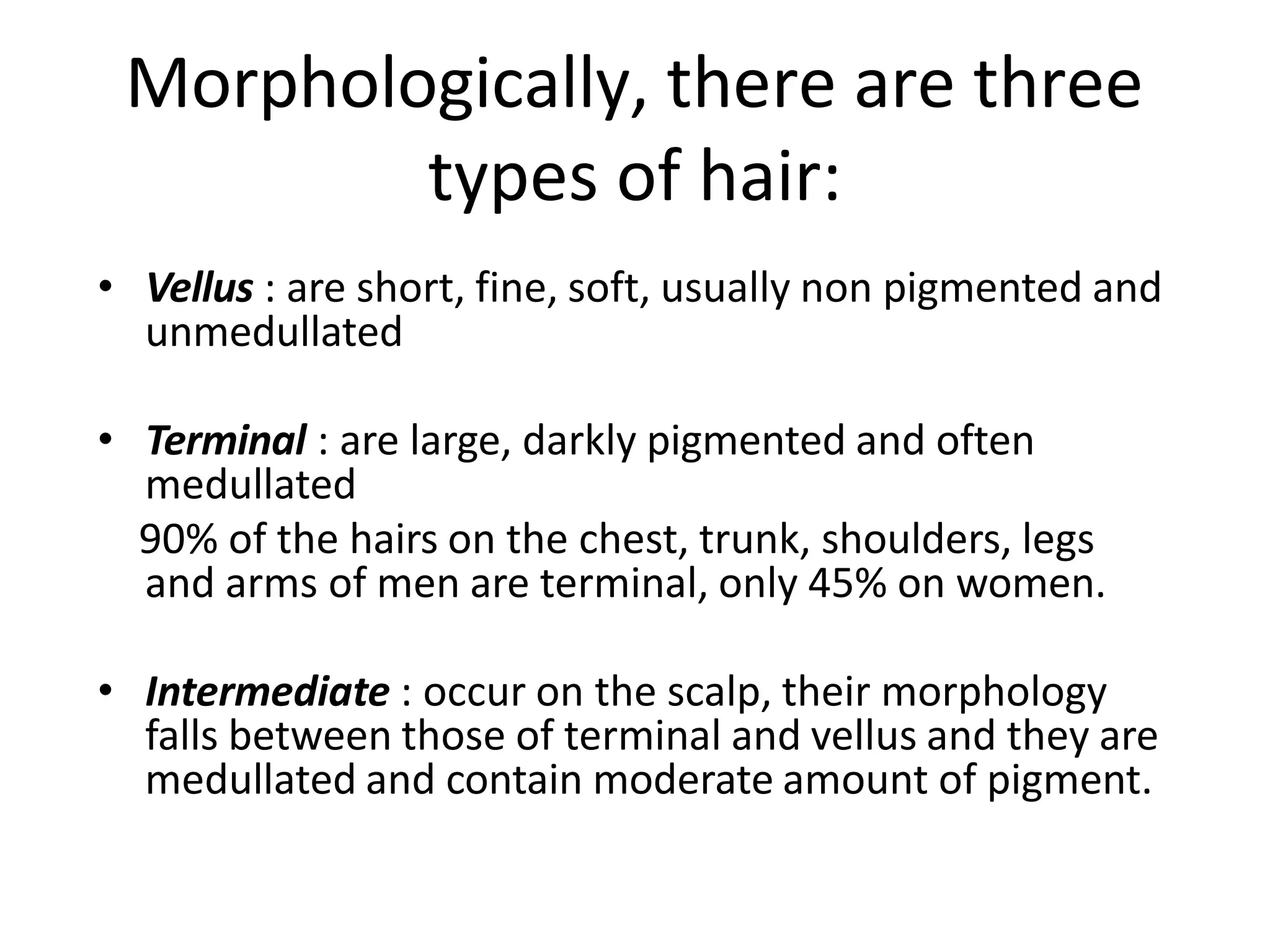
Morphologically, there are three
types of hair:
• Vellus : are short, fine, soft, usually non pigmented and
unmedullated
• Terminal : are large, darkly pigmented and often
medullated
90% of the hairs on the chest, trunk, shoulders, legs
and arms of men are terminal, only 45% on women.
• Intermediate : occur on the scalp, their morphology
falls between those of terminal and vellus and they are
medullated and contain moderate amount of pigment.
⦿Dandruff is a skin condition that mainly affects the scalp.
⦿ Symptoms include flaking and sometimes mild itchiness.
⦿ It can result in social or self-esteem
problems.
A more severe form of the condition,
which includes inflammation of the skin, and
is known as seborrheic dermatitis.
⦿ Newborns and adults aged 30-60 are
More likely to get seborrheic dermatitis
⦿Physiological
⦿ Mild scaling of the scalp
⦿ Affects almost everyone during adult life
⦿ Manifestation of seborrheic dermatitis/psoriasis, allergic
reaction.
⦿Stress
⦿Your genes
⦿ A yeast that normally lives on the skin
⦿ Certain medical conditions and medicines
⦿ Cold, dry weather
The factor contributing to Pityriasis Capitis
Acne
AIDS
Alcoholism
Depression
Eating disorder
Epilepsy
Heart attack
Parkinsons
⦿Adults with seborrheic dermatitis on their scalp can use
over-the-counter dandruff (OTC dandruff) shampoo
that contains one of these key ingredients:
⦿ Coal tar-It works by causing the skin to shed dead cells
from its top layer and slow down the growth of skin
cells.
⦿Ketoconazole-Antifungal
⦿ Salicylic acid- Dry & scaly skin-for moisturizer,
surface active agent
⦿ Selenium sulphide-Antidandruff
⦿ Zinc pyrithone- Control skin irritation
Other treatments include:
⦿Antifungal products
⦿Corticosteroid lotions
⦿ Prescription-strength medicated shampoos
⦿Sulfur products
⦿ Often the best results come from a combination
of treatments, both medication and lifestyle.
⦿Work with your doctor or pediatrician if you're using a
treatment other than shampoo, since there could be
side effects, especially if you use it for longer or more
often than prescribed.
⦿ If your seborrheic dermatitis doesn't get better, or if
the area becomes painful, red, swollen, or starts to
drain pus, see your doctor.
A. Excessive Growth Hypertrichosis
Eg: Hirsutism
B. Loss of Hair Eg : ( Alopecia )
⦿Reversibility Cicatricial (Scarring)-
Non cicatricial (Non scarring)
⦿ Pattern
Patchy- Alopecia areata Diffuse
- Androgenetic alopecia
Telogen effluvium
Growth of coarse terminal
hair
⦿ Excessive for site /age of the patient
⦿ Involving non-androgendependentfollicles
⦿ Generalizedhypertrichosis, which
occurs over the entire body,
⦿ Localized hypertrichosis,
which is restricted to a certain area.
Causes:
1.Porphyriacutaneatarda
2.Malnutrition
3.Diet or an eatingdisorder like anorexia
nervosa
4. Cancer
5. Certaindrugs androgenicsteroids, Hair
growthdrugsMinoxidil& cyclosporin
(Sandimmune– is to
preventorgan rejection)
Treatment
 Shaving
 Chemical epilation (cosmetic preparation used to
remove unwanted hair)
 ⦿Waxing
 ⦿Plucking
 ⦿ Hair bleaching
 ⦿ Long-term treatment includes electrolysis & laser surgery
 Electrolysis is the destruction of individual hair
 follicles with small electrical charges.
 Laser surgery involve the application of special laser light
over several hair at a one time.
 Hair loss can be permanent with these treatment,
though you may need a few session to complete job.
Polycystic ovary disease A hormonal disorder
causing enlarged ovaries with small cysts
on the outer edges.--- (This hormone imbalance causes them
to skip menstrual periodsand makesit harderfor themto get pregnant)
⦿ Ovariantumors
⦿Congenital adrenal hyperplasia - A pair of walnut-sized organs above your
kidneys - (A person with CAH lacks one of the enzymes the adrenal
glands use to produce hormones that help regulate metabolism, the
immune system, blood pressure and other essential functions)
⦿ Cushingssyndrome
⦿ Prolactinoma (A prolactinoma is a benign noncancerous tumor of the
pituitary gland that produces a hormone called prolactin.
Prolactinomas are the most common type of pituitary tumor. Symptoms
of prolactinoma are caused by hyperprolactinemia—too much prolactin
in the blood—or by pressure of the tumor on surrounding tissues)
⦿ Idiopathic An idiopathic disease is any disease with an unknown cause or
mechanism of apparent spontaneous origin. From Greek ἴδιος idios "one's own"
and πάθος pathos "suffering", idiopathy means approximately "a disease of its
own kind".
Treatment of Hirsutism
⦿Cosmetic :
⦿Depilatory creams
⦿ Waxing
⦿ Plucking
⦿ Electrolysis
⦿ Hormonal:
⦿ Cyproterone acetate
⦿ Spironolactone
⦿ Corticosteroids
Mechanism of action
Cyproterone is an anti-androgen.It suppresses the
actions of testosterone (and its metabolite
dihydrotestosterone)on tissues. ...
The direct antiandrogenic effect of cyproterone
is blockage of the binding of
dihydrotestosterone to the specific receptorsin
the prostaticcarcinoma cell
Types
o Cicatricial: Permanent loss of hair
o Non-cicatricial : Androgenetic alopecia.
o Telogen effluvium
o Neonatal alopecia
o Drug induced alopecia (anticoagulants, retinol
(vitamin A)
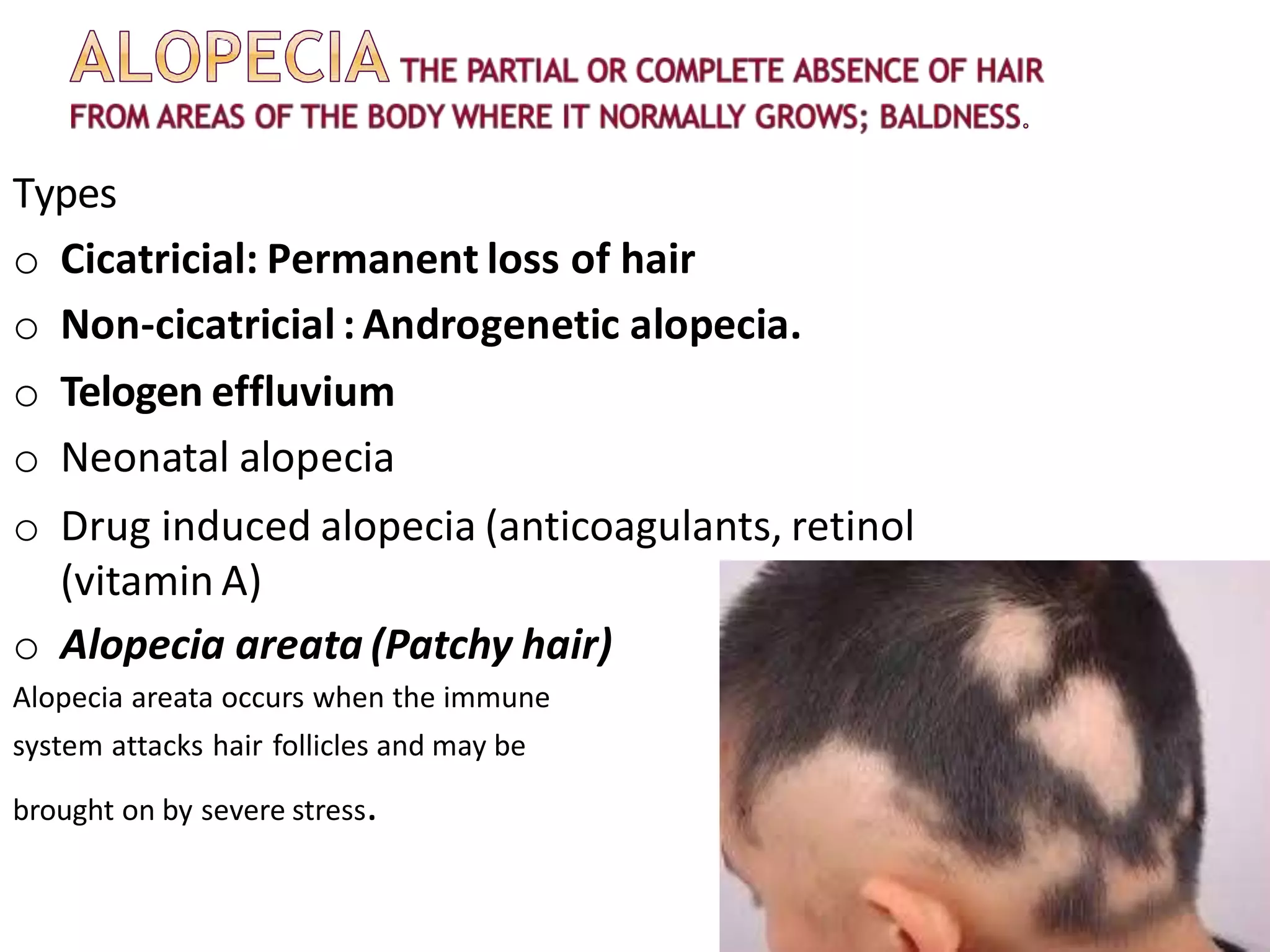
o Alopecia areata (Patchy hair)
Alopecia areata occurs when the immune
system attacks hair follicles and may be
brought on by severe stress.
Lichen
planus
ANDROGENETICALOPECIA
⦿(Male pattern baldness)
⦿Loss of hair : with increasing age
⦿ Genetically predisposedindividuals
⦿Response to circulating androgens
Clinical Features
⦿16% men b/w 18-29 yr
⦿53% men b/w 40-49 yrs
⦿50% females below 50 yrs
ALOPECIA AREATA
• Alopecia areata (AA) is a complex genetic, immune-mediated
non-scarring disease that targets actively growing anagen hair
follicles.
• The disease can affect all ethnic groups and both males and
females at all ages.
• The lifetime risk is estimated to be approximately 2%.
• AA typically presents as one of four major patterns:
1. Round or oval patches of hair loss
2. „Loss of all scalp hair (alopecia totalis)
3. „Loss of all body hair (alopecia universalis)
4. „Ophiasis pattern alopecia areata
HAMILTON’s
grading
in males
LUDWIG’s
grading in
females
Clinical Features...
• In addition to the common presentations of patchy or extensive hair
loss, alopecia areata may present less commonly as reticular alopecia
areata, diffuse scalp alopecia areata, or perinevoid alopecia areata.
• Patients who experience the reticular variant have ongoing disease
activity with patches of non-scarring hair loss appearing and
disappearing.
• When the AA process is active, hair-pull tests are positive and
exclamation-mark hair fibers can frequently be found.
• These fibers have a broader distal segment than the proximal end and
when these fibers grow they taper down proximally to a pencil point
and may break easily, similar to what is seen with hair fibers
experiencing anagen arrest as with chemotherapy
• Nail abnormalities may precede, follow, or occur concurrently with
hair-loss activity.
• Nail pitting as the most commonly reported nail abnormality.
Other abnormalities include koilonychia, longitudinal ridging,
brittle nails, onycholysis, onychomadesis, and periungual
erythema .
• AA may occur in otherwise healthy individuals or it may occur
associated with other diseases. Common disease associations
include atopy (allergic rhinitis, asthma, and atopic dermatitis).
• Other common disease associations include thyroid disease
and autoimmune diseases, such as thyroiditis and vitiligo.
• Though not a life-threatening disease, AA may have a significant
psychological impact on patients, leading to a high lifetime rate of
generalized anxiety disorders or even depression.
Pathophysiology of Alopecia areata:
Histology:
• T-cell immunity plays a crucial role in the pathophysiology of AA.
• Histologically, a hallmark of AA has been the presence of a
peribulbar lymphocytic infiltrate that consists primarily of
activated T lymphocytes.
• These changes with disease activity and type are postulated to be
associated with different therapeutic responses; for example, it
may be that the use of steroids may be more effective in the
acute phase as compared to the chronic phase of AA when the
inflammatory infiltrate is less prominent.
• If the diagnosis of AA is not straightforward, examination of a 4-
mm scalp biopsy specimen may be useful in confirming the
diagnosis.
• This biopsy specimen will typically show the characteristic
peribulbar, inflammatory infiltrate, in both horizontal and vertical
sections, as well as an increased percentage of follicles in telogen.
 Immunology:
• Normal anagen hair-bulb keratinocytes lack expression of major
histocompatibility complex class I and class II antigens.
• However, in alopecia areata, human leukocyte antigen (HLA) A,
HLA-B, HLA-C, and HLA-DR are all expressed on anagen hair bulbs.
• These observations have led to the concept that immune privilege
is lost in AA and that the disease involves Tcell interaction with
aberrant HLA-DR antigens expressed by hair follicle keratinocytes.
• Increased, decreased, and normal peripheral blood T and B
lymphocyte number and function have all been reported in AA
patients.
 Genetics:
• The familial incidence of AA has been reported to range between
10% and 50% and it is now generally accepted that AA is a complex
or multifactorial genetic trait.
• This is based on the following: --
1. Its prevalence in the population
2. Concordance with twins (55%)
3. A Gaussian distribution of severity
4. A ten-fold increased risk of affected first-degree relatives
5. The aggregation of affected individuals in families, rather
than showing a clear Mendelian pattern of inheritance.
• The major histocompatiblity complex class I chain-related gene A
(MICA) was identified as both a potential candidate gene that
could be associated with susceptibility as well as severe, extensive
disease.
• Other disease associations described with disease severity include
the IL-1 receptor antagonist
 Nerves:
• Many AA patients experience occasional itching, tingling,
formication, or slight local pain during combing, touching, or
tension on their hair.
• Alterations in neuropeptide and neurotrophin expression in animal
models of AA as well as humans have been reported, suggesting a
role for the neurocutaneous immune system in AA .
• More recently, peripheral nerve function in the C2 and V1
dermatomes, both of which innervate scalp skin, was found to be
abnormal as compared to controls.
• Stressful life events and psychiatric disorders have been studied as
they relate to both the onset and the progression of alopecia
areata.
Treatments ....
• There is no “best” treatment for AA and at this time there is no
FDA-approved drug for the treatment of AA.
• It is believed that the available treatments at best only suppress
the underlying process.
• Treatment for AA also needs to be considered in light of the
normal course of the disease.
• Review of the literature indicates that in contrast to other
treatments, contact sensitizers such as diphencyprone or squaric
acid dibutylester have been used.
1. Topical Sensitizers:
• Diphenycyprone is the most commonly used topical
sensitizer. Patients are normally sensitized into a 2%
solution within a two-week time period.
• The goal is to choose a concentration capable of
producing a mild allergic contact dermatitis.
• Cosmetically acceptable hair regrowth may require up to
two years of treatment.
• Sensitization, if usually performed on the scalp, and
weekly applications are targeted to produce a mild
eczematous reaction.
• Initial hair regrowth may be visible after 8–12 weeks
and may be discontinued once hair regrowth occurs;
likewise, treatment can be reinstituted if a relapse
occurs.
2. Steroids: Topical, Intralesional, Oral:
• The use of 0.05% betamethasone dipropionate cream,
0.05% clobetasol propionate, and 0.2% fluocinolone
acetonide cream have all also been associated with hair
regrowth with the time to regrowth averaging three months.
• Intralesional steroids, including triamcinolone acetonide or
triamcinolone hexacetonide are commonly used to treat
patients with less than 50% scalp involvement.
• Eyebrow regions may also be injected .
• Concentrations typically used range from 3 to 10 mg/cc.
• Oral steroids may be of benefit to patients with active disease.
• An oral monthly pulse of 300 mg prednisolone for a minimum of
four doses has also been reported to result in complete or
cosmetically acceptable hair regrowth.
• Side effects of using oral or intravenous steroids for the
treatment of AA deserve attention.
• Adverse experiences include weight gain, osteoporosis,
hypertension, psychological changes, suppression of the
adrenal cortical axis, striae, acne, hypertrichosis, and purpura.
• To counter the development of osteoporosis, calcium, vitamin
D may be prescribed .
3. Minoxidil: Topical and Oral:
• Patients with patchy AA have been reported to achieve
cosmetically acceptable regrowth with 2% topical minoxidil
and in one study it was suggested that patients with severe
disease may benefit from 5 mg of oral minoxidil administered
every 12 hours with a mean time of approximately 35 weeks
to attain cosmetically acceptable hair regrowth.
• Topical minoxidil, either the 2% or 5% concentrations, can be
beneficial in AA when the focus is on promoting follicle
differentiation, early anagen to late anagen.
4. Anthralin:
• Anthralin is postulated to target mitochondria and interact
with the electron transport chain on the inner mitochondrial
membrane, ultimately resulting in a decrease in adenosine
triphophosphate synthesis.
• Concentrations used in the management of AA must be sufficient
to elicit mild irritation and may range from 0.2% to 1.0% .
• However, just as with minoxidil, the use of this drug in published
studied has not fulfilled the criteria of evidence-based treatment
described earlier
5. Light Therapy (UVA, NBUVB, UVB, Laser:
• The use of psoralen-ultraviolet A (PUVA) light has resulted in
complete hair regrowth for some patients with either patchy or
extensive AA.
• Although complete hair regrowth has been achieved with 50 to 80
treatment sessions, averaging three per week, hair loss is
commonly seen following discontinuation.
• UVB light treatment has also resulted in complete hair and beard
regrowth although hair loss may occur following discontinuation
of treatment
6. Combination Therapies:
• Topical minoxidil and oral prednisone: oral prednisone (starting at
40 mg/day) followed by 2% topical minoxidil applied daily for up
to 14 weeks.
• Topical minoxidil and bethamethasone dipropionate: Patients
applied 5% topical minoxidil twice daily, followed 30 minutes
later by 0.05% beta-methasone dipropionate cream.
• Topical minoxidil and anthralin: patients applied 1 ml 5% topical
minoxidil twice daily, followed by an overnight application of
anthralin.
Androgenetic Alopecia
• Androgenetic alopecia describes a form of scalp-hair loss in which
there is a decline in production of hair, which may eventually lead
to balding.
• It affects both sexes and all ethnic groups although the severity
and frequency are greater in men.
• The same is true of androgenetic alopecia in most women.
Clinical Features: Androgenic Alopecia
Male Androgenetic Alopecia:
• Male androgenetic alopecia (male balding, male-pattern hair
loss) is a common that can start at any age after puberty.
• In the majority of men balding is patterned of two
major components are fronto-temporal recession and loss of
hair over the vertex.
• Hairs become shorter.
• Ultimately this may lead to complete hair loss except at the
lateral and posterior margins of the scalp where hair is
retained.
 Female Androgenetic Alopecia:
• Most women with androgenetic alopecia (also known as FPHL)
present with a history of gradual thinning of scalp hair, often
over a period of several years.
• The hair loss can start at any age from puberty onwards.
• In some women the hair loss may affect a quite small area of the
frontal scalp whereas in others the entire scalp is involved.
Pathophysiology: Androgenic Alopecia
• The follicular changes in androgenetic alopecia, in both men and
women, comprise a gradual reduction in the duration of anagen,
prolongation of the “latent phase” of the hair cycle.
• The latent phase, also termed kenogen, refers
between the telogen hair and reentry into anagen.
to the interval
• Miniaturization may eventually lead to deletion of hair follicles.
• A modest degree of chronic inflammation around the upper part of
hair follicles.
ETIOLOGY: Androgenic Alopecia
 Androgens:
• Male balding is an androgen-dependent.
• Testosterone is the major circulating androgen in men. However,
there is compelling evidence that dihydrotestosterone (DHT), the
5α-reduced metabolite of testosterone, is responsible for hair
loss.
• A role for androgens in the etiology of male balding is
incontrovertible.
• The role of androgens in female androgenetic alopecia is less
clear-
than it is in men.
 Prevalance:
• Population frequency and severity of androgenetic alopecia in both
sexes increase with age.
• Almost all men develop some of the frontal hairline at the temples
during their teens.
• Hair loss progresses to a bald scalp in 50–60% of men by the age of 70.
• Balding is less common inAsian men.
• One early study reported that balding is four times less common in
AfricanAmerican men than in Caucasians.
• The frequency and severity of androgenetic alopecia is lower in women
than in men but it still affects a sizeable proportion of the population.
 Diagnosis:
• The diagnosis of androgenetic alopecia in men rarely causes difficulties.
• In cases presenting with general thinning, other causes of diffuse hair
loss should be considered, particularly when the hair loss progresses
quickly.
• The diagnosis of female androgenetic alopecia may be more challenging.
• Rapidly progressive hair loss with a strongly positive “tug test” should
raise the possibility of diffuse alopecia areata.
• Loss of body hair, eyebrows, or eyelashes, and nail changes will support
the diagnosis but it is sometimes necessary to obtain histology
Treatments :
• Treatment for Male:
 At present only two medical treatments, minoxidil and finasteride
are licensed for the treatment of male balding.
 Both drugs will stimulate some regrowth of hair in some men but
are perhaps better regarded as preventative treatments.
 Neither will regrow hair on completely bald scalp and continued
treatment is necessary to maintain the response.
 Both drugs have a good safety record, a consideration of
paramount importance when treating hair-growth disorders.
Minoxidil
• Minoxidil was licensed as an oral drug to treat hypertension in the
early 1970s. Because it significant hypertrichosis, this drug almost
eliminated its use as an anti-hypertensive agent.
• Minoxidil solution were developed for topical application in the
treatment of hair loss .
• A 2% formulation of minoxidil solution was subsequently licensed
by the U. S. Food and Drug Administration for the treatment of
male balding .
• A 5% formulation was marketed in 1993. The recommended dose
is 1ml twice daily (for both 2% and 5% formulations).
• Adverse effects of minoxidil are mainly dermatological.
• Constituents of the vehicle occasionally cause scalp irritation,
more commonly with the 5% formulation.
• Allergic reactions to minoxidil or propylene glycol (a component
of the vehicle) are rare but necessitate stopping treatment.
• Some patients notice an increase in hair shedding 2–8 weeks after
starting treatment.
• This is self-limiting and patients should be forewarned not to stop
treatment if this happens
Finasteride
• Finasteride is a competitive inhibitor of type II 5α-reductase.
• Taken orally it reduces DHT levels in serum and in scalp by up to
70%’.
• The improvement peaks at around 12 months and, on average,
there is some decline after two years.
• Clinical trials have shown a small increase in sexual dysfunction
(e.g., impotence) in men taking finasteride for male balding.
• These side effects resolve on discontinuation of the drug.
• Data from a long-term trial in 18,882 men aged over 54 taking 5mg
Finasteride daily.
Surgery
• Surgical treatment of male balding involves the redistribution of
terminal hair to cover balding scalp; the number of terminal hair
follicles on the scalp remains the same.
• In most cases this means transplanting hair follicles from the
occipital scalp to the balding areas.
• Surgical treatment can achieve very satisfactory results but careful
patient selection and surgical skill allied to the aesthetics of scalp
hair growth are essential.
 Treatment for Women:
• For those who are keen to be treated there are two medical options:
minoxidil solution and antiandrogens.
• In both cases it should be stressed that treatment will, at best,
produce only a modest increase in hair density and that it is not
possible to fully reverse hair loss.
• Furthermore, in those who respond, treatment has to be continued
to maintain the response.
• As in men, surgery is the only method capable of restoring the
appearance in the presence of severe hair loss
Minoxidil...
• Minoxidil solution 2% is licensed for the treatment of female
androgenetic alopecia in most countries.
• The 5% formulation is not currently licensed for use in women.
• A more recent trial comparing 5% and 2% minoxidil solution
found increases of 18% and 14% respectively in mean non-vellus
hair counts after 48 weeks of treatment.
• Minoxidil is a safe treatment. Some patients complain that it leaves
unsightly deposits on the hair.
• Occasionally it causes scalp irritation that may be severe enough
to cause a temporary increase in hair shedding and patients should
be warned about this.
• minoxidil solution is more reliably effective and better tolerated
than anti-androgen treatment.
Antiandrogens
• The antiandrogens cyproterone acetate, spironolactone and
flutamide have all been used to treat female androgenetic alopecia,
as has the 5α-reductase inhibitor finasteride, although none is
licensed for this purpose.
• Cyproterone acetate acts by blocking androgen receptors. It also has
progestational activity and suppresses the production of
gonadotrophins.
• Spironolactone is a competitive inhibitor of aldosterone receptors. It
also blocks androgen receptors and increases metabolic clearance
of testosterone. It has been widely used to treat hirsutism.
• Report shows that women treated for 12 months with
spironolactone showed less hair loss than an untreated group.
• Flutamide is a pure androgen receptor blocker.
• A study shows that flutamide 250 mg daily with cyproterone acetate
and finasteride in the treatment of 48 hyperandrogenic women with
androgenetic alopecia.
• Those treated with flutamide showed a modest improvement in
hair growth whereas those treated with cyproterone acetate or
finasteride did not .
• Antiandrogen treatment is not without problems.
• Women taking antiandrogens should not become pregnant because
of the risks of feminizing a male fetus.
• Dose-related side effects of cyproterone acetate, including weight
gain, fatigue, loss of libido, mastodynia, nausea, headaches and
depression, are common.
• There is a significant risk of hepatotoxicity with flutamide and
cyproterone acetate is also potentially hepatotoxic in high doses.
• Spironolactone may cause menstrual irregularities.
• Finasteride is well tolerated and is worth considering in post-
menopausal and infertile women.
 Surgery:
• Hair transplantation is less widely used in women than in men but
can give good results in selected cases .
• It is most appropriate in women with pronounced hair loss of
limited extent who retain good hair density in the donor site.
 Iron:
• The idea that body iron stores, usually measured as serum ferritin.
• Patients should be advised that iron treatment alone will not halt
or reverse hair loss but it may improve the response to specific
treatments.
HAIR Disorders.pptx

HAIR Disorders.pptx

  • 1.
  • 2.
    • Hair isa unique character found on all mammals but not on other animals • In humans it is a special and cherished feature, especially in females. • Its main functions are in protection of the skin from possible dameges. • Eyebrows and eyelashes, for example, stop things entering the eyes, while scalp hair prevents sunlight, cold, and physical damage to the head and neck. • Mammalian skin produces hair almost all over the body surface except for a few areas of the body, i.e., sole of the foot, palm of the hand, buccal surface of the lip, and portions of external genitalia . • Human hair is usually classified according to three conventional ethnic human subgroups, i.e., African, Asian, and European.
  • 3.
    • Hair isonly found in mammals. Hair is made of epidermal cells that grow out of follicles. In the follicle, hair is nourished by blood vessels. • Keratin is a protein (also found in fingernails) that gives hair its hard durable structure. • Hair grows about ½ inch per month and 6 inches per month. • Melanocytes: cells that make pigment called melanin. Dark hair has more melanin. Gray hair has lost its melanin
  • 5.
    Hair Shaft Composed of: Cuticle—outsidecovering, made of overlapping scales, cuticle covers the hair from the root to the tip of the epidermis and is formed by flat overlapping cells. Each cuticle cell is generally 0.3– 0.5lm thick, and its visible length is about 50lm. Cortex—inner layer made of keratin and embedded with pigment; also contains air sacs called cortical fusi cortex, which represents the majority of the hair fiber composition and plays an important role in the physical and mechanical properties of hair, is the peripheral part and is made up of approximately 50–60% of macrofibrils embeded in matrix . Medulla—inside layer running down the center of the cortex
  • 7.
    The Cuticle The cuticleis the outermost layer of hair which is covered with scales. The scales point toward the tip of the hair. Scales differ among species of animals and are named based on their appearance. The three basic patterns are: Coronal Spinous Imbricate
  • 8.
    The Cortex The cortexgives the hair its shape. It has two major characteristics: Melanin—pigment granules that give hair its color Cortical fusi—air spaces, usually found near the root but may be found throughout the hair shaft
  • 9.
    The Medulla The medullais the hair core that is not always visible. The medulla comes in different types and patterns. Types: Intermittent or interrupted Fragmented Continuous Stacked Absent— not present
  • 10.
    Human medulla maybe continuous, fragmented, or absent. Animal hair medullas:
  • 11.
    Physiology of thehair: hair growth cycle
  • 12.
    • The developmentof hair is a dynamic, cyclic process in which the duration of growth cycles is coordinated by many hormones and cytokines. • Hair growth depends not only on where the hair is growing but also on some other factors, such as the individual’s age and stage of development, nutritional habits, or environmental alterations like day-length. • Important players of this cycle are mainly cytokines (hormones), which are able to instruct the follicle to undergo appropriate changes, so that each hair can be in a different stage of growth cycle compared to the adjacent hairs
  • 13.
    • Hair folliclesgrow in repeated cycles, in which stages of rapid growth and hair shaft formation alternate with stages of apoptosis-driven hair follicle. • In particular, the hair growth cycle can be divided into three distinct phases: (i) Anagen or growth phase; (ii) Catagen or transitional phase; (iii) Telogen or resting phase
  • 14.
     Anagen: • Theanagen phase is an active growth phase, during which the hair follicle enlarges reaching its characteristic onion shape and a hair fiber is produced. • It can be divided into six stages (I–VI). During anagen I–V (proanagen), hair progenitor cells proliferate, envelope the growing dermal papilla, grow downwards into the skin, and begin to differentiate into the hair shaft and Inner Root Sheath (IRS); then, the newly formed hair shaft begins to develop and the melanocytes located in the hair matrix pigment producing activity • In anagen VI (metanagen), full restoration of the hair fiber-producing unit is realized, which is characterized by formation of the epithelial hair bulb surrounding the dermal papilla, located deep in the subcutaneous tissue, and the new hair shaft appears from the skin surface. This phase can last for several years in hair follicles
  • 15.
     Catagen: • Thecatagen phase starts when the anagen growth phase comes to the end. • At the beginning of the catagen phase, differentiation and proliferation of hair matrix keratinocytes decreases significantly, the pigment-producing activity of melanocytes stops, and hair shaft production is completed. • The hair follicle undergoes apoptosis-driven regression resulting in a reduction of about one-sixth of the normal diameter. • During catagen, a specialized structure, the club hair, is formed. • The keratinized brush-like structure at the base of the club hair is surrounded by epithelial cells of the ORS and anchors the hair in the telogen follicle. • This phase lasts for a few weeks
  • 16.
     Telogen: • Thetelogen phase begins after the catagen phase; the hair goes into a resting phase, and this period can last few weeks (eyelashes) to eight months (scalp hair). • Although the hair does not grow during this stage, the dermal papilla stays in the resting phase. • Telogen hair follicles are characterized by a lack of pigment- producing melanocytes and the IRS. • Their dermal papilla is closely attached to a small cap of secondary hair germ keratinocytes containing hair follicle stem cells. • Approximately 10–15% of all hairs are in resting phase at any given moment. • At the end of this stage, the hair falls (exogen phase); a few weeks later, the hair follicle re-enters the growth phase by stimulating stem cells from the bulge area.
  • 18.
    Morphologically, there arethree types of hair: • Vellus : are short, fine, soft, usually non pigmented and unmedullated • Terminal : are large, darkly pigmented and often medullated 90% of the hairs on the chest, trunk, shoulders, legs and arms of men are terminal, only 45% on women. • Intermediate : occur on the scalp, their morphology falls between those of terminal and vellus and they are medullated and contain moderate amount of pigment.
  • 19.
    ⦿Dandruff is askin condition that mainly affects the scalp. ⦿ Symptoms include flaking and sometimes mild itchiness. ⦿ It can result in social or self-esteem problems. A more severe form of the condition, which includes inflammation of the skin, and is known as seborrheic dermatitis. ⦿ Newborns and adults aged 30-60 are More likely to get seborrheic dermatitis ⦿Physiological ⦿ Mild scaling of the scalp ⦿ Affects almost everyone during adult life ⦿ Manifestation of seborrheic dermatitis/psoriasis, allergic reaction.
  • 20.
    ⦿Stress ⦿Your genes ⦿ Ayeast that normally lives on the skin ⦿ Certain medical conditions and medicines ⦿ Cold, dry weather The factor contributing to Pityriasis Capitis Acne AIDS Alcoholism Depression Eating disorder Epilepsy Heart attack Parkinsons
  • 21.
    ⦿Adults with seborrheicdermatitis on their scalp can use over-the-counter dandruff (OTC dandruff) shampoo that contains one of these key ingredients: ⦿ Coal tar-It works by causing the skin to shed dead cells from its top layer and slow down the growth of skin cells. ⦿Ketoconazole-Antifungal ⦿ Salicylic acid- Dry & scaly skin-for moisturizer, surface active agent ⦿ Selenium sulphide-Antidandruff ⦿ Zinc pyrithone- Control skin irritation
  • 22.
    Other treatments include: ⦿Antifungalproducts ⦿Corticosteroid lotions ⦿ Prescription-strength medicated shampoos ⦿Sulfur products ⦿ Often the best results come from a combination of treatments, both medication and lifestyle. ⦿Work with your doctor or pediatrician if you're using a treatment other than shampoo, since there could be side effects, especially if you use it for longer or more often than prescribed. ⦿ If your seborrheic dermatitis doesn't get better, or if the area becomes painful, red, swollen, or starts to drain pus, see your doctor.
  • 23.
    A. Excessive GrowthHypertrichosis Eg: Hirsutism B. Loss of Hair Eg : ( Alopecia ) ⦿Reversibility Cicatricial (Scarring)- Non cicatricial (Non scarring) ⦿ Pattern Patchy- Alopecia areata Diffuse - Androgenetic alopecia Telogen effluvium
  • 24.
    Growth of coarseterminal hair ⦿ Excessive for site /age of the patient ⦿ Involving non-androgendependentfollicles ⦿ Generalizedhypertrichosis, which occurs over the entire body, ⦿ Localized hypertrichosis, which is restricted to a certain area. Causes: 1.Porphyriacutaneatarda 2.Malnutrition 3.Diet or an eatingdisorder like anorexia nervosa 4. Cancer 5. Certaindrugs androgenicsteroids, Hair growthdrugsMinoxidil& cyclosporin (Sandimmune– is to preventorgan rejection)
  • 25.
    Treatment  Shaving  Chemicalepilation (cosmetic preparation used to remove unwanted hair)  ⦿Waxing  ⦿Plucking  ⦿ Hair bleaching  ⦿ Long-term treatment includes electrolysis & laser surgery  Electrolysis is the destruction of individual hair  follicles with small electrical charges.  Laser surgery involve the application of special laser light over several hair at a one time.  Hair loss can be permanent with these treatment, though you may need a few session to complete job.
  • 27.
    Polycystic ovary diseaseA hormonal disorder causing enlarged ovaries with small cysts on the outer edges.--- (This hormone imbalance causes them to skip menstrual periodsand makesit harderfor themto get pregnant) ⦿ Ovariantumors ⦿Congenital adrenal hyperplasia - A pair of walnut-sized organs above your kidneys - (A person with CAH lacks one of the enzymes the adrenal glands use to produce hormones that help regulate metabolism, the immune system, blood pressure and other essential functions)
  • 28.
    ⦿ Cushingssyndrome ⦿ Prolactinoma(A prolactinoma is a benign noncancerous tumor of the pituitary gland that produces a hormone called prolactin. Prolactinomas are the most common type of pituitary tumor. Symptoms of prolactinoma are caused by hyperprolactinemia—too much prolactin in the blood—or by pressure of the tumor on surrounding tissues) ⦿ Idiopathic An idiopathic disease is any disease with an unknown cause or mechanism of apparent spontaneous origin. From Greek ἴδιος idios "one's own" and πάθος pathos "suffering", idiopathy means approximately "a disease of its own kind".
  • 30.
    Treatment of Hirsutism ⦿Cosmetic: ⦿Depilatory creams ⦿ Waxing ⦿ Plucking ⦿ Electrolysis ⦿ Hormonal: ⦿ Cyproterone acetate ⦿ Spironolactone ⦿ Corticosteroids
  • 31.
    Mechanism of action Cyproteroneis an anti-androgen.It suppresses the actions of testosterone (and its metabolite dihydrotestosterone)on tissues. ... The direct antiandrogenic effect of cyproterone is blockage of the binding of dihydrotestosterone to the specific receptorsin the prostaticcarcinoma cell
  • 32.
    Types o Cicatricial: Permanentloss of hair o Non-cicatricial : Androgenetic alopecia. o Telogen effluvium o Neonatal alopecia o Drug induced alopecia (anticoagulants, retinol (vitamin A) o Alopecia areata (Patchy hair) Alopecia areata occurs when the immune system attacks hair follicles and may be brought on by severe stress.
  • 34.
  • 35.
    ANDROGENETICALOPECIA ⦿(Male pattern baldness) ⦿Lossof hair : with increasing age ⦿ Genetically predisposedindividuals ⦿Response to circulating androgens Clinical Features ⦿16% men b/w 18-29 yr ⦿53% men b/w 40-49 yrs ⦿50% females below 50 yrs
  • 36.
    ALOPECIA AREATA • Alopeciaareata (AA) is a complex genetic, immune-mediated non-scarring disease that targets actively growing anagen hair follicles. • The disease can affect all ethnic groups and both males and females at all ages. • The lifetime risk is estimated to be approximately 2%. • AA typically presents as one of four major patterns: 1. Round or oval patches of hair loss 2. „Loss of all scalp hair (alopecia totalis) 3. „Loss of all body hair (alopecia universalis) 4. „Ophiasis pattern alopecia areata
  • 37.
  • 39.
    Clinical Features... • Inaddition to the common presentations of patchy or extensive hair loss, alopecia areata may present less commonly as reticular alopecia areata, diffuse scalp alopecia areata, or perinevoid alopecia areata. • Patients who experience the reticular variant have ongoing disease activity with patches of non-scarring hair loss appearing and disappearing. • When the AA process is active, hair-pull tests are positive and exclamation-mark hair fibers can frequently be found. • These fibers have a broader distal segment than the proximal end and when these fibers grow they taper down proximally to a pencil point and may break easily, similar to what is seen with hair fibers experiencing anagen arrest as with chemotherapy
  • 40.
    • Nail abnormalitiesmay precede, follow, or occur concurrently with hair-loss activity. • Nail pitting as the most commonly reported nail abnormality. Other abnormalities include koilonychia, longitudinal ridging, brittle nails, onycholysis, onychomadesis, and periungual erythema . • AA may occur in otherwise healthy individuals or it may occur associated with other diseases. Common disease associations include atopy (allergic rhinitis, asthma, and atopic dermatitis). • Other common disease associations include thyroid disease and autoimmune diseases, such as thyroiditis and vitiligo. • Though not a life-threatening disease, AA may have a significant psychological impact on patients, leading to a high lifetime rate of generalized anxiety disorders or even depression.
  • 41.
    Pathophysiology of Alopeciaareata: Histology: • T-cell immunity plays a crucial role in the pathophysiology of AA. • Histologically, a hallmark of AA has been the presence of a peribulbar lymphocytic infiltrate that consists primarily of activated T lymphocytes. • These changes with disease activity and type are postulated to be associated with different therapeutic responses; for example, it may be that the use of steroids may be more effective in the acute phase as compared to the chronic phase of AA when the inflammatory infiltrate is less prominent.
  • 42.
    • If thediagnosis of AA is not straightforward, examination of a 4- mm scalp biopsy specimen may be useful in confirming the diagnosis. • This biopsy specimen will typically show the characteristic peribulbar, inflammatory infiltrate, in both horizontal and vertical sections, as well as an increased percentage of follicles in telogen.  Immunology: • Normal anagen hair-bulb keratinocytes lack expression of major histocompatibility complex class I and class II antigens. • However, in alopecia areata, human leukocyte antigen (HLA) A, HLA-B, HLA-C, and HLA-DR are all expressed on anagen hair bulbs.
  • 43.
    • These observationshave led to the concept that immune privilege is lost in AA and that the disease involves Tcell interaction with aberrant HLA-DR antigens expressed by hair follicle keratinocytes. • Increased, decreased, and normal peripheral blood T and B lymphocyte number and function have all been reported in AA patients.  Genetics: • The familial incidence of AA has been reported to range between 10% and 50% and it is now generally accepted that AA is a complex or multifactorial genetic trait. • This is based on the following: --
  • 44.
    1. Its prevalencein the population 2. Concordance with twins (55%) 3. A Gaussian distribution of severity 4. A ten-fold increased risk of affected first-degree relatives 5. The aggregation of affected individuals in families, rather than showing a clear Mendelian pattern of inheritance. • The major histocompatiblity complex class I chain-related gene A (MICA) was identified as both a potential candidate gene that could be associated with susceptibility as well as severe, extensive disease. • Other disease associations described with disease severity include the IL-1 receptor antagonist
  • 45.
     Nerves: • ManyAA patients experience occasional itching, tingling, formication, or slight local pain during combing, touching, or tension on their hair. • Alterations in neuropeptide and neurotrophin expression in animal models of AA as well as humans have been reported, suggesting a role for the neurocutaneous immune system in AA . • More recently, peripheral nerve function in the C2 and V1 dermatomes, both of which innervate scalp skin, was found to be abnormal as compared to controls. • Stressful life events and psychiatric disorders have been studied as they relate to both the onset and the progression of alopecia areata.
  • 46.
    Treatments .... • Thereis no “best” treatment for AA and at this time there is no FDA-approved drug for the treatment of AA. • It is believed that the available treatments at best only suppress the underlying process. • Treatment for AA also needs to be considered in light of the normal course of the disease. • Review of the literature indicates that in contrast to other treatments, contact sensitizers such as diphencyprone or squaric acid dibutylester have been used.
  • 47.
    1. Topical Sensitizers: •Diphenycyprone is the most commonly used topical sensitizer. Patients are normally sensitized into a 2% solution within a two-week time period. • The goal is to choose a concentration capable of producing a mild allergic contact dermatitis. • Cosmetically acceptable hair regrowth may require up to two years of treatment. • Sensitization, if usually performed on the scalp, and weekly applications are targeted to produce a mild eczematous reaction. • Initial hair regrowth may be visible after 8–12 weeks and may be discontinued once hair regrowth occurs; likewise, treatment can be reinstituted if a relapse occurs.
  • 48.
    2. Steroids: Topical,Intralesional, Oral: • The use of 0.05% betamethasone dipropionate cream, 0.05% clobetasol propionate, and 0.2% fluocinolone acetonide cream have all also been associated with hair regrowth with the time to regrowth averaging three months. • Intralesional steroids, including triamcinolone acetonide or triamcinolone hexacetonide are commonly used to treat patients with less than 50% scalp involvement. • Eyebrow regions may also be injected . • Concentrations typically used range from 3 to 10 mg/cc.
  • 49.
    • Oral steroidsmay be of benefit to patients with active disease. • An oral monthly pulse of 300 mg prednisolone for a minimum of four doses has also been reported to result in complete or cosmetically acceptable hair regrowth. • Side effects of using oral or intravenous steroids for the treatment of AA deserve attention. • Adverse experiences include weight gain, osteoporosis, hypertension, psychological changes, suppression of the adrenal cortical axis, striae, acne, hypertrichosis, and purpura. • To counter the development of osteoporosis, calcium, vitamin D may be prescribed .
  • 50.
    3. Minoxidil: Topicaland Oral: • Patients with patchy AA have been reported to achieve cosmetically acceptable regrowth with 2% topical minoxidil and in one study it was suggested that patients with severe disease may benefit from 5 mg of oral minoxidil administered every 12 hours with a mean time of approximately 35 weeks to attain cosmetically acceptable hair regrowth. • Topical minoxidil, either the 2% or 5% concentrations, can be beneficial in AA when the focus is on promoting follicle differentiation, early anagen to late anagen.
  • 51.
    4. Anthralin: • Anthralinis postulated to target mitochondria and interact with the electron transport chain on the inner mitochondrial membrane, ultimately resulting in a decrease in adenosine triphophosphate synthesis. • Concentrations used in the management of AA must be sufficient to elicit mild irritation and may range from 0.2% to 1.0% . • However, just as with minoxidil, the use of this drug in published studied has not fulfilled the criteria of evidence-based treatment described earlier
  • 52.
    5. Light Therapy(UVA, NBUVB, UVB, Laser: • The use of psoralen-ultraviolet A (PUVA) light has resulted in complete hair regrowth for some patients with either patchy or extensive AA. • Although complete hair regrowth has been achieved with 50 to 80 treatment sessions, averaging three per week, hair loss is commonly seen following discontinuation. • UVB light treatment has also resulted in complete hair and beard regrowth although hair loss may occur following discontinuation of treatment
  • 53.
    6. Combination Therapies: •Topical minoxidil and oral prednisone: oral prednisone (starting at 40 mg/day) followed by 2% topical minoxidil applied daily for up to 14 weeks. • Topical minoxidil and bethamethasone dipropionate: Patients applied 5% topical minoxidil twice daily, followed 30 minutes later by 0.05% beta-methasone dipropionate cream. • Topical minoxidil and anthralin: patients applied 1 ml 5% topical minoxidil twice daily, followed by an overnight application of anthralin.
  • 54.
    Androgenetic Alopecia • Androgeneticalopecia describes a form of scalp-hair loss in which there is a decline in production of hair, which may eventually lead to balding. • It affects both sexes and all ethnic groups although the severity and frequency are greater in men. • The same is true of androgenetic alopecia in most women.
  • 55.
    Clinical Features: AndrogenicAlopecia Male Androgenetic Alopecia: • Male androgenetic alopecia (male balding, male-pattern hair loss) is a common that can start at any age after puberty. • In the majority of men balding is patterned of two major components are fronto-temporal recession and loss of hair over the vertex. • Hairs become shorter. • Ultimately this may lead to complete hair loss except at the lateral and posterior margins of the scalp where hair is retained.
  • 57.
     Female AndrogeneticAlopecia: • Most women with androgenetic alopecia (also known as FPHL) present with a history of gradual thinning of scalp hair, often over a period of several years. • The hair loss can start at any age from puberty onwards. • In some women the hair loss may affect a quite small area of the frontal scalp whereas in others the entire scalp is involved.
  • 58.
    Pathophysiology: Androgenic Alopecia •The follicular changes in androgenetic alopecia, in both men and women, comprise a gradual reduction in the duration of anagen, prolongation of the “latent phase” of the hair cycle. • The latent phase, also termed kenogen, refers between the telogen hair and reentry into anagen. to the interval • Miniaturization may eventually lead to deletion of hair follicles. • A modest degree of chronic inflammation around the upper part of hair follicles.
  • 59.
    ETIOLOGY: Androgenic Alopecia Androgens: • Male balding is an androgen-dependent. • Testosterone is the major circulating androgen in men. However, there is compelling evidence that dihydrotestosterone (DHT), the 5α-reduced metabolite of testosterone, is responsible for hair loss. • A role for androgens in the etiology of male balding is incontrovertible. • The role of androgens in female androgenetic alopecia is less clear- than it is in men.
  • 61.
     Prevalance: • Populationfrequency and severity of androgenetic alopecia in both sexes increase with age. • Almost all men develop some of the frontal hairline at the temples during their teens. • Hair loss progresses to a bald scalp in 50–60% of men by the age of 70. • Balding is less common inAsian men. • One early study reported that balding is four times less common in AfricanAmerican men than in Caucasians. • The frequency and severity of androgenetic alopecia is lower in women than in men but it still affects a sizeable proportion of the population.
  • 62.
     Diagnosis: • Thediagnosis of androgenetic alopecia in men rarely causes difficulties. • In cases presenting with general thinning, other causes of diffuse hair loss should be considered, particularly when the hair loss progresses quickly. • The diagnosis of female androgenetic alopecia may be more challenging. • Rapidly progressive hair loss with a strongly positive “tug test” should raise the possibility of diffuse alopecia areata. • Loss of body hair, eyebrows, or eyelashes, and nail changes will support the diagnosis but it is sometimes necessary to obtain histology
  • 63.
    Treatments : • Treatmentfor Male:  At present only two medical treatments, minoxidil and finasteride are licensed for the treatment of male balding.  Both drugs will stimulate some regrowth of hair in some men but are perhaps better regarded as preventative treatments.  Neither will regrow hair on completely bald scalp and continued treatment is necessary to maintain the response.  Both drugs have a good safety record, a consideration of paramount importance when treating hair-growth disorders.
  • 64.
    Minoxidil • Minoxidil waslicensed as an oral drug to treat hypertension in the early 1970s. Because it significant hypertrichosis, this drug almost eliminated its use as an anti-hypertensive agent. • Minoxidil solution were developed for topical application in the treatment of hair loss . • A 2% formulation of minoxidil solution was subsequently licensed by the U. S. Food and Drug Administration for the treatment of male balding . • A 5% formulation was marketed in 1993. The recommended dose is 1ml twice daily (for both 2% and 5% formulations).
  • 66.
    • Adverse effectsof minoxidil are mainly dermatological. • Constituents of the vehicle occasionally cause scalp irritation, more commonly with the 5% formulation. • Allergic reactions to minoxidil or propylene glycol (a component of the vehicle) are rare but necessitate stopping treatment. • Some patients notice an increase in hair shedding 2–8 weeks after starting treatment. • This is self-limiting and patients should be forewarned not to stop treatment if this happens
  • 67.
    Finasteride • Finasteride isa competitive inhibitor of type II 5α-reductase. • Taken orally it reduces DHT levels in serum and in scalp by up to 70%’. • The improvement peaks at around 12 months and, on average, there is some decline after two years. • Clinical trials have shown a small increase in sexual dysfunction (e.g., impotence) in men taking finasteride for male balding. • These side effects resolve on discontinuation of the drug. • Data from a long-term trial in 18,882 men aged over 54 taking 5mg Finasteride daily.
  • 68.
    Surgery • Surgical treatmentof male balding involves the redistribution of terminal hair to cover balding scalp; the number of terminal hair follicles on the scalp remains the same. • In most cases this means transplanting hair follicles from the occipital scalp to the balding areas. • Surgical treatment can achieve very satisfactory results but careful patient selection and surgical skill allied to the aesthetics of scalp hair growth are essential.
  • 69.
     Treatment forWomen: • For those who are keen to be treated there are two medical options: minoxidil solution and antiandrogens. • In both cases it should be stressed that treatment will, at best, produce only a modest increase in hair density and that it is not possible to fully reverse hair loss. • Furthermore, in those who respond, treatment has to be continued to maintain the response. • As in men, surgery is the only method capable of restoring the appearance in the presence of severe hair loss
  • 70.
    Minoxidil... • Minoxidil solution2% is licensed for the treatment of female androgenetic alopecia in most countries. • The 5% formulation is not currently licensed for use in women. • A more recent trial comparing 5% and 2% minoxidil solution found increases of 18% and 14% respectively in mean non-vellus hair counts after 48 weeks of treatment. • Minoxidil is a safe treatment. Some patients complain that it leaves unsightly deposits on the hair. • Occasionally it causes scalp irritation that may be severe enough to cause a temporary increase in hair shedding and patients should be warned about this. • minoxidil solution is more reliably effective and better tolerated than anti-androgen treatment.
  • 72.
    Antiandrogens • The antiandrogenscyproterone acetate, spironolactone and flutamide have all been used to treat female androgenetic alopecia, as has the 5α-reductase inhibitor finasteride, although none is licensed for this purpose. • Cyproterone acetate acts by blocking androgen receptors. It also has progestational activity and suppresses the production of gonadotrophins. • Spironolactone is a competitive inhibitor of aldosterone receptors. It also blocks androgen receptors and increases metabolic clearance of testosterone. It has been widely used to treat hirsutism.
  • 73.
    • Report showsthat women treated for 12 months with spironolactone showed less hair loss than an untreated group. • Flutamide is a pure androgen receptor blocker. • A study shows that flutamide 250 mg daily with cyproterone acetate and finasteride in the treatment of 48 hyperandrogenic women with androgenetic alopecia. • Those treated with flutamide showed a modest improvement in hair growth whereas those treated with cyproterone acetate or finasteride did not . • Antiandrogen treatment is not without problems.
  • 74.
    • Women takingantiandrogens should not become pregnant because of the risks of feminizing a male fetus. • Dose-related side effects of cyproterone acetate, including weight gain, fatigue, loss of libido, mastodynia, nausea, headaches and depression, are common. • There is a significant risk of hepatotoxicity with flutamide and cyproterone acetate is also potentially hepatotoxic in high doses. • Spironolactone may cause menstrual irregularities. • Finasteride is well tolerated and is worth considering in post- menopausal and infertile women.
  • 75.
     Surgery: • Hairtransplantation is less widely used in women than in men but can give good results in selected cases . • It is most appropriate in women with pronounced hair loss of limited extent who retain good hair density in the donor site.  Iron: • The idea that body iron stores, usually measured as serum ferritin. • Patients should be advised that iron treatment alone will not halt or reverse hair loss but it may improve the response to specific treatments.