LACTIC ACID
FERMENTATION
MIXED-ACID
FERMENTATION
IMPORTANCES OF
THE FERMENTATION
KOAY BOON KEAT TONG KAI LOON
GAO LE EE CAI FENG
EMMANUEL JUDE JIMY VINCENT YATIN
JUMAAIAH BINTI TAASA TUTTYCIA MITCHEL ANAK SEAT
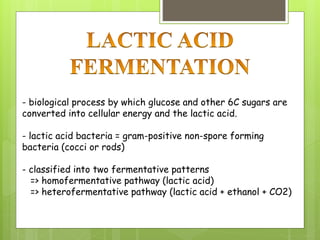
- biological process by which glucose and other 6C sugars are
converted into cellular energy and the lactic acid.
- lactic acid bacteria = gram-positive non-spore forming
bacteria (cocci or rods)
- classified into two fermentative patterns
=> homofermentative pathway (lactic acid)
=> heterofermentative pathway (lactic acid + ethanol + CO2)
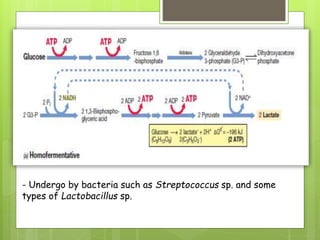
- Undergo by bacteria such as Streptococcus sp. and some
types of Lactobacillus sp.
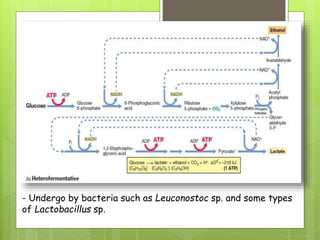
- Undergo by bacteria such as Leuconostoc sp. and some types
of Lactobacillus sp.
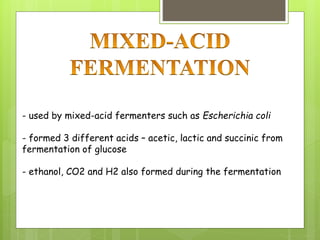
- used by mixed-acid fermenters such as Escherichia coli
- formed 3 different acids – acetic, lactic and succinic from
fermentation of glucose
- ethanol, CO2 and H2 also formed during the fermentation
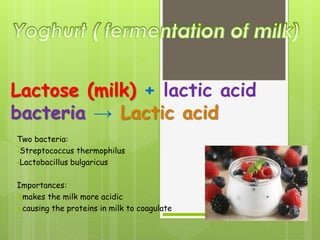
Lactose (milk) + lactic acid
bacteria → Lactic acid
Two bacteria:
Streptococcus thermophilus
Lactobacillus bulgaricus
Importances:
makes the milk more acidic
causing the proteins in milk to coagulate
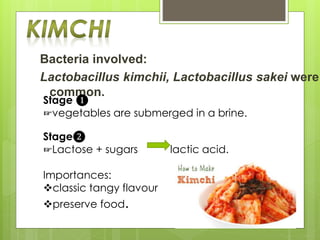
Bacteria involved:
Lactobacillus kimchii, Lactobacillus sakei were
common.
Stage ❶
☞vegetables are submerged in a brine.
Stage❷
☞Lactose + sugars lactic acid.
Importances:
classic tangy flavour
preserve food.
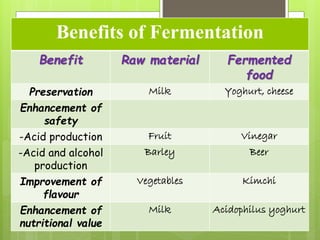
Benefits of Fermentation
Benefit Raw material Fermented
food
Preservation Milk Yoghurt, cheese
Enhancement of
safety
-Acid production Fruit Vinegar
-Acid and alcohol
production
Barley Beer
Improvement of
flavour
Vegetables Kimchi
Enhancement of
nutritional value
Milk Acidophilus yoghurt
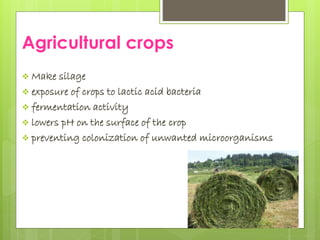
Agricultural crops
 Make silage
 exposure of crops to lactic acid bacteria
 fermentation activity
 lowers pH on the surface of the crop
 preventing colonization of unwanted microorganisms
(Group10)bacterial fermentation

(Group10)bacterial fermentation

  • 1.
    LACTIC ACID FERMENTATION MIXED-ACID FERMENTATION IMPORTANCES OF THEFERMENTATION KOAY BOON KEAT TONG KAI LOON GAO LE EE CAI FENG EMMANUEL JUDE JIMY VINCENT YATIN JUMAAIAH BINTI TAASA TUTTYCIA MITCHEL ANAK SEAT
  • 3.
    - biological processby which glucose and other 6C sugars are converted into cellular energy and the lactic acid. - lactic acid bacteria = gram-positive non-spore forming bacteria (cocci or rods) - classified into two fermentative patterns => homofermentative pathway (lactic acid) => heterofermentative pathway (lactic acid + ethanol + CO2)
  • 4.
    - Undergo bybacteria such as Streptococcus sp. and some types of Lactobacillus sp.
  • 5.
    - Undergo bybacteria such as Leuconostoc sp. and some types of Lactobacillus sp.
  • 6.
    - used bymixed-acid fermenters such as Escherichia coli - formed 3 different acids – acetic, lactic and succinic from fermentation of glucose - ethanol, CO2 and H2 also formed during the fermentation
  • 8.
    Lactose (milk) +lactic acid bacteria → Lactic acid Two bacteria: Streptococcus thermophilus Lactobacillus bulgaricus Importances: makes the milk more acidic causing the proteins in milk to coagulate
  • 9.
    Bacteria involved: Lactobacillus kimchii,Lactobacillus sakei were common. Stage ❶ ☞vegetables are submerged in a brine. Stage❷ ☞Lactose + sugars lactic acid. Importances: classic tangy flavour preserve food.
  • 10.
    Benefits of Fermentation BenefitRaw material Fermented food Preservation Milk Yoghurt, cheese Enhancement of safety -Acid production Fruit Vinegar -Acid and alcohol production Barley Beer Improvement of flavour Vegetables Kimchi Enhancement of nutritional value Milk Acidophilus yoghurt
  • 11.
    Agricultural crops  Makesilage  exposure of crops to lactic acid bacteria  fermentation activity  lowers pH on the surface of the crop  preventing colonization of unwanted microorganisms