Fermentation
BY
Muhammad Hassan
BBOF18E030
History of Fermentation
Age old applications:
1. Wine/ Beer/ Spirits 2. Cheese and Yoghurt
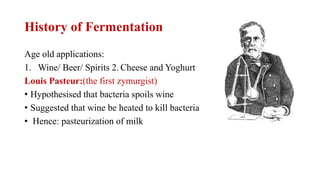
Louis Pasteur:(the first zymurgist)
• Hypothesised that bacteria spoils wine
• Suggested that wine be heated to kill bacteria
• Hence: pasteurization of milk
Introduction to Fermentation
• Fermentation is derived from latin verb fevere – to boil.
• The science of fermentation is known as zymology.
Definition:
• Fermentation is metabolic process of converting carbohydrate into
acid or alcohol.
• Mainly occur under anaerobic conditions.
• Mainly occur naturally in bacteria and fungi.
• There will be no net change in the C:H ratio of reactants and products.
• The science of fermentation is known as zymology
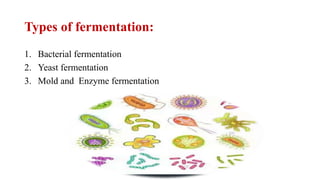
Types of fermentation:
1. Bacterial fermentation
2. Yeast fermentation
3. Mold and Enzyme fermentation
1. Bacterial Fermentation (4 types)
1. Lactic Acid Bacteria (pickles, sauerkraut)
2. Acetic Acid Bacteria (vinegar)
3. Carbon Dioxide Bacteria (Edam, Gouda, Swissd
4. Proteolytic Bacteria (cocoa, chocolate)
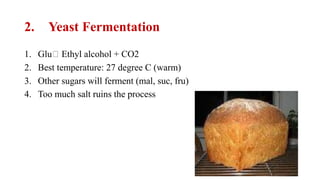
2. Yeast Fermentation
1. Glu Ethyl alcohol + CO2
2. Best temperature: 27 degree C (warm)
3. Other sugars will ferment (mal, suc, fru)
4. Too much salt ruins the process
3. Mould and Enzyme Fermentation
1. Enzymes in Mold can be useful:
2. Break down cellulose thus grains easier to chew
3. Add flavour and texture to cheeses (ex- blue)
FERMENTATION CONDITION
1. CARBON SOURCE
2. NITROGEN SOURCE
3. GROWTH FACTOR
4. PH
5. TEMPERATURE
6. TIME
7. YIELD
TYPES BASED ON RESPIRATION(AEROBIC
AND AN-AEROBIC)
• Aerobic Fermentation: Aerobic fermentation means that oxygen is
present. Wine, beer and acetic acid vinegar (such as apple cider
vinegar), need oxygen in the “primary” or first stage of fermentation.
• Anaerobic Fermentation: Anaerobic fermentation is a method cells use
to extract energy from carbohydrates when oxygen or other electron
acceptors are not available in the surrounding environment. This
differentiates it from anaerobic respiration, which doesn’t use oxygen
but does use electron-accepting molecules that come from outside of
the cell. T
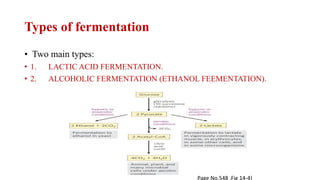
Types of fermentation
• Two main types:
• 1. LACTIC ACID FERMENTATION.
• 2. ALCOHOLIC FERMENTATION (ETHANOL FEEMENTATION).
Page No.548 ,Fig 14-4)
1. LACTIC ACID FERMENTATION
1. Lactic acid fermentation is a metabolic process by which glucose
and other six-carbon sugars are converted to cellular energy and
metabolic lactate.
2. Condition:Hypoxic-that is when cell do not receive enough oxygen
to perform krebs cycle and ETC.
3. Location : Cytoplasm
4. Occur in lactic acid bacteria,very active skeletal muscle cells under
low anaerobic conditions and in some tissues and cell types (even
under aerobic conditions) such as erythrocytes which have no
mitochondria and thus cannot oxidise pyruvate to carbon-di-oxide.
STEPS IN LACTIC ACID FERMENTATION
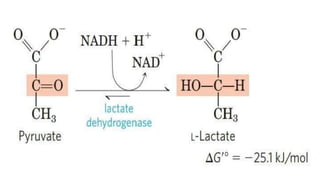
1. Pyruvate gain H from NADH.
2. Lactic acid is formed.
3. NAD+ recreated.
4. NAD+ helps restart glycolysis.
5. The reduction of pyruvate in this pathway is catalysed by lactate
dehydrogenase which forms the L-isomer of Lactate at pH 7.
1. Number of molecules of ATP generated: 0
2. Number of NAD+ regenerated by reduction of one molecule of
pyruvate to lactate : 2
3. However,there is no net change NAD+ and NADH
0
NADH.
2. ALCOHOL(ETHANOL)
FERMENTATION.
1. Yeast and some other micro-organisms ferment glucose to ethanol
and carbon-di-oxide.
2. Location:Cytoplasm.
3. Overall equation:
• Pyruvate dehydrogenase present in brewer’s and baker’s
yeast(Saccharomyces cerevisiae) and all other organisms that ferment
glucose to alcohol and also in spme plants.
STEPS:
1. Pyruvate is decarboxylated In an irreversible reaction Catalysed by
pyruvate dehydrogenase.Hence,acetaldehyde is formed and carbon-
di-oxide is relesed.(Pyruvate decarboxylase requires Mg2+ and has a
tightly bound coenzyme Thymine pyrophospate.
2. Acetaldehyde is reduced to ethanod by the action of alcohol
dehydrogenase with the reducing power furnished by
NADH.Thus,NAD+ is also generated.
3. NAD+ thus helps restart glycolysis.
SOME FERMENTED PRODUCTS
• BY LACTIC ACID FERMENTATION
• Sour dough.
• Yogurt(fermented by
Lactobacillus bulgaricus in milk) ,Pickle.
• BY ALCOHOL FERMENTATION
• Most breads.
• Alcoholic beverages.
Fermentation and it's types

Fermentation and it's types

  • 1.
  • 2.
    History of Fermentation Ageold applications: 1. Wine/ Beer/ Spirits 2. Cheese and Yoghurt Louis Pasteur:(the first zymurgist) • Hypothesised that bacteria spoils wine • Suggested that wine be heated to kill bacteria • Hence: pasteurization of milk
  • 3.
    Introduction to Fermentation •Fermentation is derived from latin verb fevere – to boil. • The science of fermentation is known as zymology. Definition: • Fermentation is metabolic process of converting carbohydrate into acid or alcohol. • Mainly occur under anaerobic conditions. • Mainly occur naturally in bacteria and fungi. • There will be no net change in the C:H ratio of reactants and products. • The science of fermentation is known as zymology
  • 4.
    Types of fermentation: 1.Bacterial fermentation 2. Yeast fermentation 3. Mold and Enzyme fermentation
  • 5.
    1. Bacterial Fermentation(4 types) 1. Lactic Acid Bacteria (pickles, sauerkraut) 2. Acetic Acid Bacteria (vinegar) 3. Carbon Dioxide Bacteria (Edam, Gouda, Swissd 4. Proteolytic Bacteria (cocoa, chocolate)
  • 6.
    2. Yeast Fermentation 1.Glu Ethyl alcohol + CO2 2. Best temperature: 27 degree C (warm) 3. Other sugars will ferment (mal, suc, fru) 4. Too much salt ruins the process
  • 7.
    3. Mould andEnzyme Fermentation 1. Enzymes in Mold can be useful: 2. Break down cellulose thus grains easier to chew 3. Add flavour and texture to cheeses (ex- blue)
  • 8.
    FERMENTATION CONDITION 1. CARBONSOURCE 2. NITROGEN SOURCE 3. GROWTH FACTOR 4. PH 5. TEMPERATURE 6. TIME 7. YIELD
  • 9.
    TYPES BASED ONRESPIRATION(AEROBIC AND AN-AEROBIC) • Aerobic Fermentation: Aerobic fermentation means that oxygen is present. Wine, beer and acetic acid vinegar (such as apple cider vinegar), need oxygen in the “primary” or first stage of fermentation. • Anaerobic Fermentation: Anaerobic fermentation is a method cells use to extract energy from carbohydrates when oxygen or other electron acceptors are not available in the surrounding environment. This differentiates it from anaerobic respiration, which doesn’t use oxygen but does use electron-accepting molecules that come from outside of the cell. T
  • 10.
    Types of fermentation •Two main types: • 1. LACTIC ACID FERMENTATION. • 2. ALCOHOLIC FERMENTATION (ETHANOL FEEMENTATION). Page No.548 ,Fig 14-4)
  • 11.
    1. LACTIC ACIDFERMENTATION 1. Lactic acid fermentation is a metabolic process by which glucose and other six-carbon sugars are converted to cellular energy and metabolic lactate. 2. Condition:Hypoxic-that is when cell do not receive enough oxygen to perform krebs cycle and ETC. 3. Location : Cytoplasm 4. Occur in lactic acid bacteria,very active skeletal muscle cells under low anaerobic conditions and in some tissues and cell types (even under aerobic conditions) such as erythrocytes which have no mitochondria and thus cannot oxidise pyruvate to carbon-di-oxide.
  • 12.
    STEPS IN LACTICACID FERMENTATION 1. Pyruvate gain H from NADH. 2. Lactic acid is formed. 3. NAD+ recreated. 4. NAD+ helps restart glycolysis. 5. The reduction of pyruvate in this pathway is catalysed by lactate dehydrogenase which forms the L-isomer of Lactate at pH 7.
  • 14.
    1. Number ofmolecules of ATP generated: 0 2. Number of NAD+ regenerated by reduction of one molecule of pyruvate to lactate : 2 3. However,there is no net change NAD+ and NADH 0 NADH.
  • 15.
    2. ALCOHOL(ETHANOL) FERMENTATION. 1. Yeastand some other micro-organisms ferment glucose to ethanol and carbon-di-oxide. 2. Location:Cytoplasm. 3. Overall equation:
  • 16.
    • Pyruvate dehydrogenasepresent in brewer’s and baker’s yeast(Saccharomyces cerevisiae) and all other organisms that ferment glucose to alcohol and also in spme plants. STEPS:
  • 17.
    1. Pyruvate isdecarboxylated In an irreversible reaction Catalysed by pyruvate dehydrogenase.Hence,acetaldehyde is formed and carbon- di-oxide is relesed.(Pyruvate decarboxylase requires Mg2+ and has a tightly bound coenzyme Thymine pyrophospate. 2. Acetaldehyde is reduced to ethanod by the action of alcohol dehydrogenase with the reducing power furnished by NADH.Thus,NAD+ is also generated. 3. NAD+ thus helps restart glycolysis.
  • 19.
    SOME FERMENTED PRODUCTS •BY LACTIC ACID FERMENTATION • Sour dough. • Yogurt(fermented by Lactobacillus bulgaricus in milk) ,Pickle. • BY ALCOHOL FERMENTATION • Most breads. • Alcoholic beverages.