Respiration Chapter 10
Lesson Objectives What is respiration? Aerobic & Anaerobic respiration To show respiration in an animal Internal vs external respiration Breathing mechanisms Gaseous exchange in lungs Lung capacity
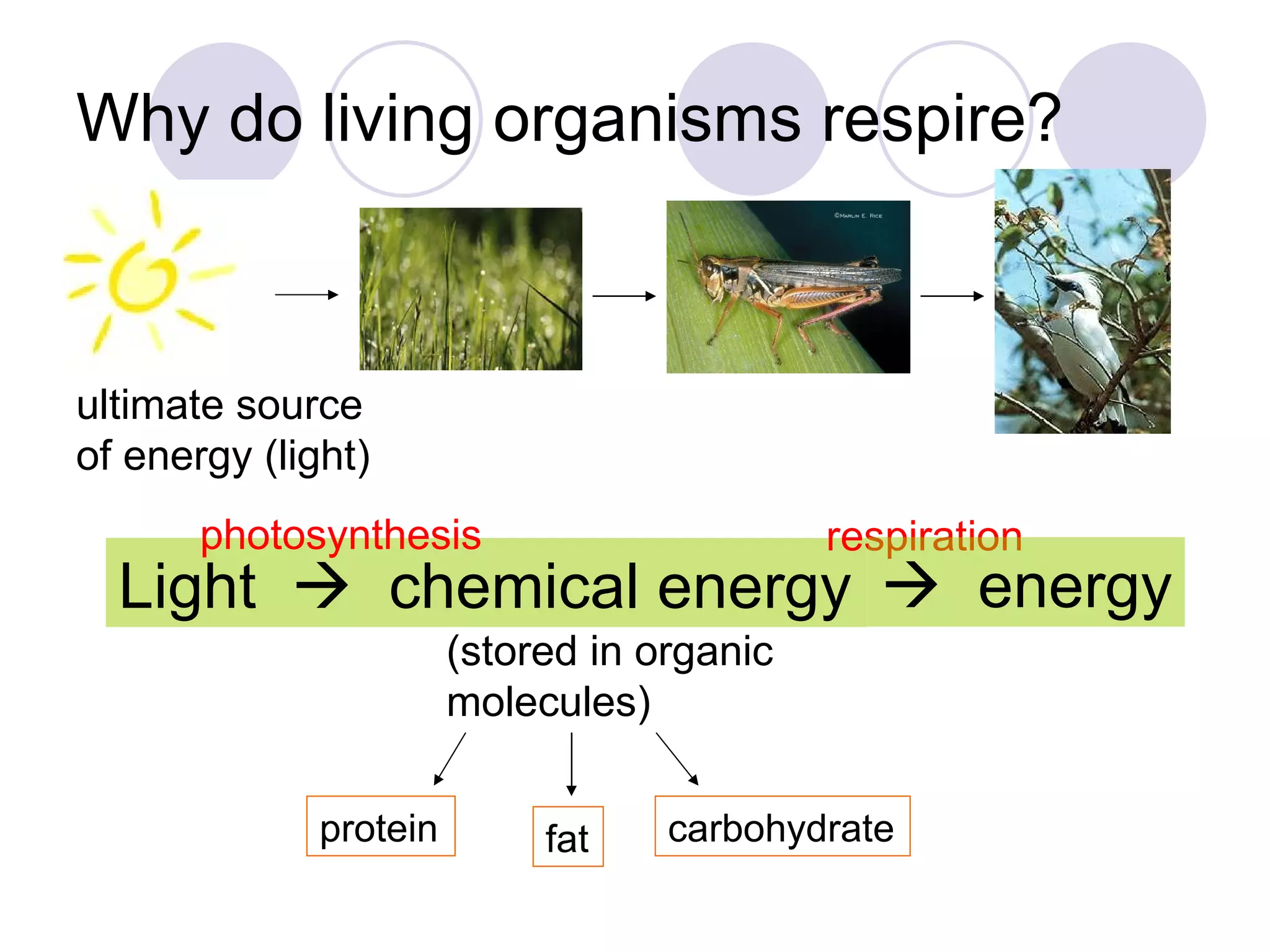
Why do living organisms respire? Light     chemical energy ultimate source of energy (light) (stored in organic molecules) protein fat carbohydrate respiration photosynthesis    energy
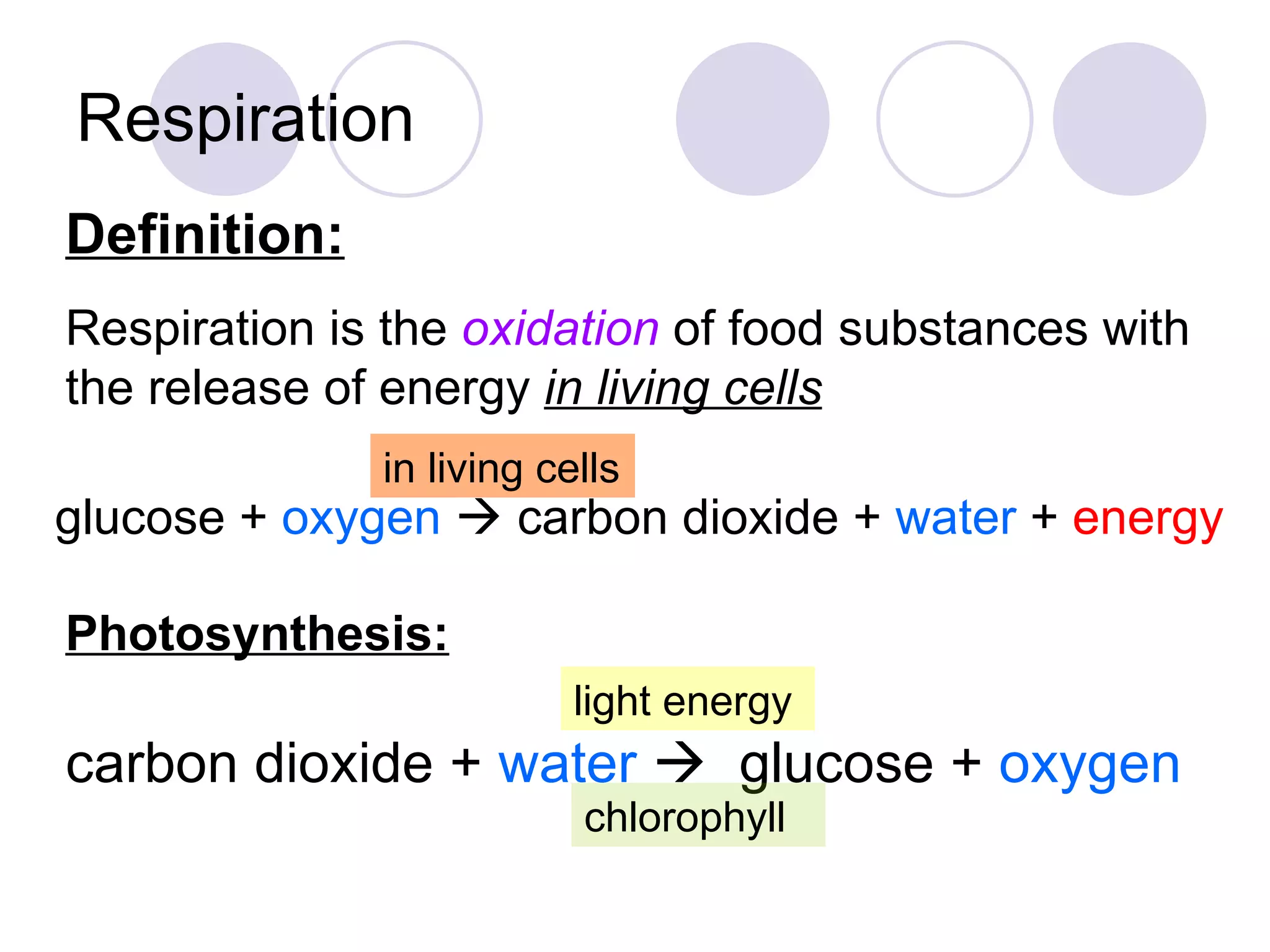
Respiration glucose +  oxygen     carbon dioxide +  water  +  energy Definition: Respiration is the  oxidation  of food substances with the release of energy  in living cells carbon dioxide +  water     glucose +  oxygen   light energy chlorophyll Photosynthesis: in living cells
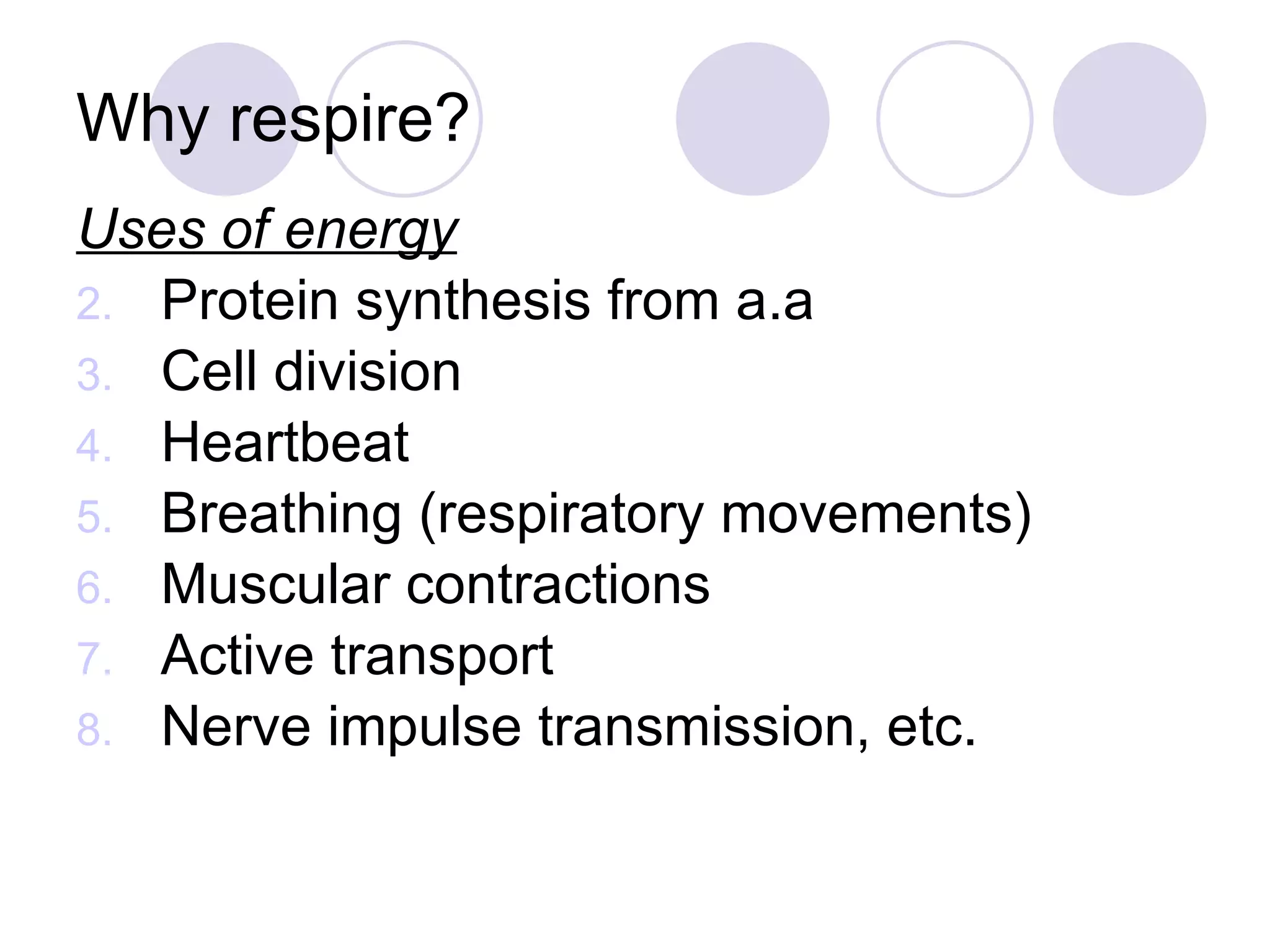
Why respire? Uses of energy Protein synthesis from a.a Cell division Heartbeat Breathing (respiratory movements) Muscular contractions Active transport Nerve impulse transmission, etc.
Aerobic vs Anaerobic respiration
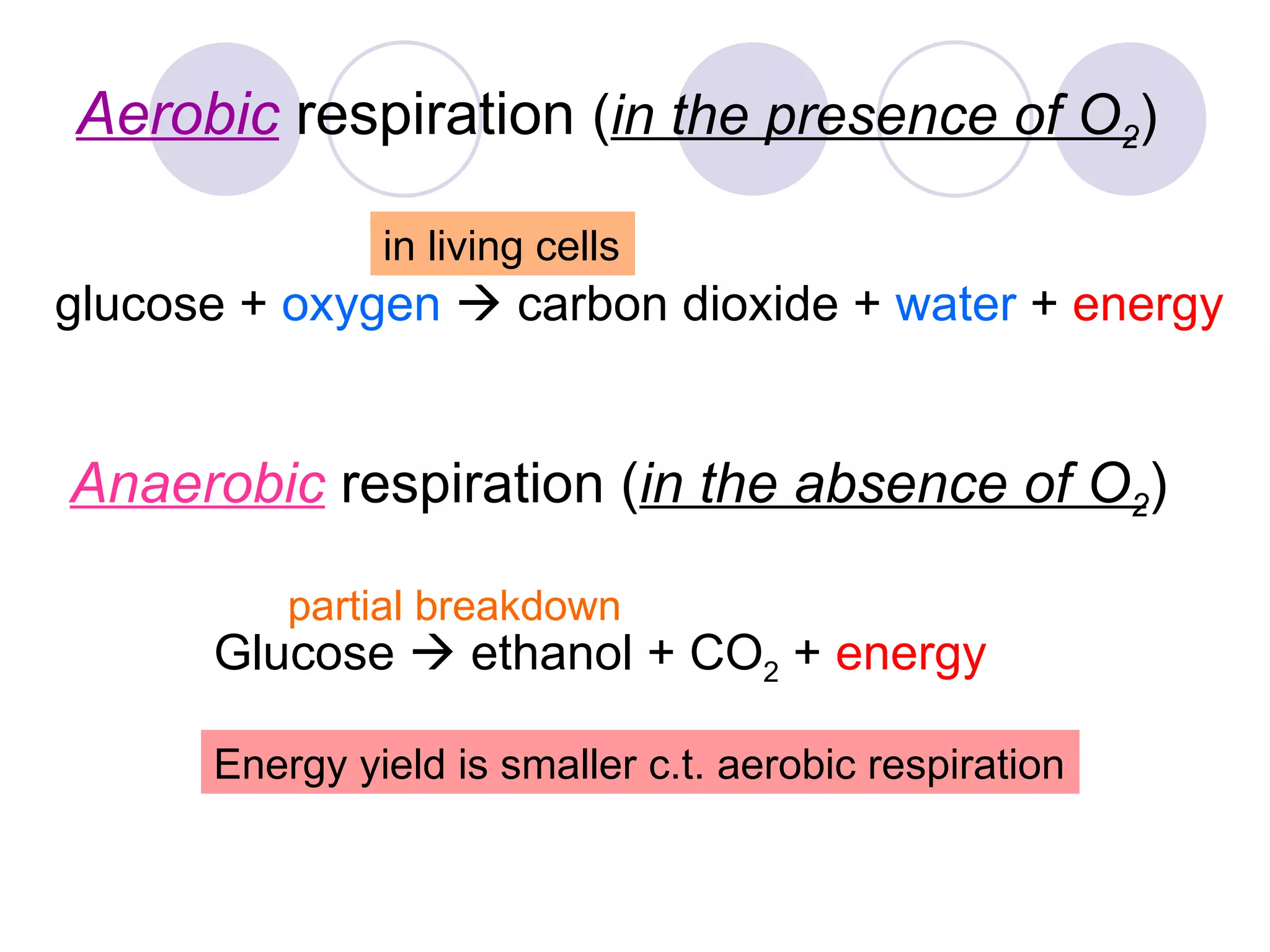
Aerobic  respiration  ( in the presence of O 2 ) glucose +  oxygen     carbon dioxide +  water  +  energy in living cells Anaerobic  respiration ( in the absence of O 2 ) Glucose    ethanol + CO 2  +  energy partial breakdown Energy yield is smaller c.t. aerobic respiration
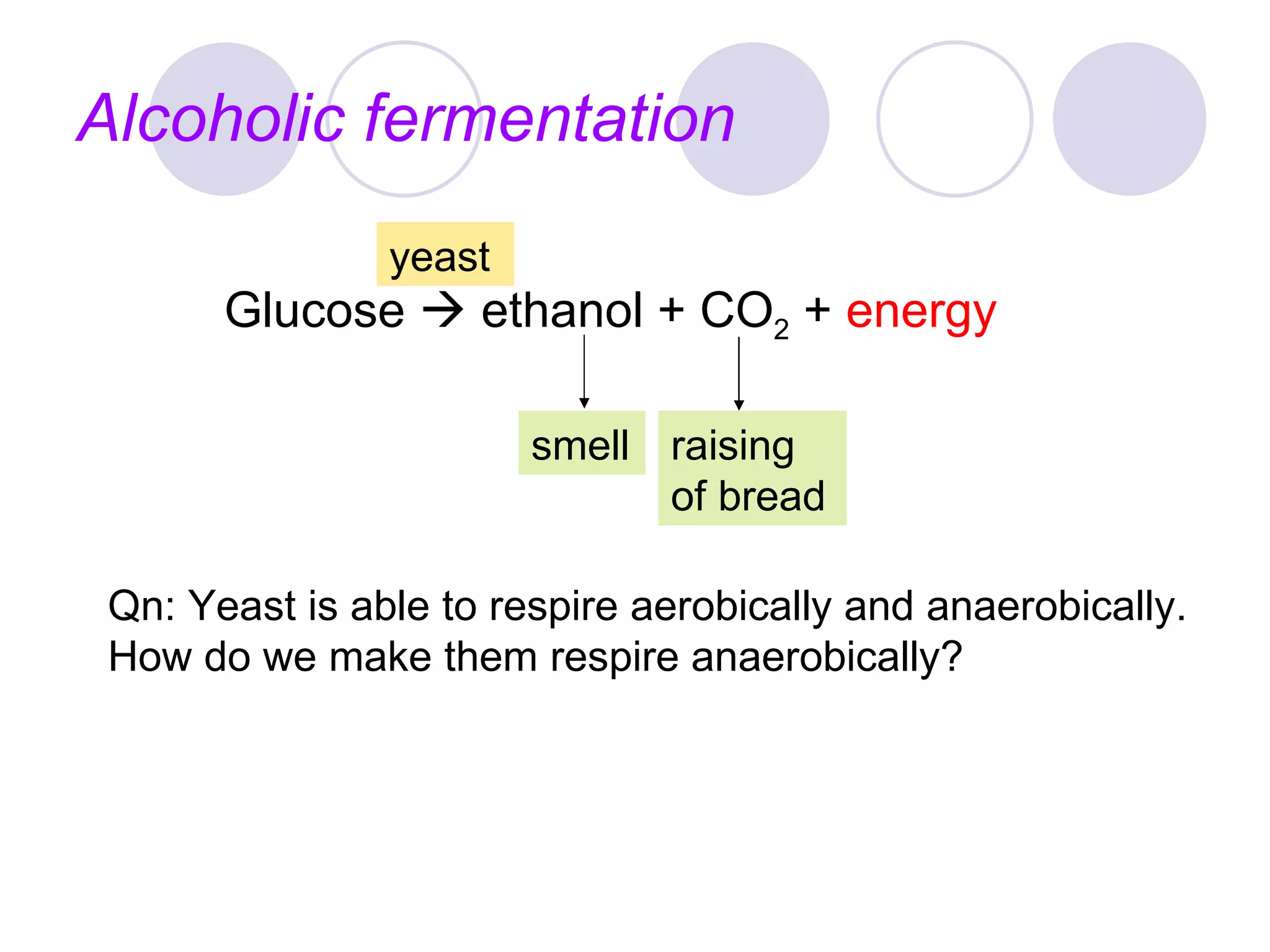
Alcoholic fermentation raising of bread smell Qn: Yeast is able to respire aerobically and anaerobically. How do we make them respire anaerobically? Glucose    ethanol + CO 2  +  energy yeast
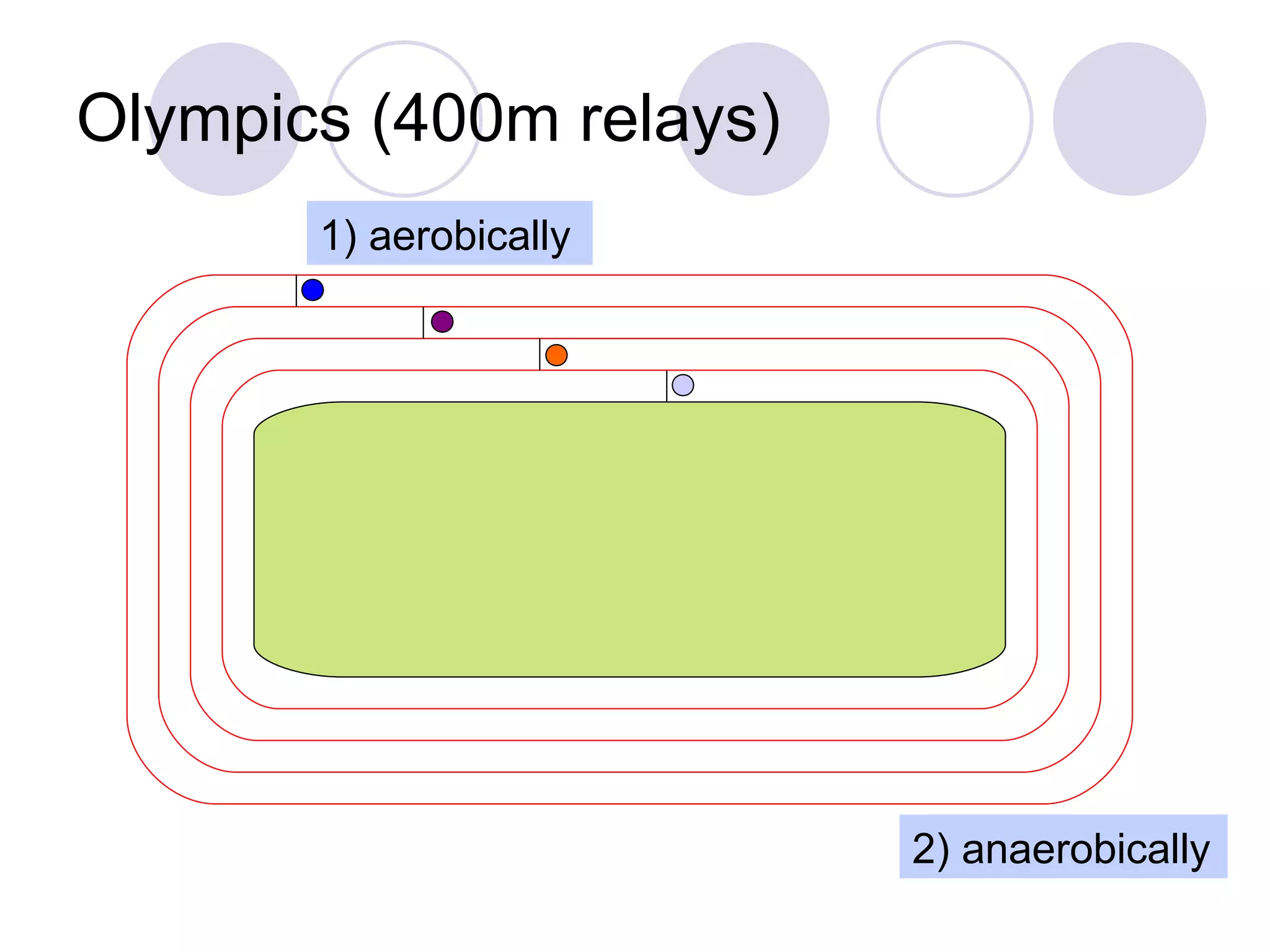
Olympics (400m relays) 1) aerobically 2) anaerobically
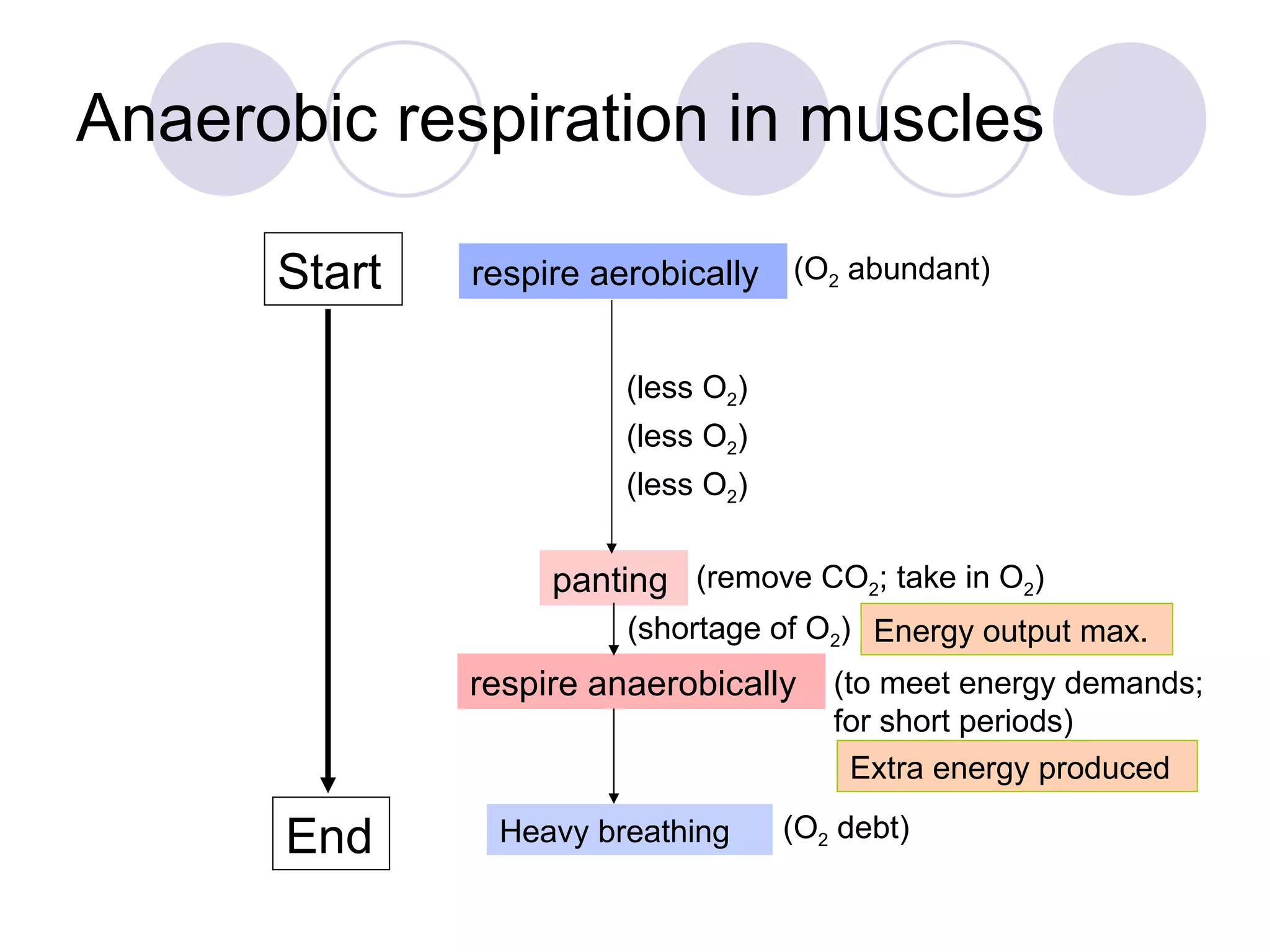
Anaerobic respiration in muscles Start End respire aerobically panting (remove CO 2 ; take in O 2 ) respire anaerobically (to meet energy demands; for short periods) (O 2  abundant) (less O 2 ) (less O 2 ) (less O 2 ) (shortage of O 2 ) Energy output max. Heavy breathing Extra energy produced (O 2  debt)
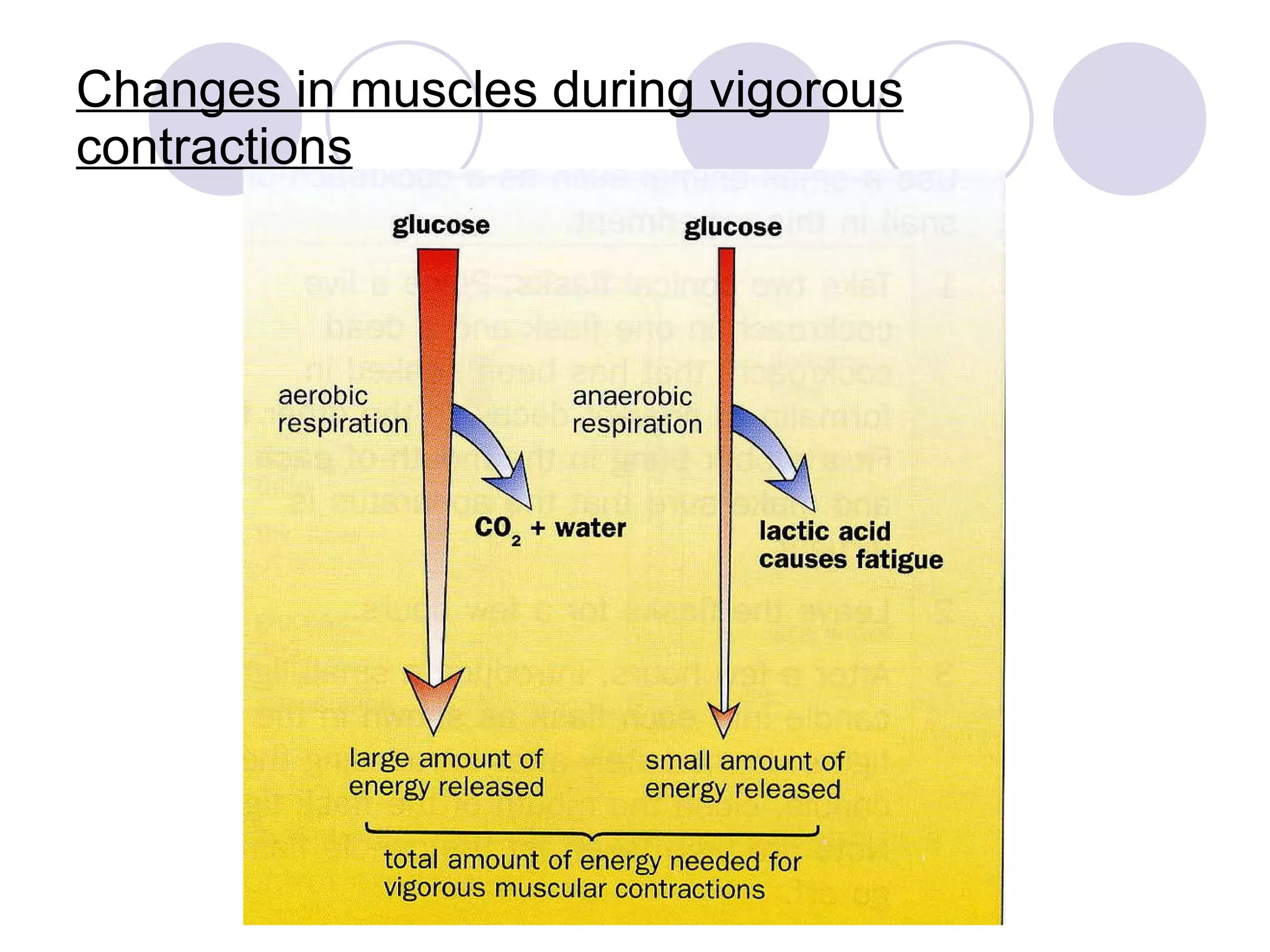
Changes in muscles during vigorous contractions
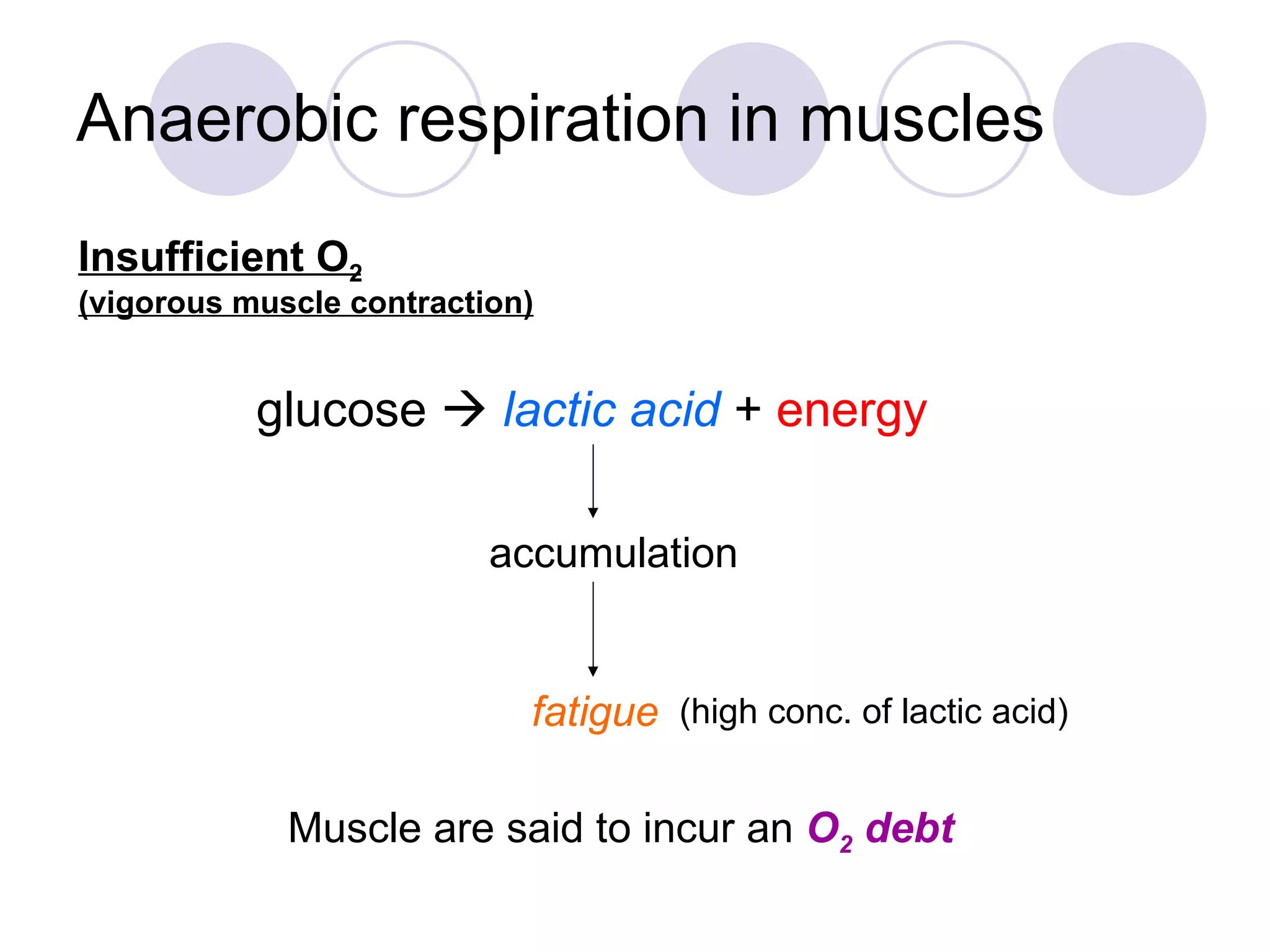
Anaerobic respiration in muscles glucose     lactic acid  +  energy Insufficient O 2 (vigorous muscle contraction) accumulation fatigue (high conc. of lactic acid) Muscle are said to incur an  O 2  debt
During the race… muscular contractions are so vigorous that maximum aerobic respiration is unable to produce energy fast enough to meet energy demands  If vigorous muscular contractions continue, extra energy has to be produced by anaerobic respiration  Lactic acid  is formed in the process  The small amount of energy released in anaerobic respiration, together with that produced in aerobic respiration, is sufficient to keep the muscles contracting  The muscles incur an  O 2  debt   Lactic acid concentrations build up slowly in the muscles and eventually become high enough to cause  fatigue  and  muscular pains
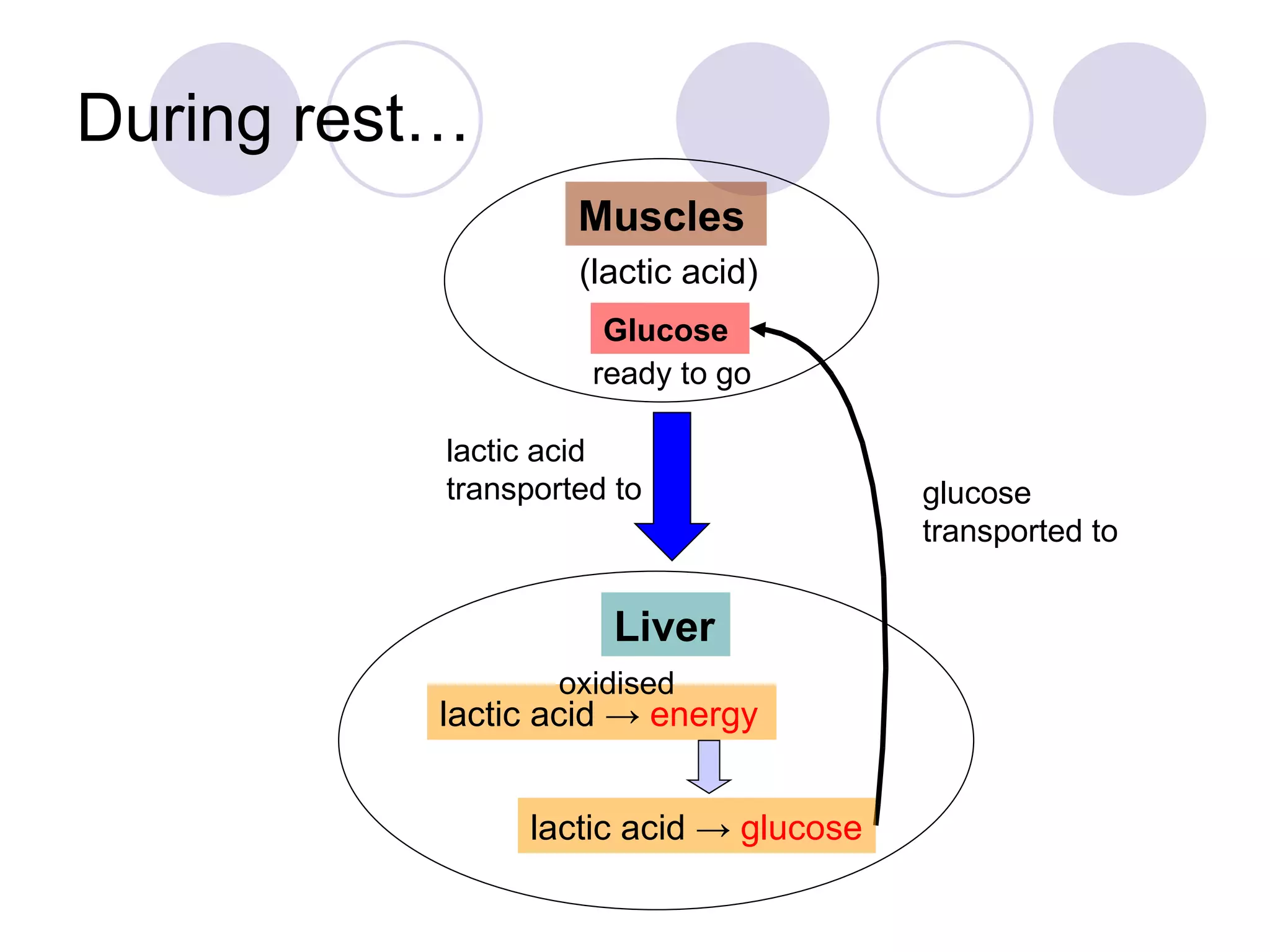
During rest… Muscles (lactic acid) Liver lactic acid  ->  energy oxidised lactic acid transported to Glucose lactic acid  ->  glucose ready to go glucose transported to
During rest… the breathing rate continues to remain fast for some time to provide sufficient O 2  to repay the O 2  debt  Lactic acid is removed from the muscles and transported to the liver  In the liver, some of the lactic acid is oxidized to produce energy to convert the remaining lactic acid into glucose  When the lactic acid is used up, the O 2  debt is paid Glucose is then transported back to the muscle and the body is now ready for another race
How do we know if organisms respire?
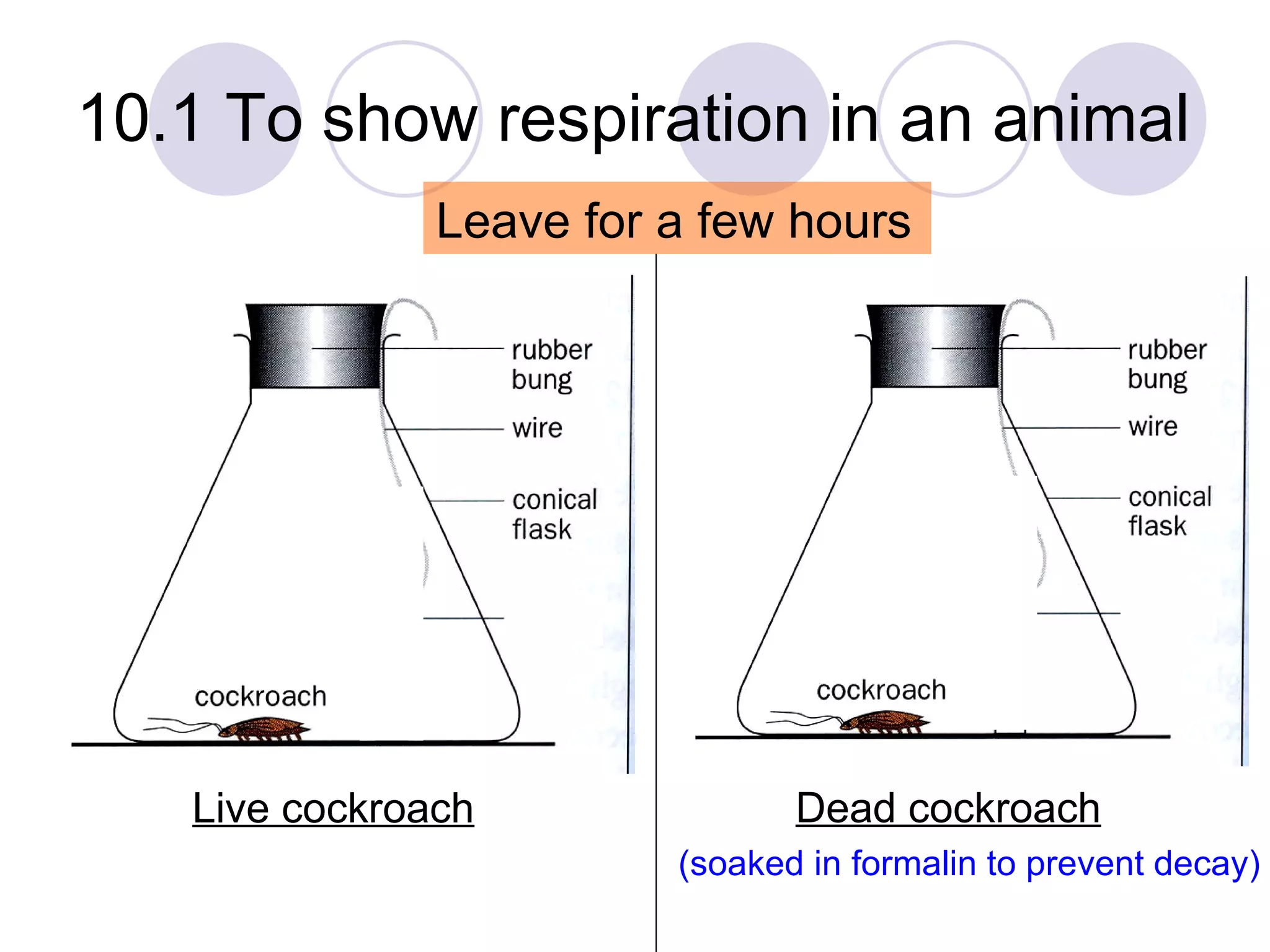
10.1 To show respiration in an animal Live cockroach Dead cockroach (soaked in formalin to prevent decay) Leave for a few hours
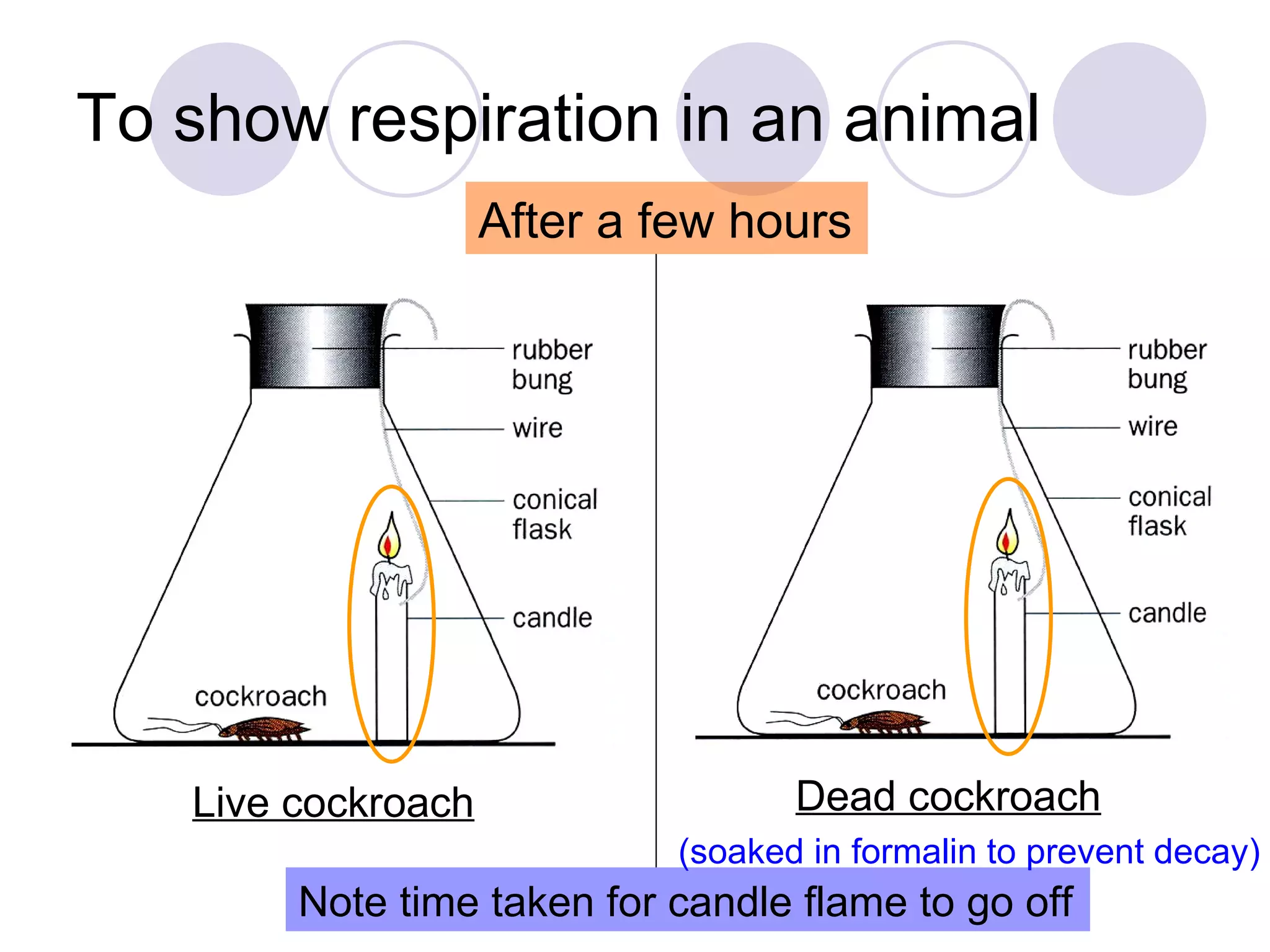
To show respiration in an animal Live cockroach Dead cockroach (soaked in formalin to prevent decay) After a few hours Note time taken for candle flame to go off
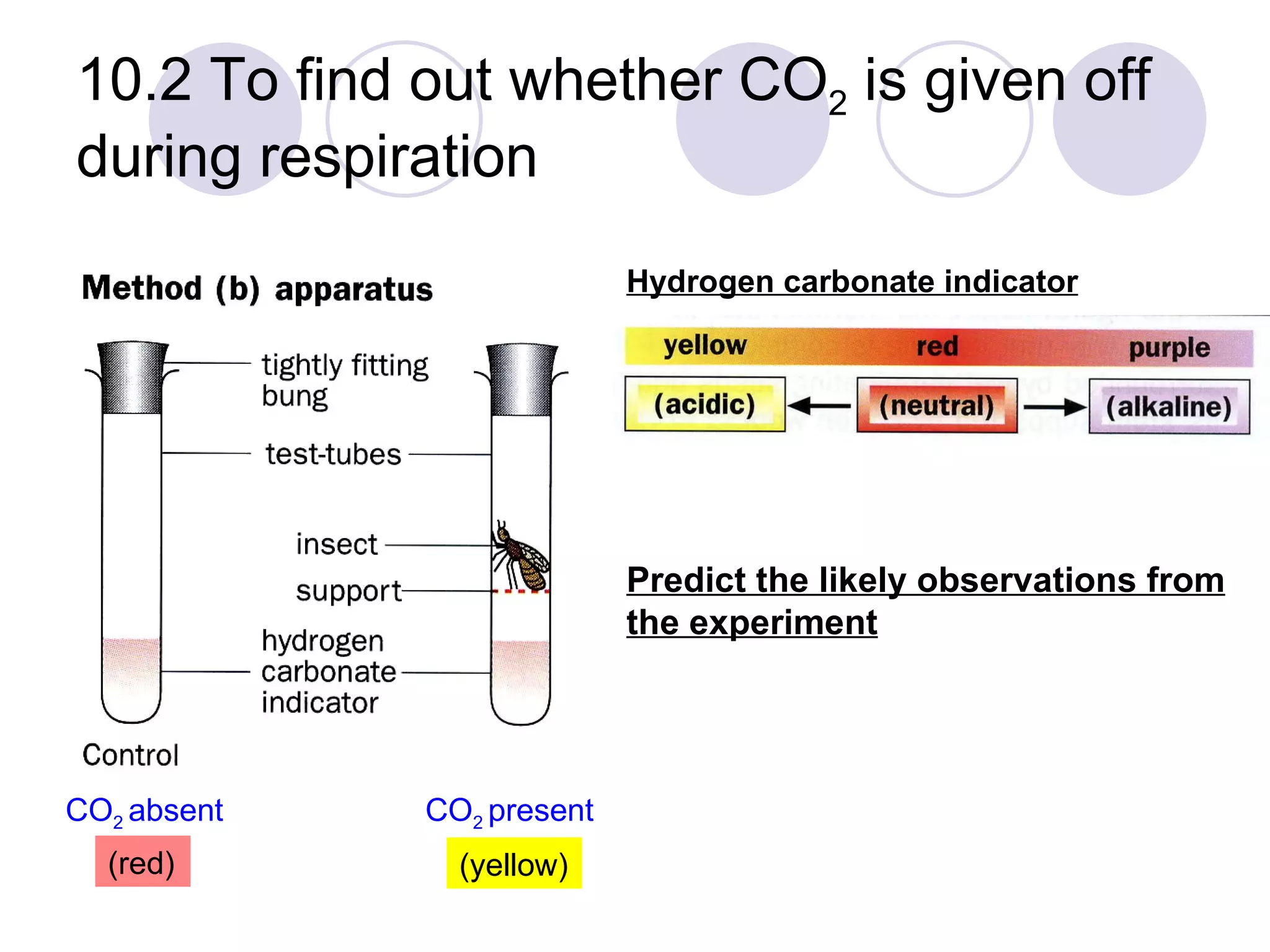
10.2 To find out whether CO 2  is given off during respiration Hydrogen carbonate indicator Predict the likely observations from the experiment (red) (yellow) CO 2  present CO 2  absent
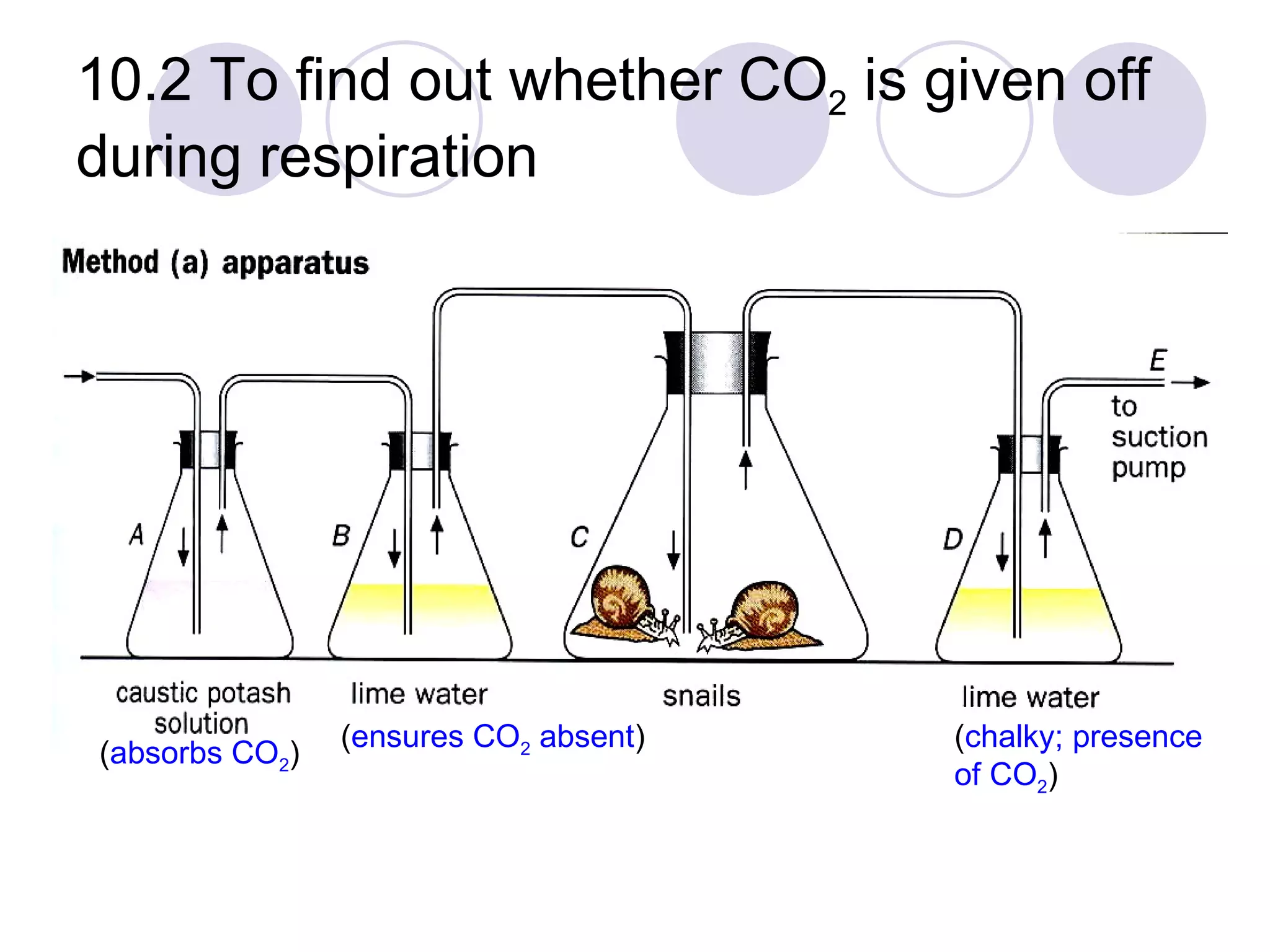
10.2 To find out whether CO 2  is given off during respiration ( absorbs CO 2 ) ( chalky; presence of CO 2 ) ( ensures CO 2  absent )
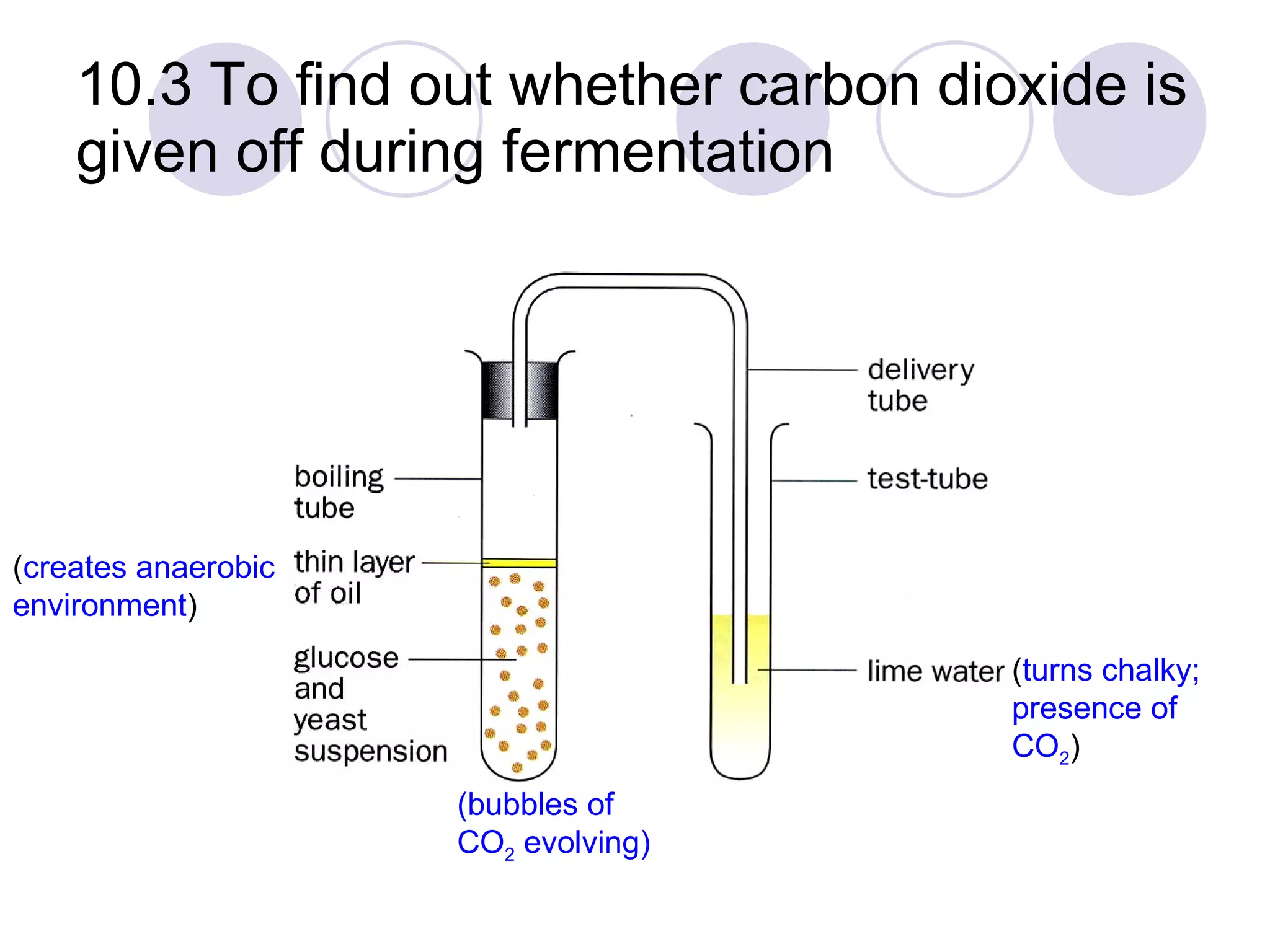
10.3 To find out whether carbon dioxide is given off during fermentation ( creates anaerobic environment ) ( turns chalky; presence of CO 2 ) (bubbles of CO 2  evolving)
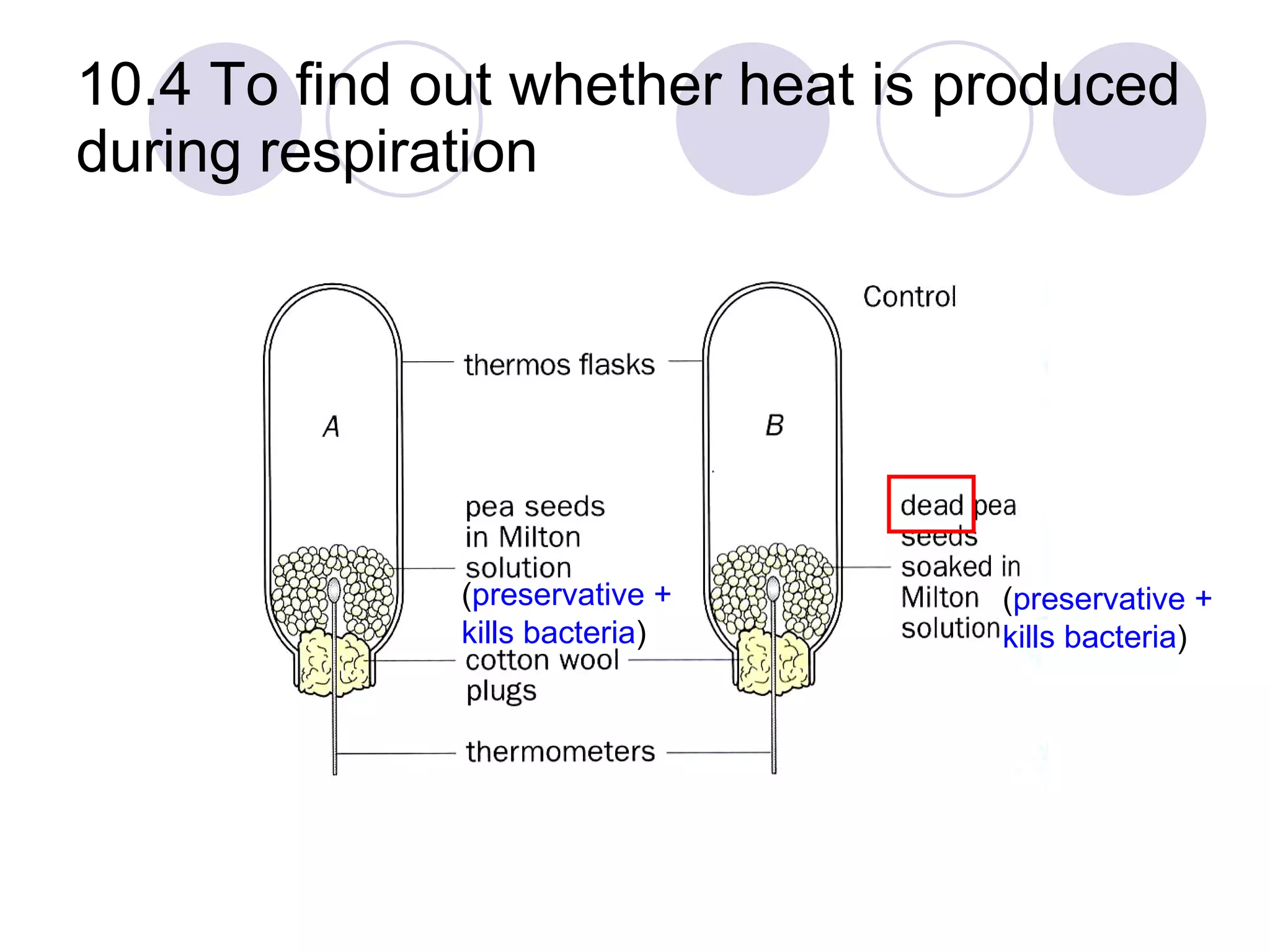
10.4 To find out whether heat is produced during respiration ( preservative + kills bacteria ) ( preservative + kills bacteria )

Chapter 10 Respiration Lesson 1 - Aerobic and Anaerobic Respiration and the Experiments

  • 1.
  • 2.
    Lesson Objectives Whatis respiration? Aerobic & Anaerobic respiration To show respiration in an animal Internal vs external respiration Breathing mechanisms Gaseous exchange in lungs Lung capacity
  • 3.
    Why do livingorganisms respire? Light  chemical energy ultimate source of energy (light) (stored in organic molecules) protein fat carbohydrate respiration photosynthesis  energy
  • 4.
    Respiration glucose + oxygen  carbon dioxide + water + energy Definition: Respiration is the oxidation of food substances with the release of energy in living cells carbon dioxide + water  glucose + oxygen light energy chlorophyll Photosynthesis: in living cells
  • 5.
    Why respire? Usesof energy Protein synthesis from a.a Cell division Heartbeat Breathing (respiratory movements) Muscular contractions Active transport Nerve impulse transmission, etc.
  • 6.
  • 7.
    Aerobic respiration ( in the presence of O 2 ) glucose + oxygen  carbon dioxide + water + energy in living cells Anaerobic respiration ( in the absence of O 2 ) Glucose  ethanol + CO 2 + energy partial breakdown Energy yield is smaller c.t. aerobic respiration
  • 8.
    Alcoholic fermentation raisingof bread smell Qn: Yeast is able to respire aerobically and anaerobically. How do we make them respire anaerobically? Glucose  ethanol + CO 2 + energy yeast
  • 9.
    Olympics (400m relays)1) aerobically 2) anaerobically
  • 10.
    Anaerobic respiration inmuscles Start End respire aerobically panting (remove CO 2 ; take in O 2 ) respire anaerobically (to meet energy demands; for short periods) (O 2 abundant) (less O 2 ) (less O 2 ) (less O 2 ) (shortage of O 2 ) Energy output max. Heavy breathing Extra energy produced (O 2 debt)
  • 11.
    Changes in musclesduring vigorous contractions
  • 12.
    Anaerobic respiration inmuscles glucose  lactic acid + energy Insufficient O 2 (vigorous muscle contraction) accumulation fatigue (high conc. of lactic acid) Muscle are said to incur an O 2 debt
  • 13.
    During the race…muscular contractions are so vigorous that maximum aerobic respiration is unable to produce energy fast enough to meet energy demands If vigorous muscular contractions continue, extra energy has to be produced by anaerobic respiration Lactic acid is formed in the process The small amount of energy released in anaerobic respiration, together with that produced in aerobic respiration, is sufficient to keep the muscles contracting The muscles incur an O 2 debt Lactic acid concentrations build up slowly in the muscles and eventually become high enough to cause fatigue and muscular pains
  • 14.
    During rest… Muscles(lactic acid) Liver lactic acid -> energy oxidised lactic acid transported to Glucose lactic acid -> glucose ready to go glucose transported to
  • 15.
    During rest… thebreathing rate continues to remain fast for some time to provide sufficient O 2 to repay the O 2 debt Lactic acid is removed from the muscles and transported to the liver In the liver, some of the lactic acid is oxidized to produce energy to convert the remaining lactic acid into glucose When the lactic acid is used up, the O 2 debt is paid Glucose is then transported back to the muscle and the body is now ready for another race
  • 16.
    How do weknow if organisms respire?
  • 17.
    10.1 To showrespiration in an animal Live cockroach Dead cockroach (soaked in formalin to prevent decay) Leave for a few hours
  • 18.
    To show respirationin an animal Live cockroach Dead cockroach (soaked in formalin to prevent decay) After a few hours Note time taken for candle flame to go off
  • 19.
    10.2 To findout whether CO 2 is given off during respiration Hydrogen carbonate indicator Predict the likely observations from the experiment (red) (yellow) CO 2 present CO 2 absent
  • 20.
    10.2 To findout whether CO 2 is given off during respiration ( absorbs CO 2 ) ( chalky; presence of CO 2 ) ( ensures CO 2 absent )
  • 21.
    10.3 To findout whether carbon dioxide is given off during fermentation ( creates anaerobic environment ) ( turns chalky; presence of CO 2 ) (bubbles of CO 2 evolving)
  • 22.
    10.4 To findout whether heat is produced during respiration ( preservative + kills bacteria ) ( preservative + kills bacteria )