Fungal Fermentation
Group members:
Chan Shu Wen Gary Kam Yin Cheng
Chew Shi Wah Lim Yee Kei
Chin Wen Yee Tan Jia Sin
Choo Ming Huei
Is it…?
Fermentation
- a metabolic process in which an organism
converts a carbohydrate, such as starch or a
sugar, into an alcohol or an acid.
a fungus
Fungal Fermentation
Fungus
- a general term used to denote a group of
eukaryotic protists, including mushrooms,
yeasts, moulds, etc that live by decomposing
and absorbing organic material
MAIN CHARACTERISTICS OF FUNGI
 Eukaryotes
 Cell wall made of chitin
 Most are multicellular(mushroom,molds)exceptsingle-celled
yeast
 Filamentous( the hyphae group togetherto form mycelium)
 Heterotrophic ( they cannot make their own food)
 Reproduce by spores
Scientific name : Saccharomyces
cerevisiae
Common name: Brewer’s yeast/ Baker’s
yeast
Habitat :
Wild growing on the skins of grapes and
other fruits.
This yeast is responsible for the
production of ethanol in alcoholic
drinks and is the reasons the bread
dough rises in the pan. That is where
the names brewer’s and baker’s yeast
come from. The process in which it
produces ethanol is one way this yeast
converts glucose into energy.
PROCESS OF FERMENTATION
a) Lactic Acid fermentation
b) Ethanol fermentation
ETHANOL FERMENTATION
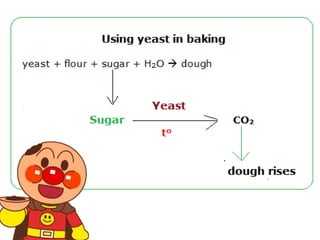
 A biological process in which simple sugar are
converted into cellular energy and thereby
produce ethanol and carbon dioxide as
metabolic waste products. Because yeasts
perform this conversion in the absence of
oxygen ethanol fermentation is classified as
anaerobic.
Figure 1 : Process of alcohol fermentation
 Source of the ethanol in wine and beer.
 Ethanol – a by-product of fermentation that is
actually toxic to yeast.
 Yeast are killed once it approaches a concentration
of about 12%
 Naturally fermented wine contains only about 12%
ethanol
Wine
Inexpensi
ve
↑ improve digestion
by introducing
beneficial
microflora.
↑ the
vitamin
content in
foods
rich in enzymes -
help the body
properly digest,
absorb, and make
full use of your
food.
↑ the
shelf life
of food.
↑ the flavor -
changes and
enhances the taste
of foods, creating
complex flavors.
helps us to
absorb the
nutrients we’re
consuming.
ADVANTAGES
Thank You ! 

(Group9)fungus fermentation

  • 1.
    Fungal Fermentation Group members: ChanShu Wen Gary Kam Yin Cheng Chew Shi Wah Lim Yee Kei Chin Wen Yee Tan Jia Sin Choo Ming Huei
  • 3.
  • 8.
    Fermentation - a metabolicprocess in which an organism converts a carbohydrate, such as starch or a sugar, into an alcohol or an acid. a fungus Fungal Fermentation
  • 9.
    Fungus - a generalterm used to denote a group of eukaryotic protists, including mushrooms, yeasts, moulds, etc that live by decomposing and absorbing organic material
  • 11.
    MAIN CHARACTERISTICS OFFUNGI  Eukaryotes  Cell wall made of chitin  Most are multicellular(mushroom,molds)exceptsingle-celled yeast  Filamentous( the hyphae group togetherto form mycelium)  Heterotrophic ( they cannot make their own food)  Reproduce by spores
  • 13.
    Scientific name :Saccharomyces cerevisiae Common name: Brewer’s yeast/ Baker’s yeast Habitat : Wild growing on the skins of grapes and other fruits. This yeast is responsible for the production of ethanol in alcoholic drinks and is the reasons the bread dough rises in the pan. That is where the names brewer’s and baker’s yeast come from. The process in which it produces ethanol is one way this yeast converts glucose into energy.
  • 14.
    PROCESS OF FERMENTATION a)Lactic Acid fermentation b) Ethanol fermentation
  • 15.
    ETHANOL FERMENTATION  Abiological process in which simple sugar are converted into cellular energy and thereby produce ethanol and carbon dioxide as metabolic waste products. Because yeasts perform this conversion in the absence of oxygen ethanol fermentation is classified as anaerobic.
  • 16.
    Figure 1 :Process of alcohol fermentation
  • 17.
     Source ofthe ethanol in wine and beer.  Ethanol – a by-product of fermentation that is actually toxic to yeast.  Yeast are killed once it approaches a concentration of about 12%  Naturally fermented wine contains only about 12% ethanol
  • 19.
  • 25.
    Inexpensi ve ↑ improve digestion byintroducing beneficial microflora. ↑ the vitamin content in foods rich in enzymes - help the body properly digest, absorb, and make full use of your food. ↑ the shelf life of food. ↑ the flavor - changes and enhances the taste of foods, creating complex flavors. helps us to absorb the nutrients we’re consuming. ADVANTAGES
  • 27.