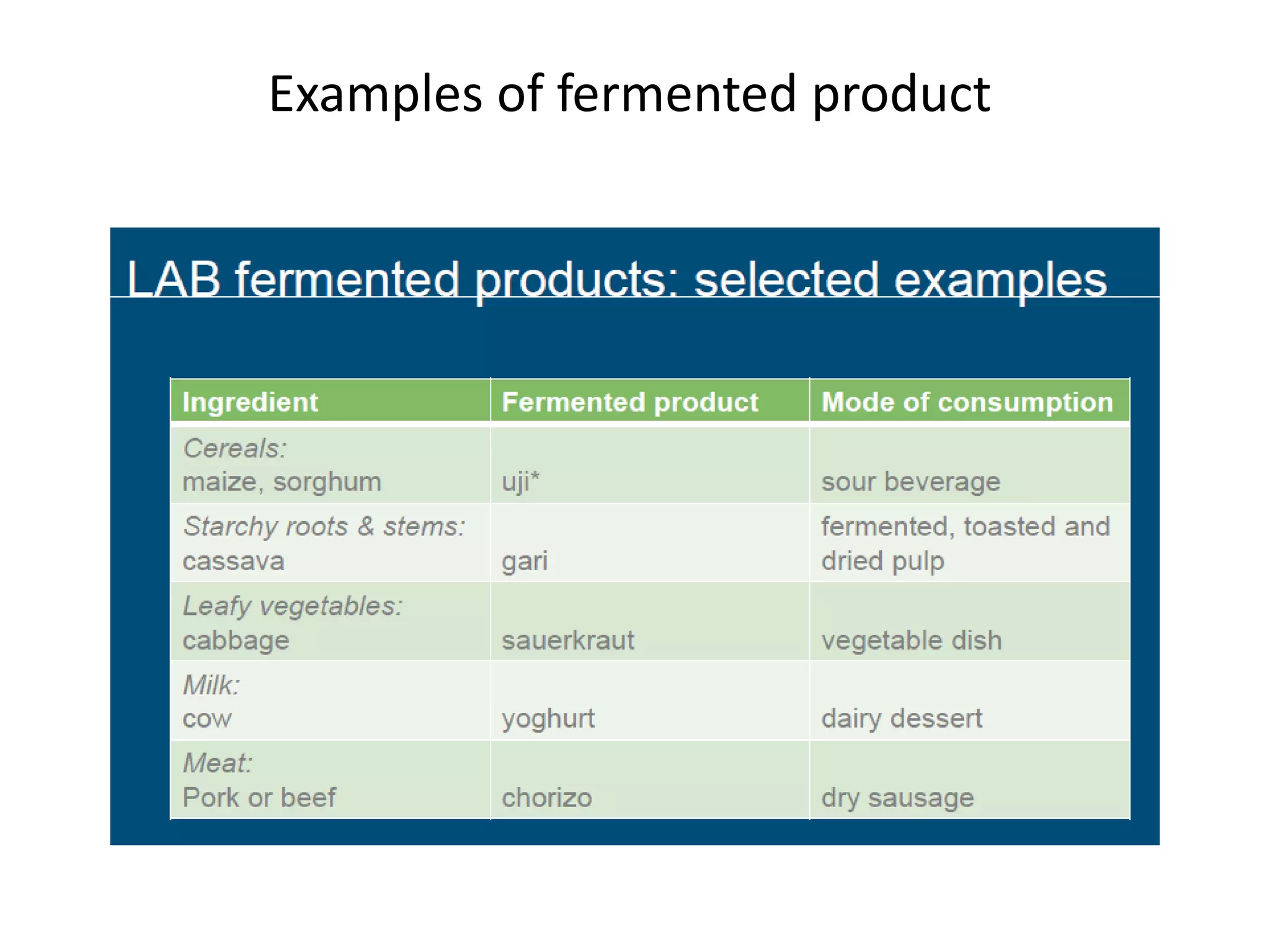
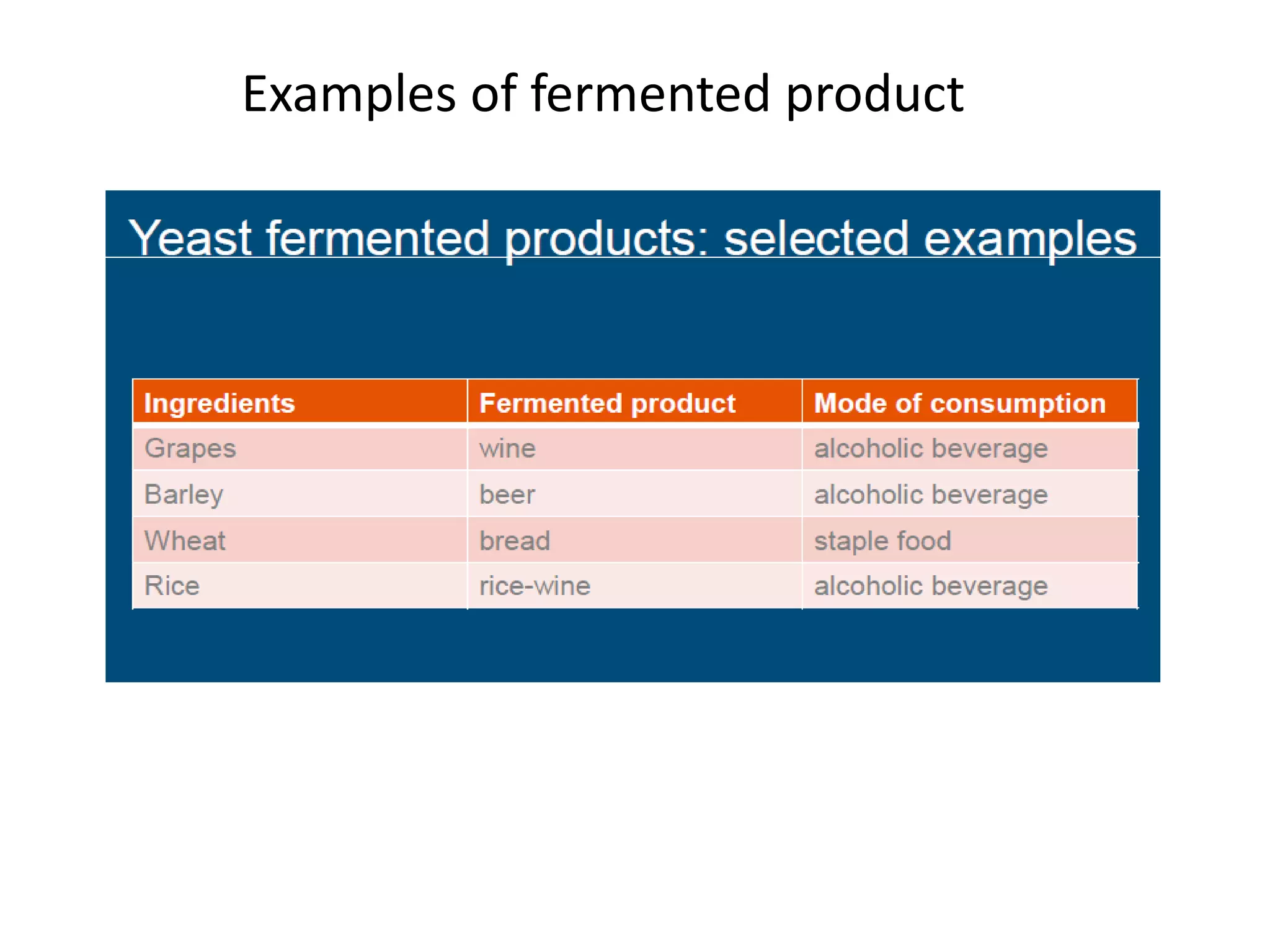
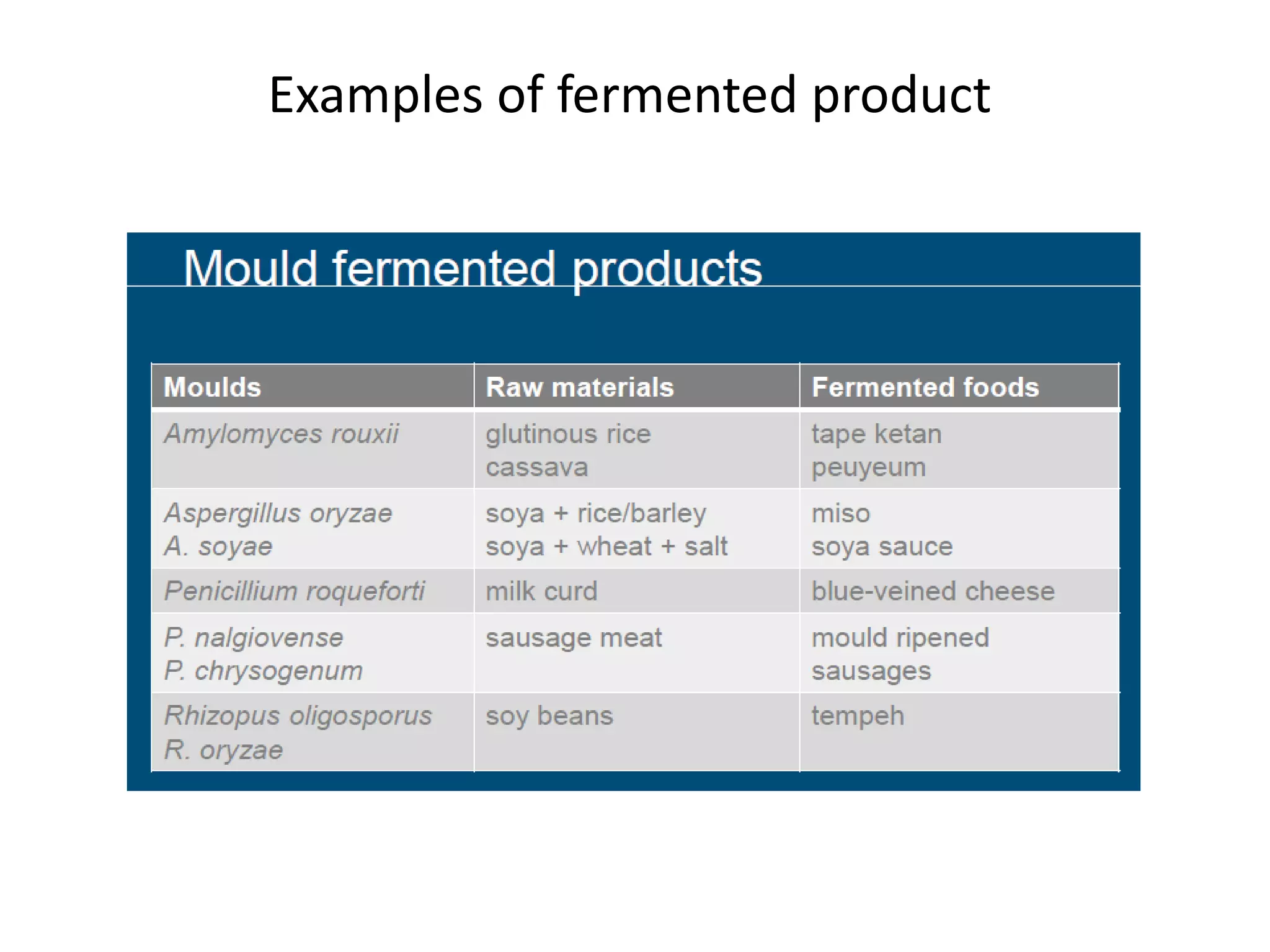
Examples of fermented product
Factors governing fermentation
1. Temperature
• Bacteria- optimum temperature-20 to 300C
• Thermophiles- 50 to550C
• LAB- 18 to 220C
• Leuconostoc species- 18 to 220C
2. Salt concentration
• LAB – high salt concentrations, begin
metabolism & produces acid
Factors governing fermentation
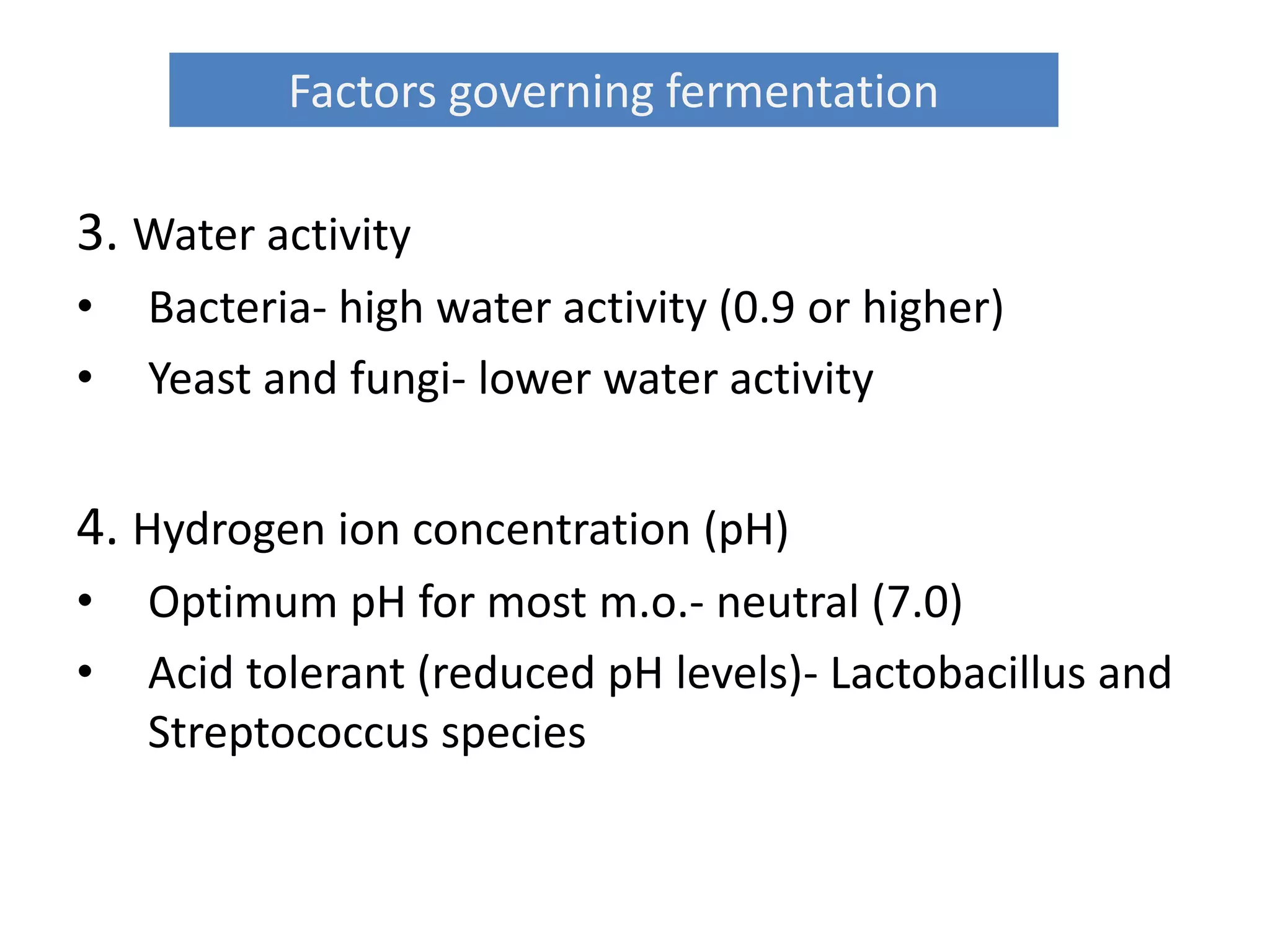
3. Water activity
• Bacteria- high water activity (0.9 or higher)
• Yeast and fungi- lower water activity
4. Hydrogen ion concentration (pH)
• Optimum pH for most m.o.- neutral (7.0)
• Acid tolerant (reduced pH levels)- Lactobacillus and
Streptococcus species
Factors governing fermentation
5. Oxygen availability
• Bacteria- anaerobes, aerobes or microaerophilic
(some lactobacilli)
• aerobic fermentations- oxygen is one of the limiting
factors, determines the type, the amount of
biological product obtained , substrate consumed,
energy released from the reaction. Exp- acetobacter
require oxygen for the oxidation of alcohol to acetic
acid
Factors governing fermentation
6. Nutrients
• All m.o. require nutrients/ energy
• Fermentative bacteria require carbohydrates-
either simple or complex.
7. Inhibitors
• Chemical compounds can inhibit the growth &
activity of m.os.
• Prevents metabolism, denature proteins,
damage the cell
Undesirable changes in food fermentation
i) Vinegar in wine
ii) Proteolysis
iii) Lipolysis
iv) Toxin
v) Odd colours
vi) Odd flavours
vii) Bad odours
Types of bacterial food fermentation
1. Lactic acid fermentation
• most desirable food fermentation, sour dough bread,
sorghum beer, fermented milks, fermented
vegetables.
• Lactobacillus, Leuconostoc, Pediococcus
and Streptococcus
• Homolactic fermentation:
Glucose 2 lactic acid
• Heterolactic fermentation:
Glucose lactic acid+ ethanol+ CO2
Types of bacterial food fermentation
2. Acetic acid fermentation
• Vinegar from fruit juices and alcohols
• acetic acid bacteria/ acetobacter- convert alcohol to
acetic acid in the presence of oxygen
Alcohol acetic acid + water
Types of bacterial food fermentation
3. Alkaline fermentation
• With protein rich foods. Exp soybeans, legumes and
also plant seeds
• Bacillus species- Bacillus subtilis, Bacillus pumilus etc.
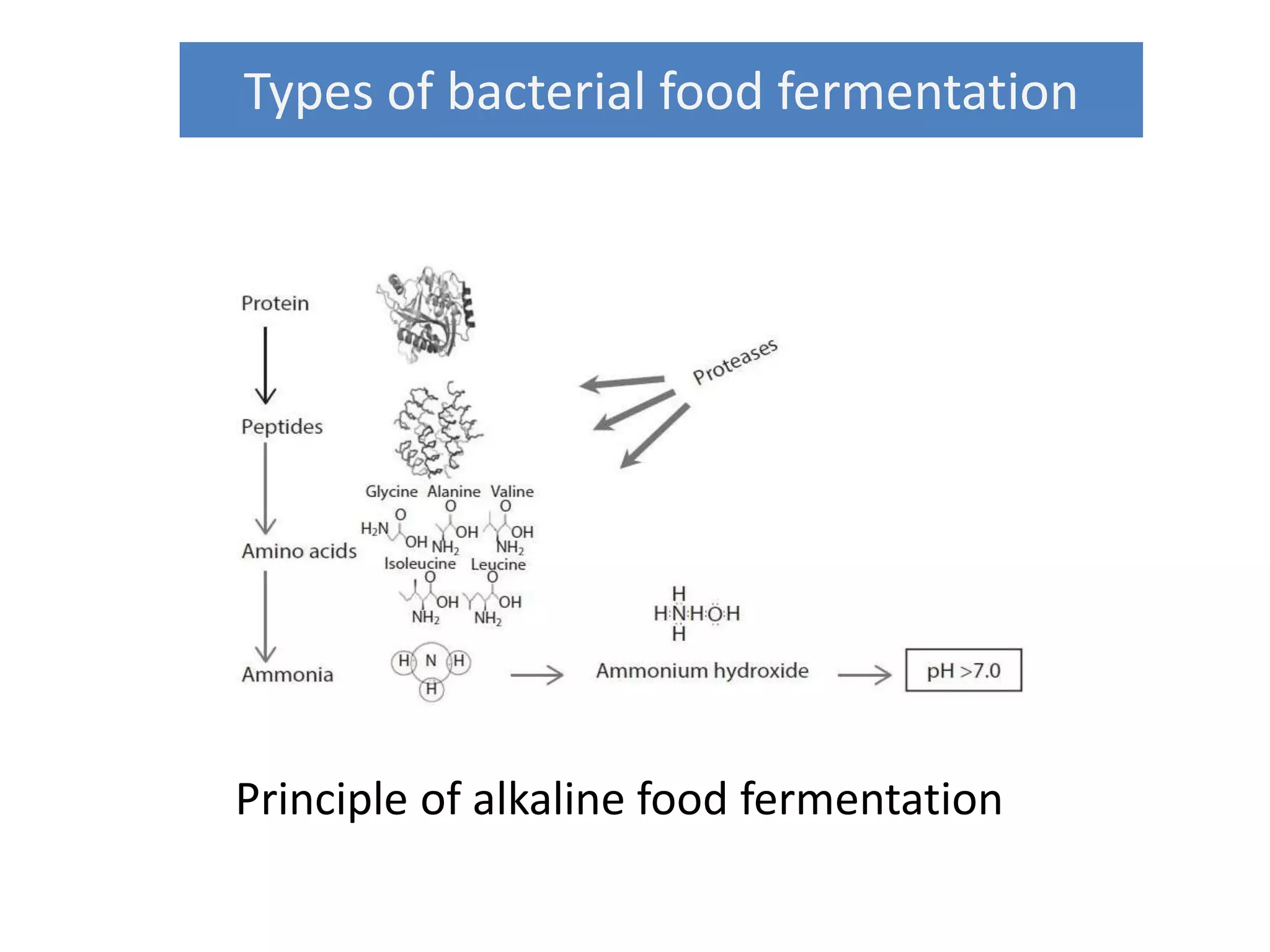
• Bacillus subtilis is the dominant species causing
hydrolysis of protein which increases the alkalinity of
the substrate.
• Provide protein rich, low cost foods from leaves,
seeds and beans
Types of bacterial food fermentation
Principle of alkaline food fermentation
Types of fermentation based on culture media
A. Solid-state fermentation
• m.os. grow on a moist solid with little or no ‘free
water’
• Example- mushroom cultivation, bread making,
manufacture of miso (soy paste), tempeh (soy cake),
gari (cassava) etc.
• Subdivided into aerobic (koji fermentation) &
anaerobic (sausage production by acid-forming
bacteria) process
Types of fermentation based on culture media
B. Submerged fermentation
• May use a dissolved substrate, suspended in large
amount of water
• e.g. pickling vegetables, producing yogurt, beer, wine
& soy sauce
• Subdivided into aerobic (citric acid production by
Aspergillus niger) & anaerobic (yogurt) process

Types of Food Fermentation

  • 1.
  • 2.
  • 3.
  • 4.
    Factors governing fermentation 1.Temperature • Bacteria- optimum temperature-20 to 300C • Thermophiles- 50 to550C • LAB- 18 to 220C • Leuconostoc species- 18 to 220C 2. Salt concentration • LAB – high salt concentrations, begin metabolism & produces acid
  • 5.
    Factors governing fermentation 3.Water activity • Bacteria- high water activity (0.9 or higher) • Yeast and fungi- lower water activity 4. Hydrogen ion concentration (pH) • Optimum pH for most m.o.- neutral (7.0) • Acid tolerant (reduced pH levels)- Lactobacillus and Streptococcus species
  • 6.
    Factors governing fermentation 5.Oxygen availability • Bacteria- anaerobes, aerobes or microaerophilic (some lactobacilli) • aerobic fermentations- oxygen is one of the limiting factors, determines the type, the amount of biological product obtained , substrate consumed, energy released from the reaction. Exp- acetobacter require oxygen for the oxidation of alcohol to acetic acid
  • 7.
    Factors governing fermentation 6.Nutrients • All m.o. require nutrients/ energy • Fermentative bacteria require carbohydrates- either simple or complex. 7. Inhibitors • Chemical compounds can inhibit the growth & activity of m.os. • Prevents metabolism, denature proteins, damage the cell
  • 8.
    Undesirable changes infood fermentation i) Vinegar in wine ii) Proteolysis iii) Lipolysis iv) Toxin v) Odd colours vi) Odd flavours vii) Bad odours
  • 9.
    Types of bacterialfood fermentation 1. Lactic acid fermentation • most desirable food fermentation, sour dough bread, sorghum beer, fermented milks, fermented vegetables. • Lactobacillus, Leuconostoc, Pediococcus and Streptococcus • Homolactic fermentation: Glucose 2 lactic acid • Heterolactic fermentation: Glucose lactic acid+ ethanol+ CO2
  • 10.
    Types of bacterialfood fermentation 2. Acetic acid fermentation • Vinegar from fruit juices and alcohols • acetic acid bacteria/ acetobacter- convert alcohol to acetic acid in the presence of oxygen Alcohol acetic acid + water
  • 11.
    Types of bacterialfood fermentation 3. Alkaline fermentation • With protein rich foods. Exp soybeans, legumes and also plant seeds • Bacillus species- Bacillus subtilis, Bacillus pumilus etc. • Bacillus subtilis is the dominant species causing hydrolysis of protein which increases the alkalinity of the substrate. • Provide protein rich, low cost foods from leaves, seeds and beans
  • 12.
    Types of bacterialfood fermentation Principle of alkaline food fermentation
  • 13.
    Types of fermentationbased on culture media A. Solid-state fermentation • m.os. grow on a moist solid with little or no ‘free water’ • Example- mushroom cultivation, bread making, manufacture of miso (soy paste), tempeh (soy cake), gari (cassava) etc. • Subdivided into aerobic (koji fermentation) & anaerobic (sausage production by acid-forming bacteria) process
  • 14.
    Types of fermentationbased on culture media B. Submerged fermentation • May use a dissolved substrate, suspended in large amount of water • e.g. pickling vegetables, producing yogurt, beer, wine & soy sauce • Subdivided into aerobic (citric acid production by Aspergillus niger) & anaerobic (yogurt) process

Editor's Notes

  • #4 glutinous rice: low amylose content, sticky when cooked
  • #5 All chemical reactions that occur in living cells including digestion, divided into catabolism & anabolism
  • #9 Hydrolysis of tryglycerides into glyserol and free fatty acids
  • #12 water melon seeds (Ogiri in Nigeria) and sesame seeds (Ogiri-saro in Sierra Leone) and others where coconut and leaf proteins are the substrates (Indonesian semayi and Sudanese kawal respectively).
  • #13 Soy proteins are sequentially hydrolyzed into peptides, amino acids, and ammonia. Due to release of ammonia, the pH of thua nao rapidly reaches as high as 8 (or even higher). This alkaline nature not only provides a selective condition for certain bacteria (i.e., Bacillus spp.) but also causes difficulty for other microbes to grow. Ammonia is considered as a major chemical causing a strong smell to the product.
  • #14 Lactobacillus, Pediococcus, Micrococcus Miso/ koji -soy sauce Sausage- penicillium mould & bacteria LAB