Basic principles of food
fermentation
Anchal
F.T, 18/ A
Fermentation
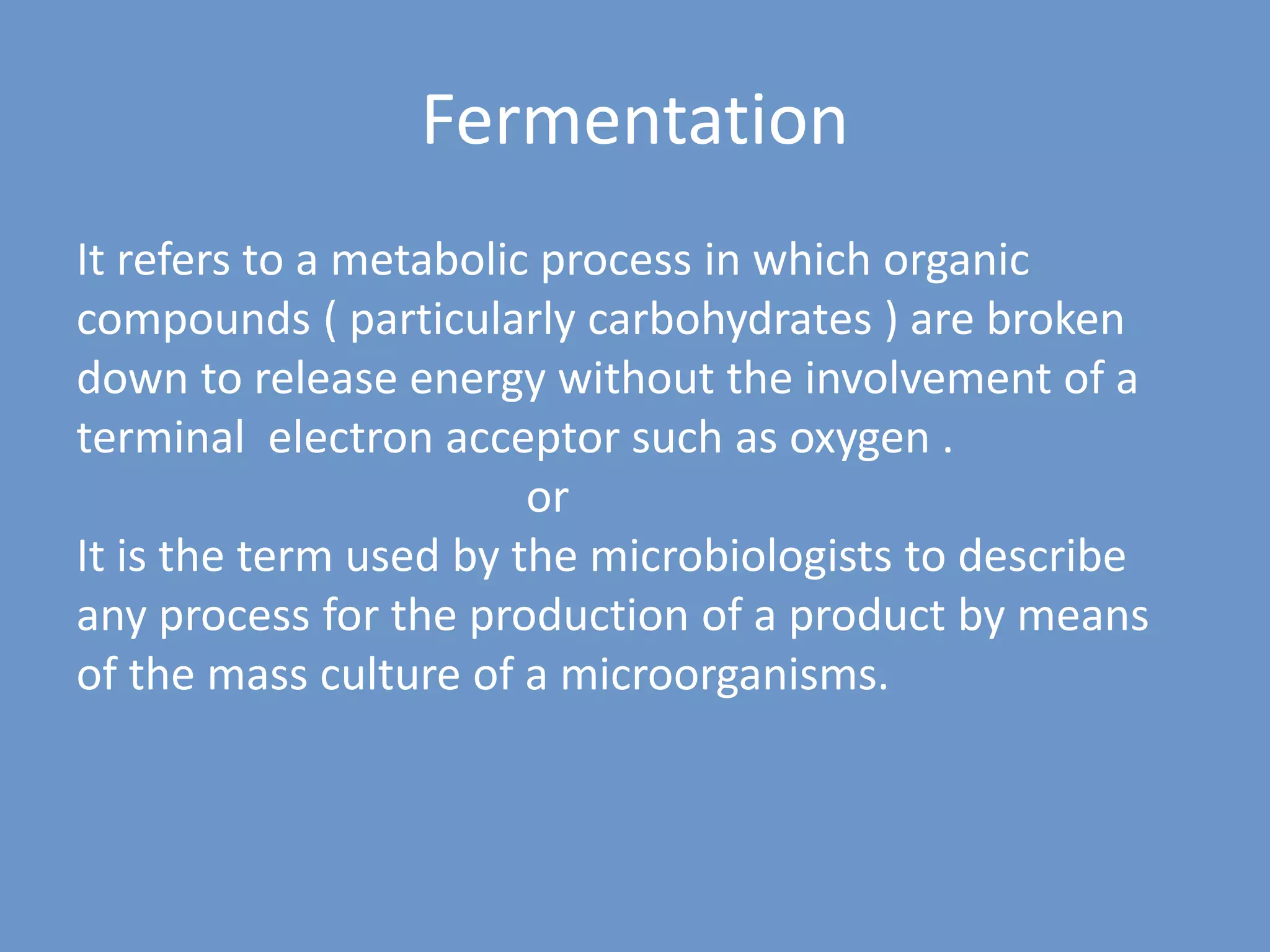
It refers to a metabolic process in which organic
compounds ( particularly carbohydrates ) are broken
down to release energy without the involvement of a
terminal electron acceptor such as oxygen .
or
It is the term used by the microbiologists to describe
any process for the production of a product by means
of the mass culture of a microorganisms.
Products can either be :
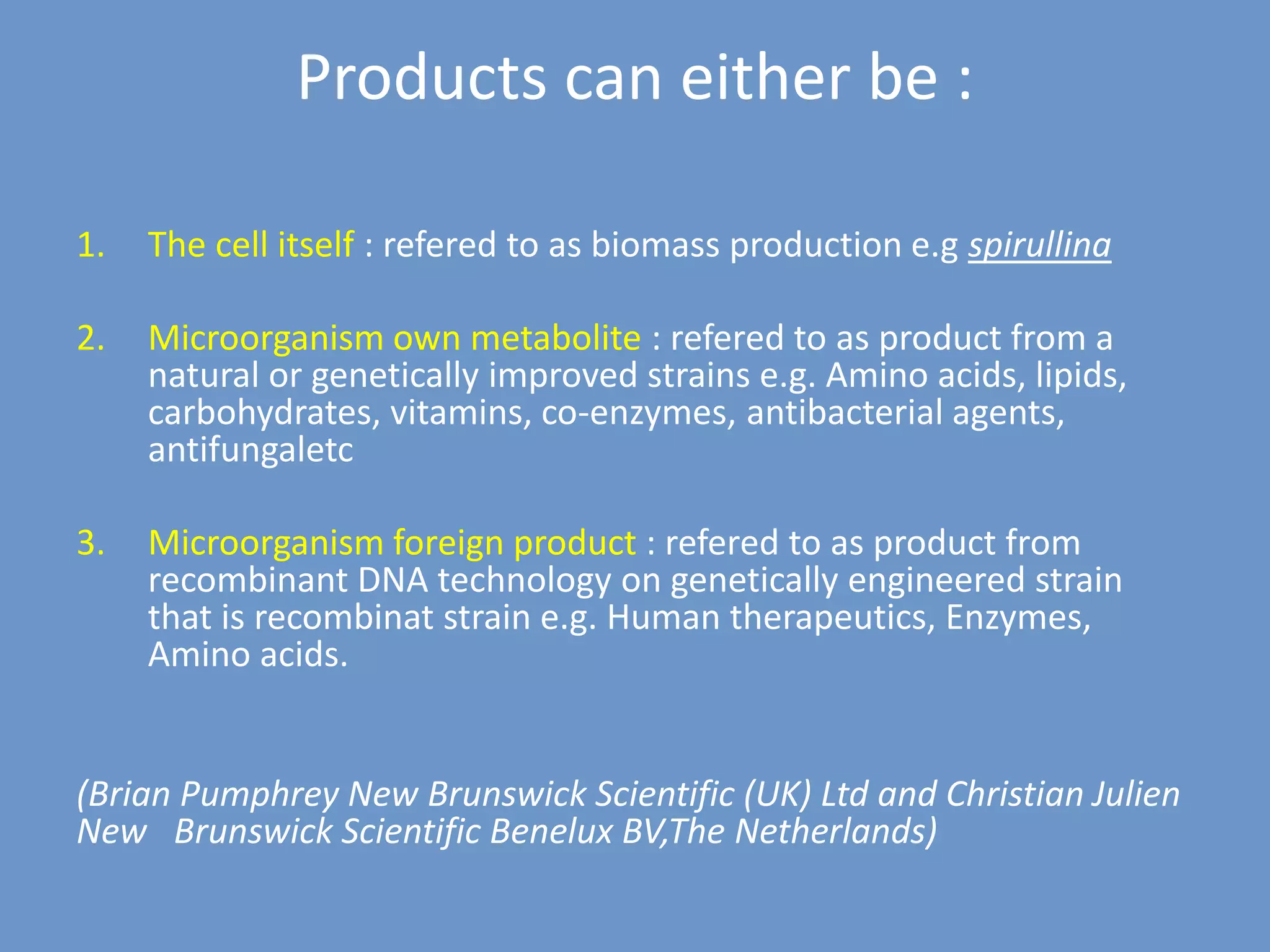
1. The cell itself : refered to as biomass production e.g spirullina
2. Microorganism own metabolite : refered to as product from a
natural or genetically improved strains e.g. Amino acids, lipids,
carbohydrates, vitamins, co-enzymes, antibacterial agents,
antifungaletc
3. Microorganism foreign product : refered to as product from
recombinant DNA technology on genetically engineered strain
that is recombinat strain e.g. Human therapeutics, Enzymes,
Amino acids.
(Brian Pumphrey New Brunswick Scientific (UK) Ltd and Christian Julien
New Brunswick Scientific Benelux BV,The Netherlands)
APPLICATIONS OF FERMENTATION
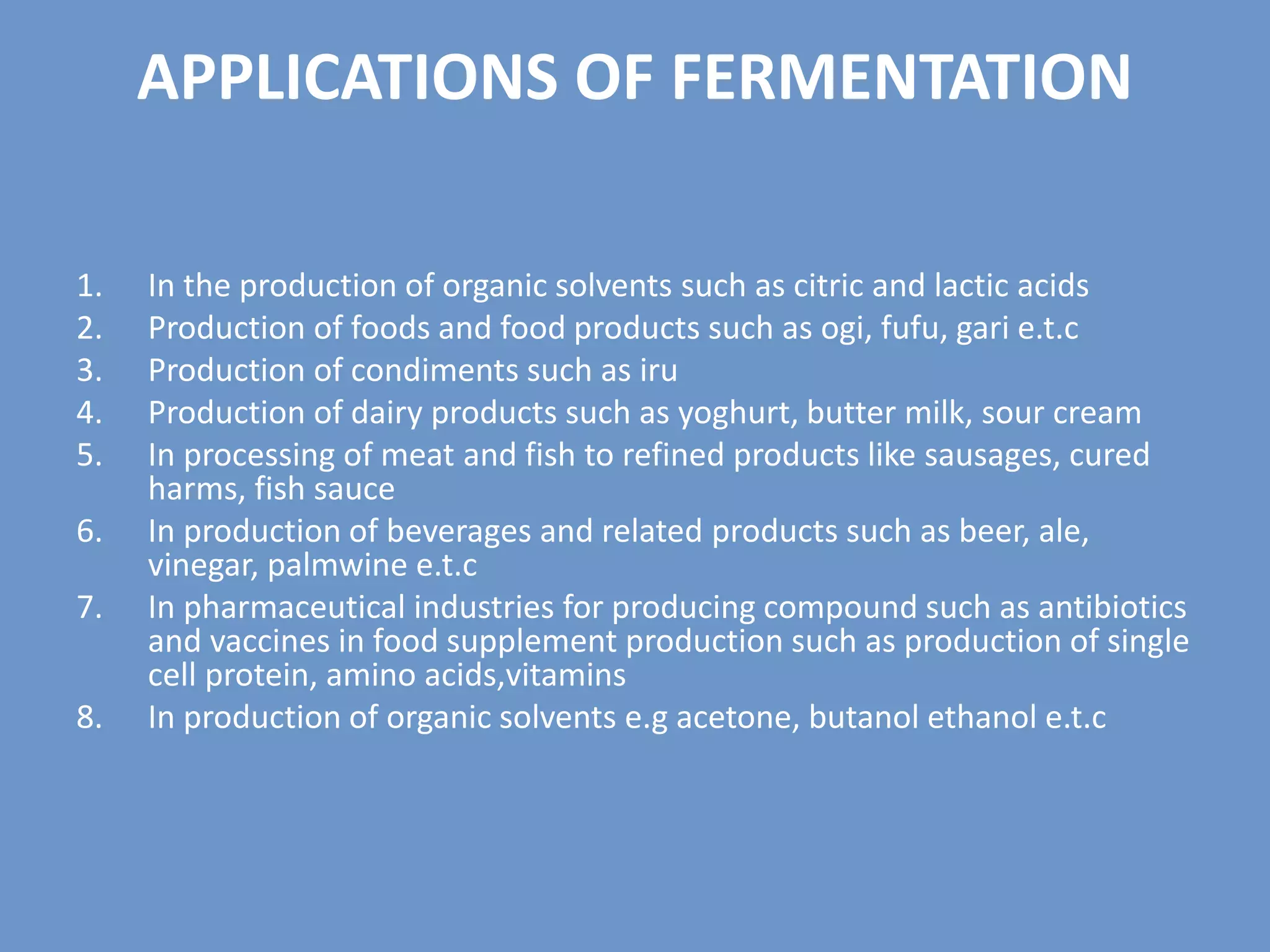
1. In the production of organic solvents such as citric and lactic acids
2. Production of foods and food products such as ogi, fufu, gari e.t.c
3. Production of condiments such as iru
4. Production of dairy products such as yoghurt, butter milk, sour cream
5. In processing of meat and fish to refined products like sausages, cured
harms, fish sauce
6. In production of beverages and related products such as beer, ale,
vinegar, palmwine e.t.c
7. In pharmaceutical industries for producing compound such as antibiotics
and vaccines in food supplement production such as production of single
cell protein, amino acids,vitamins
8. In production of organic solvents e.g acetone, butanol ethanol e.t.c
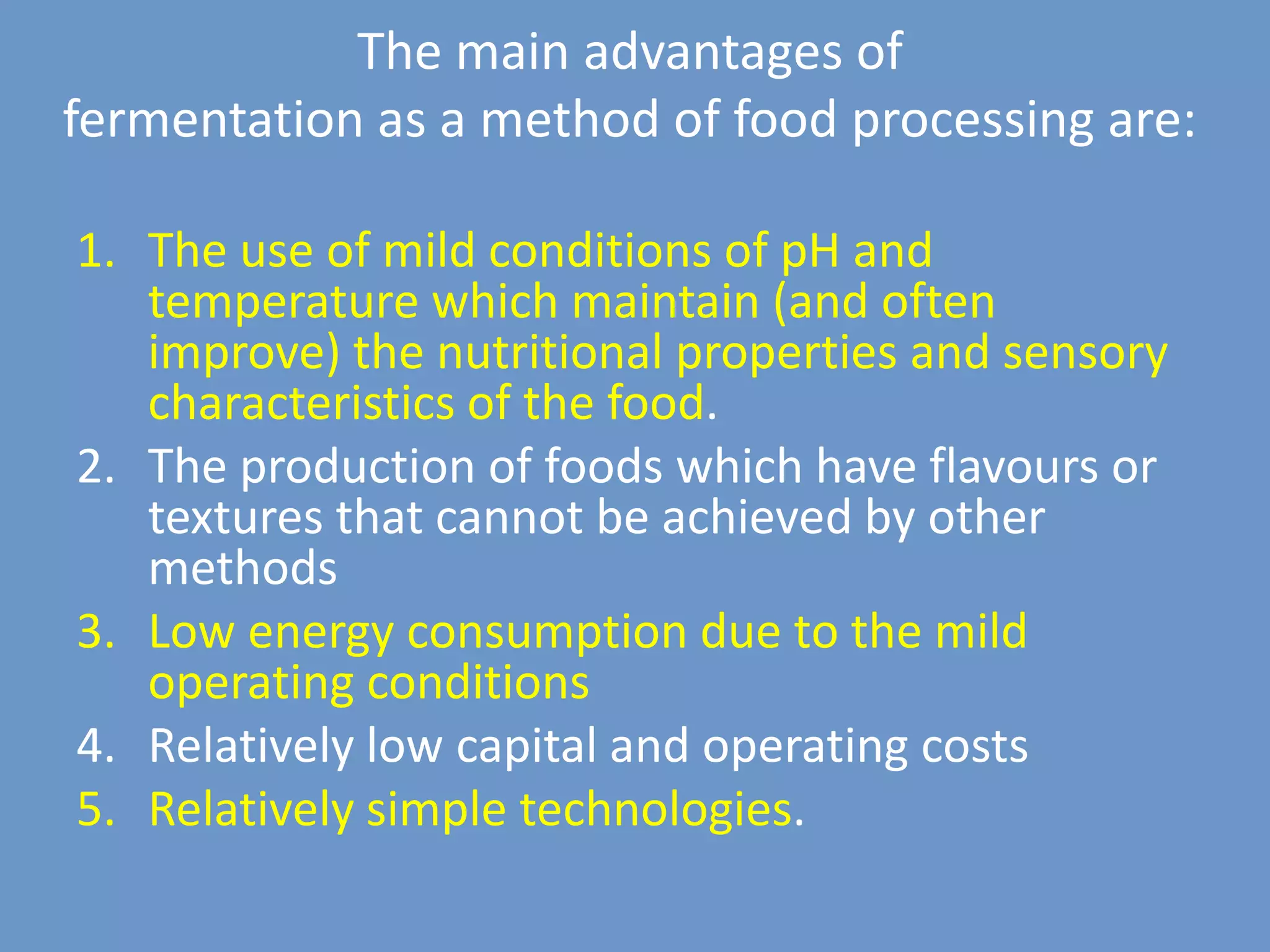
The main advantages of
fermentation as a method of food processing are:
1. The use of mild conditions of pH and
temperature which maintain (and often
improve) the nutritional properties and sensory
characteristics of the food.
2. The production of foods which have flavours or
textures that cannot be achieved by other
methods
3. Low energy consumption due to the mild
operating conditions
4. Relatively low capital and operating costs
5. Relatively simple technologies.
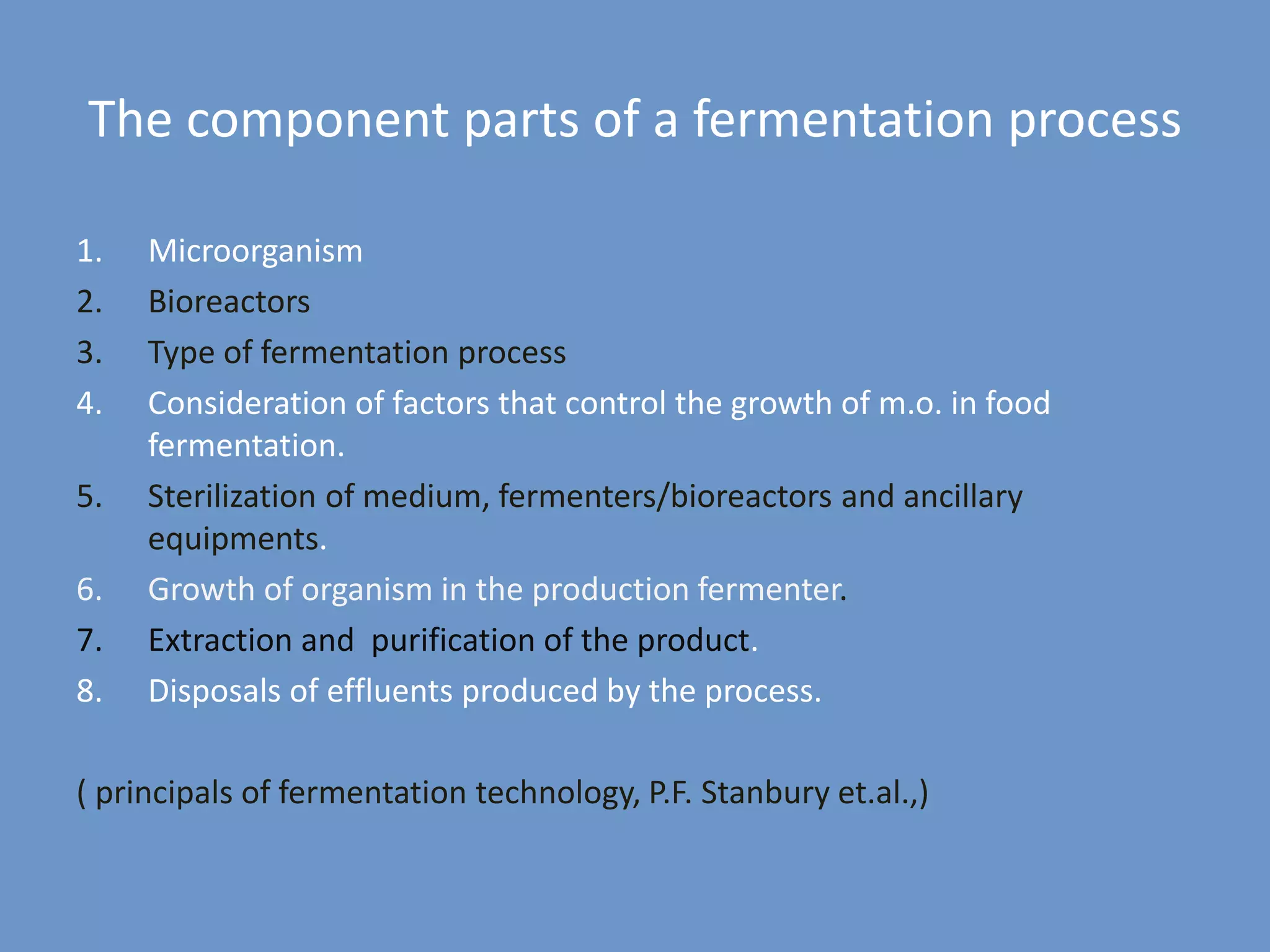
The component parts of a fermentation process
1. Microorganism
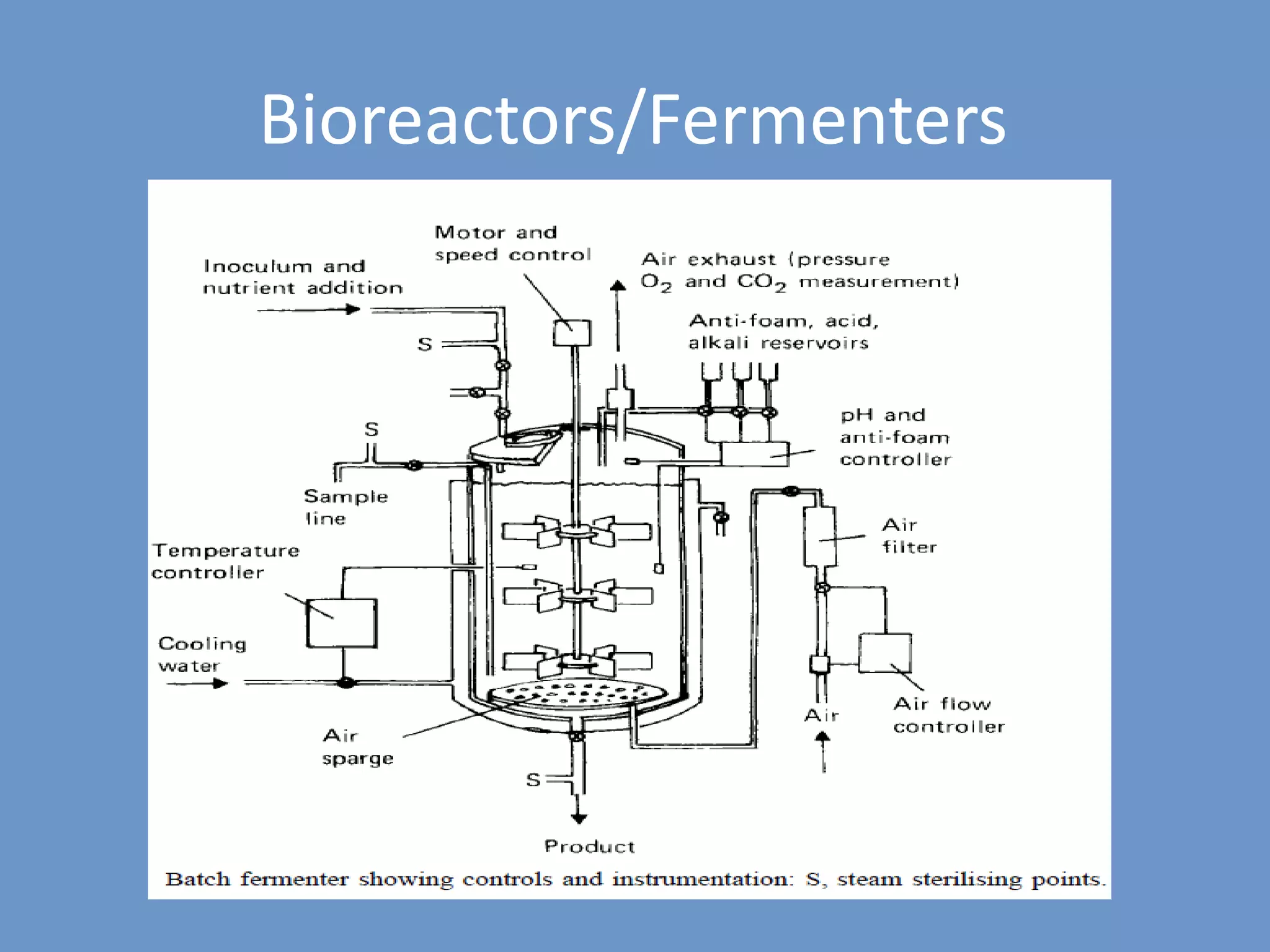
2. Bioreactors
3. Type of fermentation process
4. Consideration of factors that control the growth of m.o. in food
fermentation.
5. Sterilization of medium, fermenters/bioreactors and ancillary
equipments.
6. Growth of organism in the production fermenter.
7. Extraction and purification of the product.
8. Disposals of effluents produced by the process.
( principals of fermentation technology, P.F. Stanbury et.al.,)
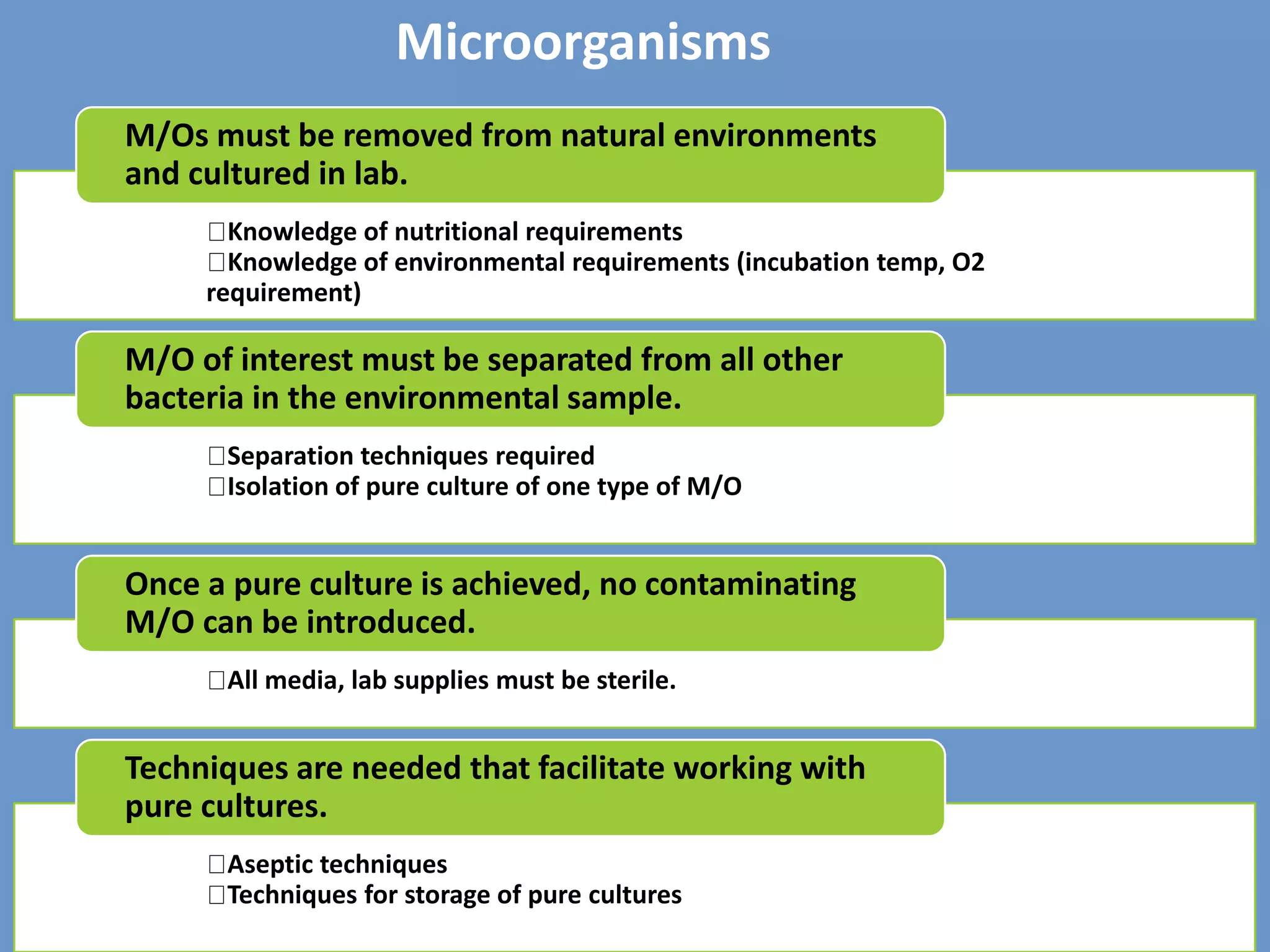
Knowledge of nutritional requirements
Knowledge of environmental requirements (incubation temp, O2
requirement)
M/Os must be removed from natural environments
and cultured in lab.
Separation techniques required
Isolation of pure culture of one type of M/O
M/O of interest must be separated from all other
bacteria in the environmental sample.
All media, lab supplies must be sterile.
Once a pure culture is achieved, no contaminating
M/O can be introduced.
Aseptic techniques
Techniques for storage of pure cultures
Techniques are needed that facilitate working with
pure cultures.
Microorganisms
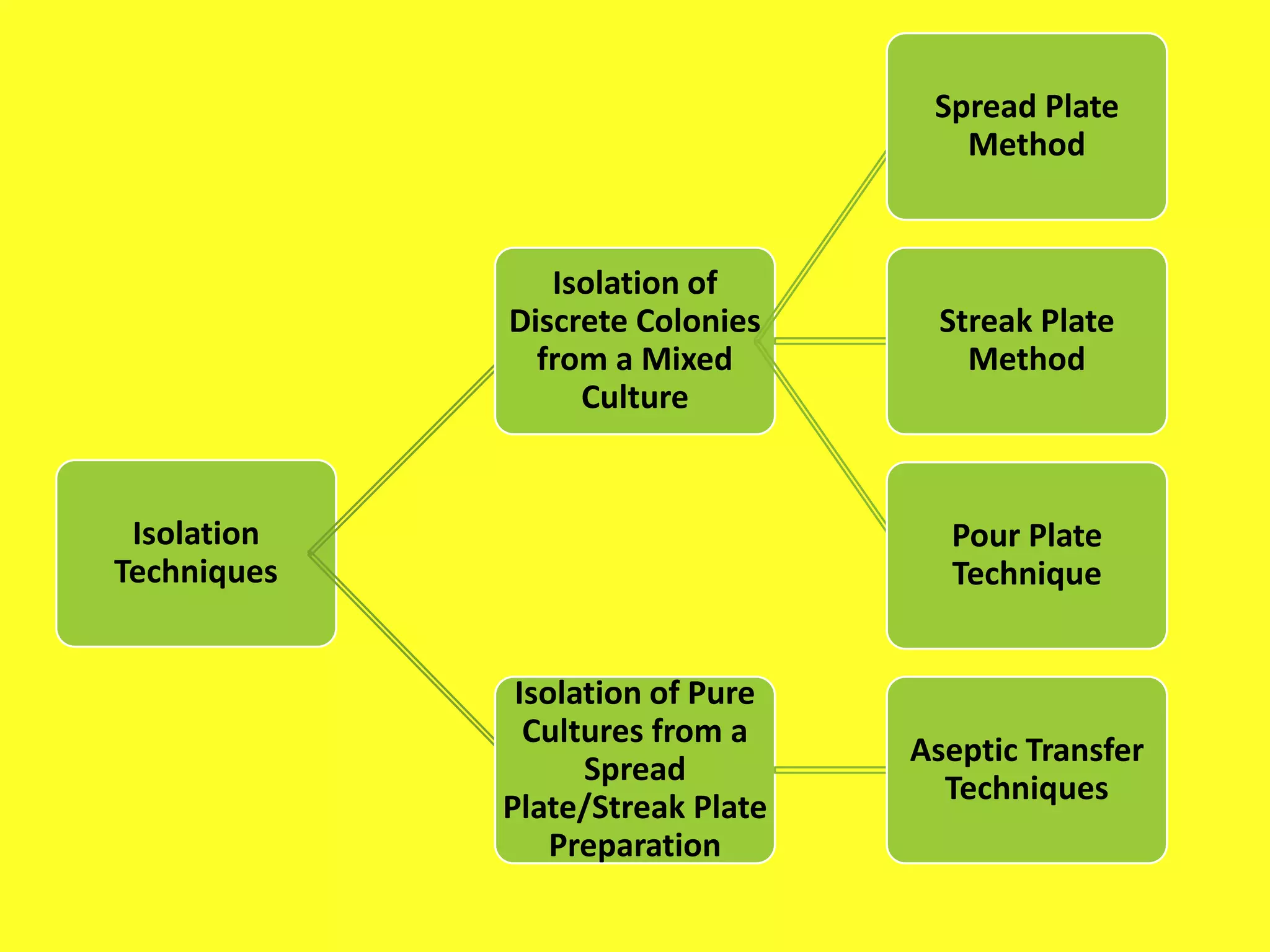
Isolation
Techniques
Isolation of
Discrete Colonies
from a Mixed
Culture
Spread Plate
Method
Streak Plate
Method
Pour Plate
Technique
Isolation of Pure
Cultures from a
Spread
Plate/Streak Plate
Preparation
Aseptic Transfer
Techniques
Bioreactors/Fermenters
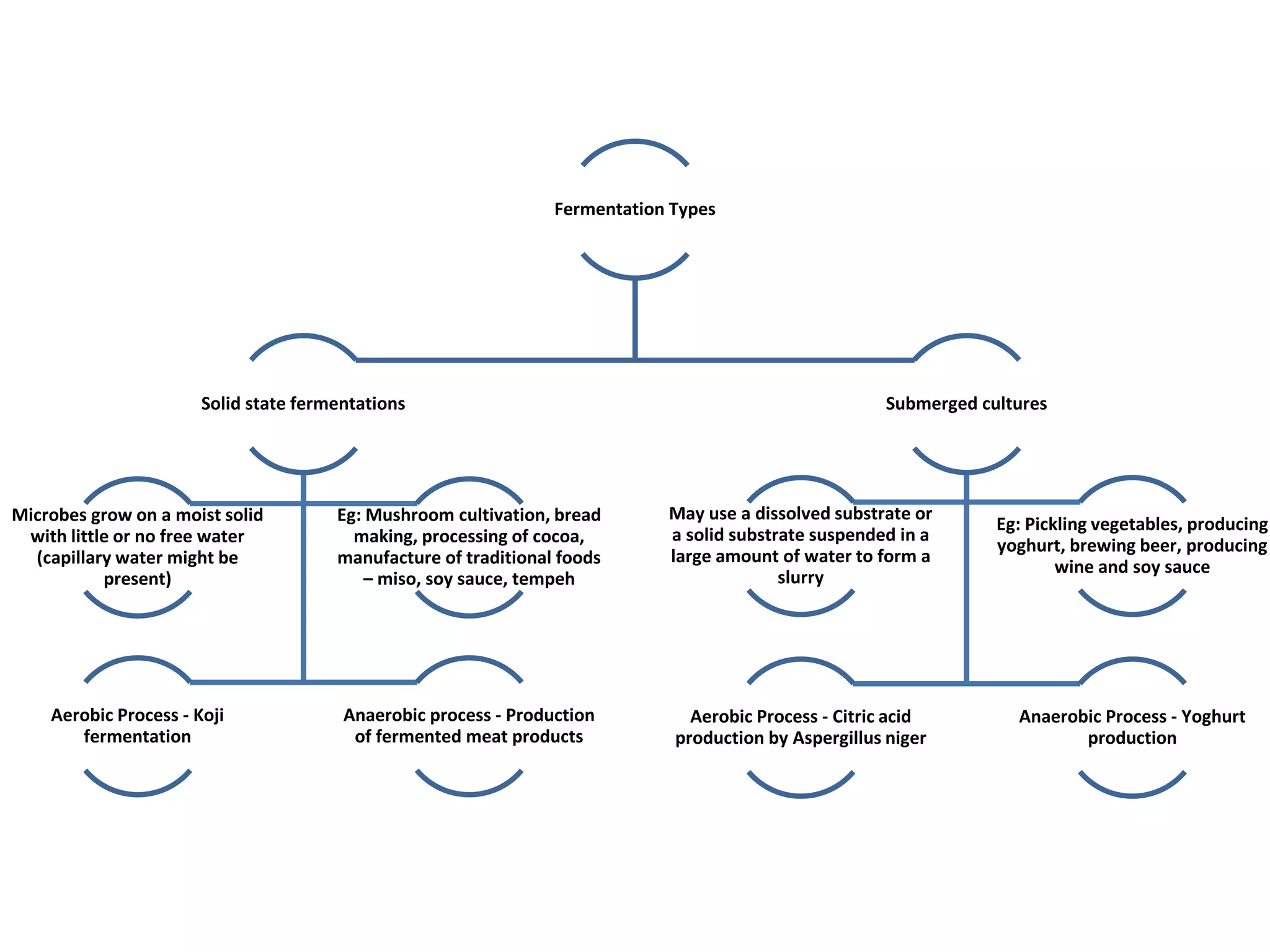
Fermentation Types
Solid state fermentations
Microbes grow on a moist solid
with little or no free water
(capillary water might be
present)
Eg: Mushroom cultivation, bread
making, processing of cocoa,
manufacture of traditional foods
– miso, soy sauce, tempeh
Aerobic Process - Koji
fermentation
Anaerobic process - Production
of fermented meat products
Submerged cultures
May use a dissolved substrate or
a solid substrate suspended in a
large amount of water to form a
slurry
Eg: Pickling vegetables, producing
yoghurt, brewing beer, producing
wine and soy sauce
Aerobic Process - Citric acid
production by Aspergillus niger
Anaerobic Process - Yoghurt
production
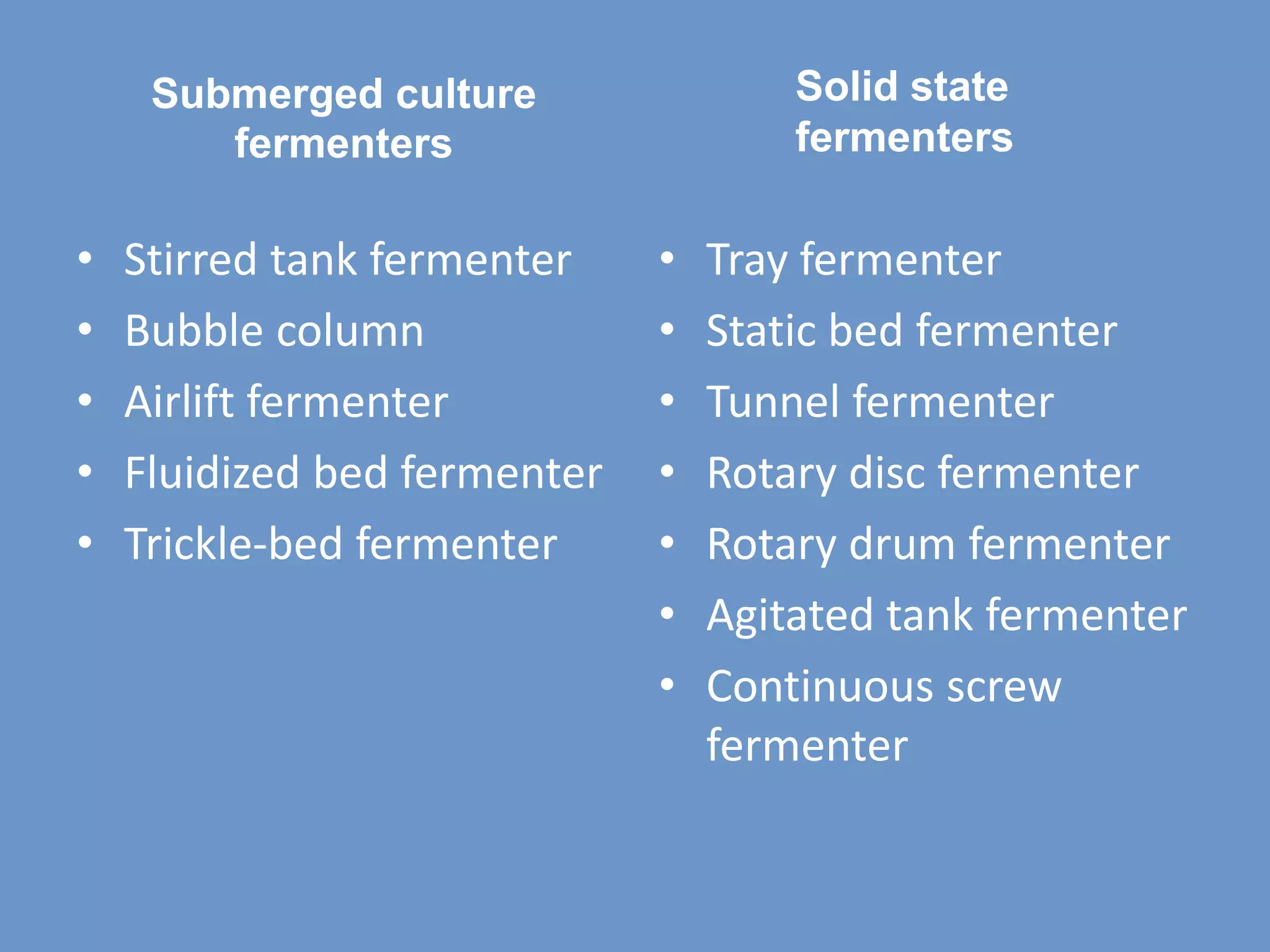
Submerged culture
fermenters
• Stirred tank fermenter
• Bubble column
• Airlift fermenter
• Fluidized bed fermenter
• Trickle-bed fermenter
• Tray fermenter
• Static bed fermenter
• Tunnel fermenter
• Rotary disc fermenter
• Rotary drum fermenter
• Agitated tank fermenter
• Continuous screw
fermenter
Solid state
fermenters
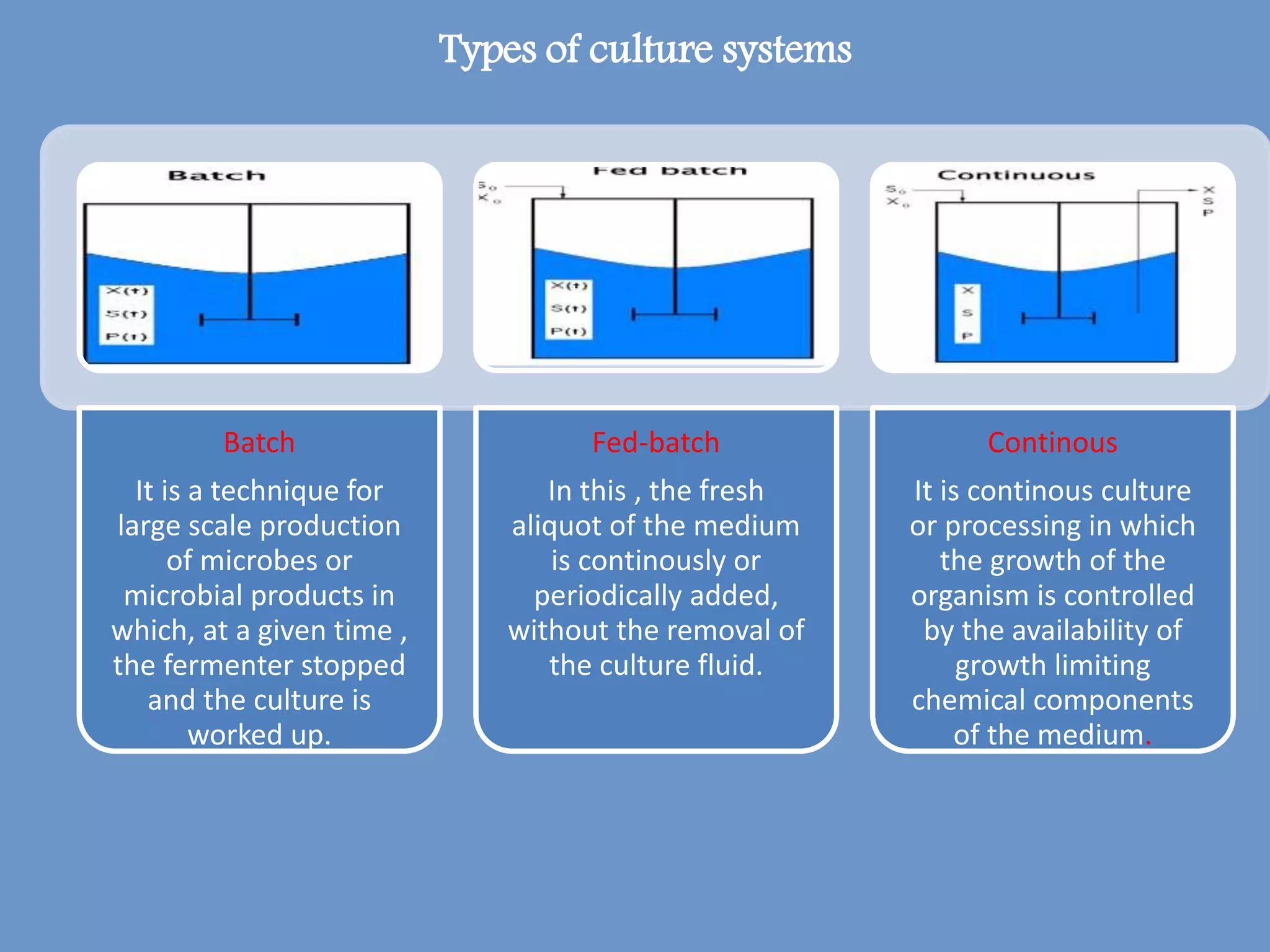
Batch
It is a technique for
large scale production
of microbes or
microbial products in
which, at a given time ,
the fermenter stopped
and the culture is
worked up.
Fed-batch
In this , the fresh
aliquot of the medium
is continously or
periodically added,
without the removal of
the culture fluid.
Continous
It is continous culture
or processing in which
the growth of the
organism is controlled
by the availability of
growth limiting
chemical components
of the medium.
Types of culture systems
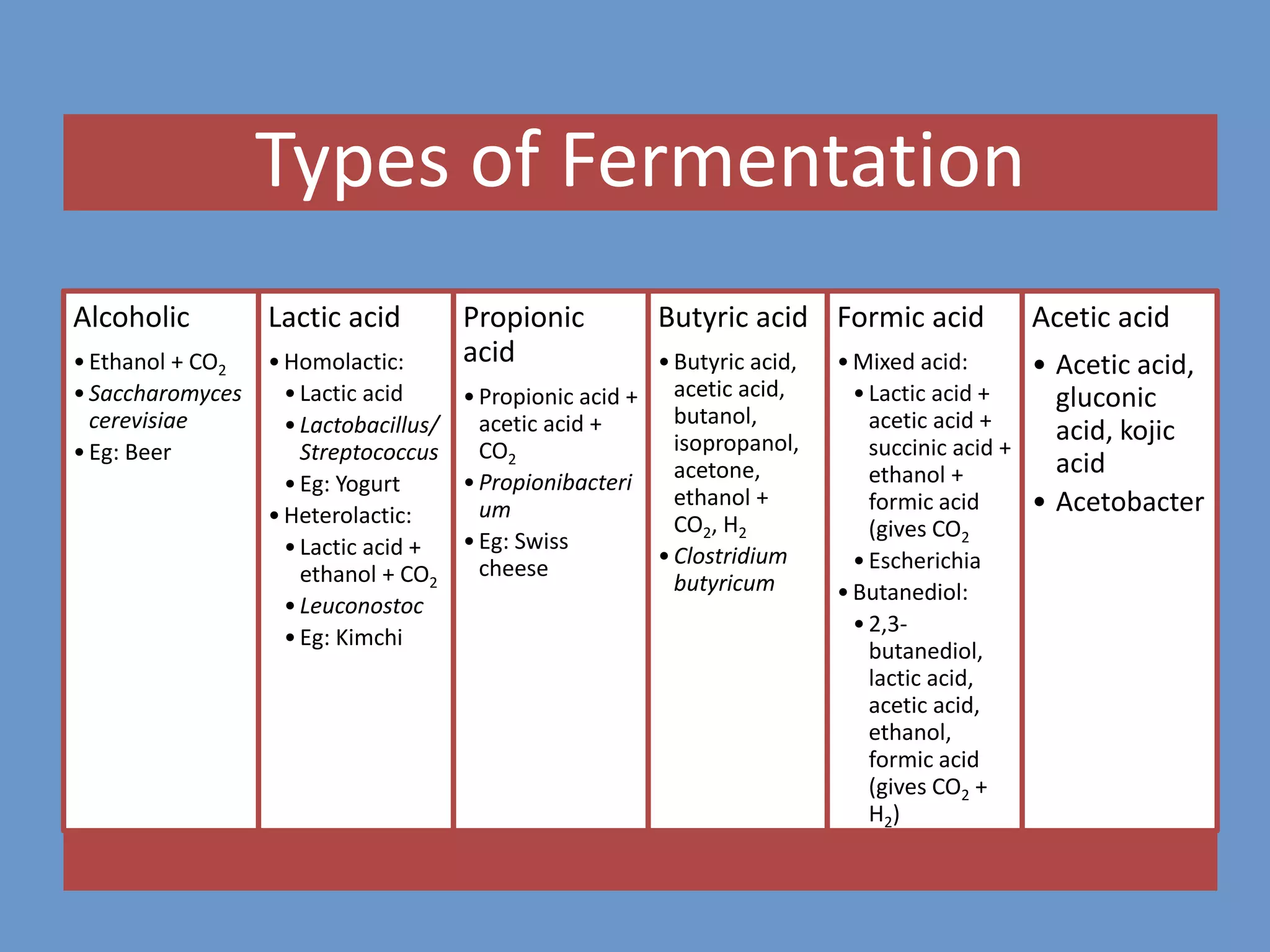
Types of Fermentation
Alcoholic
•Ethanol + CO2
•Saccharomyces
cerevisiae
•Eg: Beer
Lactic acid
•Homolactic:
•Lactic acid
•Lactobacillus/
Streptococcus
•Eg: Yogurt
•Heterolactic:
•Lactic acid +
ethanol + CO2
•Leuconostoc
•Eg: Kimchi
Propionic
acid
•Propionic acid +
acetic acid +
CO2
•Propionibacteri
um
•Eg: Swiss
cheese
Butyric acid
•Butyric acid,
acetic acid,
butanol,
isopropanol,
acetone,
ethanol +
CO2, H2
•Clostridium
butyricum
Formic acid
•Mixed acid:
•Lactic acid +
acetic acid +
succinic acid +
ethanol +
formic acid
(gives CO2
•Escherichia
•Butanediol:
•2,3-
butanediol,
lactic acid,
acetic acid,
ethanol,
formic acid
(gives CO2 +
H2)
•Klebsiella
Acetic acid
• Acetic acid,
gluconic
acid, kojic
acid
• Acetobacter
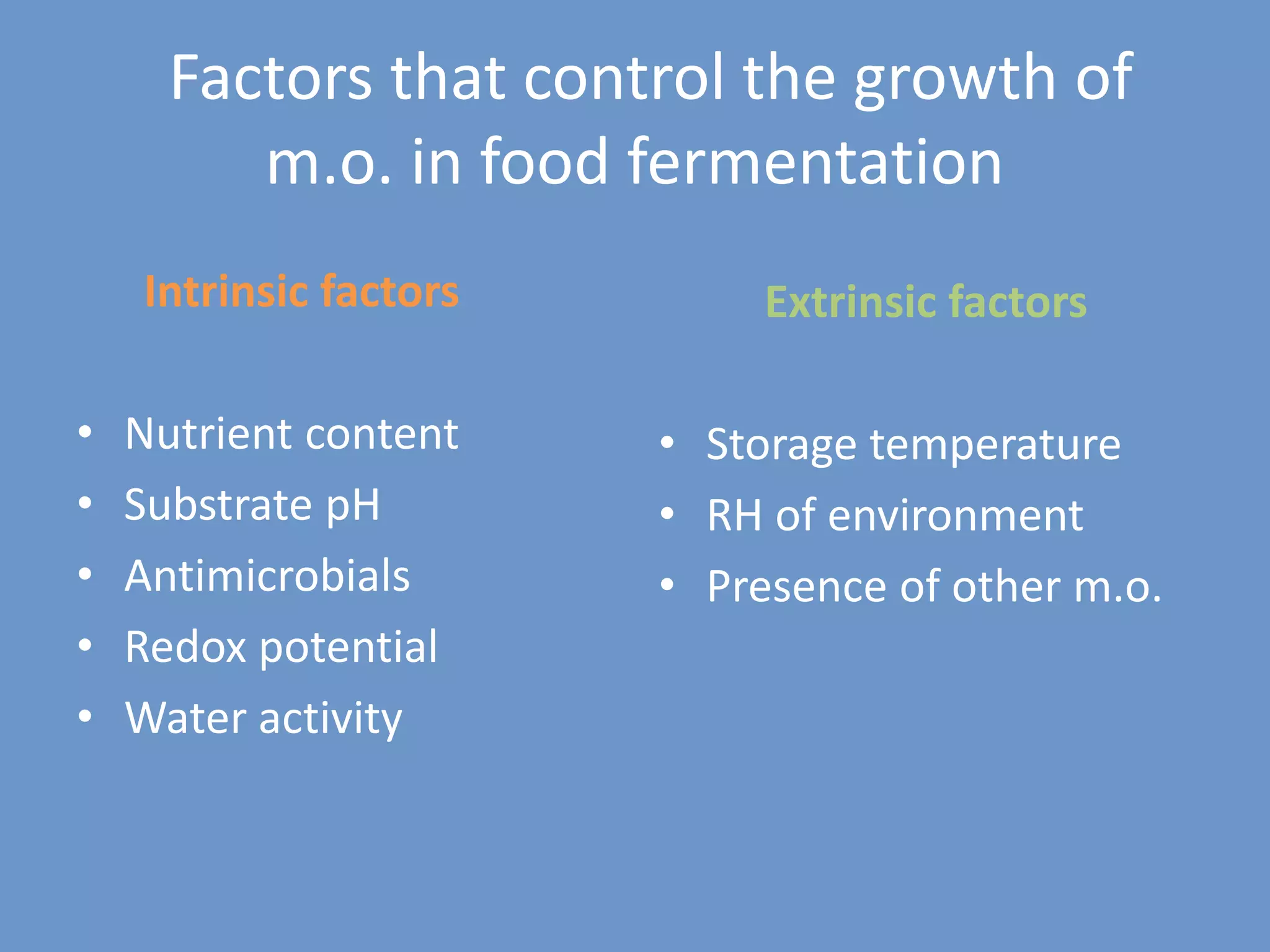
Factors that control the growth of
m.o. in food fermentation
Intrinsic factors
• Nutrient content
• Substrate pH
• Antimicrobials
• Redox potential
• Water activity
Extrinsic factors
• Storage temperature
• RH of environment
• Presence of other m.o.
References
• http://lecturenotesfree.blogspot.in/2013/03/f
ermentation.html
• principals of fermentation technology, P.F.
Stanbury et.al.,
• FOOD PROCESSING TECHNOLOGY Principles
and Practice Second Edition, P. Fellows
• https://www.researchgate.net/publication/22
5946883

Basic principles of food fermentation

  • 1.
    Basic principles offood fermentation Anchal F.T, 18/ A
  • 2.
    Fermentation It refers toa metabolic process in which organic compounds ( particularly carbohydrates ) are broken down to release energy without the involvement of a terminal electron acceptor such as oxygen . or It is the term used by the microbiologists to describe any process for the production of a product by means of the mass culture of a microorganisms.
  • 3.
    Products can eitherbe : 1. The cell itself : refered to as biomass production e.g spirullina 2. Microorganism own metabolite : refered to as product from a natural or genetically improved strains e.g. Amino acids, lipids, carbohydrates, vitamins, co-enzymes, antibacterial agents, antifungaletc 3. Microorganism foreign product : refered to as product from recombinant DNA technology on genetically engineered strain that is recombinat strain e.g. Human therapeutics, Enzymes, Amino acids. (Brian Pumphrey New Brunswick Scientific (UK) Ltd and Christian Julien New Brunswick Scientific Benelux BV,The Netherlands)
  • 4.
    APPLICATIONS OF FERMENTATION 1.In the production of organic solvents such as citric and lactic acids 2. Production of foods and food products such as ogi, fufu, gari e.t.c 3. Production of condiments such as iru 4. Production of dairy products such as yoghurt, butter milk, sour cream 5. In processing of meat and fish to refined products like sausages, cured harms, fish sauce 6. In production of beverages and related products such as beer, ale, vinegar, palmwine e.t.c 7. In pharmaceutical industries for producing compound such as antibiotics and vaccines in food supplement production such as production of single cell protein, amino acids,vitamins 8. In production of organic solvents e.g acetone, butanol ethanol e.t.c
  • 5.
    The main advantagesof fermentation as a method of food processing are: 1. The use of mild conditions of pH and temperature which maintain (and often improve) the nutritional properties and sensory characteristics of the food. 2. The production of foods which have flavours or textures that cannot be achieved by other methods 3. Low energy consumption due to the mild operating conditions 4. Relatively low capital and operating costs 5. Relatively simple technologies.
  • 6.
    The component partsof a fermentation process 1. Microorganism 2. Bioreactors 3. Type of fermentation process 4. Consideration of factors that control the growth of m.o. in food fermentation. 5. Sterilization of medium, fermenters/bioreactors and ancillary equipments. 6. Growth of organism in the production fermenter. 7. Extraction and purification of the product. 8. Disposals of effluents produced by the process. ( principals of fermentation technology, P.F. Stanbury et.al.,)
  • 7.
    Knowledge of nutritionalrequirements Knowledge of environmental requirements (incubation temp, O2 requirement) M/Os must be removed from natural environments and cultured in lab. Separation techniques required Isolation of pure culture of one type of M/O M/O of interest must be separated from all other bacteria in the environmental sample. All media, lab supplies must be sterile. Once a pure culture is achieved, no contaminating M/O can be introduced. Aseptic techniques Techniques for storage of pure cultures Techniques are needed that facilitate working with pure cultures. Microorganisms
  • 8.
    Isolation Techniques Isolation of Discrete Colonies froma Mixed Culture Spread Plate Method Streak Plate Method Pour Plate Technique Isolation of Pure Cultures from a Spread Plate/Streak Plate Preparation Aseptic Transfer Techniques
  • 9.
  • 10.
    Fermentation Types Solid statefermentations Microbes grow on a moist solid with little or no free water (capillary water might be present) Eg: Mushroom cultivation, bread making, processing of cocoa, manufacture of traditional foods – miso, soy sauce, tempeh Aerobic Process - Koji fermentation Anaerobic process - Production of fermented meat products Submerged cultures May use a dissolved substrate or a solid substrate suspended in a large amount of water to form a slurry Eg: Pickling vegetables, producing yoghurt, brewing beer, producing wine and soy sauce Aerobic Process - Citric acid production by Aspergillus niger Anaerobic Process - Yoghurt production
  • 11.
    Submerged culture fermenters • Stirredtank fermenter • Bubble column • Airlift fermenter • Fluidized bed fermenter • Trickle-bed fermenter • Tray fermenter • Static bed fermenter • Tunnel fermenter • Rotary disc fermenter • Rotary drum fermenter • Agitated tank fermenter • Continuous screw fermenter Solid state fermenters
  • 12.
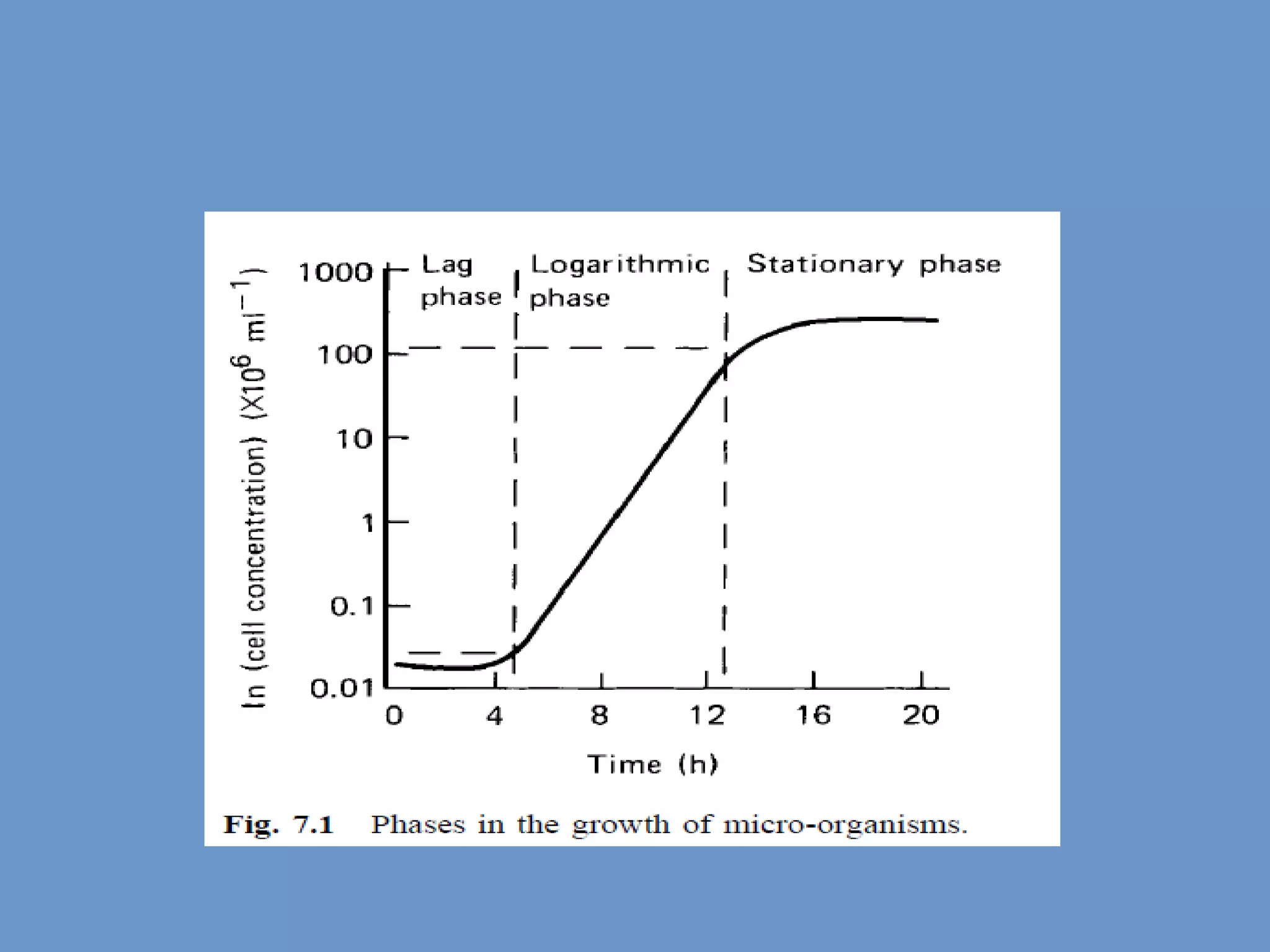
    Batch It is atechnique for large scale production of microbes or microbial products in which, at a given time , the fermenter stopped and the culture is worked up. Fed-batch In this , the fresh aliquot of the medium is continously or periodically added, without the removal of the culture fluid. Continous It is continous culture or processing in which the growth of the organism is controlled by the availability of growth limiting chemical components of the medium. Types of culture systems
  • 14.
    Types of Fermentation Alcoholic •Ethanol+ CO2 •Saccharomyces cerevisiae •Eg: Beer Lactic acid •Homolactic: •Lactic acid •Lactobacillus/ Streptococcus •Eg: Yogurt •Heterolactic: •Lactic acid + ethanol + CO2 •Leuconostoc •Eg: Kimchi Propionic acid •Propionic acid + acetic acid + CO2 •Propionibacteri um •Eg: Swiss cheese Butyric acid •Butyric acid, acetic acid, butanol, isopropanol, acetone, ethanol + CO2, H2 •Clostridium butyricum Formic acid •Mixed acid: •Lactic acid + acetic acid + succinic acid + ethanol + formic acid (gives CO2 •Escherichia •Butanediol: •2,3- butanediol, lactic acid, acetic acid, ethanol, formic acid (gives CO2 + H2) •Klebsiella Acetic acid • Acetic acid, gluconic acid, kojic acid • Acetobacter
  • 15.
    Factors that controlthe growth of m.o. in food fermentation Intrinsic factors • Nutrient content • Substrate pH • Antimicrobials • Redox potential • Water activity Extrinsic factors • Storage temperature • RH of environment • Presence of other m.o.
  • 16.
    References • http://lecturenotesfree.blogspot.in/2013/03/f ermentation.html • principalsof fermentation technology, P.F. Stanbury et.al., • FOOD PROCESSING TECHNOLOGY Principles and Practice Second Edition, P. Fellows • https://www.researchgate.net/publication/22 5946883