Grammar Book Felipe-5th
La Mesa de Content Preterito Trigger palabras Car, Gar, Zar Spock Cucaracha Snake Snakey Imperfecto Trigger palapras Irregulares Preterito vs. Imperfecto Ser vs. Estar Verbs like gustar Comparatives/superlatives Transition palabras El Futuro Trigger palabras Irregulares Por Para Demonstrative adjectives Demonstrative pronouns
El preterito aron/ieron Ellos/ Ellas/ Ustedes ó/ió Él/ Ella/ Usted aste/iste Tú amos/imos Nosotros é/í Yo
Trigger Palabras Anoche- Last night Ayer- Yesterday Anteayer- Day before yesterday El año pasado- Last year La semana pasada- Last week
Car, Gar, Zar Verbs ending in –car, -gar, or –zar change the ending in the preterito conjugation of the yo form to preserve the sound of the verb. -ce -zar -gue -gar -que -car
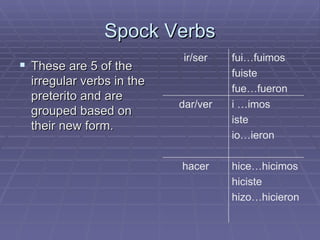
Spock Verbs These are 5 of the irregular verbs in the preterito and are grouped based on their new form. hice…hicimos hiciste hizo…hicieron hacer i …imos iste io…ieron dar/ver fui…fuimos fuiste fue…fueron ir/ser
Cucaracha Verbs These are another set of the irregular preterito verbs. Andar, Estar, Poder, Poner, Querer, Saber, Tener, Venir, Decir, Conducir, Traducir, Producir, Traer These verbs take the following forms, Anduv, Estuv, Pud, Pus, Quis, Sup, Tuv, Vin, Dij, Produj, Traj. And all use the following endings: é, iste, ó, imos, ieron
Snake Verbs These are another form of irregular preterito verbs. These verbs change in the third person singular and plural forms, and include:  (e ►i): Pedir, Preferir, Competir, Repetir, Servir, Sentir (o ►u): Dormir, Morir Sirven Durmen Sirve Durme Serviste Dormiste Servimos Dormimos Serví Dormí
Snakey verbs These are another form of irregular preterito verbs. These verbs change in the third person singular and plural forms, and include: (e/i ► y): Leer, Creer, and Oir All use the same endings. Leyeron Leyó Leíste Leímos Leí
El Imperfecto aban/ían Ellos/ Ellas/ Ustedes aba/ ía Él/ Ella/ Usted abas/ías Tú abamos/íamos Nosotros aba/ía Yo
Trigger Palabras A veces- sometimes Cada día- everyday Todo los días- everyday Siempre- always Mientras- meanwhile Cuando- when De vez en cuando- once in a while
Irregulares The irregulars of the imperfecto tense are: Ir, Ser, and Ver. Iban Eran Veían Iba Era Veía Ibas Eras Veías Íbamos Éramos Veíamos Iba Era Veía
Preterito vs. Imperfecto Shows a completed action in the past Events in a sequence Used for specific events in the past Repeated actions (specific number of times) “ Picture” Shows an incomplete action in the past Continuous story Describing characteristics or state of something. Repeated actions (habitual reptetion of said actions) “ Movie”
Ser vs. Estar D- Description O- Occupation C- Characteristics T- Time O- Origin R- Relationship P- Possession E- Events D- Dates H- Health E- Emotions L- Location P- Present condition ING-  (er) -endo (ir) -yendo (ar) -ando
Verbs like Gustar These verbs are used in conjunction with direct and indirect objects to show a relation If the noun is singular or the verb is followed by one or more infinitive verbs, then use the singular form of the verb. If the noun is plural, then us the plural form of the verb. These verbs include: Aburrir, Encantar, Faltar, Fascinar, Importar, Interesar, Molestar, Quedar, Dolar, Disgustar, Preocupar, Sorprender, Apetecer. These verbs can also be used in conjunction with the conditional tense.
Comparatives and Superlatives These are used to compare and contrast. Expressions are set up using: Más… que/de (de= #) Menos… que/de (de= #) Tan… como El/ La … Mejor (bueno), Peor (malo), Mayor (viejo), Menor (joven)
Transition Palabras Aunque- even though Támbien- also Por lo tanto- therefore Sin embargo- nevertheless Pero- but Mientras- contrast to A pensar de- in spite of
El Futuro Note: these verbs are formed as infinitive + ending án Ellos/ Ellas/ Ustedes á Él/ Ella/ Usted ás Tú emos Nosotros é Yo
Trigger Palabras Mañana- Tomorrow El proximo año- next year El proximo semana- next week En (tiempo)- In (x) time increments En cuatro minutos En noventa y cinco semanas.
Irregulares Some of the irregular verbs in the future tense include: Decir, Hacer, Poner, Salir, Tener, Valer, Venir, Poder, Querer, Saber, Caber, Haber The irregular roots of these words are: Dir, Har, Pondr, Saldr, Tendr, Valdr, Vendr, Podr, Querr, Sabr, Cabr, Habr Hay es habrá = there will be
Por This is one of the forms of “for” and is used for the following cases: Passing through a portal General location How long something lasts Cause of something An exchange Doing something in place of or instead of someone else A means of transportation
Para This is one of the forms of “for” and is used for the following cases: For whom something is done Destination (specific location) Purpose for which something is done Express an opinion Compare and contrast Express idea of deadlines

Grammar book

  • 1.
  • 2.
    La Mesa deContent Preterito Trigger palabras Car, Gar, Zar Spock Cucaracha Snake Snakey Imperfecto Trigger palapras Irregulares Preterito vs. Imperfecto Ser vs. Estar Verbs like gustar Comparatives/superlatives Transition palabras El Futuro Trigger palabras Irregulares Por Para Demonstrative adjectives Demonstrative pronouns
  • 3.
    El preterito aron/ieronEllos/ Ellas/ Ustedes ó/ió Él/ Ella/ Usted aste/iste Tú amos/imos Nosotros é/í Yo
  • 4.
    Trigger Palabras Anoche-Last night Ayer- Yesterday Anteayer- Day before yesterday El año pasado- Last year La semana pasada- Last week
  • 5.
    Car, Gar, ZarVerbs ending in –car, -gar, or –zar change the ending in the preterito conjugation of the yo form to preserve the sound of the verb. -ce -zar -gue -gar -que -car
  • 6.
    Spock Verbs Theseare 5 of the irregular verbs in the preterito and are grouped based on their new form. hice…hicimos hiciste hizo…hicieron hacer i …imos iste io…ieron dar/ver fui…fuimos fuiste fue…fueron ir/ser
  • 7.
    Cucaracha Verbs Theseare another set of the irregular preterito verbs. Andar, Estar, Poder, Poner, Querer, Saber, Tener, Venir, Decir, Conducir, Traducir, Producir, Traer These verbs take the following forms, Anduv, Estuv, Pud, Pus, Quis, Sup, Tuv, Vin, Dij, Produj, Traj. And all use the following endings: é, iste, ó, imos, ieron
  • 8.
    Snake Verbs Theseare another form of irregular preterito verbs. These verbs change in the third person singular and plural forms, and include: (e ►i): Pedir, Preferir, Competir, Repetir, Servir, Sentir (o ►u): Dormir, Morir Sirven Durmen Sirve Durme Serviste Dormiste Servimos Dormimos Serví Dormí
  • 9.
    Snakey verbs Theseare another form of irregular preterito verbs. These verbs change in the third person singular and plural forms, and include: (e/i ► y): Leer, Creer, and Oir All use the same endings. Leyeron Leyó Leíste Leímos Leí
  • 10.
    El Imperfecto aban/íanEllos/ Ellas/ Ustedes aba/ ía Él/ Ella/ Usted abas/ías Tú abamos/íamos Nosotros aba/ía Yo
  • 11.
    Trigger Palabras Aveces- sometimes Cada día- everyday Todo los días- everyday Siempre- always Mientras- meanwhile Cuando- when De vez en cuando- once in a while
  • 12.
    Irregulares The irregularsof the imperfecto tense are: Ir, Ser, and Ver. Iban Eran Veían Iba Era Veía Ibas Eras Veías Íbamos Éramos Veíamos Iba Era Veía
  • 13.
    Preterito vs. ImperfectoShows a completed action in the past Events in a sequence Used for specific events in the past Repeated actions (specific number of times) “ Picture” Shows an incomplete action in the past Continuous story Describing characteristics or state of something. Repeated actions (habitual reptetion of said actions) “ Movie”
  • 14.
    Ser vs. EstarD- Description O- Occupation C- Characteristics T- Time O- Origin R- Relationship P- Possession E- Events D- Dates H- Health E- Emotions L- Location P- Present condition ING- (er) -endo (ir) -yendo (ar) -ando
  • 15.
    Verbs like GustarThese verbs are used in conjunction with direct and indirect objects to show a relation If the noun is singular or the verb is followed by one or more infinitive verbs, then use the singular form of the verb. If the noun is plural, then us the plural form of the verb. These verbs include: Aburrir, Encantar, Faltar, Fascinar, Importar, Interesar, Molestar, Quedar, Dolar, Disgustar, Preocupar, Sorprender, Apetecer. These verbs can also be used in conjunction with the conditional tense.
  • 16.
    Comparatives and SuperlativesThese are used to compare and contrast. Expressions are set up using: Más… que/de (de= #) Menos… que/de (de= #) Tan… como El/ La … Mejor (bueno), Peor (malo), Mayor (viejo), Menor (joven)
  • 17.
    Transition Palabras Aunque-even though Támbien- also Por lo tanto- therefore Sin embargo- nevertheless Pero- but Mientras- contrast to A pensar de- in spite of
  • 18.
    El Futuro Note:these verbs are formed as infinitive + ending án Ellos/ Ellas/ Ustedes á Él/ Ella/ Usted ás Tú emos Nosotros é Yo
  • 19.
    Trigger Palabras Mañana-Tomorrow El proximo año- next year El proximo semana- next week En (tiempo)- In (x) time increments En cuatro minutos En noventa y cinco semanas.
  • 20.
    Irregulares Some ofthe irregular verbs in the future tense include: Decir, Hacer, Poner, Salir, Tener, Valer, Venir, Poder, Querer, Saber, Caber, Haber The irregular roots of these words are: Dir, Har, Pondr, Saldr, Tendr, Valdr, Vendr, Podr, Querr, Sabr, Cabr, Habr Hay es habrá = there will be
  • 21.
    Por This isone of the forms of “for” and is used for the following cases: Passing through a portal General location How long something lasts Cause of something An exchange Doing something in place of or instead of someone else A means of transportation
  • 22.
    Para This isone of the forms of “for” and is used for the following cases: For whom something is done Destination (specific location) Purpose for which something is done Express an opinion Compare and contrast Express idea of deadlines