+
cells 101
A recap on cells…
+
Learning objective:
To understand the components and function of
plant and animal cells.
Starter: What is a cell?--- Create a definition in
pairs.
+
Learning objective:
To understand the components and function of
plant and animal cells.
Starter: What is a cell?--- Create a definition in
pairs.
A self-replicating unit that may exist as a functional
independent unit of life (as in the case of unicellular
organism), or as sub-unit in a multicellular organism (such
as in plants and animals) that is specialized into carrying
out particular functions towards the cause of the organism
as a whole.
+
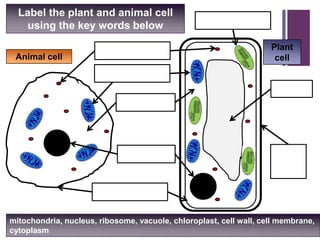
mitochondria, nucleus, ribosome, vacuole, chloroplast, cell wall, cell membrane,
cytoplasm
Label the plant and animal cell
using the key words below
Animal cell
Plant
cell
+
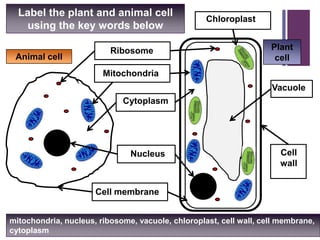
mitochondria, nucleus, ribosome, vacuole, chloroplast, cell wall, cell membrane,
cytoplasm
Chloroplast
Vacuole
Cell
wall
Cell membrane
Nucleus
Cytoplasm
Mitochondria
Ribosome
Label the plant and animal cell
using the key words below
Animal cell
Plant
cell
+Roles of each structure in the cell
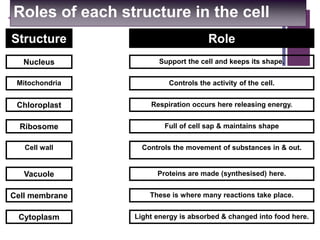
Structure Role
Nucleus Support the cell and keeps its shape.
Mitochondria Controls the activity of the cell.
Chloroplast Respiration occurs here releasing energy.
Ribosome Full of cell sap & maintains shape
Cell wall Controls the movement of substances in & out.
Vacuole Proteins are made (synthesised) here.
Cell membrane These is where many reactions take place.
Cytoplasm Light energy is absorbed & changed into food here.
+Roles of each structure in the cell
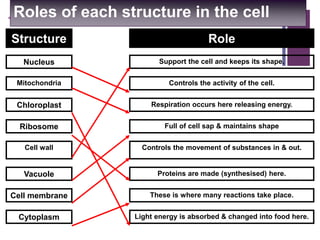
Structure Role
Nucleus Support the cell and keeps its shape.
Mitochondria Controls the activity of the cell.
Chloroplast Respiration occurs here releasing energy.
Ribosome Full of cell sap & maintains shape
Cell wall Controls the movement of substances in & out.
Vacuole Proteins are made (synthesised) here.
Cell membrane These is where many reactions take place.
Cytoplasm Light energy is absorbed & changed into food here.
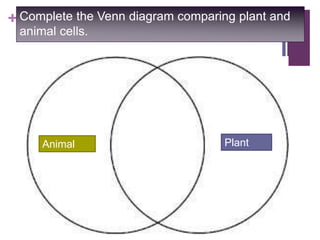
+ Complete the Venn diagram comparing plant and
animal cells.
Animal
Cell
Plant
Cell
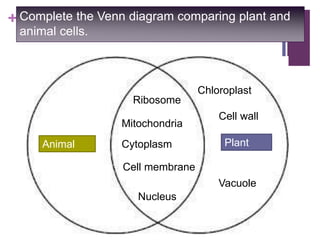
+ Complete the Venn diagram comparing plant and
animal cells.
Animal
Cell
Plant
Cell
Ribosome
Mitochondria
Cytoplasm
Nucleus
Cell membrane
Chloroplast
Vacuole
Cell wall
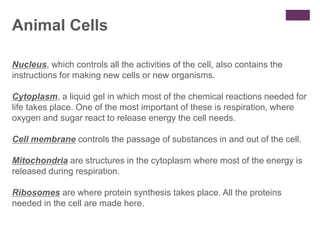
Nucleus, which controls all the activities of the cell, also contains the
instructions for making new cells or new organisms.
Cytoplasm, a liquid gel in which most of the chemical reactions needed for
life takes place. One of the most important of these is respiration, where
oxygen and sugar react to release energy the cell needs.
Cell membrane controls the passage of substances in and out of the cell.
Mitochondria are structures in the cytoplasm where most of the energy is
released during respiration.
Ribosomes are where protein synthesis takes place. All the proteins
needed in the cell are made here.
Animal Cells
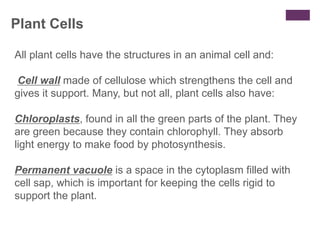
Plant Cells
All plant cells have the structures in an animal cell and:
Cell wall made of cellulose which strengthens the cell and
gives it support. Many, but not all, plant cells also have:
Chloroplasts, found in all the green parts of the plant. They
are green because they contain chlorophyll. They absorb
light energy to make food by photosynthesis.
Permanent vacuole is a space in the cytoplasm filled with
cell sap, which is important for keeping the cells rigid to
support the plant.
Chemical reactions that take place in cells are controlled by
enzymes. Each enzyme, which are proteins, typically control one
specific reaction.
Enzymes that control different functions are found in different
structures of a cell.
Mitochondria formed enzymes control respiration.
Chloroplasts form enzymes which control photosynthesis.
Protein synthesis enzymes are found on the surface of ribosomes.
+
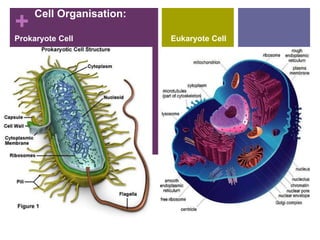
Cell Organisation:
Prokaryote Cell Eukaryote Cell
+
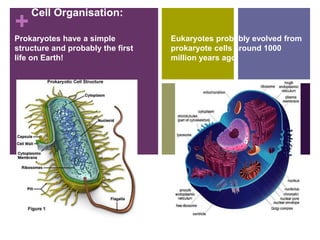
Cell Organisation:
Prokaryotes have a simple
structure and probably the first
life on Earth!
Eukaryotes probably evolved from
prokaryote cells around 1000
million years ago!
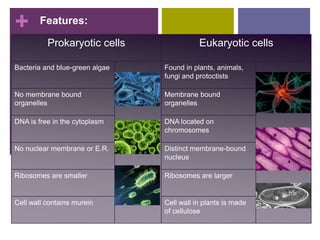
+ Features:
Prokaryotic cells Eukaryotic cells
Bacteria and blue-green algae Found in plants, animals,
fungi and protoctists
No membrane bound
organelles
Membrane bound
organelles
DNA is free in the cytoplasm DNA located on
chromosomes
No nuclear membrane or E.R. Distinct membrane-bound
nucleus
Ribosomes are smaller Ribosomes are larger
Cell wall contains murein Cell wall in plants is made
of cellulose
+
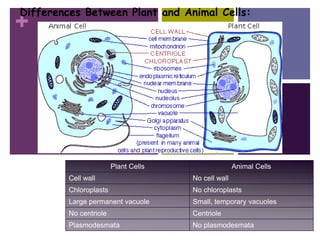
Differences Between Plant and Animal Cells:
Plant Cells Animal Cells
Cell wall No cell wall
Chloroplasts No chloroplasts
Large permanent vacuole Small, temporary vacuoles
No centriole Centriole
Plasmodesmata No plasmodesmata

Grade 12 lesson 1 intro slideshare

  • 1.
  • 2.
    + Learning objective: To understandthe components and function of plant and animal cells. Starter: What is a cell?--- Create a definition in pairs.
  • 3.
    + Learning objective: To understandthe components and function of plant and animal cells. Starter: What is a cell?--- Create a definition in pairs. A self-replicating unit that may exist as a functional independent unit of life (as in the case of unicellular organism), or as sub-unit in a multicellular organism (such as in plants and animals) that is specialized into carrying out particular functions towards the cause of the organism as a whole.
  • 4.
    + mitochondria, nucleus, ribosome,vacuole, chloroplast, cell wall, cell membrane, cytoplasm Label the plant and animal cell using the key words below Animal cell Plant cell
  • 5.
    + mitochondria, nucleus, ribosome,vacuole, chloroplast, cell wall, cell membrane, cytoplasm Chloroplast Vacuole Cell wall Cell membrane Nucleus Cytoplasm Mitochondria Ribosome Label the plant and animal cell using the key words below Animal cell Plant cell
  • 6.
    +Roles of eachstructure in the cell Structure Role Nucleus Support the cell and keeps its shape. Mitochondria Controls the activity of the cell. Chloroplast Respiration occurs here releasing energy. Ribosome Full of cell sap & maintains shape Cell wall Controls the movement of substances in & out. Vacuole Proteins are made (synthesised) here. Cell membrane These is where many reactions take place. Cytoplasm Light energy is absorbed & changed into food here.
  • 7.
    +Roles of eachstructure in the cell Structure Role Nucleus Support the cell and keeps its shape. Mitochondria Controls the activity of the cell. Chloroplast Respiration occurs here releasing energy. Ribosome Full of cell sap & maintains shape Cell wall Controls the movement of substances in & out. Vacuole Proteins are made (synthesised) here. Cell membrane These is where many reactions take place. Cytoplasm Light energy is absorbed & changed into food here.
  • 8.
    + Complete theVenn diagram comparing plant and animal cells. Animal Cell Plant Cell
  • 9.
    + Complete theVenn diagram comparing plant and animal cells. Animal Cell Plant Cell Ribosome Mitochondria Cytoplasm Nucleus Cell membrane Chloroplast Vacuole Cell wall
  • 10.
    Nucleus, which controlsall the activities of the cell, also contains the instructions for making new cells or new organisms. Cytoplasm, a liquid gel in which most of the chemical reactions needed for life takes place. One of the most important of these is respiration, where oxygen and sugar react to release energy the cell needs. Cell membrane controls the passage of substances in and out of the cell. Mitochondria are structures in the cytoplasm where most of the energy is released during respiration. Ribosomes are where protein synthesis takes place. All the proteins needed in the cell are made here. Animal Cells
  • 11.
    Plant Cells All plantcells have the structures in an animal cell and: Cell wall made of cellulose which strengthens the cell and gives it support. Many, but not all, plant cells also have: Chloroplasts, found in all the green parts of the plant. They are green because they contain chlorophyll. They absorb light energy to make food by photosynthesis. Permanent vacuole is a space in the cytoplasm filled with cell sap, which is important for keeping the cells rigid to support the plant.
  • 12.
    Chemical reactions thattake place in cells are controlled by enzymes. Each enzyme, which are proteins, typically control one specific reaction. Enzymes that control different functions are found in different structures of a cell. Mitochondria formed enzymes control respiration. Chloroplasts form enzymes which control photosynthesis. Protein synthesis enzymes are found on the surface of ribosomes.
  • 13.
  • 14.
    + Cell Organisation: Prokaryotes havea simple structure and probably the first life on Earth! Eukaryotes probably evolved from prokaryote cells around 1000 million years ago!
  • 15.
    + Features: Prokaryotic cellsEukaryotic cells Bacteria and blue-green algae Found in plants, animals, fungi and protoctists No membrane bound organelles Membrane bound organelles DNA is free in the cytoplasm DNA located on chromosomes No nuclear membrane or E.R. Distinct membrane-bound nucleus Ribosomes are smaller Ribosomes are larger Cell wall contains murein Cell wall in plants is made of cellulose
  • 16.
    + Differences Between Plantand Animal Cells: Plant Cells Animal Cells Cell wall No cell wall Chloroplasts No chloroplasts Large permanent vacuole Small, temporary vacuoles No centriole Centriole Plasmodesmata No plasmodesmata