Cell Structure and Function
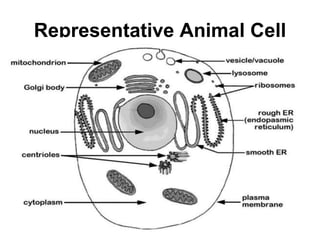
Representative Animal Cell
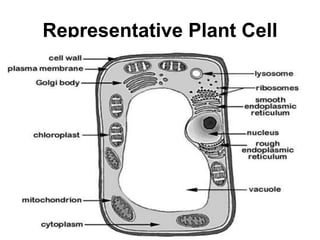
Representative Plant Cell
CELL PARTS
The cell has 3 basic parts:
1.Nucleus
2.Plasma membrane
3.Cytoplasm
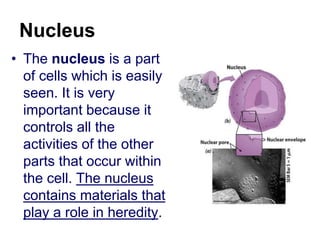
Nucleus
• The nucleus is a part
of cells which is easily
seen. It is very
important because it
controls all the
activities of the other
parts that occur within
the cell. The nucleus
contains materials that
play a role in heredity.
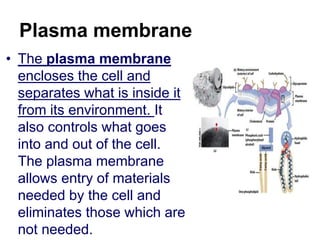
Plasma membrane
• The plasma membrane
encloses the cell and
separates what is inside it
from its environment. It
also controls what goes
into and out of the cell.
The plasma membrane
allows entry of materials
needed by the cell and
eliminates those which are
not needed.
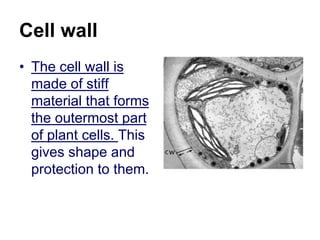
Cell wall
• The cell wall is
made of stiff
material that forms
the outermost part
of plant cells. This
gives shape and
protection to them.
Cytoplasm
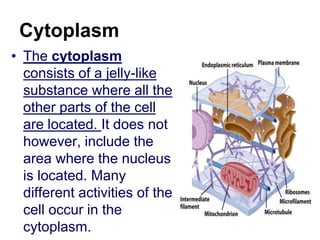
• The cytoplasm
consists of a jelly-like
substance where all the
other parts of the cell
are located. It does not
however, include the
area where the nucleus
is located. Many
different activities of the
cell occur in the
cytoplasm.
Organelles
• Are distinct membrane-bound
particles that includes mitochondria,
smooth endoplasmic reticulum, rough
endoplasmic reticulum, ribosomes,
golgi body, lysosomes,
vacuoles/vesicles, chloroplast, and
centrioles.
Mitochondria
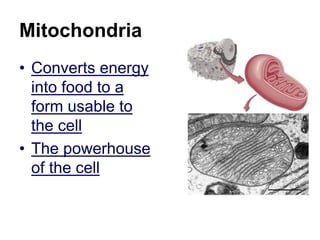
• Converts energy
into food to a
form usable to
the cell
• The powerhouse
of the cell
Ribosomes
Produced in the nucleus, occurs
in large numbers and can be
free floating in the cytoplasm,
involved in the manufacture of
protein.
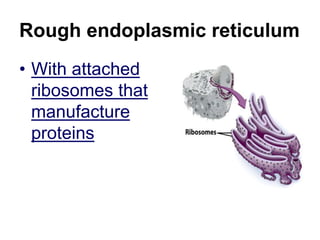
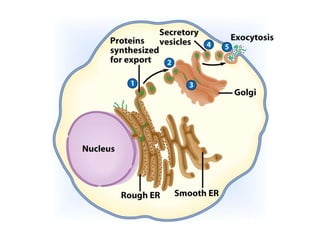
Rough endoplasmic reticulum
• With attached
ribosomes that
manufacture
proteins
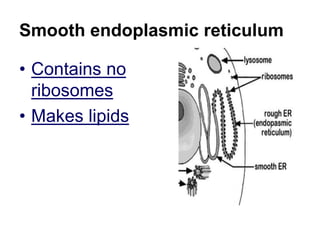
Smooth endoplasmic reticulum
• Contains no
ribosomes
• Makes lipids
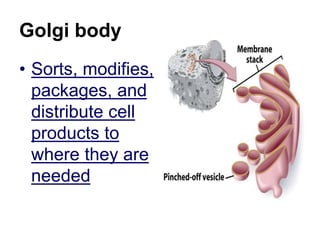
Golgi body
• Sorts, modifies,
packages, and
distribute cell
products to
where they are
needed
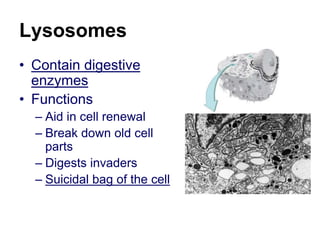
Lysosomes
• Contain digestive
enzymes
• Functions
– Aid in cell renewal
– Break down old cell
parts
– Digests invaders
– Suicidal bag of the cell
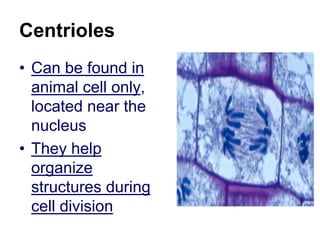
Centrioles
• Can be found in
animal cell only,
located near the
nucleus
• They help
organize
structures during
cell division
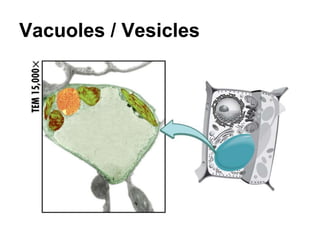
Vacuoles / Vesicles
• Vacuoles are present in both plant and animal
cells. In plant cells, they are large and usually
occupy more than half of the cell space.
Vacuoles also store water, thereby maintaining
rigidity to cells and provide support for plants to
stand upright.
• Vacuoles in animal cells are small and are called
vesicles. They serve as storage of water and
food and also function in the excretion of waste
materials.
Vacuoles / Vesicles
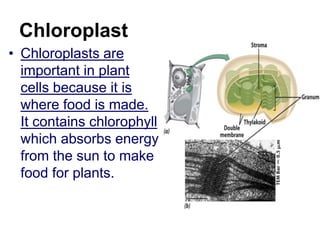
Chloroplast
• Chloroplasts are
important in plant
cells because it is
where food is made.
It contains chlorophyll
which absorbs energy
from the sun to make
food for plants.
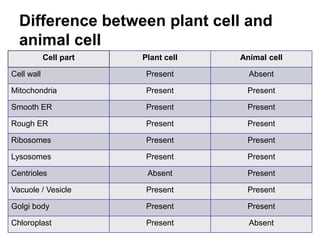
Difference between plant cell and
animal cell
Cell part Plant cell Animal cell
Cell wall Present Absent
Mitochondria Present Present
Smooth ER Present Present
Rough ER Present Present
Ribosomes Present Present
Lysosomes Present Present
Centrioles Absent Present
Vacuole / Vesicle Present Present
Golgi body Present Present
Chloroplast Present Absent

cell-new.ppt

  • 1.
  • 2.
  • 3.
  • 4.
  • 5.
    The cell has3 basic parts: 1.Nucleus 2.Plasma membrane 3.Cytoplasm
  • 6.
    Nucleus • The nucleusis a part of cells which is easily seen. It is very important because it controls all the activities of the other parts that occur within the cell. The nucleus contains materials that play a role in heredity.
  • 7.
    Plasma membrane • Theplasma membrane encloses the cell and separates what is inside it from its environment. It also controls what goes into and out of the cell. The plasma membrane allows entry of materials needed by the cell and eliminates those which are not needed.
  • 8.
    Cell wall • Thecell wall is made of stiff material that forms the outermost part of plant cells. This gives shape and protection to them.
  • 9.
    Cytoplasm • The cytoplasm consistsof a jelly-like substance where all the other parts of the cell are located. It does not however, include the area where the nucleus is located. Many different activities of the cell occur in the cytoplasm.
  • 10.
    Organelles • Are distinctmembrane-bound particles that includes mitochondria, smooth endoplasmic reticulum, rough endoplasmic reticulum, ribosomes, golgi body, lysosomes, vacuoles/vesicles, chloroplast, and centrioles.
  • 11.
    Mitochondria • Converts energy intofood to a form usable to the cell • The powerhouse of the cell
  • 12.
    Ribosomes Produced in thenucleus, occurs in large numbers and can be free floating in the cytoplasm, involved in the manufacture of protein.
  • 13.
    Rough endoplasmic reticulum •With attached ribosomes that manufacture proteins
  • 14.
    Smooth endoplasmic reticulum •Contains no ribosomes • Makes lipids
  • 15.
    Golgi body • Sorts,modifies, packages, and distribute cell products to where they are needed
  • 17.
    Lysosomes • Contain digestive enzymes •Functions – Aid in cell renewal – Break down old cell parts – Digests invaders – Suicidal bag of the cell
  • 18.
    Centrioles • Can befound in animal cell only, located near the nucleus • They help organize structures during cell division
  • 19.
    Vacuoles / Vesicles •Vacuoles are present in both plant and animal cells. In plant cells, they are large and usually occupy more than half of the cell space. Vacuoles also store water, thereby maintaining rigidity to cells and provide support for plants to stand upright. • Vacuoles in animal cells are small and are called vesicles. They serve as storage of water and food and also function in the excretion of waste materials.
  • 20.
  • 21.
    Chloroplast • Chloroplasts are importantin plant cells because it is where food is made. It contains chlorophyll which absorbs energy from the sun to make food for plants.
  • 22.
    Difference between plantcell and animal cell Cell part Plant cell Animal cell Cell wall Present Absent Mitochondria Present Present Smooth ER Present Present Rough ER Present Present Ribosomes Present Present Lysosomes Present Present Centrioles Absent Present Vacuole / Vesicle Present Present Golgi body Present Present Chloroplast Present Absent