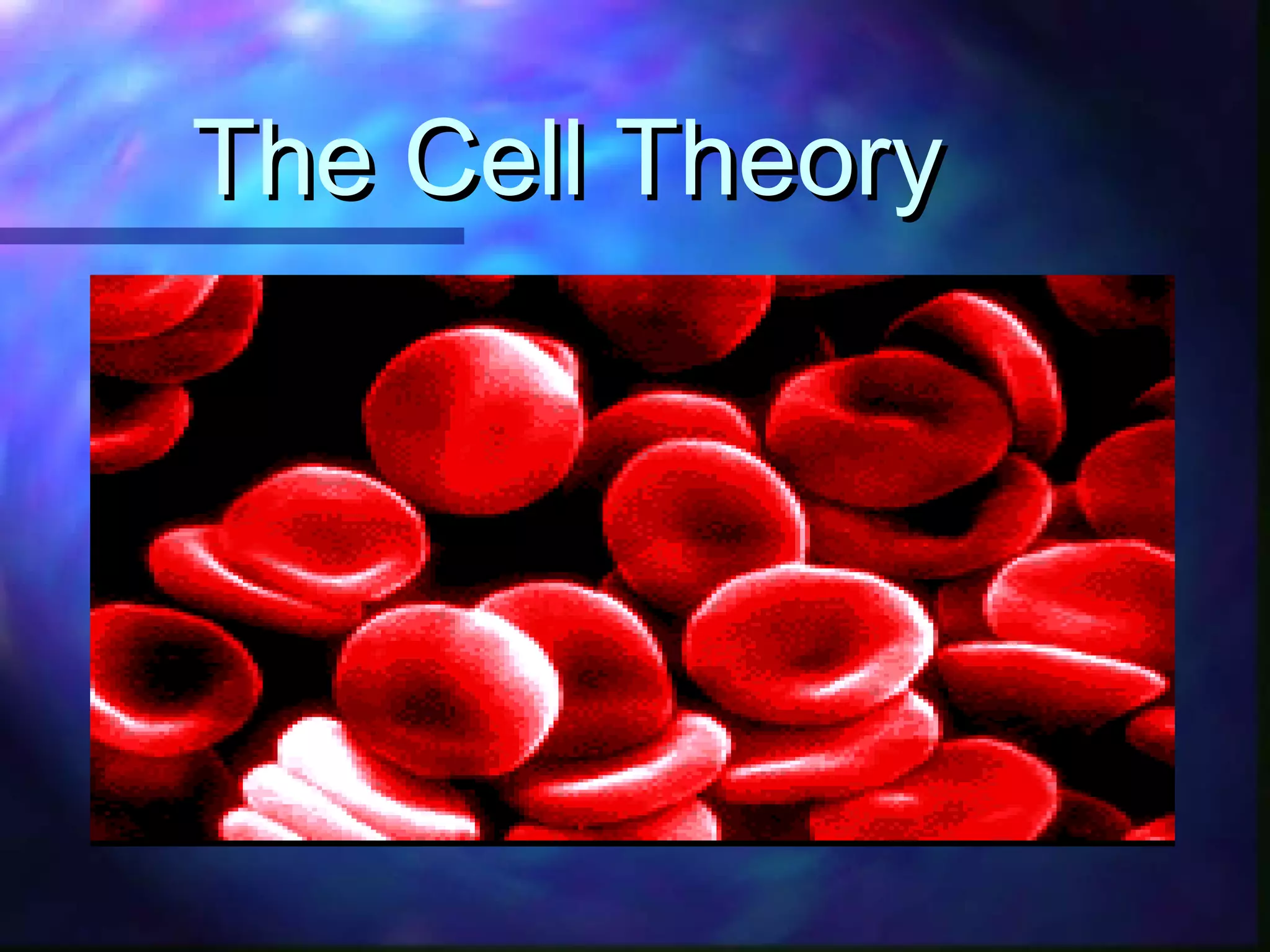
The Cell Theory
Some Random Cell Facts
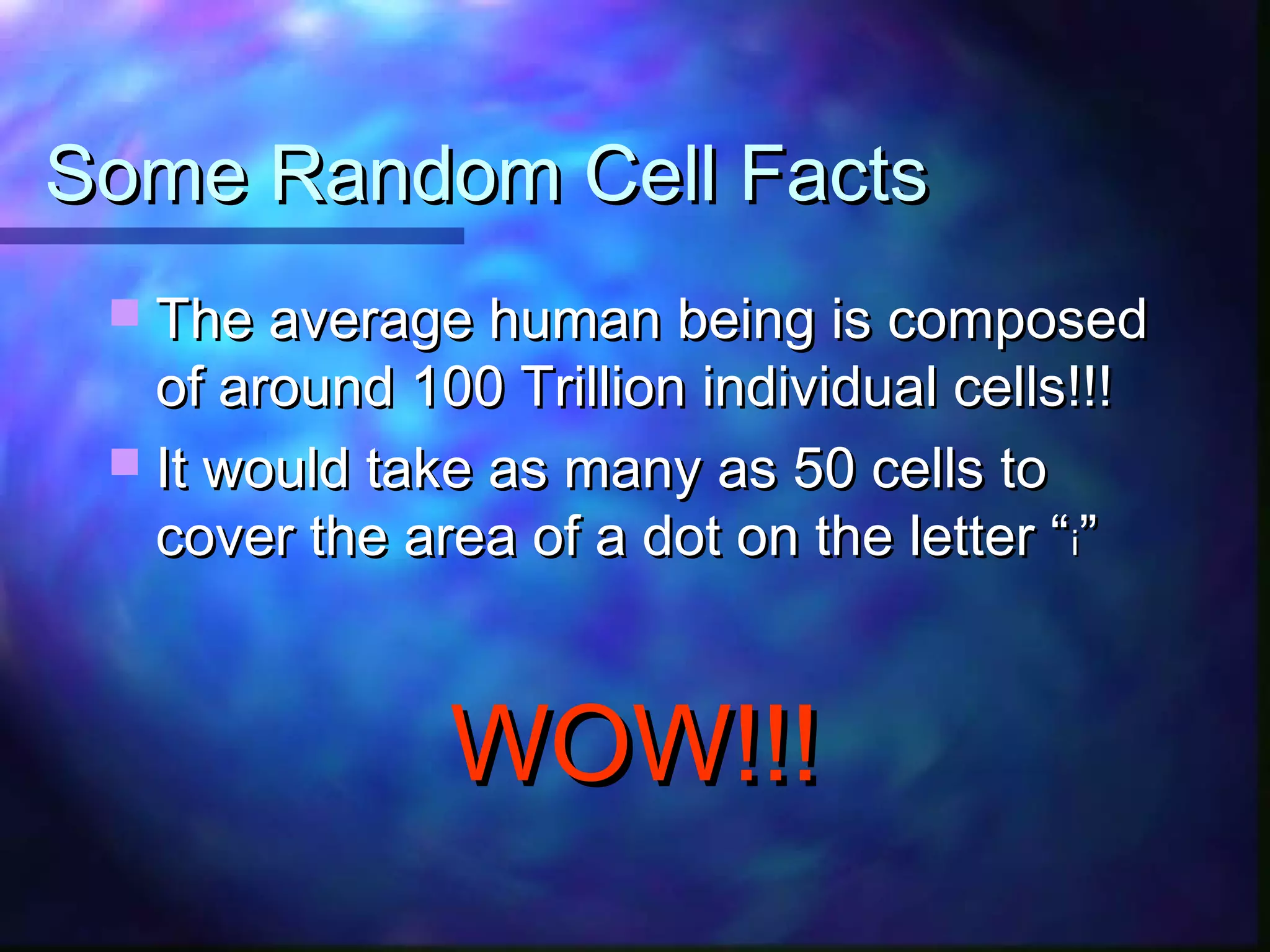
  The average human being is composed
   of around 100 Trillion individual cells!!!
  It would take as many as 50 cells to
   cover the area of a dot on the letter “ i”


               WOW!!!
Discovery of Cells
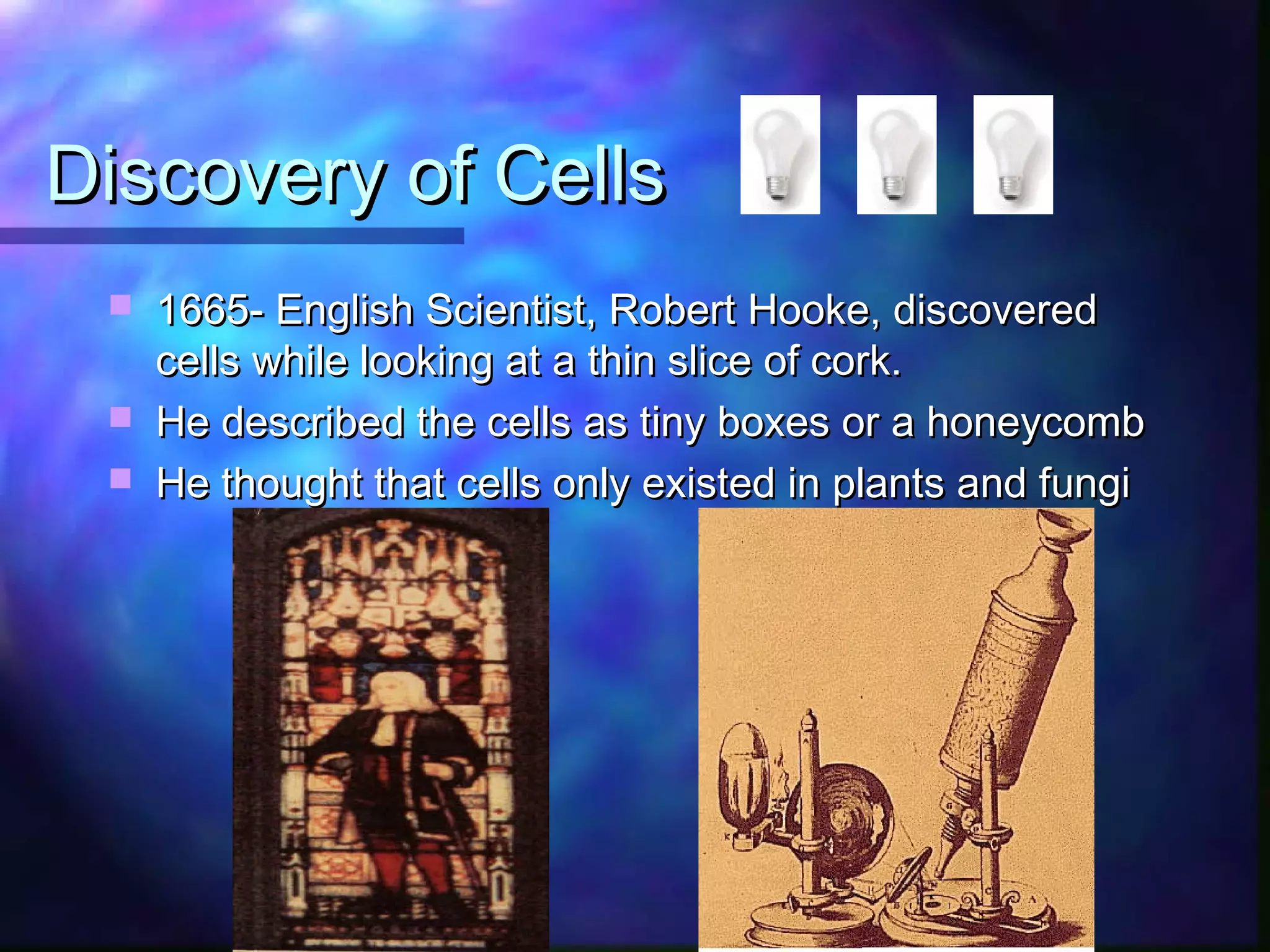
    1665- English Scientist, Robert Hooke, discovered
     cells while looking at a thin slice of cork.
    He described the cells as tiny boxes or a honeycomb
    He thought that cells only existed in plants and fungi
Anton van Leuwenhoek
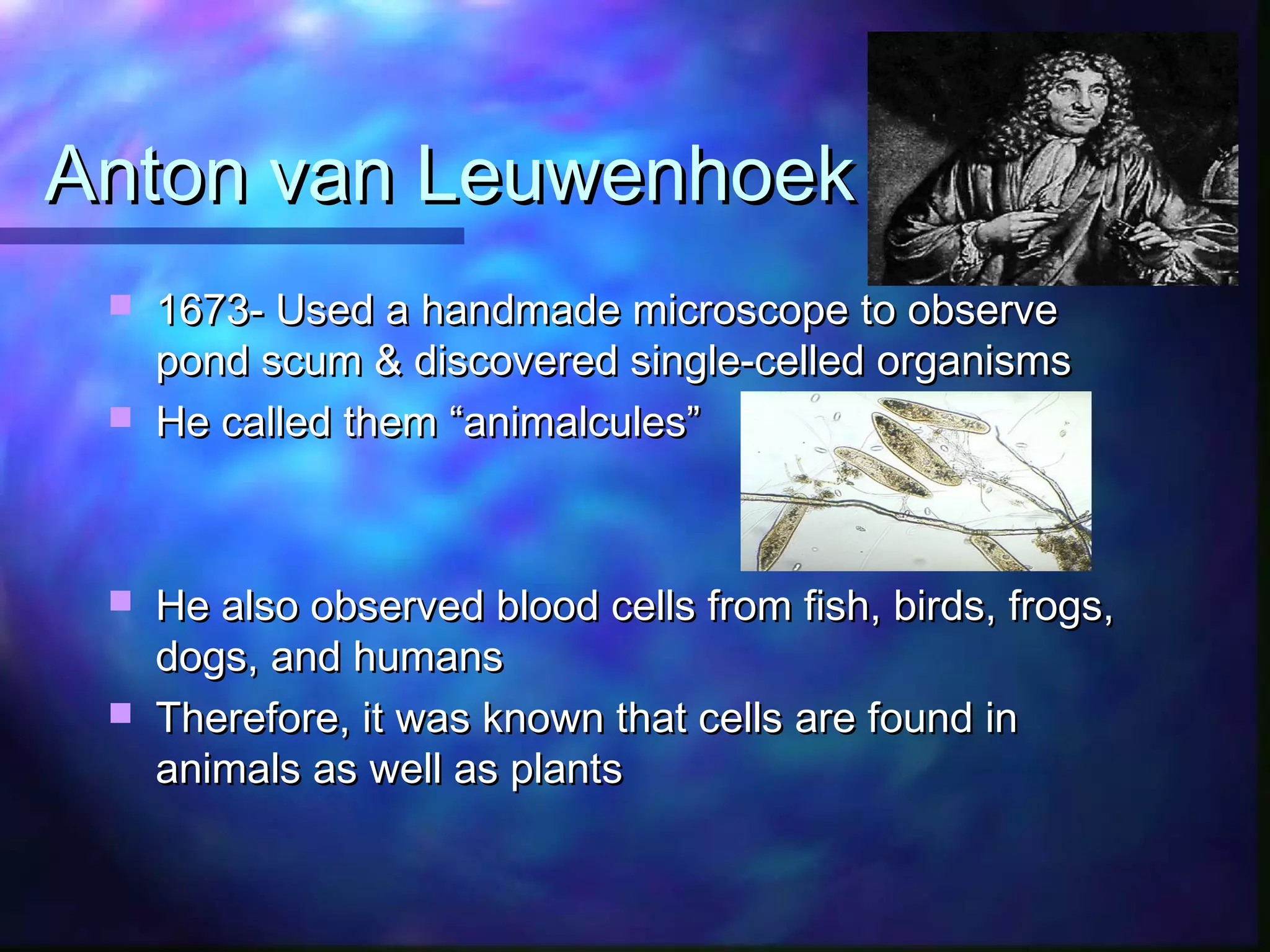
    1673- Used a handmade microscope to observe
     pond scum & discovered single-celled organisms
    He called them “animalcules”


    He also observed blood cells from fish, birds, frogs,
     dogs, and humans
    Therefore, it was known that cells are found in
     animals as well as plants
150-200 Year Gap???
    Between the Hooke/Leuwenhoek discoveries
     and the mid 19th century, very little cell
     advancements were made.
    This is probably due to the widely accepted,
     traditional belief in Spontaneous Generation.
    Examples:
     -Mice from dirty clothes/corn husks
     -Maggots from rotting meat
19th Century Advancement
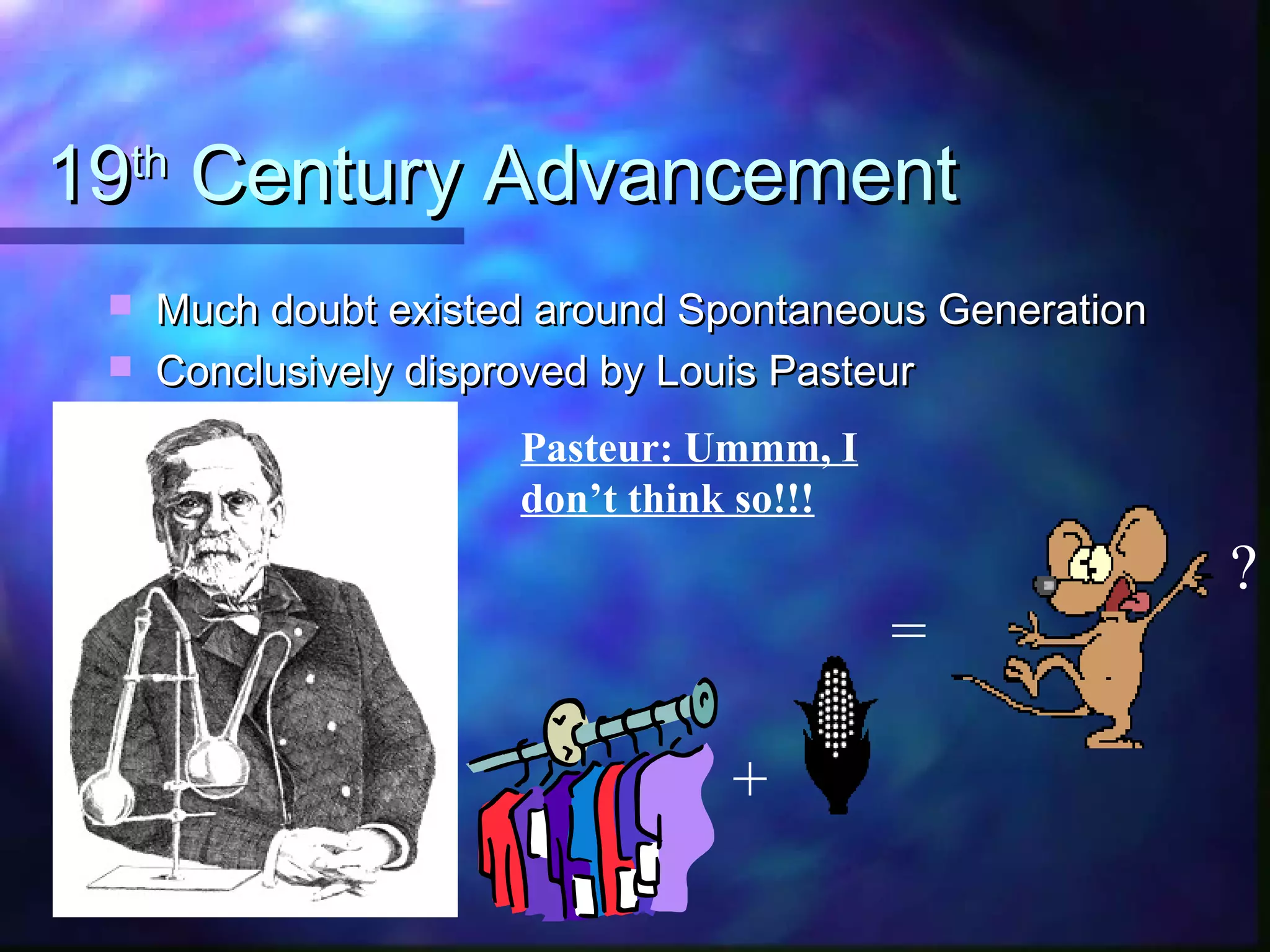
    Much doubt existed around Spontaneous Generation
    Conclusively disproved by Louis Pasteur
                      Pasteur: Ummm, I
                      don’t think so!!!
                                                        ?
                                          =

                                +
Development of Cell Theory
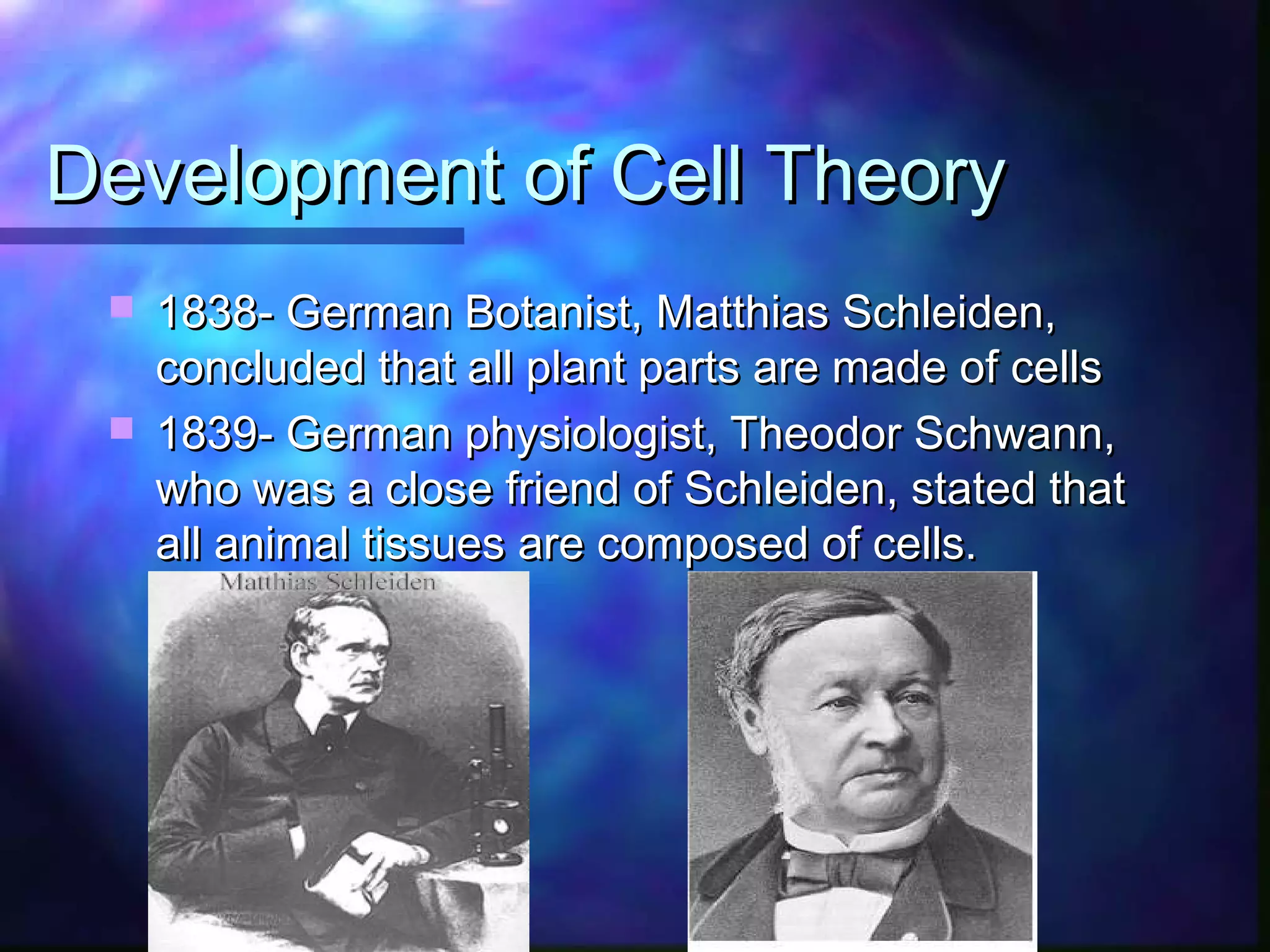
  1838- German Botanist, Matthias Schleiden,
   concluded that all plant parts are made of cells
  1839- German physiologist, Theodor Schwann,
   who was a close friend of Schleiden, stated that
   all animal tissues are composed of cells.
Development of Cell Theory
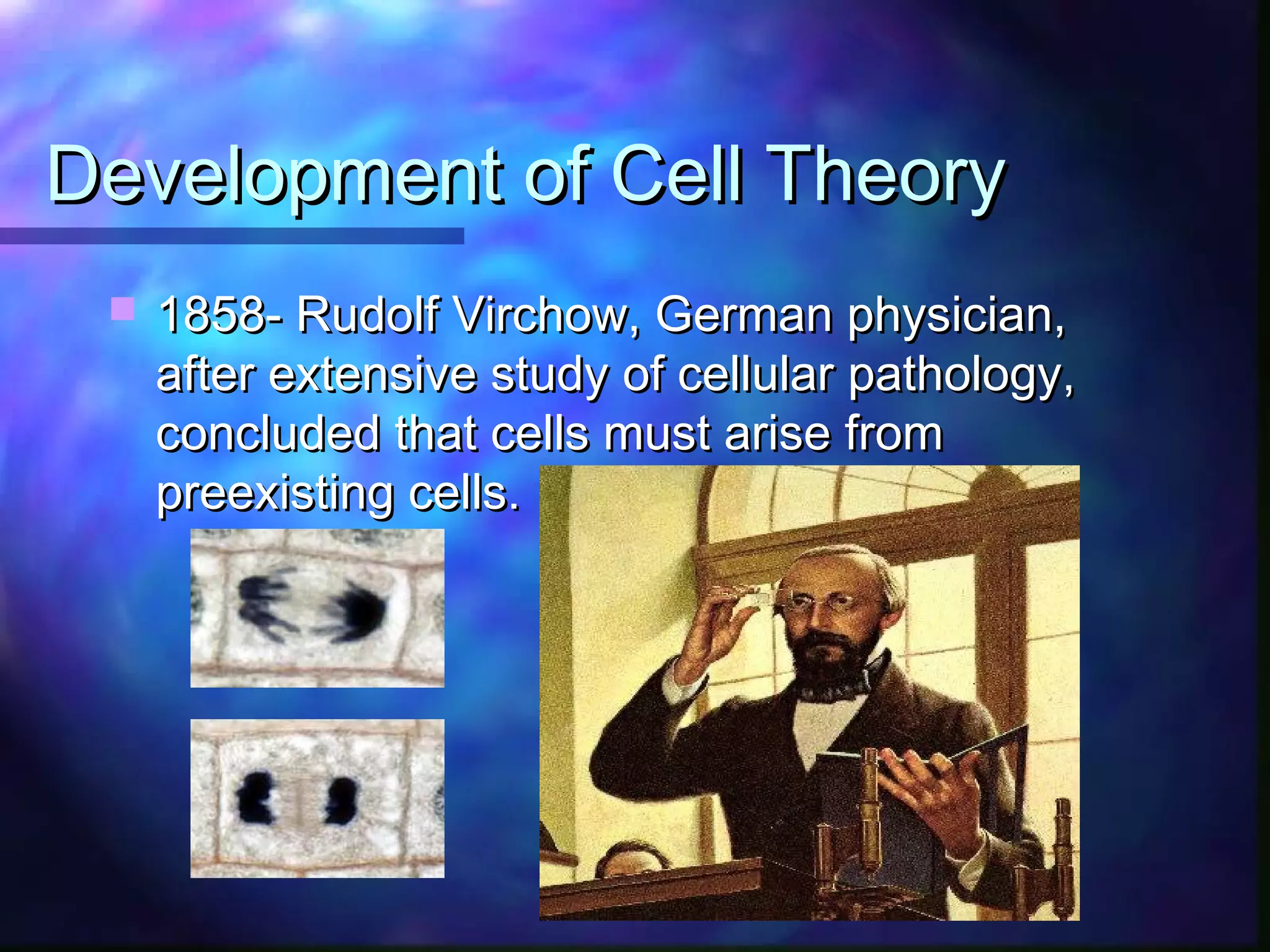
    1858- Rudolf Virchow, German physician,
     after extensive study of cellular pathology,
     concluded that cells must arise from
     preexisting cells.
The Cell Theory Complete
    The 3 Basic Components of the Cell Theory
     were now complete:
  1. All organisms are composed of one or more
   cells. (Schleiden & Schwann)(1838-39)
  2. The cell is the basic unit of life in all living
   things. (Schleiden & Schwann)(1838-39)
  3. All cells are produced by the division of
   preexisting cells. (Virchow)(1858)
Modern Cell Theory
    Modern Cell Theory contains 4 statements, in
     addition to the original Cell Theory:
    The cell contains hereditary information(DNA) which
     is passed on from cell to cell during cell division.
    All cells are basically the same in chemical
     composition and metabolic activities.
    All basic chemical & physiological functions are
     carried out inside the cells.(movement, digestion,etc)
    Cell activity depends on the activities of sub-cellular
     structures within the cell(organelles, nucleus, plasma
     membrane)
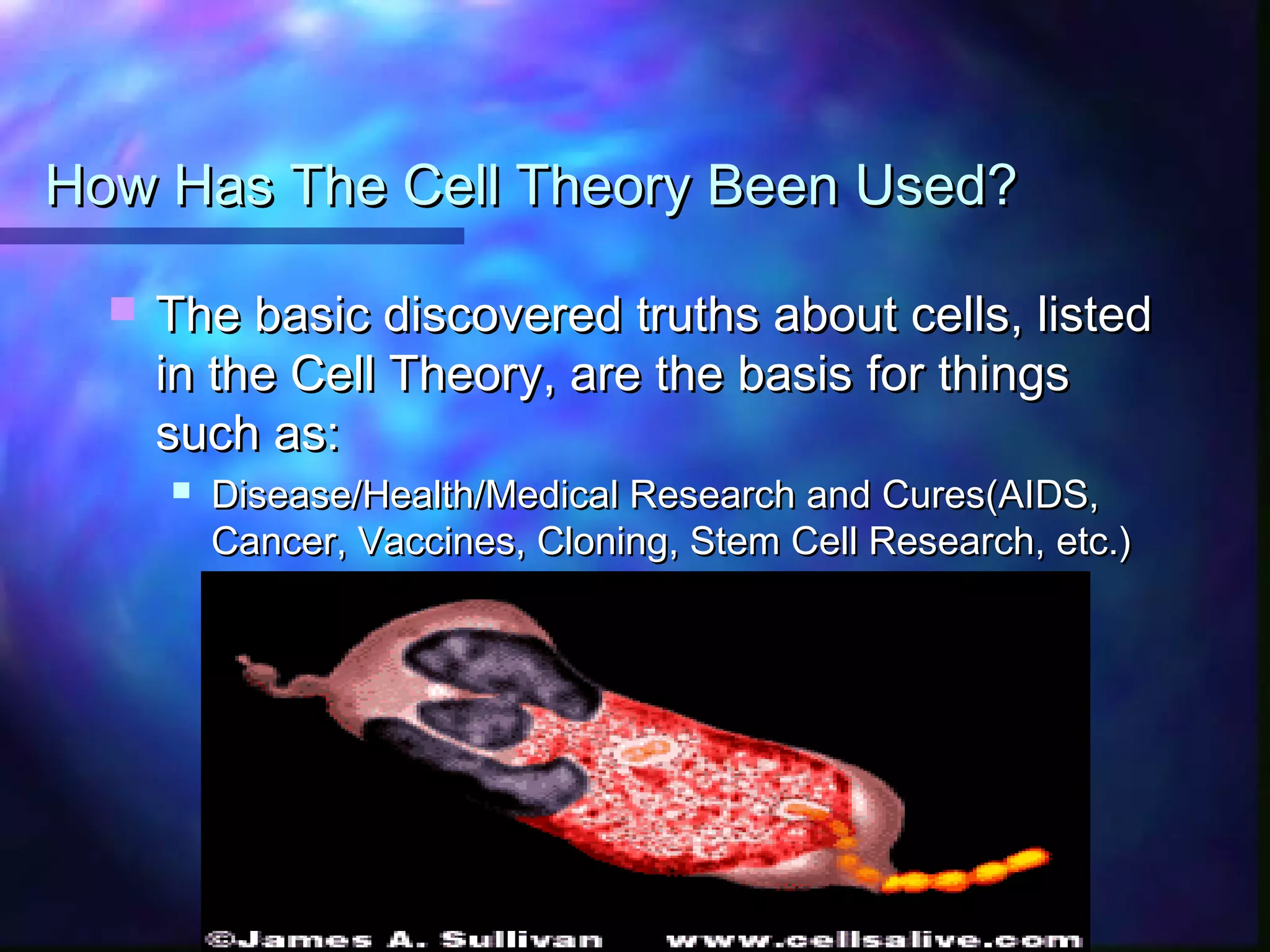
How Has The Cell Theory Been Used?

     The basic discovered truths about cells, listed
      in the Cell Theory, are the basis for things
      such as:
         Disease/Health/Medical Research and Cures(AIDS,
          Cancer, Vaccines, Cloning, Stem Cell Research, etc.)
Some Parting Thoughts
    It is amazing to think that the cells that make
     up our bodies are just as alive as we are.
     Humans are just an intricately designed
     community of cells, which must work together
     to survive.
    Cells, in my opinion, are one of the strongest
     cases for intelligent design by our Creator
     God!
This powerpoint was kindly donated to
www.worldofteaching.com


http://www.worldofteaching.com is home to over a
thousand powerpoints submitted by teachers. This is a
completely free site and requires no registration. Please
visit and I hope it will help in your teaching.

The cell theory

  • 1.
  • 2.
    Some Random CellFacts  The average human being is composed of around 100 Trillion individual cells!!!  It would take as many as 50 cells to cover the area of a dot on the letter “ i” WOW!!!
  • 3.
    Discovery of Cells  1665- English Scientist, Robert Hooke, discovered cells while looking at a thin slice of cork.  He described the cells as tiny boxes or a honeycomb  He thought that cells only existed in plants and fungi
  • 4.
    Anton van Leuwenhoek  1673- Used a handmade microscope to observe pond scum & discovered single-celled organisms  He called them “animalcules”  He also observed blood cells from fish, birds, frogs, dogs, and humans  Therefore, it was known that cells are found in animals as well as plants
  • 5.
    150-200 Year Gap???  Between the Hooke/Leuwenhoek discoveries and the mid 19th century, very little cell advancements were made.  This is probably due to the widely accepted, traditional belief in Spontaneous Generation.  Examples: -Mice from dirty clothes/corn husks -Maggots from rotting meat
  • 6.
    19th Century Advancement  Much doubt existed around Spontaneous Generation  Conclusively disproved by Louis Pasteur Pasteur: Ummm, I don’t think so!!! ? = +
  • 7.
    Development of CellTheory  1838- German Botanist, Matthias Schleiden, concluded that all plant parts are made of cells  1839- German physiologist, Theodor Schwann, who was a close friend of Schleiden, stated that all animal tissues are composed of cells.
  • 8.
    Development of CellTheory  1858- Rudolf Virchow, German physician, after extensive study of cellular pathology, concluded that cells must arise from preexisting cells.
  • 9.
    The Cell TheoryComplete  The 3 Basic Components of the Cell Theory were now complete:  1. All organisms are composed of one or more cells. (Schleiden & Schwann)(1838-39)  2. The cell is the basic unit of life in all living things. (Schleiden & Schwann)(1838-39)  3. All cells are produced by the division of preexisting cells. (Virchow)(1858)
  • 10.
    Modern Cell Theory  Modern Cell Theory contains 4 statements, in addition to the original Cell Theory:  The cell contains hereditary information(DNA) which is passed on from cell to cell during cell division.  All cells are basically the same in chemical composition and metabolic activities.  All basic chemical & physiological functions are carried out inside the cells.(movement, digestion,etc)  Cell activity depends on the activities of sub-cellular structures within the cell(organelles, nucleus, plasma membrane)
  • 11.
    How Has TheCell Theory Been Used?  The basic discovered truths about cells, listed in the Cell Theory, are the basis for things such as:  Disease/Health/Medical Research and Cures(AIDS, Cancer, Vaccines, Cloning, Stem Cell Research, etc.)
  • 12.
    Some Parting Thoughts  It is amazing to think that the cells that make up our bodies are just as alive as we are. Humans are just an intricately designed community of cells, which must work together to survive.  Cells, in my opinion, are one of the strongest cases for intelligent design by our Creator God!
  • 13.
    This powerpoint waskindly donated to www.worldofteaching.com http://www.worldofteaching.com is home to over a thousand powerpoints submitted by teachers. This is a completely free site and requires no registration. Please visit and I hope it will help in your teaching.