Cell And
Structure Of
Cell
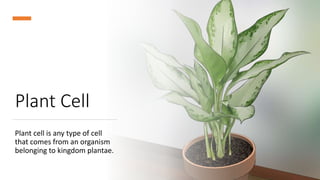
Plant Cell
Plant cell is any type of cell
that comes from an organism
belonging to kingdom plantae.
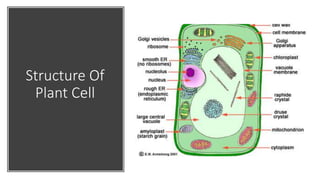
Structure Of
Plant Cell
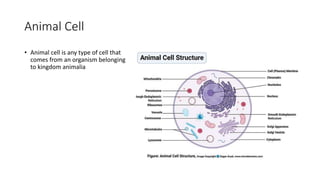
Animal Cell
• Animal cell is any type of cell that
comes from an organism belonging
to kingdom animalia
Main
parts of
cells
• Cell membrane
• Cell wall
• Nucleus
• Cytoplasm
• Mitochondria
• Chloroplast
• Ribosomes
• Endoplasmic Reticulum
• Chromosomes
• Vacuole
• Centrioles
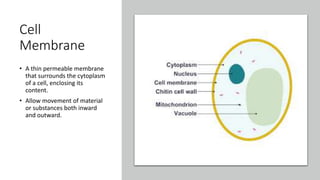
Cell
Membrane
• A thin permeable membrane
that surrounds the cytoplasm
of a cell, enclosing its
content.
• Allow movement of material
or substances both inward
and outward.
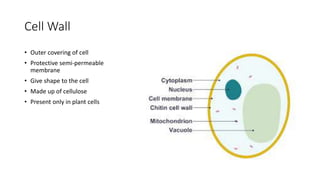
Cell Wall
• Outer covering of cell
• Protective semi-permeable
membrane
• Give shape to the cell
• Made up of cellulose
• Present only in plant cells
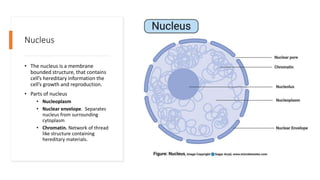
Nucleus
• The nucleus is a membrane
bounded structure, that contains
cell’s hereditary information the
cell’s growth and reproduction.
• Parts of nucleus
• Nucleoplasm
• Nuclear envelope. Separates
nucleus from surrounding
cytoplasm
• Chromatin. Network of thread
like structure containing
hereditary materials.
Nucleus
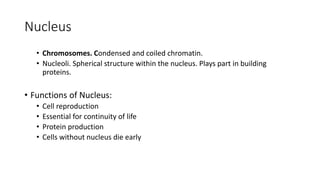
• Chromosomes. Condensed and coiled chromatin.
• Nucleoli. Spherical structure within the nucleus. Plays part in building
proteins.
• Functions of Nucleus:
• Cell reproduction
• Essential for continuity of life
• Protein production
• Cells without nucleus die early
Cytoplasm
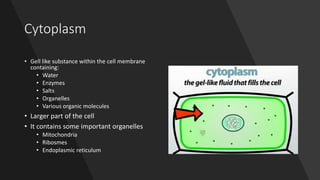
• Gell like substance within the cell membrane
containing:
• Water
• Enzymes
• Salts
• Organelles
• Various organic molecules
• Larger part of the cell
• It contains some important organelles
• Mitochondria
• Ribosmes
• Endoplasmic reticulum
What are organelles?
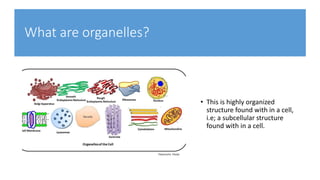
• This is highly organized
structure found with in a cell,
i.e; a subcellular structure
found with in a cell.
Mitochondria
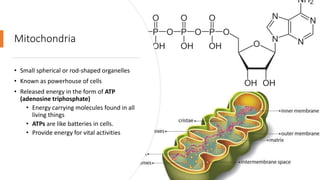
• Small spherical or rod-shaped organelles
• Known as powerhouse of cells
• Released energy in the form of ATP
(adenosine triphosphate)
• Energy carrying molecules found in all
living things
• ATPs are like batteries in cells.
• Provide energy for vital activities
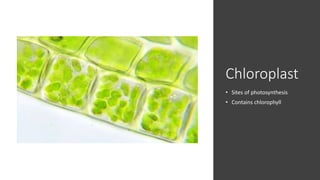
Chloroplast
• Sites of photosynthesis
• Contains chlorophyll
Vacuole
• A fluid-filled space enclosed by a membrane.
• Animal cells may have a small vacuole, while plant cells have large
central vacuole.
• Provide support and participates in variety of cellular functions
including:
• Storage
• Detoxification
• Protection
• Growth
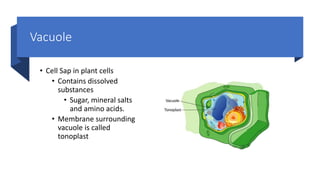
Vacuole
• Cell Sap in plant cells
• Contains dissolved
substances
• Sugar, mineral salts
and amino acids.
• Membrane surrounding
vacuole is called
tonoplast
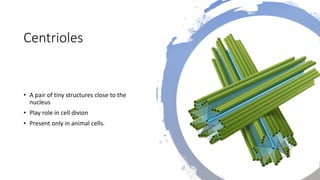
Centrioles
• A pair of tiny structures close to the
nucleus
• Play role in cell divion
• Present only in animal cells.
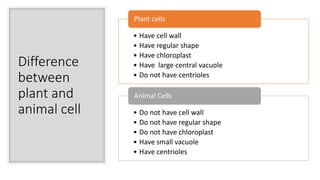
Difference
between
plant and
animal cell
• Have cell wall
• Have regular shape
• Have chloroplast
• Have large central vacuole
• Do not have centrioles
Plant cells
• Do not have cell wall
• Do not have regular shape
• Do not have chloroplast
• Have small vacuole
• Have centrioles
Animal Cells
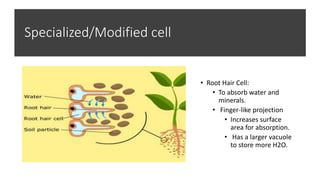
Specialized/Modified cell
• Root Hair Cell:
• To absorb water and
minerals.
• Finger-like projection
• Increases surface
area for absorption.
• Has a larger vacuole
to store more H2O.
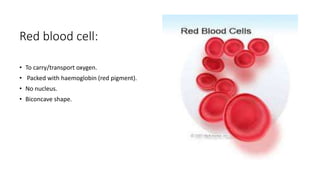
Red blood cell:
• To carry/transport oxygen.
• Packed with haemoglobin (red pigment).
• No nucleus.
• Biconcave shape.
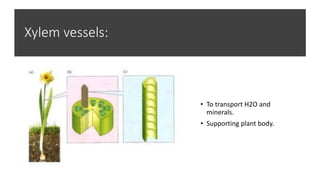
Xylem vessels:
• To transport H2O and
minerals.
• Supporting plant body.

Plant cell | Animal Cell | Cell structure O level notes

  • 1.
  • 2.
    Plant Cell Plant cellis any type of cell that comes from an organism belonging to kingdom plantae.
  • 3.
  • 4.
    Animal Cell • Animalcell is any type of cell that comes from an organism belonging to kingdom animalia
  • 5.
    Main parts of cells • Cellmembrane • Cell wall • Nucleus • Cytoplasm • Mitochondria • Chloroplast • Ribosomes • Endoplasmic Reticulum • Chromosomes • Vacuole • Centrioles
  • 6.
    Cell Membrane • A thinpermeable membrane that surrounds the cytoplasm of a cell, enclosing its content. • Allow movement of material or substances both inward and outward.
  • 7.
    Cell Wall • Outercovering of cell • Protective semi-permeable membrane • Give shape to the cell • Made up of cellulose • Present only in plant cells
  • 8.
    Nucleus • The nucleusis a membrane bounded structure, that contains cell’s hereditary information the cell’s growth and reproduction. • Parts of nucleus • Nucleoplasm • Nuclear envelope. Separates nucleus from surrounding cytoplasm • Chromatin. Network of thread like structure containing hereditary materials.
  • 9.
    Nucleus • Chromosomes. Condensedand coiled chromatin. • Nucleoli. Spherical structure within the nucleus. Plays part in building proteins. • Functions of Nucleus: • Cell reproduction • Essential for continuity of life • Protein production • Cells without nucleus die early
  • 10.
    Cytoplasm • Gell likesubstance within the cell membrane containing: • Water • Enzymes • Salts • Organelles • Various organic molecules • Larger part of the cell • It contains some important organelles • Mitochondria • Ribosmes • Endoplasmic reticulum
  • 11.
    What are organelles? •This is highly organized structure found with in a cell, i.e; a subcellular structure found with in a cell.
  • 12.
    Mitochondria • Small sphericalor rod-shaped organelles • Known as powerhouse of cells • Released energy in the form of ATP (adenosine triphosphate) • Energy carrying molecules found in all living things • ATPs are like batteries in cells. • Provide energy for vital activities
  • 13.
    Chloroplast • Sites ofphotosynthesis • Contains chlorophyll
  • 14.
    Vacuole • A fluid-filledspace enclosed by a membrane. • Animal cells may have a small vacuole, while plant cells have large central vacuole. • Provide support and participates in variety of cellular functions including: • Storage • Detoxification • Protection • Growth
  • 15.
    Vacuole • Cell Sapin plant cells • Contains dissolved substances • Sugar, mineral salts and amino acids. • Membrane surrounding vacuole is called tonoplast
  • 16.
    Centrioles • A pairof tiny structures close to the nucleus • Play role in cell divion • Present only in animal cells.
  • 17.
    Difference between plant and animal cell •Have cell wall • Have regular shape • Have chloroplast • Have large central vacuole • Do not have centrioles Plant cells • Do not have cell wall • Do not have regular shape • Do not have chloroplast • Have small vacuole • Have centrioles Animal Cells
  • 18.
    Specialized/Modified cell • RootHair Cell: • To absorb water and minerals. • Finger-like projection • Increases surface area for absorption. • Has a larger vacuole to store more H2O.
  • 19.
    Red blood cell: •To carry/transport oxygen. • Packed with haemoglobin (red pigment). • No nucleus. • Biconcave shape.
  • 20.
    Xylem vessels: • Totransport H2O and minerals. • Supporting plant body.